食品杂货

Search documents
Canada puts grocery affordability at top of policy agenda
Yahoo Finance· 2026-03-25 09:25
Core Perspective - Canada is prioritizing grocery affordability in its economic and competition policy due to rising food prices affecting households and scrutiny of the retail grocery sector [1][5] Focus on Competition in Grocery Market - The Competition Bureau of Canada emphasizes that stronger market competition is essential for reducing grocery prices, benefiting consumers through lower prices, greater choice, and improved service [3] - The Canadian grocery sector is characterized by a small number of large national chains, raising concerns about pricing power and barriers for new entrants [3][4] Structural Issues and Policy Actions - The Bureau is addressing structural issues limiting competition by reviewing mergers, examining restrictive practices, and supporting measures for new retailers and suppliers to enter the market [4] - This approach is similar to ongoing debates in the UK, EU, and Australia regarding concentrated grocery markets and their impact on food prices [4] Consumer Pressure and Political Focus - Rising grocery prices are a significant cost-of-living issue in Canada, with food inflation outpacing overall inflation, particularly affecting lower- and middle-income consumers [5] - There is increasing political focus on supermarket pricing, profit margins, and supply chain dynamics due to financial strain on households [5][6] Government Emphasis and International Context - The government's focus on grocery affordability aligns with public concern over everyday expenses and the demand for accountability in food pricing across the supply chain [6] - Food affordability has become a global policy priority as governments respond to inflation shocks, geopolitical disruptions, and changing consumer behavior [6]
特朗普所言不实:食品杂货价格仍在上涨
Xin Lang Cai Jing· 2026-01-15 13:08
Core Insights - The core inflation rate in the U.S. for December increased by 2.6% year-on-year, which is lower than expected [1] - Food prices have significantly risen, contradicting claims from the Trump administration that grocery prices are decreasing [3][13] Food Price Trends - Over the past year, beef prices rose by 16.4%, coffee by 19.8%, lettuce by 7.3%, and frozen fish by 8.6% [3][13] - The overall cost of household food consumption increased by 2.4% in the past 12 months, with a monthly increase of 0.7% in December, marking the largest monthly rise since October 2022 [4][14] - Despite some food categories like eggs seeing a price drop of 20.9%, five out of six tracked food categories experienced price increases [5][15] Consumer Behavior Changes - Low-income consumers are prioritizing essential items and opting for cheaper alternatives, reducing their purchase quantities and increasing shopping frequency [5][15] - Middle-class consumers are also shifting their purchasing habits, focusing on promotions and store-brand products to save costs [5][15] Impact of Tariffs and Policies - Tariff policies have had a limited direct impact on most food prices, as the majority of food consumed in the U.S. is domestically produced [5][15] - Imported goods like coffee and tropical fruits have seen price increases due to tariffs, with bananas rising by 5.9% year-on-year in December [7][16] Labor Market and Agricultural Costs - Labor shortages in agriculture are exacerbated by tightened immigration policies, affecting the availability of workers for harvesting crops [10][20] - Agricultural labor costs are a significant driver of overall industry expenses, accounting for about 50% of total spending [20] - The U.S. Department of Agriculture projects a 2.3% increase in household food prices by 2026, maintaining a similar growth rate as in 2025 [19] Economic Outlook - The current inflation data suggests that while inflation is not spiraling out of control, the claims of decreasing food prices by the government are unfounded [4][14] - The ongoing labor shortages and rising costs of agricultural inputs may continue to pressure food prices in the near future [20]


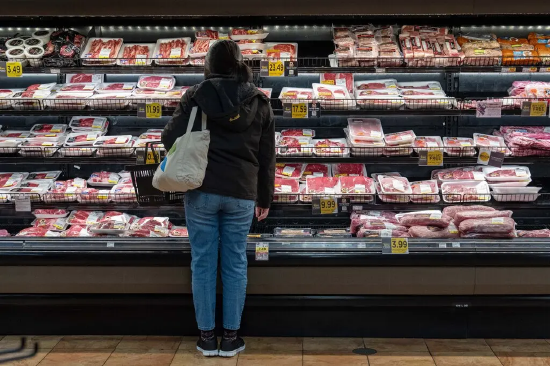
美股“失落阵营”消费股迎财报“大考” 美国家庭“压力山大”是病根
Zhi Tong Cai Jing· 2025-11-05 13:36
Core Insights - The consumer sector is lagging behind the overall stock market performance, with significant declines in major consumer companies' stock prices, highlighting the challenges faced by American households [1][2][3] Group 1: Consumer Sector Performance - Major consumer companies like Lululemon Athletica, Chipotle, and Deckers Outdoor have seen stock declines exceeding 45% this year [1] - Essential consumer goods companies such as Kraft Heinz, Hormel Foods, and Target have also experienced stock declines of at least 27% [1] - Excluding Amazon and Tesla from the S&P 500 consumer discretionary index shows that the index has remained flat in 2025, indicating the struggles of non-essential consumer companies [1] Group 2: Economic Challenges - The poor performance of consumer stocks reflects multiple pressures on American households, including layoffs, high tariffs on goods, and elevated mortgage rates affecting the real estate market [2] - Upcoming earnings reports from companies like McDonald's, DoorDash, and Wynn Resorts are anticipated to provide insights into the consumer sector's current dynamics [2] Group 3: Market Dynamics - The ongoing AI investment trend is overshadowing the difficulties faced by consumer stocks, with the S&P 500 index nearing historical highs and a 15% increase this year [3] - The market is exhibiting a "barbell" structure, where a few AI-related companies perform well while most stocks are dragged down by labor market concerns and household spending pressures [3][4] - Only 5% of stocks in the S&P 500 consumer staples sector have outperformed the market in the past six months, marking one of the lowest ratios in 50 years [4] Group 4: Employment and Layoffs - The focus has shifted from official labor market data to corporate layoff announcements due to the U.S. government shutdown, with significant layoffs announced by companies like UPS and Amazon [5][6] - Some analysts suggest that the current wave of layoffs could be beneficial for the stock market, potentially leading to a "no-employment boom" scenario that may prompt the Federal Reserve to adopt a more accommodative policy [6]


美股异动|亚马逊股价连跌创新低背后风险与机遇并存
Xin Lang Cai Jing· 2025-09-23 22:48
Core Viewpoint - Amazon's stock has recently shown weakness, with a notable decline of 3.04% on September 23, leading to a cumulative drop of 4.65% over two trading days, reaching its lowest point since August 2025 [1] Group 1: Market Performance - Amazon's cloud computing business, AWS, has been a key growth driver, but competition from Microsoft and Google in the AI sector poses new threats [1] - Despite being labeled as a year dominated by the "Magnificent Seven," Amazon has struggled to keep pace, even falling behind Apple, which has seen a resurgence due to strong iPhone sales [1] Group 2: Legal and Regulatory Challenges - Amazon is facing multiple legal and regulatory challenges, including a trial initiated by the Federal Trade Commission (FTC) over alleged "dark patterns" in its Prime membership cancellation process, which could significantly impact its revenue [1] - The company has also filed a lawsuit against New York State, challenging new labor laws that it claims represent an unconstitutional power grab [1] Group 3: Growth Outlook - Some analysts remain optimistic about Amazon's growth prospects, citing its strong position in the e-commerce sector and the resilience of its core business despite new market challenges [2] - Amazon is adjusting its global expansion strategy, including a shift in its grocery business in the UK, where it plans to close some fresh food stores to expand its high-end Whole Foods Market [2] - The company continues to explore various retail models to strengthen its presence in the grocery sector, indicating its ongoing competitive strength in technology and e-commerce, particularly in the AWS domain [2]
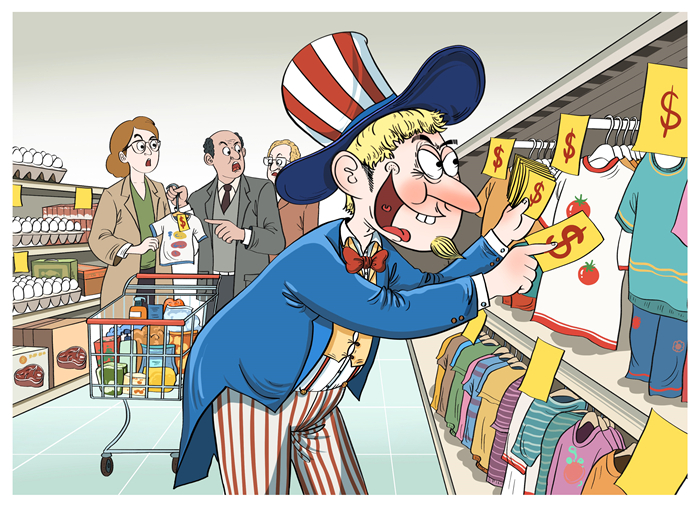
漫评美物价上涨:“悄悄起飞”
人民网-国际频道 原创稿· 2025-08-15 10:11
Group 1 - The impact of U.S. government tariff policies is increasingly affecting the daily lives of American citizens, with about half of Americans citing high grocery prices as a major source of stress [1] - The price effects of the tariff policies have become more apparent, with prices remaining relatively stable in the spring but beginning to rise in May and continuing to increase in June [1] - Prices for goods typically produced outside the U.S., such as appliances, furniture, and toys, have all seen increases [1] Group 2 - Rising prices are causing significant stress for American consumers, with individuals expressing frustration over constantly changing prices, particularly for fruits [1]
Kesko Oyj (KKOYF) H1 2025 Earnings Conference Call Transcript
Seeking Alpha· 2025-07-22 11:18
Group 1 - The core message of the Q2 2025 release call is steady profit development and a slower-than-expected turnaround in the construction cycle [2] - The agenda includes a presentation by the President and CEO, Jorma Rauhala, followed by a Q&A session [2] - Key participants in the call include division presidents for Grocery Trade, Building and Technical Trade, and Car Trade, as well as the CFO [2][3] Group 2 - The call is hosted in a virtual format, welcoming participants to Helsinki [2] - All materials related to Q2 can be accessed on the company's investor relations website [2]

脉速跨境丨TikTok墨西哥美妆个护爆火;亚马逊执行官对食品杂货市场看好
Sou Hu Cai Jing· 2025-05-26 06:25
Group 1 - TikTok Shop in Mexico has seen explosive growth in beauty and personal care sales, with a total of 255,000 items sold in April, representing a month-on-month increase of 83.9% [2] - The launch of TikTok's e-commerce in Mexico has led to over 120,000 beauty-related promotional videos by local influencers, significantly enhancing content conversion rates [2] - Amazon's CEO Andy Jassy expressed optimism about the grocery market, noting that Whole Foods' growth is outpacing the overall grocery industry, with grocery sales exceeding $100 billion last year [3][5] Group 2 - Creality's 3D printers have been sold in 192 countries, with over 5.5 million units sold and annual revenue exceeding $1 billion, establishing it as a leading global manufacturer [3][7] - The opening of the international cargo route from Hefei to Liège is expected to handle over 23,000 tons of cargo annually, enhancing logistics for cross-border e-commerce [8][10] - JD Logistics has launched the "Mangrove Ecological Restoration Plan 2.0" in collaboration with environmental organizations, aiming to build a global network for marine environmental protection [11][13]