丹参

Search documents
昆仑山下瓜果香
Xin Lang Cai Jing· 2026-02-14 18:45
Core Viewpoint - The article highlights the transformation of a pastoral area into a thriving agricultural and tourism hub, showcasing the successful cultivation of tropical fruits and medicinal herbs in a previously barren landscape, driven by local government support and community engagement [1][2][3] Group 1: Agricultural Development - The local government has implemented a series of supportive policies for facility agriculture, including financial support, technical training, and market connections, significantly boosting the enthusiasm of local farmers [2] - The variety of crops has expanded to include peaches, cherries, grapes, watermelons, strawberries, and dragon fruits, with medicinal herbs like white atractylodes, yellow gentian, and others covering over 5,000 acres [2] - The community's income has increased due to the cultivation of high-value agricultural products, leading to improved living standards [2] Group 2: Tourism Growth - The area is becoming a popular tourist destination due to the establishment of high-end accommodations and the filming of popular variety shows, marking a shift from its previous status as an under-visited location [2] - The local government is focusing on promoting unique agricultural products, such as "Yim牧场羊肉" and "Yim牧场昆仑雪菊," as part of a strategy to enhance the region's agricultural brand and expand its market reach [2] Group 3: Future Prospects - Plans are in place to further expand the cultivation of dragon fruits and snow chrysanthemums, with an emphasis on quality to enhance product reputation and marketability, including international sales [3]
政策滴灌产业兴旺
Xin Lang Cai Jing· 2026-01-19 22:17
Group 1 - The core idea of the articles reflects the transformation of agriculture in Wanrong County over the past five years, emphasizing the shift from scattered small-scale farming to a more organized and technology-driven agricultural industry [1][2] - The agricultural development has focused on five major sectors: grain, fruit, mushrooms, traditional Chinese medicine, and livestock, achieving significant improvements in productivity and efficiency [1][2] - The implementation of high-standard farmland has led to a stable annual grain production target of 400 million jin, with a focus on increasing yield and profitability rather than merely maintaining acreage [1] Group 2 - The county has adopted a circular agriculture model, turning agricultural waste into valuable resources, such as using apple branches to produce mushroom cultivation sticks, resulting in a scale of 40 million sticks and the establishment of 15 standardized production centers [2] - The establishment of a standardized base for traditional Chinese medicine has expanded from scattered cultivation to a 100,000-acre standardized base, enhancing local processing and increasing farmers' income [2] - The livestock sector has seen rapid growth with the establishment of standardized breeding bases, successfully entering the Hong Kong and Macau markets, thereby extending the industrial chain and increasing added value [2] Group 3 - Looking ahead, the company aims to modernize agriculture by leveraging digital technologies such as IoT, big data, and e-commerce, transitioning from traditional farming to smart farming [2] - The agricultural industry is expected to expand beyond single-function farming to include processing, circulation, tourism, culture, and health, creating new business models and growth drivers [2] - The commitment to rural revitalization is emphasized, with confidence in a brighter future for Wanrong agriculture supported by strong agricultural policies [2]
年终话“三农”丨宜居又宜业 乡村绘新卷——2025年美丽乡村建设一线观察
Xin Lang Cai Jing· 2025-12-26 16:59
Core Viewpoint - The article emphasizes the importance of building livable and workable beautiful rural areas, reflecting the aspirations of millions of farmers for a better life and environment [1] Group 1: Agricultural Development - The central government has prioritized the improvement of rural living environments and ecological governance in agriculture, leading to significant enhancements in rural ecological conditions and the promotion of beautiful countryside construction [1] - The implementation of smart farming technologies, such as soil sensors and AI monitoring systems, has increased land utilization rates from below 90% to 95% and reduced water and fertilizer usage by 15% to 25% [1] - The current fertilizer utilization rate stands at 42.6%, while the comprehensive utilization rate of livestock and poultry manure has reached 80.1% [1] Group 2: Environmental Improvement - The national rural sewage treatment rate has exceeded 51%, doubling since the end of the 13th Five-Year Plan, with over 98% of major rural black and odorous water bodies being treated [1] - The implementation of the "toilet revolution" has significantly improved sanitation and living conditions in rural areas, enhancing the overall quality of life for residents [1] Group 3: Economic Development - The article highlights the emergence of rural tourism and the development of cultural homestays as a means to boost local economies, with some villages seeing tourism revenue account for over 60% of per capita income [1] - The integration of agriculture with culture, tourism, and other industries is being actively promoted to create new economic opportunities in rural areas [1]
新疆于田县沙产业实验基地中药材迎来丰收
Zhong Guo Xin Wen Wang· 2025-12-08 05:53
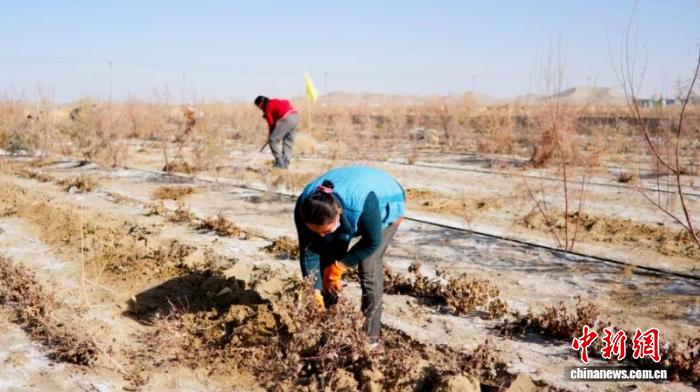
Core Insights - The Xinjiang Yutian County is experiencing a harvest of various traditional Chinese medicinal herbs at its sand industry experimental base, showcasing a successful integration of ecological and economic development through the "ecology + traditional Chinese medicine industry" model [1] Group 1: Development and Implementation - Yutian County has developed 360,000 acres for traditional Chinese medicinal herb cultivation, including 240,000 acres of Cistanche, 80,000 acres of rose, and 40,000 acres of other specialty herbs like Isatis indigotica and licorice [2] - The county has confirmed that over 20 varieties of medicinal herbs are suitable for the local sandy soil, indicating significant potential for expansion and promotion of these crops [2] Group 2: Agricultural Techniques and Innovations - The implementation of standardized planting models for "sand land medicinal fields" will be expanded, utilizing drip and spray irrigation technologies to enhance ecological management and increase income [2] - Innovative planting methods combining trees and shrubs with medicinal herbs have diversified the types and structures of medicinal herb cultivation [2]

山东发布应对连阴雨天气加强中药材生产技术指导意见
Qi Lu Wan Bao· 2025-10-24 08:00
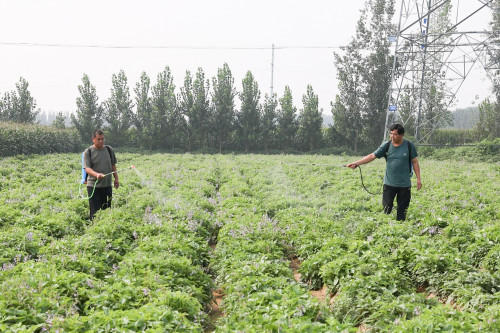
Core Viewpoint - The Shandong Provincial Department of Agriculture and Rural Affairs has issued guidelines to mitigate the adverse effects of continuous rainy weather on traditional Chinese medicine (TCM) production, aiming to enhance quality and yield while ensuring stable supply [1] Group 1: Impact of Weather on TCM Production - Continuous rainy and low-light conditions since mid-September have led to excessive soil moisture, waterlogging, and root damage, negatively affecting the growth and quality of TCM, particularly for root medicines like Salvia miltiorrhiza, Panax quinquefolius, and Scutellaria baicalensis [1] - The current priority in field management is to ensure effective drainage to prevent root rot due to prolonged waterlogging [1] Group 2: Agricultural Practices for Recovery - Timely soil cultivation and aeration are essential once soil moisture is suitable, with a focus on breaking surface compaction to enhance root respiration and growth [2] - Enhancing plant resilience is crucial, particularly for deep-rooted medicines like Salvia miltiorrhiza, which have suffered from root damage; foliar fertilization with potassium dihydrogen phosphate and plant growth regulators is recommended [2] - Controlling pests and diseases through timely removal of dead plants and appropriate pesticide application is vital to maintain the quality of TCM [2] Group 3: Harvesting and Processing Guidelines - Harvesting times for deep-rooted medicines should be flexible based on field conditions, with specific recommendations for Salvia miltiorrhiza and Panax quinquefolius to prevent quality degradation due to waterlogging [3] - Post-harvest handling should avoid stacking and instead utilize well-ventilated areas for drying, with a preference for mechanical drying to control moisture levels effectively [3]
邹平市韩店镇:跨村联建“聚合力” 乡村振兴“加速跑”
Qi Lu Wan Bao Wang· 2025-09-11 13:23
Core Insights - The article emphasizes the importance of collaborative development in rural industries, highlighting the success of various agricultural initiatives in the Han Dian Town of Zhou Ping City [1][8] Group 1: Agricultural Initiatives - The establishment of a cooperative for egg production has led to a significant increase in output, with expectations to reach over 2000 kg per day within a month [9] - The cooperative integrates resources from nine villages, utilizing central government subsidies to enhance collective income for both the village and its residents [9] - A 100-acre traditional Chinese medicine planting base has been developed, focusing on the cultivation of Danshen, which has a high market demand and profitability [3][4] Group 2: Economic Impact - The cooperative model has resulted in a projected profit of approximately 3000 to 4000 yuan per acre for Danshen cultivation, with a total yield of over 2000 kg per acre [3] - The fly locust farming initiative has been established across seven villages, with an expected yield of nearly 1 kg per square meter per harvest, generating significant economic benefits [6] - The collaborative approach not only enhances agricultural productivity but also provides income opportunities for elderly residents, thereby optimizing local human resources [4]
山东鄄城:中药材产业开出增收致富新“药方”
Zhong Guo Jing Ji Wang· 2025-08-06 07:54
Group 1 - The traditional Chinese medicine (TCM) industry is a key and advantageous industry in Juancheng County, Shandong Province, with a focus on the cultivation, processing, and sales of medicinal herbs [3] - The Shunwangcheng TCM professional market is the only national-level TCM market in Shandong Province, facilitating a comprehensive industrial chain that integrates cultivation, production, sales, storage, logistics, and research [3] - In the first half of this year, the transaction volume of the Juancheng TCM market reached 6.05 billion yuan, with an increase of 18,000 mu in TCM planting area and the establishment of five high-standard planting bases [3] Group 2 - Shandong Shun Agricultural Development Co., Ltd. has leased 900 mu of land for TCM cultivation, focusing on varieties like Ophiopogon japonicus and Scutellaria baicalensis, which are well-suited for local soil and have good market prices [2] - The company ensures stable sales channels through long-term partnerships with TCM markets in Hebei and Anhui, resulting in an average annual income increase of over 20,000 yuan for local villagers [2] - The company also processes and exports TCM products to countries like Japan and South Korea, enhancing its market reach [2] Group 3 - Individual farmer Cha Shibang cultivates 43 mu of medicinal herbs, employing crop rotation methods to enhance soil fertility and reduce pest issues, achieving profits of 3,000 to 10,000 yuan per mu [1] - The scientific crop rotation model used by farmers significantly improves land productivity and sustainability [1] - The integration of TCM cultivation with traditional farming practices contributes to the overall economic development of the region [1]
潍坊安丘:“桃药共生”结硕果 富民产业悄然兴
Qi Lu Wan Bao Wang· 2025-07-16 15:28
Core Insights - The innovative "under-forest economy" model in Jinzhongzi Town has significantly enhanced agricultural productivity and income for local farmers, demonstrating a successful integration of traditional fruit farming with medicinal herb cultivation [1][2][3] Group 1: Agricultural Innovation - The "under-forest economy" model allows for efficient land use by combining peach cultivation with the planting of medicinal herbs, resulting in a dual-income stream for farmers [1] - The integration of peach trees and medicinal herbs creates a symbiotic root system, enriching the fruit with trace elements and increasing consumer appeal [1] Group 2: Economic Impact - Each acre of land with the combined planting of medicinal herbs can generate an additional income of 3,000 yuan, leading to an annual increase of 400,000 yuan for a 200-acre farm [1] - The cooperative model involving local party branches, family farms, and farmers ensures a fair distribution of profits, with 60% going to farmers, 20% to the farm, and 20% to the village collective [2] Group 3: Community Engagement - Over 20 villages have engaged in planting medicinal herbs on idle land, involving more than 200 households and covering over 200 acres [2] - The initiative not only improves the living environment but also contributes over 40,000 yuan annually to village collectives, enhancing community satisfaction [2] Group 4: Future Development - Jinzhongzi Town is expanding its agricultural initiatives by developing the Dou Dan industry and planning to increase the cultivation area by over 1,000 acres in the coming years [2][3] - The town is also focusing on establishing new types of agricultural entities and promoting brand-driven agricultural efficiency and farmer income growth [2][3]
宁夏银川:药田绿意浓 富民产业兴
Zhong Guo Xin Wen Wang· 2025-07-10 16:13
Core Viewpoint - The article highlights the successful transformation of Kongque Village in Ningxia, focusing on the cultivation of traditional Chinese medicinal herbs, particularly Atractylodes macrocephala and Saposhnikovia divaricata, which are expected to bring significant economic benefits and support rural revitalization efforts [1][2]. Group 1: Economic Potential - The medicinal herb market is characterized by high demand and limited supply, with suitable cultivation areas primarily in Gansu, Anhui, and Ningxia [1]. - The cooperative has expanded its cultivation area from 7 acres in 2024 to 120 acres, with 100 acres dedicated to Atractylodes macrocephala and approximately 10 acres each for Saposhnikovia divaricata and Salvia miltiorrhiza [1][2]. Group 2: Employment and Community Impact - The cultivation project has created local employment opportunities, averaging 45 workers daily since planting began on March 23, allowing villagers to earn income close to home [2]. - The dual benefit of stable land transfer income and additional earnings from labor has resulted in a win-win situation for the villagers [2]. Group 3: Future Plans and Growth - The cooperative aims to guide more villagers into medicinal herb cultivation, planning to increase Atractylodes macrocephala planting to 300 acres within three years, with unified procurement, processing, and sales [2]. - The anticipated yield for Atractylodes macrocephala is between 3,000 to 3,500 pounds per acre, with expected average earnings exceeding 12,000 yuan per acre, significantly surpassing traditional crop returns [2].
成都一诊所“50元输液3天”促销?当地通报
券商中国· 2025-06-21 09:56
Core Viewpoint - A clinic in Chengdu's Jinniu District was found to have unlawfully advertised a promotion for intravenous therapy at a price of 50 yuan for three days, leading to an investigation by the local market supervision bureau [1][2]. Group 1: Incident Overview - A video surfaced online showing a clinic in Chengdu's Jinniu District promoting "50 yuan for three days of intravenous therapy," which was confirmed to be true by the local market supervision bureau [1]. - The promotion occurred around March 15, and the clinic did not obtain the required medical advertising review certificate before posting the advertisement [2]. Group 2: Regulatory Response - The Chengdu Jinniu District Market Supervision Administration has initiated an investigation into the clinic for violating the Medical Advertising Management Measures and the Advertising Law of the People's Republic of China [2]. - Following the investigation, the clinic's management stated that the promotion was intended to provide discounts to the public and that they have ceased advertising the promotion after being reported [2]. Group 3: Clinic's Position - The clinic's staff clarified that treatment decisions are based on individual patient needs, and not all patients require intravenous therapy [2]. - The clinic's operator emphasized that the promotion was aimed at benefiting the public and that they are cooperating with the market supervision authorities regarding the matter [2].