达妥昔单抗β注射液

Search documents
28省份明确:商保创新药“进院”参照“国谈药”
第一财经· 2026-01-08 13:50
Core Viewpoint - The article discusses the implementation of the first commercial insurance innovative drug directory in China, highlighting the challenges and opportunities for innovative drugs to enter hospitals and outpatient settings under the new policies [3][4][6]. Group 1: Policy Implementation and Impact - The "three exclusions" policy allows innovative drugs included in the commercial insurance directory to be billed separately for inpatient cases, not affecting the bundled payment limits [3][6]. - As of January 8, at least 28 provinces have issued notifications regarding the execution of the national drug directory and the commercial insurance innovative drug directory [6]. - The sales data from the National Healthcare Security Administration indicates that from January 1 to 6, over 15 medical institutions recorded sales of commercial insurance innovative drugs, although most had already stocked these drugs prior to the directory's release [6][7]. Group 2: Challenges in Outpatient Use - The outpatient use of commercial insurance innovative drugs remains largely unregulated, with no clear incentives established for outpatient prescriptions [4][10]. - The article notes that while inpatient use may be supported by the "three exclusions" policy, outpatient scenarios face significant barriers, including a lack of payment guarantees from commercial insurance products [10][11]. - The need for clearer guidelines and incentives for outpatient use is emphasized, as many innovative drugs, particularly for cancer and Alzheimer's treatment, are typically administered in outpatient settings [10][11]. Group 3: Market Dynamics and Future Outlook - The article suggests that the success of commercial insurance innovative drugs in hospitals will depend on balancing interests among stakeholders and creating differentiated plans based on local healthcare financing conditions [11][12]. - There is a call for establishing specific standards for exceptional case applications to ensure that patients using commercial insurance innovative drugs are not competing for limited resources with those using nationally negotiated drugs [12][13]. - The potential for hospitals to receive more definitive incentives through "exceptional payments" is highlighted, as this could significantly impact the market volume of commercial insurance innovative drugs [13][14]. Group 4: Retail Pharmacy Integration - The National Healthcare Security Administration has proposed supporting retail pharmacies in stocking drugs from the commercial insurance innovative drug directory, which could enhance access to these medications [15][16]. - However, concerns remain regarding how pricing negotiations and reimbursement rules will be implemented, which could affect the willingness of commercial insurance companies to include these drugs in their coverage [15][16]. - The article stresses the importance of aligning the commercial insurance innovative drug directory with existing healthcare policies to build confidence among healthcare providers in prescribing these medications [16].


28省份明确商保创新药“进院”参照“国谈药” 细则仍待确定
Di Yi Cai Jing· 2026-01-08 12:59
Core Viewpoint - The implementation of the first version of the commercial insurance innovative drug directory has begun, with significant implications for the use of innovative drugs in hospitals and outpatient settings, particularly under the "three exclusions" policy [1][3][7]. Group 1: Policy Implementation and Impact - The "three exclusions" policy allows innovative drugs included in the commercial insurance directory to be reimbursed separately from the bundled payment for hospital cases, which is seen as a major benefit for the inclusion of these drugs in hospitals [1][3]. - As of January 8, at least 28 provinces have issued notifications to implement the 2025 version of the national drug directory and the commercial insurance innovative drug directory, indicating a broad acceptance of these policies [3][4]. - The sales data from the National Medical Insurance Administration shows that from January 1 to 6, over 15 medical institutions recorded sales of commercial insurance innovative drugs, although most of these were completed before the directory was published [3][4]. Group 2: Challenges in Drug Utilization - There is uncertainty regarding the allocation of special case approvals for commercial insurance innovative drugs, as these approvals are limited to a small percentage of total cases, which may restrict access for patients [8][9]. - The outpatient use of commercial insurance innovative drugs remains largely unregulated, with no existing incentives or policies to support their prescription in outpatient settings [6][12]. - The lack of clear guidelines for the inclusion of commercial insurance innovative drugs in hospital formularies is hindering their adoption compared to nationally negotiated drugs [4][5]. Group 3: Market Dynamics and Future Directions - The market for commercial insurance innovative drugs is expected to grow, but many stakeholders remain cautious due to unresolved issues regarding prescription and payment processes [2][6]. - There is a call for clearer standards and collaboration among departments to ensure the effective use of commercial insurance innovative drugs without being subject to self-payment rate assessments [8][9]. - The potential for outpatient pharmacies to stock commercial insurance innovative drugs is being explored, with some regions already supporting this initiative, but concerns about the integration of outpatient prescriptions into hospital billing remain [11][12].
28省份明确商保创新药“进院”参照“国谈药”,细则仍待确定
Di Yi Cai Jing· 2026-01-08 12:34
Core Insights - The commercial insurance innovative drug directory has been officially implemented since January 1, with the inclusion of drugs like Daratumumab β injection, but outpatient incentives for these drugs remain in a policy vacuum [1][2] - The "three exclusions" policy is seen as a significant but challenging measure to facilitate the entry of commercial insurance innovative drugs into hospitals [1][3] - There is a lack of clarity regarding the implementation details for the entry of commercial insurance innovative drugs into hospitals, which limits the ability of medical institutions to stock a wider variety of these drugs [4][5] Group 1 - The first version of the commercial insurance innovative drug directory was launched on January 1, and it includes specific drugs that can be reimbursed separately from the bundled payment system [1] - As of January 8, at least 28 provinces have mandated local medical institutions to hold pharmacy meetings by the end of February to discuss the integration of commercial insurance innovative drugs [2] - The "three exclusions" policy aims to allow innovative drugs to be used in hospitals without affecting the bundled payment system, but its practical implementation remains uncertain [3][7] Group 2 - The entry of commercial insurance innovative drugs into hospitals can either be through inclusion in special drug directories or by facilitating their hospital entry pathways [3] - Recent data shows that from January 1 to 6, over 15 medical institutions recorded sales of commercial insurance innovative drugs, although most of these were pre-configured before the directory's release [3][4] - The sales of commercial insurance innovative drugs are highly concentrated in a few products, particularly those used for Alzheimer's treatment [3] Group 3 - There are currently no specific assessment indicators for the hospital configuration of commercial insurance innovative drugs, unlike the established metrics for national negotiated drugs [4] - Some provinces have clarified that the use of national negotiated drugs will not be included in certain performance assessment metrics for public medical institutions, but it is unclear if this applies to commercial insurance innovative drugs [5] - The transition from hospital entry to patient medication involves prescription and payment processes, which currently face significant bottlenecks, especially in outpatient settings [6] Group 4 - The "three exclusions" policy is expected to be crucial for expanding the hospital sales of commercial insurance innovative drugs, but balancing interests among stakeholders is necessary for effective implementation [7] - A common approach to support the use of innovative drugs in hospitals is to open a "special case negotiation" green channel, but the limited application quota raises concerns about accessibility for commercial insurance innovative drugs [8] - The implementation of "exclusion payment" mechanisms is seen as a more definitive incentive for hospitals to use innovative drugs, but current policies primarily favor national negotiated drugs [9] Group 5 - The commercial insurance innovative drug directory's initial week saw sales primarily occurring in medical institutions, but the market potential remains limited due to the nature of the drugs included [11] - There is a push for retail pharmacies to stock commercial insurance innovative drugs, but concerns about prescription practices and reimbursement processes persist [12] - Future efforts should focus on aligning the commercial insurance innovative drug directory with the national insurance system to enhance confidence in the use of these drugs in hospitals [12]
今起北京执行新版医保商保药品“双目录”
Xin Lang Cai Jing· 2026-01-01 03:18
Core Viewpoint - The implementation of the new national basic medical insurance drug list and the first commercial health insurance innovative drug list in Beijing on January 1, 2026, introduces 114 new drugs into the basic insurance reimbursement scope and 19 innovative drugs into the commercial insurance list, significantly benefiting patients [1][2]. Group 1: New Drug Inclusion - The new national medical insurance directory includes a total of 3,253 drugs, with 114 new drugs added, covering critical treatment areas such as cancer, chronic diseases, and rare diseases [1]. - Notable new drugs include the anti-cancer drug Lurbinectedin for triple-negative breast cancer, the diabetes medication Tirzepatide, and treatments for rare diseases like Langerhans cell histiocytosis [1]. Group 2: Commercial Insurance Drug List - The commercial insurance list includes 19 innovative drugs, focusing on high innovation, significant clinical value, and substantial patient benefits beyond the basic insurance coverage [1]. - Included innovative treatments are CAR-T cell immunotherapy products, biological agents for Alzheimer's disease, and specific drugs for Gaucher disease and short bowel syndrome [1]. Group 3: Patient Impact - An 8-year-old boy with high-risk neuroblastoma became one of the first beneficiaries of the new policy, with his treatment costs significantly reduced from tens of thousands of yuan annually to being partially covered by commercial insurance [2]. - The inclusion of GD2 antibody therapy in the commercial insurance list allows families to shift from full out-of-pocket expenses to insurance reimbursement, alleviating financial burdens [2]. Group 4: Transition Period and Adjustments - A 6-month transition period is established for drugs removed from the old national medical insurance directory, allowing them to still be reimbursed until June 30, 2026 [3]. - The Beijing Medical Insurance Bureau has mandated timely adjustments in drug supply at medical institutions and updates to the insurance information system to ensure patient access to necessary medications [3].
6款罕见病药物纳入首版商保创新药目录,如何吸引更多商保承接
Di Yi Cai Jing· 2025-12-10 09:38
Core Insights - The newly released commercial insurance innovative drug directory includes 19 drugs, with 6 specifically for rare diseases, addressing conditions such as neuroblastoma and Gaucher disease [1][3] - The directory aims to provide a reference for multi-tiered medical insurance systems, but attracting more commercial insurance participation remains a challenge [1][6] Summary by Sections Rare Disease Drug Inclusion - The innovative drug for short bowel syndrome, injection of teduglutide, is set to be the first GLP-2 analog approved in China, filling a long-standing gap in treatment options [3][4] - Gaucher disease, affecting approximately 3,000 patients in China, now has a locally developed enzyme replacement therapy, injection of velaglucerase alfa, included in the directory [5] Challenges in Commercial Insurance - The increasing pressure on basic medical insurance funds makes it unrealistic to rely solely on them for rare disease drug coverage, highlighting the need for commercial insurance products like Huiminbao [6][8] - Huiminbao has made strides in covering certain rare disease drugs, but the number of drugs and policies available for rare diseases still needs improvement [8] Future Directions - Experts suggest that a multi-tiered approach involving basic insurance, commercial insurance, and charitable support is essential for effective rare disease drug coverage [9][10] - The focus should shift from post-reimbursement to comprehensive service and long-term health management for rare disease patients [10]

全国首版商业保险创新药品目录发布,“深圳惠民保”率先落地
Xin Lang Cai Jing· 2025-12-08 12:14
Core Insights - The first national commercial insurance innovative drug directory for 2025 has been released, including 19 high-value innovative drugs covering key treatment areas such as oncology, rare diseases, and neurodegenerative diseases [1][3][4] - Shenzhen's "Shenzhen Huiminbao" has proactively included all 19 innovative drugs in its coverage for 2025, significantly reducing out-of-pocket expenses for insured residents when using these drugs [1][2][3] Summary by Sections National Drug Directory - The newly published commercial insurance innovative drug directory serves as a supplement to basic medical insurance, focusing on drugs with high innovation, significant clinical value, and substantial patient benefits that exceed the coverage of basic medical insurance [1][4] - Included drugs feature CAR-T therapies for cancer treatment, medications for rare diseases like Gaucher disease, and drugs for Alzheimer's disease, which has garnered significant public attention [1][4] Shenzhen Huiminbao - "Shenzhen Huiminbao" has achieved full coverage of the 19 innovative drugs, providing a crucial supplement to the existing medical insurance framework in Shenzhen [1][4] - The insurance plan supports a "one-stop settlement" service, alleviating the financial burden on insured individuals when seeking medical treatment [2][4] - The program has been operational for three years, maintaining a public welfare characteristic with no restrictions on age, occupation, or health status, allowing for an annual premium of 88 yuan for coverage exceeding 4 million yuan [5] - As of 2025, the number of insured individuals has surpassed 6.15 million, with a total of over 18 million insured instances in three years [5]
一图看懂首版商保创新药目录,含5款“天价抗癌药”
Di Yi Cai Jing· 2025-12-07 22:40
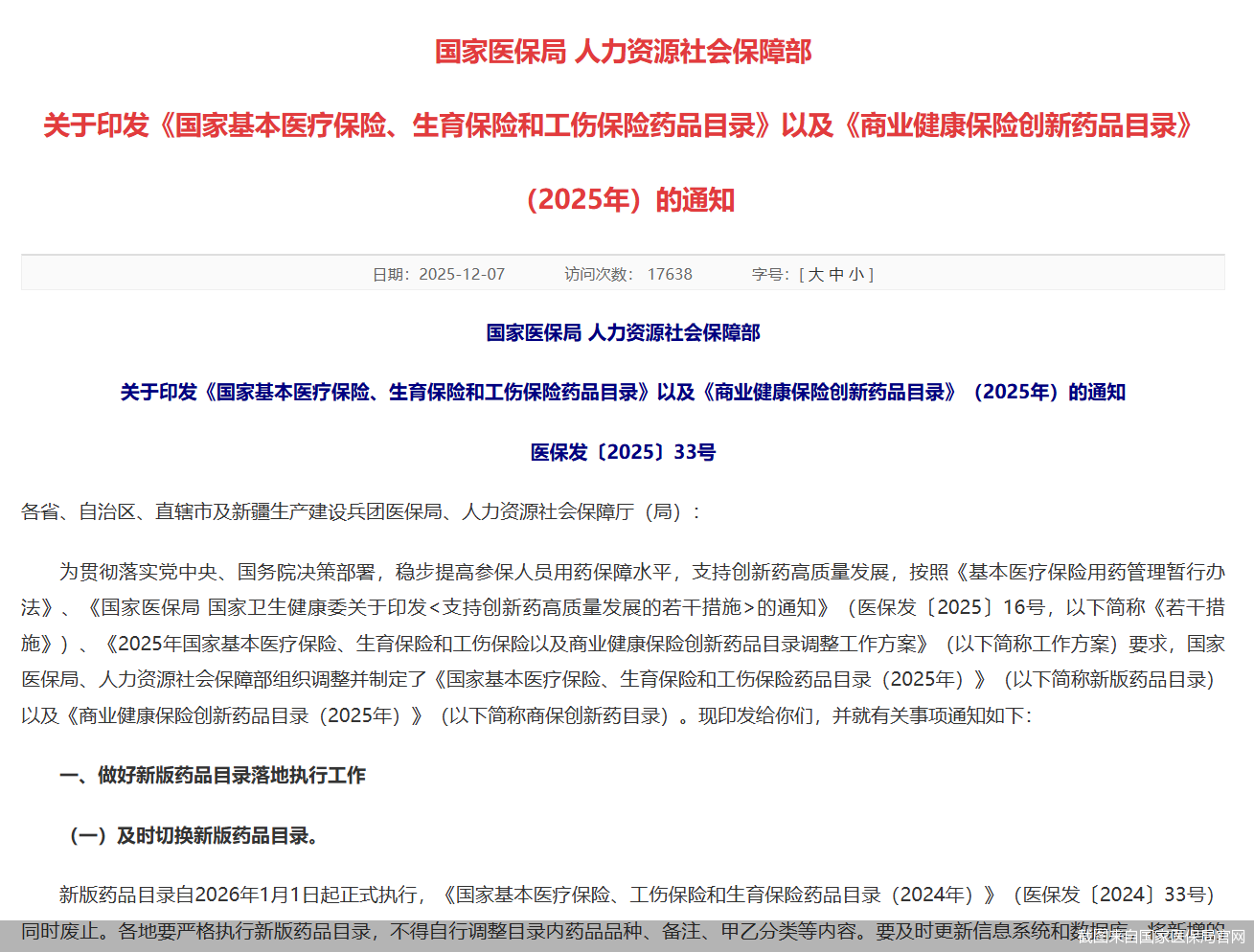
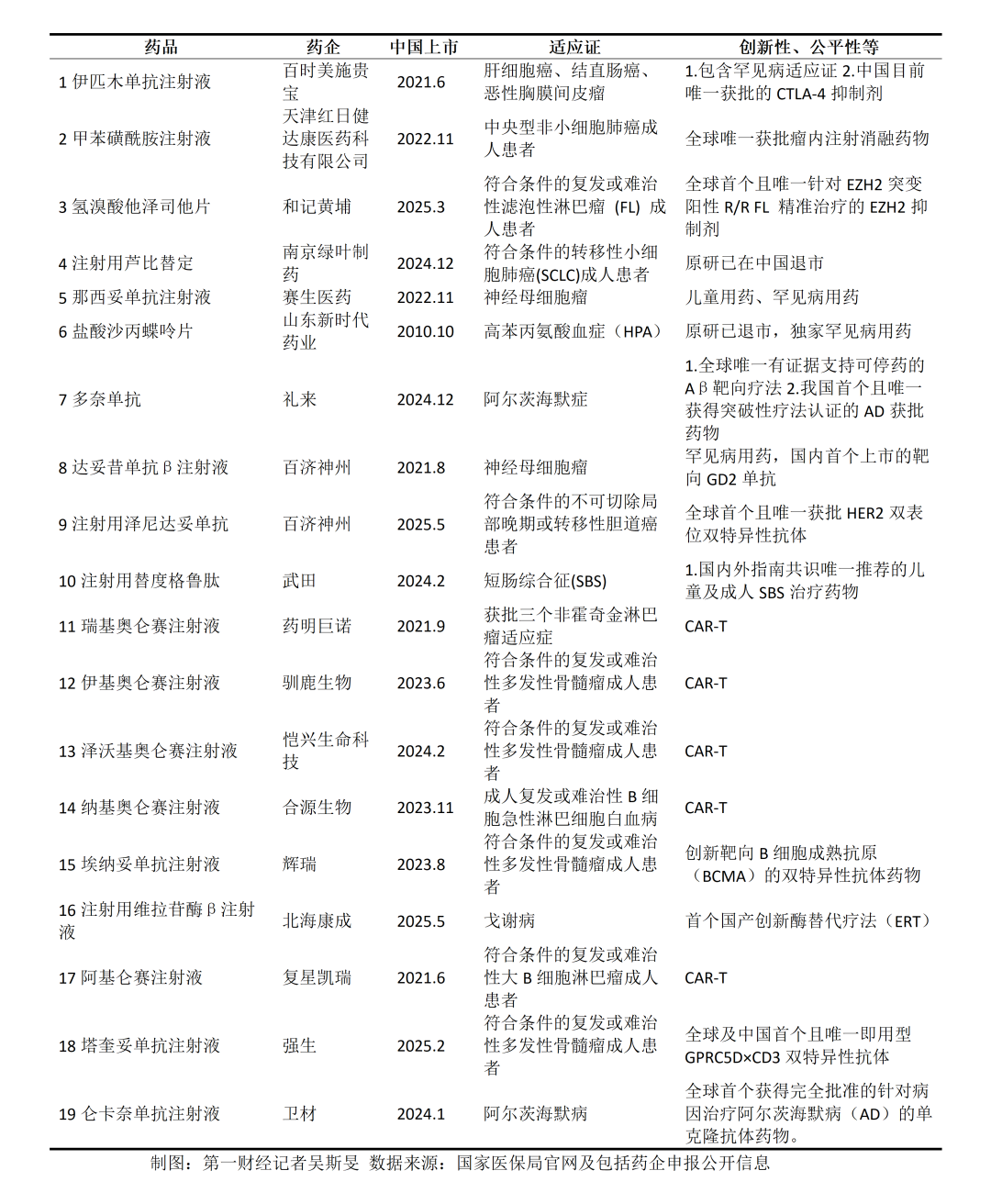
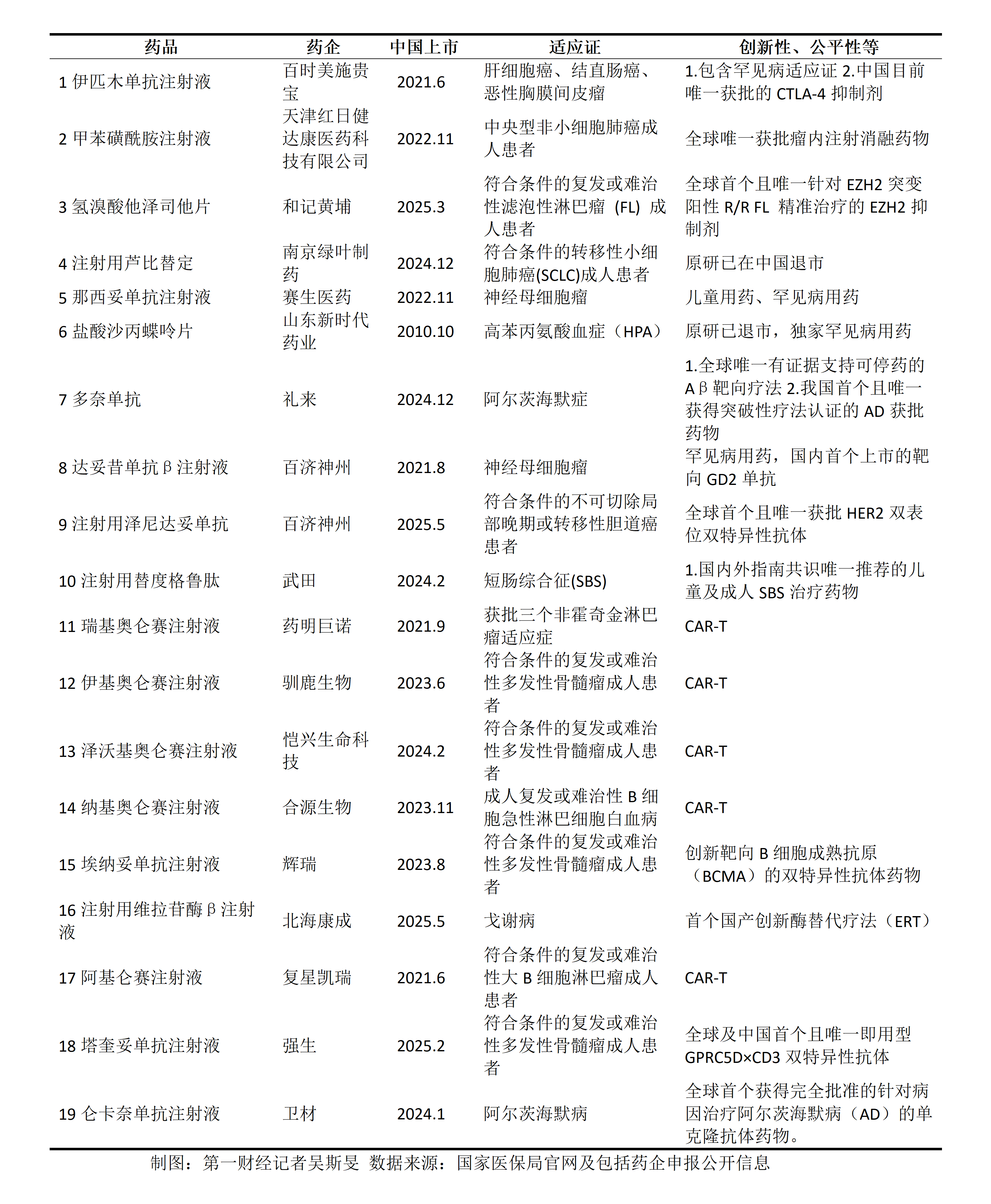
Core Insights - The first version of the commercial insurance innovative drug directory has been released, including 19 new drugs from 18 innovative pharmaceutical companies, with a roughly equal share of domestic and imported drugs [1][2] - Approximately 70% of the drugs included are oncology treatments, featuring five high-cost CAR-T products, indicating a significant focus on cancer therapies [1][8] - The inclusion of rare disease medications and Alzheimer's treatments in the directory is expected to enhance commercial insurance payment opportunities and favorable policies for hospital access [1][10] Summary by Category Drug Inclusion - A total of 19 drugs have been included in the first commercial insurance innovative drug directory, with a selection rate of about 16%, aligning with industry expectations [4][6] - The directory features a mix of oncology drugs, rare disease treatments, and Alzheimer's medications, with a notable emphasis on high-priced innovative drugs [1][8] Market Dynamics - The directory's limited number of drugs (around 20) is seen as a strategic move to facilitate implementation and avoid complications in local insurance products [6][10] - The commercial insurance market is expected to leverage the directory to enhance patient access to high-value drugs, particularly in the oncology sector [9][11] Regulatory and Policy Framework - The National Healthcare Security Administration (NHSA) encourages local insurance departments to support the integration of the commercial insurance innovative drug directory into retail pharmacies and monitor pricing [7][14] - The directory aims to provide a reference for various commercial insurance entities, allowing them to negotiate with innovative drug companies without the need for exclusive selections [11][14] Patient Impact - The drugs listed in the directory are characterized by a small patient base or specific indications, minimizing the risk of clinical misuse and aligning with commercial insurance risk management strategies [8][13] - The directory includes several drugs for rare diseases, which are expected to fill clinical gaps and provide essential treatments previously unavailable in China [12][13]
2025国谈结果公布:“药王”进医保 5款百万抗癌药进商保
经济观察报· 2025-12-07 12:13
Core Viewpoint - The recent adjustments to the national basic medical insurance directory and the introduction of the commercial insurance innovative drug directory mark significant steps towards enhancing access to innovative treatments in China, particularly for high-cost therapies like CAR-T drugs [2][6]. Summary by Sections National Basic Medical Insurance Directory Adjustments - A total of 114 new drugs were added to the basic medical insurance directory, including 50 first-class innovative drugs [2]. - The total number of drugs in the basic medical insurance directory has increased to 3,253, comprising 1,857 Western medicines and 1,396 traditional Chinese medicines [3]. - New inclusions cover various fields such as oncology, chronic diseases, mental health, and pediatric medications, with several rare disease treatments also added [3]. Commercial Insurance Innovative Drug Directory - The commercial insurance innovative drug directory aims to include high-innovation drugs that exceed the basic insurance scope but offer significant clinical value and patient benefits [6]. - A total of 121 drugs underwent formal review for the commercial insurance directory, with 24 entering price negotiation, ultimately resulting in 19 drugs from 18 companies being included [6]. - Notable inclusions are five CAR-T therapies, which previously cost over one million yuan per injection, making them unaffordable for many patients [6]. Performance of Pharmaceutical Companies - Several leading pharmaceutical companies have reported their successes in the 2025 national medical insurance negotiations, with Heng Rui Pharmaceutical having 20 drugs included, contributing 7.554 billion yuan to their total revenue [5]. - Innovent Biologics announced that 7 of its new drugs were included in the updated national medical insurance directory, with 12 of its 17 innovative drugs now covered [5]. Specific Drug Inclusions - The directory includes drugs for Alzheimer's disease, such as the monoclonal antibodies from Eisai and Eli Lilly, and several rare disease treatments [7]. - Some high-profile drugs, like Novo Nordisk's semaglutide and Bristol-Myers Squibb's nivolumab, were not included despite passing the formal review [8]. Implementation Timeline - The new directory is set to be officially implemented nationwide on January 1, 2026 [9].



首版商保创新药目录出炉:入选药有四大共性,含5款“天价抗癌药”
Di Yi Cai Jing· 2025-12-07 11:47
Core Insights - The first version of the commercial insurance innovative drug directory has been released, including 19 new drugs from 18 innovative pharmaceutical companies, with a roughly equal share of domestic and imported drugs [1][2] - The directory focuses heavily on oncology drugs, which account for 70% of the list, including five CAR-T products, and also includes rare disease medications and Alzheimer's treatments [1][11] Summary by Category Drug Inclusion - A total of 121 drug generic names passed the review for the commercial insurance innovative drug directory, with only 19 drugs ultimately selected, resulting in an acceptance rate of approximately 16% [6] - The directory includes a variety of drugs, with a significant number targeting rare diseases and high-cost innovative treatments [12][14] Market Dynamics - The commercial insurance innovative drug directory is expected to enhance the payment space for rare disease treatments and provide policy advantages for hospital access [1][11] - The directory's limited number of drugs aims to facilitate implementation, as having too many drugs could complicate market entry [8][11] Drug Characteristics - The drugs in the directory generally have a small patient base or clear indications, minimizing the risk of clinical misuse, and are often high-value innovative drugs that fill clinical gaps [11][12] - The directory includes multiple oncology treatments, particularly those for rare or difficult-to-treat cancers, which are expected to have a significant market impact [12][13] Commercial Insurance Implications - The commercial insurance innovative drug directory serves as a reference for various commercial insurance entities, allowing them to negotiate with innovative drug companies without the need for exclusive selections [14] - The directory is anticipated to support the development of multi-tiered medical insurance systems, encouraging commercial insurance companies to design new products based on the directory [16]
首版医保“双目录”出炉!新增药品超四成为一类创新药,CAR-T等19种药品进商保创新药目录
Bei Jing Shang Bao· 2025-12-07 07:26
Core Insights - The release of the 2025 National Basic Medical Insurance, Maternity Insurance, and Work Injury Insurance Drug Catalogs marks a significant step in enhancing drug accessibility and innovation in China, with a total of 114 new drugs added to the basic insurance catalog, including 50 innovative drugs, achieving an overall success rate of 88%, up from 76% in 2024 [1][5][9]. Summary by Sections Basic Medical Insurance Drug Catalog - A total of 114 new drugs were successfully added, with 50 classified as innovative drugs, reflecting an overall success rate of 88% [5][9]. - The total number of drugs in the national insurance catalog now stands at 3,253, including 1,857 Western medicines and 1,396 traditional Chinese medicines, with significant improvements in coverage for critical areas such as cancer, chronic diseases, mental health, rare diseases, and pediatric medications [5][9]. - The catalog includes drugs that fill gaps in basic insurance coverage, such as treatments for triple-negative breast cancer, pancreatic cancer, and other major diseases [9]. Commercial Health Insurance Innovative Drug Catalog - The first edition of the Commercial Health Insurance Innovative Drug Catalog includes 19 drugs, with a focus on high clinical value and innovation, particularly in oncology, rare diseases, and chronic conditions [11][12]. - Notable inclusions are CAR-T therapies and treatments for rare diseases like neuroblastoma and Gaucher disease, as well as Alzheimer's disease medications [11][12]. - The catalog emphasizes the distinction between basic insurance, which focuses on essential and proven therapies, and commercial insurance, which supports cutting-edge innovations [11][12]. Future Implications - The introduction of these catalogs is expected to enhance clinical medication standards and boost confidence in pharmaceutical R&D, ensuring better healthcare and injury treatment for the public [8]. - The ongoing adjustments to the drug catalogs reflect a commitment to improving the accessibility of innovative drugs and encouraging pharmaceutical companies to invest in research and development [10][11].