
免税商品销售

Search documents
中国中免(601888):期待内生外延并举积蓄长期势能
Xin Lang Cai Jing· 2026-04-01 08:26
Core Viewpoint - The company reported a revenue of 53.694 billion yuan for 2025, a year-on-year decrease of 4.92%, and a net profit attributable to shareholders of 3.586 billion yuan, down 15.96% year-on-year, indicating a challenging year but signs of recovery in the fourth quarter [1] Group 1: Financial Performance - The company achieved a revenue of 13.831 billion yuan in Q4 2025, reflecting a year-on-year increase of 2.81%, marking a positive turnaround in quarterly revenue growth [1] - The net profit attributable to shareholders in Q4 2025 was 534 million yuan, a significant year-on-year increase of 53.59%, with a corresponding net profit margin of 3.9%, up 1.3 percentage points year-on-year [1] - The company plans to distribute a cash dividend of 7.00 yuan per 10 shares, resulting in an annual dividend payout ratio of 40.50% [1] Group 2: Market and Sales Performance - The company recorded a revenue of 28.537 billion yuan in Hainan for 2025, a slight decrease of 1.23% year-on-year, but saw a revenue increase of 11.6% in the second half of 2025 [2] - The total sales of duty-free goods in Hainan for 2025 reached 30.38 billion yuan, down 1.8% year-on-year, but showed a positive trend since September 2025 [2] - The company capitalized on the new duty-free policies and integrated tourism with duty-free sales, enhancing its market share in Hainan [2] Group 3: Cost Management and Profitability - The company maintained a stable gross profit margin of 31.92%, with a slight year-on-year increase of 0.41 percentage points [3] - The sales expense ratio was 16.17%, showing a minor increase of 0.1 percentage points, while the management expense ratio rose to 4.11%, up 0.6 percentage points, indicating effective cost control [3] - The company reduced its inventory from 17.348 billion yuan to 15.302 billion yuan, improving inventory turnover by approximately 10% [3] Group 4: Strategic Developments - The company successfully opened all 13 city duty-free stores in Shenzhen, Guangzhou, and other locations, leveraging new duty-free policies to attract overseas consumers [4] - The company secured operating rights for 16 duty-free stores in key hubs such as Shanghai, Beijing, and Guangzhou, strengthening its market presence [4] - The acquisition of DFS's retail business in Greater China and the introduction of a strategic shareholder from LVMH are expected to enhance the company's brand strength and global supply chain influence [4] Group 5: Profit Forecast and Valuation - The company slightly adjusted its net profit forecasts for 2026 and 2027 to 5.062 billion yuan and 6.034 billion yuan, respectively, while introducing a forecast of 6.738 billion yuan for 2028 [5] - The estimated earnings per share (EPS) for 2026, 2027, and 2028 are projected to be 2.44 yuan, 2.90 yuan, and 3.24 yuan, respectively [5] - The target price for A-shares is maintained at 101.15 yuan, with a slight adjustment to the target price for H-shares to 94.31 HKD, reflecting the company's improved profitability and channel layout [5]

中国中免:期待内生外延并举积蓄长期势能-20260401
HTSC· 2026-04-01 07:25
Investment Rating - The investment rating for the company is "Buy" [7][28]. Core Views - The company, China Duty Free Group, reported a revenue of 53.694 billion RMB for 2025, a year-on-year decrease of 4.92%, with a net profit attributable to shareholders of 3.586 billion RMB, down 15.96% year-on-year. The net profit margin for the year was 6.7%, a decrease of 0.9 percentage points year-on-year [1]. - The fourth quarter of 2025 saw a revenue of 13.831 billion RMB, representing a year-on-year increase of 2.81%, marking a positive turnaround in revenue growth. The net profit for Q4 was 534 million RMB, up 53.59% year-on-year, with a net profit margin of 3.9%, an increase of 1.3 percentage points year-on-year [1]. - The company plans to distribute a cash dividend of 7.00 RMB per 10 shares, resulting in a dividend payout ratio of 40.50% for the year [1]. - The report indicates that the performance of Hainan's offshore duty-free sales has bottomed out and is recovering, supported by future mergers and acquisitions and organic growth, which will further solidify the company's leading position in the duty-free market [1]. Revenue Performance - In 2025, the company achieved revenue of 28.537 billion RMB in Hainan, a year-on-year decrease of 1.23%. However, in the second half of 2025, revenue in Hainan increased by 11.6% year-on-year [2]. - The total offshore duty-free sales in Hainan for 2025 reached 30.38 billion RMB, a decrease of 1.8% year-on-year, but sales have been consistently positive since September 2025 [2]. Profitability and Cost Management - The company's gross profit margin for the year was 31.92%, an increase of 0.41 percentage points year-on-year. The sales expense ratio was 16.17%, showing stability, while the management expense ratio was 4.11%, reflecting resilience despite revenue pressure [3]. - The company reduced its inventory from 17.348 billion RMB to 15.302 billion RMB, improving inventory turnover by approximately 10% [3]. Strategic Developments - The company has successfully launched its city duty-free store strategy, with all 13 city stores in Shenzhen, Guangzhou, and other locations now operational. This strategy is complemented by favorable duty-free policies and aims to attract overseas consumer spending [4]. - The company has secured operating rights for 16 duty-free stores in key hubs such as Shanghai, Beijing, and Guangzhou, enhancing its market presence [4]. - The acquisition of DFS's retail business in Greater China and the introduction of LVMH as a strategic shareholder will help the company integrate a high-quality tourism retail network and enhance its brand and supply chain influence [4]. Earnings Forecast and Valuation - The company’s net profit forecasts for 2026 and 2027 are adjusted to 5.062 billion RMB and 6.034 billion RMB, respectively, with an introduction of a 2028 forecast of 6.738 billion RMB. The corresponding EPS for these years are projected to be 2.44, 2.90, and 3.24 RMB [5]. - The target price for A-shares is maintained at 101.15 RMB, while the target price for H-shares is slightly adjusted to 94.31 HKD, reflecting a PE ratio of 41x for A-shares and 34x for H-shares in 2026 [5].
中国中免(601888):期待内生外延并举积蓄长期势能
HTSC· 2026-04-01 06:44
Investment Rating - The investment rating for the company is "Buy" [7] Core Views - The company achieved a revenue of 53.694 billion RMB in 2025, a year-on-year decrease of 4.92%, with a net profit attributable to shareholders of 3.586 billion RMB, down 15.96% year-on-year. The net profit margin for the year was 6.7%, a decrease of 0.9 percentage points year-on-year [1] - The company's performance in the Hainan duty-free market has shown signs of recovery, supported by subsequent mergers and acquisitions and organic growth, which will further solidify its leading position in the duty-free sector [1] - The company plans to distribute a cash dividend of 7.00 RMB per 10 shares, corresponding to an annual dividend payout ratio of 40.50% [1] Revenue Performance - In 2025, the company recorded revenue of 28.537 billion RMB in Hainan, a year-on-year decrease of 1.23%, but in the second half of 2025, revenue in Hainan increased by 11.6% year-on-year [2] - The total duty-free sales in Hainan for 2025 reached 30.38 billion RMB, a year-on-year decrease of 1.8%, but sales have been consistently positive since September 2025 [2] Profitability and Cost Management - The company maintained a stable gross profit margin of 31.92%, with a slight year-on-year increase of 0.41 percentage points. The sales expense ratio was 16.17%, and the management expense ratio was 4.11%, indicating effective cost control [3] - The company reduced its inventory from 17.348 billion RMB to 15.302 billion RMB, improving inventory turnover by approximately 10% [3] Strategic Developments - The company has successfully opened all 13 city duty-free stores in major cities like Shenzhen and Guangzhou, enhancing its channel network [4] - The acquisition of DFS's retail business in Greater China and the introduction of a strategic shareholder from LVMH will strengthen the company's brand and global supply chain [4] Earnings Forecast and Valuation - The company’s net profit forecasts for 2026 and 2027 are adjusted to 5.062 billion RMB and 6.034 billion RMB, respectively, with an introduction of a 2028 forecast of 6.738 billion RMB [5] - The target price for A shares is set at 101.15 RMB and for H shares at 94.31 HKD, reflecting a price-to-earnings ratio of 41x for A shares and 34x for H shares in 2026 [5]
中国中免(601888):海南复苏与海外拓展构筑长期价值
Xinda Securities· 2026-03-31 02:53
Investment Rating - The investment rating for the company is "Buy" [1] Core Insights - The company's overall performance in 2025 faced short-term pressure, but the business structure continues to optimize, with core competitiveness being reinforced. The duty-free merchandise sales achieved revenue of 39.165 billion yuan, showing resilience, while taxable goods sales dropped to 13.388 billion yuan, indicating a strategic focus on high-margin core businesses [2] - The Hainan market has shown strong recovery momentum, with the company leveraging the integration of "duty-free + cultural tourism" and introducing popular IPs to stabilize sales in the region. Notably, from December 18, 2025, to January 17, 2026, the duty-free shopping amount in Hainan increased by 46.8% year-on-year, reflecting significant synergy between policy benefits and operational capabilities [2] - The company made a historic breakthrough in overseas expansion by acquiring DFS's retail business in Greater China and signing a strategic cooperation memorandum with LVMH, enhancing its international capabilities and creating substantial industry synergies [2] - The overall gross margin for 2025 reached 32.75%, an increase of 0.72 percentage points year-on-year, despite a significant impairment loss of 838 million yuan affecting net profit due to the impact of the Shanghai business [2] Financial Summary - In 2025, the company achieved total revenue of 53.694 billion yuan, a year-on-year decrease of 4.92%, and a net profit attributable to shareholders of 3.586 billion yuan, down 15.96% year-on-year. The gross margin for 2025 was 32.75% [3][4] - The projected net profits for 2026, 2027, and 2028 are expected to be 5.041 billion yuan, 5.932 billion yuan, and 7.059 billion yuan, respectively, with corresponding P/E ratios of 29.21x, 24.82x, and 20.86x [4]
华福商社:2026年春秋假和入境游政策加码带动文旅需求
Huafu Securities· 2026-03-30 07:28
Investment Rating - The industry rating is "Strongly Outperform the Market," indicating that the overall return of the industry is expected to exceed the market benchmark index by more than 5% in the next 6 months [29]. Core Insights - The report highlights that the demand for education, particularly in high school training, is expected to increase due to a rise in the eligible population and the expansion of school capacity. The government plans to build or renovate 1,000 high schools, adding over 2 million new student places [3][10]. - In the tourism sector, the introduction of spring and autumn holidays, along with enhanced inbound travel policies, is anticipated to boost local tourism demand significantly. The report notes that travel demand surged during the spring holiday and Qingming Festival, with a notable increase in travel bookings compared to the previous year [4][12][15]. Summary by Sections Education - The eligible population for high school education is increasing, leading to a rise in school capacity. The peak enrollment for ordinary high schools is expected around 2031. The government aims to expand high school supply and enhance higher education quality by increasing undergraduate enrollment by over 100,000 [10][11]. - The report suggests focusing on personalized education leaders like Xueda Education (000526.SZ), as the peak training demand is expected in Q1 and Q2, while the company is strengthening its network and teacher capacity for sustained competitive advantage [10]. Tourism - The implementation of spring and autumn holidays is part of a broader strategy to enhance service consumption and promote travel. Various provinces are already trialing these policies, creating extended holiday periods that encourage family travel [12][13]. - By 2025, inbound travel is projected to exceed pre-pandemic levels, with 697 million entries and exits recorded, marking a 14.2% increase from 2019. The report emphasizes the growth in foreign visitors, particularly those benefiting from visa exemptions [17]. - The report anticipates that the 2026 inbound tourism policies will further expand, enhancing the benefits of visa-free travel, which has already seen significant growth in visitor numbers and spending [17].
中国中免业绩“失速”,两年间盈利近乎“腰斩”
Shen Zhen Shang Bao· 2026-03-21 21:00
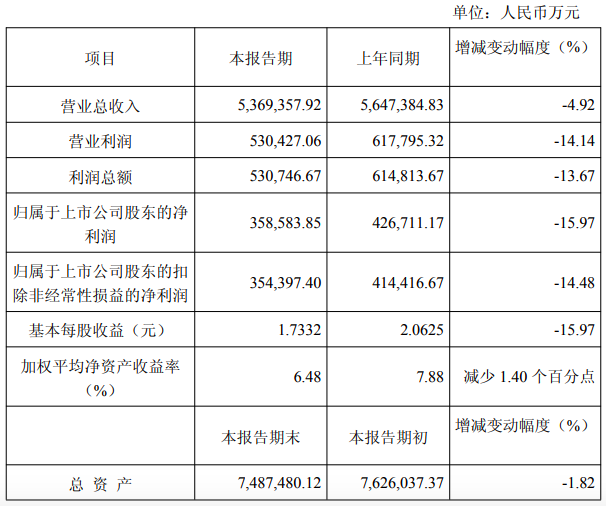
Core Viewpoint - The company, China Duty Free Group, reported a decline in both revenue and net profit for the year 2025, marking a significant drop compared to previous years, with a notable impact from goodwill impairment on net profit [3][4]. Financial Performance - Total operating revenue for 2025 was 53.69 billion RMB, a decrease of 4.92% compared to the previous year [4]. - The net profit attributable to shareholders was 3.59 billion RMB, down 15.97% year-on-year [4]. - The net profit excluding non-recurring gains and losses was 3.54 billion RMB, reflecting a 14.48% decline [4]. - Basic earnings per share were 1.73 RMB, a decrease of 15.97% from the previous year [3]. - The weighted average return on equity fell to 6.48%, down 1.40 percentage points from the previous year [3]. Quarterly Trends - In the fourth quarter of 2025, the company achieved an operating revenue of 13.83 billion RMB, a year-on-year increase of 2.81% [3]. - The net profit attributable to the parent company in the fourth quarter was 534 million RMB, showing a significant year-on-year growth of 53.49% [3]. - Excluding the impact of goodwill impairment, the net profit for the fourth quarter would have increased by 150.63% year-on-year [3]. Market Conditions - The company capitalized on new policies for duty-free shopping in Hainan and experienced record sales and customer traffic during the Spring Festival [3]. - The company’s gross margin and operational efficiency improved, with a gross margin increase of 0.51 percentage points year-on-year [3]. - Over the past three years, the company’s net profit peaked at 6.71 billion RMB in 2023 but fell to 4.27 billion RMB in 2024, a decrease of 36.44%, and further dropped to 3.59 billion RMB in 2025, nearly halving from the peak [3][7].

中国中免跌2.03%,成交额28.03亿元,主力资金净流出2.14亿元
Xin Lang Cai Jing· 2026-01-22 05:26
Core Viewpoint - China Duty Free Group Co., Ltd. (China Duty Free) has experienced a decline in stock price and revenue, indicating potential challenges in the tourism retail sector amid changing market conditions [1][2]. Financial Performance - As of January 22, China Duty Free's stock price decreased by 2.03% to 93.16 CNY per share, with a market capitalization of 192.735 billion CNY [1]. - For the period from January to September 2025, the company reported a revenue of 39.862 billion CNY, a year-on-year decrease of 7.34%, and a net profit attributable to shareholders of 3.052 billion CNY, down 22.13% year-on-year [2]. Stock and Shareholder Information - The number of shareholders increased to 309,300 as of September 30, 2025, reflecting a rise of 6.75% [2]. - The company has distributed a total of 18.922 billion CNY in dividends since its A-share listing, with 7.758 billion CNY distributed in the last three years [3]. Market Activity - On January 22, the net outflow of main funds was 214 million CNY, with large orders showing a mixed trend in buying and selling [1]. - The stock has seen a year-to-date decline of 1.48%, but has increased by 34.60% over the past 60 days [1]. Business Overview - China Duty Free primarily engages in the retail of duty-free and taxable goods, with 72.26% of revenue from duty-free sales and 25.54% from taxable goods [1]. - The company operates in both domestic and international markets, focusing on tourism retail and property leasing [1].
社会服务行业专题报告十一:酒店价格回正,REITs助力文旅资产盘活提速
Shenwan Hongyuan Securities· 2025-12-14 14:36
Investment Rating - The report rates the industry as "Overweight," indicating a positive outlook for the sector compared to the overall market performance [2]. Core Insights - The report highlights a moderate recovery in consumer spending, with tourism-related prices showing strong performance. The national CPI increased by 0.7% year-on-year in November 2025, reflecting a continued recovery in consumer spending [2][7]. - Hotel prices have shown resilience despite seasonal demand fluctuations, with the average hotel room price maintaining positive growth year-on-year. The RevPAR (Revenue Per Available Room) has only slightly declined, indicating a shift from a volume-driven recovery to a price-stabilized and optimized operational approach [2][8]. - The introduction of REITs (Real Estate Investment Trusts) in the service industry is expected to clarify the asset securitization path for various service sectors, including tourism and hospitality. This initiative aims to revitalize existing assets and improve financial structures [2][22][23]. Summary by Sections 1. Hotel Structure Differentiation and Price Resilience - The hotel industry is experiencing a seasonal decline in occupancy rates, but average room prices remain stable, with an ADR (Average Daily Rate) of 388.8 CNY per night in early December, up 4.3% year-on-year [8][10]. - The RevPAR for the week ending December 6, 2025, was 233 CNY per night, showing only a 0.4% decline year-on-year, indicating a recovery phase focused on price stability and operational efficiency [8][10]. 2. REITs Supporting Asset Securitization in the Service Industry - The newly released REITs project industry scope includes cultural tourism infrastructure and commercial facilities, allowing for a clearer path to asset securitization for hotels and tourist attractions [22][23]. - The report emphasizes that the inclusion of high-quality service industry assets in the REITs framework will enhance cash flow stability and operational efficiency, ultimately benefiting the valuation and investment landscape of the sector [22][24]. 3. Valuation of Key Industry Companies - The report provides a detailed valuation of key companies in the tourism and hospitality sectors, including metrics such as market capitalization and PE ratios, indicating a diverse range of investment opportunities [26]. - Notable companies highlighted for investment consideration include tourism sites like Sanxia Tourism and hotels like Shoulu Hotel and Huazhu [26].





铜、白银新高,周期怎么看?
2025-12-08 00:41
Summary of Key Points from Conference Call Records Industry Overview Aviation Industry - The adjustment of the China-Japan route impacts airlines and ticket prices, with the route accounting for 3% of the total market share. The removal of flights has led to a shift in capacity to domestic flights, causing ticket prices to stabilize or slightly decline from previous growth of 2-3% [2] - Airlines have extended the free ticket refund period for the China-Japan route until March 31, 2026, resulting in short-term disruptions but overall limited impact due to the small number of flights removed [2] - The recommendation for airline stocks includes China Southern Airlines, China Eastern Airlines, and Air China, followed by Huaxia Airlines, Juneyao Airlines, and Spring Airlines [2] Retail and Duty-Free Market - The Shanghai Airport duty-free store bidding process has sparked discussions, with potential new operators being introduced as existing shareholders oppose the bid. This could lead to increased revenue for Shanghai Airport [4] - The bidding process may benefit Shanghai Airport regardless of the outcome, as the expected revenue from the bidding exceeds investment returns [4] Shipping and Bulk Freight - The Baltic Dry Index (BDI) reached a two-year high of 2,854 points, driven by the upcoming production of the West Manganese Mine and concentrated shipments from Australian mines [5] - The outlook for the bulk shipping market remains positive, with recommendations for stocks such as Haitong Development, Pacific Shipping, and China Merchants Energy [5] Express Delivery Industry - Jitu's volume growth in Southeast Asia reached 78% during the Double Eleven shopping festival, with new market growth at 83%, indicating strong performance [6] - The express delivery sector is experiencing a shift, with leading companies increasing market share while lower-tier companies see declines. Zhongtong has returned to double-digit growth in October and November, making it an attractive investment opportunity [7] Commodity Market Insights Metal Market - The commodity cycle since 2020 is not yet halfway through, with expectations for a bull market in 2026 driven by a weakening dollar and supply chain disruptions [8] - The investment strategy for 2026 focuses on energy metals, nickel, cobalt, gold, copper, aluminum, and strategic metals, influenced by energy revolutions and geopolitical tensions [11] - Specific insights include: - Nickel and cobalt prices are expected to remain high due to quota systems and unexpected demand for energy storage [8] - Copper's supply issues are critical, with both financial and commodity attributes driving its value [8] - Aluminum is anticipated to break out of a three-year range due to low inventory and increased demand from industrial and energy sectors [8] Coal Market - The coal market is currently under pressure, with prices for Shanxi coal dropping by 27 yuan, and overall coal inventory rising but still below last year's levels [13][14] - Electricity consumption has decreased year-on-year, but there is a seasonal uptick in demand [15] - The national coal market conference indicated a balanced supply-demand outlook for 2026, with a focus on long-term contracts and import controls to stabilize prices [16] Future Projections - The overall sentiment for the metal sector in 2026 is optimistic, emphasizing the importance of energy revolutions and geopolitical factors for long-term investment opportunities [9]
中国中免涨2.03%,成交额3.75亿元,主力资金净流入58.95万元
Xin Lang Cai Jing· 2025-10-24 01:50
Core Viewpoint - China Duty Free Group's stock price has shown fluctuations in recent trading sessions, with a year-to-date increase of 8.43% and a recent market capitalization of 147.965 billion yuan [1][2]. Financial Performance - For the first half of 2025, China Duty Free Group reported a revenue of 28.151 billion yuan, representing a year-on-year decrease of 9.96%, while the net profit attributable to shareholders was 2.6 billion yuan, down 20.81% year-on-year [3]. - Cumulative cash dividends since the A-share listing amount to 18.405 billion yuan, with 7.241 billion yuan distributed over the last three years [4]. Shareholder Structure - As of June 30, 2025, the number of shareholders decreased by 4.30% to 289,700, with an average of 0 circulating shares per shareholder [3]. - Major shareholders include Hong Kong Central Clearing Limited, which increased its holdings by 15.7285 million shares, and several ETFs that also saw increases in their shareholdings [4]. Market Activity - The stock experienced a trading volume of 375 million yuan with a turnover rate of 0.27% on October 24, 2023, indicating active trading [1]. - The stock has appeared on the "Dragon and Tiger List" once this year, with the last occurrence on April 10 [2].