公务机

Search documents
庞巴迪第四季度营收同比增近19% 达36.9亿美元
Ge Long Hui A P P· 2026-02-12 12:00
Core Viewpoint - Bombardier, the Canadian business jet manufacturer, reported a nearly 19% year-over-year revenue increase in Q4, reaching $3.69 billion, driven by an expected rise in deliveries in the last quarter of 2025 [1] Group 1 - Bombardier anticipates revenue will exceed $10 billion in 2026 [1] - The company projects free cash flow to be between $600 million and $1 billion [1] - Total aircraft deliveries for the year are expected to surpass 157 units [1]
去年我市保税维修进出口同比增长36.3%
Xin Lang Cai Jing· 2026-02-06 22:00
Core Viewpoint - By 2025, the value of bonded maintenance imports and exports in Tianjin is expected to reach 31.7 billion, representing a year-on-year growth of 36.3% [1] Group 1: Industry Developments - Tianjin Customs has tailored regulatory service measures for enterprises with demand in the bonded maintenance business, aiming to promote the expansion of new business formats in the Tianjin region [1] - In 2025, 12 enterprises with intentions to engage in related businesses will receive targeted support, including key companies such as General Electric Medical, Lixinghang, and Bombardier, which are either starting or expanding their bonded maintenance operations in fields like medical devices, diesel engines, and business jets [1] Group 2: Company Milestones - On December 31, 2025, Tianjin Yijie Haitong General Aviation Service Co., Ltd. successfully obtained approval for its aviation bonded maintenance business, becoming the first self-approved bonded maintenance project in the city [1]
商务航空稳健复苏 跨境出行需求强劲
Zhong Guo Min Hang Wang· 2026-01-27 06:01
Group 1 - The core viewpoint of the article highlights the recovery of China's business aviation market, driven by increased cross-border activities, with a projected 7.5% growth in domestic business aviation flight segments by 2025 compared to the previous year [1] - The peak flight segment in October reached 2,666, indicating strong market performance [1] - Cross-border operations saw a year-on-year increase of 12.4%, underscoring the role of business aviation in supporting domestic enterprises' overseas investments and the Belt and Road Initiative [1] Group 2 - The AsBAA winter quarterly meeting focused on industry trends and collaboration opportunities, with over 60 representatives from the business and general aviation sectors attending [3] - The association's vice chairman summarized efforts in promoting international exchanges and addressing trade tariffs on aviation materials over the past year [3] - Plans for a series of industry activities in 2026 in China and Southeast Asia were announced to enhance regional collaboration and innovation [3] Group 3 - Industry representatives discussed market observations and business innovations, with a focus on the underutilization of business jets among emerging industry entrepreneurs, where only about 20% currently use them [3] - The advantages of mid-sized jets in terms of cost-effectiveness for small group travel were emphasized [3] - The demand for integrated, high-quality travel experiences in the business aviation market was highlighted, reflecting a trend towards service integration [3] Group 4 - Ameco, a leading aviation maintenance service provider in the Asia-Pacific region, aims to enhance customer experience through cabin customization and intelligent upgrades of onboard systems [4] - The company is open to sharing professional data resources to support industry ecosystem development [4] - The resilience of the business aviation sector was metaphorically described as "plum blossoms in the snow," indicating its potential for growth and innovation [4]


当个性化取代标准化,“公务机+”正在丈量世界与生活的边界
Guan Cha Zhe Wang· 2025-12-21 06:32
Group 1 - The global business aviation industry has entered a sustainable growth cycle despite uncertainties in the macroeconomic environment and geopolitical landscape since 2025 [1] - According to GAMA, global business jet deliveries reached 554 units from January to September 2025, marking a 10.6% year-on-year increase, making it the fastest-growing segment in general aviation [1] - Cirium forecasts an 11% year-on-year growth in global business jet deliveries in 2025, reaching 820 units [1] Group 2 - The Chinese business aviation market is undergoing deep adjustments and needs to innovate while maintaining its core values, focusing on enhancing the "business jet+" ecosystem [2] - The "2025 Tianhe Elite Cloud Honor List" by Hualong Aviation reveals that high-net-worth individuals in China are reshaping their global lifestyle through "business jet+" services, integrating cultural confidence with international standards [2] - The demand from China's high-net-worth individuals is shifting from "standardized luxury" to "personalized abundance," with business jets serving as key nodes connecting diverse scenarios [2] Group 3 - Hualong Aviation's "business jet+" ecosystem is redefining the value logic of high-end travel, expanding the sky into a canvas that embodies cultural confidence and global wisdom [3] - Future collaborations in the "business jet+" sector are expected to evolve into a deep synergy model focused on "scene co-creation and value co-existence" [3]
2025通用航空与商务航空安全国际论坛在珠海成功举办
Zhong Guo Min Hang Wang· 2025-11-29 07:05
Core Viewpoint - The 2025 General Aviation and Business Aviation Safety International Forum successfully held in Zhuhai aims to promote international cooperation for the sustainable development of general and business aviation in China and the Asia-Pacific region [1][3]. Group 1: Forum Overview - The forum is a key event of the second Asian General Aviation Exhibition, focusing on safety, efficiency, and sustainable development in the aviation sector [1]. - Organized by the Asian Business Aviation Association (AsBAA) and Zhuhai Airshow Frankfurt Co., the forum gathered high-level representatives from regulatory bodies, manufacturers, and operators in the aviation industry [3]. Group 2: Industry Insights - AsBAA's China Mainland Committee Chairman emphasized that safety is central to the development of general and business aviation, which serves as an efficient transportation mode and a significant driver of economic growth [3]. - The Asia-Pacific region currently has over 1,100 business jets, with significant market potential in China [3]. Group 3: Safety Challenges and Solutions - Discussions highlighted that human factors account for over 80% of aviation accidents, necessitating systematic risk control through Safety Management Systems (SMS) and Threat and Error Management (TEM) [6]. - The forum addressed emerging risks such as reliance on artificial intelligence, safety of new energy ground vehicles, data management challenges, and talent shortages, calling for cross-sector collaboration and standardization [6]. Group 4: Best Practices and Innovations - The forum included discussions on aviation safety management systems, high-altitude airport operations, and aviation medical rescue, with experts sharing insights on enhancing safety effectiveness through data operations and optimization [8]. - The "Lishui Model" for aviation medical rescue was presented, showcasing a cost control of approximately $6 per minute for rescue operations, achieving a 100% success rate in patient transfers [10]. Group 5: Future Directions - The forum concluded with calls to break down data barriers between companies to promote global safety experience sharing [11]. - Emphasis was placed on integrating safety awareness into every operational, planning, and technical decision, with collaborative efforts and safety management systems identified as core pathways to building industry resilience and excellence [11].

2025亚洲通用航空展开幕 集中展示国内外通用航空和低空经济领域新成果
Yang Guang Wang· 2025-11-28 03:08
Core Insights - The 2025 Asian General Aviation Exhibition opened in Zhuhai, showcasing over 380 companies from 22 countries and regions, with more than 170 aircraft on display [1][2] - The exhibition has doubled in scale compared to the first edition, with an area increase of 20,000 square meters, reaching approximately 60,000 square meters [2] - The number of aircraft displayed increased from nearly 90 in the previous exhibition to 174, marking a significant growth [2] Industry Overview - The exhibition focuses on general aviation and low-altitude economy, featuring business jets, helicopters, rotorcraft, drones, electric aircraft, and related services [2] - The event highlights innovations and developments in the general aviation and low-altitude economy sectors, including emergency rescue, emerging aviation consumption, and aviation transportation [2] - In 2024, general aviation operations in China exceeded 1.341 million hours, with 5,224 registered aircraft [2] - The forecast for the next 20 years indicates that the number of general aviation aircraft in China will surpass 13,000, with a total demand for nearly 10,000 gas turbine engines [2]
公务机市场迎“黄金十年”?霍尼韦尔报告揭示千亿级需求新浪潮
Sou Hu Cai Jing· 2025-10-19 13:03
Core Insights - The global business aviation sector is experiencing unprecedented growth, with a projected demand for new business jets reaching a total delivery value of $283 billion over the next decade [2] - The report forecasts the delivery of 8,500 new business jets from now until 2035, with an average annual growth rate of approximately 3% [2] - Key drivers of this market surge include the rise of fractional ownership models and favorable tax policies in the U.S. [3] Market Dynamics - The fractional ownership model has significantly contributed to the increase in aircraft demand, with fleets managed by fractional ownership operators growing by 65% since 2019, reaching around 1,300 aircraft [3] - U.S. tax policies, particularly the "100% bonus depreciation" provision, are influencing procurement plans, allowing companies to deduct the full cost of business jets from taxable income in the year of purchase [3] - Global operator confidence is reflected in order data, with 20% of operators indicating they hold at least one confirmed aircraft order, up from 17% in 2024 [3] Usage Trends - Business jet usage frequency is steadily increasing, with 91% of operators expecting flight hours in 2026 to be the same or higher than in 2025 [4] - Total flight hours for business jets globally have increased by 3%, reversing a stagnation observed between 2023 and 2024 [4] - North America is projected to receive approximately 70% of new business jet deliveries over the next three years, maintaining its dominance in the market [4] Buyer Preferences - Buyers' procurement criteria are shifting, with aircraft performance metrics surpassing purchase cost as the primary consideration for operators [5] - 89% of respondents prioritize performance among their top three decision-making criteria, while only 56% consider cost [5] - Sustainability is increasingly influencing purchasing decisions, with 81% of operators believing that developing more fuel-efficient aircraft is key to achieving carbon reduction goals [5] Industry Outlook - The report, based on macroeconomic analysis and a survey of 312 non-fractional ownership operators managing 1,199 business jets, provides critical insights for industry development [6] - Although historical data suggests that forecasts may sometimes be slightly optimistic, the anticipated introduction of new aircraft models and a stable global economy support the optimistic outlook for the business aviation sector [6]

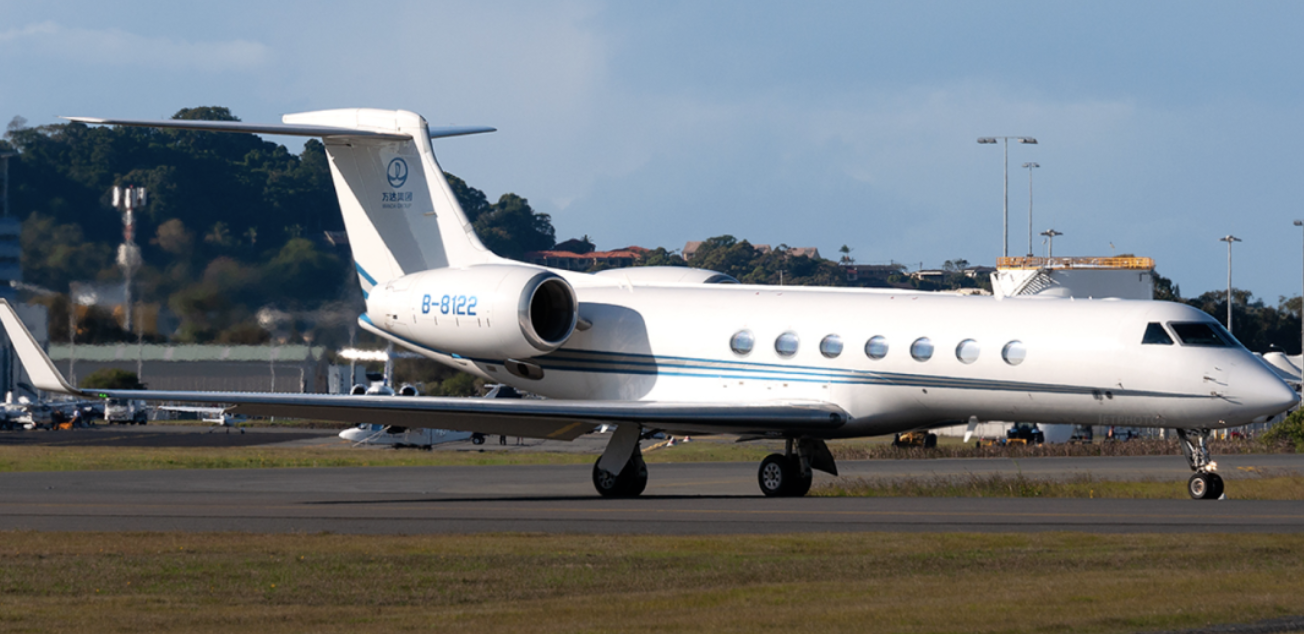
王健林们频被“限高”,他们的私人飞机还能坐吗
Di Yi Cai Jing· 2025-09-29 02:02
Core Points - The recent news about Wang Jianlin being "restricted from high consumption" has sparked discussions about the implications of such measures on wealthy individuals and their spending habits [1][2] - "High consumption restrictions" are legal measures aimed at enforcing debt repayment by limiting luxury spending behaviors of individuals who have not fulfilled their legal obligations [2][6] Group 1: Legal Framework - High consumption restrictions apply to various luxury spending behaviors, including traveling by airplane, staying in star-rated hotels, purchasing real estate, and enrolling children in expensive private schools [2][9] - The restrictions are enforced on individuals who have not complied with effective legal documents, aiming to encourage them to settle their debts [2][6] Group 2: Impact on Wealthy Individuals - Wealthy individuals, including those with private jets, are theoretically restricted from using their own aircraft or staying in their hotels, as the law targets high consumption behaviors regardless of payment source [6][8] - Despite the legal restrictions, many individuals have found ways to circumvent these limitations, particularly when it comes to private jet travel, as the process does not require purchasing tickets [6][8] Group 3: Industry Trends - The number of business jets in China has significantly decreased since 2022, with a reported drop of around 70 aircraft, marking the largest decline since 2012 [8] - Many wealthy individuals and companies have been selling their private jets to raise funds for debt repayment, indicating a broader trend in the industry [7][8]
特朗普对巴西大部分商品加征50%关税 对部分关键行业作出豁免
Zhi Tong Cai Jing· 2025-07-30 22:25
Group 1 - The U.S. has imposed tariffs of up to 50% on most Brazilian goods in response to political persecution of former President Bolsonaro, but key industries like aviation, energy, and orange juice are exempted, alleviating worst fears in Brazil's business community [1] - Brazilian Finance Minister Seron stated that the outcome is milder than expected, indicating that the worst-case scenario has not materialized [1] - The tariffs are directly linked to Bolsonaro's trial regarding allegations of attempting to overturn the 2022 presidential election results, with additional sanctions imposed on the Brazilian Supreme Court judge overseeing the case [1] Group 2 - The exemption from tariffs includes critical export categories such as civilian aircraft, pig iron, precious metals, pulp, energy, and fertilizers, which is particularly important for Embraer, as 45% of its commercial aircraft and 70% of its executive jets are exported to the U.S. [1] - Analysts have warned that the tariffs could severely impact Suzano, one of the world's largest pulp producers, but market sentiment improved following the exemption announcement [1] - The former Brazilian Trade Minister Bahar cautioned that while some products are exempt, Brazil exports approximately 3,000 items to the U.S., and the remaining products will still face actual impacts [1] Group 3 - Notably, the executive order does not exempt beef and coffee exports, which are significant agricultural products for Brazil, with the Brazilian beef export organization Abiec previously indicating that tariffs would make exports to the U.S. "unsustainable" [2] - Despite the exemption for "energy and related products," several energy companies operating in Brazil have paused crude oil shipments to the U.S. due to policy uncertainty, with the Brazilian Petroleum Association stating that the industry is monitoring the situation [2]
美关税蔓延,巴西航空公司面临巨额损失
Sou Hu Cai Jing· 2025-07-29 08:14
Group 1 - The return of unilateralism, particularly through the U.S. tariff policy, poses significant risks to global economic stability and multinational companies [1][4] - Embraer, the third-largest aircraft manufacturer globally, has reported potential losses in the billions due to impending U.S. tariffs, which could severely impact its financial health and international cooperation [1][3] - The U.S. government's proposed 50% tariff on Embraer's aircraft could lead to an additional cost of 50 million Brazilian Reais (approximately 6.42 million RMB) per aircraft, resulting in order cancellations, delivery delays, and potential layoffs [3][4] Group 2 - The challenges faced by Embraer are reflective of broader issues affecting global industries, as nearly every sector is impacted by U.S. protectionist policies, disrupting normal international trade [4][6] - The unilateral trade policies of the U.S. threaten the interconnectedness of the global economy, with potential long-term consequences for U.S. companies that rely on global supply chains [6][9] - The warning from Embraer serves as a broader alert regarding the future of globalization, highlighting the need for multinational companies to navigate increasing uncertainties in international trade [9]