
前海开源黄金ETF

Search documents
两大金银主题LOF闭门谢客,配置贵金属还能怎么办?
2 1 Shi Ji Jing Ji Bao Dao· 2026-01-29 00:08
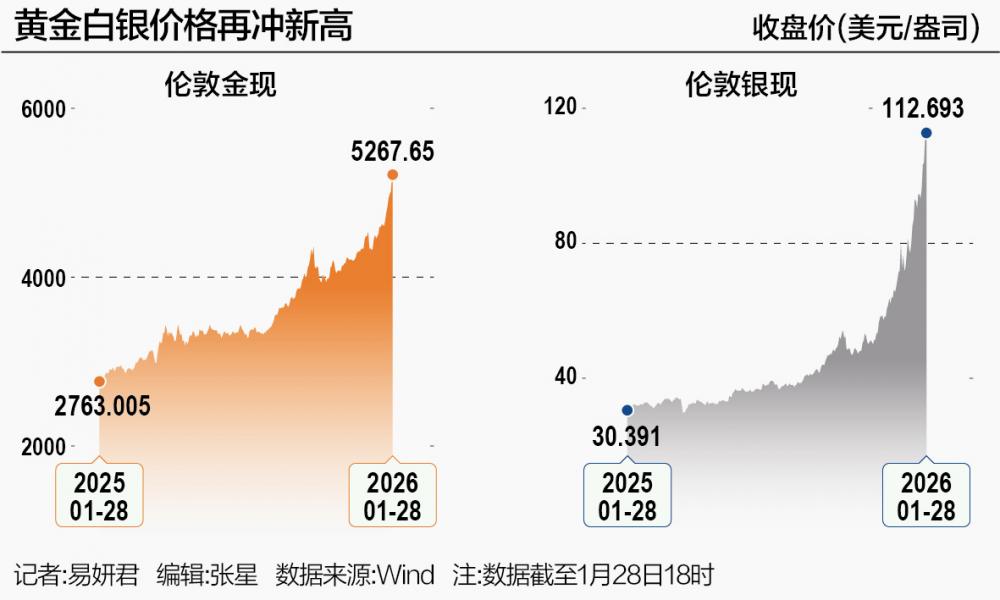
Core Viewpoint - Recent market risk aversion has driven international gold prices to new highs, with spot gold prices in London surpassing $5200 and $5300 per ounce before retreating [1][19]. Group 1: Gold Price and Market Dynamics - The rise in gold prices has led to increased interest in gold-themed funds, with premium risks emerging for gold LOFs, prompting fund managers to enhance risk control measures [20][21]. - As of January 27, 2026, the largest gold ETF in the domestic market has exceeded 120 billion yuan in scale, reflecting strong capital inflows since the beginning of the year [21][34]. - Institutions suggest that after rapid price increases, gold may experience high-level fluctuations or technical corrections, but geopolitical risks will continue to provide long-term support for gold prices [21][36]. Group 2: Fund Management and Premium Risks - Multiple gold-themed LOFs, including E Fund's gold LOF, have announced the suspension of subscription and regular investment services to ensure stable fund operations [24][25]. - E Fund's gold LOF reported a net asset value of 1.7633 yuan per share on January 19, 2026, while the market price was 2.069 yuan on January 21, indicating significant premium risks [25][26]. - Other fund companies, such as Huatai-PineBridge and Harvest Fund, have also issued premium risk warnings for their gold LOFs, highlighting the need for investor caution [26]. Group 3: ETF Performance and Investor Behavior - A total of 14 gold ETFs have seen a net inflow of 28.912 billion yuan since the beginning of the year, with their total scale increasing by over 30% to 314.141 billion yuan [30][33]. - The largest gold ETF, Huaan Gold ETF, has grown by nearly 26.6 billion yuan since December 31, 2025, reaching over 120 billion yuan in scale [34]. - Gold stock ETFs have also attracted attention, with six ETFs gaining a net inflow of 5.922 billion yuan and four of them achieving returns exceeding 37% [14][35]. Group 4: Long-term Investment Perspective - Analysts believe that while short-term price surges may lead to corrections, the long-term logic for gold as a safe-haven asset remains intact amid geopolitical uncertainties and dollar depreciation [36]. - Investors are advised to adopt a long-term perspective, utilizing gold ETFs as tools for hedging against inflation and systemic risks, while avoiding short-term speculative behaviors [37].

全市场首只千亿元级黄金ETF亮相
Zheng Quan Ri Bao· 2026-01-15 16:48
Group 1 - The core point of the news is the emergence of the first gold ETF in the market to surpass 100 billion yuan, specifically the Huaan Gold ETF, which reached a scale of 100.76 billion yuan as of January 14 [1] - Since 2025, the Huaan Gold ETF has experienced rapid growth, increasing from 28.68 billion yuan at the beginning of 2025 to 93.99 billion yuan by the end of that year, with a growth of over 65 billion yuan [1] - The price of gold has been on the rise, with the London spot gold price breaking the 4,600 USD/ounce mark for the first time on January 12, and reaching a historical high of 4,643 USD/ounce on January 14 [1] Group 2 - In addition to the Huaan Gold ETF, there are other significant gold ETFs, including Bosera Gold ETF, E Fund Gold ETF, Guotai Gold ETF, and Huaxia Gold ETF, each with scales exceeding 40 billion yuan, all showing growth of over 10 billion yuan since early 2025 [2] - Other gold-related funds have also seen growth, such as the Yongying Gold Stock ETF, which increased from 1.65 billion yuan at the beginning of 2025 to 14.32 billion yuan by January 14, 2026 [2] Group 3 - Industry insiders view gold ETFs and linked funds as efficient and low-cost tools for ordinary investors to allocate gold [3] - Gold is highlighted as a core asset for hedging inflation risks and optimizing asset portfolios in the medium to long term, although investors are advised to be cautious of short-term market sentiment [3] - It is recommended that investors maintain a gold allocation of 10% to 20% in their portfolios to effectively optimize their investment mix [3]
黄金白银,史诗级暴涨,最新解读来了
3 6 Ke· 2025-12-28 23:57
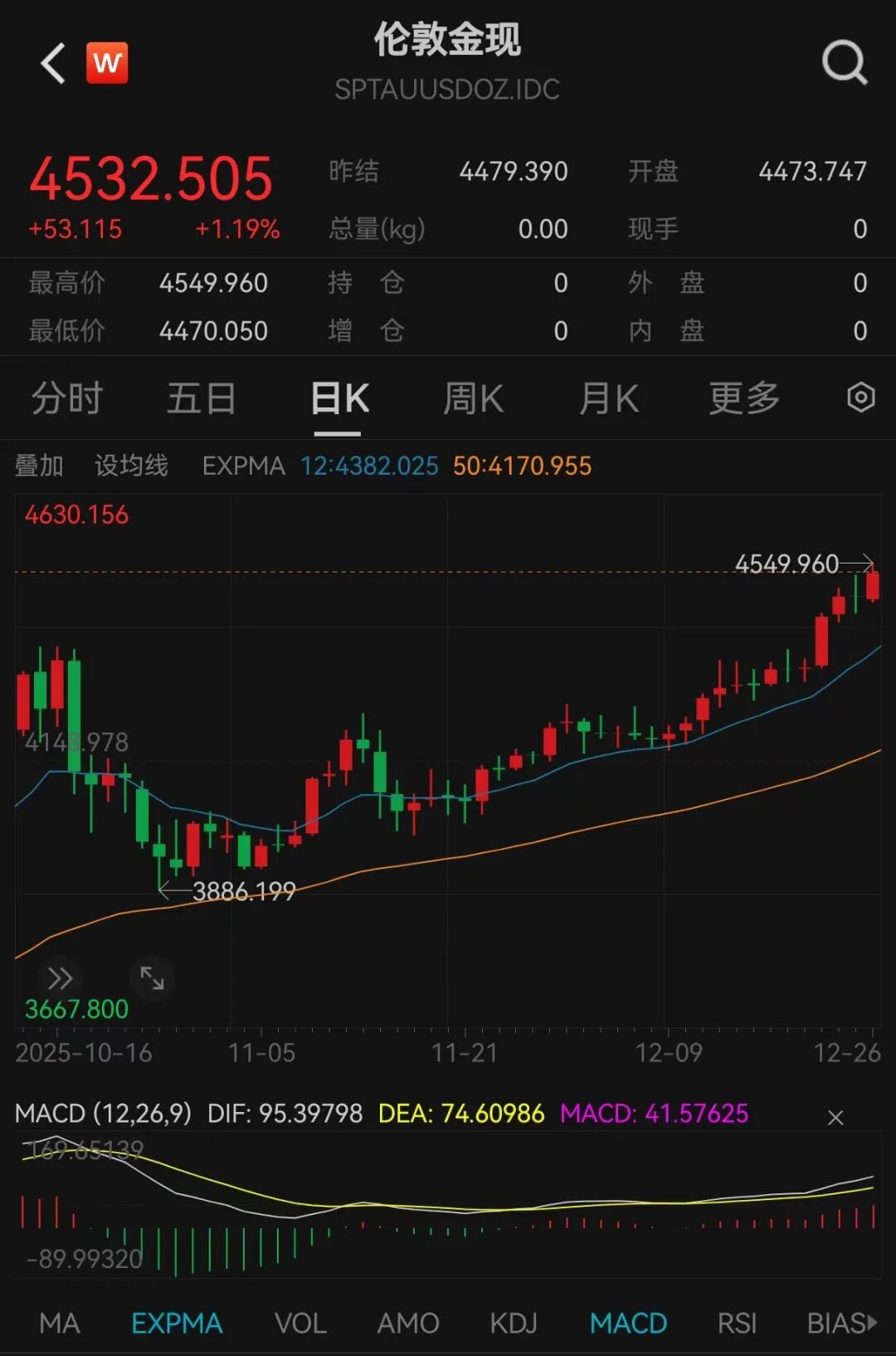
Core Viewpoint - The international gold and silver markets are experiencing a significant surge, with gold prices surpassing $4500 per ounce and silver reaching $75.5 per ounce, marking substantial annual increases of over 70% and nearly 150% respectively, outperforming most asset classes globally [1][12]. Group 1: Market Drivers - The current bull market in precious metals is driven by a combination of short-term catalysts and long-term fundamentals, primarily influenced by the ongoing easing of Federal Reserve policies and heightened global risk aversion [12][18]. - Key factors include the consensus on the Federal Reserve's shift from tightening to easing, which reduces the holding costs of non-yielding assets like gold, and the continuous purchasing of gold by central banks to diversify foreign exchange risks [14][15]. - Geopolitical tensions and increased demand for safe-haven assets have further contributed to the rising prices of gold and silver [15][18]. Group 2: Market Trends and Future Outlook - The long-term support for gold prices is underpinned by the weakening of the dollar's credit and the ongoing trend of central banks diversifying their reserves, leading to a sustained demand for gold [17][22]. - The relationship between gold prices and actual interest rates has decoupled, indicating a structural shift in the pricing logic of gold, where its monetary and safe-haven attributes are currently more influential than its financial characteristics [19][20]. - The overall sentiment in the precious metals market remains optimistic, although short-term volatility may increase due to rapid price increases and market exuberance [21][24]. Group 3: Investment Strategies - Investors are advised to consider gold as a core component of their asset allocation, with a recommended allocation of 10% to 20% to optimize portfolio performance and mitigate risks [23][24]. - Strategies such as dollar-cost averaging or phased buying during market dips are suggested to avoid chasing high prices and to manage entry costs effectively [23][24].
可控核聚变概念涨幅居前,23位基金经理发生任职变动
Jin Rong Jie· 2025-12-11 09:25
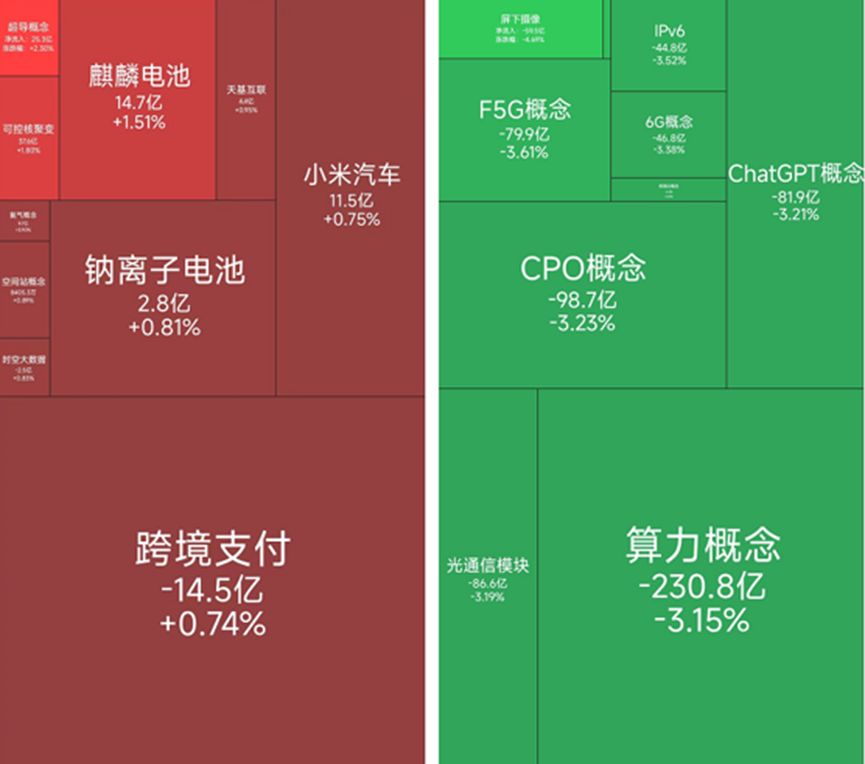
Market Performance - On December 11, A-shares saw declines across major indices, with the Shanghai Composite Index down 0.7% to 3873.32 points, the Shenzhen Component Index down 1.27% to 13147.39 points, and the ChiNext Index down 1.41% to 3163.67 points [1] Fund Manager Changes - On December 11, a total of 23 fund managers experienced changes in their positions, with 701 fund products seeing manager departures over the past 30 days [3][4] - The reasons for these changes included 6 managers leaving due to job changes, 2 due to product expiration, and 1 for personal reasons [3] New Fund Managers - On December 11, 33 fund products announced new fund manager appointments, involving 14 new managers [5] - Notably, Liang Pusen from Qianhai Kaiyuan Fund has a total fund asset scale of 36.10 billion yuan, with his highest-performing product being the Qianhai Kaiyuan Gold ETF, which achieved a return of 132.74% over 5 years and 212 days [5] Fund Research Activity - In the past month (November 11 to December 11), Bosera Fund conducted the most company research, engaging with 49 listed companies, followed by Huaxia Fund and Guotai Fund with 45 and 44 companies respectively [7] - The consumer electronics sector was the most researched industry, with 250 instances of fund company inquiries, followed by specialized equipment with 218 inquiries [7] Recent Fund Research Focus - In the last week (December 4 to December 11), Zhongke Shuguang was the most researched company, receiving inquiries from 116 fund institutions, followed by Haiguang Information and Canxin Technology [8][9]

两市ETF两融余额较上一日减少1.73亿元
Zheng Quan Shi Bao Wang· 2025-08-18 01:56
Core Viewpoint - The latest ETF margin balance in the two markets is 100.148 billion yuan, showing a decrease of 1.73 billion yuan compared to the previous trading day, indicating a slight decline in market activity [1] Group 1: ETF Margin Balance Overview - As of August 15, the total ETF margin balance is 100.148 billion yuan, down 1.73 billion yuan or 0.17% from the previous day [1] - The financing balance for ETFs is 93.908 billion yuan, a decrease of 1.80 billion yuan or 0.19% from the previous day [1] - The Shenzhen market's ETF margin balance is 31.904 billion yuan, increasing by 2.44 million yuan, while the Shanghai market's balance is 68.243 billion yuan, decreasing by 4.18 billion yuan [1] Group 2: Specific ETF Financing Balances - The top three ETFs by financing balance are: - Huaan Gold ETF with 7.453 billion yuan - E Fund Gold ETF with 6.253 billion yuan - Huaxia Hang Seng ETF with 4.232 billion yuan [2] - The ETFs with the highest increase in financing balance include: - Penghua CSI 300 ETF with an increase of 8331.75% - Wanji Zhongzheng A500 ETF with an increase of 2384.62% - CSI 500 ETF with an increase of 1814.58% [2] Group 3: Margin Trading and Short Selling - The latest short selling balance for ETFs shows significant changes, with the highest increase in short selling being for Guangfa Solar 50 ETF, which increased by 16666.67% [5] - The top three ETFs by short selling balance are: - Southern CSI 1000 ETF with 2.1107418 billion yuan - Guangfa CSI 1000 ETF with 386.4118 million yuan - Huaxia CSI 1000 ETF with 374.5804 million yuan [6] Group 4: Net Buying and Selling of ETFs - The ETFs with the highest net buying amounts are: - E Fund ChiNext ETF with 229.45 million yuan - Southern CSI 500 ETF with 221.48 million yuan - E Fund Hong Kong Securities Investment Theme ETF with 190.98 million yuan [4] - The ETFs with the highest net selling amounts include: - Fuguo Zhongdai 7-10 Year Policy Financial Bond ETF with 703 million yuan - Guotai CSI 5-Year National Bond ETF with 75.117 million yuan - Guangfa Zhongzheng Hong Kong Innovative Medicine ETF with 73.2018 million yuan [4]
大类资产与基金周报:黄金下跌,商品基金跌幅录得-3.58%-20250518
Tai Ping Yang Zheng Quan· 2025-05-18 14:12
- The report provides an overview of the major asset markets, including equities, bonds, commodities, and foreign exchange markets[4][9][10][26][27][32][33][39] - The report highlights the performance of various indices in the A-share market, such as the Shanghai Composite Index, Shenzhen Component Index, and others, with their respective percentage changes[9][11][12][13][15] - The report also covers the performance of the Hong Kong stock market, including the Hang Seng Index and the Hang Seng China Enterprises Index, along with their percentage changes[10][18][19][22] - The report includes the performance of the US stock market, with indices like the Dow Jones Industrial Average, Nasdaq Index, and S&P 500, along with their percentage changes[10][24][25] - The bond market section discusses the yield changes of various government and corporate bonds, including the yield spread between different maturities[26][27][28][29][30][31] - The commodities market section provides the weekly percentage changes of various commodities such as crude oil, gold, copper, aluminum, and others[32][33][34][35][36][37][38] - The foreign exchange market section details the exchange rate changes of major currencies against the Chinese Yuan[39][41][42][43] - The report summarizes the newly established funds for the week, including their types, sizes, and fund managers[44][46] - The report provides an overview of the total number and scale of open-end public funds in China, categorized by different types of funds[47][48][49][50] - The performance of different types of funds over the past week, month, year, and year-to-date is compared, highlighting the best and worst performers[51][52][54][55][56][57][59]