
全球避险情绪

Search documents
刚刚,日股重挫近2000点!韩国股市暴跌熔断!
证券时报· 2026-03-23 00:52
Market Overview - Japanese and South Korean stock markets experienced significant declines, with the Nikkei 225 index dropping nearly 2000 points, a decrease of over 3% [2] - The KOSPI index in South Korea fell by 5%, triggering a market circuit breaker that paused trading for 5 minutes [4] Precious Metals - COMEX gold prices fell below $4430 per ounce, with a daily decline exceeding 3%, while silver prices dropped nearly 1% [5] Economic Insights - Citic Securities noted that key issues regarding the impact of Middle Eastern conflicts will gradually be resolved by April, with the market currently in a narrative-driven phase reflecting liquidity tightening [7] - The 10-year U.S. Treasury yield rose sharply from 3.97% at the end of February to 4.39%, the highest level since August of the previous year [7] Investment Strategy - The focus should remain on sectors where China has a competitive advantage in pricing power, particularly in new energy, chemicals, electric equipment, and non-ferrous metals [8] - The recent liquidity shock has brought valuations of several sectors back to attractive levels, similar to the post-April 7, 2022, scenario for overseas products [8] - Key areas for investment include low-valuation factors, particularly in insurance, brokerage, and electric power sectors, with price increases expected to be a significant theme in 2024 [8]


新能源及有色金属日报:美元指数反弹,压制镍不锈钢价格走势-20260312
Hua Tai Qi Huo· 2026-03-12 05:19
1. Report Industry Investment Rating No information provided. 2. Core Viewpoints of the Report - The current supply - demand situation of nickel is weak but in line with expectations. Policy factors are the main driver of nickel price trends. With the dominant nickel ore contraction policy in Indonesia, nickel prices are expected to remain in a high - level oscillatory state [1][4]. - The price trend of stainless steel is mainly influenced by nickel prices. High costs support the price bottom, but the loose supply and increasing inventory will suppress the upward space of stainless steel prices. It is expected that stainless steel prices will also maintain a high - level oscillatory state [5][6]. 3. Summary by Related Catalogs Nickel Variety Market Analysis - On March 11, 2026, the main contract of Shanghai nickel opened at 137,480 yuan/ton and closed at 137,160 yuan/ton, a change of - 0.69% compared with the previous trading day's closing price. The trading volume was 309,179 (-192,726) lots, and the open interest was 210,843 (-681) lots [1]. - Nickel is in a state of game between policy and fundamentals. The Indonesian nickel ore policy continues to ferment, with the 2026 RKAB quota set at 2.5 billion tons, a 34% drop from 3.79 billion tons in 2025, which leads to expectations of future nickel ore supply shortage and supports nickel prices. On the fundamental side, supply production continues to rise, inventories at home and abroad accumulate, and the market supply is sufficient. The consumption of stainless steel after the Spring Festival is poor, and the inventory rebounds significantly, suppressing price rebounds. The production and sales of new energy vehicles meet expectations but are in the off - season, with limited month - on - month improvement [1]. Macro and Cost Factors - Global risk - aversion sentiment has reignited. The US dollar index has rebounded, suppressing the price trends of nickel and stainless steel. The global crude oil supply crisis has led to a resurgence of tension, and the US dollar has strengthened, putting pressure on commodity prices [2]. - Affected by the tense situation in the Middle East, international oil prices have soared, driving up ocean freight rates. The transportation cost of Philippine nickel ore has increased significantly, strengthening cost - side support. The ocean freight from the Philippines to major ports in China and Indonesia has generally increased by 5 - 7 US dollars/wet ton. In Indonesia, the domestic trade premium of nickel ore remains high, and the incentive mechanism is diversified [2]. Spot Market - The nickel price declined slightly during the day. The spot premium of Jinchuan resources rebounded slightly, while the premiums and discounts of other brands remained stable. After the nickel price correction, the downstream's willingness to purchase at low prices increased slightly, but overall trading was still cautious. The cost - side support remains solid. The tightening policy of the Indonesian nickel ore RKAB quota continues to ferment, and the situation in the Strait of Hormuz affects sulfur imports, pushing up the production costs of hydrometallurgy and electrowinning nickel [3]. Strategy - The current supply - demand situation is weak but in line with expectations. Policy is the main driver of nickel price trends. It is expected that nickel prices will remain in a high - level oscillatory state. The strategy is mainly interval operation for the single - side, and there are no strategies for cross - period, cross - variety, spot - futures, and options [4]. Stainless Steel Variety Market Analysis - On March 11, 2026, the main contract of stainless steel opened at 14,235 yuan/ton and closed at 14,215 yuan/ton. The trading volume was 150,682 (-30,711) lots, and the open interest was 104,928 (-4,171) lots [5]. - The price trend of stainless steel is mainly influenced by nickel prices. On the supply side, the crude steel production schedule in March increased month - on - month, and the supply pressure increased. The operating rate of stainless steel plants remained high, and the production was sufficient. On the consumption side, the consumption after the Spring Festival was poor, and the social inventory continued to accumulate, suppressing price rebounds. Although there are expectations for the "Golden March and Silver April" peak season, short - term demand is difficult to improve significantly [5]. Spot Market - Spot traders' quotations remained stable overall. Downstream terminals mainly made rigid - demand purchases. The previous bullish sentiment has been exhausted, and the willingness to purchase and stock up in advance is insufficient. As the traditional peak season approaches, the basic demand can still be maintained, and practitioners expect that the stainless steel price will still be strongly supported by costs within the month [5]. Strategy - The current price trend is mainly influenced by nickel prices. High costs support the price bottom, but the loose supply and increasing inventory will suppress the upward space of stainless steel prices. It is expected that stainless steel prices will maintain a high - level oscillatory state. The single - side strategy is neutral, and there are no strategies for cross - period, cross - variety, spot - futures, and options [6].
美指震荡上行逼近四周高位
Jin Tou Wang· 2026-02-25 02:30
Group 1 - The core viewpoint of the articles indicates that the US dollar index is experiencing a short-term upward trend, influenced by the Federal Reserve's cautious stance on interest rate cuts, changes in US tariff policies, and global risk aversion sentiment [1][2] - The Federal Reserve's interest rate cut expectations have cooled, with the January meeting minutes reinforcing a "wait and see" signal, and the inflation target of 2% being a key factor for any potential rate cuts [1] - The recent Supreme Court ruling regarding tariffs may lead to a reduction in tariffs by 5 percentage points and a potential tax refund of $175 billion, although former President Trump has indicated plans to maintain existing tariffs, which creates policy uncertainty and boosts demand for the dollar as a safe-haven asset [1] Group 2 - Technically, the dollar index has shown a rebound from 95.56 to 97.95 since mid-February, with short-term support at 97.80 and resistance around 98.00-98.05, although it remains in a long-term downtrend with targets around 80-85 [2] - The outlook for the dollar remains strong in the short term, influenced by Federal Reserve policies, tariff implementations, and inflation data, but long-term pressures from fiscal deficits, interest rate cut cycles, trade deficits, and de-dollarization persist [2] - Investors are advised to monitor inflation, official statements, and tariff developments closely, as these factors could lead to potential pullback risks [2]
江问樵:2.24美伊局势紧张美元破位,黄金继续看多
Sou Hu Cai Jing· 2026-02-24 09:36
Group 1 - The overall news sentiment is positive for gold, reinforcing the feasibility of a long position strategy due to heightened global risk aversion stemming from the tense US-Iran situation and uncertainty surrounding Trump's tariff policies [1] - The US dollar index has fallen below the 96 mark, reaching a nearly three-year low, which enhances the attractiveness of gold priced in dollars [1] - Continued global central bank gold purchases and strong expectations for a Federal Reserve rate cut in the second half of the year provide solid long-term support for gold prices [1] Group 2 - There is a strong physical demand for gold post-holiday, which contributes to the momentum for a price rebound [1] - Technically, gold is showing a high-level correction pattern, providing a reasonable entry point for long positions around 5170 [1] - The London gold price reached a high of 5237.71 USD/ounce before a sharp drop of over 100 points, but the daily bullish pattern remains intact [1] Group 3 - The key support level is identified around 5170, aligning with the low of 5144.62 USD/ounce and the market consensus on the 5170-5180 support range [1] - A stabilization at this support level would provide clear technical backing for long positions, with an upward target near 5230, which is a prior resistance level [1]
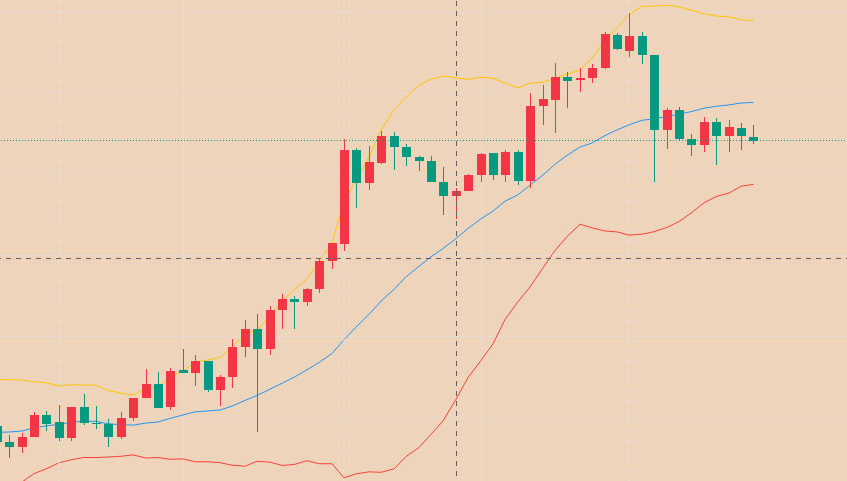
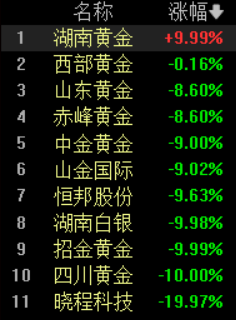
黄金概念股重挫!现货黄金回落至5340美元/盎司附近,特朗普将公布下一任美联储主席人选
Jin Rong Jie· 2026-01-30 02:01
Market Overview - The A-share market opened lower and continued to decline, with the gold sector experiencing significant losses, leading to multiple stocks hitting the daily limit down [1] - The Hong Kong stock market also showed weakness, with the non-ferrous metals sector declining across the board [1] Gold Sector Performance - The gold sector collectively retreated, closely linked to the short-term volatility of international gold prices [2] - On January 29, gold prices initially surged past $5,500 per ounce, setting a historical high, but later experienced a sharp drop, retracting over $100 from the peak [2][5] - By 9:50 AM Beijing time, spot gold had fallen to around $5,340 per ounce, reflecting a significant decline from the previous day's high [2] Historical Context and Factors Influencing Gold Prices - Recent strong performance in the gold market is attributed to multiple shocks to the U.S. dollar credit system since the outbreak of the Russia-Ukraine conflict in 2022 [5] - Gold prices have reached historical highs three times due to these shocks, with significant increases noted in 2022 and 2023 [5] - As of 2025, global gold demand reached 5,002 tons, amounting to $555 billion, indicating a growing recognition of gold's safe-haven attributes [5] Market Reactions and Future Outlook - The recent market volatility is closely tied to the upcoming announcement of the next Federal Reserve Chair by President Trump, which has led to profit-taking among investors [6] - There is a divergence in market opinions regarding the future of gold prices, with short-term adjustments expected as the market awaits clarity on the new Fed Chair's policies [6] - Long-term support for gold assets remains strong due to potential risks in the dollar credit system, geopolitical uncertainties, and sustained global demand for safe-haven assets [6]
瑞郎创阶段新低避险
Jin Tou Wang· 2026-01-27 02:41
Core Viewpoint - The USD/CHF exchange rate has been on a downward trend since the beginning of 2026, breaking key support levels and reaching new lows, driven by the safe-haven appeal of the Swiss franc and diverging monetary policies between the US and Switzerland [1][2]. Group 1: Exchange Rate Dynamics - As of January 27, 2026, the USD/CHF traded at 0.7774, with a daily decline of 0.22%, and a trading range of 0.7760-0.7782. On January 26, it fell significantly to a low of 0.7740, marking a single-day drop of 0.4358% [1]. - The Swiss franc has maintained a stable performance against the euro, fluctuating around the 0.93-0.94 range, indicating a strong independent trend compared to other major currencies [1]. Group 2: Monetary Policy Divergence - The Swiss National Bank (SNB) has maintained a 0% policy interest rate, with a high threshold for reintroducing negative rates, expected to remain until at least the second half of 2027. In contrast, the Federal Reserve is anticipated to cut rates by 50 basis points in 2026, with the first cut likely in June [2]. - The narrowing interest rate differential between the US and Switzerland has diminished the attractiveness of USD yields, prompting a shift of funds towards the Swiss franc [2]. Group 3: Central Bank Interventions - The SNB's foreign exchange interventions are crucial in managing the exchange rate, particularly to mitigate the impact of a strong franc on export-oriented sectors like watchmaking and pharmaceuticals [2]. - Market consensus suggests that the SNB may reduce intervention efforts if the USD/CHF falls below 0.79, while a rebound above 0.80 could trigger increased intervention [2]. Group 4: Economic Fundamentals - Switzerland's economic indicators show weak inflation, with January CPI rising only 0.1% year-on-year and December PPI declining 1.8%. The manufacturing PMI is below the growth threshold, with GDP growth expected to slow to 1.0% in 2026 [2]. - The reduction of US tariffs on Swiss goods from 39% to 15% has improved the trade balance, partially offsetting pressures from a sluggish economic recovery [2]. Group 5: Technical Analysis - The bearish trend for USD/CHF is solid, with daily candles consistently closing lower. Key support is at 0.7740, and a break below this level could lead to a decline towards the psychological level of 0.7700 [3]. - The short-term outlook for USD/CHF is likely to remain bearish, influenced by global risk sentiment, SNB intervention actions, and the pace of Fed rate cuts [3].
金丰来:金价破五千美元 牛市格局深化
Xin Lang Cai Jing· 2026-01-26 11:39
Core Viewpoint - The precious metals market is experiencing an unprecedented price revaluation, with gold surpassing $5000 per ounce, reflecting a shift towards hard assets amid rising global risk aversion [1][3]. Group 1: Gold Market Performance - Gold prices have shown a remarkable increase, with a 64% annual rise in 2025, the best performance since 1979, and a further increase of over 17% in 2026 [1][4]. - On January 26, gold reached a peak of $5092.71 per ounce, indicating strong investor interest in gold as a safe-haven asset [1][3]. - The silver market also performed well, achieving a historical high of $109.44, following a 147% increase in the previous year [1][4]. Group 2: Market Influences - Recent extreme trade policy measures from developed economies, including potential tariffs on Canada and France, have contributed to a crisis of confidence in the current trade order [2][4]. - The uncertain political environment and sovereignty disputes have weakened the dollar's safe-haven status, leading to a significant capital flow into non-dollar-denominated precious metals [2][4]. - The upcoming Federal Reserve meeting has heightened market vigilance, with the yen's rebound causing a decline in the dollar index, further reducing gold's cost for non-dollar holders [2][4]. Group 3: Future Outlook - Despite the potential for profit-taking at historical price levels, any price pullback is expected to present buying opportunities [5]. - Current institutional forecasts suggest that gold prices may test the $5500 peak within the year [5]. - The strategic value of gold is seen as surpassing mere speculation, with a focus on technical support levels around $5088 for capturing deeper trend benefits [5].

黄金冲破5000美元背后——我们正站在新秩序的转折点上
对冲研投· 2026-01-26 07:07
Group 1 - The core viewpoint of the article is that the surge in gold prices, surpassing $5000 per ounce, is driven by a combination of factors including distrust in the US dollar, central banks' strategic gold purchases, and global risk aversion [1][2][4][12] - Gold entered a bull market starting from the end of 2021, with a significant price increase of 64% in 2025, reaching $4349.9 per ounce by the end of that year [1][2] - The price of gold has risen over 15% in just three weeks of 2026, indicating a strong upward momentum [1] Group 2 - The first major reason for the gold price surge is the growing distrust in the US dollar, exacerbated by the increasing US national debt, which exceeded $38 trillion by the end of 2025 [2][3] - The second reason is the global central banks' shift from being net sellers to net buyers of gold, with a record net purchase of 1089.38 tons in 2024, the highest since 1950 [3][4] - The third reason is the global geopolitical instability, which has heightened the demand for gold as a safe-haven asset, leading to a record high of 4025 tons in gold ETF holdings by the end of 2025 [4][5] Group 3 - The relationship between gold and the US dollar is described as a "seesaw," where typically one rises while the other falls, influenced by factors such as pricing effects, opportunity costs, and risk aversion [5][6] - Historical patterns show that gold and the dollar have had inverse relationships during various economic crises, indicating a complex interplay between the two assets [6][7] - Current dynamics suggest that gold's pricing mechanisms are evolving, reflecting broader concerns about the future of the monetary system rather than solely traditional interest rate logic [7][8] Group 4 - The article discusses the potential shift in the global monetary system, suggesting that the dominance of the US dollar may be weakening, with signs of de-dollarization emerging post-2022 [8][9] - Central banks are diversifying their reserves, with gold now surpassing US Treasury holdings in value, indicating a move away from reliance on the dollar [9][10] - While the dollar's dominance is still significant, the article posits that the current changes may represent the beginning of a long process of "hegemonic weakening" and "system diversification" rather than an immediate overhaul [10][11] Group 5 - The article concludes that the recent surge in gold prices reflects deeper concerns about debt inflation, geopolitical risks, and the foundational trust in the US dollar [12][13] - The ongoing trends suggest that gold's role may evolve into a stabilizing asset in a potentially diversified monetary landscape, serving as a hedge against dollar credit risks [11][12] - Understanding gold's rising significance may provide insights into the broader search for certainty in an increasingly uncertain world [12]
工业有色ETF万家(560860)半日收涨5.11%,规模、份额均创成立以来新高!
Xin Lang Cai Jing· 2026-01-26 03:47
Group 1 - The industrial non-ferrous metal sector is experiencing significant gains, with the CSI Industrial Non-Ferrous Metal Theme Index (H11059) rising by 5.14% as of January 26, 2026, and individual stocks such as Vanadium Titanium and Xinyi Silver Tin hitting the daily limit up [1] - The latest scale of the Industrial Non-Ferrous ETF Wan Jia (560860) reached 14.378 billion yuan, with a total of 7.582 billion shares, both hitting record highs since inception, and a net inflow of 60.1082 million yuan was recorded [1] - Silver prices have surged past 100 USD/ounce, driven by heightened global risk aversion due to tariff increases by Trump, accelerated gold reserve purchases by central banks, and reduced US Treasury holdings by emerging markets [1] Group 2 - Long-term underinvestment in copper mine capital expenditures, combined with frequent supply disruptions, is shifting the copper supply-demand balance from tight equilibrium to substantial shortage [2] - The upcoming interest rate cuts by the Federal Reserve in 2026 and the "anti-involution" in the smelting sector are expected to push copper prices beyond previous highs, indicating a clear upward trend in the overall pricing center for industrial metals [2] - The top ten weighted stocks in the CSI Industrial Non-Ferrous Metal Theme Index (H11059) as of December 31, 2025, include major players such as Luoyang Molybdenum, Northern Rare Earth, and China Aluminum, collectively accounting for 56.18% of the index [2]
2026年1月26日,国内黄金9995价格多少钱一克?
Sou Hu Cai Jing· 2026-01-26 01:10
Core Insights - Domestic gold price reached 1121.16 CNY per gram, up by 1.66% [1] - International gold price reported at 5032.9 USD per ounce, up by 1.07% [2] Group 1: Price Movements - Spot gold price first broke the 5000 USD per ounce mark, setting a historical high on January 26. Multiple institutions have raised their gold price forecasts, with Goldman Sachs increasing its 2026 year-end target from 4900 USD to 5400 USD, and Jefferies providing an aggressive target of 6600 USD. This breakthrough is attributed to the weakening of the US dollar's credibility, a resonance of demand from global central banks and the private sector, and rising expectations of Federal Reserve rate cuts [3] Group 2: Geopolitical Factors - Escalating geopolitical risks have heightened demand for safe-haven assets like gold. Ongoing disputes between the US and Europe over Greenland remain unresolved, with Trump threatening significant retaliation against Europe for selling US assets. Additionally, tensions in the Middle East have intensified, with the US increasing military presence in the Persian Gulf, and both Israel and Iran on high alert. Turkey has warned external forces against interfering in Iranian affairs, leading to a surge in global risk aversion and capital flowing into gold as a safe haven [4] Group 3: Central Bank Actions - Global central banks continue to purchase gold, with the People's Bank of China having increased its gold holdings for 14 consecutive months. The average monthly gold purchase by global central banks is expected to reach 60 tons by 2026, reinforcing the price support for gold. The market anticipates that the Federal Reserve will implement 2 to 3 rate cuts in 2026, leading to a continued decline in the US dollar index and reducing the opportunity cost of holding gold, further boosting investment demand for the metal [5]