
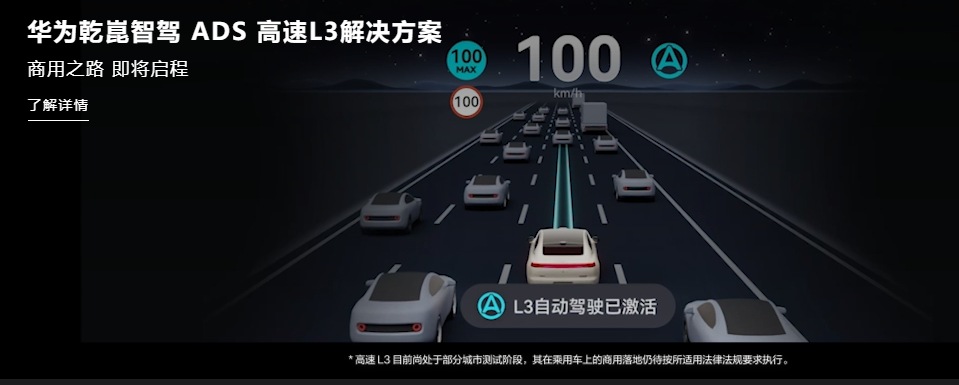
华为乾崑智驾ADS高速L3解决方案

Search documents
阿维塔科技拟赴港IPO 管理层:融资不是最重要目的
Mei Ri Jing Ji Xin Wen· 2025-12-24 14:02
Core Viewpoint - The primary goal of Avita Technology's IPO is not financing, but rather to access the capital market for growth and competitiveness in the electric vehicle sector [1] Financial Performance - Avita Technology's revenue projections for 2022 to 2024 are 28.34 million, 5.645 billion, and 15.195 billion respectively, with losses of 2.015 billion, 3.693 billion, and 4.018 billion [1] - In the first half of 2025, the company's loss narrowed to 1.585 billion, and the gross margin turned positive at 10.1% [1] Strategic Partnerships - Avita Technology has a strategic partnership with Huawei, where it holds a 10% stake in Huawei's subsidiary, and both companies operate under a "dual leadership" model [2][3] - The collaboration with Huawei is expected to enhance Avita's technological capabilities and market competitiveness [2] Product Development - By 2026, Avita plans to increase the number of co-created models with Huawei from 1 to 4, and aims to reach 17 models by 2030 [4] - The company is set to launch 4 new products in the coming year, including a large six-seat vehicle, to capture a younger consumer demographic [4] Market Positioning - Avita Technology aims to control operational costs and expand sales to achieve breakeven, emphasizing the importance of being listed to avoid negative cycles in a competitive market [1][2] - The company recognizes the challenges posed by a saturated market and plans to leverage new product launches and technological advancements to ensure growth [4]
中国汽车市场一周行业信息快报——2025年12月第1期
Zhong Guo Zhi Liang Xin Wen Wang· 2025-12-24 06:15
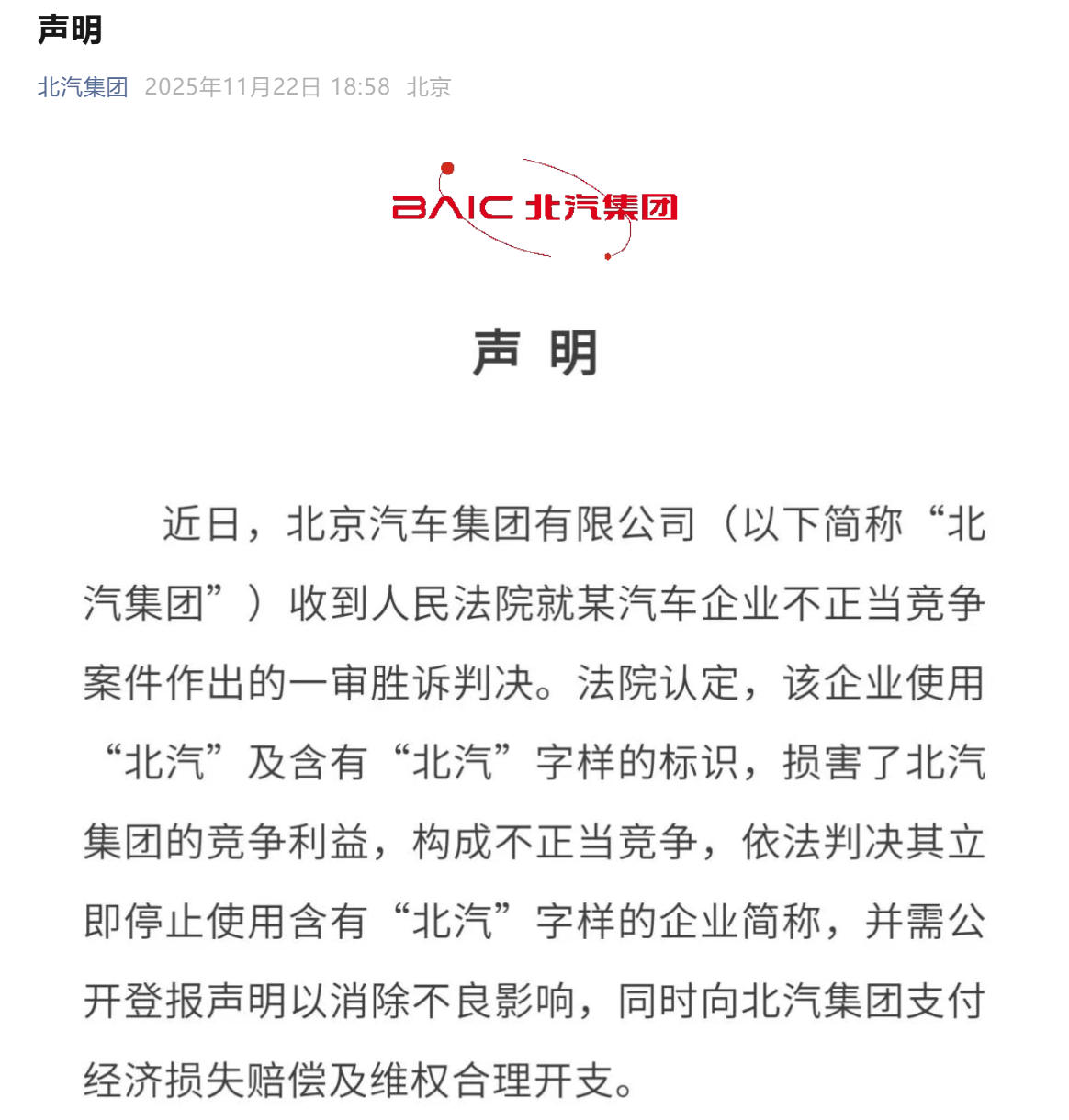
Group 1: Industry Developments - The domestic automotive market is experiencing diverse dynamics as multiple events unfold, including Zeekr's crowdfunding for an upgraded driver assistance system, the establishment of Volkswagen's first full-process R&D testing center outside Germany, and the initiation of pre-restructuring procedures by Jidu Auto [1][5][15] - Zeekr has launched a crowdfunding project for the replacement of driver assistance systems in its 2024 models, with prices set at 13,500 yuan for the Zeekr 001 and 18,500 yuan for the Zeekr 009, requiring 3,000 and 1,500 participants respectively for success [7][5] - A strategic partnership has been formed between Pony.ai and Sunshine Mobility to develop a large-scale driver assistance fleet, aiming to enhance driver assistance services in major Chinese cities [8][10] Group 2: Company Announcements - BAIC Group announced a court victory in a case against an automotive company for unfair competition, which was found to have misused the "BAIC" name, leading to a ruling for cessation of use and public retraction [2][4] - The Volkswagen (China) Technology Co., Ltd. has inaugurated a new R&D testing center in Hefei, covering 100,000 square meters with over 100 advanced laboratories, which will shorten vehicle development cycles by approximately 30% [11][13] - Jidu Auto has filed for pre-restructuring to attract new strategic investors and maintain asset value, while ensuring the stability of core operations under the supervision of a temporary administrator [15][18] Group 3: Technological Advancements - Huawei has initiated internal testing for its ADS Level 3 solution across multiple cities, collaborating with various vehicle models, aiming to create a comprehensive service ecosystem for future scenarios [19][23] - Didi Charging has rebranded from Xiaoju Charging, expanding its service network to over 62,000 charging stations across more than 270 cities, with a charging station availability rate of 97% [14]

阿维塔科技IPO前夜 管理层披露关键动因:融资不是最重要目的
Mei Ri Jing Ji Xin Wen· 2025-12-20 13:43
Group 1 - The core purpose of Avita Technology's IPO in Hong Kong is not primarily for financing, despite significant losses reported in their financial statements [1] - Avita's revenue projections for 2022 to 2024 are 28.34 million, 5.645 billion, and 15.195 billion respectively, with corresponding losses of 2.015 billion, 3.693 billion, and 4.018 billion [1] - The company emphasizes the importance of R&D investment despite current financial losses, indicating that this is a necessary phase for a high-end brand's growth [1] Group 2 - Avita Technology's partnership with Huawei is seen as a strategic advantage, despite concerns about competition and resource dilution among Huawei's automotive partners [2] - The company holds a 10% stake in Huawei's subsidiary, which positions it favorably within the "Huawei ecosystem" [2] - Avita aims to leverage its collaboration with Huawei to enhance its technological capabilities and market competitiveness [2] Group 3 - Avita Technology and Huawei have established a "dual leadership" model in product development and marketing, indicating a close operational partnership [3] - The strategic plan includes increasing the number of jointly developed models from one to four by 2026, with a target of 17 models by 2030 [3] Group 4 - Avita plans to launch four new products next year, including a large six-seater vehicle, to capture a younger customer demographic [4] - The company anticipates a challenging market environment in the coming year but aims to ensure growth through product saturation and technological advancements [4] - Avita intends to double its overseas market channels and release the Taihang Smart Control Chassis 2.0 next year [4]
股汽车ETF、港股通汽车ETF、香港汽车ETF涨超3%,智能驾驶概念持续活跃
Ge Long Hui· 2025-12-19 06:57
Group 1 - The smart driving concept is gaining momentum, with significant stock price increases for companies like Zhejiang Shibao (over 11%) and XPeng Motors (over 7%), as well as ETFs related to the automotive sector in Hong Kong rising over 3% [1] - The Ministry of Industry and Information Technology has granted the first batch of L3 conditional autonomous driving vehicle permits in China, with Changan Automobile and BAIC Jihe being the first approved companies for specific road trials [1] - The approval of L3 autonomous driving vehicles marks a critical step from testing to commercial application in China, indicating a significant advancement in the industry [3] Group 2 - XPeng Motors has received an L3 autonomous driving road testing license in Guangzhou, initiating regular L3 road tests, leveraging its integrated software and hardware advantages [2] - The L3 level of autonomous driving allows the vehicle system to fully take over driving tasks under specific conditions, while the driver must remain alert and ready to take control [2] - The formal implementation of L3 autonomous driving regulations is expected to be a key catalyst for industry development in 2026, with several automakers already capable of producing L3 vehicles [2][3] Group 3 - Multiple automakers, including Changan, BYD, GAC, Dongfeng, SAIC, Geely, XPeng, and Li Auto, have made substantial progress in the L3 autonomous driving sector, with several models receiving road testing permits [3] - The launch of L3 testing permits for vehicles like GAC A800, which can operate at speeds of up to 120 km/h, signifies a major milestone in the commercialization of L3 technology [3] - The recent approvals for L3 vehicles indicate advancements in both technology and policy, laying the groundwork for the commercial progression of smart driving by 2026 [3]


国联民生证券:L3级自动驾驶商业化加速 行业有望开启发展新阶段
Zhi Tong Cai Jing· 2025-12-17 06:24
Group 1 - The Ministry of Industry and Information Technology officially announced the first batch of L3 conditional autonomous driving vehicle permits in China, marking a significant step towards the commercialization of L3 autonomous driving [1] - Two models, one from Changan Automobile and another from BAIC BluePark, have received conditional approval for L3 autonomous driving capabilities, with specific operational areas designated in Chongqing and Beijing [1] - The Changan SC7000AAARBEV can operate in congested traffic at speeds up to 50 km/h, while the Arcfox BJ7001A61NBEV can operate at speeds up to 80 km/h on designated highways [1] Group 2 - Multiple domestic automakers, including Changan, BYD, GAC, Dongfeng, SAIC, Geely, Xpeng, and Li Auto, have made substantial progress in the L3 autonomous driving sector, with several models receiving road testing permits [2] - Huawei's QianKun Intelligent Driving ADS L3 solution is undergoing internal testing across multiple cities and models, while GAC's A800 has obtained a license for L3 testing at speeds of up to 120 km/h in Guangzhou [2] - The PhiGo Max, developed by 4D Mapping and its subsidiary, is set for mass production in 2026, targeting the high-end L3 intelligent driving market [2]





自动驾驶又迎催化!“华为系”智能汽车在全国多地开启L3路测
Shang Hai Zheng Quan Bao· 2025-12-16 12:33
Core Insights - The commercial use of L3 conditional autonomous driving is approaching, with multiple cities in China conducting road tests for L3 vehicles, including Shenzhen, Beijing, Shanghai, Guangzhou, Hefei, Wuhan, and Chongqing [1][3][6] Group 1: L3 Autonomous Driving Testing - Huawei's subsidiary, Hongmeng Zhixing, has initiated L3 conditional autonomous driving testing in Shenzhen, focusing on real-world scenarios to validate the safety and maturity of the L3 system [3][6] - The testing involves real users, specifically Huawei employees, using self-purchased models such as the 2025 Wanjie M9 and Zun Jie S800, covering 1,000 kilometers of high-speed roads in Shenzhen [3][6] - Other brands, including Xiaopeng Motors, have also received L3 road testing licenses and are conducting regular tests in cities like Guangzhou [6][7] Group 2: Partnerships and Collaborations - As of October 2025, Huawei's "Qian Kun" has partnered with 14 automotive companies, resulting in 33 mass-produced models across various vehicle types, including electric, hybrid, and fuel vehicles [4][10] - The first two L3 autonomous driving models approved for road testing are the Changan Deep Blue SL03 and the BAIC Arcfox Alpha S (L3 version), which are designed for urban congestion and highway scenarios [7][10] - Changan Deep Blue has three models equipped with Huawei's Qian Kun intelligent driving solution, while BAIC's Arcfox Alpha S (L3 version) also utilizes this technology [10]

华为L3级自动驾驶,新消息
Shang Hai Zheng Quan Bao· 2025-12-16 11:19
Core Viewpoint - The commercial use of L3 conditional autonomous driving is approaching, with multiple companies, including Huawei, actively conducting road tests in various cities across China [1][3][4]. Group 1: L3 Autonomous Driving Testing - Huawei's subsidiary, Hongmeng Zhixing, has initiated L3 conditional autonomous driving internal testing in Shenzhen, collaborating with local transportation authorities [1][3]. - The testing involves real users, specifically Huawei employees, using self-purchased vehicles, covering 1,000 kilometers of high-speed roads in Shenzhen [3]. - Other brands, such as Xiaopeng Motors, are also conducting L3 road tests, with Xiaopeng announcing its L3 road test license in Guangzhou [7]. Group 2: Partnerships and Collaborations - As of October 2025, Huawei's QianKun has partnered with 14 automotive companies, resulting in 33 mass-produced models across various vehicle types, from electric to fuel [4][11]. - The first two L3 autonomous driving models approved for road testing by the Ministry of Industry and Information Technology are from Changan Deep Blue and BAIC Arcfox, both of which have deep collaborations with Huawei [8][11]. Group 3: Future Projections - Huawei anticipates entering the L3 and L3+ era in the coming year, with expectations to progress towards L4 by 2027 [7].
L3级准入破冰 自动驾驶商业化落地驶入快车道
Bei Jing Shang Bao· 2025-12-15 22:56
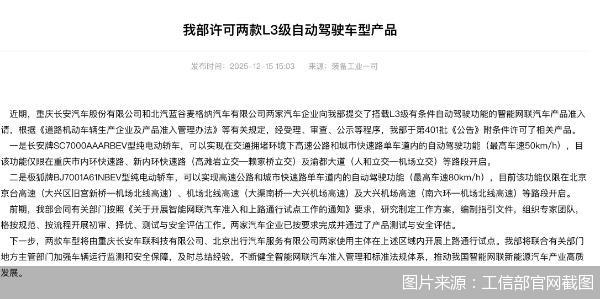
Core Insights - The Ministry of Industry and Information Technology (MIIT) of China has officially announced the first batch of L3 conditional autonomous driving vehicle permits, with Changan Automobile and BAIC Jihe receiving approvals for trial operations in designated areas of Chongqing and Beijing respectively [1][2] Group 1: L3 Autonomous Driving Development - The approval of L3 autonomous driving vehicles is expected to accelerate technological iterations within the industry and drive computing platforms towards automotive-grade standards and scalable applications [1][6] - L3 autonomous driving allows for partial decision-making by the system under specific conditions, enabling drivers to completely disengage from driving tasks [2][6] - Changan's approved model can achieve autonomous driving at speeds up to 50 km/h in congested scenarios on designated highways, while BAIC's Alpha S (L3 version) can reach speeds of 80 km/h on certain routes in Beijing [2] Group 2: Industry Competition and Collaboration - Major automotive companies have entered a competitive mode to commercialize autonomous driving technology, with several firms, including BAIC, GAC, and BYD, being included in the first batch of intelligent connected vehicle trial operations [4][6] - The collaboration between automotive manufacturers and technology companies is crucial for the commercial viability of L3 autonomous driving, with Horizon Robotics and Huawei providing essential technological support [5][6] Group 3: Safety and Regulatory Framework - The shift in driving responsibility due to autonomous driving raises concerns about accident liability, with regulations evolving to clarify responsibilities among users and autonomous systems [3][6] - The MIIT and other departments have emphasized the need for improved regulations and safety standards to support the growth of the autonomous driving sector [5][6] - The market for autonomous driving in China is projected to approach 450 billion yuan by 2025, driven by technological advancements and cost reductions [6]
L3级准入破冰,自动驾驶商业化落地驶入“快车道”
Bei Jing Shang Bao· 2025-12-15 14:07
Core Viewpoint - The Ministry of Industry and Information Technology (MIIT) of China has officially granted the first batch of L3 conditional autonomous driving vehicle permits, allowing Changan Automobile and BAIC's Arcfox models to conduct road trials in designated areas of Chongqing and Beijing, respectively [1][4]. Group 1: Policy and Regulatory Developments - The MIIT has approved L3 autonomous driving vehicles under specific conditions, marking a significant step towards the commercialization of autonomous driving technology in China [4][9]. - The approval process involved thorough assessments and compliance with regulations, ensuring that the vehicles meet safety and operational standards [3][4]. Group 2: Vehicle Specifications and Capabilities - Changan's model can achieve autonomous driving at speeds up to 50 km/h in congested traffic conditions on designated roads in Chongqing [3][4]. - BAIC's Arcfox model can operate at speeds up to 80 km/h on specific highways in Beijing, showcasing the capabilities of L3 autonomous driving technology [3][4]. Group 3: Industry Trends and Competitive Landscape - The autonomous driving industry is entering a competitive phase, with multiple automakers racing to develop and deploy L3 technology [6][9]. - Companies like GAC and BYD are also advancing their L3 capabilities, with GAC's model receiving a license for high-speed testing and BYD integrating L3 systems into urban driving scenarios [7][9]. Group 4: Technological Advancements and Partnerships - The successful deployment of L3 technology relies on advanced sensor systems, with BAIC's Arcfox equipped with 34 high-performance sensors for comprehensive environmental perception [7][8]. - Partnerships with technology firms are crucial, as seen with Horizon Robotics and Huawei, which are providing the necessary technological foundation for L3 commercialization [8][10]. Group 5: Market Outlook and Future Projections - The autonomous driving market in China is projected to approach 450 billion yuan by 2025, driven by technological advancements and increasing adoption rates [9]. - The focus on safety, regulatory compliance, and user experience will shape the competitive landscape, with companies needing to balance innovation with responsible marketing practices [9][10].

递表港交所,阿维塔科技计划2026年实现IPO,大股东系长安汽车、宁德时代
Mei Ri Jing Ji Xin Wen· 2025-11-28 06:44
Core Viewpoint - Avita Technology has submitted its listing application to the Hong Kong Stock Exchange, aiming to enhance its core competitiveness through fundraising for product development, brand building, and operational support [1][5]. Financial Performance - Projected revenues for Avita Technology are 5.645 billion yuan in 2023 and 15.195 billion yuan in 2024, representing a year-on-year growth of 169.16%. In the first half of 2025, revenue is expected to reach 12.208 billion yuan, a 98.52% increase compared to the same period in 2024 [1]. - Vehicle sales revenue is anticipated to be 11.49 billion yuan, while other business revenues, including driver assistance solutions and after-sales services, are expected to be 718 million yuan [1]. Funding and Valuation - The funds raised from the IPO will primarily be allocated to product and technology development, brand establishment, and sales network expansion [5]. - Avita Technology's valuation is approximately 26.017 billion yuan, based on a recent equity transfer agreement [5]. Shareholding Structure - The largest shareholders of Avita Technology are Chang'an Automobile and CATL, with significant investments from Huawei as well [8]. - Avita has completed payments totaling 11.5 billion yuan to Huawei for a 10% stake in a related company, which is expected to attract more investors [8]. Strategic Partnerships and Future Plans - Avita Technology has established a strategic partnership with Huawei and CATL, focusing on advanced technologies such as L3 autonomous driving solutions [8]. - The company aims to produce four co-created models with Huawei by 2026 and plans to expand this to 17 models by 2030 [8]. Sales Targets - Avita Technology targets global sales of 400,000 vehicles by 2027, with annual revenue reaching 100 billion yuan, and aims for 800,000 vehicles by 2030 and 1.5 million by 2035 [9]. - In October, Avita's sales reached 13,500 units, marking a 34% year-on-year increase and maintaining over 10,000 units sold for eight consecutive months [9].