
压片糖果

Search documents
数读「糖果、巧克力」:低糖健康、功能功效、IP食玩,是出路吗?
东京烘焙职业人· 2026-03-06 08:33
Core Insights - The article discusses the challenges faced by the candy and chocolate categories in the retail market, highlighting the impact of health trends and rising raw material costs on consumer preferences and pricing strategies [2][4]. Group 1: Market Overview - The candy and chocolate categories account for approximately 9% and 4% of the overall snack market, respectively, with chocolate experiencing a slight decline in market share from 2024 to 2025 [7]. - Both categories have seen negative year-on-year sales growth, with chocolate sales declining by about 7% and candy experiencing a more significant drop of over 10% [7][11]. - The overall market for snacks in traditional retail channels is shrinking, affecting all subcategories, with candy facing more severe pressure than chocolate [7][11]. Group 2: Seasonal Trends - Chocolate sales peak in the autumn and winter months due to higher caloric needs and seasonal holidays like Christmas and Valentine's Day [9]. - Candy maintains a higher quarterly market share than chocolate but has shown a noticeable decline in 2025, reflecting changing consumer preferences and a shift away from traditional candy [9][11]. Group 3: Pricing Trends - The average price per 100 grams for chocolate has been rising, influenced by increased raw material costs, while candy prices have generally declined [13][15]. - The price index for both categories has shown a trend of initial decline followed by recovery, with chocolate performing better than the overall snack category in certain periods [15][17]. Group 4: Regional Insights - In 2025, the Southwest region had the highest market share for candy, exceeding 10%, while the Northeast had the lowest at around 5.5% [17]. - Chocolate market share is higher in East China, North China, and Southwest regions, with some areas showing growth in market share from 2024 to 2025 [19]. Group 5: Market Concentration - The chocolate category has a high market concentration, with the top three brands holding over 70% of the market share, while the candy category remains fragmented with only about 20% held by the top three brands [21]. - The market share of the top ten brands in chocolate remains stable at around 80%, indicating a trend towards increased concentration in this category [21]. Group 6: Brand Dynamics - In the chocolate category, Meiji Group has shown significant sales growth of over 15%, while other brands like Mars and Ferrero have also seen positive market share growth [25][29]. - The candy category's top ten brands have all reported negative year-on-year sales growth, with Mars being the only brand exceeding 8% market share [41][45]. Group 7: Product Innovations - The article highlights the emergence of new product types such as probiotic and sugar-free candies, which are gaining traction among health-conscious consumers [46][57]. - The trend towards IP-themed products in both candy and chocolate categories is noted, with brands leveraging popular culture to enhance product appeal and pricing power [43][45].


数读「糖果、巧克力」:低糖健康、功能功效、IP食玩,是出路吗?
3 6 Ke· 2026-02-10 03:41
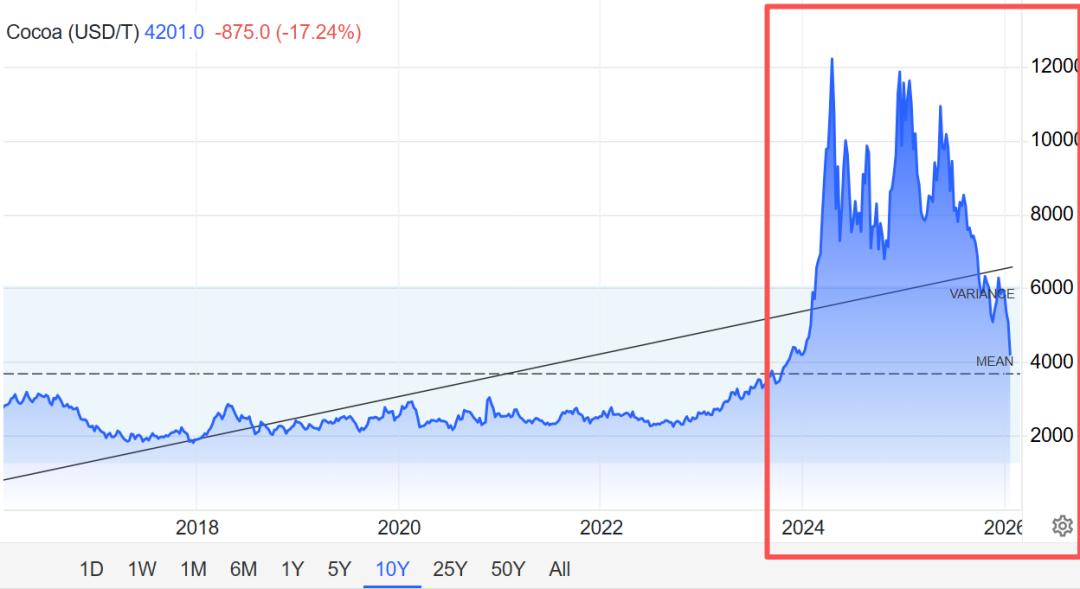
Overview - The leisure snack category, particularly candy and chocolate, has faced significant challenges in recent years due to health trends and rising raw material costs, with cocoa prices expected to remain high in 2024 and 2025, having increased several times compared to a decade ago [1][3]. Market Dynamics - In 2024 and 2025, chocolate accounts for approximately 9% of the leisure snack category, while candy holds about 4%, indicating a significant disparity [5]. - Both categories are experiencing negative sales growth, with chocolate sales declining by about 7% year-on-year, while candy's decline is more pronounced, exceeding 10% [5][9]. - The overall market for leisure snacks in traditional retail channels is shrinking, affecting all subcategories, with candy facing more severe pressure than chocolate [5][14]. Seasonal Trends - Chocolate sees higher sales in the autumn and winter months due to increased caloric needs and holiday celebrations, while candy's market share has shown a noticeable decline in 2025 [7][9]. Pricing Trends - The average price per 100 grams for chocolate has been rising, influenced by increased raw material costs, while candy prices have generally decreased [11][14]. - The price index for both chocolate and candy has shown a similar trend, with fluctuations indicating a general decline in prices for leisure snacks overall [13][14]. Regional Insights - In 2025, the market share of candy has declined across seven regions, with the Southwest region having the highest share, while the Northeast has the lowest [16]. - Chocolate's market share is higher in East China, North China, and Southwest regions, with some regions showing growth in 2025 compared to 2024 [17]. Market Concentration - The chocolate category has a high market concentration, with the top three companies holding over 70% of the market share, which is expected to increase further [19]. - In contrast, the candy category has a much lower concentration, with the top three companies holding only about 20% of the market share, indicating a fragmented market [19]. Brand Performance - Among chocolate brands, Meiji has shown significant sales growth, while Mars maintains the largest market share [22][27]. - In the candy sector, all top ten companies reported negative sales growth, with Mars being the only one exceeding 8% market share [36][42]. Product Trends - The chocolate category is seeing a rise in the number of SKUs, particularly in milk chocolate, while the market share of nostalgic products like M&Ms is declining [30][33]. - In the candy category, products like pressed candy and sugar-free options are gaining traction, but traditional candy faces challenges in maintaining market share [43][50]. Future Outlook - The candy and chocolate sectors are expected to evolve with a focus on health-oriented products and innovative marketing strategies, such as IP branding, to enhance consumer appeal and pricing power [53].

90后理工男返乡创业带动1000多人就业
Xin Lang Cai Jing· 2026-01-24 04:11
Core Viewpoint - A young entrepreneur from Bozhou, Zhang Junqiang, has successfully created over 1,000 jobs through his herbal tea and health product business, leveraging local resources and skills training programs [1] Group 1: Company Overview - Zhang Junqiang, a graduate of Anhui University of Technology, returned to his hometown to start a business focused on herbal tea, health products, and related food items [1] - His company has grown to a team of over 10 people, achieving an annual output value exceeding 6 million yuan [1] - The business has contributed to the development of a complete industrial chain, impacting over 1,000 jobs in the region [1] Group 2: Industry Insights - Bozhou is home to over 1,000 companies engaged in herbal tea production, with more than 500 varieties available, accounting for approximately 80% of the national production capacity [1] - The city is strategically positioned to enhance its traditional Chinese medicine industry through herbal tea, health food, and wellness services [1] - Local training programs, such as those for medicinal cuisine, are tailored to meet industry needs, creating a "training-qualification-employment" industrial chain [1]

警惕“神奇功效”减肥茶的“速效陷阱”
Xin Lang Cai Jing· 2025-12-29 04:48
Core Viewpoint - The Hunan Provincial Market Supervision Administration has issued a consumer alert regarding the risks associated with functional foods claiming to "cleanse the intestines" and "aid in weight loss," highlighting the illegal addition of senna leaves in these products, which pose health risks to consumers [1][2]. Group 1: Risks of Illegal Additives - The high-risk product categories for illegal addition of senna leaves are primarily those claiming "laxative," "weight loss," and "detoxification," with the highest risk found in substitute teas and weight loss teas, where 90% of illegal addition cases are concentrated [2] - Other products such as enzyme plums and fiber gummies also present significant risks, targeting different consumer groups with misleading claims of "natural fermentation" and "zero-calorie snacks" [2] - Solid beverages, tablet candies, and functional drinks are also at risk, often misleading consumers with false advertising about "imported ingredients" and "no additives," while concealing illegal components like senna leaf extracts [2] Group 2: Consumer Awareness and Identification - Consumers can identify and prevent the purchase of products containing illegal additives by looking for key indicators, such as claims of "3-day laxative" or "7-day detox," which likely indicate illegal additions [2] - To verify product safety, consumers should check for the "blue hat" symbol and the "National Food Health Registration" number on health foods, as ordinary foods claiming health benefits are illegal [3] - It is recommended to purchase from reputable pharmacies, large supermarkets, or official online stores to ensure product traceability and after-sales support, while avoiding high-risk channels like personal purchases and unregulated online platforms [3]
两部门:将红2G等物质纳入食品中可能添加的非食用物质名录
Yang Shi Wang· 2025-12-15 12:59
Core Viewpoint - The announcement by the State Administration for Market Regulation and the National Health Commission to include Red 2G, Dimethyl Yellow, Diethyl Yellow, Sibutramine, and their derivatives in the list of non-edible substances aims to enhance food safety and public health protection by preventing illegal food coloring practices and harmful additives [1][2]. Group 1: Regulatory Actions - The inclusion of these substances in the non-edible substances list provides targeted guidance and legal basis for regulatory enforcement, enabling more precise and effective actions against illegal additions in food products [2]. - The illegal addition of these substances can constitute the crime of "producing and selling toxic and harmful food," which may lead to severe penalties, including the death penalty, thereby creating a strong deterrent for unlawful businesses [2]. Group 2: Focus Areas and Future Plans - Regulatory authorities will intensify inspections in key areas such as rice and flour products, meat products, and pressed candy, with strict penalties for violations involving non-edible substances, including referral to judicial authorities for criminal cases [2]. - This announcement marks the second batch of non-edible substances, following the first list released in June 2025, and indicates that the list will be continuously updated based on the discovery of new non-edible substances, risk monitoring results, and regulatory needs [2].
中国最高检:将持续加大力度打击危害食品药品安全犯罪
Zhong Guo Xin Wen Wang· 2025-11-05 13:29
Core Points - The Supreme People's Procuratorate of China is intensifying efforts to combat crimes related to food and drug safety, as evidenced by the release of seven typical cases of prosecution against such crimes [1][2] - The cases involve various sectors, including health products, beef, and traditional Chinese medicine, highlighting a comprehensive approach to tackling these issues [1] Group 1: Prosecution Efforts - A total of 1,025 cases involving food safety crimes and 1,693 individuals were approved for arrest from January to September this year, while 3762 cases involving 7,316 individuals were prosecuted [1] - For drug safety crimes, 279 cases involving 443 individuals were approved for arrest, and 1,354 cases involving 2,668 individuals were prosecuted [1] Group 2: Case Examples - Some criminals were involved in the purchase, processing, and sale of diseased cattle, resulting in sentences ranging from four years to one month of detention for 26 individuals [2] - Other offenders illegally added enhancement substances to pressed candy and sold them online, with 11 individuals receiving sentences from five years to six months [2] Group 3: Future Actions - The Procuratorate plans to further investigate the upstream and downstream supply chains to dismantle criminal networks and improve the coordination mechanism between law enforcement and judicial processes in the food and drug safety sector [2]
湖北来凤大力发展藤茶产业
Jing Ji Ri Bao· 2025-08-13 01:00
Core Insights - The third International Vine Tea Conference was held in Laifeng County, Hubei Province, showcasing a new craft product that combines traditional tea with modern techniques, attracting both domestic and international attention [1][2] - Laifeng County has significantly developed its vine tea industry, with 102,000 acres of vine tea plantations producing 6,788 tons of dry tea annually, benefiting over 20,000 farmers and generating a comprehensive annual output value of 2.253 billion yuan [1][4] Industry Development - The vine tea industry is expanding into various sectors such as medicine, food, and daily chemicals, with products increasingly integrating traditional flavors and modern health concepts [2][3] - The introduction of vine tea into the Hubei medical insurance directory and the application for health certifications for new products indicate a growing recognition of vine tea's health benefits [2] Product Innovation - A recent creative competition for new vine tea drinks attracted over 100 mixologists, resulting in innovative recipes that blend traditional vine tea with modern flavors, appealing to younger consumers [2][3] - The development of new products, such as jasmine vine tea and osmanthus vine tea, is being facilitated through cross-border e-commerce, targeting international markets [3] Economic Impact - The local government is actively supporting the vine tea industry with financial initiatives, including a 50 million yuan project funded by the central lottery public welfare fund and annual loan interest subsidies of 20 million yuan [4] - Farmers are directly benefiting from the vine tea industry, with some earning over 100 yuan daily from tea picking, and companies like Hubei Jinqi Biotechnology are involving farmers as shareholders [3][4]
久久王(01927.HK)7月4日收盘上涨9.52%,成交4.62万港元
Jin Rong Jie· 2025-07-04 08:29
Company Overview - Jiujiuwang Food International Co., Ltd. was established in 1999 in China and is a manufacturer of confectionery products, including gelatin-based candies, tablet candies, puffed candies, and hard candies [2] - The company sources raw materials from suppliers and produces and packages confectionery products in its internal facilities, selling products under its own brands (Kusha, Lalab, and Jiujiuwang) through e-commerce channels and to distributors in China and overseas [2] - As of August 31, 2020, the company had 129 distributors, covering a wide sales network across one municipality, two autonomous regions, and 21 provinces in China [2] Production Capacity - The company operates a factory in Jinjiang, Fujian Province, with an area of approximately 117,589 square meters and 32 production lines, with an annual production capacity of about 15,045.4 tons [3] - The company emphasizes direct control over product quality, production costs, and production schedules through its own manufacturing facilities [3] - The company has over 20 years of experience in producing high-quality confectionery products and continuously develops new products and modifies existing ones to meet changing consumer preferences [3] Market Position - According to Frost & Sullivan, the company ranked second in the overall confectionery market in Fujian Province by revenue, holding approximately 2.7% market share in 2019, and about 0.7% market share in the overall Chinese market [2]