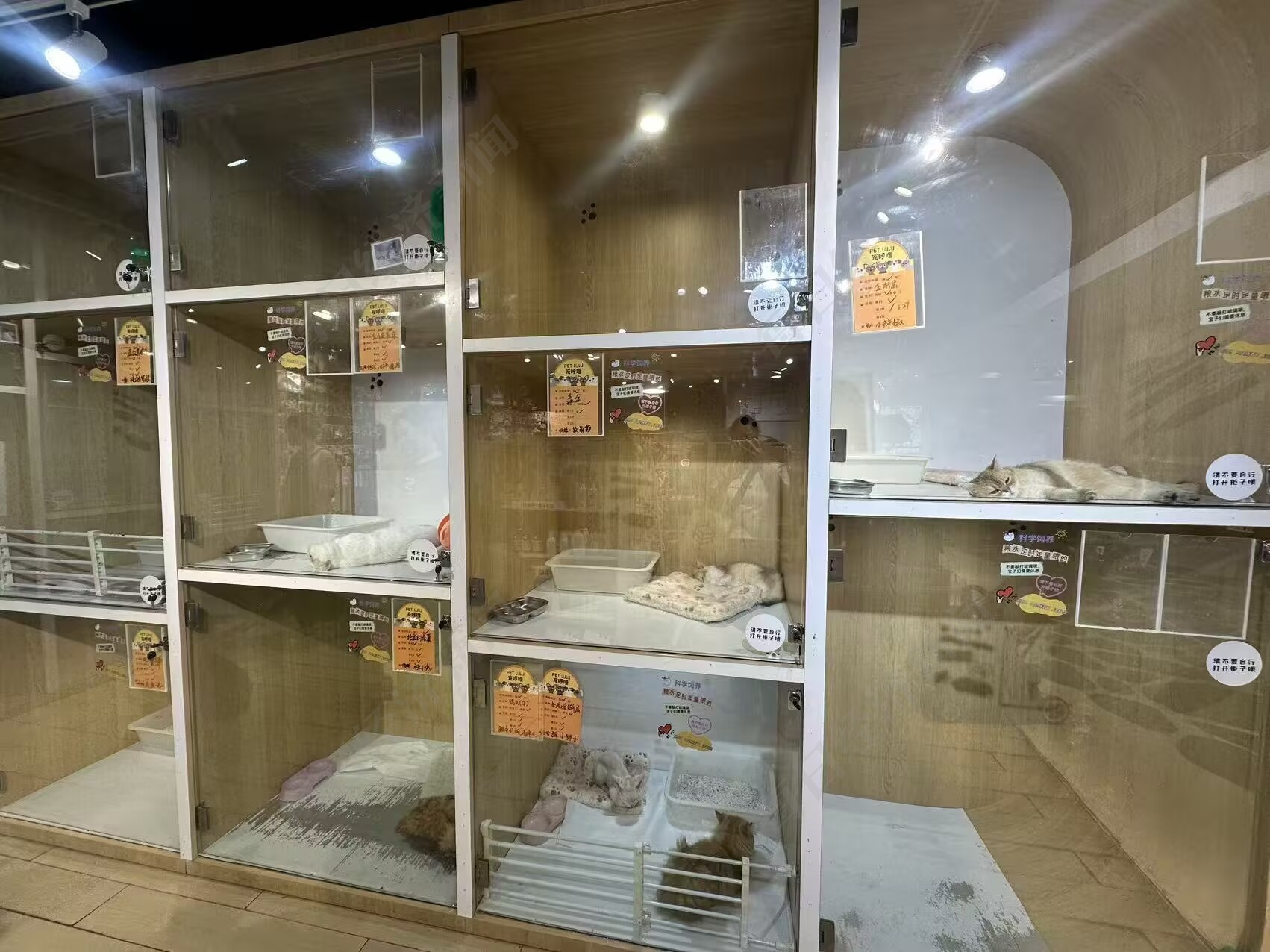
宠物洗护服务

Search documents
为它写对联,给它派利是 “毛孩子”过年仪式感拉满
Xin Lang Cai Jing· 2026-02-18 00:52
Core Insights - The pet economy is becoming a significant growth driver in the consumer upgrade wave, with pets increasingly viewed as family members rather than just companions [2][3] - Young consumers are driving emotional spending on pets, leading to the emergence of "pet customs" during festive seasons, particularly during the Chinese New Year [3][8] Group 1: Consumer Behavior - Over 70% of pet owners arranged grooming, custom New Year meals, and photoshoots for their pets during the Spring Festival, indicating a rise in pet-related services [3] - The trend of celebrating the New Year with pets includes activities such as giving "lucky money" and preparing special meals, showcasing the growing ritualistic aspect of pet ownership [4][6] Group 2: Market Dynamics - The demand for pet services surged during the Spring Festival, with grooming service prices increasing by 50% in some stores, reflecting a robust market response to heightened consumer interest [7] - According to iMedia Consulting, the national pet economy is projected to reach 811.4 billion yuan by 2025, with a year-on-year growth of 15.7% [7] - The urban pet consumption market for dogs and cats is expected to reach 312.6 billion yuan in 2026, marking a 4.1% increase from 2024 [7] Group 3: Service Industry Response - Pet service providers are experiencing a peak in demand, with many stores fully booked for grooming services ahead of price increases [7] - To manage the influx of customers, pet service establishments are implementing strict appointment policies and temporarily halting certain services during peak periods [7]


宠物“年节经济”升温 中国“铲屎官”为爱宠备年夜饭购新装
Zhong Guo Xin Wen Wang· 2026-02-11 00:16
Core Insights - The "pet New Year economy" is emerging as a new growth point in China's Spring Festival consumption market, with a focus on specialized products and services for pets [1] Group 1: Pet Food and Products - "Pet New Year dinner" has become a trending search term on e-commerce platforms, with significant sales growth in "Spring Festival limited" products [2] - In supermarkets, pet food gift boxes for the Spring Festival are being prominently displayed, emphasizing healthy ingredient ratios and affordable pricing [2] - Pet owners are increasingly viewing pets as family members, leading to a desire to celebrate the New Year with special meals and new outfits for their pets [2] Group 2: Pet Services - There is a notable increase in demand for pet grooming services, with appointments fully booked well in advance of the holiday [3] - Customized "Spring Festival special styles" for pets have become popular grooming options, alongside a surge in demand for pet boarding and home care services, with prices rising by 20% to 50% compared to regular rates [4] Group 3: Market Growth and Trends - The Chinese pet economy is rapidly growing, with projections estimating the industry size to reach 811.4 billion yuan by 2025 and potentially exceed 1.15 trillion yuan by 2028 [4] - The rise of the "pet New Year economy" reflects a deeper trend in emotional consumption, as pets are increasingly seen as important family members [4] - The ongoing growth in pet-related spending is pushing the industry towards more professional and refined service offerings [4]

宠物“年节经济”升温,中国“铲屎官”为爱宠备年夜饭购新装
Sou Hu Cai Jing· 2026-02-10 18:21
Group 1 - The core viewpoint of the article highlights the emergence of the "pet New Year economy" as a new growth point in China's Spring Festival consumption market, reflecting a trend towards more refined and emotional spending on pets during the holiday season [1][5]. Group 2 - Recent trends show that "pet New Year dinner" has become a hot search term on e-commerce platforms, with significant sales growth in "Spring Festival limited" products, indicating a surge in pet-related holiday consumption [2]. - Various pet platforms and themed live broadcasts are promoting New Year-themed products, utilizing live tastings and ingredient explanations to attract pet owners to make purchases [2]. - In physical retail, pet food gift boxes for the Spring Festival are being prominently displayed, with a focus on healthy ingredient combinations and competitive pricing, catering to the growing demand for quality pet food during the holiday [2]. Group 3 - The offline service sector for pets is also experiencing comprehensive growth, with high demand for grooming and spa services as pet owners seek to prepare their pets for the New Year [3]. - Customized "Spring Festival special styles" for pets have become popular grooming options, and there is a peak in demand for pet boarding and home care services, with prices increasing by 20% to 50% compared to regular rates [3]. Group 4 - The Chinese pet consumption market has been rapidly growing, with projections indicating that the industry scale will reach 811.4 billion yuan by 2025 and potentially exceed 1.15 trillion yuan by 2028, reflecting a shift from basic needs to emotional and social demands [5]. - The rise of the pet "New Year economy" signifies a deeper emotional consumption trend in contemporary society, as pets are increasingly viewed as important family members, integrating pet-related spending into traditional holiday practices [5]. - The ongoing growth of the pet "New Year economy" challenges businesses to innovate their products and services, pushing the industry towards more professional and refined development [5].

宠物上门喂养师:“它经济”升温,新机遇上门
Xin Lang Cai Jing· 2026-01-05 00:10
Core Insights - The pet economy is experiencing significant growth, driven by policy support and emotional demand, leading to new job opportunities in pet care services [1][3][4] - Young professionals are increasingly entering the pet care industry, with a focus on standardizing services and enhancing customer experience [2][3] Group 1: Industry Growth and Trends - The pet economy is being accelerated by government initiatives aimed at boosting consumption, including the promotion of pet-related services [1][3] - Search volumes for services like "dog walking" and "cat feeding" have seen substantial year-on-year increases since 2025, particularly among the 20-35 age demographic [1] - The market for pet-related services is projected to grow significantly, with Zhejiang province aiming for a market size exceeding 30 billion yuan by 2027 [3] Group 2: Professionalization and Standardization - Professionals in the pet care industry are moving towards team-based and specialized service models, enhancing the quality and reliability of care [2][3] - Standardized service processes are being developed to cater to high-demand clients, particularly for premium pet care services [2][3] - Platforms like Didi are entering the pet service market, promoting standardization and professionalization within the industry [4] Group 3: Consumer Behavior and Demand - Pet owners increasingly view their pets as emotional companions, driving demand for personalized and professional pet care services [4] - The rise of flexible employment opportunities in the pet care sector is attracting many young individuals, although there is a need for ongoing professional development to meet industry standards [4]
95后跨年怎么过?吃火锅烤肉、打台球、美发美甲……
Sou Hu Cai Jing· 2026-01-03 17:11
Core Insights - Urban consumption vitality was fully released during the New Year period, with cities like Shanghai, Nanjing, and Changsha showcasing strong local consumption activity [1][8] - Diverse consumption experiences, including shopping, cross-city travel, and winter activities, saw significant growth, indicating a robust experience economy [1][3] Consumption Trends - Supermarket shopping and cross-city tourism were popular, with supermarket coupon sales on Douyin increasing by 164% year-on-year, and sales of clothing and jewelry rising by 147% and 109% respectively [3] - The pet care sector also saw a notable increase, with pet grooming services growing by 63% [3] Travel and Accommodation - The travel market was vibrant, with hotel and guesthouse sales increasing by 93% and 97% year-on-year, respectively, and attraction ticket sales rising by 46% [3] - The "Heartfelt List" of hotels saw a 71% increase in sales and an 85% increase in order volume from December 19 to January 1 [3] Experience Economy - The offline experience economy became a new highlight, with "Pindou" handcraft experiences seeing a staggering 1461% increase in sales on Douyin [6] - Theme park visits and pottery experiences also gained popularity, with sales increasing by 106% and 99% respectively [6] Food Consumption - Food consumption remained a key focus during the holiday, with hot pot, chicken pot, grilled fish, and other dishes being particularly favored, and buffet sales increasing by 94% year-on-year [4] Regional Highlights - Cities such as Shanghai, Zhengzhou, Fuzhou, Chengdu, Wuhan, Guangzhou, Hangzhou, Beijing, Nanjing, and Changsha demonstrated strong local consumption vitality during the New Year holiday [8] - Hainan experienced a tourism surge, attracting visitors with its unique climate and travel resources, leading to high demand for group purchases of scenic area tickets and travel packages [8]

暴利的宠物,大厂的坟墓
36氪· 2026-01-03 13:08
Core Viewpoint - The pet economy, while appearing lucrative with a market size of 300 billion and gross margins up to 50%, is not a profitable venture for large companies due to high operational costs and reliance on human capital rather than scalable business models [4][10][30]. Industry Overview - The pet economy is characterized by high gross margins, particularly in pet food, where domestic brands can achieve margins of 40%-50% [10][11]. - Service sectors such as grooming and veterinary care also show high potential margins, but the actual profitability for companies is often low due to high operational costs [10][15]. Company Performance - Major players like Pet Fresh and others have faced significant losses, with Pet Fresh closing 18 stores after burning through 178 million RMB in just nine months, averaging losses of over 200,000 RMB per store monthly [5][11]. - Companies like Zhongchong Co. and Petty Co. report low net profit margins, with Zhongchong's gross margin at 28.16% and net margin at only 9.33% [11][12]. Marketing and Sales Costs - The cost of acquiring customers through KOLs (Key Opinion Leaders) and marketing has skyrocketed, with sales expenses for companies like Guibao Pet increasing from under 100 million RMB in 2017 to 500 million RMB in 2024, leading to diminished net profit margins despite increased sales [13][14]. Challenges in Scaling - The pet economy is heavily reliant on personal relationships and trust between pet owners and service providers, making it difficult for large companies to replicate the success of smaller, independent businesses [27][30]. - The high costs associated with maintaining quality service and customer trust, such as expensive store locations and high employee wages, hinder profitability for larger firms [15][28]. Comparison with Other Industries - Similar challenges are observed in other high-margin industries like beauty and medical services, where the core value lies in skilled personnel rather than scalable business operations [19][20][24]. - The pet industry exemplifies a trend where the most profitable segments are those that rely on individual expertise and customer relationships, rather than mass-market strategies [30].


金店退租,商场欲引入宠物摄影店 一只猫卖5万8,毛孩子成了商场新流量密码?丨宠物经济④
Mei Ri Jing Ji Xin Wen· 2025-10-03 00:22
Core Insights - The pet industry is experiencing significant growth in China, with the urban pet consumption market expected to exceed 300 billion yuan in 2024 and surpass 400 billion yuan by 2027, driven by a growing young pet owner demographic [4][6][10] Group 1: Market Trends - Shopping malls are increasingly welcoming pet stores, with many actively seeking to incorporate pet-friendly spaces to attract younger and middle-aged consumers [4][6] - The shift in attitude from shopping malls towards pet businesses has become particularly evident in the last two years, with a notable increase in invitations for pet-related businesses to enter malls [4][6] - Pet stores are becoming a key strategy for shopping centers to drive foot traffic, similar to the appeal of the "二次元" (anime) culture [4][11] Group 2: Business Models - The pet retail landscape is evolving, with a focus on services rather than just product sales; the service sector is projected to grow, while product sales are declining [10][11] - Active sales of live pets are identified as a lucrative business model, with some stores achieving monthly sales of around 600,000 yuan [8][10] - Pet grooming and care services are becoming increasingly popular, often commanding higher prices than pet products, indicating a shift towards service-oriented revenue streams [10][11] Group 3: Operational Challenges - The success of pet stores in malls heavily relies on location, foot traffic, and the operational capabilities of the shopping centers [11][13] - Some pet store owners report challenges in profitability despite the influx of customers, highlighting the need for effective marketing and event planning by mall operators [11][13] - The balance between accommodating pet-friendly environments and maintaining consumer satisfaction is crucial for the sustainable growth of the pet-friendly concept in commercial spaces [13]