帕萨特家族

Search documents
如何穿越市场寒潮?上汽大众:稳扎稳打、价值破局
Zhong Guo Jing Ji Wang· 2026-02-12 03:24
Core Insights - SAIC Volkswagen is responding to a cooling market and price competition by focusing on "steady progress and value breakthrough" [1] - The company achieved a terminal sales figure of 89,600 units in January, supported by strong performances from multiple models [2][4] - SAIC Volkswagen plans to launch seven new energy models by 2026, aiming to capture over 50% of the new energy market share [1][5] Sales Performance - In January, SAIC Volkswagen's sales included over 23,000 units from the Lavida family, nearly 21,000 from the Passat family, and over 21,000 from the Tiguan family [2] - The Audi brand under SAIC Volkswagen also saw a significant increase, with sales of 3,800 units in January, marking a 35.7% year-on-year growth [4] Product Strategy - The company is committed to a dual strategy of "oil and electricity advancing together," focusing on both traditional fuel vehicles and new energy vehicles [5][8] - The ID. ERA 9X, the first model in the new ID. ERA series, has garnered significant market attention and is undergoing rigorous performance testing [7] Market Positioning - SAIC Volkswagen aims to differentiate itself through value rather than price competition, emphasizing long-term value creation around users, technology, and brand [9][11] - The company has reached a milestone of 26 million cumulative sales, becoming the first single brand in the domestic market to achieve this figure [4] Future Outlook - The company anticipates a strong push in 2026, focusing on high-quality products and a marketing strategy that avoids price wars, such as the "one price" model [11] - With the new subsidy policy linked to vehicle prices, there is a favorable outlook for mid-to-high-end models, supporting SAIC Volkswagen's strategy for quality products [11]

1月终端销售8.96万辆,上汽大众2026奔赴出众年
Zhong Guo Qi Che Bao Wang· 2026-02-05 08:18
Group 1 - In January, the domestic automotive market faced pressure due to a shift in consumption policies and seasonal factors, with SAIC Volkswagen achieving terminal sales of 89,600 units [1] - The main products of SAIC Volkswagen showed strong performance, with the Lavida family selling over 23,000 units, the Passat family nearly 21,000 units, and the Tiguan family over 21,000 units, all leading their respective segments with monthly sales exceeding 20,000 units [2] - The SAIC Volkswagen brand reached a cumulative sales milestone of 26 million units in January, becoming the first single brand in the domestic market to surpass this figure [2] Group 2 - In the luxury segment, SAIC Audi achieved terminal sales of 3,800 units in January, representing a year-on-year increase of 35.7% [6] - The Audi E5 Sportback, a key model, has won several prestigious awards, reinforcing its position in the luxury electric vehicle market [6][7] - The automotive industry is transitioning from scale expansion to high-quality development, with consumer purchasing decisions shifting from policy dependence to product value recognition [9] Group 3 - In 2026, SAIC Volkswagen plans to launch seven new energy models covering pure electric, plug-in hybrid, and range-extended technologies [12] - The Audi E7X, the second model under the Audi brand, will be officially unveiled at the Beijing Auto Show [12] - The ID. ERA 9X is set to begin mass production, having successfully completed winter testing, showcasing the company's strong R&D and technological capabilities [12][13]

上汽奥迪9月终端销量5700辆,同比增长90%
Xin Lang Cai Jing· 2025-10-12 11:27
Core Insights - SAIC Volkswagen reported a terminal sales figure of 91,300 units in September 2025, representing a month-on-month increase of 1.4% [1] - Cumulative terminal sales for the first three quarters of this year reached 787,000 units [1] - The Volkswagen brand saw significant sales in September, with the Lavida family achieving 22,000 units, the Passat family nearly 19,000 units, and the Tiguan family exceeding 19,000 units [1] - The luxury brand SAIC Audi experienced a remarkable year-on-year growth of 90% in September, with terminal sales reaching 5,700 units [1]
新车集中到店 “十一”车市加速放量
Bei Jing Shang Bao· 2025-10-08 15:41
Group 1 - The automotive industry is leveraging the National Day and Mid-Autumn Festival holidays to launch new models and attract customers, resulting in a significant increase in store orders [1][2][3] - Over 70 new car models were launched in September, with the Tesla Model Y L becoming a standout during the holiday period, driving consumer interest and inquiries [2][3] - The "trade-in" policy continues to boost new car sales, and the holiday period is seen as a critical window for automakers to achieve their annual sales targets [1][3][7] Group 2 - Various automakers are implementing creative discount strategies to attract buyers, such as cash vouchers and trade-in subsidies, to lower the purchasing threshold [4][5] - The combination of online and offline marketing efforts, including live streaming and promotional events, is being utilized to enhance customer engagement and drive sales [6][7] - The automotive market is expected to see a moderate sales increase in the fourth quarter, with projections of a 5% to 10% year-on-year growth due to favorable policies and holiday effects [8][10] Group 3 - The new energy vehicle segment is experiencing significant growth, with brands like Li Auto and Xpeng Motors reporting substantial sales increases, while traditional fuel vehicles are also showing signs of recovery [10][11][12] - The market concentration for fuel vehicles is increasing, with a few models dominating sales, indicating a "head effect" where top-selling models account for a significant portion of total sales [13]
“金九银十”看车市|“十一”车市加速放量:新车站“C位”,商超店成客流主力
Bei Jing Shang Bao· 2025-10-08 13:45
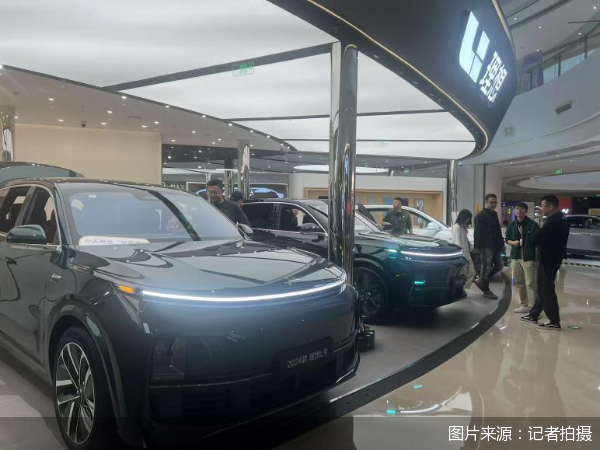
Core Insights - The automotive industry is leveraging the National Day and Mid-Autumn Festival holidays to boost sales through new vehicle launches and promotional offers, aiming to capture market share in the fourth quarter [1][11]. New Vehicle Launches - Over 70 new vehicles were launched in September, with significant attention on models like the Tesla Model Y L, which became a focal point for consumer inquiries and test drives during the holiday [2][3]. - The introduction of the Li Auto i6 has led to increased orders, with expectations of selling out production capacity by January 31 [3]. Promotional Strategies - Automotive companies are implementing various promotional strategies, including cash discounts and trade-in subsidies, to attract consumers during the holiday period [7][8]. - For example, GAC Honda and SAIC Volkswagen are offering cash vouchers and trade-in subsidies to lower the purchase threshold for consumers [7][8]. Consumer Behavior - The convenience of automotive superstores during the holidays has attracted consumers who may not have had time to visit traditional dealerships [6]. - Many consumers are taking advantage of the holiday to explore vehicle options while engaging in other leisure activities, such as shopping and dining [6]. Market Trends - The "Golden September" and "Silver October" sales periods are expected to see a boost due to favorable policies and promotional activities, with a projected 5% to 10% year-on-year growth in fourth-quarter sales [12]. - The government's "old-for-new" policy has effectively stimulated automotive consumption, contributing to a 12.7% increase in production and a 12.6% increase in sales year-on-year for the first eight months of the year [11].
“十一”车市加速放量:新车站“C位”,商超店成客流主力
Bei Jing Shang Bao· 2025-10-08 13:41
Core Insights - The automotive industry is leveraging the National Day and Mid-Autumn Festival holidays to launch new models and attract customers, resulting in increased order volumes for dealerships [1][2][3] - Companies are implementing various promotional strategies, combining new vehicle launches with attractive pricing to stimulate consumer interest and drive sales [1][4][5] - The "trade-in" policy continues to boost new car consumption, making the holiday period a critical time for automakers to achieve their annual sales targets [1][7][8] New Model Launches - Over 70 new vehicles were launched in September, with significant attention on models like the Tesla Model Y L during the holiday period, which became a key attraction for consumers [2][3] - Dealerships are experiencing increased foot traffic and order volumes due to the strategic placement of new models in prominent locations within showrooms [2][3] Promotional Strategies - Automakers are employing various promotional tactics, such as cash discounts and trade-in subsidies, to lower the purchase threshold for consumers [4][5] - For instance, GAC Honda and SAIC Volkswagen are offering special cash vouchers and trade-in bonuses during the holiday period to incentivize purchases [4][5] Market Dynamics - The automotive market is witnessing a recovery in demand, supported by favorable policies and promotional activities, with production and sales figures showing significant year-on-year growth [7][8] - The "Golden September" and "Silver October" sales periods are expected to see a boost in customer traffic and sales volume, driven by holiday shopping and promotional events [8]
上汽大众油电同进战略稳步推进
Huan Qiu Wang· 2025-09-15 10:12
Core Viewpoint - The Chinese automotive market is transitioning towards a more rational development with a diversified energy landscape, where both fuel and electric vehicles coexist, reflecting a maturation of consumer purchasing behavior [3][6][9]. Group 1: Market Trends - The market share of fuel vehicles is stabilizing, indicating a mature automotive market where consumer decisions are becoming more rational [3][6]. - As of January to August 2025, SAIC Volkswagen's retail sales for the Volkswagen brand reached 662,500 units, with a fuel vehicle market share of 8.76%, maintaining the top position for 14 consecutive months since July 2024 [5][6]. Group 2: Strategic Initiatives - SAIC Volkswagen is implementing a dual-track strategy of "oil and electricity advancing together," focusing on both fuel and electric vehicle development to enhance product competitiveness [6][7][9]. - The company plans to launch six new energy products next year, covering various segments including fuel, pure electric, and hybrid vehicles [7]. Group 3: Consumer Behavior - Consumers are increasingly considering the total lifecycle cost of ownership, making fuel vehicles a stable choice for many users despite the rapid development of electric vehicles [8][9]. - The shift in consumer behavior reflects a broader trend in the Chinese automotive market, where practicality, reliability, and long-term costs are prioritized over merely adopting new technologies [9].
上汽大众:油电同智战略打造“全势能”竞争力
Zhong Guo Qi Che Bao Wang· 2025-09-14 15:09
Core Viewpoint - The traditional fuel vehicle market in China is experiencing a stabilization and growth phase, with companies like SAIC Volkswagen demonstrating resilience and competitiveness through innovation and strategic product offerings [1][3][8]. Group 1: Market Trends - Traditional fuel passenger vehicles have shown positive growth for three consecutive months, indicating a shift in the competitive landscape against new energy vehicles [1]. - The market share decline of fuel vehicles is slowing, reflecting a more mature market where consumers are making rational purchasing decisions [3]. - Fuel vehicles still hold approximately 50% market share, showcasing their ongoing relevance despite the rise of new energy vehicles [3]. Group 2: Company Performance - SAIC Volkswagen's retail sales for the Volkswagen brand reached 662,500 units in the first eight months of the year, with a fuel vehicle market share of 8.76% [4]. - The company has maintained the number one position in fuel vehicle market share for 14 consecutive months, indicating strong brand performance [4]. - The introduction of the fifth-generation EA888 engine and the "Pro family" product series has significantly enhanced the competitiveness and intelligence of fuel vehicles [4]. Group 3: Strategic Initiatives - SAIC Volkswagen employs a comprehensive product strategy, covering nearly every price segment with popular fuel vehicle models [7]. - The company plans to launch six new energy products next year, aiming for a dual-track development approach that encompasses fuel, electric, and hybrid markets [7]. - The "oil-electric synergy" strategy is being implemented to integrate intelligent technologies from electric vehicles into fuel vehicles, enhancing overall product competitiveness [3][8].

以“油电同进+个性化”筑牢市场竞争力 上汽大众携全新凌渡 L GTS亮相成都车展
Zheng Quan Ri Bao Wang· 2025-08-31 14:13
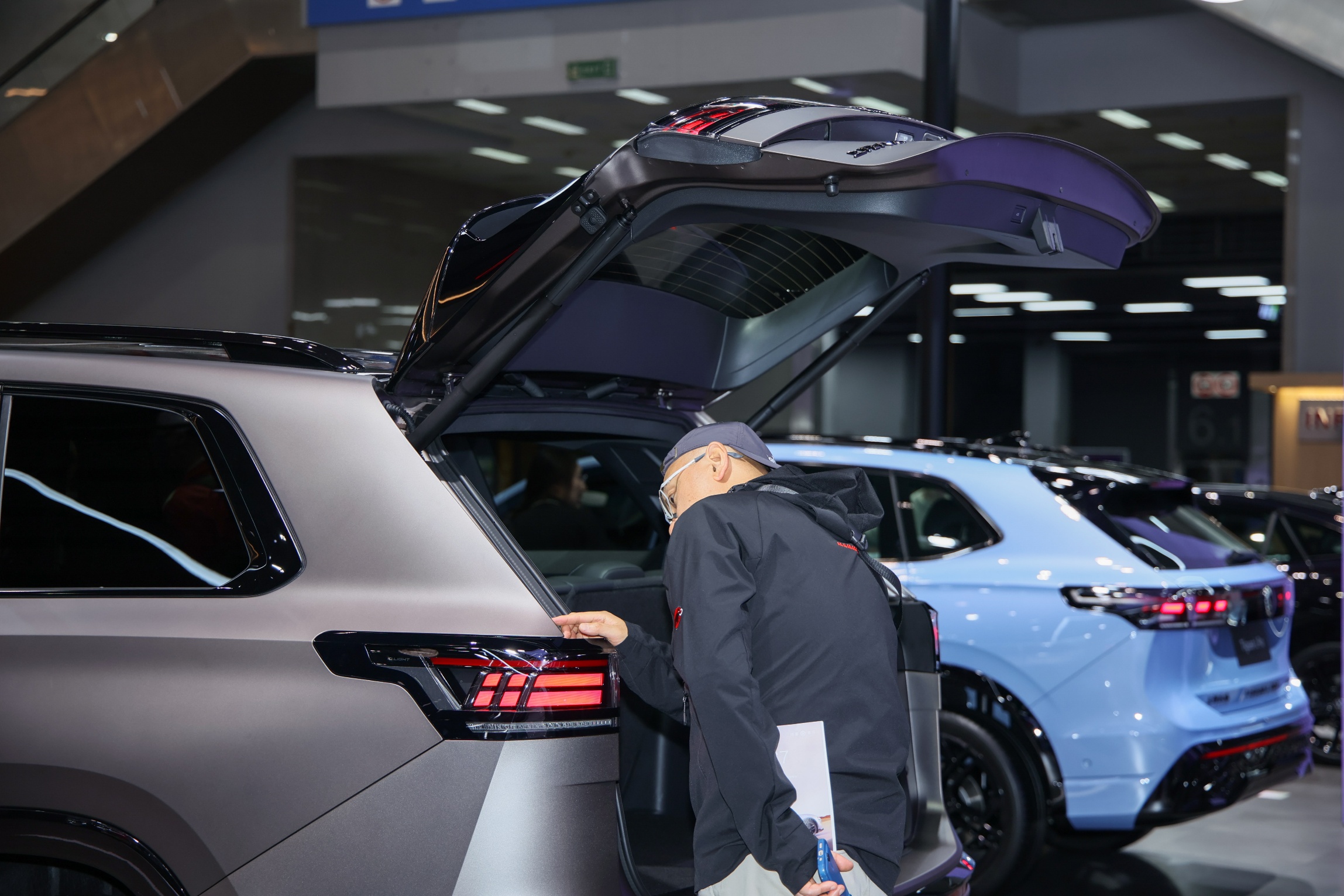
Core Insights - The 2025 Chengdu Auto Show showcases SAIC Volkswagen's commitment to both fuel and electric vehicles, highlighting the launch of the new Lingdu LGTS as a key move in the fuel vehicle market [1][6] - The company emphasizes a dual strategy of "oil and electricity advancing together," planning to release six new energy products by 2026 while continuing to enhance fuel vehicle capabilities [4][6] Product Launch and Features - The new Lingdu LGTS, priced from 139,900 yuan, targets young consumers as an affordable high-performance option, featuring a 2.0T engine with 162 kW power and 350 N m torque, achieving 0-100 km/h in 6.98 seconds [2][3] - The vehicle includes advanced technology such as the Qualcomm 8155 chip, a floating central control screen, and L2-level driver assistance, balancing driving pleasure with safety [2][3] Market Strategy - SAIC Volkswagen is entering the fuel vehicle modification market, offering official customization options and a 1 million yuan modification fund to cater to the younger demographic, which has a nearly 50% female representation [3] - The Pro family of vehicles, including models like the Tuquan L Pro and Passat Pro, aims to elevate the intelligence of fuel vehicles, integrating advanced features and enhancing user experience [4][6] R&D and Service Transformation - The company has optimized its R&D cycle from 36-48 months to under 24 months while maintaining rigorous safety testing protocols, ensuring each product undergoes over 600,000 km of testing [5] - A shift from a sales-focused approach to a service-oriented model has been implemented, with a new digital marketing department enhancing direct communication with users and improving service capabilities among dealers [5]
销量稳增 上汽大众开启新征程
Hang Zhou Ri Bao· 2025-08-12 07:13
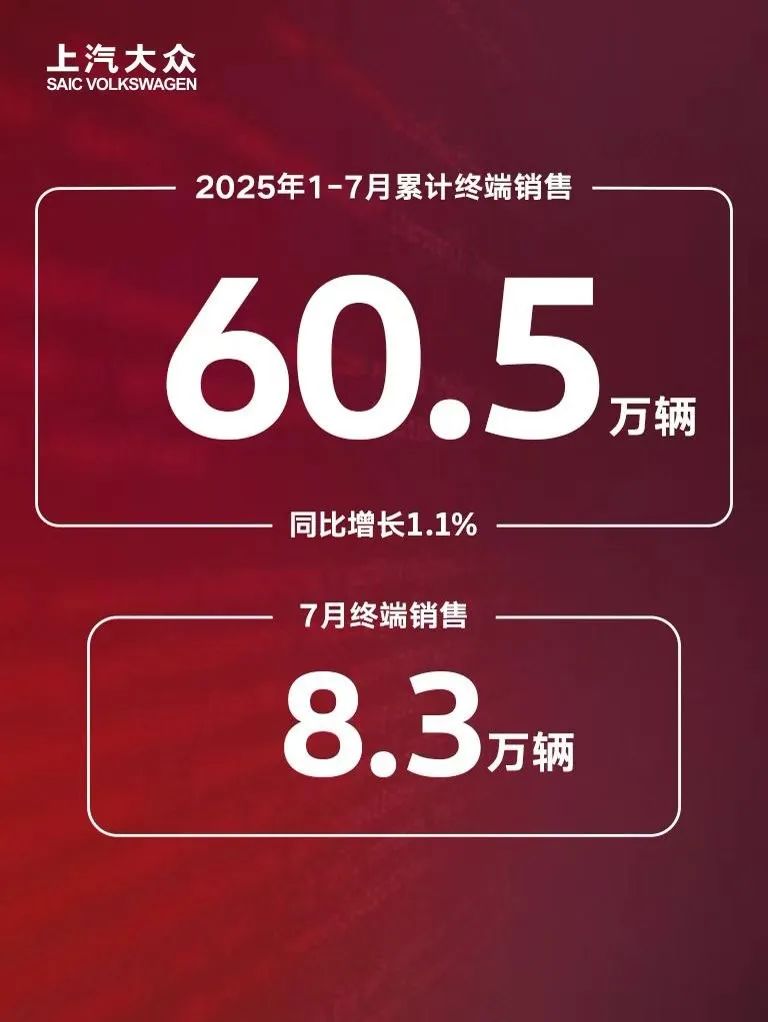
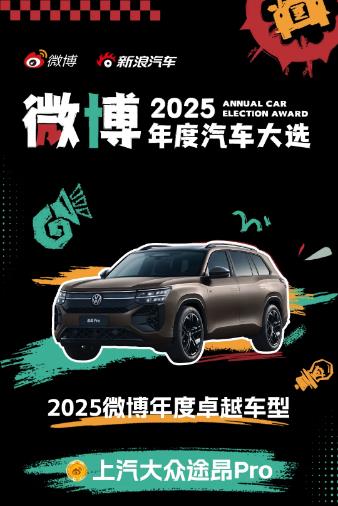
Core Insights - The Chinese automotive market in 2025 presents both challenges and opportunities, with SAIC Volkswagen achieving impressive sales figures, selling 605,000 vehicles from January to July, a year-on-year increase of 1.1% [1] Sales Performance - In July, SAIC Volkswagen's key models performed well, with the Passat family selling 17,000 units, the Lavida family 23,000 units, the Tiguan family over 16,000 units, and the Tayron family 12,000 units, marking a year-on-year doubling [3][5] - The Passat Pro received high safety ratings in the C-IASI 2024 assessment, showcasing its quality [3] - The Tiguan L ranked first in the one-year resale value among joint venture mid-size SUVs priced between 200,000 to 250,000 yuan [3] New Energy Initiatives - SAIC Volkswagen is actively innovating in the new energy sector, with the ID.3GTX kit attracting users seeking personalization [5] - The company plans to launch over 20 new models by 2030, with 10 models expected by the end of 2026 [9] Product Strategy - The launch of the new Lingdu L, positioned as a stylish German A+ class coupe, reflects the company's commitment to appealing to younger consumers [7] - The new Audi A5L Sportback combines Audi's strengths in control, aesthetics, and quality with the demand for smart technology in the Chinese market [9] Strategic Developments - SAIC Volkswagen is entering the "Joint Venture 2.0" era, enhancing product lines and technology routes through deep integration of German quality and Chinese innovation [10][12] - The company aims to improve its market share in fuel vehicles from 8.49% last year to 8.59% in the first half of this year [12] - The focus on "oil-electric synergy" will lead to a comprehensive rollout of various vehicle types, including fuel, pure electric, range-extended, and plug-in hybrid models [12]