合资2.0时代

Search documents
上汽大众准备跟新势力拼刺刀
Hua Er Jie Jian Wen· 2026-02-04 08:31
Core Insights - The Chinese automotive market underwent significant restructuring in 2025, with various brands, including new entrants and joint ventures, facing intense competition and challenges [1] - SAIC Volkswagen managed to maintain its position in the market, achieving a total sales volume of 1.06 million units in 2025, thus securing its place in the "million club" [1][2] - The company plans to launch a series of new energy vehicles (NEVs) in 2026, marking a strategic shift from survival to offensive strategies against competitors [6][7] Group 1: Market Performance - In 2025, SAIC Volkswagen's market share in the fuel vehicle segment increased to 8.3%, despite an overall decline in the market [2] - The sales structure revealed that traditional models like Passat, Lavida, and Tiguan continued to perform well, each maintaining monthly sales of around 20,000 units [2] - SAIC Audi achieved a sales volume of 47,000 units with a 23% year-on-year growth, outperforming the market [2] Group 2: Strategic Transition - The company is adopting a dual-track strategy, focusing on both fuel and new energy vehicles, to balance its existing fuel vehicle business with the need for a transition to NEVs [4][5] - The upcoming ID.ERA series is designed specifically for the Chinese market, with the flagship model ID.ERA 9X featuring a range of over 1,000 kilometers, aimed at competing with popular models from rivals [9][10] - SAIC Volkswagen plans to introduce seven new energy models in 2026, covering pure electric, hybrid, and range-extended technologies [7][10] Group 3: Organizational Changes - The company is undergoing significant internal restructuring to adapt to the new automotive era, including the introduction of new processes and systems to enhance efficiency and responsiveness [11][12] - The integration of IPD and GTM processes aims to break down traditional silos, allowing for a more customer-oriented approach in product development and marketing [13][14] - The leadership emphasizes the need for agility and speed in decision-making to compete effectively with new entrants in the market [14][15]

21独家|ID.ERA 9X预批量生产,威然停止后续研发
2 1 Shi Ji Jing Ji Bao Dao· 2026-01-25 02:48
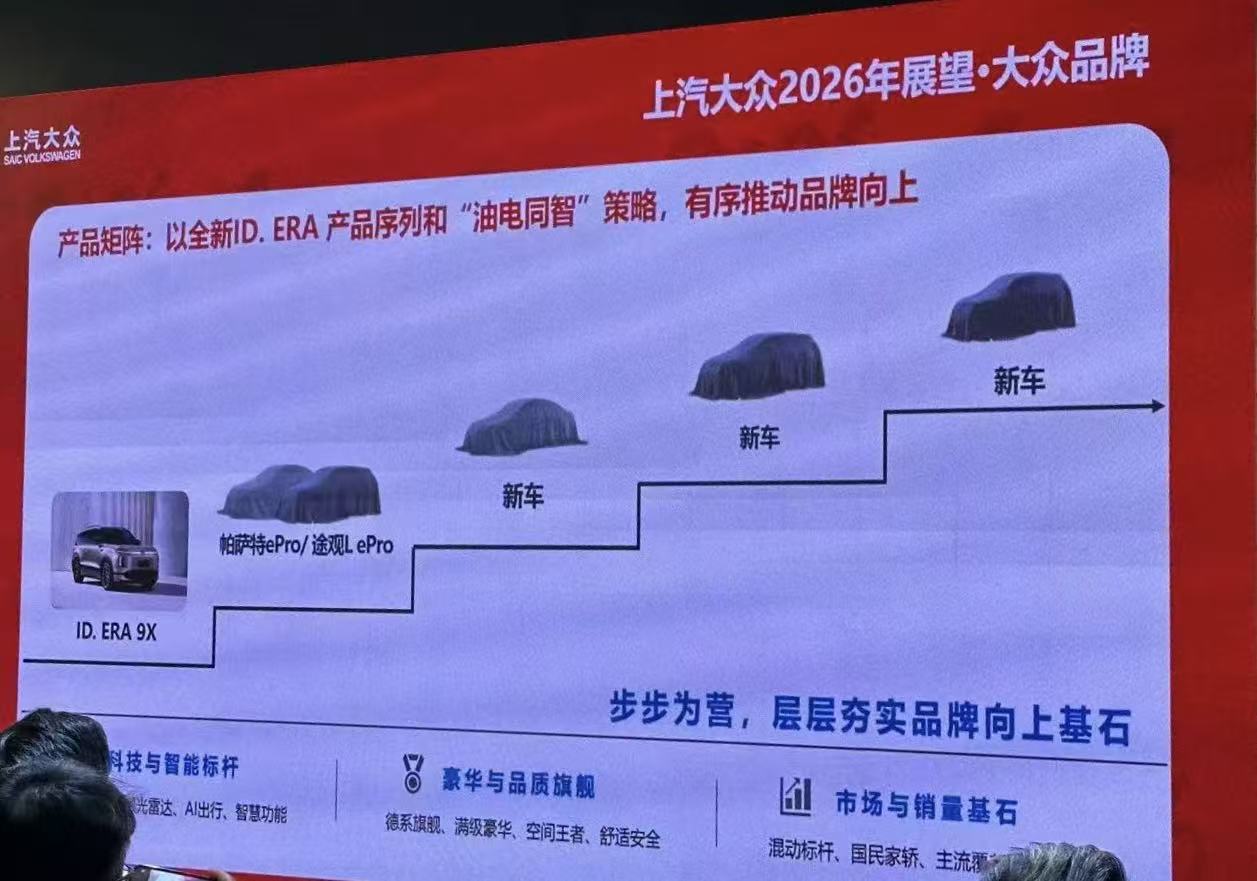
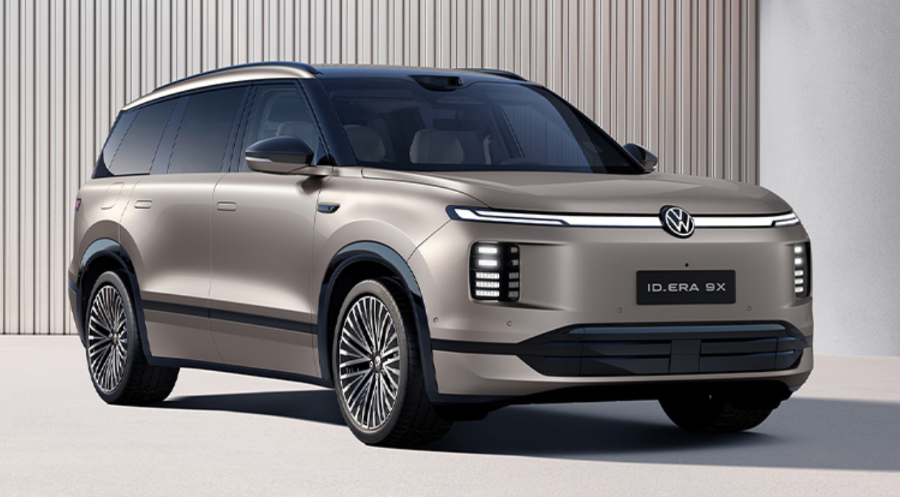
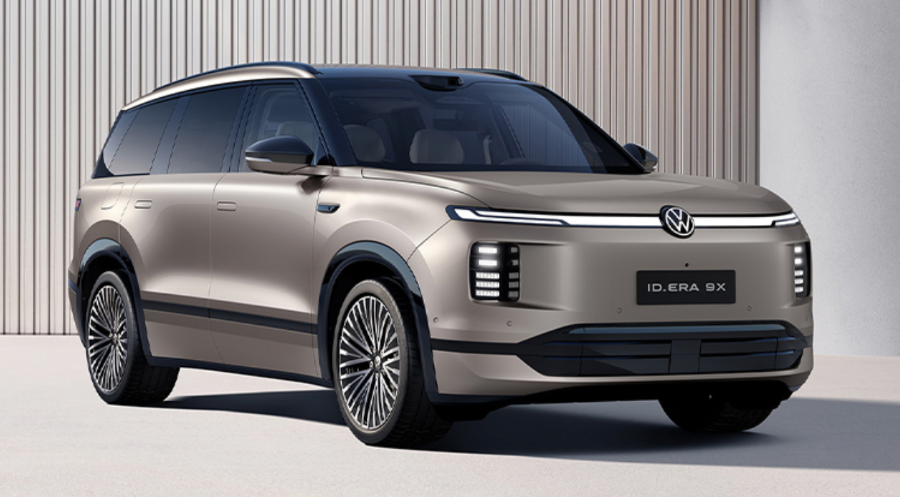
Core Viewpoint - SAIC Volkswagen is focusing on product portfolio optimization to enhance profitability and meet financial targets, with 2026 being a pivotal year for the launch of nearly seven new energy products, including the highly anticipated ID.ERA 9X [1][4] Group 1: Product Development - The ID.ERA 9X, a large SUV with a six-seat design, is currently in pre-production and is expected to launch in March 2024, with plans for export [3][4] - The vehicle features a 1.5T range extender engine with a maximum power of 105kW and a 65.2kWh battery, offering a pure electric range of over 400 km [4] - Another five-seat range-extended model is set to debut in the second half of 2024, alongside two pure electric models based on the CMP platform [5] Group 2: Market Strategy - The decision to halt the development of the Viloran MPV reflects a strategic shift, as the MPV market has been declining, with Viloran struggling against competitors like the GL8 [3][6] - The Viloran's sales were 19,959 units in 2022, but saw a significant drop in 2024, with average monthly sales around 900 units [6] - The company aims to focus resources on developing products that meet local market demands, leveraging partnerships with local suppliers for software and technology capabilities [5][8] Group 3: Industry Context - The automotive industry is facing challenges due to tightening policies and rising costs, necessitating effective cost control and strong product offerings to maintain market share [9] - The transition to the "Joint Venture 2.0" era signifies a shift in product definition authority to China, allowing for products that better cater to local consumer needs [8]

ID.ERA 9X预批量生产,威然停止后续研发
2 1 Shi Ji Jing Ji Bao Dao· 2026-01-25 02:39
Core Viewpoint - SAIC Volkswagen is focusing on its product portfolio to enhance profitability and meet financial goals, with 2026 being a pivotal year for the launch of nearly seven new energy products, including the highly anticipated ID.ERA9X model [1][4]. Group 1: Product Development - The ID.ERA9X, a large SUV with a six-seat design, is currently in pre-production and is expected to launch in March 2024, with plans for export [3][4]. - The vehicle features a 1.5T range extender engine with a maximum power of 105kW and a 65.2kWh battery, offering a pure electric range of over 400 km [4]. - The company is also developing another five-seat range-extended model set to debut in the second half of 2024, alongside two pure electric models based on the CMP platform [5]. Group 2: Market Strategy - The decision to halt the development of the Viloran MPV reflects a strategic shift, as the model struggled to compete in a shrinking MPV market, which has seen a decline in market share to below 5% [5][6]. - The Viloran's sales were disappointing, with a significant drop in 2024, leading to a monthly average of around 900 units sold after aggressive price cuts [6][8]. - The company aims to focus resources on high-potential products like the ID.ERA9X, which represents a shift towards a "joint venture 2.0" era, emphasizing local market needs and product definition [8][9]. Group 3: Industry Context - The automotive industry is facing challenges due to tightening policies and rising costs, necessitating effective cost control and strong product offerings to maintain market share [9]. - The competitive landscape is intensifying, with established players like GL8 and emerging brands introducing more intelligent high-end MPVs, further complicating the market for traditional models like the Viloran [6][9].
上汽大众陶海龙:能够超越大众的唯有大众
Xin Lang Cai Jing· 2026-01-13 11:27
Core Viewpoint - The Chinese automotive market is undergoing a significant reshuffle as consumer buying behavior becomes more rational post-subsidy era, with SAIC Volkswagen maintaining its market leadership while introducing the ID. ERA 9X, a flagship model that signifies a strategic declaration for the new era of joint ventures [2][19]. Group 1: Product Launch and Technology - The ID. ERA 9X is positioned as a "German full-level flagship SUV" and represents a strategic shift for SAIC Volkswagen in the joint venture 2.0 era [2][19]. - The vehicle aims to address a common pain point in range-extended vehicles, where performance drops significantly when battery levels are low, with SAIC Volkswagen targeting a performance degradation of no more than 5% even in low battery conditions [5][24]. - The ID. ERA 9X features a specially optimized EA211 engine and advanced technologies like deep Miller cycle, ensuring consistent performance across different battery states [7][24]. Group 2: Organizational Transformation - The launch of the ID. ERA series is not just a technological breakthrough but also a reflection of profound changes in organizational processes, corporate culture, and partnerships within SAIC Volkswagen [27]. - The company is transitioning from a technology-import-focused "joint venture 1.0" model to a "joint venture 2.0" model that emphasizes deep integration and rapid response to the Chinese market [27]. - SAIC Volkswagen has implemented a Go-to-Market (GTM) mechanism and integrated product development (IPD) and marketing processes to ensure alignment between R&D, marketing, and quality teams from the project's inception [27][28]. Group 3: Brand Image and Market Strategy - The ID. ERA series aims to refresh SAIC Volkswagen's brand perception in the new energy era, focusing on three core values: progressive, reliable, and user-friendly [30][32]. - The company emphasizes continuous innovation by integrating advanced global technologies and adapting to the Chinese market's unique demands [30]. - The marketing strategy for 2026 will focus on brand reshaping, targeting younger demographics, and highlighting the vehicle's technological capabilities and safety features [32]. Group 4: Future Aspirations - The ID. ERA series symbolizes SAIC Volkswagen's ambition to enter a new era in the new energy market, showcasing a collaborative effort between Chinese and German teams [34]. - The company aims to maintain its core identity while adapting to market changes, with a commitment to delivering vehicles that embody the essence of the Volkswagen brand [34].
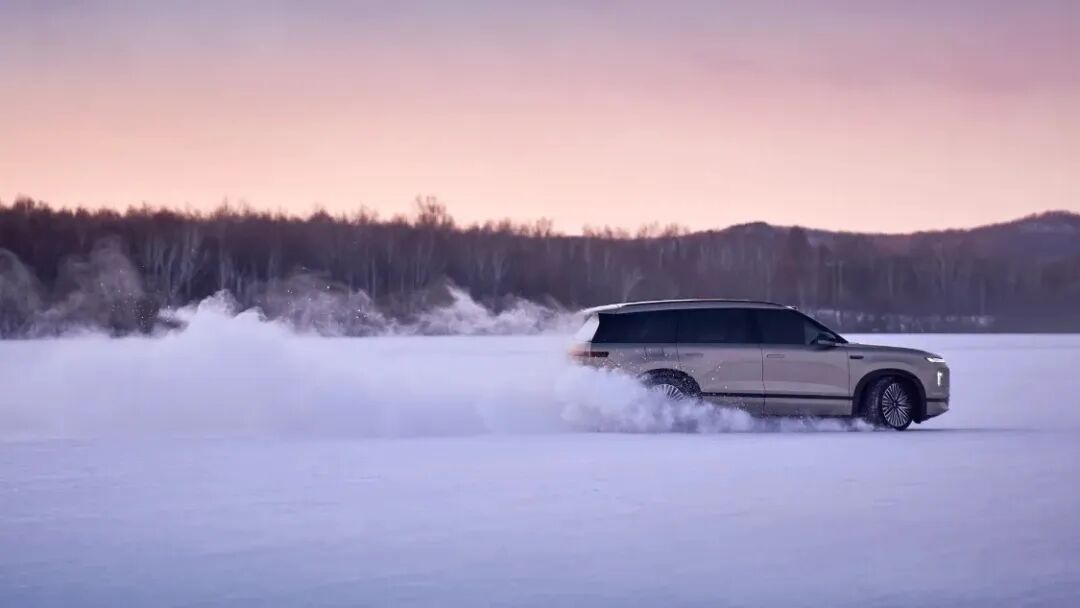
逆势破局:起亚在中国市场的长期主义答卷与合资的生存新范式
Mei Ri Jing Ji Xin Wen· 2026-01-09 07:36
Core Insights - The global automotive market in 2025 is characterized as a "survival competition," with price wars in China and increasing penetration of new energy vehicles, leading to a shift from "price competition" to "value cultivation" [1] - Kia has emerged as a standout performer, achieving record global sales and revenue while maintaining positive growth in the Chinese market for two consecutive years, contrasting with many joint venture brands facing declining sales and profit pressures [1][2] Industry Trends - The automotive industry has moved away from the "big fish in a big pond" era, requiring companies to possess core capabilities to navigate through cycles successfully [2] - Kia's global sales reached approximately 3.1358 million units in 2025, a 2% increase year-on-year, marking the highest sales record since its establishment in 1944 [2] Growth Drivers - Kia's export business has been a significant growth engine, with cumulative exports of 537,000 vehicles and over 478,000 engines since November 2018, generating an export value of $5.83 billion [4] - The company's growth is built on a healthy profit structure, emphasizing product value and brand recognition, while maintaining a long-term commitment to the Chinese market [4] Channel Strategy - In a challenging environment where dealer losses are at an eight-year high, Kia has strengthened partnerships with local dealers, adding over 60 sales outlets and ensuring profitability for over 60% of its dealers [6] - Kia's inventory index stands at approximately 1.2, better than the industry average, reflecting its robust channel performance [6] Social Responsibility - Kia has maintained a commitment to social responsibility, contributing approximately 52.5 billion yuan in taxes over 24 years in China and investing over 110 million yuan in social initiatives [8] Strategic Positioning - Kia's strategy of "In China, For China" is not just a slogan but a comprehensive approach that integrates technology, products, manufacturing, and channels, marking its entry into the "Joint Venture 2.0 Era" [9] - The company has focused on diverse and personalized travel needs of Chinese consumers, launching core models like the new Sportage and EV5, which address key pain points in electric vehicle usage [9][11] Brand Development - In 2025, Kia introduced a new brand slogan "Kia, Driven by Heart," and engaged in various marketing activities to resonate with Chinese consumers [12] - The company has established a comprehensive service ecosystem, achieving high customer satisfaction ratings and reinforcing its commitment to quality service [12] Conclusion - Kia's approach provides a clear answer to the challenges faced by joint venture brands, emphasizing the importance of viewing the Chinese market as a strategic core and focusing on long-term, user-centered strategies across multiple dimensions [13]
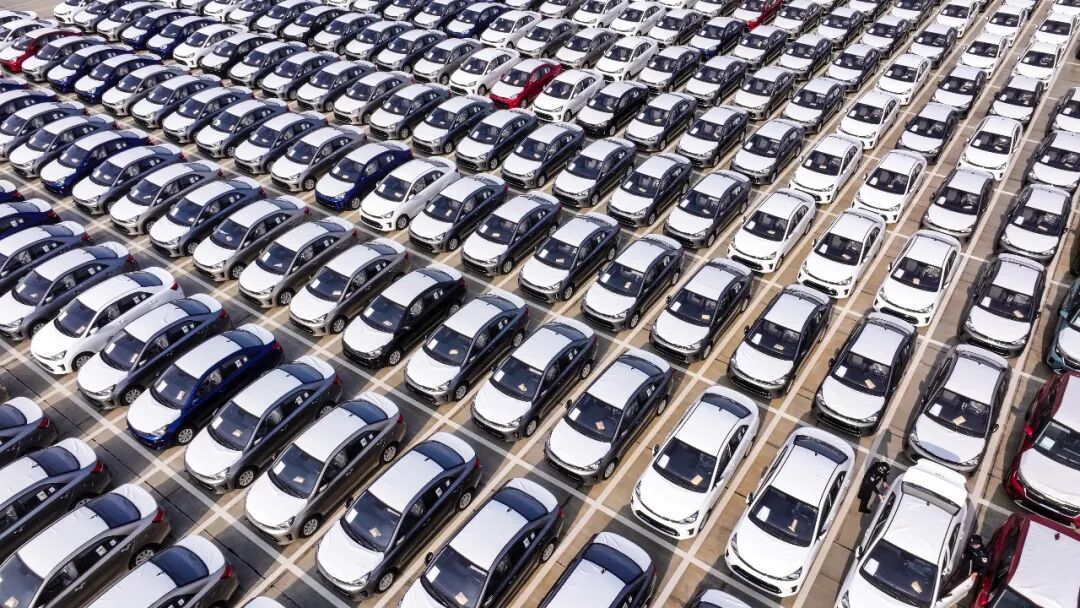
入局即重构,上汽大众ID. ERA 9X开启增程“价值竞争”下半场
Zhong Guo Qi Che Bao Wang· 2026-01-09 03:39
Core Insights - The ID. ERA 9X is positioned as a flagship model for SAIC Volkswagen, marking a significant entry into the high-end new energy vehicle market, emphasizing a comprehensive approach rather than just a product launch [2][4] - The vehicle is designed to integrate global manufacturing expertise with local smart ecosystems, aiming to redefine value standards in the automotive industry [2][4] Group 1: Product Specifications - The ID. ERA 9X is a six-seat extended-range vehicle with dimensions of 5207mm in length, 1997mm in width, and 1810mm in height, making it the largest SUV in the Volkswagen Group's lineup [4] - It features a long wheelbase of 3070mm and combines German functional aesthetics with Eastern design philosophy, creating a unique visual identity [4] Group 2: Market Positioning - The entry of the ID. ERA 9X into the 400,000 RMB high-end SUV market signifies the arrival of a major player equipped with global R&D capabilities and extensive manufacturing experience [4][6] - The vehicle aims to address the evolving consumer expectations for luxury, focusing on long-term reliability, energy efficiency, safety redundancy, and resale value [6] Group 3: Technological Advancements - The ID. ERA 9X represents a transition to the 3.0 era of extended-range vehicles, featuring a large capacity battery from CATL that ensures over 400km of pure electric range, thus eliminating range anxiety for users [9][11] - The vehicle's powertrain is designed to minimize performance degradation during battery depletion, maintaining a performance drop of less than 5%, compared to competitors that may experience drops of 50%-150% [11] Group 4: Brand Strategy - The launch of the ID. ERA 9X is part of a broader strategy to reshape the Volkswagen brand in the new energy market, aiming to enhance brand recognition and reputation among consumers [12][14] - The company emphasizes a commitment to safety and user experience, with plans to incorporate advanced intelligent driving assistance systems in the ID. ERA 9X [14] Group 5: Future Outlook - The ID. ERA 9X is seen as a critical response to the challenges of the new energy transition, addressing technical pain points and redefining value logic in the automotive sector [14][15] - The overarching goal is to ensure that the ID. ERA 9X embodies the essence of a Volkswagen vehicle, maintaining a driving experience that is easy, controllable, and user-friendly [15]
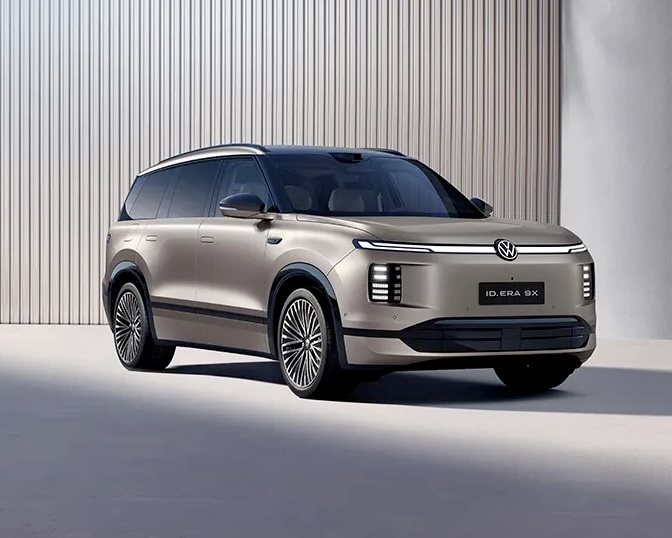
走车企,看中国汽车产业的“三个三千万”(深度观察)
Ren Min Wang· 2025-12-31 00:42
Core Insights - The automotive industry in China is experiencing significant growth, with three major companies achieving the milestone of producing 30 million vehicles each, highlighting the strength of Chinese manufacturing and market vitality [1] Group 1: China Changan Automobile - Changan Automobile achieved the production of its 30 millionth vehicle in December 2025, marking a rapid growth from 20 million to 30 million in just 4.5 years [2] - The company emphasizes self-research in core technologies, having established a global R&D network and applied for over 14,000 patents in the last three years [2][3] - Changan has developed a multi-brand matrix to cater to diverse consumer needs, aiming for over 1 million sales in new energy vehicles by 2025 [3] Group 2: FAW-Volkswagen - FAW-Volkswagen has produced over 30 million vehicles since its establishment 34 years ago, generating over 5.5 trillion yuan in revenue and creating over 500,000 jobs [6] - The company is transitioning to a "Joint Venture 2.0 Era," focusing on independent R&D and local supply chain management, with 155 innovation projects initiated in 2025 [7][9] - FAW-Volkswagen is collaborating with Huawei on advanced driver assistance systems, showcasing its shift from technology importation to independent development [8] Group 3: NIO - NIO has positioned itself in the high-end electric vehicle market, achieving significant delivery milestones for its ES8 model, with over 40,000 units delivered within 100 days of launch [10][11] - The company has invested nearly 70 billion yuan in R&D, developing a comprehensive technology stack and applying for over 9,900 patents [11][12] - NIO has innovated in business models, introducing battery swapping and a full lifecycle service concept, enhancing customer engagement and operational efficiency [12][13]


聚焦2025广州车展 上汽大众陶海龙:锚定“合资2.0”新时代 以“战略定力”穿越周期
Ren Min Wang· 2025-11-29 06:39
Core Insights - The 23rd Guangzhou International Auto Show showcased new products and technologies, reflecting the vitality and transformation of the Chinese automotive industry as it approaches the end of the 14th Five-Year Plan [1] - SAIC Volkswagen is entering a "2.0 era" for joint ventures through comprehensive innovation across products, systems, and the supply chain [1] Product Strategy - SAIC Volkswagen plans a significant product year ahead, introducing the new ID.ERA series, which includes pure electric, hybrid, and range-extended vehicles, with the flagship "9 series" SUV setting a new market standard [2] - The "Oil-Electric Intelligence" strategy has been deepened, enhancing smart driving features across various models, ensuring that both electric and fuel vehicle users can enjoy advanced technology [2] System Innovation - The brand renewal is encapsulated in the values of "progressive, reliable, and caring," focusing on cutting-edge technology, strengthening traditional advantages, and enhancing customer service [3] - The company emphasizes a healthy ecosystem for dealers, advocating for a cooperative relationship where dealers can profit, avoiding strategies that lead to initial losses for them [3] Industry Collaboration - The automotive industry is characterized by a long supply chain, where core competitiveness lies in understanding and integrating core technologies rather than complete self-reliance [4] - SAIC Volkswagen aims to act as an "industry coordinator," fostering open collaboration with top global partners to promote high-quality development in the Chinese automotive sector [4] - Recent regulatory changes and a shift towards rationality in the industry are seen as positive signs for the future health and sustainability of the automotive market [4]
别克高端新能源子品牌“至境”首秀2025成都车展
Zhong Guo Qi Che Bao Wang· 2025-08-31 11:25
Core Insights - Buick's high-end new energy sub-brand "Zhijing" was unveiled at the 28th Chengdu International Auto Show, showcasing three concept cars: a sedan, an SUV, and an MPV, all based on the "Xiaoyao" super fusion vehicle architecture, indicating Buick's strong reserves and forward-looking layout in the new energy sector [1][3][5] Group 1: Product Launch and Features - Buick plans to launch five new energy models based on the "Xiaoyao" architecture within the next eight months, including the upcoming Buick Zhijing L7 intelligent luxury sedan [1][8] - The "Xiaoyao" architecture features an advanced driver assistance system named "Xiaoyao Zhixing," developed in collaboration with leading smart driving company Momenta, aiming to provide a top-tier intelligent travel experience [1][16] - The Zhijing L7 will redefine luxury sedan standards in the new energy era, featuring the "Zhenlong" range extender technology and advanced driving assistance capabilities, including "no-stop" parking [8][21] Group 2: Technological Advancements - The "Xiaoyao" architecture is the first fully local development by a joint venture in China, designed for the electric and intelligent era, showcasing Buick's commitment to technological innovation [9][14] - The architecture integrates advanced technologies across various domains, including power, chassis, driver assistance, and intelligent cockpit, providing a versatile platform for product expansion [11][20] - The "Zhenlong" range extender system addresses current industry pain points, offering superior performance and safety features [13][14] Group 3: Strategic Vision - Buick's unveiling of the "Zhijing" brand and "Xiaoyao" architecture marks a strategic shift from market following to technology leadership in the electric and intelligent vehicle sector [20] - The company aims to focus on the high-end new energy market, enhancing its core competitiveness in the new energy era and leading the joint venture 2.0 era [20]

销量稳增 上汽大众开启新征程
Hang Zhou Ri Bao· 2025-08-12 07:13
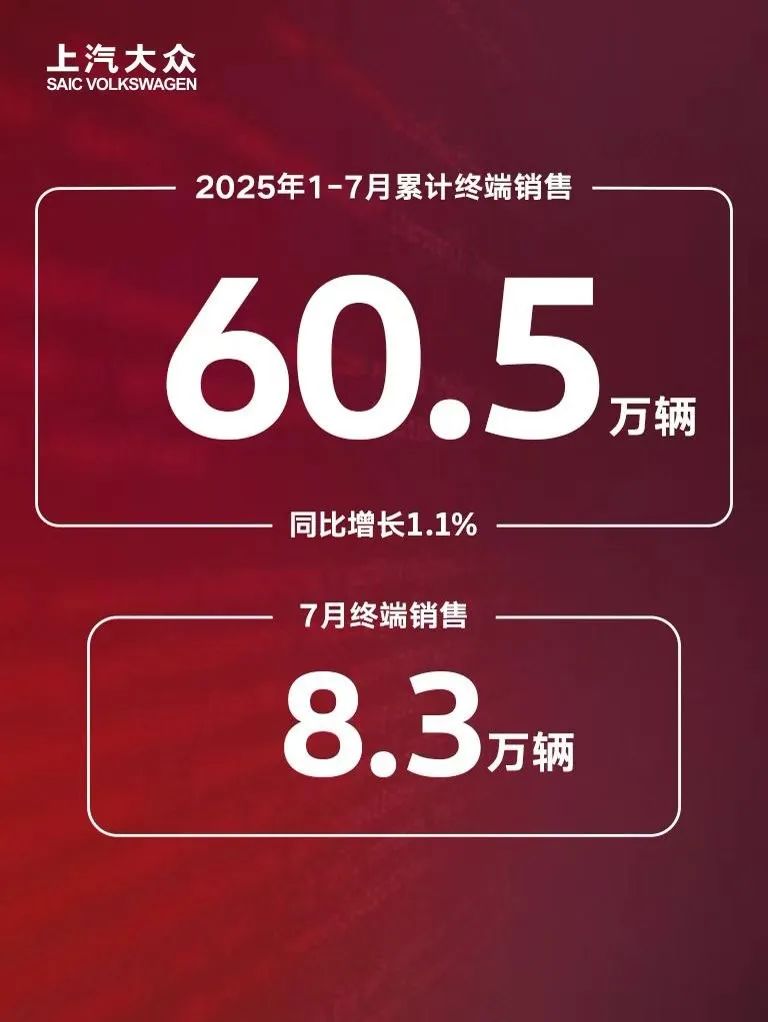
Core Insights - The Chinese automotive market in 2025 presents both challenges and opportunities, with SAIC Volkswagen achieving impressive sales figures, selling 605,000 vehicles from January to July, a year-on-year increase of 1.1% [1] Sales Performance - In July, SAIC Volkswagen's key models performed well, with the Passat family selling 17,000 units, the Lavida family 23,000 units, the Tiguan family over 16,000 units, and the Tayron family 12,000 units, marking a year-on-year doubling [3][5] - The Passat Pro received high safety ratings in the C-IASI 2024 assessment, showcasing its quality [3] - The Tiguan L ranked first in the one-year resale value among joint venture mid-size SUVs priced between 200,000 to 250,000 yuan [3] New Energy Initiatives - SAIC Volkswagen is actively innovating in the new energy sector, with the ID.3GTX kit attracting users seeking personalization [5] - The company plans to launch over 20 new models by 2030, with 10 models expected by the end of 2026 [9] Product Strategy - The launch of the new Lingdu L, positioned as a stylish German A+ class coupe, reflects the company's commitment to appealing to younger consumers [7] - The new Audi A5L Sportback combines Audi's strengths in control, aesthetics, and quality with the demand for smart technology in the Chinese market [9] Strategic Developments - SAIC Volkswagen is entering the "Joint Venture 2.0" era, enhancing product lines and technology routes through deep integration of German quality and Chinese innovation [10][12] - The company aims to improve its market share in fuel vehicles from 8.49% last year to 8.59% in the first half of this year [12] - The focus on "oil-electric synergy" will lead to a comprehensive rollout of various vehicle types, including fuel, pure electric, range-extended, and plug-in hybrid models [12]