手持影像设备

Search documents
舜宇光学科技(02382):25E盈利超预期,需求波动不改光学升级主线
Haitong Securities International· 2026-02-02 23:30
Investment Rating - The report maintains an "Outperform" rating for Sunny Optical Technology [2][10][17] Core Insights - Sunny Optical is expected to achieve attributable net profit of RMB 45.89–47.24 billion in 2025, representing a year-on-year increase of 70% to 75%, significantly above Bloomberg consensus of RMB 35.39 billion. This upside is primarily driven by a one-off investment gain of approximately RMB 9.19 billion from an equity transfer for a stake in Goertek Optics. Excluding this non-recurring item, the core attributable net profit is estimated to be RMB 36.7–38.05 billion, supported by the ongoing premiumization of smartphone camera specifications [3][13] - The company continues to benefit from the upgrade of camera specifications in flagship and mid-to-high-end smartphones, which is expected to drive the average selling price (ASP) and gross margin for handset lenses and camera modules [4][14] Summary by Relevant Sections Handsets - Despite ongoing cost pressures from rising memory prices, the trend towards optical upgrades in smartphones remains intact. The company is well-positioned to benefit from the adoption of higher-value products such as variable aperture and periscope cameras, which will drive ASP and margin expansion [4][14] Automotive - The adoption of intelligent driving technologies is expected to significantly boost the company's automotive lens and module businesses. The average number of cameras per vehicle is projected to increase, with high-end vehicles already equipped with around 12 cameras. This trend is anticipated to accelerate growth in the automotive segment [5][15] XR & IoT - The company maintains its leading market share in imaging modules for smart glasses, with strong growth in revenue from handheld imaging devices. The rapid expansion of AI and AR glasses is expected to become a key growth driver in the coming years [6][16] Valuation - The estimated EPS for 2025-2027 is revised to RMB 4.23, 3.86, and 4.19 respectively. Based on a P/E ratio of 19.6x for 2026, the target price is set at HKD 85.24, maintaining the "Outperform" rating [6][17]

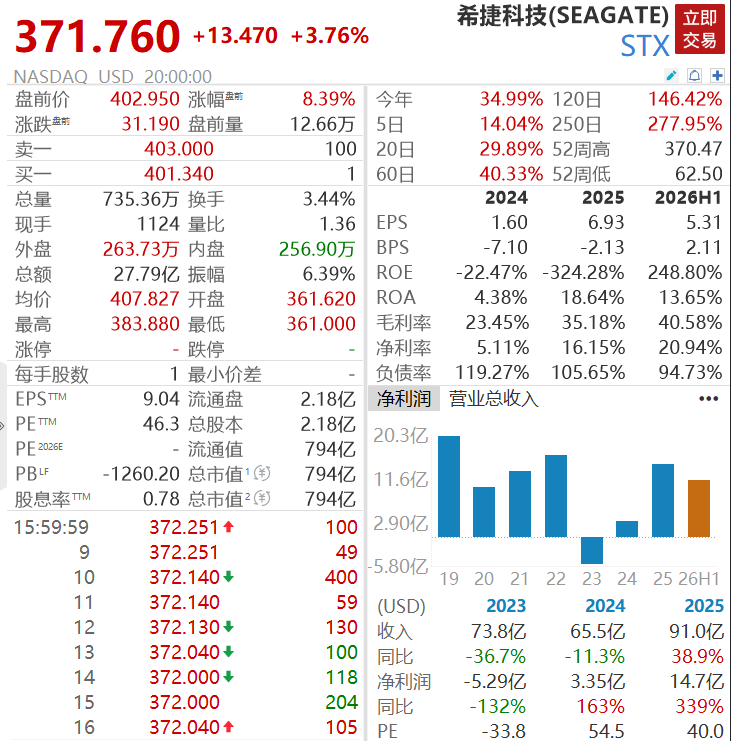
美股存储盘前大涨,希捷科技涨超8%,多品牌手机或涨价
2 1 Shi Ji Jing Ji Bao Dao· 2026-01-28 14:29
Group 1: Price Increases in the Storage Market - The storage market is experiencing a price surge, with multiple manufacturers continuing to raise prices, affecting not only storage chips but also foundry and packaging processes, as well as passive components [1][4] - Companies like Zhongwei Semiconductor and Guokai Micro have announced price increases for their products, with adjustments ranging from 15% to 80% [2] - The ongoing price increases are expected to create a selection process among storage manufacturers, focusing on long-term partnerships with clients who can generate premium products [5] Group 2: Impact on Smartphone Market - The smartphone market is facing challenges due to rising storage costs, which may lead manufacturers to seek cost reductions in other core components [3][6] - Major smartphone brands are adjusting their business plans downward to force other component suppliers to lower prices, particularly in the AMOLED panel segment [6] - The price increases in storage components are likely to affect the bill of materials (BOM), leading to potential price hikes for smartphones priced under $100, while higher-end models may manage costs through configuration adjustments [5][6] Group 3: New Device Trends - The smartphone industry is evolving with new device forms such as foldable screens and smart glasses, which are expected to play a crucial role in the next AI era [3][8] - The foldable smartphone market is projected to grow significantly, especially with Apple's anticipated entry, which could increase global shipments to 25 million units by 2026 [9][11] - New hardware developments, including AI glasses and handheld imaging devices, are gaining traction, with expectations for rapid iteration and product launches in 2026 [12][13] Group 4: Competitive Landscape and Future Outlook - The competition in the smartphone industry is increasingly focused on the intersection of AI and hardware, with companies needing to identify real user scenarios to build differentiated products [13] - The ability to navigate supply chain fluctuations and innovate in product design will be critical for success in the evolving market landscape [13]




美股存储盘前大涨,希捷科技涨超8%,多品牌手机或涨价
21世纪经济报道· 2026-01-28 14:24
| | 371.760 +13.470 +3.76% | | | 希捷科技(SEAGATE) 立即 | | | | --- | --- | --- | --- | --- | --- | --- | | | | | | | | STX 交易 | | NASDAO USD 20:00:00 | | | | | | 10 + | | 盘前价 | 402.950 涨幅 | 8.39% | 之生 | 34.99% 120日 | | 146.42% | | 涨跌 | 31.190 盘前量 | 12.66万 | 5日 | 14.04% 250日 | | 277.95% | | 三一 | 403.000 | 100 | 20日 | 29.89% 52周高 | | 370.47 | | 杀一 | 401.340 | - | 60日 | 40.33% 52周低 | | 62.50 | | 总量 | 735.36万 换手 | 3.44% | | 2024 | 2025 | 2026H1 | | 现手 | 1124 量比 | 1.36 | EbS | 1.60 | 6.93 | 5.31 | | 外盘 | 263.73万 内盘 | ...

存储、金属涨价搅动供应链 手机市场面临新战役
2 1 Shi Ji Jing Ji Bao Dao· 2026-01-28 14:05
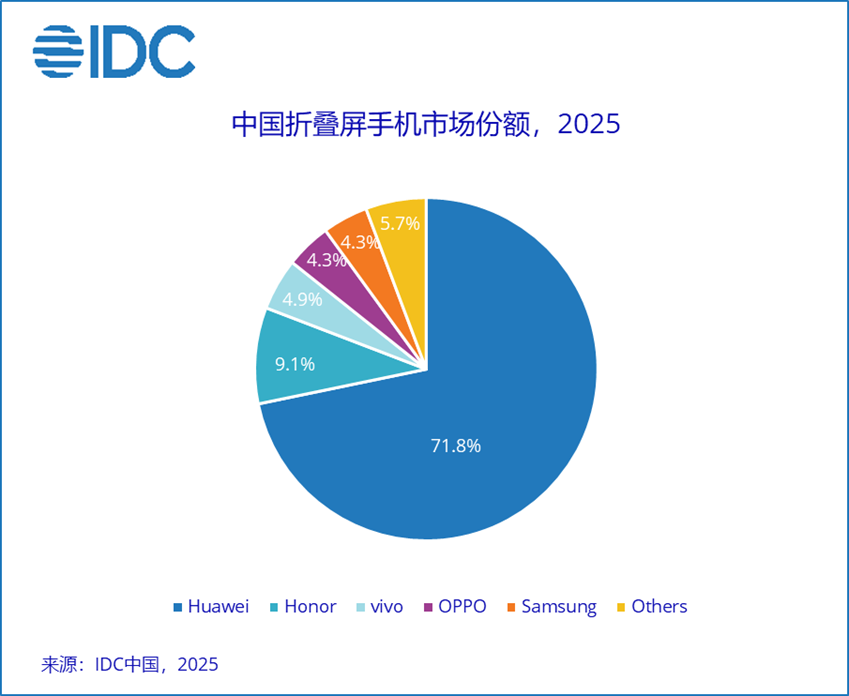
Core Insights - The smartphone market in 2026 is undergoing significant changes due to rising prices and supply chain challenges, with manufacturers needing to enhance their collaborative response capabilities [1] - The competition is shifting from merely pricing to a multidimensional battle involving supply chain resilience, cost control, AI technology implementation, and new hardware innovation [1] Supply Chain and Cost Dynamics - The ongoing rise in storage prices is creating a bottleneck for the smartphone industry, with manufacturers facing pressure to select long-term, value-recognizing clients for storage chips [2] - Despite recent expansions in storage capacity by overseas manufacturers, relief from tight supply is not expected until late 2027, maintaining the pressure on prices [2] - The increase in storage costs significantly impacts the bill of materials (BOM), particularly affecting models priced below $100, while higher-end models may adjust through configuration changes and marketing strategies [3] - Chinese smartphone brands are hesitant to pass on increased storage costs to consumers, leading to downward adjustments in business plans to compel other component suppliers to lower prices [3] New Hardware and Market Trends - The search for new hardware forms, such as foldable phones, smart glasses, and handheld imaging devices, is becoming crucial as the smartphone market matures [5] - The global foldable phone shipment is expected to rise to 25 million units in 2026, largely driven by Apple's entry into the market [6] - The price of foldable phones is likely to increase due to rising memory costs, limiting their market to high-end users [7] - The development of AI glasses is rapidly evolving, with a competitive landscape emerging among various manufacturers, indicating a promising market outlook for 2026 [11] Future Outlook - The smartphone industry is expected to see accelerated development in emerging categories like action cameras, catering to younger consumers' preferences for outdoor and lifestyle documentation [12] - The competition in 2026 will hinge on the ability to navigate supply chain fluctuations and leverage AI and hardware convergence to create differentiated user experiences [12]
存储、金属涨价搅动供应链,手机市场面临新战役
2 1 Shi Ji Jing Ji Bao Dao· 2026-01-28 13:31
Core Insights - The smartphone market in 2026 is facing significant changes due to rising prices and supply chain challenges, with manufacturers needing to enhance their collaborative response capabilities [1] - The competition is shifting from merely pricing and configuration to a multidimensional battle involving supply chain resilience, cost control, AI technology implementation, and new hardware innovation [1] Supply Chain and Cost Dynamics - The ongoing rise in storage prices is creating pressure on manufacturers, leading them to reconsider their pricing strategies and cost structures [2][3] - Smaller manufacturers, particularly those targeting the budget segment, are under greater pressure compared to larger brands that can afford to maintain their supply chains [2] - The impact of rising storage costs is significant, particularly for models priced under $100, which may face price increases, while higher-end models can offset costs through adjustments in configuration and marketing expenses [2][3] New Hardware and AI Integration - The exploration of new hardware forms, such as foldable phones and smart glasses, is becoming crucial as the smartphone market matures [4][5] - The global foldable phone shipment is expected to rise significantly in 2026, driven largely by Apple's entry into the market [4] - AI technology is increasingly influencing the development of new products, with a focus on optimizing performance and user experience in smart glasses and handheld imaging devices [8][9] Market Trends and Future Outlook - The first half of 2026 will be critical for smartphone brands to adjust their production and product structures in response to rising costs [3] - The rapid evolution of AI technology is expected to lead to a diverse range of new smart terminal products, enhancing market prospects for 2026 [8] - Collaboration and flexibility in product development are essential for companies to meet market demands and consumer expectations effectively [9]
与大疆交锋升级!影石回应市场份额下降
Di Yi Cai Jing· 2025-11-04 22:33
Core Viewpoint - The competition between the company and DJI in the panoramic camera market has intensified, with significant changes in market share and pricing strategies impacting financial performance [1][2][3]. Market Share and Competition - Recent reports indicate a drastic decline in the company's global market share in the panoramic camera segment from 92% in Q2 to 49% in Q3, while DJI holds 43% in the same period [2] - Another report shows the company's market share at 75% and DJI at 17.1% for Q3, highlighting discrepancies in data from different consulting firms [2] - The company did not directly address the validity of the conflicting reports but emphasized the need for caution regarding data accuracy [2]. Pricing Strategies - DJI's aggressive pricing strategy, including a new panoramic camera priced from 2999 yuan, has prompted the company to offer discounts on its products, such as a 500 yuan reduction on the Insta360X5 [2][3]. - The company acknowledges that the price competition initiated by competitors has created conditions for market expansion, aiming for overall industry growth [3]. Financial Performance - Despite a 92.64% year-on-year revenue growth in Q3, the company's net profit decreased by 15.9%, attributed to increased R&D expenses [3]. - R&D investment surged by 164.81% to 524 million yuan, reflecting a strategic shift rather than a passive decline in profitability [3]. - The company views net profit as a dynamic variable influenced by various factors, including R&D and marketing strategies [3]. Future Business Prospects - The company is unable to predict the revenue contribution from its drone business, which is expected to be trialed in select markets in Q4 [4]. - Investment in custom chips aims to enhance performance and address market competition, although the costs are high [4]. - The company plans to strategically enter new markets, focusing on technology accumulation and avoiding a rush for immediate market share [4].

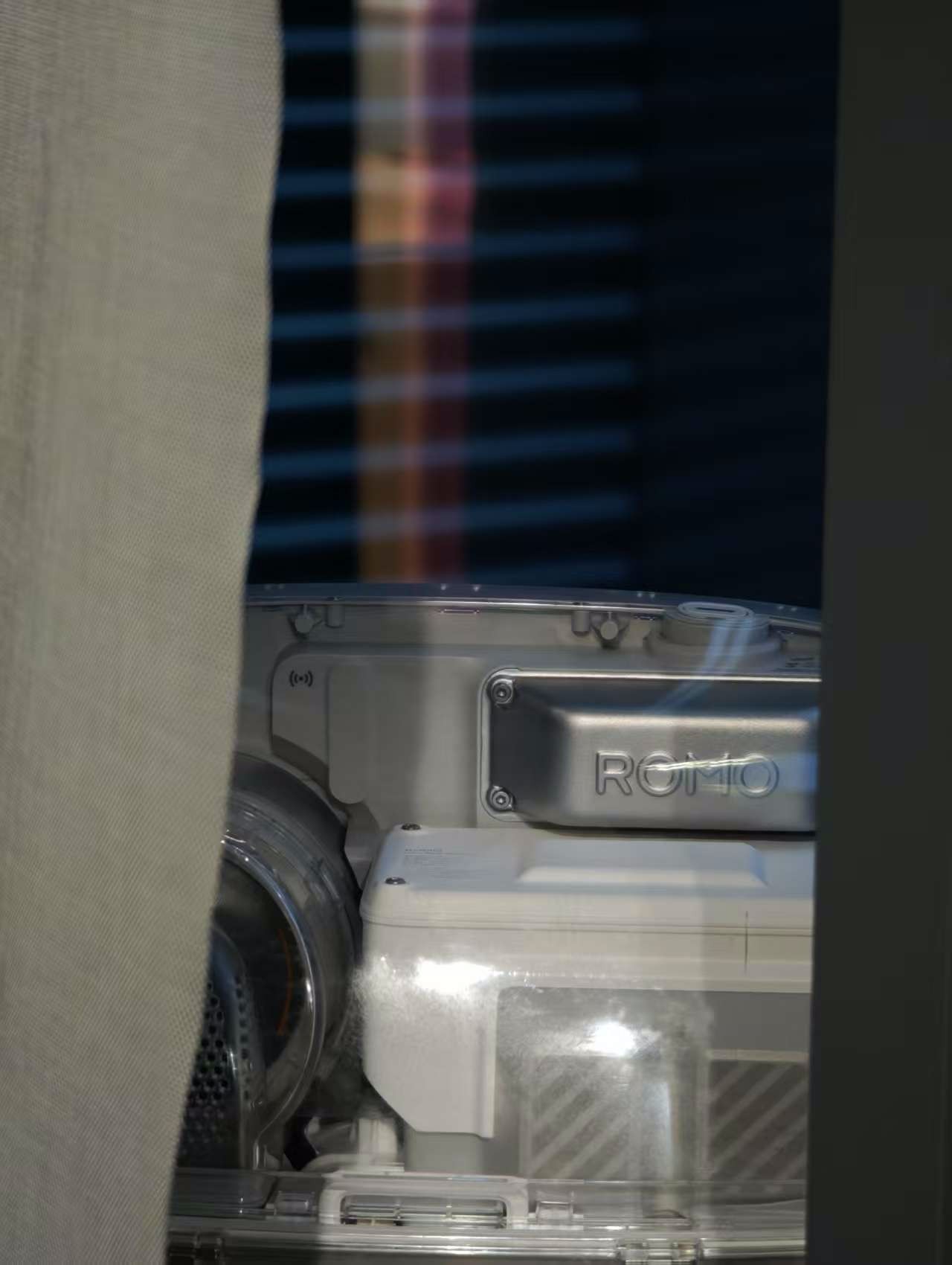
大疆推出扫地机器人“ROMO”,硬氪独家获得产品图
3 6 Ke· 2025-05-29 03:34
Core Insights - DJI is set to launch a new line of robotic vacuum cleaners named "ROMO" in mid-June, featuring three versions, including one with a transparent design to showcase its internal structure [1][4] - The introduction of ROMO marks DJI's expansion into a new product category, following its success with drones, and aims to address existing pain points in the robotic vacuum market [4][5] Product Development - The ROMO project was initiated in 2021 and has undergone multiple iterations over four years of development [4] - DJI aims to create a robotic vacuum that is user-friendly, aesthetically pleasing, and intelligent, ultimately allowing users to achieve a hands-free and thorough cleaning experience [5] Market Opportunity - The global robotic vacuum market is projected to exceed 20 million units shipped in 2024, with a year-on-year growth of 11%, and an overall sales revenue surpassing $9 billion [5] - In China, over 5 million units are expected to be shipped, with a significant 28% increase in the fourth quarter due to government subsidies [5] - The market is highly concentrated, with the top five companies holding over 60% of the global market share, indicating substantial revenue potential for individual companies [5] Competitive Landscape - The robotic vacuum segment has shown that individual companies can generate over 10 billion yuan in revenue, with Stone Technology and Ecovacs contributing 10.8 billion yuan and 8 billion yuan, respectively, last year [5] - Despite the growth, the market penetration of robotic vacuums remains below 10%, suggesting significant room for expansion [5] Technological Synergy - DJI's expertise in drone technology is applicable to robotic vacuums, as both share foundational technologies in sensors, navigation algorithms, control systems, communication, artificial intelligence, and machine learning [5] - The launch of ROMO follows the success of DJI's Pocket series, with high expectations for its performance in the smart home cleaning sector [5]