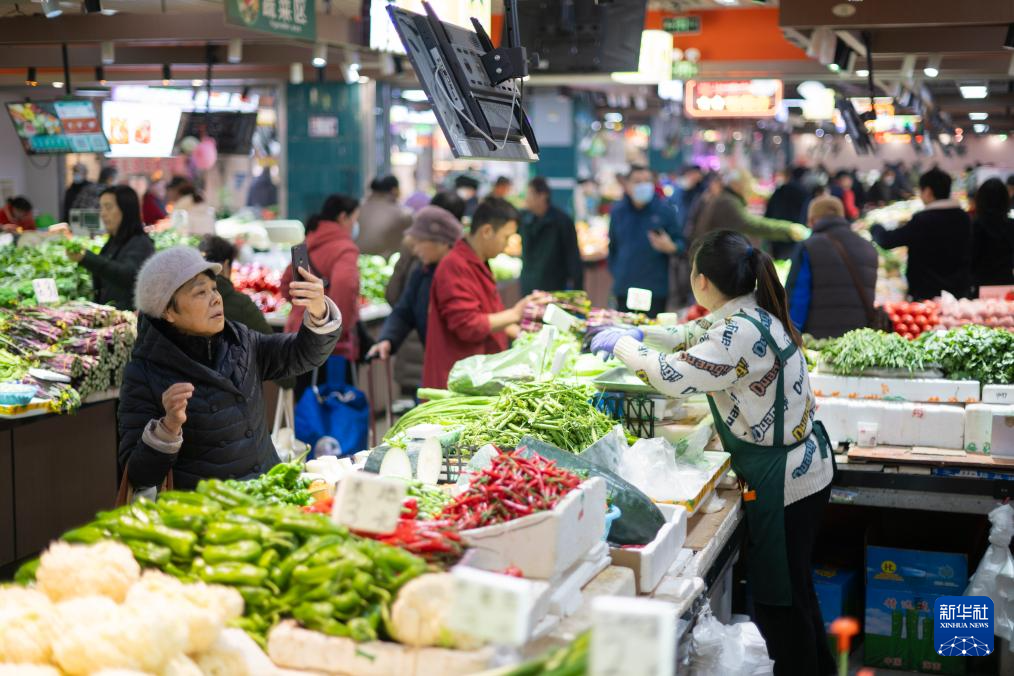
果蔬

Search documents
封锁26日 他们在战火中穿过霍尔木兹
经济观察报· 2026-03-27 08:50
Core Viewpoint - The ongoing conflict in the region has severely impacted shipping through the Strait of Hormuz, leading to significant disruptions in oil and gas supply chains, with a notable increase in shipping risks and costs [1][7][21]. Group 1: Current Situation in the Strait of Hormuz - Approximately 2,000 vessels and 20,000 crew members have been trapped in the Strait of Hormuz for over 26 days, marking an unprecedented situation in maritime history [2]. - The Strait of Hormuz, known as the "world's oil valve," sees about 20 million barrels of oil pass through daily, accounting for 20% of global oil consumption [7]. - The conflict has led to a drastic reduction in vessel traffic, with only 5 to 4 ships passing through on March 23 and 24, compared to the pre-war daily average of 100 to 140 vessels [8]. Group 2: Shipping Risks and Navigation Challenges - The Iranian Revolutionary Guard has issued warnings to vessels attempting to navigate the Strait, increasing the perceived risks for shipping companies [12][18]. - Many crew members express reluctance to navigate the Strait unless the conflict is fully resolved, highlighting the psychological impact of the ongoing violence [9][34]. - The potential for attacks on vessels remains high, particularly for those carrying oil and liquefied natural gas from countries other than Iran [18]. Group 3: Economic Implications and Supply Chain Disruptions - The conflict has led to a near halt in port operations in the region, complicating food imports and increasing prices significantly; for instance, the price of bottled water has surged from $2.5 to $30 per box [21][23]. - Shipping costs have escalated, with current rates being over four times higher than pre-war levels due to the disruption of logistics and supply chains [21]. - The situation has forced shipping companies to consider alternative routes, which are often more expensive and logistically challenging, such as using land transport after reaching ports outside the Strait [24][26]. Group 4: Responses from Stakeholders - The U.S. has announced measures to ensure maritime security, including insurance guarantees and potential naval escorts, but these have not alleviated crew members' fears about navigating the Strait [31][32]. - Iranian officials have stated that non-hostile vessels can pass through the Strait with proper coordination, but this has not significantly reassured shipping companies [8][34]. - The uncertainty surrounding the conflict and its resolution continues to affect investor sentiment, with fluctuations in oil prices reflecting the ongoing geopolitical tensions [37][39].


越南对欧盟果蔬出口四年增长三倍
Shang Wu Bu Wang Zhan· 2026-02-27 07:39
Core Insights - By 2025, Vietnam's fruit and vegetable exports to the EU are projected to reach $477 million, representing a threefold increase from 2021, marking a historical high [1] - From 2021 to 2025, the export value is expected to increase by $322.7 million, with a growth rate of 208% and a compound annual growth rate (CAGR) of approximately 43% [1] - The export value in 2025 is anticipated to grow by 53% year-on-year, indicating a strong growth trend in the EU market [1] Market Dynamics - The growth in Vietnam's fruit and vegetable exports to the EU reflects an overall expansion of market size and an optimization of export product structure [1] - The variety of products exported to the EU is diversifying, reducing reliance on a few traditional export items [1] - The EU market is expected to become one of the fastest-growing markets for Vietnam's fruit and vegetable exports, with a projected scale of nearly $480 million by 2025 [1] Future Outlook - The Vietnamese fruit and vegetable industry plans to continue investing in compliant raw material areas and increasing the proportion of deep processing [1] - The focus on building sustainable brands is aimed at maintaining high growth rates in exports to the EU in the coming years [1]
【黄河沃野 都市新农】三产融合绘新卷 都市农业富乡邻
Zheng Zhou Ri Bao· 2026-02-27 03:39
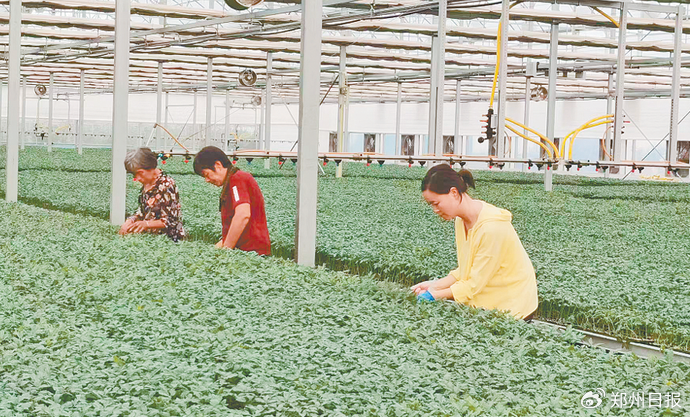
Core Insights - Zhengzhou is promoting urban agriculture by integrating primary, secondary, and tertiary industries, enhancing smallholder farmers' connection to modern agricultural practices, and fostering local economic growth [1][7] Group 1: Agricultural Development - Zhengzhou's urban agriculture strategy focuses on moderate-scale farming, aiming to create a robust agricultural foundation for rural revitalization [1][7] - The city is leveraging collective farming models to break traditional farming constraints, allowing smallholders to become stakeholders in cooperative ventures [3][7] Group 2: Economic Impact - The cooperative model in Sunzhuang Village transformed it from an "empty shell" economy to a "star village" with annual income exceeding 3.5 million yuan, showcasing significant economic growth [3][4] - From 2018 to 2021, the average income per mu for cooperative members increased from 1,860 yuan to 8,000 yuan, indicating a substantial rise in agricultural profitability [3][4] Group 3: Employment and Skills Development - The "Xinghuochong·Xiangyao Farm" has created stable employment for over 600 local residents and engaged more than 5,000 households in high-quality agricultural production [5][6] - Training programs in modern agricultural techniques and e-commerce platforms are empowering farmers with essential skills, fostering a new generation of professional farmers [6][7] Group 4: Technological Integration - The butterfly orchid base in Beiti Village utilizes 5G and IoT technologies for real-time monitoring and automated farming processes, significantly improving production efficiency [5][6] - The integration of smart agriculture practices is not only enhancing productivity but also increasing local wages, making rural employment more attractive [5][6]
烟火升腾年味浓 惠民新政热玉川!济源春节消费市场火爆
Sou Hu Cai Jing· 2026-02-25 14:40
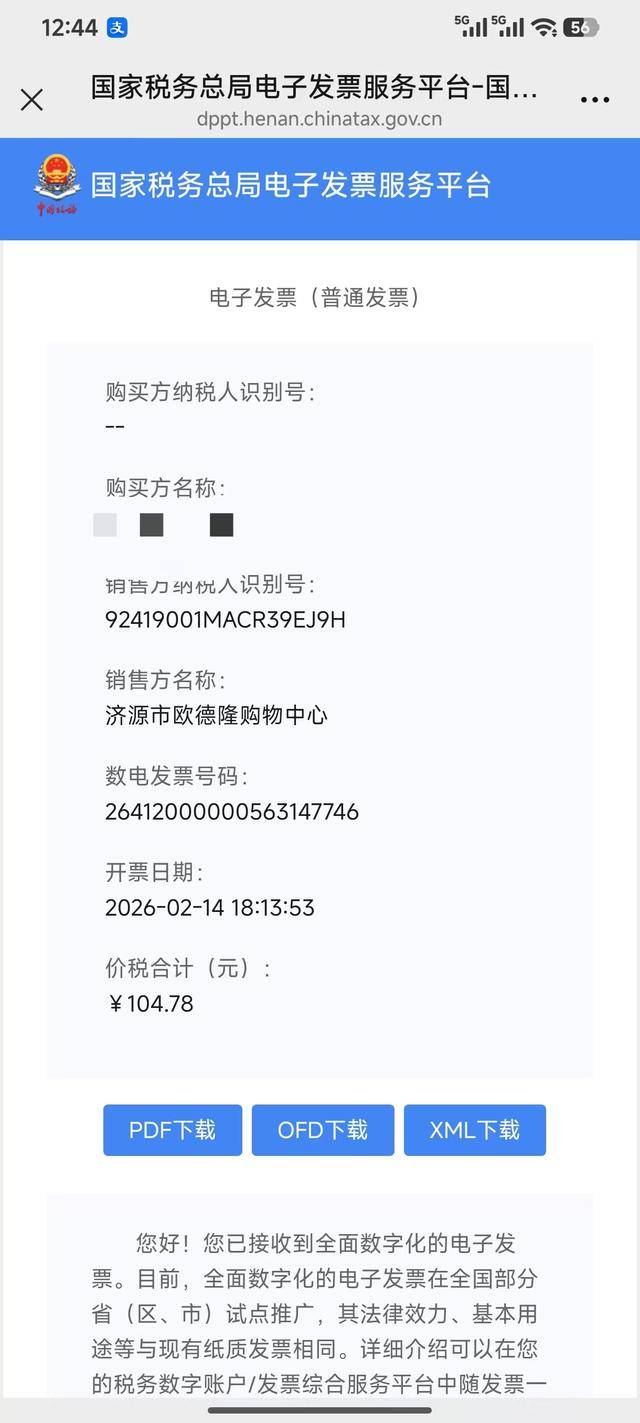
Group 1: Core Insights - The consumption market in Jiyuan is experiencing a vibrant and prosperous atmosphere during the Spring Festival, showcasing a strong holiday economy supported by sufficient supply and stable prices [1][3][8] - Supermarkets are implementing strict management of essential goods, ensuring ample stock and stable prices for items like rice, oil, and meat, contributing to consumer confidence [2][3] - The "Open Invoice for Joy" campaign is promoting consumer spending by offering rewards for digital invoices, enhancing the shopping experience and encouraging participation [4][6][7] Group 2: Sales and Consumer Behavior - Jiyuan supermarkets achieved a total sales revenue of 42.82 million yuan during the Spring Festival, with a customer flow of 1.0067 million people, reflecting the residents' pursuit of a better life [3] - The average occupancy rate of hotels reached 38.5%, a year-on-year increase of 7.54%, while the restaurant sector reported a total revenue of 3.4544 million yuan, up 6.74% year-on-year, indicating a significant boost in holiday spending [8] - The "Trade-in for New" initiative has seen 18,252 vehicles and appliances replaced, with subsidies totaling 9.6398 million yuan and sales reaching 74.3635 million yuan, highlighting strong market vitality [9] Group 3: Digital and Community Engagement - The introduction of a city points code platform during the temple fair economy has successfully aggregated sales data from 54 merchants, resulting in 52,600 transactions worth 843,700 yuan, injecting new digital vitality into the consumption market [9] - The combination of policy incentives and consumer demand for upgrades is driving a robust "Trade-in for New" market, enhancing the quality of life for residents [9]
“832平台”实现交易额603.42万元
Xin Lang Cai Jing· 2026-02-21 18:17
Core Insights - The article highlights the successful completion of agricultural product procurement in Haibei Prefecture, exceeding the reserved quota by 169.93% with a transaction value of 6.0342 million yuan compared to the reported reserved quota of 3.5151 million yuan [1] - The "832 platform" is emphasized as a key tool for connecting poverty alleviation efforts with rural revitalization, enhancing sales channels for agricultural products and supporting farmers' income growth [1][2] Group 1 - The "832 platform" has achieved a transaction value of 6.0342 million yuan, significantly surpassing the reserved quota of 3.5151 million yuan [1] - The procurement total has shown steady growth year-on-year, indicating effective implementation of agricultural product sales strategies [1] - The government has issued notifications to optimize procurement management, increasing the proportion of agricultural products sourced from poverty-stricken areas [1] Group 2 - Efforts are being made to strengthen the local supplier base for the "832 platform," with a focus on improving product packaging and quality [2] - The platform currently features nearly a thousand products, including grains, oils, fruits, vegetables, and livestock products, showcasing a diverse range of local offerings [2] - There is an active initiative to connect various organizations and encourage them to procure local agricultural products through the "832 platform," expanding the market reach of these products [2]
保供稳价,托举万家团圆年
Xin Lang Cai Jing· 2026-02-20 18:38
Core Viewpoint - The article emphasizes the importance of stable supply and prices of essential goods during the Chinese New Year, highlighting the efforts made by the local agricultural sector to ensure that families can enjoy a fulfilling reunion dinner [1][2] Group 1: Supply and Price Stability - The Xinjiang Jiuding Agricultural Products Wholesale Market is bustling with activity, indicating a steady supply of goods with prices remaining similar to usual levels, which contributes to public confidence [1] - The article notes that the stability of prices is crucial for the peace of mind of the public, especially during the traditional peak consumption season of the Spring Festival [1] Group 2: Agricultural and Logistical Efforts - Farmers are actively harvesting fresh fruits and vegetables, ensuring a continuous supply to the market, which is essential for meeting consumer demand during the festive season [1] - The logistics and wholesale markets are well-organized, with sufficient stock and smooth transportation of goods, reinforcing the supply chain from farms to consumers [1] Group 3: Community and Consumer Assurance - The article highlights the comprehensive measures taken to safeguard the "vegetable basket," "rice bag," and "fruit plate" for the community, allowing families to prepare for their reunion dinners with ease [1] - The commitment to ensuring a stable supply and pricing reflects the local government's dedication to improving the quality of life for workers and their families [2]
我的春节不打烊|卖的是果蔬,更是团圆的盼头
Xin Lang Cai Jing· 2026-02-19 10:43
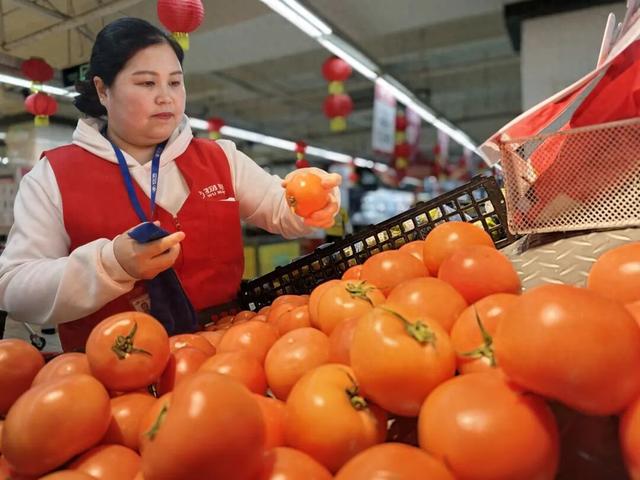
Core Viewpoint - The article highlights the dedication of staff at the Chaonei Vegetable Market during the Spring Festival, emphasizing their role in ensuring a steady supply of fresh produce for families celebrating the holiday, thus contributing to the warmth and joy of the season [1][16]. Group 1: Market Operations - The Chaonei Vegetable Market features a well-organized 300-square-meter area with over 300 varieties of fresh fruits and vegetables, catering to the diverse needs of customers during the Spring Festival [3][5]. - Daily foot traffic at the market approaches 5,000 people, with significant increases during holidays, particularly the Spring Festival, where sales of fruits and vegetables can exceed normal levels by more than three times [5][11]. - The market has evolved from an open-air market in 1953 to one of the four major vegetable markets in Beijing, reflecting its long-standing presence and commitment to serving the community [11]. Group 2: Customer Engagement - Staff member Wang Hongyan actively engages with customers, providing personalized advice on produce selection, such as recommending the best way to enjoy tomatoes [3][9]. - The market not only offers traditional produce but also introduces new varieties, enhancing the festive dining experience for families [9][15]. - Wang Hongyan and her team ensure that elderly customers, who may have difficulty shopping, are informed about delivery services, demonstrating a commitment to customer care [15][16]. Group 3: Staff Commitment - During the Spring Festival, Wang Hongyan and her 17 colleagues remain on duty, showcasing their dedication to maintaining a reliable supply of fresh produce [11][13]. - The staff's responsibilities include managing inventory, ensuring product quality, and providing assistance to customers throughout the busy market hours [13][16]. - The article emphasizes the importance of the staff's hard work and commitment to the community, which helps preserve the traditional market atmosphere and the spirit of the Spring Festival [15][16].
一间小超市托起残疾人就业梦
Xin Lang Cai Jing· 2026-02-18 19:17
Core Viewpoint - The establishment of the Mengzhongyi Assistive Supermarket aims to provide employment opportunities for people with disabilities, fostering an inclusive environment while supporting their self-worth and community integration [1][2]. Group 1: Company Overview - The Mengzhongyi Assistive Supermarket began trial operations in October 2025 and officially opened in January 2026, serving as a shopping destination for local residents and a supportive workplace for individuals with disabilities [1]. - The supermarket is operated in collaboration with the Xilofeng Street community, focusing on creating suitable job positions for people with disabilities [1]. Group 2: Employment and Training - Currently, the supermarket employs three individuals with disabilities who handle tasks such as product organization and cashier duties [1]. - To facilitate the transition into the workforce, the supermarket provides one-on-one training for employees, addressing their concerns and helping them adapt to their roles [1]. Group 3: Community Impact - All profits from the supermarket, after covering operational costs and employee wages, are donated to support disability-related charitable initiatives [2]. - The supermarket encourages customer participation in supporting the cause, as evidenced by a customer who appreciated the opportunity to contribute to the welfare of people with disabilities through their purchases [2]. Group 4: Future Plans - The organization is actively seeking partnerships with more communities to establish additional sustainable stores operated by individuals with disabilities, aiming to create more job opportunities and promote positive energy in supporting people with disabilities [2].
惠州搭建高速服务区长效助农平台 泰美服务区展销点正式启用
Nan Fang Du Shi Bao· 2026-02-14 07:09
Core Insights - The establishment of a long-term sales platform for agricultural products at the Tai Mei service area aims to integrate transportation with rural revitalization, addressing the challenges of agricultural product sales and supporting the "Hundred Million Thousand Project" [1][2] Group 1: Platform Establishment and Operations - The Tai Mei service area, with an average daily traffic of over 80,000 vehicles, provides a strategic location for the agricultural sales platform, enhancing operational efficiency [1] - The collaboration involves the Huizhou Transportation Bureau, Guangdong Provincial Highway Company, local government, and work teams to ensure effective management and supply of agricultural products [1][2] - The platform features over 20 types of seasonal local agricultural products, including fruits, vegetables, and specialty livestock, all sourced directly from farms [1] Group 2: Economic Impact and Future Plans - The initiative is expected to reduce logistics costs for local agricultural products by 20% to 30%, facilitating the movement of products from rural areas to urban markets [1] - In its first year, the platform is projected to increase agricultural sales in Tai Mei Town by approximately 0.5%, benefiting over 3,000 farmers with an estimated income boost of 4 million yuan [2] - The project aims to create 40 local jobs and increase the exposure of local agricultural products to 100,000 instances annually, promoting entry into the Greater Bay Area market [2]
中外网友大对账,对到菜市场
Xin Lang Cai Jing· 2026-02-14 06:12
Core Viewpoint - The article highlights the contrast between China's abundant fruit and vegetable supply and the shortages faced by some Western countries, emphasizing the effectiveness of China's "vegetable basket" project in ensuring food security and diversity in agricultural production [2][5][12]. Group 1: Comparison of Agricultural Supply - In 2023, the per capita vegetable consumption in China reached 588 kg, achieving year-round balanced supply, with vegetable cultivation area consistently over 30 million acres, maintaining the world's largest scale [6][10]. - In contrast, Western countries like the UK, South Korea, and Australia have faced vegetable shortages due to adverse weather, rising energy costs, and insufficient government subsidies, leading to reduced agricultural production [5][6]. Group 2: Historical Context and Policy Initiatives - The "vegetable basket" project was initiated in 1988 to alleviate supply tensions in vegetables, meat, and dairy, with a unique governance structure involving provincial and municipal leaders [9][12]. - Recent revisions to the "vegetable basket" assessment methods emphasize measurable outcomes, such as maintaining vegetable planting areas and establishing retail points in communities [11]. Group 3: Technological and Agricultural Advancements - China has developed six major vegetable production areas, ensuring seasonal availability of various crops, with facility vegetables accounting for one-third of total vegetable production [15][16]. - Advanced agricultural technologies, including smart systems for monitoring soil conditions and cold chain logistics, have significantly improved the efficiency and reliability of food supply [16][18]. Group 4: Global Position and Production Statistics - China is the world's largest producer and consumer of fruits, with a total fruit production of 335 million tons in 2024, and a per capita fruit consumption significantly above the global average [7][18]. - The country produces over half of the world's cabbage and significant proportions of other fruits, such as 90% of bayberries and 80% of lychees, showcasing its dominant position in global agricultural production [18].