比亚迪宋Plus

Search documents
独家专访比亚迪CTO孙华军:反超特斯拉,藏着“死磕”磷酸铁锂的20年
2 1 Shi Ji Jing Ji Bao Dao· 2026-01-12 23:03
Core Insights - BYD has surpassed Tesla in pure electric vehicle sales for the first time in 2025, achieving a total of 2.2567 million units sold, representing a year-on-year growth of 27.86% [1] - The foundation of BYD's success lies in the development of lithium iron phosphate (LFP) batteries, which were initially considered unsuitable for electric vehicles but have been revitalized through BYD's blade battery technology [1][2] - The strategic decision to focus on LFP batteries was driven by safety concerns and the desire for resource independence, as LFP materials are more abundantly available in China compared to cobalt and nickel used in ternary batteries [2][3] Battery Technology Development - BYD began exploring LFP technology in 2002, with a focus on safety following global recalls of lithium-ion batteries due to overheating issues [2][3] - The company launched its first plug-in hybrid model, the F3DM, in 2008, which utilized self-developed LFP batteries, marking its entry into the consumer market [3] - Despite initial market challenges and a shift towards ternary batteries, BYD maintained its commitment to LFP technology, culminating in the development of the blade battery, which significantly improved energy density and safety [4][5] Market Position and Strategy - In 2019, BYD faced significant challenges, including a market downturn and internal doubts about the viability of LFP batteries, leading to a strategic pivot towards passenger vehicles and the refinement of LFP technology [6][12] - The "Qinghai Conference" in 2018 was a pivotal moment for BYD, where the core team reaffirmed their commitment to LFP batteries, emphasizing safety and cost as key priorities [12][13] - BYD's blade battery, introduced in 2020, showcased superior safety features and contributed to a resurgence in sales, with 2021 sales exceeding 600,000 units [5][6] Future Directions - BYD plans to continue investing in LFP battery research and development, prioritizing safety and efficiency as the industry moves towards longer-range electric vehicles [6][20] - The company is also focusing on enhancing charging speeds and addressing challenges related to low-temperature performance, with the introduction of the "megawatt fast charging" technology [6][20] - Upcoming regulatory changes are expected to raise safety standards across the industry, which may further solidify BYD's position in the market as it has already met new safety certifications [21]

中国车企的新战场
2 1 Shi Ji Jing Ji Bao Dao· 2025-10-19 07:42
Core Insights - The export of Chinese automobiles is accelerating, with a total of 4.95 million vehicles exported in the first three quarters of the year, representing a year-on-year increase of 14.8%. Notably, the export of new energy vehicles (NEVs) reached 1.758 million units, up 89.4% year-on-year [2][4]. Group 1: Market Dynamics - The Latin American automotive market, previously dominated by European and American car manufacturers, is now witnessing a surge in Chinese NEVs, with brands like BYD and Geely gaining significant market presence [2][4]. - In Brazil, BYD captured over 70% of the pure electric vehicle market in September, selling 5,687 units, marking a significant milestone with the 14 millionth vehicle produced at its Brazilian factory [4][5]. - The overall NEV sales in Latin America are projected to reach approximately 412,500 units in 2024, reflecting a year-on-year growth of 73.5%, with Brazil leading at an 88.7% growth rate [6]. Group 2: Challenges and Local Adaptation - Several Latin American countries are imposing tariff barriers and localization requirements, which are reshaping the export strategies of Chinese automakers. For instance, Brazil plans to reintroduce import taxes on NEVs starting January 2024, potentially increasing rates to 35% by mid-2026 [9][10]. - The need for local manufacturing has become essential for Chinese car manufacturers to navigate these challenges, with companies like BYD and Great Wall Motors establishing local production facilities to meet market demands and regulatory requirements [10][12]. Group 3: Strategic Partnerships and Infrastructure - Chinese automakers are increasingly focusing on forming local partnerships to enhance their market presence and operational efficiency. For example, BYD has collaborated with local firms to develop a comprehensive charging network in Brazil [14]. - The lack of adequate charging infrastructure in Brazil poses a significant challenge for the NEV market, with a ratio of 14 electric vehicles per charging station, highlighting the need for investment in charging facilities [13][14].

中国车企逐鹿拉美2.0:从整车出口到体系出海 不落地就可能出局
2 1 Shi Ji Jing Ji Bao Dao· 2025-10-17 23:10
Core Insights - The export of Chinese automobiles is accelerating, with a total of 4.95 million vehicles exported in the first three quarters of the year, representing a year-on-year growth of 14.8%. Notably, the export of new energy vehicles (NEVs) reached 1.758 million units, a remarkable increase of 89.4% [1][2] Industry Overview - The Latin American automotive market, previously dominated by European and American manufacturers, is now witnessing a surge in Chinese NEVs. In Brazil, BYD's electric vehicles have captured over 70% of the pure electric market share, with the company selling 5,687 units in September alone [2][3] - The overall NEV sales in Latin America are projected to reach approximately 412,500 units in 2024, marking a year-on-year growth of 73.5%. Brazil leads with an 88.7% growth rate, followed by Mexico and Colombia [3][4] Market Dynamics - Traditional international car manufacturers still dominate the Latin American market, particularly in the fuel vehicle segment. However, Chinese manufacturers are catching up in the 1.5L engine technology and are enhancing their competitiveness in fuel vehicles through advancements in electric vehicle technologies [4][5] - The low penetration rate of NEVs in Latin America, currently below 5%, presents significant growth opportunities compared to China's 58.3% and Europe's 32% [3] Localization Strategies - Increasing tariffs in several Latin American countries are pushing Chinese manufacturers to adopt local production strategies. Brazil plans to reintroduce import taxes on NEVs starting January 2024, with rates expected to rise to 35% by July 2026 [6][7] - Local manufacturing is becoming essential for Chinese car companies to navigate tariff barriers and meet local employment requirements. For instance, BYD's factory in Brazil employs over 80% local staff and is expected to create 20,000 jobs when fully operational [7][8] Infrastructure Challenges - The underdeveloped charging infrastructure in Brazil poses a challenge for the NEV market. As of February, Brazil had only 14,827 charging stations, leading to a ratio of 14 electric vehicles per charging station [10] - To address this, BYD is collaborating with local partners to establish a comprehensive charging network, aiming to provide access to over 450 charging stations by May 2025 [10] Future Outlook - The shift from merely exporting vehicles to establishing a comprehensive operational presence in Latin America is becoming a strategic focus for Chinese manufacturers. This includes local production, supply chain development, and talent acquisition [8][9] - The collaboration with local partners is crucial for overcoming challenges related to local component sourcing and meeting localization requirements [11]
深蓝S07:现金优惠28000,用性价比去打宋L
车fans· 2025-09-08 00:32
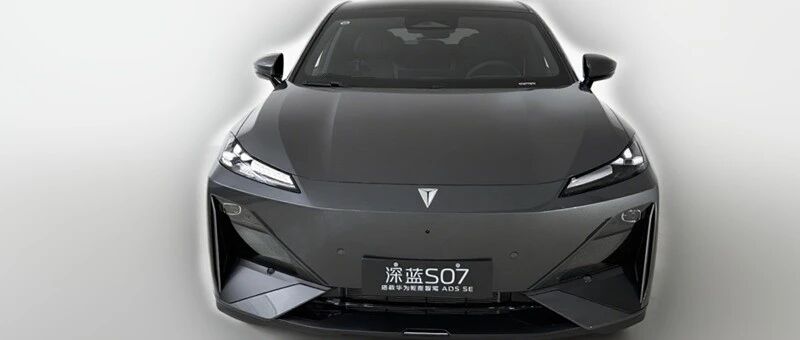
Core Viewpoint - The article discusses the current market situation and consumer behavior regarding the S07 model, highlighting the challenges and opportunities faced by the company in a competitive landscape. Market Situation - In a small fifth-tier city, foot traffic is limited, with 5-6 groups visiting the store daily and nearly 20 groups on weekends. Despite being a low season, there is a slight increase in customer visits, with 3 out of 10 customers specifically interested in the S07 model. The upcoming facelift and the recent launch of the L07 model have led to increased consumer hesitation [2]. Sales Performance - The best-selling configuration is the 215MAX Intelligent Driving version, with a popular color combination of gray exterior and orange interior. The S07 is currently in a clearance phase, with only existing stock available. The least popular model is the pure electric 628 MAX Intelligent Driving version, primarily due to its high price of ¥197,900, which, even with discounts, remains at ¥172,900, making it less competitive [3]. Consumer Preferences - Customers seeking intelligent driving options may consider alternatives like the Xiaopeng G6, while those looking for value and space might opt for Leap Motor. Many customers are attracted to the S07 due to the CATL battery, but the 628 version uses a different battery from China Innovation Aviation, which is perceived as a downgrade despite a longer range [5]. Current Promotions - The manufacturer offers a discount of ¥25,000, a trade-in subsidy of ¥5,000, and a charging pile promotion. Starting August 1, veterans can receive an additional ¥3,000 subsidy. However, as of July 1, the manufacturer no longer provides free charging piles, which has drawn criticism from customers [7][8]. Financing Options - High-interest promotions have been discontinued, and currently, there are no manufacturer-sponsored interest-free options. The maximum loan available is 90%, with a five-year interest rate of 13.2% [9]. Competitive Landscape - The target demographic for the S07 is relatively young, with competitors including BYD Song Plus and Leap Motor C11. Customers who are set on BYD are less likely to consider the S07, but those who do visit the dealership often find the S07 to be a competitive option [12]. Customer Feedback - Common complaints from customers include issues with the chassis, particularly its performance on uneven surfaces, and the lack of physical buttons for controls, which some find inconvenient. Concerns about potential software lag in the vehicle's system after a few years of use have also been raised [27][28].
李斌亮剑,乐道冲锋
Hua Er Jie Jian Wen· 2025-08-04 09:31
Core Viewpoint - The launch of the L90 SUV by NIO has exceeded market expectations, leading to a surge in consumer interest and a significant increase in stock price, indicating renewed confidence in the brand and its future prospects [4]. Pricing Strategy - The L90's starting price was reduced by 14,000 yuan, bringing it to 265,800 yuan, which positions it competitively against the Tesla Model Y. The battery-as-a-service (BaaS) model allows for an entry price of 179,800 yuan, making it accessible to a broader market segment [2][4]. - The pricing strategy reflects a deep understanding of costs and market competition, allowing for a balance between profitability and competitiveness [6]. Market Response - Following the L90's launch, there were long queues at NIO stores, with many customers returning for additional experiences, indicating strong consumer demand [2][3]. - The L90 is seen as a strategic product that could significantly impact NIO's sales targets, with expectations of contributing to half of the company's goal of 440,000 units by 2025 [4]. Production and Delivery Strategy - NIO has learned from past experiences and has prepared 600 test drive vehicles across over 400 stores, ensuring readiness for customer engagement [3]. - The company has shifted to a proactive production strategy, manufacturing vehicles in advance to meet anticipated demand, rather than relying solely on pre-orders [3][8]. Product Innovation and Long-term Vision - NIO's commitment to pure electric vehicles is underscored by its long-term vision, with expectations of significant advancements in user experience by 2025 and 2026 [4][14]. - The L90 is positioned as a transformative product that addresses family needs and emotional value in transportation, marking a shift in NIO's approach to product development [2][11]. Competitive Landscape - The L90 aims to disrupt the family SUV market, where competitors have primarily focused on five-seat models, by offering six and seven-seat configurations [2]. - NIO's strategy emphasizes the importance of understanding user needs and addressing pain points, such as space and usability, which have been critical to the L90's appeal [16]. Future Outlook - NIO's leadership expresses confidence in achieving profitability in Q4, attributing this to the strategic importance of the L90 and its potential to drive sustained operational improvements [5][17]. - The company plans to continue expanding its SUV lineup, with several new models set to launch, reinforcing its commitment to the high-end electric vehicle market [18][19].