
兆瓦闪充电池

Search documents
专访比亚迪CTO孙华军:反超特斯拉,藏着“死磕”磷酸铁锂的20年
2 1 Shi Ji Jing Ji Bao Dao· 2026-01-12 23:12
Core Viewpoint - BYD has surpassed Tesla in pure electric vehicle sales for the first time in 2025, achieving a total of 2.2567 million units sold, representing a year-on-year growth of 27.86% [2] Group 1: Historical Development - The journey of BYD began 23 years ago with a focus on lithium iron phosphate (LFP) batteries, which were initially deemed unsuitable for electric vehicles due to low energy density [2][4] - In 2002, BYD's chairman Wang Chuanfu decided to pursue the LFP route, emphasizing safety and resource independence as key factors [4][10] - BYD launched its first plug-in hybrid model, the F3DM, in 2008, featuring self-developed LFP batteries [4][5] Group 2: Market Challenges and Strategic Decisions - From 2017 to 2019, the electric vehicle market faced challenges, with LFP batteries being marginalized as high-energy-density ternary lithium batteries gained popularity [5][6] - During this period, BYD experienced internal doubts about the LFP strategy but ultimately decided to focus on LFP technology, leading to the development of the "blade battery" [6][14] - A pivotal meeting in Qinghai in 2018 solidified the commitment to LFP batteries, addressing concerns about achieving longer ranges [14][16] Group 3: Technological Innovations - The blade battery design improved space utilization, allowing for a higher energy capacity within the same volume, achieving over 600 kilometers of range [6][17] - The manufacturing process for the blade battery involved overcoming significant technical challenges, including precision in stacking and cutting the battery components [19][20] - The blade battery was officially launched in 2020, showcasing its safety advantages through rigorous testing [6][7] Group 4: Future Directions - BYD plans to continue investing in LFP battery research and development, prioritizing safety as a core consideration [8][24] - The company is also focusing on enhancing charging speeds and addressing performance in extreme conditions, with the introduction of the "megawatt flash charging" technology [8][23] - Upcoming regulatory changes are expected to raise safety standards across the industry, which BYD is prepared to meet with its existing safety protocols [23][24]


独家专访比亚迪CTO孙华军:反超特斯拉,藏着“死磕”磷酸铁锂的20年
2 1 Shi Ji Jing Ji Bao Dao· 2026-01-12 23:03
Core Insights - BYD has surpassed Tesla in pure electric vehicle sales for the first time in 2025, achieving a total of 2.2567 million units sold, representing a year-on-year growth of 27.86% [1] - The foundation of BYD's success lies in the development of lithium iron phosphate (LFP) batteries, which were initially considered unsuitable for electric vehicles but have been revitalized through BYD's blade battery technology [1][2] - The strategic decision to focus on LFP batteries was driven by safety concerns and the desire for resource independence, as LFP materials are more abundantly available in China compared to cobalt and nickel used in ternary batteries [2][3] Battery Technology Development - BYD began exploring LFP technology in 2002, with a focus on safety following global recalls of lithium-ion batteries due to overheating issues [2][3] - The company launched its first plug-in hybrid model, the F3DM, in 2008, which utilized self-developed LFP batteries, marking its entry into the consumer market [3] - Despite initial market challenges and a shift towards ternary batteries, BYD maintained its commitment to LFP technology, culminating in the development of the blade battery, which significantly improved energy density and safety [4][5] Market Position and Strategy - In 2019, BYD faced significant challenges, including a market downturn and internal doubts about the viability of LFP batteries, leading to a strategic pivot towards passenger vehicles and the refinement of LFP technology [6][12] - The "Qinghai Conference" in 2018 was a pivotal moment for BYD, where the core team reaffirmed their commitment to LFP batteries, emphasizing safety and cost as key priorities [12][13] - BYD's blade battery, introduced in 2020, showcased superior safety features and contributed to a resurgence in sales, with 2021 sales exceeding 600,000 units [5][6] Future Directions - BYD plans to continue investing in LFP battery research and development, prioritizing safety and efficiency as the industry moves towards longer-range electric vehicles [6][20] - The company is also focusing on enhancing charging speeds and addressing challenges related to low-temperature performance, with the introduction of the "megawatt fast charging" technology [6][20] - Upcoming regulatory changes are expected to raise safety standards across the industry, which may further solidify BYD's position in the market as it has already met new safety certifications [21]
比亚迪孙华军:反超特斯拉,藏着死磕磷酸铁锂的20年
2 1 Shi Ji Jing Ji Bao Dao· 2026-01-09 15:00
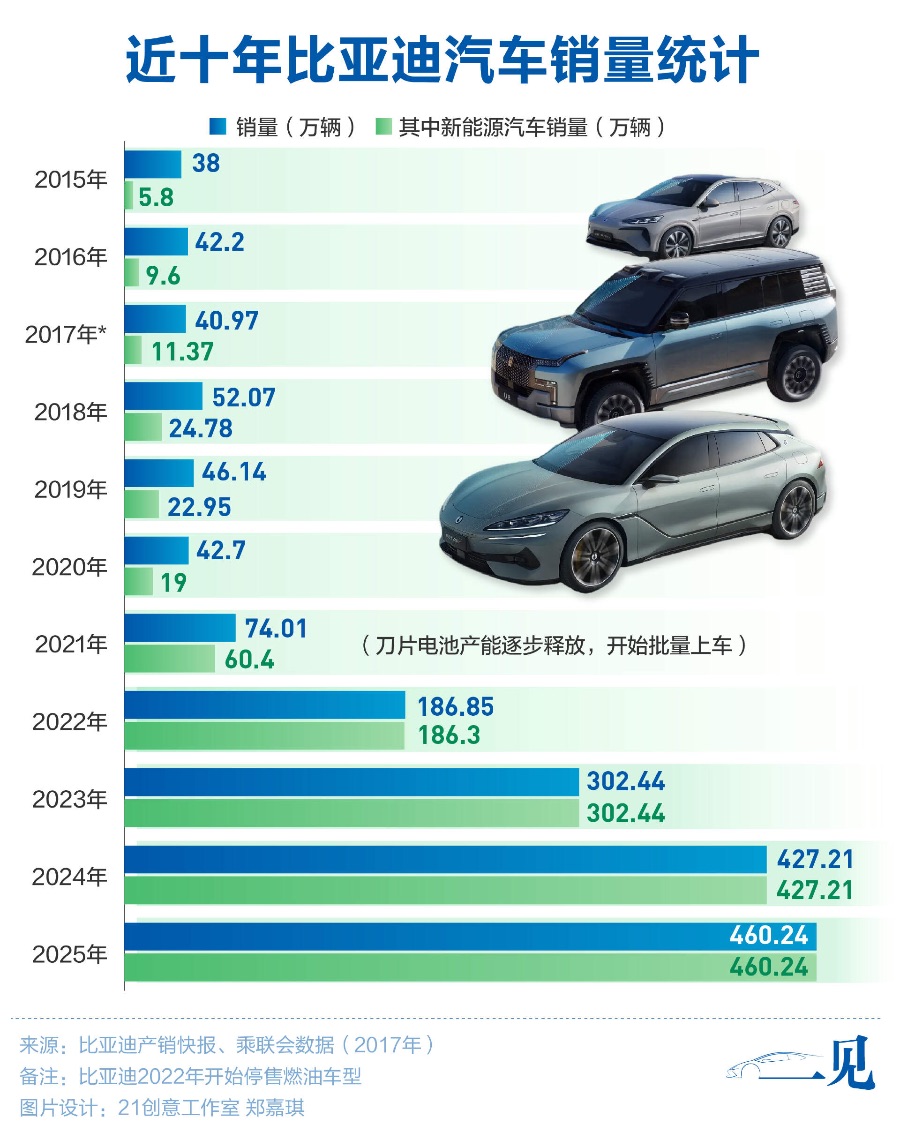
Core Viewpoint - BYD has surpassed Tesla in pure electric vehicle sales for the first time, achieving a total of 2.2567 million units sold in 2025, marking a year-on-year growth of 27.86% [1] Group 1: Historical Context and Technological Development - The journey of BYD from being overtaken by Tesla in 2019 to reclaiming the top position in 2025 began with a long exploration of battery technology, particularly focusing on lithium iron phosphate (LFP) batteries, which were initially deemed unsuitable for electric vehicles [2][3] - The decision to pursue LFP technology was made by BYD's chairman Wang Chuanfu in 2002, prioritizing safety and resource availability over energy density [3][4] - BYD's first plug-in hybrid model, the F3DM, launched in 2008, utilized self-developed LFP batteries, setting the foundation for future models [4] Group 2: Market Challenges and Strategic Decisions - Between 2017 and 2019, the electric vehicle market faced challenges, leading to a shift towards high-energy-density ternary lithium batteries, which dominated the market during that period [4][5] - In 2019, BYD faced significant difficulties, prompting a strategic pivot from commercial vehicles to passenger vehicles and a renewed focus on LFP battery technology [5][6] Group 3: Innovations and Product Launches - The "Blade Battery" was developed as a result of internal discussions aimed at improving the range of LFP batteries, achieving over 600 kilometers of range by enhancing space utilization in battery packs [6][7][8] - The introduction of the Blade Battery in 2020 marked a turning point for BYD, leading to a resurgence in sales, with 190,000 electric vehicles sold that year [8][11] Group 4: Competitive Advantages and Future Directions - BYD's vertical integration in the supply chain became a significant advantage during the global semiconductor shortage, allowing the company to maintain production and growth [11] - As the industry shifts towards ultra-fast charging and solid-state batteries, BYD plans to continue investing in LFP technology while also developing a "megawatt fast-charging battery" capable of providing 400 kilometers of range in just five minutes [11][32] - The company remains committed to enhancing the safety and performance of LFP batteries, with ongoing investments in research and development [33]
21对话|比亚迪孙华军:反超特斯拉,藏着死磕磷酸铁锂的20年
2 1 Shi Ji Jing Ji Bao Dao· 2026-01-09 14:52
Core Insights - BYD has surpassed Tesla in global electric vehicle sales for the first time, achieving a total of 2.2567 million pure electric vehicles sold in 2025, marking a year-on-year growth of 27.86% [2] - The foundation of BYD's success lies in the development of lithium iron phosphate (LFP) batteries, which were initially considered unsuitable for electric vehicles due to their lower energy density [2][3] - The strategic decision to focus on LFP batteries was driven by safety concerns and the availability of raw materials in China, as opposed to the reliance on cobalt and nickel used in ternary batteries [3][4] Development Timeline - BYD began exploring LFP technology in 2002, with the first LFP battery used in a plug-in hybrid model, the F3DM, launched in 2008 [4] - The company faced challenges between 2017 and 2019 when the electric vehicle market cooled, leading to a temporary shift in focus towards ternary batteries due to their higher energy density [5][6] - In 2019, BYD made a pivotal decision to refocus on LFP technology, leading to the development of the "blade battery" which improved space utilization and safety [6][7] Technological Innovations - The blade battery design allowed for a higher space utilization rate of over 60%, enabling a range of 600 kilometers, which was a significant improvement over previous designs [6][18] - The manufacturing process for the blade battery involved overcoming significant engineering challenges, including precision in stacking and cutting the battery cells [20][21] - BYD's commitment to LFP technology has resulted in a robust R&D team of approximately 10,000 members, emphasizing the company's dedication to innovation in battery technology [21] Market Position and Future Outlook - BYD's sales began to recover in the latter half of 2020, with total electric vehicle sales reaching 190,000 units that year, and over 600,000 units sold in 2021 [7] - The company has established a competitive edge through vertical integration of its supply chain, which became particularly advantageous during global shortages of chips and batteries [7][8] - Looking ahead, BYD plans to continue investing in LFP technology while also addressing challenges such as charging speed and safety standards in response to new regulations [24][25]

字节跳动联手比亚迪进军锂电!
鑫椤锂电· 2025-06-19 07:20
Core Viewpoint - The collaboration between ByteDance's Seed team and BYD aims to enhance lithium battery research through AI technology and high-throughput experiments, particularly focusing on the development of the "Megawatt Flash Charging Battery" which can charge in 5 minutes for a range of 400 kilometers [2][3]. Group 1: Collaboration Details - ByteDance's Seed and BYD are deepening their partnership to explore AI for Science in conjunction with high-throughput experiments to accelerate lithium battery development [2]. - The collaboration will involve the establishment of an "AI + High-Throughput Joint Laboratory" to address challenges related to fast charging, battery lifespan, and safety [3]. Group 2: Technological Innovations - BYD's recent innovation, the Megawatt Flash Charging Battery, has garnered significant attention due to its capability of charging in just 5 minutes for a range of 400 kilometers [3]. - The Seed team from ByteDance contributed to the early stages of the Megawatt Flash Charging Battery's development by implementing the BAMBOO AI model framework for electrolyte formulation, which allows for rapid screening of electrolyte compositions [3]. - The BAMBOO model enhances the prediction of key electrolyte properties such as density, viscosity, and ionic conductivity, thereby expediting the research and development process compared to traditional trial-and-error methods [3].

字节跳动AI技术助力比亚迪兆瓦闪充突破 双方将共建联合实验室
Feng Huang Wang· 2025-06-18 05:47
Core Insights - ByteDance and BYD announced a collaboration to deepen the application of AI for Science technology in lithium battery research through the establishment of a joint laboratory [1][2] - BYD's recently launched megawatt fast-charging battery can achieve "charging in 5 minutes for a range of 400 kilometers," with significant contributions from ByteDance's BAMBOO AI model framework [1] - The BAMBOO framework utilizes machine learning to predict key performance indicators of electrolyte solutions, significantly reducing the research and development cycle [1][2] Technology Overview - BAMBOO-MLFF is a machine learning force field designed for liquid-phase organic small molecule design, integrating molecular dynamics algorithms with AI model network design [2] - BAMBOO-Mix is a formulation generation and prediction model that can generate potential formulations based on constraints and quickly predict properties of given formulations [2] - The BAMBOO framework effectively addresses the challenges of high computational costs associated with traditional quantum mechanics simulations while maintaining accuracy [2] Industry Implications - The collaboration exemplifies the deep application value of AI technology in traditional manufacturing, potentially providing new development pathways for technological innovation in the power battery industry [3]
“兆瓦闪充”技术能否照进现实?比亚迪加紧补齐生态最后一环
Xin Lang Cai Jing· 2025-06-01 07:27
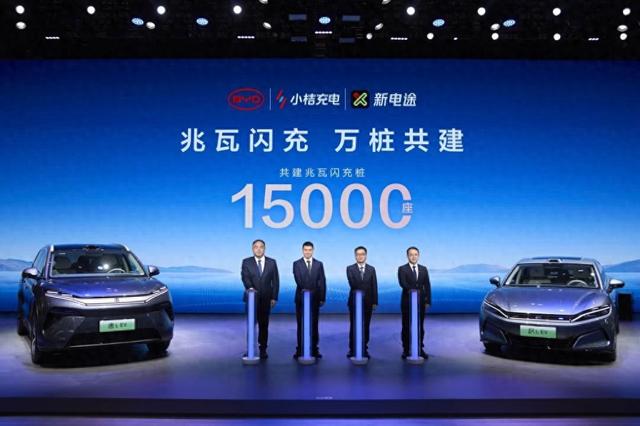
Group 1 - The core issue of range anxiety in electric vehicles remains unresolved, prompting major battery manufacturer CATL to heavily invest in battery swapping technology, aiming to build 1,000 battery swap stations for passenger vehicles this year and a mid-term goal of 10,000 stations [1] - BYD has introduced the "Megawatt Flash Charging" technology, which allows for charging in just 5 minutes for a range of 400 kilometers, addressing user charging anxiety [1] - BYD's self-developed liquid-cooled charging pile can output a maximum power of 1,360 kW, which, along with energy storage cabinets, can alleviate pressure on the power grid [1] Group 2 - BYD announced partnerships with Xiaojucharging and Xindian Tu to jointly build 10,000 and 5,000 Megawatt Flash charging piles, respectively, to promote the widespread adoption of this charging ecosystem across the country [2] - As of now, BYD has announced plans to build a total of 19,000 Megawatt Flash charging piles, with over 500 already completed, covering more than 200 core cities nationwide [4][5] - BYD's self-developed liquid-cooled Megawatt Flash charging terminal system is the first of its kind globally, with a maximum output capacity of 1,360 kW, and plans to establish over 4,000 Megawatt Flash stations across the country [4]
快充产业链专题报告:快充已成大势所趋,产业链迎发展机遇
Dongguan Securities· 2025-04-30 06:02
Investment Rating - The report maintains an "Overweight" rating for the fast charging industry, indicating a positive outlook for investment opportunities in this sector [1]. Core Insights - The fast charging industry is experiencing significant growth driven by the increasing demand for electric vehicles (EVs) and the need for efficient charging infrastructure. The report highlights that by the end of 2024, the number of electric vehicles in China is expected to reach 31.4 million, representing a year-on-year growth of 53.85% [5][12]. - The report emphasizes the urgency of addressing charging anxiety among consumers, with high-power fast charging being identified as a crucial solution. The current ratio of charging stations to electric vehicles remains inadequate, necessitating a substantial increase in fast charging infrastructure [5][22]. - The report outlines the technological advancements in high-voltage fast charging, which is becoming the mainstream solution for rapid energy replenishment. The adoption of high-voltage platforms is expected to penetrate the mid-to-high-end market significantly in the next 2-3 years [5][45]. Summary by Sections 1. Charging Infrastructure Gap and Demand for Fast Charging - The report notes a significant gap in charging infrastructure, with a projected vehicle-to-charging station ratio of 2.4:1 by the end of 2024, indicating a continued need for expansion [5][22]. - The rapid growth of electric vehicle ownership is driving an increase in charging demand, with public charging infrastructure expected to see a 54.99% year-on-year increase in charging volume by 2024 [16][22]. - National policies are actively promoting the development of high-power charging infrastructure to alleviate consumer charging anxiety and enhance the market potential for electric vehicles [5][40]. 2. Maturity of High-Voltage Fast Charging - The report highlights that the conditions for promoting high-voltage fast charging are becoming increasingly favorable, with expectations for rapid growth in adoption [5][45]. - The introduction of the "ChaoJi" charging standard in September 2023 is expected to accelerate the deployment of high-power charging infrastructure, enhancing compatibility and safety [45][46]. - High-voltage fast charging is identified as the leading trend in rapid energy replenishment, with significant advantages over traditional high-current charging methods [5][49]. 3. Systematic Upgrades in the Fast Charging Industry - The development of high-voltage fast charging is driving systematic upgrades across the industry, necessitating advancements in core components and materials for both charging stations and electric vehicles [5][59]. - The report indicates that major automotive manufacturers are increasingly launching high-voltage fast charging models, with a notable rise in market penetration for these vehicles in the mid-to-high-end segments [5][51]. - The construction of high-power charging infrastructure is accelerating, with industry leaders introducing megawatt-level charging technologies to enhance charging efficiency [5][59]. 4. Investment Recommendations - The report suggests focusing on leading companies within the high-voltage fast charging supply chain, including Shenghong Co., Ltd. (300693), Wolong Nuclear Materials (002130), CATL (300750), Tiannai Technology (688116), and Hongfa Technology (600885) [5].

雷军缺席,周鸿祎成上海车展“最忙车模”?| 次世代车研所
新浪财经· 2025-04-24 01:04
文 | 新浪科技 张俊 张奥 "谢谢大家到访小米展台,现场领到礼物的朋友在留言区贴张图。" 虽然人未到,但雷氏营销的风还是吹到了上海车展现场——没有发布会,没有新车,但送礼 物的方式还是让小米展台人气爆棚。 雷军缺席之下,周鸿祎可谓成为上海车展"最忙车模"。他先后出现在小鹏、北京越野展 台,还被网红"卤鹅哥"现场强制"投喂",也算是"顶流"背后的烦恼。 另外,虽有近 1000 家中外知名企业参展,但一些车企还是因为各种原因缺席。比如陷入 经营困境的哪吒汽车,中国销量下滑的兰博基尼、玛莎拉蒂、劳斯莱斯等多家超豪华品牌, 还有多家韩系、法系车企等。 雷军缺席, 周鸿祎成"顶流"? 2024 北京车展, 360 集团创始人周鸿祎一身红衣坐在一辆车上,引发大量围观,被调侃 为"最老车模"。 而这一次上海车展,周鸿祎也再次当起了车模。他首先作为神秘嘉宾现身小鹏汽车展台,与 小鹏汽车 CEO 何小鹏共同参观小鹏机器人 IRON 。"我们期待着更多这样的机器人来当牛 马。"周鸿祎调侃道。 另外,周鸿祎还作为 BJ40 增程新车车主,亮相了北京越野展台。发布会现场,北汽集团 董事长张建勇亲自为周鸿祎交付新车。 不过,"最忙车 ...
比亚迪超级e平台即将交付,首搭车型汉L和唐L上市
news flash· 2025-04-10 03:21
Core Viewpoint - BYD has launched its new models Han L and Tang L based on the Super e-platform, showcasing advancements in electric vehicle technology and performance [1] Pricing Information - The price range for Han L is set between 209,800 to 279,800 yuan, while Tang L is priced between 229,800 to 289,800 yuan [1] Technical Specifications - Both models are equipped with megawatt fast-charging batteries and a high charging voltage of 1000V [1] - The Han L EV has a tested acceleration time of 0 to 100 km/h in as fast as 2.7 seconds [1]