活性阳极材料

Search documents
特朗普对华再下狠招,160%关税砸向中国?美国这次制裁,损失惨重
Sou Hu Cai Jing· 2026-02-17 12:55
其实,这项措施早在去年底,就已经有了苗头,当时美国国内的一些生产商联合向政府提交申请,表示中国的石墨产品"价格不合理",给美国本土行业"造 成了伤害",里面甚至有人叫嚣着要征收超过九倍的关税。 当时很多人觉得这个数字过于夸张,难以真正落地,没想到这波操作落实得比大家想的还快,而这次真刀实枪地宣布要征收160%左右的复合关税,也就是 反倾销叠加反补贴,确实震动了整个市场。 2月11日,美国商务部下属的国际贸易管理局表示,从我们中国进口的一类关键石墨产品,也就是活性阳极材料,将被征收至高160%的反倾销税和反补贴 税。 要知道,这种材料不是普通的工业用品,而是新能源电池里几乎无法替代的核心材料,尤其对于电动车行业来说,缺了它,电池就造不出来,电动车也就动 不了。 包括很多在美国有生产基地的国际品牌,也都非常依赖从中国进口的这类石墨产品,特斯拉、通用、福特这些企业,没有中国的石墨供应,电动车的生产就 会受到限制,在这个节骨眼上,美国突然加重关税,无疑是给整个行业来了个急刹车。 只能说,特朗普实在是黔驴技穷了。 我们中国企业的报价之所以低,是因为规模化和产业体系的效率带来的结果,而并非简单的补贴行为,这一点,其实在美 ...

澳大利亚西拉资源公司为特斯拉石墨供应交易争取更多时间
Xin Lang Cai Jing· 2026-01-19 00:09
目前,两家公司已同意在美国能源部批准的前提下,将修复期限推迟到 2026 年 3 月 16 日。 原定9月16日的最后期限延长至11月15日,后又推至1月16日。这家澳大利亚矿业公司在一份声明中 说:"虽然西拉公司不承认它在承购协议下违约,但双方已将补救日期延长至2026年3月16日,并正在密 切合作以补救所谓的违约。"由世界首富埃隆-马斯克领导的特斯拉公司还保留了终止供应协议的权利, 如果西拉公司提供的活性阳极材料在2月9日之前不符合其技术规格。 周一早盘,这家石墨生产商的股价下跌6.6%,至0.285澳元,创下自12月22日以来的最低水平,而更广 泛的矿业分类指数上涨0.6%。 责任编辑:王永生 澳大利亚西拉资源公司周一表示,该公司与特斯拉达成一致,第三次延长解决据称违反双方石墨供应协 议的最后期限。 2021协议规定在四年内每年供应8,000吨石墨,这对Syrah在路易斯安那州维达利亚的业务至关重要。 总部位于得克萨斯州的特斯拉公司于 2025 年 7 月发出了第一份违约通知,称西拉公司未能从其维达利 亚加工厂交付用于电动汽车电池的合格活性阳极材料样品。 总部位于得克萨斯州的特斯拉公司于 2025 年 ...

中美“交锋”再起?美国要对中国电池材料下手,不料中方早已预判
Sou Hu Cai Jing· 2025-05-27 16:44
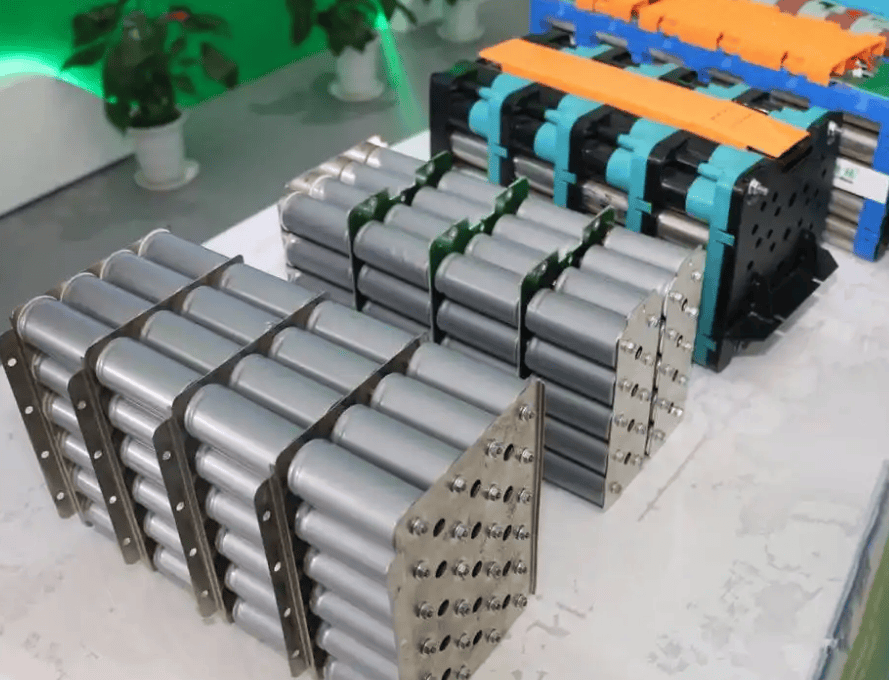
Group 1 - The U.S. Department of Commerce has preliminarily ruled that Chinese key battery components, specifically active anode materials, are receiving substantial government subsidies, paving the way for potential anti-subsidy tariffs [1][3] - The investigation, initiated on December 18, 2024, was prompted by a complaint from the U.S. Active Anode Materials Producers Alliance regarding subsidy issues, with findings indicating that two Chinese companies did not fully cooperate, leading to a presumed subsidy rate exceeding 700% for them, while other Chinese companies faced a 6.55% rate [1][3] - Active anode materials are crucial for electric vehicle batteries, directly impacting performance, lifespan, and safety, with China supplying a significant portion of the world's graphite, accounting for 59% of U.S. natural graphite and 68% of synthetic graphite imports [1][3] Group 2 - The U.S. House of Representatives passed the "Decoupling from Foreign Adversaries Act" in March, which prohibits the Department of Homeland Security from purchasing batteries from six Chinese companies, including CATL and BYD, aiming to reduce China's dominance in the battery supply chain [3][5] - China has preemptively taken measures in response to U.S. actions, including listing battery cathode material preparation technology and lithium iron phosphate preparation technology in its export restriction catalog, highlighting its significant role in the global lithium battery supply chain [5][7] - The U.S. attempts to restrict Chinese battery materials are driven by both economic competition and military strategic considerations, as advanced military equipment increasingly relies on high-performance batteries [5][7] Group 3 - The U.S. strategy to impose tariffs on Chinese battery materials is unlikely to achieve its intended goals, as China's strong position in the battery industry is difficult to undermine, and such tariffs could harm U.S. industries and consumers while provoking stronger Chinese countermeasures [7]
48小时内,美国连下3道挑战书,邀6国“入伙”,中方早有准备
Sou Hu Cai Jing· 2025-05-26 15:56
Group 1 - The U.S. Department of Commerce has preliminarily ruled that key battery components from China are receiving "unfair subsidies," paving the way for potential anti-subsidy tariffs [1] - Two Chinese companies have subsidy rates exceeding 700%, while other companies have a subsidy rate of 6.55% [1] - Active anode materials, which include graphite and silicon, are critical for electric vehicle batteries [1] Group 2 - The American Association of Port Authorities warns that imposing import tariffs on Chinese-made cranes could lead to a loss of nearly $6.7 billion and hinder infrastructure investment upgrades [3] - The association's CEO urged the U.S. Trade Representative to exempt already ordered cranes from tariffs, predicting that tariff costs will increase over the next decade [3] - The G7 finance ministers' meeting is focusing on issues such as manufacturing overcapacity and non-market behavior, with U.S. tariffs on China being a central topic [3] Group 3 - Recent high-level economic talks between China and the U.S. in Geneva have led to significant reductions in bilateral tariff levels, effectively canceling tariffs imposed since the trade war began on April 2 [4] - Multiple media outlets and scholars emphasize that cooperation between China and the U.S. is essential for mutual benefit, warning against confrontation [4] Group 4 - Jamie Dimon, CEO of JPMorgan Chase, visited Beijing and expressed commitment to deepening engagement in the Chinese capital market, signaling a potential easing of U.S.-China relations [6] - Despite the Geneva meeting's outcomes, the U.S. continues to pressure other countries regarding the use of Chinese technology, particularly Huawei's AI chips, citing export control violations [6] - The U.S. State Department has instructed financial institutions not to provide loans to Chinese state-owned enterprises involved in the Belt and Road Initiative, alleging threats to regional security without providing evidence [6] Group 5 - Following the Geneva trade meeting, the tariff confrontation between China and the U.S. has reverted to the state prior to April 2, with experts noting that China's surpassing of the U.S. will be gradual and phase-based [8] - China is expected to achieve absolute maritime dominance over the U.S. in the South China Sea and Taiwan Strait by around 2028 [8] - By 2030, China aims to complete over 300 remote sensing satellites, enhancing its global monitoring capabilities [8]
721%关税!美国再度针对中国锂电企业!
起点锂电· 2025-05-22 10:16
Core Viewpoint - The U.S. Department of Commerce has preliminarily ruled that Chinese key battery components, specifically active anode materials, are receiving substantial government subsidies, paving the way for potential anti-subsidy tariffs on these products [1][2]. Group 1: Preliminary Ruling and Tariff Implications - The preliminary ruling on May 20 indicates that companies like Huzhou Kaijin New Energy and Shanghai Shaosheng Knitted Sweat, which did not participate in the investigation, face a tariff rate of 712.03%, while Panasonic and other Chinese producers face a rate of 6.55% [1]. - Huzhou Kaijin New Energy, established in August 2017, has an effective production capacity of 250,000 tons of anode materials, with plans to increase capacity to 590,000 tons by the end of 2025 [1]. - The final ruling from the U.S. Department of Commerce is expected on September 19, 2025, pending approval from the International Trade Commission (ITC), which will make its final decision on November 13, 2025 [1]. Group 2: Industry Context and Competitive Landscape - U.S. graphite producers initiated the investigation, claiming that Chinese government subsidies artificially lower prices, making it difficult for them to compete [2]. - The U.S. relies heavily on China for graphite, importing 59% of its natural graphite and 68% of its synthetic graphite from China, with approximately $350 million worth of anode materials imported in 2023 [3]. - The increasing trade barriers may lead to higher costs for U.S. customers and exacerbate volatility in the global new energy supply chain [3]. Group 3: Broader Trade Policies and Protectionism - The U.S. has escalated tariffs on electric vehicle batteries and non-vehicle lithium batteries, with rates reaching 173.4% and 155.9% respectively, although these rates have been reduced recently [4]. - The U.S. House of Representatives passed a bill aimed at decoupling from Chinese battery suppliers, further indicating a strategy to weaken China's dominance in the battery supply chain [4]. - The ongoing trade tensions reflect a broader trend of protectionism in the U.S. and Europe, aimed at bolstering domestic industries against Chinese competition [5]. Group 4: Strategic Recommendations for Chinese Companies - Chinese lithium battery companies are advised to remain vigilant against geopolitical risks and trade protectionism, focusing on building resilient and localized supply chains [5]. - There is a need to create technological advantages to maintain a competitive edge in the global market, as highlighted by the statement from CATL's founder regarding the indispensable role of Chinese technology for global automakers [5].


美国准备对中国电池材料下手,专家:美以补贴为借口,实质出于政治考量
鑫椤锂电· 2025-05-22 03:06
Core Viewpoint - The U.S. Department of Commerce has preliminarily ruled that Chinese key battery components, specifically active anode materials, are receiving substantial government subsidies, paving the way for potential anti-subsidy tariffs against China. This action is perceived as politically motivated rather than purely economic [1]. Group 1: Investigation and Findings - On May 20, the U.S. Department of Commerce announced its ruling on the investigation into active anode materials from China, claiming that two Chinese companies did not fully cooperate, leading to an assumption of a subsidy rate exceeding 700%, while other Chinese companies were estimated to have a subsidy rate of 6.55% [1]. - Active anode materials are crucial components in electric vehicle batteries, primarily composed of graphite and silicon, directly affecting battery performance, lifespan, and safety [1]. Group 2: Market Dependency and Supply Chain - Bloomberg reports that China supplies a significant portion of the world's graphite, with U.S. imports relying on China for 59% of natural graphite and 68% of synthetic graphite [1]. - The investigation into Chinese active anode materials began on December 18 of the previous year, initiated by a complaint from the U.S. Active Anode Materials Producers Alliance regarding subsidy issues [1]. Group 3: Legislative Actions - The investigation is separate from the broader tariffs imposed by the U.S. government on trade partners and differs from proposed additional tariffs on semiconductors and pharmaceuticals [2]. - In March, the U.S. House of Representatives passed the "Decoupling from Foreign Adversaries Act," which prohibits the Department of Homeland Security from purchasing batteries from six Chinese companies, including CATL and BYD, aiming to reduce China's dominance in the battery supply chain [2].

刚刚,A50跳水!亚太股市,全线低开!
Zheng Quan Shi Bao Wang· 2025-05-22 02:21
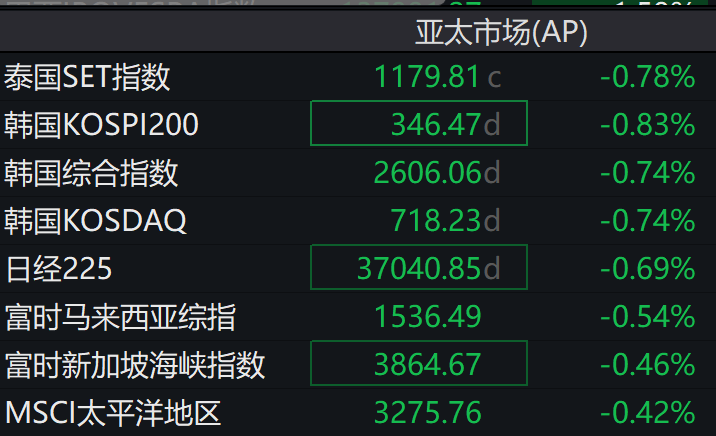
截至发稿,韩国综合指数、日经225指数跌幅分别为0.74%、0.69%。 | | 亚太市场(AP) | | | --- | --- | --- | | 泰国SET指数 | 1179.81 с | -0.78% | | 韩国KOSPI200 | 346.47 d | -0.83% | | 韩国综合指数 | 2606.06d | -0.74% | | 韩国KOSDAQ | 718.23d | -0.74% | | 日经225 | 37040.85d | -0.69% | | 富时马来西亚综指 | 1536.49 | -0.54% | | 富时新加坡海峡指数 | 3864.67 | -0.46% | | MSCI大平洋地区 | 3275.76 | -0.42% | 5月22日,亚太股市全线低开,而黄金再次飙涨。 港股低开,截至发稿,恒指跌0.4%。小鹏汽车涨近10%,公司昨日披露业绩与指引均好于预期;微博涨近3%,公司Q1归属股东净利润同比增长 116.36%。 A股三大指数均飘绿。化学原料板块短线走低,中毅达跌停。高位股调整,南京港跌停,苏州龙杰、连云港、百利电气、成飞集成等大幅低开。 富时中国A50指数期货直线 ...
美国准备对中国电池材料下手,专家:美以补贴为借口,实质出于政治考量
Huan Qiu Shi Bao· 2025-05-21 23:03
Core Points - The U.S. Department of Commerce has preliminarily ruled that Chinese key battery components, specifically active anode materials, are receiving substantial government subsidies, paving the way for potential anti-subsidy tariffs [1][2] - The investigation into these subsidies began on December 18, 2022, following a complaint from the U.S. Active Anode Materials Producers Alliance [1] - Active anode materials are crucial for battery performance, lifespan, and safety, with China supplying a significant portion of the world's graphite, accounting for 59% of U.S. natural graphite and 68% of synthetic graphite imports [1] Industry Implications - The investigation is separate from broader tariffs imposed by the U.S. government on trade partners and is specifically targeting the battery supply chain [2] - The U.S. House of Representatives passed a bill in March aimed at reducing reliance on Chinese battery suppliers, indicating a strategic move to weaken China's dominance in the battery supply chain [2] - Chinese companies are noted for their competitive advantage due to high cost-performance ratios and a well-established supply chain, which allows them to produce quality products at lower costs [2]
美国对中活性阳极材料作出反补贴初裁
news flash· 2025-05-21 03:35
Group 1 - The U.S. Department of Commerce announced a preliminary countervailing duty ruling on imported active anode materials from China, with specific duty rates set for various companies [1] - The preliminary duty rates are 712.03% for Huzhou Kaijin New Energy Technology Co., Ltd. and Shanghai Shaosheng Knitted Sweat, while Panasonic Global Procurement (China) Co., Ltd. and other Chinese producers/exporters face a rate of 6.55% [1] - The final countervailing duty ruling is expected to be issued by the U.S. Department of Commerce on September 29, 2025 [1] Group 2 - The case primarily involves products under U.S. Customs codes 2504.10.5000 and 3801.10.5000 [1]
突发!美国对中国锂电材料发起双反调查
起点锂电· 2025-01-16 10:08
联盟声称,2024年前9个月,中国输美活性阳极材料金额超2.6亿美元,占据美国进口市场份额 超60%,并认定中国进口产品存在828.14% - 920.95%的倾销幅度。 1月7日,应美国负极材料生产商联盟(AAAMP)于2024年12月18日提交的申请,美国商务部 对进口自中国的活性阳极材料(Active Anode Material)发起反倾销和反补贴调查。 本案主要涉及美国海关编码2504.10.5000和3801.10.5000项下产品。美国双反调查所涉及的"活 性负极材料"涵盖了天然石墨、人造石墨、任何含石墨的化合物或混合物。 美国国际贸易委员会(ITC)预计将最晚于2025年2月3日作出反倾销和反补贴产业损害初裁。若 美国国际贸易委员会裁定涉案产品的进口对美国国内产业构成了实质性损害或实质性损害威 胁,美国商务部将继续对本案进行调查并预计于2025年3月13日作出反补贴初裁,2025年5月27 日作出反倾销初裁。 该联盟要求对中国进口的锂离子电池负极石墨产品征收高达920%的关税。 理由是中国通过大 规模补贴进行低价倾销,导致石墨产能过剩,价格紊乱,并对美国本土生产商造成了冲击。尽 管当前已存在2 ...