AI入口

Search documents
AI 大战的终局不是模型,而是入口:苹果正在收割一切
美股研究社· 2026-03-31 13:15
Core Viewpoint - The article argues that the true winners in the AI revolution will not be those who create the technology but those who control the user entry points, with Apple positioned to be the ultimate beneficiary of this shift [1][15]. Group 1: AI Market Dynamics - The AI landscape is evolving into a "heavy asset competition," with major tech companies like Microsoft, Google, and Amazon significantly increasing capital expenditures, leading to a decline in fixed asset returns [4][6]. - In 2025, Microsoft's capital expenditure exceeded $80 billion, primarily directed towards AI infrastructure, but this has resulted in diminishing marginal returns as AI-related revenue growth has begun to lag behind capital expenditure growth [5][6]. - The commoditization of AI capabilities is evident, with open-source models approaching the performance of proprietary models, and API call costs dropping over 90% in the past 18 months [7]. Group 2: Apple's Strategic Positioning - Apple has adopted a "restrained strategy," choosing not to develop its own models but to control the entry points into the AI ecosystem, leveraging its 2.5 billion active devices [9][10]. - By utilizing a hybrid architecture where lightweight tasks are processed on-device and complex tasks are routed to cloud-based models, Apple is redefining the user interaction interface with AI [9][10]. - The release of the A20 series chip in 2026, which triples the neural network engine's power, allows for local execution of large models, enhancing user experience and privacy [10]. Group 3: Future of AI Infrastructure - The article posits that large models will transition from being products to infrastructure, shifting profit margins from production to entry points, which is what Apple is strategically pursuing [12]. - Apple is testing an "AI Agent Store" in 2026, allowing developers to list their AI agents for direct access via Siri, thus controlling the distribution and monetization of AI services [12][14]. - Other tech giants face challenges in monetizing their AI technologies, while Apple, with over $100 billion in cash, can afford to wait for optimal conditions to capitalize on AI advancements [13][14]. Group 4: Long-term Implications - The article concludes that controlling user entry points will determine the future landscape of the AI industry, with companies like Apple potentially becoming the "electric grid" of the AI era, while others may become mere service providers with thin profit margins [15][16].


无人“通赢”!80亿AI红包战转场
Shen Zhen Shang Bao· 2026-02-26 22:55
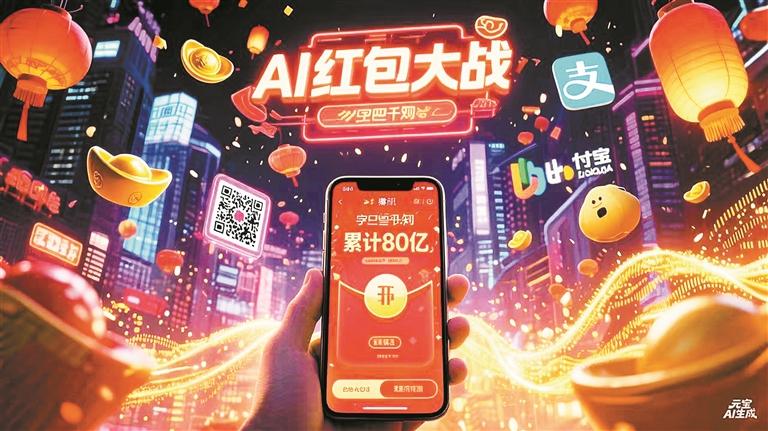
Core Insights - The AI Spring Festival "Red Packet War" involved major industry players, with over 8 billion yuan invested in promotional activities, marking a significant marketing push for AI applications [2][3][11] - The competition is not just about short-term marketing but also about establishing AI as a key entry point in consumer decision-making and daily life [6][9] Group 1: Investment and Participation - Tencent initiated the campaign with a 1 billion yuan cash red packet, followed by Alibaba's 3 billion yuan "free meal" initiative, and ByteDance's distribution of tech products during the Spring Festival [3][4] - The total investment from various internet companies exceeded 8 billion yuan, indicating a strong commitment to capturing market share in the AI sector [2][11] Group 2: User Engagement and Growth Metrics - During the promotional period, DAU for Yuanbao surged to over 50 million, while Qianwen's DAU increased by 727.7% to reach 5.848 million [4][5] - The promotional activities led to significant user engagement, with Yuanbao users completing over 10 billion AI creations and Qianwen facilitating nearly 2 billion orders [4][5] Group 3: Market Dynamics and Competition - The initial surge in user numbers is expected to decline as subsidies fade, leading to a more stable competitive landscape focused on user retention and ecosystem integration [7][10] - The competition is shifting from attracting users to maintaining them, with a focus on the long-term value of AI applications rather than just short-term gains [11] Group 4: Strategic Implications - The investments signal a transition from technology development to large-scale competition in the AI space, with companies vying for strategic positioning in the market [11] - The differing strategies among companies highlight various approaches to integrating AI into existing ecosystems, whether as standalone applications or embedded capabilities [9][10]



几十亿烧完了 春节AI大战到底谁赢了?
Di Yi Cai Jing· 2026-02-25 09:42
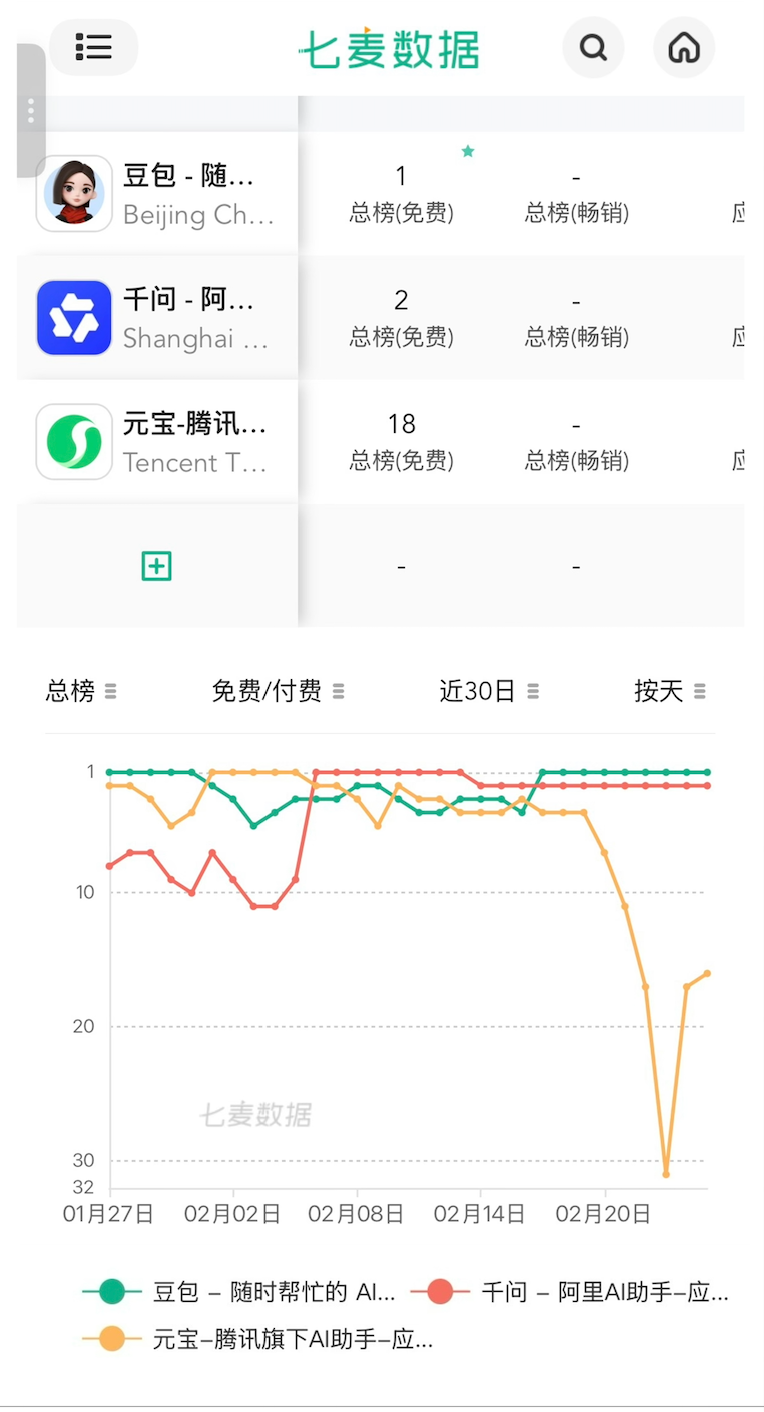
Core Insights - The "Chinese Large Model Spring Festival War" has concluded, with ByteDance's Doubao and Alibaba's Qianwen maintaining top positions in the App Store download rankings, while Ant Group's Aifu and Tencent's Yuanbao have dropped significantly [1][4][11] - The competition reflects differing strategies between Chinese and American firms, with Chinese companies focusing on consumer traffic and app entry points, while U.S. firms are prioritizing model performance and practical applications [1][15][17] Group 1: Competition Overview - The competition began gradually without a clear starting signal, with major players like Baidu, Ant Group, and Tencent announcing significant investments in AI activities leading up to the Spring Festival [3][4] - By early February, core players intensified their efforts, with Qianwen's promotional activities leading to a tenfold increase in orders and topping the App Store free list [4][6] - The download data indicates that Doubao leads with a 23% share, while Aifu and Yuanbao lag behind with around 15% each [4][5] Group 2: User Engagement and Retention - The cash-burning strategy has shown effectiveness in user acquisition, with Yuanbao's daily active users (DAU) increasing significantly during its promotional activities [6][10] - However, the long-term retention of users remains uncertain, as many users reported decreased usage of AI applications post-promotion [9][12] - Analysts emphasize the importance of evaluating user retention rates after the promotional period to assess the true value of the products [11][12] Group 3: Market Dynamics and Future Outlook - The current competition is seen as a pivotal moment in the AI landscape, with Doubao establishing a strong brand presence and Qianwen focusing on practical applications [10][11][17] - The differing paths of Chinese and American firms highlight a focus on consumer engagement in China versus a more mature SaaS ecosystem in the U.S. [15][17] - The future of AI assistants is expected to involve differentiated competition and integration into various user scenarios, moving beyond standalone applications [13][15]
几十亿烧完了,春节AI大战到底谁赢了?
Di Yi Cai Jing· 2026-02-25 09:26
Core Insights - The competition among Chinese AI models during the Spring Festival has highlighted the struggle for market entry and user retention, with ByteDance's Doubao and Alibaba's Qianwen leading the download rankings, while Ant Group's Aifuku and Tencent's Yuanbao have fallen behind [1][4][12] - The differing strategies between Chinese and American AI companies reflect their respective stages of commercialization, with Chinese firms focusing on consumer traffic and app entry points, while U.S. firms are advancing in model performance and ecosystem development [1][16] Group 1: Competition Overview - The "Spring Festival AI Battle" saw major players like Baidu, Alibaba, Tencent, and ByteDance invest heavily in marketing, with significant cash incentives to attract users [3][4] - By February 25, Doubao maintained the top position in the App Store, while Aifuku and Yuanbao dropped significantly, indicating a failure to secure a lasting user base [1][4][12] - The competition has led to a notable increase in daily active users (DAU) for Yuanbao, which reached over 50 million after its cash giveaway campaign [6][11] Group 2: Marketing Strategies - The marketing approach of AI firms has shifted from traditional user acquisition methods to a focus on creating lasting user engagement and brand loyalty [10][12] - Analysts suggest that the effectiveness of these marketing strategies should be evaluated based on user retention rates post-campaign, rather than just initial download rankings [13][14] - The "red envelope" strategy has attracted users, but concerns remain about the sustainability of user engagement once the incentives are removed [12][14] Group 3: Product Differentiation - Doubao has established a unique position by integrating content creation capabilities and multi-modal interactions, while Qianwen focuses on e-commerce applications [14][18] - The lack of strong use cases for Yuanbao and Aifuku has resulted in lower user retention, highlighting the importance of addressing real user needs and providing distinct value propositions [12][14] - The future of AI assistants is expected to involve more integrated solutions that seamlessly fit into users' daily lives, emphasizing the need for personalized services [14][18] Group 4: Industry Trends - The current landscape indicates a divergence in strategies between Chinese and American AI companies, with the former prioritizing consumer engagement and the latter focusing on foundational model improvements and infrastructure [16][18] - The significant investments in AI infrastructure by companies like OpenAI and Google reflect a global trend towards practical applications and sustainable growth in the AI sector [16][17] - The competition for user engagement in China is seen as a critical step in defining the future of AI applications, with the potential for long-term impacts on market dynamics [18]
45亿红包打响AI入口大战,百度给出另一种回应
量子位· 2026-02-15 03:45
Core Viewpoint - The article discusses the competitive landscape of AI in China, highlighting the intense rivalry among major internet companies to establish themselves as the "super entrance" to AI services, particularly during the Chinese New Year marketing campaigns [10][16]. Group 1: AI Developments and Market Dynamics - OpenClaw has gained significant traction, reaching 189,000 stars on GitHub by the end of January [1]. - Major companies like Baidu, Alibaba, and Tencent are heavily investing in cash giveaways during the Spring Festival, with Tencent offering 10 billion, Alibaba 30 billion, and Baidu 5 billion in cash red envelopes [3][16]. - Baidu has integrated OpenClaw into its ecosystem, allowing users to deploy AI assistants without prior development experience [4][5]. Group 2: User Engagement Strategies - Baidu's approach focuses on embedding AI capabilities within its existing app, allowing users to access AI features seamlessly without needing to download a separate application [20][21]. - The integration of AI into high-frequency user scenarios, such as search queries, is crucial for retaining user engagement beyond the initial marketing push [17][24]. - Baidu's strategy has resulted in a fourfold increase in monthly active users for its AI assistant, demonstrating the effectiveness of its embedded approach [31]. Group 3: Long-term Strategic Vision - Baidu aims for a long-term strategy that emphasizes a comprehensive technological ecosystem, referred to as "chip-cloud-model-body" [36][42]. - The company has been proactive in launching significant AI models and applications, positioning itself as a leader in the evolving AI landscape [33][34]. - Baidu's full-stack capabilities provide a competitive edge, allowing it to maintain a strong position in the AI market as competition intensifies [42].
又一巨头加入红包大战,大厂撒钱已达75亿
Sou Hu Cai Jing· 2026-02-13 12:26
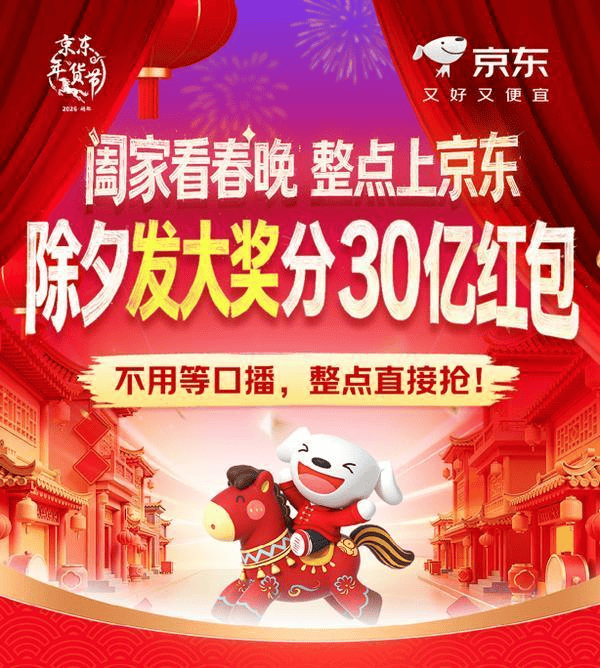
Core Viewpoint - JD.com is strategically positioning itself in the upcoming "next-generation internet entry" competition by focusing on direct consumer needs rather than following the trend of AI-driven applications, investing 30 billion yuan in a unique approach to the Chinese New Year shopping season [1][6]. Group 1: JD.com's Strategy - JD.com will launch the "Moon Black Wind High" Super Festival on February 16, offering a total of 3 billion yuan in red envelopes and physical rewards, focusing solely on e-commerce without complex tasks or waiting for promotional broadcasts [3][5]. - The promotional strategy includes direct discounts on popular products like iPhones and Moutai, emphasizing a straightforward "buy or not" approach compared to competitors' AI-driven user engagement tactics [3][6]. Group 2: Competitive Landscape - The competition has split into two distinct paths: one focusing on AI entry points and the other on immediate consumer purchases, with JD.com opting for the latter to build consumer trust rather than just attention [6][9]. - Major competitors like Alibaba, Tencent, ByteDance, and Baidu have collectively invested over 4.5 billion yuan in AI-related red envelope initiatives, while JD.com aims to capture the immediate market with its 30 billion yuan investment [9]. Group 3: Operational Confidence - JD.com demonstrates confidence in its supply chain capabilities, utilizing over 3,600 warehouses to predict and meet regional consumer demand during the peak shopping season [6]. - An additional 1.3 billion yuan is allocated to support delivery personnel and customer service staff during the holiday, ensuring operational continuity and employee welfare [6].

阿里要继续大投入淘宝闪购,三年不担心亏损
Xin Lang Cai Jing· 2026-02-11 11:57
Core Insights - The new round of instant retail competition has begun, accelerated by the AI assistant battle [3][26] - Alibaba's management encourages bold moves in flash sales, aiming for significant investment in instant retail by 2026 [4][28] - The focus for Taobao Flash Sales includes high-value orders and precise operational improvements in food delivery and instant retail [5][29] Group 1: Market Strategy - Taobao Flash Sales plans to increase its investment in 2026, focusing on instant retail and high-value orders above 30 yuan [4][28] - The strategy includes enhancing delivery efficiency and targeting specific high-demand categories like pharmaceuticals, beverages, and fresh produce [5][29] - The goal is to surpass Meituan's market share by summer 2026, with a focus on high-quality orders [7][31] Group 2: Competitive Landscape - The current market share is approximately 50% for Meituan and 40% for Taobao Flash Sales, with JD.com below 5% [9][34] - Taobao Flash Sales has shifted its focus from order volume growth to increasing the proportion of high-quality orders to 60% [9][34] - Both companies are competing on delivery capabilities, with Taobao Flash Sales aiming to match Meituan's delivery times [10][35] Group 3: Operational Enhancements - Taobao Flash Sales is implementing a "super computing system" to optimize delivery processes and reduce costs [10][35] - The company is expanding its delivery capacity with multiple logistics lines, enhancing its operational efficiency [11][36] - In southern regions, Taobao Flash Sales has improved delivery times, surpassing Meituan in cities like Guangzhou and Shenzhen [12][36] Group 4: Infrastructure Development - Instant retail requires long-term investment and infrastructure development, with a focus on building warehouses for efficient delivery [14][38] - Taobao Flash Sales is currently stabilizing its daily order volume at around 10 million, which is about half of Meituan's [17][41] - Alibaba is constructing dedicated warehouses for instant retail, with plans to expand its logistics network significantly [18][42] Group 5: AI Integration and User Engagement - The competition for AI entry points is intensifying, with significant investments from Alibaba to cultivate consumer habits in AI-assisted shopping [21][45] - The launch of the Qianwen app has led to a surge in user engagement, with daily active users increasing dramatically during promotional events [22][46] - The integration of AI into shopping experiences is seen as a critical area for future growth, despite potential challenges in user retention [23][47]


21评论丨红包大战背后:AI入口即未来流量
2 1 Shi Ji Jing Ji Bao Dao· 2026-02-04 23:00
Core Insights - The 2026 "red envelope war" marks a significant shift in competition among tech giants like Tencent, Baidu, and Alibaba, focusing on AI integration rather than traditional payment methods [1][2] - This competition signifies a new phase in AI rivalry, transitioning from technical capabilities to a comprehensive ecosystem approach involving user engagement and AI applications [2][4] Group 1: Competition Dynamics - The current red envelope competition is not merely about cash incentives but is strategically aimed at establishing AI as a core user interaction point [2][4] - Tencent's strategy involves leveraging its social platforms to create an AI-driven social network, while Baidu focuses on integrating AI into its extensive app ecosystem [2][4] - Alibaba aims to embed AI deeply within its commercial services, creating a closed-loop ecosystem that connects AI with consumer interactions [4] Group 2: User Engagement and Retention - Cash incentives attract users, particularly in underdeveloped markets, but long-term retention will depend on the intrinsic value of AI products [4][5] - Unlike the 2015 mobile payment landscape, where user retention was easier post-education, the current AI landscape faces challenges in establishing a compelling need for users to engage with AI [5] - The future competition will shift from merely acquiring users through financial incentives to creating genuine value through technological advancements and practical AI applications [5]

红包大战背后:AI入口即未来流量
2 1 Shi Ji Jing Ji Bao Dao· 2026-02-04 22:42
Core Insights - The 2026 "red envelope war" marks a significant shift in competition among tech giants, focusing on AI as the new entry point rather than traditional payment methods [1][2] - This competition is not merely about cash incentives but represents a strategic move towards comprehensive AI ecosystem development [2][3] Group 1: AI Integration and User Engagement - Major companies like Tencent, Baidu, and Alibaba are integrating AI into their platforms, requiring users to engage in AI interactions to unlock rewards [2][3] - The goal is to create a habit where users associate their needs with AI, fostering a long-term relationship with the technology [2] Group 2: Ecosystem Competition - The competition has evolved from technical capabilities to a comprehensive battle involving entry points, scenarios, and ecosystems [3][4] - Each company's strategy reflects its AI ecosystem layout, with Tencent leveraging social networks, Baidu focusing on a full-stack approach, and Alibaba integrating AI into core business functions [3] Group 3: Future of AI and User Retention - The expectation is that general-purpose AI will become the core of the next internet generation, potentially disrupting existing traffic entry patterns [4] - While cash incentives attract users, long-term retention will depend on the core value of AI products, which currently face challenges of homogeneity [4][5] Group 4: Long-term Strategy and Value Creation - The real competition will shift from acquiring users through cash incentives to creating value and deepening user engagement with AI [5] - Companies need to invest in technology development and integrate AI into high-frequency daily scenarios to enhance user experience and functionality [5]
阿里30亿加入战局,AI应用“春节大战”升级
第一财经· 2026-02-02 13:47
Core Viewpoint - The article discusses the competitive landscape of major internet companies in the AI sector during the 2026 Spring Festival, highlighting Alibaba's significant investment in its AI shopping app, Qianwen, as part of a broader marketing strategy to attract users through cash red envelopes and promotional activities [2][3][4]. Group 1: Company Initiatives - Alibaba's Qianwen app announced a 30 billion yuan investment to launch the "Spring Festival Treat Plan," promoting AI shopping through a "free meal" approach [2]. - The Qianwen app has integrated with various Alibaba ecosystem platforms, including Taobao, Alipay, and Fliggy, allowing users to order food with a single sentence [2]. - The "Spring Festival Treat Plan" will officially launch on February 6, with participation from multiple Alibaba services, emphasizing continuous promotions and cash red envelopes [2]. Group 2: Competitive Landscape - The 2026 Spring Festival has become a critical battleground for AI market entry, with ByteDance's Volcano Engine and Baidu also heavily investing in promotional activities [3][4]. - Baidu has allocated 500 million yuan for red envelope giveaways, while Tencent has initiated a 1 billion yuan red envelope campaign, indicating a fierce competition among major players [3]. - The article notes that the introduction of cash red envelopes is a strategy to encourage app installations and user engagement with new AI features, although it may not significantly alter market shares [4][6]. Group 3: Market Trends - The trend of using red envelopes during the Spring Festival aligns with the festive atmosphere and has proven effective in cultivating user habits, as seen with WeChat's success in the past [4]. - The competition is characterized as a "user habit incubation battle," suggesting that while promotional tactics may drive initial engagement, they do not guarantee long-term market dominance [6].