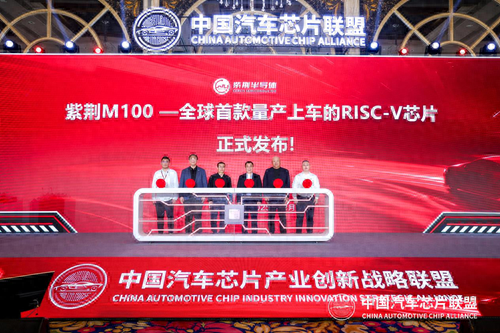
紫荆M100

Search documents
协同创新筑生态 跨界融合启新程——中国汽车芯片联盟2025全体成员大会在沪圆满举办
Zhong Guo Qi Che Bao Wang· 2025-12-23 09:23
Group 1 - The China Automotive Chip Industry Innovation Strategic Alliance held its 2025 General Assembly in Shanghai, focusing on cross-industry integration and ecosystem collaboration [2] - The alliance has grown to 450 members since its establishment in 2020, aiming to promote the large-scale application of domestic chips [4] - Key outcomes of the conference included the release of the "Energy-saving and New Energy Vehicle Technology Roadmap 3.0" and the establishment of a three-dimensional standard system for RISC-V automotive chips [4] Group 2 - The conference featured discussions on vehicle demand and chip layout by representatives from major companies like FAW Group and Preh [5] - The world's first mass-produced RISC-V automotive-grade chip, "Zijing M100," was announced, with plans for vehicle integration by 2026 [5] - Several sub-forums addressed topics such as the integration of AI and robotics with automotive chips, focusing on standardization and collaborative breakthroughs in the industry [7] Group 3 - The alliance aims to transition the automotive chip industry from merely being capable of production to achieving high-quality, sustainable, and stable development [7] - Future initiatives will include deepening supply-demand connections and advancing work on automotive-grade processes and testing certifications [4]


全球首款量产RISC-V车规芯片发布:紫荆M100开启开放架构新纪元
半导体芯闻· 2025-12-22 10:17
Core Viewpoint - The article highlights the significant milestone in China's automotive chip industry with the launch of the world's first mass-produced RISC-V automotive chip, the Zijing M100, marking a substantial step in independent research and engineering capabilities in open architecture [1][3]. Group 1: Technological Breakthrough - The Zijing M100 chip showcases the advantages of the RISC-V open and modular architecture, aligning with the evolution of smart automotive electronic and electrical architectures, featuring high computing power, low power consumption, high security, and high scalability [3]. - The development timeline of the Zijing M100 is notably rapid, taking only two years from planning in 2023 to mass production in 2025, a remarkable feat compared to the typical 4-5 years required for automotive-grade chip development [3]. Group 2: Unique Business Model and Technical Advantages - Zijing Semiconductor's rapid mass production success is attributed to its unique business closed-loop model, benefiting from direct definitions from automakers, quick validation, and application endorsements [5]. - The Zijing M100 achieved a CoreMark score of 2.42, outperforming similar products by 38%, enhancing vehicle control response speed and user experience [5]. - The chip meets ASIL-B safety standards and supports national encryption standards, ensuring robust security for smart connected vehicles [5]. Group 3: Challenges and Future Planning - Despite significant progress, the construction of a complete ecosystem remains a major challenge, particularly in the automotive chip sector where supply chain-related IDE tools are not fully developed [8]. - Zijing Semiconductor has obtained various certifications, including IATF16949 and AEC-Q100, with additional software certifications in progress, expected to be completed by the first quarter of next year [9]. - The product roadmap includes the M200 and M300 chips, with applications expanding from body control to more critical areas like engine and chassis, indicating a strategic approach to risk management [10].

从长城孵化到独立远航:紫荆半导体的RISC-V造芯之路
Guan Cha Zhe Wang· 2025-12-22 02:37
Core Insights - The article highlights the historic achievement of Zijing Semiconductor, which has successfully mass-produced the first RISC-V automotive-grade MCU in China, marking a significant milestone in the domestic automotive semiconductor industry [1][17] - The company has adopted a unique business model that emphasizes deep collaboration with automotive manufacturers and a focus on RISC-V architecture, enabling it to complete the mass production process in just two years, compared to the typical four to five years in the industry [1][6] Company Background - Zijing Semiconductor was incubated within Great Wall Motors for about two years before becoming an independent entity in November 2024, receiving a strategic investment of 500 million yuan in 2025 to fuel its growth [1][3] - The company's equity structure is designed to encourage industry-wide participation, with Great Wall Motors reducing its stake from 100% to 30%, allowing core team members to hold 40% and external investors to hold 30% [3] Technology Choice - Zijing Semiconductor chose RISC-V architecture for its MCUs due to its complete autonomy, performance advantages, and cost-effectiveness, with the M100 showing a 38% performance improvement over similar architectures [4][5] - The modular design of RISC-V allows for customized development based on specific automotive needs, such as enhanced ESD protection for vehicles operating in extreme conditions [4] Business Model - The company employs a "commercial closed loop" model, which prioritizes defining customer needs before chip development, thus reversing the traditional approach of developing chips first and seeking customers later [6] - This model has proven effective, allowing Zijing Semiconductor to secure its first external order of 250,000 units from a Taiwanese company, indicating market validation of its approach [6] Product Development - Zijing Semiconductor is building a comprehensive product matrix that includes various MCU models and plans to expand into analog chips, aiming for a production target of at least 50 million units over five years [8][14] - The company has developed 15 reusable IPs and is focused on creating integrated solutions that streamline the chip selection process for customers [8] Market Outlook - The automotive MCU market is projected to grow at a compound annual growth rate of over 10% to 15%, driven by increasing demand for smart vehicles, which require more MCUs [12] - Zijing Semiconductor aims to differentiate itself by focusing on the Chinese market and tailoring its products to local needs, avoiding direct competition with international giants [12][13] Future Strategy - The company plans to pursue both self-research and potential mergers and acquisitions to integrate promising startups into its product ecosystem, leveraging significant investment support [14] - Zijing Semiconductor is optimistic about the future of RISC-V in automotive applications, positioning itself as a pioneer in this emerging field [15]

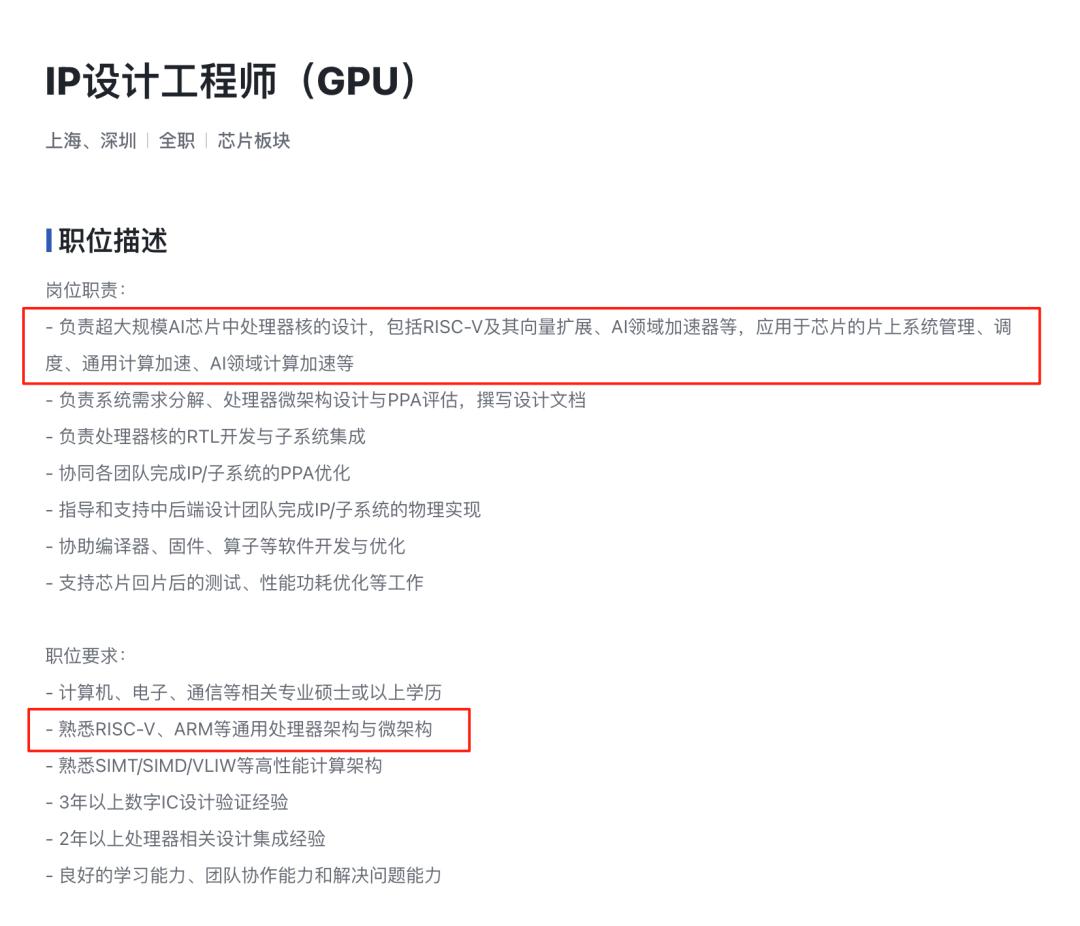
入局RISC-V智驾芯片开发?小鹏汽车回应
3 6 Ke· 2025-08-15 01:21
Core Viewpoint - Xiaopeng Motors is entering the RISC-V automotive chip development space, as indicated by their recent job postings for IP design engineers focused on RISC-V architecture and AI accelerators [2][4]. Group 1: Industry Trends - The RISC-V ecosystem is rapidly developing, with significant interest in automotive applications. The market penetration of RISC-V SoC chips is projected to grow from 5.9% in 2024 to 25.7% by 2031, with automotive market share expected to reach 31% by 2031, translating to over 20 billion units shipped [6]. - Major international automotive chip manufacturers, including Bosch, Qualcomm, Infineon, NXP, and STMicroelectronics, have formed a joint venture named Quintauris to focus on RISC-V based products for automotive applications [7]. - Domestic companies are also advancing in RISC-V automotive chip development, with Yiswei Computing launching several innovative products tailored for smart vehicles, including RISC-V+AI vehicle control MCUs and C-V2X SoCs [8]. Group 2: Company Developments - Xiaopeng Motors is not the first automotive manufacturer to explore RISC-V chip development; Dongfeng Motor has introduced the DF30 chip, the first to use an open-source RISC-V architecture, aimed at various automotive applications [11]. - Great Wall Motors has successfully developed the RISC-V vehicle-grade MCU chip, Zijing M100, which boasts a 38% performance improvement over competitors and meets automotive safety standards [11]. - Guoxin Technology announced the design of its first high-performance vehicle-grade MCU chip, CCFC3009PT, based on RISC-V architecture, targeting applications in intelligent driving and domain control [10].
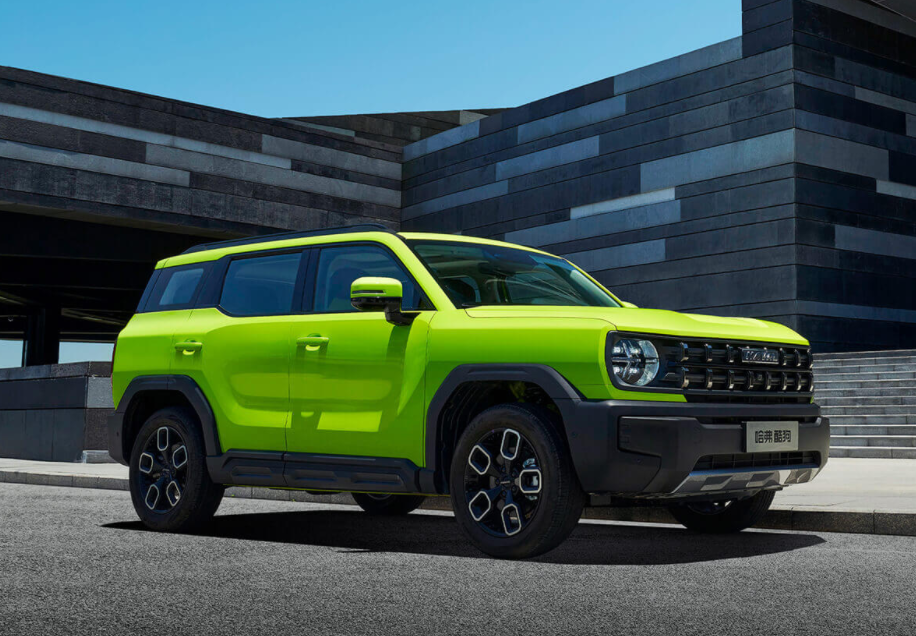
长城汽车2024年销售新车123.45万辆,净利润同比大增80.76%
Ju Chao Zi Xun· 2025-03-31 03:07
Financial Performance - In 2024, the company achieved total revenue of 202.20 billion, a year-on-year increase of 16.73% compared to 2023 [2] - The net profit attributable to shareholders reached 12.69 billion, marking an 80.76% increase from the previous year [2] - The net profit after deducting non-recurring gains and losses was 9.74 billion, up 101.40% year-on-year [2] - The net cash flow from operating activities was 2.78 billion, reflecting a 56.49% increase compared to 2023 [2] Sales and Market Performance - The company sold a total of 1.23 million vehicles in 2024, a slight increase of 0.37% year-on-year [4] - New energy vehicle sales reached 322,200 units, representing a year-on-year growth of 25.65%, with a domestic penetration rate of 43.99% [3] - Overseas sales reached 454,100 units, a significant increase of 44.61%, setting a new historical high [5] Product and Technological Advancements - The company launched the next-generation intelligent driving system Coffee Pilot Ultra and the Coffee OS 3 smart space system in 2024 [2] - The RISC-V automotive-grade MCU chip, Zijing M100, was successfully developed, enhancing the company's technological capabilities [2] - The company established a comprehensive AI data intelligence system and a supercomputing center, positioning itself at the forefront of the industry in terms of algorithms, data, and computing power [2]