经济舱机票

Search documents
10家航司经济舱均存在锁座行为,春秋深航超半数座位被锁
Mei Ri Jing Ji Xin Wen· 2026-01-20 04:32
Core Insights - The article discusses the prevalent practice of airlines locking certain economy class seats, which limits consumer choice and is seen as a method for airlines to increase revenue through service tier differentiation [1][2] Group 1: Airline Practices - A survey conducted by the Jiangsu Consumer Protection Committee revealed that none of the 10 major airlines fully open all economy class seats for selection, indicating that seat locking has become a common practice in civil aviation services [1] - The airlines surveyed include Eastern Airlines, Southern Airlines, Air China, Hainan Airlines, Xiamen Airlines, Shenzhen Airlines, Shandong Airlines, Sichuan Airlines, Spring Airlines, and Juneyao Airlines [1] Group 2: Seat Locking Statistics - The proportion of locked seats during the purchasing phase varies significantly among the surveyed airlines, ranging from 19.9% to 62.1%, with an average of 38.7% [1] - Specific routes with high seat locking include Spring Airlines' "Nanjing-Lanzhou" route, which has over 60% of economy seats locked, and Shenzhen Airlines' "Shenzhen-Zhanjiang" route, with over 50% locked [1] Group 3: Consumer Concerns - Consumers have raised questions regarding the reasons for seat locking, the extent of locked seats, unlocking methods, and related rules, but airline customer service responses have been vague regarding these issues [2]





民航旅客量有望创新高,日本推出史上最高财政预算 | 财经日日评
吴晓波频道· 2025-12-27 00:29
Group 1 - The National Venture Capital Guidance Fund has officially launched, focusing on cutting-edge fields such as artificial intelligence, biopharmaceuticals, quantum technology, and 6G, with a lifespan of 15 to 20 years to match the long-term R&D needs of hard technology [2] - The fund aims to leverage a substantial fiscal investment to mobilize trillions in social capital, with at least 70% of investments directed towards seed and early-stage companies [2][3] - The fund operates as a "fund of funds," delegating decision-making to regional funds, which enhances efficiency and separates government guidance from market operations [2] Group 2 - Japan's new fiscal year budget is set at approximately 122.3 trillion yen (about $786 billion), marking a 6.3% increase from the previous year's budget [4] - The government plans to issue around 29.6 trillion yen in new bonds to support this budget, with a slight reduction in reliance on debt issuance [4][5] - The budget focuses on social security, debt repayment, and defense spending, reflecting the increasing financial pressures due to an aging population and rising costs [4][5] Group 3 - China's civil aviation sector is projected to achieve a record high of 770 million passenger trips in 2025, a 5.4% increase from 2024 and a 16.6% increase from 2019 [6] - The average economy class ticket price is expected to drop by 2.9% to 740 yuan, indicating a strategy of "price for volume" among airlines [6][7] - Despite the increase in passenger numbers, the low ticket prices are compressing profit margins, raising concerns about the sustainability of this pricing strategy [7] Group 4 - The robot rental market is experiencing explosive growth, with daily rental prices for basic intelligent robots dropping to around 200 yuan, while more advanced models range from 2,000 to 5,000 yuan [8] - The demand for robot rentals is high, with bookings extending into February, but prices are fluctuating significantly [8] - The market for humanoid robots is still in its early stages, and broader applications are needed for significant growth [9] Group 5 - The price of tomatoes has surged, with retail prices in many regions exceeding 10 yuan per jin, reflecting a nearly 71.9% year-on-year increase [10] - Adverse weather conditions have impacted supply, leading to higher prices during a seasonal transition period [10] - The demand for tomatoes is expected to rise further as the New Year and Spring Festival approach, maintaining upward pressure on prices [10] Group 6 - A report from Visa indicates that 28% of American adults would be pleased to receive cryptocurrency as a gift, with this figure rising to 45% among Gen Z [11] - Nearly half of shoppers have utilized AI tools for shopping tasks, highlighting the growing integration of technology in consumer behavior [11][12] - The rising inflation has made cryptocurrency a more appealing gift option, reflecting a shift in consumer preferences towards asset-based gifts [11] Group 7 - The LOF market has seen significant volatility, with multiple funds experiencing rapid price fluctuations, indicating potential irrational trading behavior [13] - The recent surge in silver prices has created arbitrage opportunities in the LOF market, but the risks associated with such trading strategies are evident [13] - The complexity of LOF products and the lack of transparency can lead to vulnerabilities for ordinary investors [13] Group 8 - The stock market experienced a slight increase, with the Shanghai Composite Index rising by 0.1% amid a volatile trading session [14] - Market sentiment showed signs of recovery after a brief dip, although many stocks turned from gains to losses [14] - The trading volume was substantial, indicating active market participation despite the fluctuations [14]

部分经济舱锁座率达一半以上!这是变相薅羊毛行为
Sou Hu Cai Jing· 2025-12-03 15:43
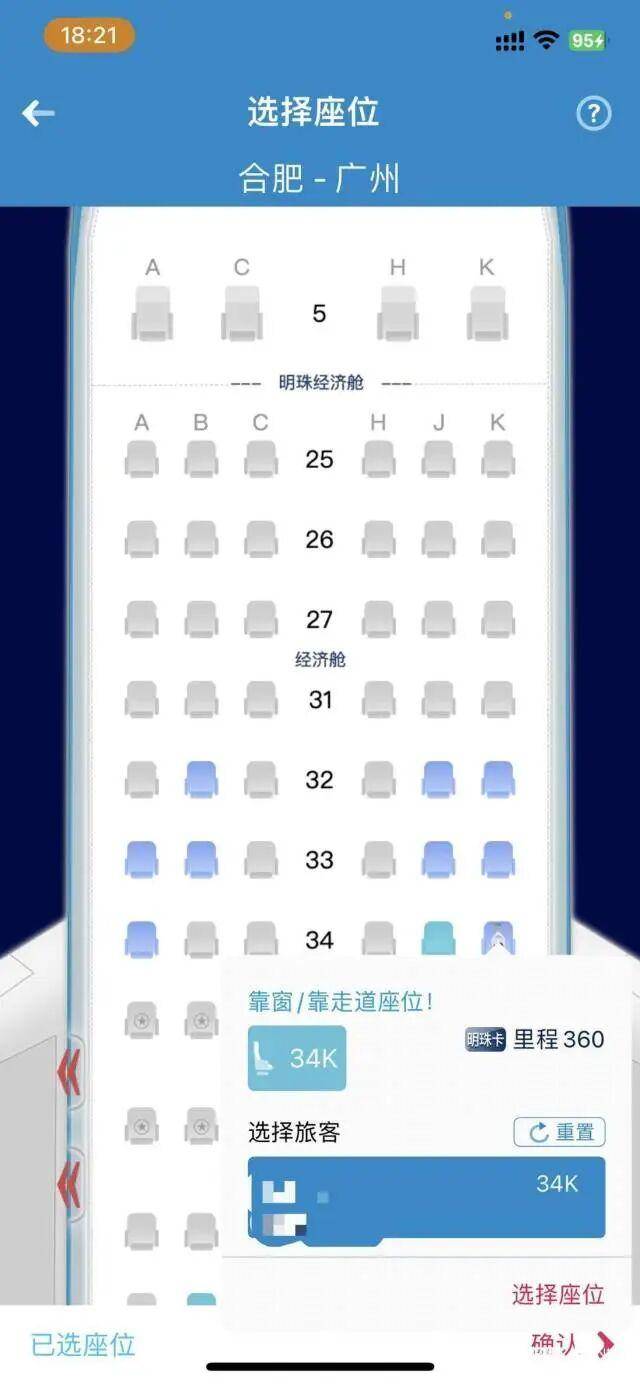
Core Viewpoint - The excessive "seat locking" behavior by airlines is identified as a practice that limits consumer choice and increases passenger costs, which has been highlighted in a recent consumer survey report by the Jiangsu Provincial Consumer Protection Committee [1][3][12]. Group 1: Seat Locking Practices - A survey of 10 major domestic airlines revealed that the proportion of locked seats in economy class ranges from 19.9% to 62.1%, with an average of 38.7% [1][8]. - Airlines typically restrict access to preferred seats (such as those in the front row, window, and aisle) while only offering less desirable seats for free selection, effectively forcing consumers to pay for better options [1][8][12]. - The practice of locking seats is often justified by airlines as necessary for safety and special service needs, but the extent of seat locking suggests it has become a revenue-generating service [3][10]. Group 2: Consumer Rights and Complaints - Many consumers express frustration over the inability to select preferred seats without incurring additional costs, which they believe undermines their rights as ticket holders [4][5]. - The lack of transparency regarding the criteria for seat locking and the absence of clear communication about free selection options violate consumer rights, including the right to know and the right to fair trading [10][12]. - The Jiangsu Provincial Consumer Protection Committee has initiated discussions with the airlines and expects them to address consumer complaints and ensure equal seat selection opportunities for all passengers [3][12]. Group 3: Regulatory Response - The Jiangsu Provincial Consumer Protection Committee has mandated that the airlines submit written rectification plans within 15 working days to address the issues related to seat locking [12]. - Continuous monitoring of the airlines' compliance with the rectification requirements will be conducted by the consumer protection authority [12].

布米普特拉北京投资基金管理有限公司:美国中产消费信心降温 多个行业感受寒意
Sou Hu Cai Jing· 2025-09-02 14:36
Group 1 - The consumer confidence index in the U.S. dropped nearly 6% in August, interrupting a two-month recovery trend [1] - Middle-income households, particularly those earning between $50,000 and $100,000, have shown a significant shift in attitude, now exhibiting a more pessimistic outlook similar to low-income groups [3] - Retail giants like Walmart report that low- to middle-income shoppers are tightening their spending, with a noticeable reduction in non-essential items in their shopping carts [3] Group 2 - The restaurant industry is feeling the pressure, with middle-income customers actively seeking discounts and opting for cheaper menu items [6] - Fast food chains have seen an increase in traffic as middle-income customers avoid high-priced restaurants, while low-income customer visits have declined [6] - High-income consumers continue to spend, with strong sales in premium airline tickets and high-end sneakers, indicating a clear divide in consumer behavior across income levels [6] Group 3 - Over 70% of surveyed consumers plan to cut budgets for significant purchases in the coming year, surpassing the spending reductions seen during the inflation spike in 2022 [9] - High-income groups are more likely to maintain their spending habits, while middle- to low-income families are forced to adjust their spending structures [9] - This trend of consumer spending differentiation is expected to persist and significantly impact the overall economy [9]

印尼出招提振暑期消费
Ren Min Ri Bao· 2025-07-21 22:11
Group 1 - The Indonesian government has launched an economic stimulus plan totaling 24.44 trillion Indonesian Rupiah (approximately 1.07 billion USD) aimed at boosting consumption and promoting economic growth during the summer holiday period [1][2] - The stimulus plan includes five main policies focusing on transportation, social assistance, wage subsidies, and toll fee reductions, with specific measures such as 30% discounts on train tickets and half-price boat tickets [1][2] - The government has allocated 11.93 trillion Indonesian Rupiah for social assistance, providing monthly basic food subsidy cards to 18.3 million low-income households and wage subsidies for workers earning below 3.5 million Indonesian Rupiah [1][2] Group 2 - This is the third economic stimulus plan introduced by the Indonesian government this year, responding to challenges such as slowing economic growth, weak consumption, and increasing employment pressure [2] - Indonesia's GDP growth for the first quarter of 2025 is reported at 4.87%, the lowest in over three years, prompting the central bank to lower its economic growth forecast by 0.1 percentage points [2] - The government aims to encourage local tourism development and public entertainment activities to stimulate travel and consumption, emphasizing the need for coordination among ministries to ensure effective implementation of the stimulus measures [2]
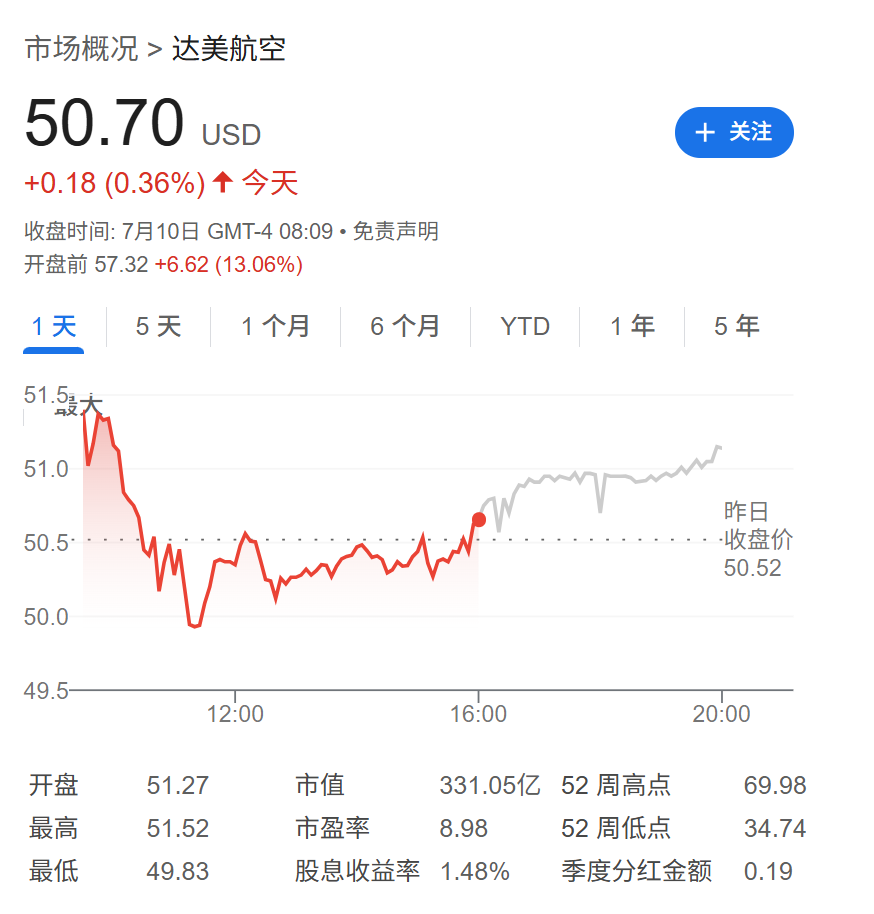
高端需求强劲,达美航空Q2业绩超预期,公司恢复全年指引
Hua Er Jie Jian Wen· 2025-07-10 12:19
Core Insights - Delta Air Lines has reissued its full-year earnings guidance after three months, indicating a recovery in airline demand from the initial impacts of the Trump trade war [1] - The company expects adjusted earnings per share (EPS) for the year to be between $5.25 and $6.25, with the midpoint exceeding analysts' average expectation of $5.35 [1][4] - Delta reported adjusted EPS of $2.10 for the second quarter, surpassing analysts' average estimate of $2.07, while quarterly revenue remained flat compared to the previous year [1][5] Group 1: Financial Performance - The strong performance in the second quarter is attributed to high-margin business segments, including international premium cabin ticket sales, loyalty program credit card spending, and cargo operations, which collectively contributed 59% of total sales [5] - For the third quarter, Delta anticipates adjusted EPS between $1.25 and $1.75, slightly below analysts' average expectation of $1.33, with revenue expected to remain flat or grow by 4% [4] Group 2: Market Conditions - Despite the recovery in demand, it remains below earlier industry expectations, as Delta was the first U.S. airline to withdraw its full-year guidance three months ago due to global trade and economic uncertainties [4] - The airline industry has faced challenges this year, including a series of incidents and a decline in domestic travel due to economic and trade uncertainties [6] - Delta plans to slow capacity growth after the summer peak season in collaboration with other airlines to improve ticket prices [6]