罕见病用药

Search documents
八成创新药上市两年内入医保
第一财经· 2026-02-05 15:29
Core Viewpoint - The article discusses how the strategic purchasing mechanism of medical insurance, centered around centralized bulk purchasing and drug price negotiations, is reshaping China's pharmaceutical industry landscape [3]. Group 1: Policy Changes and Trends - Since 2018, China's pharmaceutical policy has shifted to a value-oriented and collaborative governance phase, with medical insurance transitioning from a passive payer to an active strategic purchaser [3][4]. - The establishment of a national drug price negotiation mechanism supports the accessibility of innovative and high-priced drugs, emphasizing clinical value and cost-effectiveness [4][5]. - The proportion of new drugs entering the medical insurance directory within the same year of approval has increased from 32% in 2019 to 97.6% in 2023, significantly reducing the time from drug approval to insurance reimbursement from five years to just over one year [4]. Group 2: Drug Procurement and Pricing - The centralized procurement system has expanded, with 490 types of drugs procured over eight years, covering various treatment areas including chronic diseases and cancer [7]. - In 2024, 28.6% of the newly negotiated drugs were cancer medications, and 71% of the new varieties were domestic innovative drugs, indicating a rapid shift towards high-value areas in the pharmaceutical industry [5][6]. Group 3: Challenges and Recommendations - The article highlights challenges such as inadequate quality supervision in bulk purchasing, insufficient collaboration between medical insurance and pharmaceutical innovation, and the need for improved access to rare disease medications [8][10]. - Recommendations include enhancing clinical monitoring of selected drugs, establishing a unified drug usage tracking system, and developing a multi-tiered payment system to address the accessibility of innovative drugs [10][11].


八成创新药上市两年内入医保,仿制药进入微利时代
Di Yi Cai Jing· 2026-02-05 12:55
Core Insights - The core viewpoint of the news is that China's medical insurance purchasing mechanism, centered on centralized bulk procurement and drug price negotiations, is reshaping the pharmaceutical industry landscape in China [1] Group 1: Policy Changes and Trends - Since 2018, China's pharmaceutical policy has entered a new phase focused on value orientation and collaborative governance, transforming medical insurance from a passive payer to an active strategic purchaser [1] - The current policy shift emphasizes "cost-effectiveness" and "value-based healthcare," moving away from mere cost control [2] - The establishment of a national drug price negotiation mechanism supports the accessibility of innovative and high-priced drugs [2] Group 2: Drug Procurement and Pricing - The bulk procurement policy has transitioned from pilot programs to normalization, effectively reducing prices for generic and chronic disease medications [2] - The proportion of newly listed drugs entering the medical insurance directory within the same year of approval increased from 32% in 2019 to 97.6% in 2023 [2] - The number of drugs procured through national centralized procurement has reached 490, covering various treatment areas including chronic diseases and anti-tumor medications [3] Group 3: Innovation and Market Dynamics - Domestic innovative drugs account for 71% of newly added varieties, indicating a rapid shift towards high-value areas in the pharmaceutical industry [3] - The report anticipates that by 2025, the patient burden will be reduced by over 50 billion yuan, while improving the efficiency of medical insurance fund usage by 22% [3] - The introduction of fast-track approval channels for rare disease drugs has significantly shortened the time for new drugs to enter the medical insurance directory [4] Group 4: Challenges and Recommendations - The report highlights challenges such as the lack of a robust quality supervision mechanism for bulk procurement and insufficient collaboration between medical insurance and pharmaceutical innovation [8] - Recommendations include enhancing the drug value assessment system and establishing a unified drug usage tracking system to monitor the procurement and usage of selected drugs [9] - The report suggests building a multi-tiered payment system to address the accessibility issues of innovative drugs [9]
八成创新药上市两年内入医保,仿制药进入微利时代|晋观医养
Di Yi Cai Jing· 2026-02-05 12:40
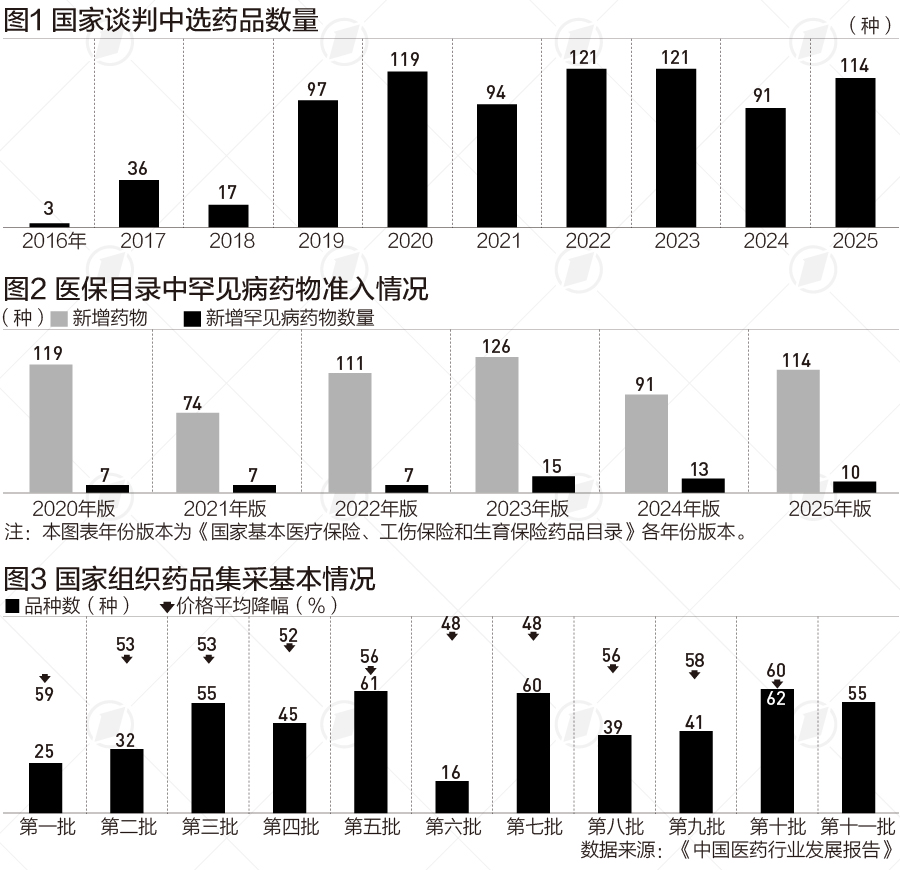
Core Insights - The report highlights the transformation of China's pharmaceutical industry driven by a strategic purchasing mechanism that emphasizes value-oriented healthcare and collaborative governance [1][2] Group 1: Policy Changes and Trends - The focus of current policies has shifted from mere cost control to pursuing "cost-effectiveness" and "value-based healthcare" [2] - The establishment of a national drug price negotiation mechanism supports the accessibility of innovative and high-priced drugs [2] - The percentage of new drugs included in the insurance catalog within the same year of approval has increased from 32% in 2019 to 97.6% in 2023 [2] Group 2: Market Dynamics - Domestic innovative drugs account for 71% of newly added varieties, while biological drugs represent 18%, indicating a rapid shift towards high-value sectors in the pharmaceutical industry [3] - The cumulative expenditure of the medical insurance fund during the 14th Five-Year Plan period is approximately 13 trillion yuan, maintaining an annual growth rate of around 10% [3] Group 3: Rare Diseases and Drug Accessibility - The basic medical insurance system faces challenges in resource allocation for rare disease medications, which often have high costs and limited patient populations [4] - The number of rare disease drugs included in the insurance catalog has increased from 7 in 2020 to 15 in 2023, with 10 new drugs added in the latest catalog [4] Group 4: Challenges and Recommendations - The report identifies shortcomings in the clinical monitoring system for selected drugs under centralized procurement, emphasizing the need for improved quality control [8][9] - Recommendations include establishing a nationwide drug usage tracking system and enhancing the multi-tiered payment system to address the accessibility of innovative drugs [9]
打通高价创新药与患者之间“最后一公里”
经济观察报· 2025-12-10 10:54
Core Viewpoint - The release of the commercial health insurance innovative drug directory addresses the issue of "can it be used" at the hospital level, but the "last mile" between high-priced innovative drugs and patients remains unconnected. To achieve seamless transformation from "policy text" to "patient benefit," three key barriers must be crossed [1][3]. Group 1: Release of the Directory - On December 7, 2025, the National Healthcare Security Administration officially released the first version of the "Commercial Health Insurance Innovative Drug Directory," incorporating 19 high-clinical-value, high-cost innovative drugs into the commercial health insurance payment framework for the first time at the national level [2]. - The directory includes 14 anti-tumor drugs (including all 5 CAR-T therapies available in China), 2 rare disease drugs, and 2 Alzheimer's disease new drugs, aligning with the current claims data of commercial health insurance, where malignant tumors are the most prevalent and costly disease area [2]. Group 2: Policy Support and Challenges - The commercial health insurance innovative drug directory is supported by policies that exempt the listed drugs from self-payment rate assessments, collection of alternative monitored varieties, and DRG payment scope, addressing the challenges hospitals face in using innovative drugs under cost control pressures [3]. - Despite the directory solving the "can it be used" issue, the connection between high-priced innovative drugs and patients still needs to be established, requiring standardization and universalization of the directory [3][4]. Group 3: Standardization and Payment Collaboration - The current directory serves as a guiding list rather than a mandatory coverage requirement for commercial insurance products, necessitating the promotion of core drugs in the directory as standard configurations in commercial health insurance, especially in inclusive "benefit insurance" products [4]. - The basic medical insurance market can leverage its large insured population to negotiate lower drug prices, but the fragmented nature of the commercial health insurance market poses challenges in forming a cohesive payment force to negotiate with pharmaceutical companies [4]. Group 4: Service Integration and Patient Experience - An ideal multi-tiered payment system should achieve seamless integration and instant settlement among basic medical insurance, commercial insurance, and patient out-of-pocket expenses, which currently requires patients to prepay and navigate complex claims processes [5]. - Commercial insurance accounts for only 7.7% of the overall payment for innovative drugs, indicating significant growth potential. Bridging the "last mile" between the 19 innovative drugs in the directory and patients requires coordinated efforts from government and market forces [5].

打通高价创新药与患者之间“最后一公里”
Jing Ji Guan Cha Wang· 2025-12-10 10:28
Core Insights - The National Healthcare Security Administration (NHSA) has officially released the first version of the "Commercial Health Insurance Innovative Drug Directory," incorporating 19 high-value, expensive innovative drugs into the commercial health insurance payment framework for the first time [1][2] - The introduction of this directory marks a significant step in improving China's multi-tiered medical security system and transforming the role of commercial insurance [1] Group 1: Directory Overview - The directory includes 19 drugs, of which 14 are anti-tumor drugs (including all 5 CAR-T therapies available in China), 2 are rare disease medications, and 2 are new drugs for Alzheimer's disease [1] - The structure of the directory aligns closely with current claims data from commercial health insurance, as malignant tumors are the most prevalent and costly disease area in China [1] Group 2: Policy Support - The drugs listed in the commercial health insurance innovative drug directory are exempt from self-payment rate assessments, do not fall under centralized procurement monitoring, and are not included in the Diagnosis-Related Group (DRG) payment scope, referred to as the "three exclusions" policy [2] - This policy alleviates the challenges hospitals face in using innovative drugs amid pressures from centralized procurement and DRG payment reforms [2] Group 3: Implementation Challenges - The transition from policy text to patient benefits requires overcoming three key barriers: standardization and inclusivity of the directory, payment coordination and bargaining power, and service fluidity and one-stop experience [2][3][4] - The current directory serves as a guiding list rather than a mandatory coverage requirement for commercial insurance products, necessitating efforts to make core drugs standard features in commercial health insurance, especially in inclusive "benefit insurance" products [3] Group 4: Payment and Service Integration - The commercial health insurance market is fragmented, with varying funding levels and coverage across different regions, which raises uncertainties about its ability to negotiate effectively with pharmaceutical companies [3] - Establishing a regional or national commercial insurance procurement coordination mechanism is essential for negotiating better drug prices and conditions, ensuring financial sustainability of coverage plans [3][4] - The ideal multi-tiered payment system should enable seamless integration and immediate settlement among basic medical insurance, commercial insurance, and out-of-pocket expenses, which currently requires patients to prepay and navigate complex claims processes [4]
商保怎么落地?医保怎么支持创新?权威解读来了
经济观察报· 2025-12-09 14:25
Core Viewpoint - The introduction of the commercial insurance innovative drug directory will create a win-win situation for patients, insurance companies, and hospitals, allowing patients access to innovative drugs, insurance companies to benefit from discounts, and hospitals to enhance their diagnostic capabilities and influence [1][7]. Summary by Sections Commercial Insurance Directory Release - On December 7, the National Medical Insurance Administration released the adjusted national basic medical insurance directory and the first version of the commercial insurance innovative drug directory, adding 114 new drugs to the basic insurance directory and 19 drugs to the commercial insurance directory [2]. Support for Innovation - The National Medical Insurance Administration aims to clarify the boundaries of basic medical insurance coverage and leave room for the development of commercial insurance, focusing on supporting true and differentiated innovations rather than redundant innovations [3][15]. Drug Selection Criteria - The drugs included in the commercial insurance directory are characterized by high innovation, significant clinical value, non-replaceability by existing basic insurance drugs, and strong insurability [6][11]. Market Dynamics - The commercial insurance directory is expected to provide coverage primarily for high-cost treatments after second and third-line therapies, indicating that it is designed to supplement existing basic insurance rather than simply overlap with it [7][10]. Insurance Product Development - Insurance companies are encouraged to design products that align with the commercial insurance directory, focusing on specific populations and innovative drugs [8][10]. Challenges and Considerations - The main challenges for commercial insurance include improving the efficiency of claims processing, ensuring that products cover truly innovative drugs, and addressing the potential issue of adverse selection if sick individuals are more inclined to purchase insurance [12][13]. Future Outlook - The commercial insurance directory is expected to officially launch on January 1, 2026, with insurance companies likely to introduce corresponding products shortly thereafter [10][12]. Regulatory Support - The National Medical Insurance Administration is committed to supporting true innovation and has implemented stricter evaluation criteria for new drugs, resulting in a lower approval rate for submissions [16][18]. Financial Impact - As of October 2025, the medical insurance fund has paid over 460 billion yuan for negotiated drugs, benefiting over 1 billion patients and driving related sales exceeding 670 billion yuan, demonstrating substantial financial support for the development of innovative drugs [18].

上海:聚焦药品医疗器械重点领域和产品,建立在研重点品种服务清单
Xin Lang Cai Jing· 2025-11-24 09:55
Core Viewpoint - The Shanghai Municipal Government has issued measures to deepen the reform of drug and medical device regulation, aiming to promote high-quality development in the pharmaceutical industry, focusing on key areas such as cell and gene therapy, rare diseases, and pediatric medications [1] Group 1: Key Areas of Focus - The measures emphasize the importance of specific fields and products, including cell and gene therapy, rare diseases, pediatric medications, high-quality first generic drugs, artificial intelligence medical devices, medical robots, brain-machine interfaces, particle therapy equipment, and innovative traditional Chinese medicine diagnostic and treatment devices [1] Group 2: Regulatory Support - A service list for key varieties under research will be established, providing proactive guidance in clinical trials, registration and listing, inspections, and production licensing [1]
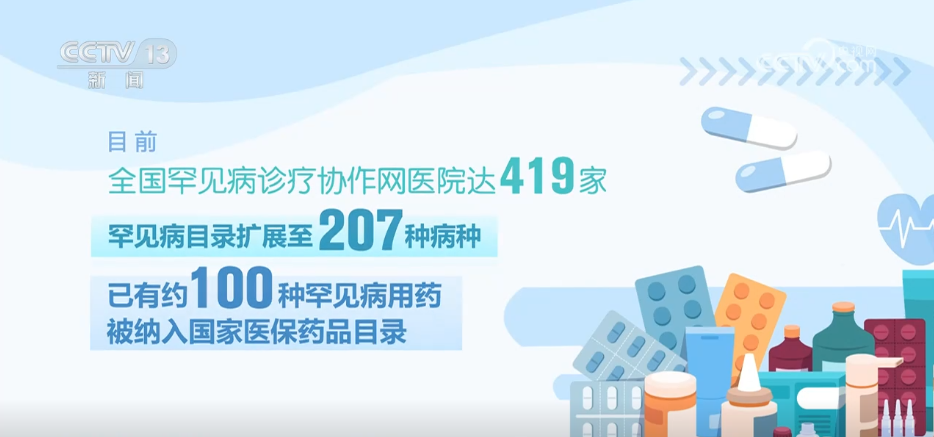
让“罕见”都被看见 我国已有约100种罕见病用药被纳入医保
Yang Shi Wang· 2025-09-22 02:10
Core Insights - The 2025 China Rare Disease Conference was held in Beijing from September 20 to 21, highlighting the growing focus on rare diseases in the country [1] - Currently, there are 419 hospitals in the national rare disease diagnosis and treatment collaboration network, with the list of rare diseases expanded to 207 types [1] - Approximately 100 rare disease medications have been included in the national medical insurance drug list, indicating increased accessibility for patients [1] - In 2024, the medical insurance fund will allocate 8.6 billion yuan for rare disease medications, accounting for 7.7% of the total payment for drugs during the agreement period [1]
新华鲜报 | 约100种罕见病用药进医保!生命与希望在集结
Xin Hua She· 2025-09-21 14:59
Core Insights - Approximately 100 rare disease medications have been included in the national medical insurance drug list, reflecting a significant advancement in the treatment and support for rare disease patients in China [1][2][3] Group 1: Medical Insurance and Coverage - The national medical insurance drug list now covers medications for 42 types of rare diseases, with a projected payment of 8.6 billion yuan for rare disease medications in 2024, accounting for 7.7% of total drug payments during the agreement period [1] - The establishment of a multi-layered insurance system, including basic medical insurance, critical illness insurance, and medical assistance, is underway to enhance support for rare disease patients [1][4] Group 2: Research and Innovation - The development of a comprehensive support network for rare diseases includes advancements in drug research, rapid review processes, and the establishment of a dual-channel supply mechanism for medications [2] - Significant breakthroughs in rare disease treatments have been achieved, with examples of previously untreatable conditions now having available medications that are also covered by insurance [2][3] Group 3: Global Contribution and Collaboration - China is emerging as a key player in the global discourse on rare diseases, having established a reporting system covering 1.15 billion people and registering 1.64 million cases [3] - The country has led initiatives at the World Health Assembly regarding rare diseases, showcasing its commitment to global health governance [3] Group 4: Social Support and Community Engagement - Various government departments and social organizations are collaborating to enhance care for rare disease patients, with initiatives aimed at improving accessibility and support [4] - Hospitals are implementing patient-friendly measures, such as placing rare disease clinics on the ground floor and ensuring lifelong follow-up care for patients [4]
卫光生物: 关于竞得土地使用权并签署成交确认书的公告
Zheng Quan Zhi Xing· 2025-09-07 09:15
Core Viewpoint - Shenzhen Wego Biological Products Co., Ltd. successfully won the bidding for state-owned construction land use rights in Guangming District, Shenzhen, for a price of RMB 60.4 million, which aligns with the company's strategic development plan for establishing an intelligent industrial base [1] Group 1: Land Acquisition Details - The company participated in the bidding for the land use rights of plot A628-0045, covering an area of 69,986.43 square meters, with a usage period of 30 years [1] - The funding for this land acquisition will come from the company's own or self-raised funds, and it does not constitute a related party transaction or a major asset restructuring as per regulations [1] Group 2: Strategic Implications - The acquisition of the land is intended to support the company's intelligent industrial base project, which is crucial for the company's high-quality development [1] - Upon completion of the new industrial base, the company plans to relocate its operations and will cooperate with the Guangming District government to facilitate the recovery of the existing factory site [1]