
置换债券

Search documents
央行将开展1.1万亿元买断式逆回购操作
Zheng Quan Shi Bao· 2026-01-07 22:28
Group 1 - The People's Bank of China (PBOC) announced a reverse repurchase operation of 1.1 trillion yuan with a term of 3 months, indicating a continuation of liquidity support in the banking system [1] - In January, a total of 1.7 trillion yuan in reverse repos will mature, and there is an expectation for an increase in the 6-month reverse repo operations to maintain liquidity [1] - Analysts suggest that the PBOC's actions are aimed at stabilizing the funding environment in response to potential liquidity tightening due to government bond issuances [1] Group 2 - The Ministry of Finance has completed the first batch of 2026 discount treasury bond auctions, with local governments also beginning to issue special bonds, indicating a significant increase in government bond issuance at the start of the year [2] - Experts predict that the scale of government bonds will further increase in 2026, necessitating the PBOC to implement measures to maintain stable liquidity in the banking system [2] - There is an estimated liquidity gap of approximately 1.3 trillion yuan in January, prompting the PBOC to potentially use reverse repos and other monetary policy tools to ensure reasonable liquidity levels [2]
央行将开展1.1万亿元买断式逆回购操作!
Xin Lang Cai Jing· 2026-01-07 16:09
Group 1 - The People's Bank of China (PBOC) announced a 1.1 trillion yuan reverse repo operation with a term of 3 months, indicating a continuation of liquidity support in the banking system [1] - In January, a total of 1.7 trillion yuan in reverse repos is set to mature, and there is an expectation for an increase in the issuance of 6-month reverse repos to maintain liquidity [1] - Analysts suggest that the PBOC's actions are aimed at stabilizing the funding environment in response to government bond issuance and potential liquidity tightening [1][2] Group 2 - The Ministry of Finance has completed the first batch of 2026 government bond issuances, with local governments also beginning to issue special bonds, indicating a significant increase in government bond supply [2] - Experts predict that the scale of government bonds will further increase in 2026, necessitating the PBOC to implement measures to maintain stable liquidity in the banking system [2] - The liquidity gap in January is estimated to be around 1.3 trillion yuan, primarily due to government bond supply pressures and tax payments, prompting the PBOC to utilize various monetary policy tools to ensure adequate liquidity [2]
6万亿置换债发行收官 明年重在城投化债
Zheng Quan Shi Bao· 2025-12-30 18:16
Core Insights - The issuance of local government special bonds and replacement bonds will commence on January 5, 2026, with Shandong Province planning to issue 24.609 billion yuan for refinancing existing hidden debts [1] - A total of 6 trillion yuan in replacement bonds is expected to be fully issued, marking a significant phase in the replacement of hidden debts, although local debt management efforts will continue [1][2] - The focus of local debt management is shifting from debt replacement to establishing long-term mechanisms, with an emphasis on the market-oriented transformation of local government financing platforms [3] Group 1: Debt Replacement and Management - The issuance of 2 trillion yuan in replacement bonds, along with special local government bonds for debt management, will alleviate the immediate debt pressure on local governments and reduce interest expenses, potentially saving around 400 billion yuan in interest payments [2] - Experts suggest that the local debt management strategy will transition from primarily replacing debts to building sustainable mechanisms, with a target to eliminate hidden debts by 2028 [3] - The central economic work conference has called for optimizing debt restructuring and replacement methods to mitigate risks associated with operational debts of local government financing platforms [4] Group 2: Market Transformation of Financing Platforms - The reform and transformation of local government financing platforms (城投公司) have accelerated, with 362 companies publicly announcing their exit from government financing roles as of December 30, 2025 [4] - The key to managing operational debts lies in the "exit from the list" process, which will determine whether the remaining financial debts of these companies will still be classified as operational debts [4] - Future debt management will rely heavily on special bonds, with the Ministry of Finance allocating 800 billion yuan annually from new local government special bonds for debt management until 2028 [3] Group 3: Risk Prevention and Control - The establishment of a dedicated Debt Management Department within the Ministry of Finance aims to centralize the management of government debts, enhancing coordination and resource allocation [7] - The department will focus on preventing and mitigating hidden debt risks, addressing issues such as underreporting and illegal activities related to hidden debts [7] - The goal is to create a comprehensive debt risk prevention system that ensures the rational use of government debt funds while avoiding systemic risks [7]


市场特征与三阶段化债路径解构:当前地方债市场有哪些投资机会?
Hua Yuan Zheng Quan· 2025-12-07 13:58
Report Industry Investment Rating The document does not mention the industry investment rating. Core Viewpoints of the Report - The new features of local government bonds include scale expansion, longer terms, and declining interest rates. The position of special bonds in local government bonds is becoming increasingly prominent. The issuance scale of local government bonds is restricted by the issuance quota, and the issuance rhythm is evolving towards a more balanced distribution. There are three stages of debt resolution: non - government bond replacement, implicit debt resolution, and expansion of the replacement scope. The investor structure of local government bonds is dominated by commercial banks, and the market is relatively concentrated. Currently, there may be room for the spread of local government bonds to compress, and attention should be paid to 3Y, 20Y, and 30Y local government bonds as well as "flying" bonds [2]. Summary by Relevant Directory 1. New Features of Local Government Bonds: Scale Expansion, Longer Terms, and Declining Interest Rates - Since 2015, local government bonds have become the only legal borrowing channel for local governments. In 2025 (January - September), the issuance scale was 8.53 trillion yuan, a year - on - year increase of 1.85 trillion yuan; the average issuance interest rate was 1.93%, a year - on - year decrease of 44bp; the weighted average issuance term was 15.63 years, a year - on - year increase of 2.46 years [7]. - Special bonds are becoming more prominent. From 2015 to 2024, the issuance scale of general bonds was between 1.7 trillion and 3.6 trillion yuan, and its proportion in local government bonds decreased from 74.6% to 21.1%. The issuance scale of special bonds increased from 0.97 trillion yuan to 7.7 trillion yuan, with an average annual compound growth rate of 25.84%, and its proportion increased from 25.4% to 78.9% [13]. - The weighted average issuance term of local government bonds has significantly lengthened, from 10.3 years in 2019 to 15.6 years in 2025 (as of September 30). The proportion of local government bonds with a term of over 20 years has increased from 20.12% in 2021 to 31.95% in 2024 [18]. - In 2025 (January - September), the funds of new local government bonds were mainly invested in traditional infrastructure and land development, such as municipal and industrial park infrastructure, transportation infrastructure, land reserve, etc. [22] 2. Factors Affecting the Issuance Scale and Implementation Effect of Local Government Bonds 2.1 Issuance Scale Constrained by Quotas and Rhythm Evolving towards Balance - The issuance scale of local government bonds is restricted by the issuance quota. It is estimated that the early - batch quota for 2026 is about 3.12 trillion yuan. The issuance rhythm has shifted from being concentrated in the second and third quarters to a more balanced distribution throughout the year [36]. 2.2 Market Impact of Local Government Bond Supply Regulated by Institutional Demand and Supporting Policies - The impact of local government bond supply on the market is affected by the allocation demand of financial institutions. Commercial banks are the main holders of local government bonds, and their allocation willingness is affected by asset returns, regulatory requirements, market sentiment, and the "asset shortage" situation [39]. - The central bank's supporting liquidity policies can alleviate the impact of supply shocks. When local government bonds are issued on a large scale, the central bank can use policies such as reserve requirement ratio cuts and medium - term lending facilities to maintain the reasonable and sufficient liquidity of the banking system [40]. 3. Three Stages of Debt Resolution 3.1 Types of Local Government Bonds for Debt Resolution - There have been three types of local government bonds for debt resolution in history, and two types are still being issued. Replacement bonds (issued from 2015 - 2019) were used to replace non - government bond - form local government stock debts; special refinancing bonds (initially issued in 2020) are used to repay local government stock implicit debts; new local government special bonds have been used for debt resolution since 2024, with 80 billion yuan allocated annually for five consecutive years [43]. 3.2 Three Stages of Debt Resolution - Replacement of non - government bonds (2015 - 2018): Through the issuance of replacement bonds, most of the non - government bond - form debts such as loans and corporate bonds were converted into legal debts, laying the foundation for the local bond management system [46]. - Resolution of implicit debts (since 2017): After the concept of "implicit debt" was proposed in 2017, relevant policies were issued to start the process of implicit debt resolution. Special refinancing bonds have been used to resolve implicit debts, and some regions have achieved zero implicit debts [47]. - Expansion of the replacement scope: The replacement scope of replacement bonds has expanded to areas outside of implicit debts, such as repaying government - owed enterprise accounts and dealing with government - owed payments in PPP contracts [49]. 4. Investor Structure of Local Government Bonds As of the end of August 2025, investors in the inter - bank bond market held 50.77 trillion yuan of local government bonds, accounting for 95.78%. Among them, commercial banks held 37.68 trillion yuan, accounting for 71.08% [52]. 5. Investment Recommendations 5.1 Compression Opportunities for Current Local Government Bond Spreads - The implementation of debt - resolution policies and the improvement of liquidity have increased the possibility of local government bond spread compression. Currently, the spreads of 3Y, 20Y, and 30Y local government bonds are at relatively high historical levels, and there may be room for compression [56][59]. 5.2 Attention to "Flying" Bonds - "Flying" bonds refer to bonds with unexpectedly high issuance interest rates. The spreads of "flying" bonds generally show a narrowing trend after issuance. In 2025 (as of the third quarter), there were 27 local government bonds with a spread of 30BP or more, mostly with a term of 15 years and mainly new special bonds [66][67].
地方政府债券发行规模研究与思考
Xin Lang Cai Jing· 2025-09-28 01:29
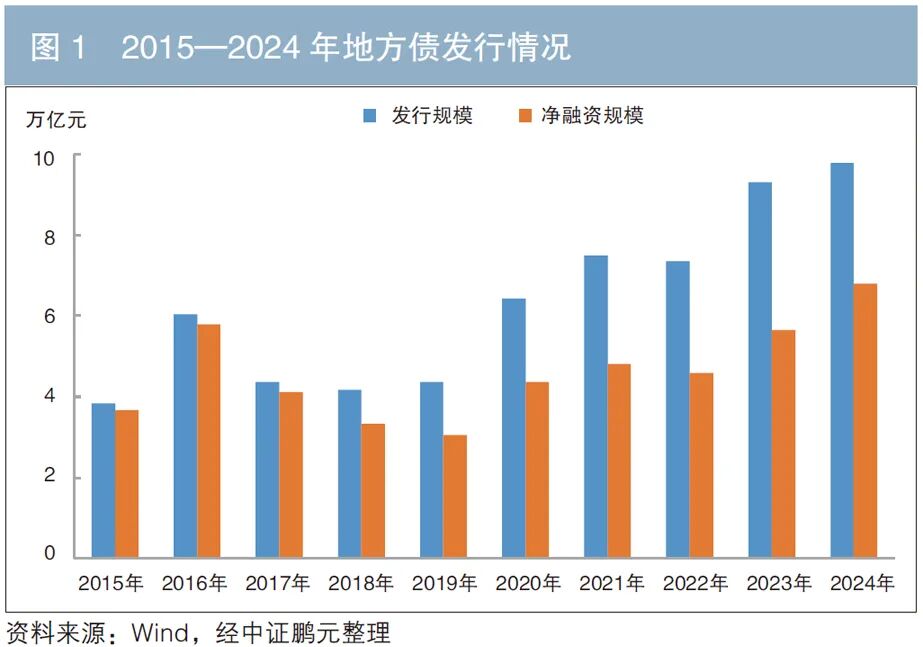
Core Viewpoint - The issuance scale of local government bonds in China has shown a significant upward trend since 2015, impacting macroeconomic operations and government debt risk management [1][2][3]. Group 1: Characteristics of Local Government Bond Issuance - The overall issuance scale of local government bonds has increased from 3.84 trillion yuan in 2015 to 9.78 trillion yuan in 2024, with a compound annual growth rate of 9.8%, surpassing the GDP growth rate of 6.9% during the same period [3][5]. - The balance of local government bonds has risen from 4.83 trillion yuan at the end of 2015 to 47.34 trillion yuan by the end of 2024, reflecting an 8.8-fold increase [5]. - The proportion of special bonds has increased significantly, from 25.4% in 2015 to 78.9% in 2024, indicating their growing importance in local government financing [6][7]. Group 2: Factors Driving Local Government Bond Issuance - The need to achieve economic development goals and implement macroeconomic adjustments has been a primary driver for the increase in local government bond issuance [17]. - The demand for debt replacement has led to several large-scale debt swaps, increasing the issuance of local government bonds while managing hidden debt risks [18]. - High levels of refinancing (borrowing new debt to repay old debt) have contributed to the continuous expansion of local government bond issuance [20]. Group 3: Relationship Between Bond Issuance and Debt Risk - There is a positive correlation between the scale of local government bond issuance and debt risk, where increased issuance can lead to higher debt levels and associated risks [21]. - The issuance of new bonds, replacement bonds, and refinancing bonds has different impacts on local debt risk, with new bonds generally expanding debt levels while replacement bonds can help mitigate hidden debt risks [22]. - The management of local government bond issuance should be flexible and responsive to economic conditions to balance debt risk and economic growth [22]. Group 4: Efficiency and Policy Implementation - The expansion of local government bond issuance can lead to decreased efficiency in the use of debt funds, as funds are often allocated to long-term public projects with lower immediate returns [23]. - Issues such as fund idleness and misallocation highlight the need for improved management mechanisms for local government bonds to enhance fund utilization efficiency [24]. - The effectiveness of local government bonds as a macroeconomic tool depends on appropriate issuance scales and coordination with other policy measures [25][26]. Group 5: Future Outlook - The issuance scale of local government bonds is expected to continue rising due to the need for economic development and debt management, with a focus on maintaining high issuance limits [28]. - The implementation of a "negative list" management system is anticipated to improve the efficiency of fund usage for special bonds, ensuring funds are directed towards productive projects [29]. - Continued support from accommodative monetary policy is expected to facilitate local government bond issuance, especially in light of significant refinancing pressures [30].
扩内需促消费 增量政策加快出台
Jing Ji Wang· 2025-07-31 09:28
Group 1: Consumption Policy and Economic Support - The government has allocated 300 billion yuan in special bonds to support the consumption of old goods, aiming to stimulate consumer potential [1] - As of now, 231 billion yuan has been distributed in three batches, with the remaining funds expected to be released in October [1] - The Ministry of Finance plans to accelerate the introduction of policies to boost consumption and improve the consumption environment [1][6] Group 2: Fiscal Revenue and Expenditure - In the first half of the year, the national general public budget revenue was 1,155.66 billion yuan, a slight decrease of 0.3% year-on-year, while government fund budget revenue was 194.42 billion yuan, down 2.4% [2] - General public budget expenditure increased by 3.4% to 1,412.71 billion yuan, and government fund budget expenditure surged by 30% to 462.73 billion yuan [2] - Key areas such as social security, education, and environmental protection saw expenditure growth exceeding 5% [2] Group 3: Special Bonds and Debt Management - The issuance of new local government special bonds reached 2.16 trillion yuan in the first half of the year, a 45% increase year-on-year [4] - The funds from special bonds are being directed towards project capital, with 191.7 billion yuan allocated, marking a 16% increase [4] - The implementation of debt replacement policies has reduced liquidity pressure and lowered interest expenses for local governments [4] Group 4: Consumer Goods Sales Performance - The "old-for-new" consumption initiative has led to significant sales in various sectors, with total sales reaching 1.6 trillion yuan [5] - Retail sales of home appliances and communication equipment saw year-on-year growth rates of 30.7% and 24.1%, respectively, contributing to a 5% increase in total social retail sales [5] Group 5: Future Consumption Strategies - The Ministry of Finance aims to promote new consumption models in key cities and enhance the consumer experience [6] - The focus is on expanding domestic demand, particularly in consumption, to strengthen the domestic market [6] - The dual-track strategy for consumption stimulation includes fostering new consumption scenarios in potential cities while enhancing global competitiveness through international consumption center city development [6]
收支两端传递积极信号 上半年财政政策效果明显
Zheng Quan Ri Bao· 2025-07-27 15:47
Revenue Summary - National general public budget revenue for the first half of the year reached 11.56 trillion yuan, a year-on-year decrease of 0.3%, with the decline narrowing by 0.8 percentage points compared to the first quarter [1] - Tax revenue amounted to 9.29 trillion yuan, down 1.2% year-on-year, but showed a positive trend with three consecutive months of growth starting from April [1] - Key tax categories such as domestic VAT, domestic consumption tax, and personal income tax exhibited stable growth, with significant increases in tax revenue from the equipment manufacturing and modern service industries [1] Expenditure Summary - Total national general public budget expenditure was 14.13 trillion yuan, reflecting a year-on-year increase of 3.4% [1] - Social security and employment expenditures grew by 9.2%, education expenditures by 5.9%, health expenditures by 4.3%, and science and technology expenditures by 9.1%, indicating a strong focus on improving living standards [2] - The increase in expenditures is aligned with the government's commitment to enhance residents' consumption capacity and promote social equity [2] Debt and Investment Summary - The issuance of special government bonds has played a crucial role in stabilizing investment and promoting consumption, with 658.3 billion yuan allocated for special long-term bonds to support key projects [3] - A total of 26 billion yuan in new local government general and special bonds was issued to support major project construction [3] - The management of local government debt has shown positive results, with 1.8 trillion yuan of the 2 trillion yuan replacement bonds issued by the end of June, effectively alleviating liquidity pressure [3] Overall Fiscal Performance - The fiscal performance for the first half of 2025 is characterized by a robust balance between revenue and expenditure, reflecting the effectiveness of proactive fiscal policies [4] - Despite the positive indicators, challenges remain due to complex domestic and international economic conditions, necessitating continued proactive fiscal measures [4] - The government aims to enhance the efficiency of fiscal fund utilization and adapt policies to support consumer spending and living standards [4]
财政部最新下达:690亿元
Jin Rong Shi Bao· 2025-07-26 04:19
Group 1 - In the first half of the year, the national general public budget revenue was 115,566 billion yuan, a year-on-year decrease of 0.3%, with tax revenue at 92,915 billion yuan, down 1.2%, and non-tax revenue at 22,651 billion yuan, up 3.7% [1] - The national general public budget expenditure reached 141,271 billion yuan, an increase of 3.4% year-on-year [1] - The Ministry of Finance addressed key social concerns such as local government debt risk, fiscal spending for people's livelihoods, and the issuance of government bonds during a press conference [1] Group 2 - By the end of June, 90% of the 20,000 billion yuan local government debt replacement bonds for 2025 had been issued, with 14,400 billion yuan already utilized [3] - The implementation of the replacement policy has significantly reduced debt interest payments and repayment pressures, while also releasing economic development momentum [3] Group 3 - The central government has allocated 66.74 billion yuan in employment support funds this year, focusing on employment priority strategies and reducing unemployment insurance rates [4] - Basic pension benefits for retirees have been increased by 2% nationwide, with the minimum standard for urban and rural residents' basic pensions raised by 20 yuan [4] Group 4 - The per capita financial subsidy standard for basic public health services has been increased by 5 yuan to 99 yuan per person per year, while the subsidy for urban and rural residents' medical insurance has been raised by 30 yuan to 700 yuan per person per year [5] - The central government has allocated 5,522 billion yuan in related subsidy funds for medical assistance this year [5] Group 5 - A record high of 78,800 billion yuan in government bonds was issued in the first half of the year, an increase of 20,547 billion yuan or 35.28% year-on-year, with an average issuance interest rate of 1.52% [6] - The average bid-to-cover ratio for book-entry government bonds was 3.03 times, indicating strong investor interest [6] Group 6 - The Ministry of Finance has allocated 690 billion yuan in the third batch of ultra-long-term special government bond funds to support the "old for new" consumption initiative, with total sales in this area reaching 1.6 trillion yuan in the first half of the year [7] - Retail sales of home appliances and other consumer goods saw significant year-on-year growth, contributing to a 5% increase in total retail sales of consumer goods [7]
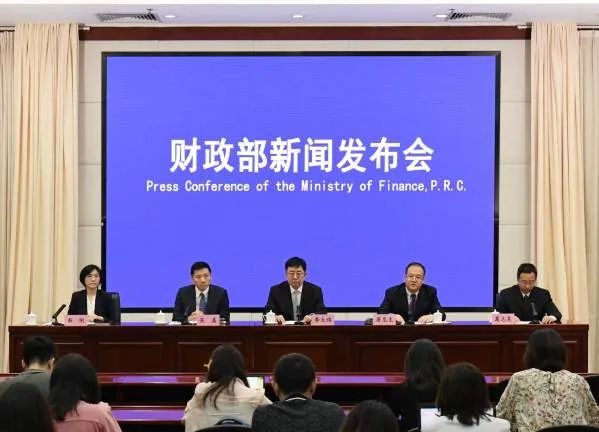
财政部李大伟:截至6月末已发行置换债券占全年额度的90%,已使用1.44万亿元
news flash· 2025-07-25 07:39
Core Viewpoint - The Ministry of Finance has reported significant progress in the issuance and utilization of replacement bonds for 2025, indicating a proactive approach to managing local government debt [1] Group 1: Replacement Bonds - As of the end of June, 1.8 trillion yuan of the 2 trillion yuan replacement bonds for 2025 have been issued, accounting for 90% of the annual quota [1] - Out of the issued bonds, 1.44 trillion yuan has already been utilized, demonstrating effective deployment of the funds [1] Group 2: Debt Management - The Ministry of Finance is guiding local governments to enhance the management of hidden debts and to reasonably schedule the issuance of bonds [1] - Efforts are being made to shorten the time gap between bond issuance and actual replacement, aiming to minimize interest costs [1]
财政政策“非常积极” 稳增长扩内需资金充足
Zheng Quan Shi Bao· 2025-07-10 18:32
Group 1 - The national general public budget expenditure progress in the first five months of this year reached the highest level in nearly five years, with a significant increase in fiscal spending to support economic growth and improve people's livelihoods [1] - The issuance of local government special bonds and replacement bonds exceeded 2.1 trillion yuan and 1.7 trillion yuan respectively in the first half of the year, indicating a proactive fiscal policy [1] - The broad fiscal expenditure scale expanded significantly to 14.5 trillion yuan in the first five months, reflecting a year-on-year growth of 6.6%, which is much higher than the revenue growth rate [1] Group 2 - Special bond funds are increasingly diversified, supporting not only infrastructure projects but also revitalizing idle land and stabilizing the real estate market [2] - Fiscal funds have been directed towards social security, education, and healthcare, with significant growth in public finance expenditure in these areas compared to infrastructure spending [2] - The issuance of replacement bonds has nearly reached 90% of the annual target, providing space for economic development through debt restructuring [2] Group 3 - The Ministry of Finance has accelerated the issuance of ultra-long-term special government bonds to support key policies, with a noticeable increase in the issuance pace of special bonds and ultra-long-term bonds since June [3] - There remains over 2 trillion yuan in special bond quotas and 745 billion yuan in ultra-long-term bond quotas available for issuance, indicating ample fiscal resources for stabilizing growth and expanding domestic demand [3] - The likelihood of introducing incremental fiscal policies in the second half of the year is low, but there may be a greater probability of policy financial tools being introduced to support the real estate sector [3] Group 4 - The foundation for the recovery of the Chinese economy needs to be further solidified through effective use of fiscal policies and optimization of expenditure structure [4] - Fiscal spending should focus on "investing in people," emphasizing key areas such as education, healthcare, employment, and elderly care to support human capital [4] - In regions with population inflows, there should be an appropriate expansion of public services, while in outflow regions, resource integration and structural optimization should be prioritized to enhance service efficiency [4]