羊绒产品

Search documents
赤峰开足马力冲刺“开门红”
Xin Lang Cai Jing· 2026-02-26 20:43
Group 1 - Chifeng City is experiencing a revival in industrial production post-Spring Festival, with various enterprises rapidly resuming operations to lay a solid foundation for high-quality economic development in the year ahead [1][3] - Chifeng Dongli Cashmere Co., Ltd. plans to accelerate the construction of a breeding base for the rare white cashmere goat and aims to achieve a scale of 2 million goats within five years, benefiting 5,000 herding families with an average annual income increase of over 10,000 yuan [1] - The company will focus on core capability development, new product and technology research, and expanding both domestic and international markets to enhance brand influence and market share [1] Group 2 - Enwo Technology Industrial Park aims to achieve an output value exceeding 250 million yuan this year, with a 30% increase in production capacity through technological innovation and automation upgrades [2] - Linxi County's Rongxin Molybdenum Industry is targeting an August production start for its second-phase project, shifting from raw material sales to new material production to capitalize on opportunities in the new energy and high-end manufacturing sectors [2] - Over 20 out of 31 large-scale industrial enterprises in Linxi County have resumed operations, with local departments actively supporting businesses by addressing labor, funding, raw material, and logistics challenges [2]
瞄准高附加值寻求突破
Jing Ji Ri Bao· 2026-02-11 22:02
Core Insights - Hebei Qinghe cashmere industry has been successfully included in the national-level characteristic industrial cluster cultivation list, highlighting its significant market share and establishing its position as a leader in the global cashmere market [1] - To achieve the goal of expanding the industrial cluster scale from 50 billion to 100 billion yuan, the industry must continue to advance in key areas such as brand value enhancement, digital transformation, and global operational capabilities [1][2] Group 1: Brand Development - The industry needs to shift from "OEM" to "brand output" to overcome the challenge of "high quality but low price," where similar products can have price differences of several times after branding [1] - A comprehensive value system integrating "design, brand, and channel" must be established to enhance product premium through international design resources and digital marketing [1] Group 2: Digital Transformation - The transition from "equipment intelligence" to "ecological collaboration" is essential, as the industry has made progress in digital applications but still faces challenges in technology, funding, and talent for small and medium-sized enterprises [1] - Accelerating the construction of an industrial internet platform is necessary to promote data connectivity across the entire supply chain, particularly in addressing the shortcomings of cross-border e-commerce [1] Group 3: Global Expansion - The industry must move from "product export" to "system export," focusing on enhancing global operational capabilities and establishing a new model of "China R&D + global manufacturing + world sales" [2] - Understanding and applying international standards and intellectual property rules is crucial for integrating into the global value chain [2] Group 4: Innovation Ecosystem - Achieving the 100 billion yuan target requires collaboration between government and enterprises to build an innovative ecosystem, addressing the shortage of design and R&D talent [2] - Establishing a collaborative mechanism among "industry, academia, research, and application" is vital to create a favorable environment for innovation [2]
新澳股份:公司在意大利设有新澳欧洲技术开发销售中心
Zheng Quan Ri Bao· 2026-02-05 12:13
Group 1 - The company, Xin'ao Co., has established a European technology development and sales center in Italy [2] - The company operates a high-end cashmere production base in Duncan, Scotland [2] - Local offices and marketing teams are set up in markets such as Germany and France to serve global customers [2]


研报掘金丨东方证券:维持新澳股份“增持”评级,26年有望释放盈利弹性
Ge Long Hui A P P· 2026-01-15 06:11
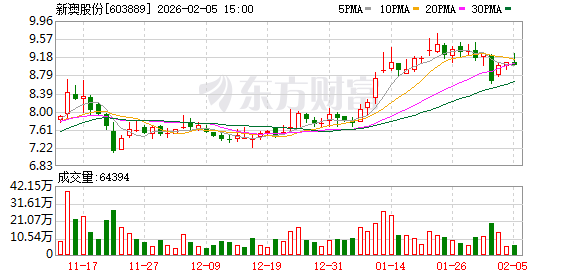
Core Viewpoint - The report from Dongfang Securities indicates that New Australia Co. is expected to release profit elasticity in 2026 due to rising wool prices, driven by tight supply and expanding demand [1] Group 1: Wool Price Trends - Australian wool prices have been continuously rising since December of last year, with the new fiscal year expected to further strengthen this upward trend due to supply constraints and increased demand [1] - The wool price in 2025 exhibited volatility, characterized by a "low start and high finish," with a clear upward trend from December onwards [1] Group 2: Company Performance and Outlook - As a leading player in the fine wool spinning sector, New Australia Co. has maintained operational resilience amid industry pressures in 2025 [1] - The company is anticipated to release profit elasticity in 2026 due to rising raw material prices, with an expected improvement in profitability from its cashmere business, which may become a new growth driver in the medium term [1] Group 3: Valuation and Rating - Based on comparable companies, a 17x PE valuation is projected for 2025, corresponding to a target price of 10.54 yuan, with a maintained "buy" rating [1]

新澳股份(603889):羊毛价格上涨之下,公司26年有望释放盈利弹性
Orient Securities· 2026-01-14 09:21
Investment Rating - The investment rating for the company is "Accumulate" (maintained) [1] Core Views - The company is expected to release profit elasticity in 2026 due to rising wool prices, with a resilient performance in 2025 despite industry pressures [4][8] - The company has adjusted its earnings forecast slightly, projecting earnings per share (EPS) of 0.62, 0.77, and 0.86 yuan for 2025-2027, respectively, with a target price of 10.54 yuan based on a 17x PE valuation for 2025 [5][9] Financial Performance Summary - Revenue is projected to grow from 4,438 million yuan in 2023 to 6,050 million yuan in 2027, with a compound annual growth rate (CAGR) of approximately 8.4% [6] - Operating profit is expected to increase from 484 million yuan in 2023 to 755 million yuan in 2027, reflecting a growth rate of 11.1% [6] - Net profit attributable to the parent company is forecasted to rise from 404 million yuan in 2023 to 624 million yuan in 2027, with a CAGR of 11.2% [6] - The gross margin is anticipated to improve from 18.6% in 2023 to 21.0% in 2027, indicating enhanced profitability [6] Market Performance Summary - The company's stock price as of January 13, 2026, is 8.9 yuan, with a target price of 10.54 yuan, suggesting a potential upside [1] - The stock has shown strong absolute performance over various time frames, including a 45.76% increase over the past year [1]
2025年第53周:服装行业周度市场观察
艾瑞咨询· 2026-01-14 00:06
Industry Environment - The domestic mid-to-high-end women's clothing market is witnessing the emergence of new brands that attract high-net-worth customers through differentiated positioning and high-quality materials [2] - Brands like AWPROJECT and CHICJOC are expanding rapidly, with AWPROJECT focusing on urban women and CHICJOC implementing a "luxury alternative" strategy to achieve high repurchase rates [2] - International brands such as AnnAndelman are accelerating their presence in the Chinese market, leveraging unique designs and online-offline integration to drive market reshuffling [2] Outdoor Lifestyle Migration - Over 500 million participants are engaged in outdoor sports in China, with a shift in consumer logic towards multi-scenario adaptability, sustainability, and emotional value [3] - The outdoor apparel market is growing at an annual rate of 49%, with consumers prioritizing durability, environmental friendliness, and multifunctionality [3] - Future trends include the proliferation of smart equipment, community integration, and the "no-trace outdoor" concept, driving professional development in the industry [3] Fast Fashion Trends - The fast fashion industry is undergoing significant changes by 2025, characterized by three main trends: premiumization, acceleration, and technology-driven innovation [5] - International brands like Uniqlo and H&M are entering the high-end market through price increases and collaborations, while local brands are expanding overseas [5] - The integration of online and offline channels is deepening, with brands utilizing AI technology in design, warehousing, and marketing to enhance efficiency [5] Luxury Goods Market - The luxury goods sector is experiencing a "store opening wave," with brands like CHANEL and Louis Vuitton opening new stores in China, indicating signs of recovery [7] - The Asia-Pacific market, particularly China, is a key growth driver, while the Japanese market shows mixed performance due to currency and tourism impacts [7] - Brands are focusing on core markets and accelerating localization marketing to strengthen cultural resonance [7] Consumer Behavior Shifts - Consumers are increasingly prioritizing functionality and brand trust over mere trends, as evidenced by the popularity of high-value down jackets [4] - The success of Sam's Club's down jackets reflects a new rational consumption trend where consumers value core needs like warmth and cost-effectiveness [4] - The shift in women's shopping behavior towards men's and children's clothing highlights a growing demand for quality and practicality over traditional fashion norms [13] Jewelry Market Trends - The jewelry market is witnessing a resurgence of retro styles, with a focus on emotional resonance and personalized design appealing to younger consumers [14] - The global jewelry market is expected to grow, with the U.S. and U.K. projected annual growth rates of 1.78% and 3.35%, respectively [14] - The industry is transitioning from "material consumption" to "spiritual consumption," emphasizing the balance between craftsmanship and emotional needs [15] Brand Dynamics - The luxury e-commerce platform Mile has acquired the bankrupt fashion retailer Matches, aiming to reshape luxury retail with a new business model [24] - Scottish luxury cashmere brand Begg x Co is expanding into the Chinese market through a strategic partnership with Meizui, launching its official Tmall flagship store [25] - Sequoia China has acquired a controlling stake in the fashion brand Golden Goose, aiming to support its global expansion and strengthen its market position [26]


149的优衣库和5000元老钱羊绒衫,谁在割韭菜?
3 6 Ke· 2025-12-18 09:54
Core Viewpoint - The article discusses the rise of cashmere as a symbol of class distinction, particularly through the influence of the Italian brand Loro Piana, which has mastered the control of raw materials and created a narrative around the exclusivity of its products [1][2][3]. Group 1: Loro Piana's Historical Context - Loro Piana's history is rooted in the control of raw materials, starting from its family's wool business in the Piedmont region of Italy in the 19th century [2]. - Post-World War II, Loro Piana shifted its focus to the Paris fashion scene, supplying high-end fabrics to luxury brands [3][4]. Group 2: Material Control and Innovation - In the 1960s, Loro Piana identified the need for lighter fabrics due to the rise of air travel and began sourcing high-quality Merino wool from Tasmania [5][6]. - The brand introduced the concept of fiber fineness as a measure of quality, with lower micron counts indicating superior softness and luxury [8][10]. Group 3: Vertical Integration Strategy - Loro Piana adopted a vertical integration strategy, controlling multiple stages of the supply chain from raw material sourcing to final sales [11]. - The brand monopolized Vicuña wool through exclusive agreements with the Peruvian government, ensuring a steady supply of this rare material [12][13]. Group 4: Expansion and Market Positioning - In 2013, LVMH acquired 80% of Loro Piana for €2 billion, enhancing its position in the luxury market and securing access to top-tier raw materials [16]. - Following the acquisition, Loro Piana's direct-to-consumer sales surged, with retail stores contributing over 85% of revenue by 2023, growing from €700 million in 2013 to €2.4 billion [16]. Group 5: Cultural Impact and Marketing - The brand's prominence was amplified by the 2018 TV series "Succession," which popularized the "quiet luxury" aesthetic, aligning with Loro Piana's understated yet high-quality offerings [18][19]. - The marketing narrative emphasizes a hierarchy of materials, where natural fibers are valued over synthetic ones, reinforcing a class distinction based on fabric choice [20][24]. Group 6: Economic Disparities - Despite the luxury branding and high prices, local communities involved in the production of raw materials, such as Vicuña wool, receive a minimal share of the profits, highlighting economic inequalities within the supply chain [36].
J.Jill(JILL) - 2026 Q3 - Earnings Call Transcript
2025-12-10 14:02
Financial Data and Key Metrics Changes - Total company sales for Q3 were approximately $151 million, down 0.5% compared to Q3 2024, with comparable sales decreasing by 0.9% [9][10] - Adjusted net income per diluted share was 76 cents, compared to 89 cents last year, reflecting a decrease in earnings [11] - Q3 gross margin was 70.9%, down 50 basis points from Q3 2024, impacted by approximately $2.5 million of net tariff pressure [10][11] Business Line Data and Key Metrics Changes - Direct sales increased by 2% compared to the prior year, while store sales decreased by 2.6%, indicating a shift in consumer preference towards online shopping [9] - The company saw positive performance in product categories such as jackets and bottoms, particularly in fashion denim and outerwear [3][27] Market Data and Key Metrics Changes - The competitive market became more promotional earlier than usual, leading to increased price sensitivity among customers [4][20] - The promotional environment is expected to continue through Q4, impacting sales negatively [14][20] Company Strategy and Development Direction - The company is focused on three strategic priorities: evolving product assortment, enhancing the customer journey, and improving operational efficiency [5][6] - A new Chief Growth Officer has been appointed to lead e-commerce and AI initiatives, indicating a commitment to leveraging technology for growth [7] Management's Comments on Operating Environment and Future Outlook - Management expressed confidence in the foundation of the business despite challenges, emphasizing the importance of adapting product assortments and marketing strategies for 2026 [8][14] - The company plans to manage through Q4 while preparing for a clean start in Q1 2026, focusing on product and marketing adjustments [20][50] Other Important Information - The company opened two new stores in Q3 and plans to open seven new stores in Q4, indicating ongoing retail expansion [12][15] - Year-to-date cash flow from operations was approximately $19 million, with ending cash of about $58 million [12] Q&A Session Summary Question: How is the company thinking about merchandising and marketing for next year? - Management noted that they will be able to influence product assortments by the end of Q1 and are encouraged by learnings from Q3 [20][21] Question: What worked well in Q3 and Q2? - Strength was noted in product categories like bottoms and jackets, with newness performing well [27] Question: How is technology evolving in the business? - The company is excited about the new appointment focused on AI, which will enhance operational efficiency and speed [30][31] Question: What is the pricing strategy going into 2026? - The company will continue to be strategic with pricing, focusing on areas where consumers are willing to pay [55][57] Question: How does the company plan to manage inventory for next year? - Inventory planning will be conservative due to evolving product assortments and uncertain consumer sentiment [49] Question: How does the company view the promotional environment? - Q4 is typically promotional, and management plans to manage promotions carefully to exit the quarter clean [50]

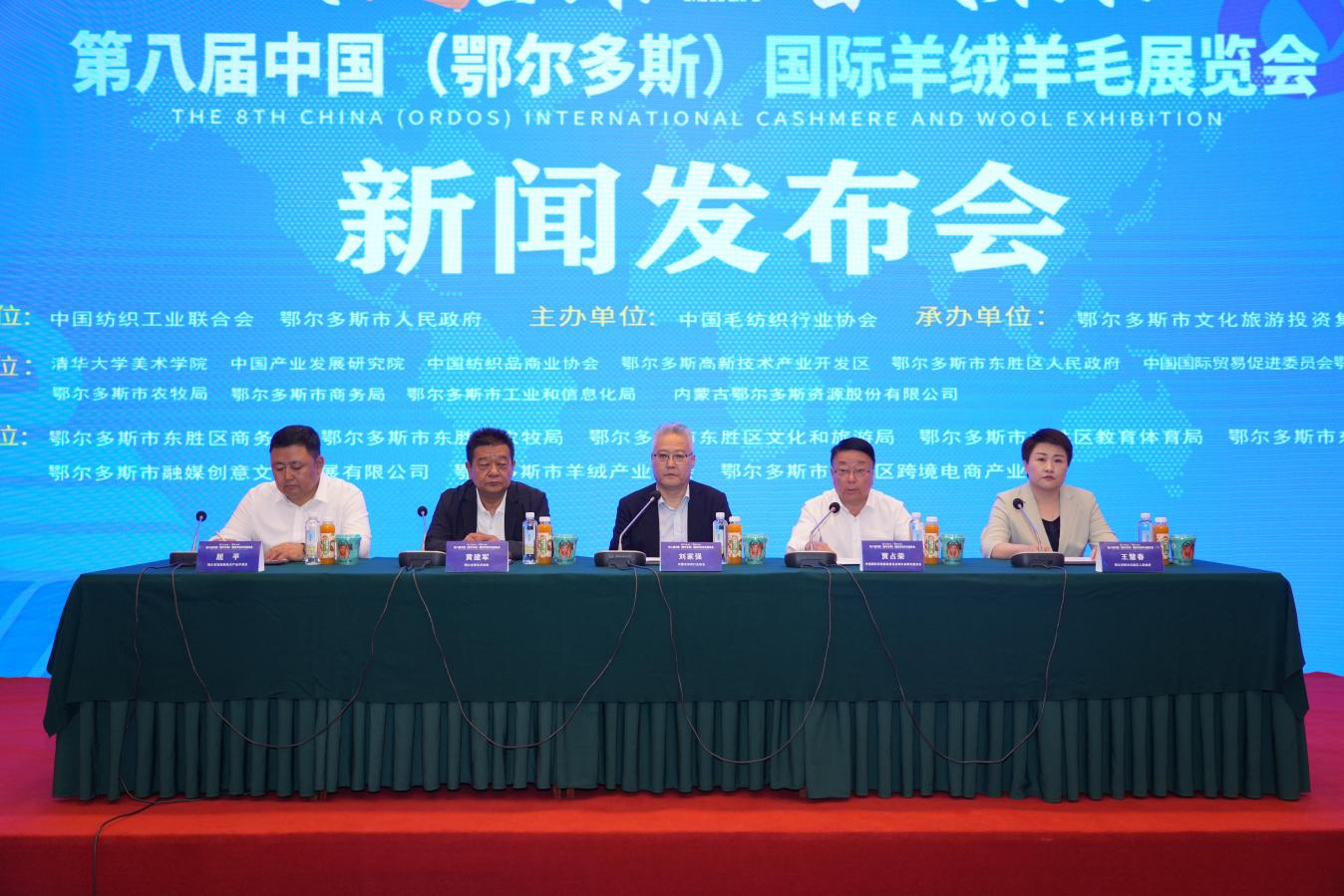
第八届中国(鄂尔多斯)国际羊绒羊毛展览会新闻发布会在京召开
Zhong Guo Jing Ji Wang· 2025-05-16 13:21
Core Insights - The 8th China (Ordos) International Cashmere and Wool Exhibition will be held from July 18 to 20, 2025, in the Dongsheng District of Ordos City, with the theme "Wool Chain Global, Intelligent Future" [2][3] - Ordos City is a global hub for the cashmere industry, hosting over 360 cashmere enterprises, accounting for 50% of China's processing capacity and 33% of the global capacity [2] - The exhibition aims to innovate and upgrade from previous editions, integrating trade cooperation, technological empowerment, and cultural tourism experiences into an international industry event [2] Industry Highlights - The exhibition is expected to attract over 200 participating companies, including top international brands from the UK, France, and Italy, as well as leading domestic enterprises [3] - It will showcase a new industrial ecosystem featuring "International Design + Chinese Intelligence + Global Market," and will release new technologies and equipment results from the cashmere industry chain [3] - The event will also host the 2025 China Cashmere Industry High-Quality Development Conference and the 9th International Goat Cashmere Testing Technology Seminar, promoting the transformation of the cashmere industry towards intelligence, sustainability, and high-end development [3] Cultural and Experiential Aspects - The exhibition will introduce innovative activities such as the "Ten Thousand Sheep Embroidery" performance and the "Wool Shining Summer" themed cultural tourism events, providing immersive experiences for attendees [3] - The local government has extended an invitation to domestic and international guests, emphasizing the welcoming atmosphere of Dongsheng in July and the collaborative future of the global cashmere industry [3]