
美国股市

Search documents
凯投宏观:美国经济数据与市场之间的脱节不太可能持续
Jin Rong Jie· 2026-02-16 07:42
Core Viewpoint - The disconnect between strong U.S. economic data and the panic in U.S. financial markets is unlikely to persist, with expectations for a rebound in U.S. stock markets, Treasury yields, and the dollar [1] Economic Data Analysis - Recent U.S. labor market and inflation data have been unexpectedly strong, contradicting the recent decline in Treasury yields [1] - The broader U.S. economy appears to be starting 2026 on a positive note, with most data exceeding general expectations [1] - It is anticipated that this positive trend will continue in the coming months, typically leading to rising yields rather than declines [1]
相差34票,最新表决结果出炉,特朗普清除内患,美联储有惊涛骇浪
Sou Hu Cai Jing· 2026-01-15 03:46
Group 1 - The core issue revolves around the extension of enhanced subsidies under the Affordable Care Act (ACA), which has become a significant point of contention in U.S. politics, affecting over 20 million insured individuals facing rising premiums due to subsidy expiration [3][5] - The internal division within the Republican Party is highlighted, as some members recognize the political costs of continued opposition to healthcare subsidies, leading to a forced vote that bypassed party leadership [5][9] - The vote on January 8, 2026, resulted in 230 votes in favor and 196 against, with 17 Republican members siding with Democrats, indicating a shift in party dynamics and a test of Trump's control over the party [5][9] Group 2 - The criminal investigation into Federal Reserve Chairman Powell, initiated on January 9, 2026, has caused significant market turmoil, raising concerns about the stability of the financial system and the independence of the Federal Reserve [7][11] - Powell's strong public response to the investigation, asserting that monetary policy decisions should be based on data rather than political pressure, has escalated the situation into a broader institutional confrontation [9][11] - The investigation and subsequent political tensions have led to a sell-off of U.S. assets, as investors reassess risks associated with the potential erosion of the Federal Reserve's independence and the implications for interest rates and market stability [11][13]

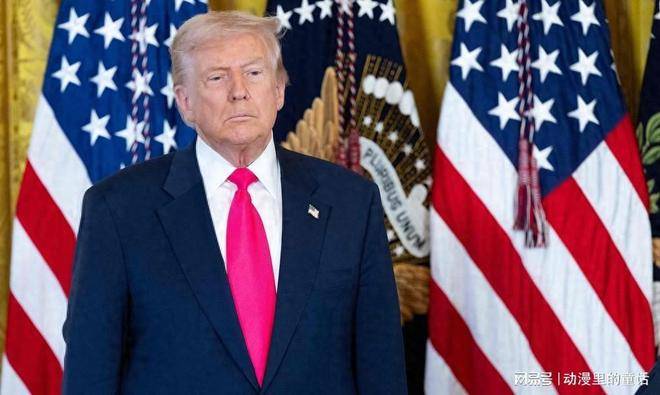
宽松押注飙升:“影子主席”将执掌美联储?美元的终极压力测试开始
Sou Hu Cai Jing· 2025-12-04 07:17
Group 1 - The market is increasingly betting on a dovish policy shift and a rate cut in December, following unexpectedly weak ADP employment data [1] - The current Fed Chair Jerome Powell's term ends in May next year, and President Trump has hinted at Kevin Hassett as the next Fed Chair, with an official announcement expected early next year [3] - The demand for the short-term yield curve linked to the Secured Overnight Financing Rate (SOFR) is rising, reflecting market expectations of accelerated monetary policy easing after Powell's term ends [3] Group 2 - Kevin Hassett, the current Director of the White House National Economic Council, has a close relationship with Trump and was a key architect of the 2017 tax cuts, raising concerns about the independence of the Fed if he becomes Chair [5] - The nomination of Hassett signals Trump's strongest public criticism of the current Fed's interest rate policy, potentially weakening the long-standing "firewall" between the White House and the Fed [7] - Hassett's inclination towards growth-focused easing policies may lead to quicker rate cuts, raising concerns about the Fed's independence and market predictability [7] Group 3 - The market has not fully priced in the implications of Hassett's potential appointment, but confirmation could lead to a comprehensive reassessment based on "political risk premium" and "easing expectations" [7] - A more dovish Fed could weaken the dollar's interest rate advantage and damage its status as a global reserve currency [7] - Gold prices may rise due to expectations of monetary easing, a weaker dollar, and increased demand for safe-haven assets amid geopolitical and financial uncertainties [7] Group 4 - The yield curve in the U.S. Treasury market is expected to steepen, with short-term rates declining faster due to rate cut expectations, while long-term bonds may face selling pressure due to inflation concerns [8] - The nomination of Hassett represents a significant test of the independence of the U.S. central bank and the stability of the modern monetary financial system [10]

特朗普“骚操作”使投资者陷入两难:押注降息还是担忧美国信誉?
Jin Shi Shu Ju· 2025-08-26 11:51
Group 1 - President Trump's dismissal of Federal Reserve Governor Cook has raised concerns about the independence of the Fed and the potential political influence on monetary policy [1] - Market reactions have been muted, with short-term Treasury yields slightly declining, while the 30-year Treasury yield increased by 4.7 basis points to 4.936% due to expectations of forced monetary easing leading to inflation [1] - Investors are cautious about shorting the dollar or U.S. assets, as significant investments from trade agreements with Europe, Japan, and South Korea could support the dollar and U.S. stock markets [1] Group 2 - Trump's actions have undermined confidence in U.S. sovereign debt as a safe investment and diminished the dollar's unique advantages, which have historically allowed the U.S. to finance its $36 trillion national debt [2] - There has been a steady outflow of foreign capital from U.S. markets, with global equity funds (excluding the U.S.) receiving substantial inflows since May, indicating a shift in investor sentiment [2] - The dollar index has declined by 9% this year, and while U.S. stock markets have reached record highs, their gains have lagged behind other markets driven by technology and AI [2]
荷兰合作银行:散户与机构观点分化,美股面临大幅回调风险
news flash· 2025-06-11 13:23
Core Viewpoint - The report from Rabobank indicates that the U.S. stock market is at risk of a significant correction due to its performance being overly optimistic compared to economic fundamentals [1] Group 1: Market Dynamics - Recent gains in the U.S. stock market have been primarily driven by retail investors, who believe that buying during price declines will yield success based on historical trends [1] - Institutional investors are becoming increasingly pessimistic about the market outlook [1] Group 2: Economic Indicators - The S&P 500 index has recently risen, approaching its historical high from February [1] - The rise in long-term U.S. Treasury yields is inconsistent with the recovery of the U.S. stock market [1] Group 3: Future Outlook - The current increase in the U.S. stock market is deemed excessive relative to the underlying economic fundamentals, suggesting that a stronger correction may occur once this discrepancy is recognized [1]
美元指数失守100点关口!美联储警告→
第一财经· 2025-05-21 23:34
Core Viewpoint - The article discusses the recent decline of the US dollar following Moody's downgrade of the US credit rating, highlighting concerns over economic uncertainty and the impact of trade policies on market sentiment [1][5]. Group 1: G7 Meeting and Currency Policy - The G7 meeting focused on monetary policy, with a record high of 80% of investors believing the US is on an unsustainable debt path [3]. - Deutsche Bank's survey indicates that over half of the investors expect future crises to lead to deficit reduction, while 26% see quantitative easing as a potential solution [3]. - Analysts from Brown Brothers Harriman noted that the broad decline of the dollar reflects a loss of confidence in US policies, exacerbated by rising stagflation risks and implicit support for a weaker currency from the Trump administration [3]. Group 2: Market Outlook on the Dollar - Morgan Stanley has a bullish outlook on US assets, raising ratings for US stocks and bonds, but predicts a continued decline of the dollar due to diminishing economic growth premiums relative to other countries [4]. - The dollar index is forecasted to drop by 9% over the next 12 months, reaching 91 points, with significant weakness expected against the euro, yen, and Swiss franc [4]. Group 3: Economic Concerns from Federal Reserve Officials - Recent statements from Federal Reserve officials express growing concerns about economic uncertainty, with deteriorating business and consumer confidence attributed to US trade policies [6][7]. - Atlanta Fed President Bostic supports only one rate cut in 2025, warning that inconsistent tariff policies could disrupt US trade logistics [7]. - Despite a temporary easing of trade tensions, Wall Street perceives ongoing risks of economic recession, particularly following Moody's downgrade of the US credit rating [7].

策略师:美元疲软是跨境投资者流动的征兆
news flash· 2025-05-15 11:44
Group 1 - The recent weakness of the US dollar is seen as a sign of cross-border investor flows [1] - These capital movements may be related to the outlook of slowing US economic growth, but could also align with the recovery of US risk assets [1] - US risk assets have risen as dollar investors shift from government bonds back to the stock market [1] Group 2 - If non-dollar investors take on greater risks while moving away from the US market, there will be no capital inflow back into dollar assets [1] - This scenario suggests that while the US stock market may rise, the dollar remains weak [1] - Neuberger Berman forecasts a potential further decline of 3%-5% for the dollar against the euro and yen this year, with increased volatility expected [1]
美银:黄金自1月来首次出现周度资金流出
news flash· 2025-05-02 08:09
Core Insights - The article highlights that for the first time since January, gold has experienced a weekly outflow of funds [1] - According to Bank of America, U.S. equities saw an outflow of $8.9 billion, while Japanese and European equities experienced inflows [1] - The outflow from U.S. Treasuries reached $4.5 billion, marking the largest outflow since December 2023 [1]