老年护理服务

Search documents
外媒关注2026开年中国消费市场新趋势——中国消费迎来“开门红”(国际论道)
Xin Lang Cai Jing· 2026-01-12 14:51
Core Insights - The Chinese consumer market is experiencing a significant transformation, shifting from quantity to quality, driven by increased consumer confidence and innovative policies [6][9][10]. Consumer Activity - During the New Year holiday, 142 million domestic trips were made in China, with total spending reaching 84.789 billion yuan, indicating a robust recovery in consumer activity [6][14]. - Hainan's duty-free sales on January 1 reached 251 million yuan, a year-on-year increase of 93.8%, showcasing the growing appeal of domestic tourism and shopping [7][14]. Market Trends - The rise of "China Shopping" alongside "China Travel" reflects a shift in consumer preferences, with tourists increasingly purchasing high-tech products and cultural items rather than traditional souvenirs [7][8]. - The Z-generation in China is gravitating towards new domestic products and services that blend tradition with modern technology, enhancing the appeal of local brands [7][8]. Policy Support - The Chinese government is implementing a series of policies aimed at stimulating consumption, including financial incentives and support for green technology products [9][10]. - The Central Economic Work Conference emphasized the continuation of proactive fiscal policies in 2026 to maintain high growth rates, focusing on boosting consumer spending and investment [9][10]. Economic Resilience - China's consumer market is not only recovering but also reflecting structural optimization and enhanced internal dynamics, contributing to economic resilience [11][19]. - The retail sales of consumer goods increased by 4% year-on-year in the first eleven months of 2025, indicating a steady release of consumer demand [11][19]. Global Perspective - International media highlight the opportunities for global businesses to adapt to the evolving Chinese market, particularly in sectors like retail and services, where consumer preferences are shifting towards local and value-driven products [12][19]. - The focus on service experiences among younger consumers presents significant opportunities for foreign companies in sectors such as tourism, cultural events, and entertainment [12][19].



中国消费迎来“开门红”
Ren Min Ri Bao Hai Wai Ban· 2026-01-12 01:07
Core Insights - The Chinese consumer market is experiencing a significant transformation, moving from quantity to quality, driven by various factors including government policies and changing consumer preferences [1][4][6] Group 1: Consumer Activity - During the New Year holiday, 142 million domestic trips were made in China, with total spending reaching 84.789 billion yuan, indicating strong consumer activity [1] - Hainan's duty-free sales on January 1 reached 251 million yuan, a year-on-year increase of 93.8%, showcasing the appeal of winter tourism and shopping [2] - The rise of "China Shopping" reflects a shift in purchasing trends, with consumers increasingly buying high-tech products and cultural items rather than traditional goods [2][3] Group 2: Policy Support - The Chinese government is implementing a series of policies aimed at stimulating consumption, including a more proactive fiscal policy and specific actions to boost consumer spending [4][5] - The "14th Five-Year Plan" emphasizes promoting consumption as a key driver for balanced economic growth, highlighting the importance of consumer spending in the overall economy [5][6] Group 3: Economic Resilience - China's consumer market is not only recovering but also showing signs of structural optimization and enhanced internal momentum, contributing to economic resilience [6] - Retail sales of consumer goods increased by 4% year-on-year in the first eleven months of 2025, indicating a steady expansion of market demand [6] Group 4: Global Opportunities - Global companies and investors are encouraged to adapt to the evolving Chinese market, particularly in retail and service sectors, to capitalize on the growing consumer base [7] - There is a notable shift in consumer preferences towards local products and experiences, presenting new opportunities for foreign brands to tailor their strategies to meet local demands [7]
中国消费迎来“开门红”(国际论道)
Ren Min Ri Bao Hai Wai Ban· 2026-01-11 23:07
Core Insights - The Chinese consumer market is experiencing a significant transformation, moving from quantity to quality, driven by increased consumer confidence and diverse product offerings [8][9][12] - The New Year holiday saw 142 million domestic trips and total spending of 84.789 billion yuan, indicating robust consumer activity [8][12] - Policies aimed at boosting consumption, such as subsidies and financial support, are expected to sustain economic growth and enhance consumer spending [11][12][13] Consumer Activity - During the New Year holiday, ice and snow tourism became a major driver of winter consumption, with record visitor numbers to ski resorts and hot springs [9][10] - Hainan's duty-free sales reached 251 million yuan on January 1, a 93.8% year-on-year increase, highlighting the appeal of warm-weather destinations [9][10] - The rise of "China Shopping" reflects a shift in foreign tourists' purchasing preferences towards high-tech products and cultural items [9][10] Policy Support - The Chinese government is implementing a series of policies to stimulate consumption, including a more proactive fiscal policy and specific actions to boost consumer spending [11][12] - The Central Economic Work Conference emphasized the need for targeted actions to enhance consumption and investment, indicating a commitment to maintaining high growth rates [11][12] - Recent notifications from financial authorities aim to strengthen the collaboration between commerce and finance to further stimulate consumer spending [11][12] Economic Resilience - China's consumer market is showing signs of resilience, with retail sales of consumer goods increasing by 4% year-on-year in the first eleven months of 2025 [13][20] - The focus is shifting from investment and exports to services and consumption, indicating a structural change in the economy [12][20] - The government's measures to enhance social security and provide financial support are expected to improve mid-term growth prospects [13][20] Global Opportunities - International brands are encouraged to adapt their strategies to align with the evolving preferences of Chinese consumers, particularly in terms of value and local tastes [14][20] - The consumption vitality in China's smaller cities presents new investment opportunities for global investors [14][20] - The younger generation's increasing spending on experiential services, such as travel and cultural events, indicates a growing market for service-oriented businesses [14][20]

陪伴走好生命的每一程,用爱让每位老人都有尊严地老去
Jin Rong Jie· 2025-12-18 03:46
Core Insights - The National Health Commission, National Medical Insurance Administration, National Administration of Traditional Chinese Medicine, and National Health Commission have jointly released an action plan to enhance elderly care services, aiming to expand elderly care resources and improve service capabilities by 2027 [1][2]. Group 1: Policy and Demographics - By the end of 2024, the population aged 60 and above in China is projected to reach 310 million, accounting for 22% of the total population, indicating a pressing demand for medical and nursing services among the elderly, especially those with disabilities [2]. Group 2: Caregiver Experiences - Caregivers in various settings, such as nursing homes and community services, are dedicated to providing personalized care, often going above and beyond to ensure the dignity and well-being of elderly individuals [3][9][20]. - Caregivers like 郝青青 and 周慧娟 have developed specific protocols and training to enhance care quality, demonstrating the importance of structured approaches in elderly care [5][11]. Group 3: Community Engagement - Initiatives like the "Memory Café" in Shanghai aim to improve the emotional well-being of elderly individuals through social interaction and activities, highlighting the role of community in elderly care [25][28]. - Social workers like 陆林锋 are actively engaging with isolated elderly individuals in rural areas, creating programs that foster community involvement and support [20][21]. Group 4: Cultural Significance - The article emphasizes the cultural importance of respecting and caring for the elderly, framing elderly care as a societal responsibility that requires professional skills, compassion, and commitment [36].

四部门联合发布!事关老年护理服务 重磅通知来了!
Zhong Guo Ji Jin Bao· 2025-12-13 23:58
Core Viewpoint - The "Action Plan for Enhancing Elderly Care Service Capacity" has been jointly released by four departments, aiming to address the urgent demand for elderly care services in China as the population aged 60 and above is projected to reach 310 million by the end of 2024, accounting for 22% of the total population [1][5]. Group 1: Action Plan Goals - By 2027, the plan aims to effectively expand elderly care resources, improve the elderly care service system covering institutions, communities, and home care, enhance the service capacity of personnel, and continuously improve the quality and accessibility of elderly care services [10][11]. Group 2: Key Tasks - The plan outlines six key tasks: 1. Expand the supply of elderly care resources 2. Strengthen the construction of the elderly care service system 3. Diversify elderly care service models 4. Improve the service capacity of elderly care personnel 5. Ensure the quality and safety of elderly care services 6. Enhance elderly medical care services [11][12][13][14][15][16][17]. Group 3: Resource Supply and System Construction - Local health authorities are encouraged to plan and increase elderly care service supply based on the aging population and service demand, with a focus on establishing nursing homes or centers in cities with significant elderly populations [12][11]. - A collaborative model among medical institutions is to be developed to extend elderly care services from institutions to communities and home settings, with a target of having 90% of community health service centers and township hospitals staffed by qualified nurses by 2027 [12][11]. Group 4: Service Diversification and Technology Integration - The plan promotes the use of "Internet + Nursing Services" to provide professional home care for elderly patients with mobility issues, leveraging information technology and encouraging the application of artificial intelligence in elderly care [14][13]. Group 5: Personnel Training and Quality Assurance - Training programs for elderly care personnel are to be implemented, aiming for 95% participation in training by 2027, while ensuring quality control and monitoring of care services through various safety indicators [15][16]. Group 6: Continuous Improvement of Services - Medical institutions are required to enhance elderly care services continuously, focusing on personalized care based on the specific needs of elderly patients, and improving the overall experience of elderly patients in medical settings [17][16].
四部门联合发布
Zhong Guo Ji Jin Bao· 2025-12-13 11:40
Core Viewpoint - The "Action Plan for Enhancing Elderly Care Service Capacity" has been jointly released by four government departments in China, aiming to address the urgent demand for elderly care services as the population aged 60 and above is projected to reach 310 million by the end of 2024, accounting for 22% of the total population [1][5][7]. Group 1: Key Tasks - The plan outlines six key tasks: expanding elderly care resource supply, strengthening the elderly care service system, diversifying elderly care service models, improving the service capacity of elderly care personnel, ensuring the quality and safety of elderly care services, and enhancing elderly medical care services [1][9][10][14][15]. Group 2: Resource Expansion - It encourages the establishment of at least one nursing home or center in major cities with a significant elderly population and promotes the increase of elderly care service beds in grassroots medical institutions based on local needs [2][9]. Group 3: Service System Construction - The plan aims to create an integrated elderly care service model that extends from institutions to communities and home care, ensuring a comprehensive care system that addresses acute, chronic, and end-of-life care needs [10][12]. Group 4: Training and Capacity Building - By 2027, the plan targets that 95% of elderly care professional nurses in the region will have participated in training programs to enhance their service capabilities [13]. Group 5: Quality Assurance - The plan emphasizes the importance of monitoring key quality indicators in elderly care services, such as the incidence of pressure injuries and unplanned extubations, to ensure safety and quality in care delivery [14]. Group 6: Implementation and Coordination - Local health authorities are tasked with integrating the elderly care service enhancement into their agendas, coordinating resources, and collaborating with insurance departments to support the development of the elderly care service system [16].
四部门联合发布
中国基金报· 2025-12-13 11:16
Core Viewpoint - The article discusses the "Action Plan for Enhancing Elderly Care Service Capacity," which aims to address the urgent demand for elderly care services in China as the population aged 60 and above is projected to reach 310 million by the end of 2024, accounting for 22% of the total population [3][4]. Summary by Sections Action Plan Overview - The "Action Plan" outlines a strategy to enhance elderly care services by 2027, focusing on expanding resources, improving service systems, and increasing the capabilities of care personnel [3][10]. Key Tasks - The plan includes six key tasks: 1. Expand the supply of elderly care resources 2. Strengthen the elderly care service system 3. Diversify elderly care service models 4. Improve the service capabilities of care personnel 5. Ensure the quality and safety of elderly care services 6. Enhance elderly medical care services [4][12][13][14][15][16][17][18]. Resource Supply Expansion - Local health authorities are tasked with planning and increasing elderly care resources based on the aging population and service demand, encouraging the establishment of nursing homes in cities with significant elderly populations [12]. Service System Construction - The plan promotes a vertically integrated elderly care service model within medical alliances, extending services from institutions to communities and homes, with a target of having over 90% of community health service centers staffed by qualified nurses by 2027 [13]. Diversification of Service Models - Medical institutions are encouraged to innovate and diversify elderly care services, utilizing technology such as "Internet + Nursing Services" to provide home care for elderly patients with mobility issues [14][15]. Personnel Training - By 2027, at least 95% of elderly care nurses in each jurisdiction are expected to undergo training to enhance their service capabilities, with a focus on practical skills and knowledge [16]. Quality and Safety Assurance - The plan emphasizes monitoring key quality indicators in elderly care, such as pressure injuries and unplanned extubations, to ensure high standards of care [17]. Improvement of Medical Care Services - Medical institutions are required to implement measures to improve elderly patients' experiences, including comprehensive assessments and psychological support, while enhancing referral services between facilities [18]. Implementation Organization - Local health authorities are urged to prioritize the action plan, coordinate resources, and integrate elderly care services with long-term care insurance policies to support the development of the elderly care service system [19].

有效扩容!我国实施老年护理服务能力提升行动
Xin Hua She· 2025-12-13 01:16
Core Viewpoint - The Chinese government aims to enhance the elderly care service system by 2027, focusing on improving service capabilities and extending care from institutions to communities and homes [1][2] Group 1: Policy and Implementation - The National Health Commission has issued a notice to improve elderly care services, requiring secondary and higher-level hospitals to establish geriatric departments and enhance nursing capabilities [1] - The notice emphasizes the need to extend elderly care services from institutions to community and home settings, addressing the acute, chronic, stable, and end-of-life care needs of the elderly population [1] Group 2: Technology and Innovation - The initiative encourages the use of "Internet + nursing services" to provide professional home care for elderly patients who are disabled, elderly, or have mobility issues, leveraging information technology [1] - There is a push for the application of artificial intelligence and other technologies in elderly care and health management [1] Group 3: Workforce Development - The notice mandates local areas to conduct training for elderly care service personnel, aiming for over 95% of elderly care nurses to participate in training by 2027 [2] - By the end of 2027, the goal is to have over 90% of community health service centers and township hospitals staffed with mid-level and senior nurses from secondary or higher-level hospitals [2] Group 4: Demographics and Demand - By the end of 2024, the population aged 60 and above in China is projected to reach 310 million, accounting for 22% of the total population, indicating a significant demand for medical and nursing services among the elderly, particularly those who are disabled [1]
研判2025!中国老年护理服务行业发展历程、市场政策、产业链、市场规模、竞争格局及发展趋势分析:市场格局较为分散[图]
Chan Ye Xin Xi Wang· 2025-11-12 01:37
Overview - The elderly care service market in China is rapidly growing, with a projected market size of 476.6 billion yuan in 2024, representing a year-on-year growth of 15.40% [1][11] - Home elderly care services account for approximately 56% of the market, community elderly care services for about 10%, and institutional elderly care services for around 34% [1][11] - The service offerings have expanded from basic daily care to include health management, rehabilitation care, and psychological comfort, catering to diverse needs of the elderly [1][11] Development History - The first nursing home in China was established in 1956, and by the end of 1958, there were 150,000 nursing homes across the country [4] - The establishment of the National Aging Work Committee in 1982 marked the beginning of a structured approach to elderly care [4] - Key policies and frameworks have been developed over the years, including the 2000 decision to strengthen community-based elderly care and the 2013 guidelines to accelerate the development of the elderly care service industry [4][5] Market Policies - A series of policies have been issued to enhance elderly health services, including the "14th Five-Year Plan" for aging services and the "Action Plan for Improving Nursing Services (2023-2025)" [7] - These policies aim to improve the quality of elderly care services and encourage social participation in the industry [7] Industry Chain - The upstream of the elderly care service industry includes sectors such as elderly real estate, medical devices, rehabilitation aids, and health management software [8] - The midstream consists of the elderly care service providers, while the downstream includes the elderly individuals and their families who receive these services [8] Current Market Situation - The aging population in China is increasing, with 22.023 million people aged 65 and above projected for 2024, accounting for 15.6% of the total population [9][10] - The rising income levels and health awareness among the elderly are driving demand for higher quality care services [9] Competitive Landscape - The elderly care service market is characterized by intense competition, with a predominance of small to medium-sized enterprises [11][12] - Over 60% of registered elderly care service companies have a registered capital of less than 2 million yuan, while only about 6% have over 50 million yuan [12] Key Players - **Taikang Home**: A subsidiary of Taikang Insurance Group, it focuses on integrated elderly care services and has established a presence in 37 major cities [12] - **Chunxuanmao Elderly Care Management Co.**: A high-quality health elderly care brand under the Ocean Group, operating nearly 30 facilities across 11 cities [15] Future Trends - The elderly population is expected to seek more self-reliance and cultural engagement, leading to a shift towards "active aging" [17] - The integration of elderly care services with healthcare, insurance, and technology sectors is anticipated to deepen, fostering new business models such as travel and educational elderly care [17]

全球媒体聚焦 | 外媒:智能经济和新兴消费趋势点亮中国经济
Sou Hu Cai Jing· 2025-10-02 06:32
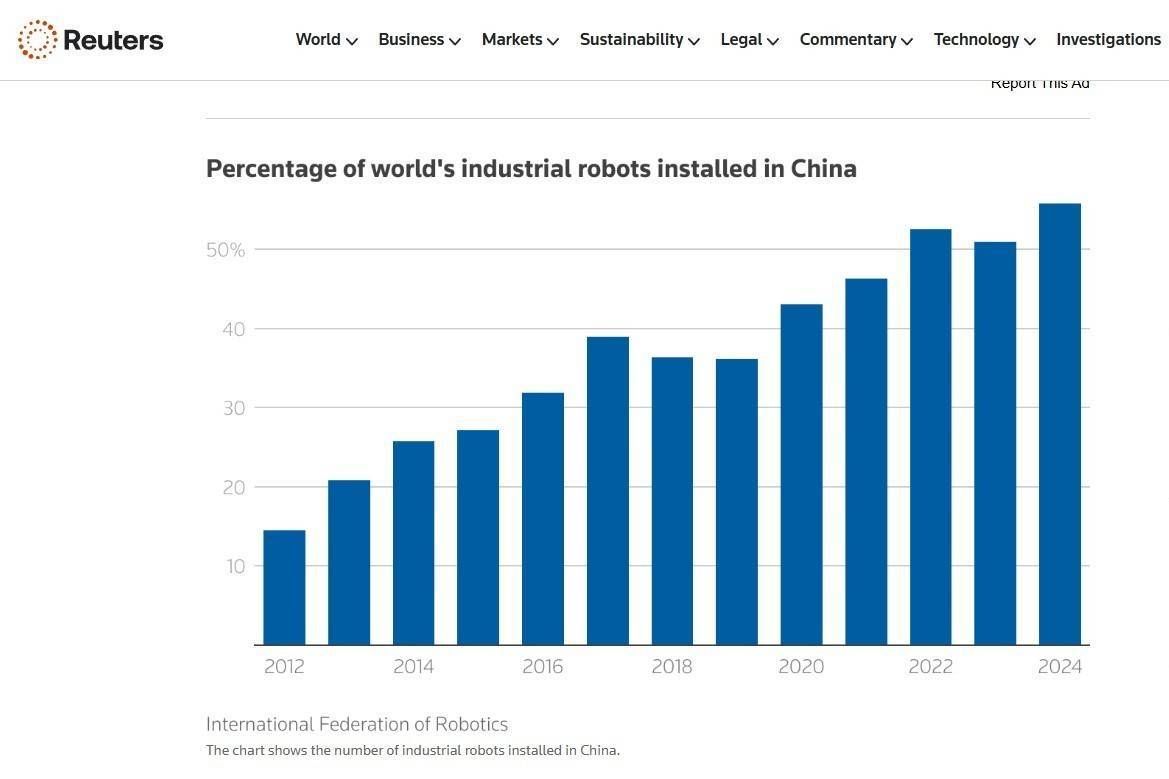
Core Insights - The article emphasizes the importance of a technology-driven "smart economy" in supporting China's economic development and facilitating its economic transformation [1][4]. Group 1: Economic Growth Drivers - Government policies aimed at supporting the "smart economy," including investments in artificial intelligence, semiconductors, and advanced manufacturing, have led to significant growth in the information technology and business services sectors since early 2024 [1]. - The proportion of industrial robots installed in China has been increasing, with over half of the world's industrial robots installed in the country over the past three years [4]. - The retail sector has benefited from targeted government policies, such as the trade-in policy implemented at the end of 2024, which has spurred growth in household appliances, furniture, and communication equipment [4]. Group 2: Consumer Trends - A shift in consumer preferences, particularly among millennials and Generation Z, is driving demand for new domestic products and services that combine tradition with modernity and leverage artificial intelligence and digital technologies [4][6]. - Emerging products and services, such as the sales of Pop Mart's Labubu dolls and the popularity of themed tea shops like "Bawang Chaji," highlight the potential for new consumption trends to break existing categories [4]. Group 3: Aging Population and New Business Opportunities - The aging population in China is creating new business opportunities in areas such as smart home technology, elderly care services, financial pension plans, and specialized healthcare products [6]. Group 4: Long-term Economic Transition - The transition to a sustainable consumption-driven economy in China is expected to be a long and complex process, but investments in advanced industries, innovation in products and services, and flexible policy-making can lay a solid foundation for this shift [6].