英伟达 GPU

Search documents
万联晨会-20260325
Wanlian Securities· 2026-03-25 02:57
Core Insights - The A-share market saw a collective rise in the three major indices, with the Shanghai Composite Index increasing by 1.78%, the Shenzhen Component Index by 1.43%, and the ChiNext Index by 0.5%. The total trading volume in the Shanghai and Shenzhen markets reached 20,827.12 billion yuan [1][6] - In the industry sectors, environmental protection, textiles and apparel, and building materials led the gains, while oil and petrochemicals, coal, and agriculture faced declines. Notably, the military equipment restructuring concept, biomass energy generation, and medical waste treatment sectors performed well [1][6] Important News - The National Data Bureau reported that as of March this year, the daily Token invocation volume in China has exceeded 140 trillion, marking a growth of over 1000 times compared to 100 billion at the beginning of 2024, and over 40% compared to 100 trillion at the end of 2025. This surge indicates a rapid growth phase in China's artificial intelligence development [2][6] - The National Data Bureau plans to continue promoting data empowerment for AI innovation, implementing a new round of high-quality data set construction action plans, which include six key initiatives aimed at enhancing the quality and quantity of AI-ready data sets [2][6] Industry Analysis - The computer industry index saw a decline of 4.74%, underperforming both the CSI 300 and ChiNext indices by 2.55 and 6.00 percentage points, ranking 20th among all primary industries [7] - Alibaba's cloud intelligence group reported revenues of 43.284 billion yuan for Q3 of fiscal year 2026, maintaining a growth trend of over 30%. The CEO emphasized that AI is a primary growth engine, with AI-related product revenues achieving triple-digit growth for ten consecutive quarters [7][9] - Both Alibaba Cloud and Baidu Intelligent Cloud announced price increases for AI computing power and storage services due to rising global AI demand and supply chain costs. Alibaba Cloud's price adjustments range from 5% to 34% for certain services, while Baidu's adjustments are also in response to increased demand [9][10] Investment Highlights - The establishment of AlibabaTokenHub aims to create, deliver, and apply Tokens, covering various AI applications and services [8] - The GTC 2026 conference highlighted the importance of AI computing power and the need for interconnectivity in large-scale AI data centers, indicating a growing focus on optical communication technologies [11][12] - The communication industry index increased by 2.10%, outperforming the CSI 300 and ChiNext indices, reflecting a strong demand for AI-related infrastructure [11] Valuation Insights - The computer industry is currently valued at a PE-TTM of 189.07, which is above the historical average of 158.11 for 2023-2025 [10] - The communication industry has a PE-TTM of 28.14, also above its historical average of 22.00 for the same period [14]
一台吹风机,吹开全球最大英伟达芯片走私案
Xin Lang Cai Jing· 2026-03-20 17:24
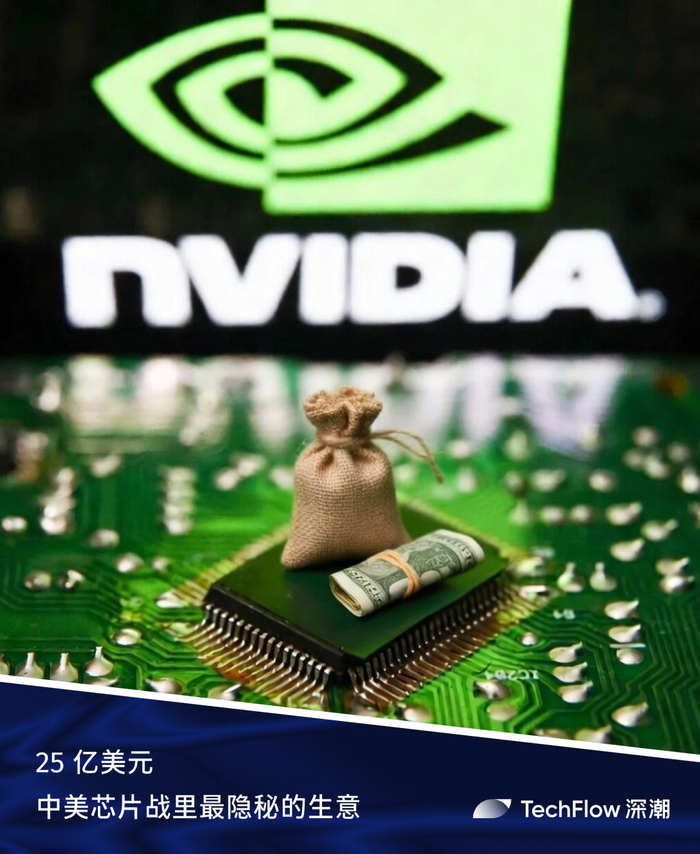
Core Viewpoint - The arrest of Wally Liaw, co-founder of Supermicro, highlights a significant case of smuggling involving $2.5 billion worth of NVIDIA AI chip servers to China, marking it as the largest AI chip smuggling case in history [3][11]. Group 1: Arrest and Charges - Wally Liaw was arrested in California and is charged with smuggling NVIDIA AI chip servers valued at $2.5 billion through a shell company in Southeast Asia to China, facing a maximum sentence of 20 years [3][11]. - The case is characterized by elaborate schemes, including the creation of thousands of fake servers to deceive compliance teams and auditors [4][6][7]. Group 2: Smuggling Operations - Liaw orchestrated a smuggling operation that involved confirming demand from Chinese buyers, applying for chip quotas from NVIDIA under the guise of self-use, and then shipping the servers to Southeast Asia before sending them to China [12][14]. - The operation saw a peak in activity just before new U.S. export regulations were set to take effect, with $510 million worth of servers shipped in a three-week period [15][18]. Group 3: Company Response and Compliance Issues - Following the news of Liaw's arrest, Supermicro's stock dropped by 13%, and the company stated that Liaw has been suspended while another involved individual was terminated [8][9]. - Supermicro claims to have a robust compliance system, although this is not the first time the company's compliance has been called into question [9][10]. Group 4: Industry Context and Trends - The smuggling case reflects a broader trend in the semiconductor industry, where smuggling operations have evolved from small-scale individual efforts to sophisticated schemes involving corporate executives [19][20][26]. - The demand for NVIDIA chips in China remains high, with over 60% of leading AI models relying on NVIDIA hardware, creating a strong incentive for smuggling despite regulatory risks [27][28].


英伟达的下一个Mellanox-针对Agentic-AI底时延的Groq-LPU
2026-03-01 17:22
Summary of Conference Call Notes Company and Industry Involved - **Company**: NVIDIA - **Technology**: Groq LPU (Language Processing Unit) - **Industry**: High-performance computing and AI Core Points and Arguments 1. **Integration Strategy**: NVIDIA plans to absorb Groq's technology and engineering team, integrating its IP into future products rather than selling it as a standalone product line, similar to the acquisition strategy used for Mellanox [2][1] 2. **LPU Architecture**: The Groq LPU architecture is designed for ultra-low latency inference, particularly suitable for batch size=1 scenarios, complementing NVIDIA's GPU strengths in training and larger batch size inference [1][4] 3. **Timeline for Integration**: The integration of LPU into NVIDIA products is expected to take at least 18-24 months, likely aligning with the Finman generation of products [1][6] 4. **Chiplet Integration**: The LPU is expected to be integrated into the GPU architecture using chiplet technology, allowing for closer physical proximity to reduce latency [1][7] 5. **SRAM Utilization**: The LPU will utilize approximately 230MB of on-chip SRAM to minimize latency from external memory access, and its deterministic timing will enhance stable low-latency inference performance [5][4] 6. **Impact on HBM**: The integration of LPU is not expected to affect the usage of High Bandwidth Memory (HBM), as LPU's SRAM serves a different purpose within the memory hierarchy [8][1] 7. **Market Beneficiaries**: The industry chain likely to benefit from LPU integration will focus on triplet-related packaging rather than HBM or PCB-related areas [9][1] Other Important but Possibly Overlooked Content 1. **Interconnect Scalability**: The LPU has limitations in interconnect scalability, which NVIDIA plans to address by integrating LPU capabilities directly into the GPU architecture, thus avoiding interconnect issues between multiple LPUs [10][9] 2. **Software Integration**: There is a potential pathway for LPU's software system to be integrated into CUDA, allowing for unified memory management and scheduling [10][1] 3. **Upcoming GTC Focus**: The upcoming GTC is expected to highlight Rubin Ultra and Firemon architectures, with less emphasis on previously discussed topics [11][1] 4. **CPU Architecture Changes**: There is speculation that Rubin Ultra may introduce an X86 architecture option, reflecting a shift in market needs for inference processing [12][1] 5. **Intel's Strategy**: Intel may move towards a unified core strategy, focusing on power optimization, which could impact its competitive stance against AMD [13][1] 6. **Long-term AI Evolution**: The long-term view suggests that large language models (LLMs) are not the ultimate path to Artificial General Intelligence (AGI), indicating a need for new algorithms and approaches in AI development [16][1]
AI手机加速迭代,ASIC市场火热
2025-12-08 00:41
Summary of Key Points from Conference Call Industry Overview - The conference discusses the emerging AI mobile phone market, particularly focusing on the development of AI assistants and the competition between customized architecture chips (ASICs) and general-purpose GPUs, primarily from companies like NVIDIA and Google [1][3][9]. Core Insights and Arguments - **AI Mobile Phones**: The introduction of the Doubao phone marks the initial phase of AI mobile phones, showcasing AI assistants that can perform tasks through natural language commands, similar to an upgraded version of Apple's Siri. Major companies like Apple, Samsung, and Google are expected to follow suit by 2026 [1][12]. - **ASIC vs. GPU**: Customized architecture chips (ASICs) are designed to accelerate specific algorithms at the cost of generality, while NVIDIA's GPUs maintain flexibility for a broader range of developers. In the short term, ASICs are not expected to completely replace GPUs, as both will drive the evolution of AI infrastructure [1][5][9]. - **Investment Trends**: Global investment in AI computing power is accelerating, with significant capital expenditures expected from major cloud service providers (CSPs) in North America, potentially reaching $600 billion by 2026, which raises concerns about funding gaps in the coming years [3][11]. - **NVIDIA's CUDA Toolkit Update**: The release of CUDA toolkit version 13.1 is the most significant update in 20 years, introducing Python-level abstractions for Tensor Core functions, enhancing usability for developers and addressing the needs of large model development [1][8]. Additional Important Insights - **Challenges for AI Mobile Phones**: AI mobile phones face challenges such as heat dissipation, battery life, and memory limitations when running small to medium parameter models. Future solutions may involve distilling high-parameter models into smaller ones [1][13]. - **Apple's Hardware Innovations**: Apple is gradually adopting steel-shell battery technology, which offers greater capacity and safety, expected to extend to more models by 2026. However, Apple is perceived to be lagging behind Android in hardware upgrades necessary for AI capabilities [4][15][14]. - **Voice Interaction and Acoustic Technology**: The demand for high-performance MEMS microphones is increasing to enhance voice interaction accuracy in AI mobile phones. This trend is expected to drive innovation in the acoustic sector, with significant investments anticipated [4][16]. - **Earphone Market Growth**: The earphone market is poised for growth, with new products expected to integrate sensors, enhancing user engagement and driving industry competition [4][17]. - **AI Glasses Market Potential**: AI glasses are seen as an ideal medium for information interaction, with several manufacturers planning to test the market with new products in the coming months. The long-term outlook suggests that glasses with display capabilities will become a trend [18][19]. Investment Opportunities - Key investment opportunities include advancements in AI mobile products from major OS ecosystems like Apple and Google, hardware innovations in response to rising storage costs, and new device forms such as earphones and glasses that enhance user interaction [20].
通信行业2025年12月投资策略:海外财报验证AI高景气度,谷歌TPU竞争力提升
Guoxin Securities· 2025-11-30 12:54
Market Overview - The communication sector outperformed the market in November, with the communication index rising by 1.85% while the CSI 300 index fell by 2.46%, ranking 6th among 31 primary industries [12][16] - Notable stocks in the sector included Changguang Huaxin (up 58.52%), Tengjing Technology (up 49.66%), and Guangke Technology (up 36.11%) [12][24] AI Infrastructure Growth - The financial reports from major North American tech companies indicate a sustained high demand for computing power, particularly driven by AI investments. NVIDIA reported a significant revenue increase of 62% year-on-year for Q3 2025, with data center revenue growing by 66% [30][31] - Capital expenditures (CAPEX) from major cloud service providers (CSPs) reached nearly $120 billion in Q3 2025, with a year-on-year growth rate exceeding 50%. TrendForce revised the expected growth rate for global CSPs' capital expenditures in 2025 from 61% to 65% [2][30] Competitive Landscape - Google has enhanced its TPU capabilities with the introduction of Ironwood, its most powerful and efficient accelerator to date. This development raises concerns about NVIDIA's market position, although NVIDIA maintains a strong foothold in the AI infrastructure space through its GPU and CUDA ecosystem [3][62] - Meta plans to integrate Google's TPU chips into its data centers by 2027, potentially worth billions, indicating a shift in competitive dynamics within the AI hardware market [3][57] Investment Recommendations - Continued focus on AI computing infrastructure, edge computing, and commercial aerospace is advised. Key areas for investment include optical devices and modules, communication equipment, and liquid cooling technologies [4][69] - The three major telecom operators are considered important assets for long-term investment due to their stable operations and increasing dividend payouts [4][69] Company Performance Insights - NVIDIA's Q3 2025 revenue reached $57 billion, with a notable increase in data center revenue, affirming the strong demand for AI-related hardware [31][33] - Google's Q3 2025 revenue surpassed $102 billion, driven by growth across all major business segments, including a 34% increase in cloud revenue [36][38] - Microsoft reported a 18% increase in revenue for Q3 2025, with significant investments in AI and cloud services, indicating a robust growth trajectory [41][42] - Amazon's cloud business, AWS, achieved a 20% revenue growth in Q3 2025, with expectations for increased capital expenditures in the coming years [51][53] - Meta's Q3 2025 revenue was $51.24 billion, but net profit declined significantly due to increased costs, prompting a rise in capital expenditure forecasts [46][50]

博通:AI 推理需求爆发,有望大幅上涨
美股研究社· 2025-11-28 11:06
Core Viewpoint - The artificial intelligence ecosystem is transitioning from the training phase to the inference phase, becoming a strong revenue engine for large tech companies and providing structural growth benefits for Broadcom's custom chips and networking products [1][22]. Group 1: AI Demand and Market Trends - There is a significant increase in demand for AI inference, which is expected to drive custom chip demand in the second half of 2026, leading to revenue growth in AI business [1][5]. - Major tech companies, including Google and ByteDance, are increasingly adopting Broadcom's custom chips, which are more cost-effective compared to Nvidia's GPUs [2][4]. Group 2: Custom Chip Advantages - Broadcom's custom accelerators are significantly cheaper than Nvidia's GPUs, with performance improvements in each generation [2]. - Google's upcoming seventh-generation Tensor Processing Unit (TPU) Ironwood is designed specifically for inference, showcasing the trend towards more efficient custom solutions [4]. Group 3: Financial Performance - Broadcom reported a 22% year-over-year revenue growth in Q3, reaching $15.95 billion, driven by strong performance in custom AI accelerators and networking switches [11]. - The AI semiconductor business saw a 63% year-over-year revenue increase, contributing significantly to overall revenue [13]. Group 4: Future Projections - Broadcom anticipates a substantial increase in AI business revenue, projecting it could reach nearly $54 billion by FY2027, accounting for about 50% of total revenue [5][12]. - The company expects to see a 34.9% year-over-year revenue growth in FY2026, reaching $85.4 billion [12]. Group 5: Networking Solutions - Broadcom is focusing on its Tomahawk 6 switch, which is the first Ethernet switch with a capacity of 102.4 Tbps, facilitating the deployment of large-scale AI accelerator clusters [9][10]. - The shift from Nvidia's GPU+InfiniBand ecosystem to Ethernet is beneficial for Broadcom, as demand for Ethernet solutions is on the rise [8]. Group 6: Cash Flow and Valuation - Broadcom has a strong cash flow generation capability, converting 44% of revenue into free cash flow, which supports its valuation premium [18][19]. - The company maintains a competitive valuation compared to Nvidia, with a forward P/E ratio of 36.9, indicating strong profit margins and growth potential [19][20].

谷歌TPU逆袭英伟达,创始人一夜之间跃升全球第二、第三富豪
Xin Lang Cai Jing· 2025-11-26 05:34
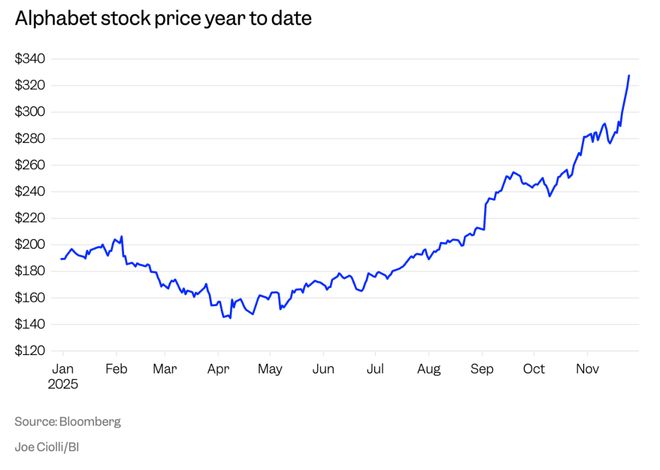
Core Insights - Alphabet's stock price surged 2.4% to $326, reaching a historical high, with a cumulative increase of over 11.5% in the past five trading days and 22% in the last month [1] - As of November 24, Alphabet's market capitalization was approximately $3.84 trillion, making it the third-largest company globally, just behind Nvidia and Apple [1] - The stock price increase has significantly boosted the wealth of its founders, Larry Page and Sergey Brin, placing them as the second and third richest individuals globally, respectively [4] AI Breakthroughs - The primary driver behind the stock surge is the release of the new AI model, Gemini 3, which has received widespread acclaim for its performance, surpassing OpenAI's ChatGPT-5 in several tests [7] - Additionally, Google's AI chip business is experiencing a major breakthrough, with reports that Meta Platforms is considering using Google's AI chips in its data centers, potentially worth billions for Google [10] Competitive Landscape - Nvidia has responded to concerns about Google's AI chip potentially disrupting its market dominance, asserting that its technology remains a generation ahead [10][11] - Despite Google's advancements, Nvidia continues to hold over 90% of the AI chip market share, emphasizing the competitive nature of the industry [11] Strategic Developments - Google has been developing its TPU chips for over a decade, which are now being used to train the Gemini models, positioning them as a strong alternative to Nvidia's offerings [16] - The potential deal with Meta could allow Google to capture about 10% of Nvidia's annual revenue, further solidifying its position in the AI hardware market [10] Financial Performance - Google's search revenue increased by 15% in the third quarter, indicating that its core business remains robust despite concerns about AI impacting its advertising revenue [20] - Warren Buffett's Berkshire Hathaway has invested approximately $4.3 billion in Alphabet, signaling strong confidence in the company's future prospects [18]

谷歌TPU逆袭英伟达,创始人一夜之间跃升全球第二、第三富豪
机器之心· 2025-11-26 05:12
Core Viewpoint - Google's stock price has surged significantly, driven by advancements in artificial intelligence, particularly the launch of the Gemini 3 model and potential AI chip deals with Meta [2][9][11]. Stock Performance - As of November 25, Alphabet's stock price reached $326, marking a 2.4% increase and a historical high. The stock has seen a cumulative increase of over 11.5% in the past five trading days and 22% in the last month [2]. - Alphabet's market capitalization is approximately $3.84 trillion, making it the third-largest company globally, just behind Nvidia and Apple [2]. Wealth Impact - The surge in stock price has significantly increased the wealth of Google's founders, with Larry Page and Sergey Brin now ranked as the second and third richest individuals globally, surpassing Jeff Bezos [5]. AI Breakthroughs - The core drivers of Google's stock increase are two major advancements in AI: the impressive performance of the Gemini 3 model and a potential deal for Google's AI chips with Meta [9][11]. - Gemini 3 has received widespread acclaim for its speed and capabilities, outperforming OpenAI's ChatGPT-5 in several benchmarks [9][10]. AI Chip Developments - Google's latest TPU chip, "Ironwood," is reported to be the most powerful and energy-efficient custom chip to date, with a potential multi-billion dollar deal with Meta for its use in data centers [10][11]. - This deal could allow Google to capture about 10% of Nvidia's annual revenue, establishing a competitive position in the AI hardware market [11]. Cloud Computing and AI Demand - Google's cloud AI infrastructure head indicated that the company needs to double its computing power every six months to meet the explosive demand for AI services, aiming for a 1000-fold increase in computing power over the next 4-5 years [12]. Competitive Landscape - Nvidia has responded to concerns about Google's AI chip potentially disrupting its market dominance, asserting that its technology remains a generation ahead [14][15]. - Despite Google's growing attention in the AI chip space, Nvidia still holds over 90% of the AI chip market share [15]. Strategic Shifts - Google's successful turnaround in the AI race is attributed to the launch of Gemini 3, which has restored market confidence and attracted industry leaders back to its products [19][20]. - The company has been promoting its TPU chips through cloud services, which may pose a long-term threat to Nvidia's market position [22]. Legal and Financial Developments - A recent antitrust ruling allowed Google to maintain its search business structure, alleviating concerns about potential disruptions to its revenue streams [23]. - Warren Buffett's Berkshire Hathaway has invested approximately $4.3 billion in Alphabet, signaling strong confidence in the company's future [24]. Search Business Resilience - Google's search advertising revenue increased by 15% in the third quarter, indicating that its core business remains robust despite the rise of AI technologies [25].

从英伟达到ASI,算力景气再确认
GOLDEN SUN SECURITIES· 2025-09-28 09:06
Investment Rating - The report maintains a "Buy" rating for companies in the computing power sector, particularly recommending leading firms in the optical module industry such as Zhongji Xuchuang and Xinyi Sheng [8][11]. Core Insights - The collaboration between Nvidia and OpenAI marks a significant milestone, indicating that the demand for computing power is a long-term trend rather than a short-term phenomenon [24][25]. - Alibaba's CEO outlined a three-phase roadmap towards Artificial Super Intelligence (ASI), emphasizing the critical role of computing power in this evolution [27][28]. - The report highlights the ongoing arms race in computing infrastructure among major AI players, with unprecedented capital investments aimed at securing resources for future AI developments [30]. Summary by Sections Investment Strategy - The report suggests focusing on the computing power sector, particularly in optical communication, with specific companies recommended for investment [16]. - Key companies include Zhongji Xuchuang, Xinyi Sheng, and Tianfu Communication, among others [9][16]. Market Overview - The communication sector experienced a decline, with quantum communication performing relatively well [20][21]. - The report notes that the overall market sentiment is influenced by significant investments in AI infrastructure, particularly from Nvidia and OpenAI [19][24]. AI Development and Computing Power - The partnership between Nvidia and OpenAI involves deploying at least 10 GW of AI data centers, with Nvidia planning to invest up to $100 billion [25][26]. - OpenAI's active user base has surpassed 700 million, highlighting the increasing demand for computing resources [26]. Phases of ASI Evolution - The three phases towards ASI include: 1. Emergence of general AI (AGI) 2. Autonomous action phase 3. Self-iterative phase, which demands nearly limitless computing power [29][28]. Future Outlook - The report anticipates a significant increase in capital expenditures (CAPEX) in the domestic market, driven by recent actions from major players like Alibaba [30][7]. - The computing power supply chain is expected to benefit across various segments, including AI chips, servers, and cooling solutions [30].


新力量New Force总第4864期
First Shanghai Securities· 2025-09-22 08:47
Group 1: Company Overview - NetDragon's revenue for the first half of 2025 was RMB 2.38 billion, a year-on-year decline of 28%[5] - The gross profit was RMB 1.7 billion, down 24.7% year-on-year, but the gross margin improved by 2.9 percentage points to 69.5%[5] - The company has a net cash position of approximately RMB 2.3 billion and holds 12,000 Ethereum as digital asset reserves[5] Group 2: Business Segments - The gaming and other businesses generated RMB 1.74 billion in revenue, a decrease of 18% year-on-year, but only a 4% decline compared to the second half of 2024, indicating stabilization[6] - The education segment, Mynd.ai, reported revenue of RMB 640 million, impacted by tightened customer budgets, with ongoing cost optimization efforts[7] Group 3: Financial Projections - The target price for NetDragon is set at HKD 20.24, representing a 71% upside from the last closing price[8] - The adjusted EPS for 2025 is projected at HKD 1.004, a decrease of 25% from previous estimates, while 2026 EPS is expected to be HKD 1.175, down 22%[2] Group 4: Market Strategy - The company plans to return at least HKD 600 million to shareholders through dividends and share buybacks over the next year[5] - New game titles and expansion into overseas markets are expected to drive future growth, with several products in the pipeline for release[6]