苹果A19芯片

Search documents
AI需求强劲,台积电2025年Q4净利润超预期创新高,消费电子ETF(561600)涨超3%
Sou Hu Cai Jing· 2026-01-16 05:56
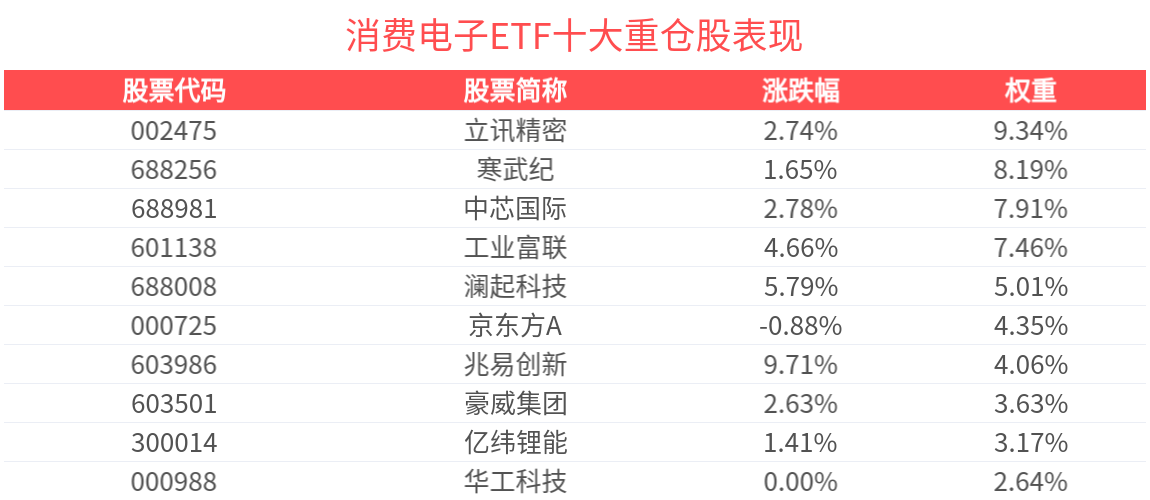
Group 1 - The core viewpoint of the articles highlights the strong performance of the consumer electronics sector, with the CSI Consumer Electronics Theme Index rising by 2.98% and the Consumer Electronics ETF increasing by 3.23% [1][2] - TSMC's fourth-quarter net profit for 2025 is reported at NT$505.7 billion, exceeding the forecast of NT$467 billion, with a gross margin of 62.3%, higher than the expected 60.6% [1] - The growth in TSMC's performance is attributed to the full release of 3nm process capacity and strong demand for AI-related products, with projected revenue growth of 25% to 30% in 2026 [1][2] Group 2 - CITIC Securities forecasts that "self-controllable and AI computing power" will be a dominant theme in the electronics industry throughout 2026, with a focus on domestic computing power and semiconductor equipment [2] - The CSI Consumer Electronics Theme Index includes 50 listed companies involved in component production and design, reflecting the overall performance of the consumer electronics sector [2] - As of December 31, 2025, the top ten weighted stocks in the CSI Consumer Electronics Theme Index account for 54.35% of the index, with notable companies including Luxshare Precision, Cambricon, and SMIC [2][4]


平安证券(香港)港股晨报-20260113
Ping An Securities Hongkong· 2026-01-13 02:51
Market Overview - The Hong Kong stock market experienced fluctuations, with the Hang Seng Index closing at 23,831 points, down 145 points or 0.61% [1] - The market turnover decreased to 82.799 billion HKD, with net inflows of 484 million HKD recorded in the Hong Kong Stock Connect [1] - The US stock market saw the Dow Jones and S&P 500 indices reach new highs, with the Dow closing at 49,590 points, up 0.2% [2] Key Insights - The report highlights the sustained net inflow of southbound funds through the Hong Kong Stock Connect, with a projected annual net inflow of 1,404.8 billion HKD by 2025 [3] - The focus on "technological self-reliance" and AI applications is expected to be a core theme for the future performance of Hong Kong stocks, with leading companies in these sectors likely to benefit from long-term growth opportunities [3] - The report suggests continued attention to sectors supported by policies aimed at expanding domestic consumption, such as sports apparel and non-essential services [3] Company Performance - TSMC, the world's largest advanced AI chip manufacturer, is expected to see a 27% increase in net profit in Q4, driven by surging demand for AI infrastructure [8] - Analysts predict TSMC's net profit could reach 475.2 billion TWD (approximately 15.02 billion USD), marking a record high for a single quarter [8] - The report recommends focusing on leading companies in the domestic semiconductor foundry industry, such as Hua Hong Semiconductor (1347.HK) and SMIC (0981.HK), which are expected to benefit from favorable domestic policies [8] Stock Recommendations - China Unicom (0762.HK) is highlighted for its strong performance in digital technology services, with a projected revenue of 45.4 billion CNY for its smart network business in the first half of 2025, reflecting a 4.3% year-on-year growth [9] - The company is also expected to maintain a high dividend yield, with a mid-2025 interim dividend of 0.2841 CNY per share, up 14.5% year-on-year [9] - The report emphasizes the company's advantages in cloud computing, IoT, big data, and AI, positioning it well to capitalize on the growth of China's digital economy [9]
AI需求火爆带飞台积电(TSM.US)业绩!Q4净利润有望激增27%创新高
智通财经网· 2026-01-12 06:40
Core Viewpoint - TSMC is expected to see a significant increase in net profit by 27% in Q4 2025, driven by the relentless demand for AI infrastructure, potentially reaching a record high of NT$475.2 billion (approximately USD 15.02 billion) [1][2] Group 1: Financial Performance - TSMC's Q4 2025 net profit is projected to be NT$475.2 billion, marking a record if it exceeds NT$452.3 billion [1] - The company's revenue for Q4 2025 is expected to rise approximately 20% to NT$1.05 trillion (around USD 33.1 billion), surpassing market expectations of NT$1.02 trillion [1] Group 2: Market Drivers - The growth in TSMC's revenue is attributed to the full utilization of its 3nm process capacity, driven by the demand for Apple's A19 chip in the iPhone 17 series and strong AI demand [1] - IDC forecasts a 25%-30% increase in TSMC's revenue in 2026, up from a previous estimate of 22%-26%, primarily due to the explosive growth in the AI server accelerator manufacturing market, which is expected to grow by 78% year-on-year [2] Group 3: Competitive Landscape - TSMC continues to expand its market share in advanced process technology, outpacing competitors [2] - The rapid expansion of overseas wafer fabs may dilute TSMC's anticipated profit growth from its 2nm process and pricing strategies [2] Group 4: Investment and Policy Considerations - TSMC is investing USD 165 billion to build chip factories in Arizona, USA, indicating a significant commitment to expanding its manufacturing capabilities [2] - The impact of U.S. tariff policies on TSMC remains uncertain, particularly regarding the 20% tariff on exports from Taiwan, excluding chips [2]
消息指苹果A20芯片单颗成本280美元
Xin Lang Cai Jing· 2026-01-04 03:30
Core Viewpoint - Apple is set to launch its A20 chip with a production cost of $280, approximately 1958 RMB, which represents an 80% increase compared to the previous A19 chip, exceeding market expectations [1] Group 1: Chip Development - Samsung has released the world's first 2nm process chip, Exynos 2600, on January 3 [1] - Major manufacturers including Qualcomm, MediaTek, and Apple plan to adopt 2nm process technology in their next-generation flagship platforms [1] Group 2: Cost Implications - The shrinking of process technology is leading to increased wafer fabrication prices and rising yield pressure, which in turn is driving up the cost of System on Chip (SoC) [1]

台积电(TSM.US)为“AI信仰”添把火!Q3业绩超预期后上调2025年指引
Zhi Tong Cai Jing· 2025-10-16 08:09
Core Insights - TSMC has raised its revenue growth forecast for 2025 to the mid-range of 30%, reflecting strong confidence in demand for AI components such as chips from Nvidia [1][3] - In Q3, TSMC reported revenue of $33.1 billion, a year-on-year increase of 40.8%, significantly exceeding market expectations [1] - The company's Q3 profit surged 39% to NT$452.3 billion (approximately $14.8 billion), prompting an increase in the lower limit of its capital expenditure target for 2025 to at least $40 billion [1] - Advanced technologies (7nm and above) accounted for 74% of TSMC's total wafer revenue, with 3nm shipments making up 23% and 5nm 37% [1] Revenue and Profit Performance - TSMC's preliminary Q3 sales reached NT$990 billion (approximately $33.05 billion), surpassing guidance expectations, indicating strong demand for AI and iPhone chips [5] - The gross margin is expected to remain at the high end of the forecast range of 55.5%-57.5% due to robust orders for Apple A19 and Nvidia Blackwell chips [5] Market Position and Industry Dynamics - TSMC plays a crucial role in the AI investment boom, being the exclusive manufacturer of chips for major devices like the iPhone and essential for AI services such as ChatGPT and Google Gemini [3] - The company is preparing for potential disruptions in the global semiconductor supply chain due to geopolitical tensions, including export restrictions on rare earth minerals from China and additional tariffs from the U.S. [3][6] - TSMC's CEO has expressed confidence in the sustainability of AI demand, while the company is expanding its manufacturing capabilities in the U.S. to mitigate risks associated with geopolitical uncertainties [6]