
赛恺泽

Search documents
科济药业20260309
2026-03-10 10:17
Summary of Key Points from the Conference Call Company Overview - **Company**: 科济药业 (Kojin Pharmaceutical) - **Focus**: Development of CAR-T therapies, particularly for gastric cancer and other hematological malignancies Industry Insights - **CAR-T Therapy**: The company is positioning itself as a leader in CAR-T therapy, with a focus on both autologous and universal CAR-T products - **Market Potential**: The gastric cancer market is expected to be significantly larger than that for hematological cancers, with an estimated 1 to 2 million patients in China annually Core Points and Arguments 1. **Product Approval Timeline**: CT041, the first CAR-T therapy for gastric cancer, is expected to be approved in Q2 2026, showing a survival benefit of nearly six months for third/fourth-line patients without severe CRS or ICANS [2][3] 2. **Financial Performance**: In 2025, the company reported revenues of approximately 126 million RMB and a net loss of 103 million RMB, a reduction of 87% year-over-year due to increased gross margins and reduced R&D and management expenses [2][4] 3. **Cash Flow**: The company anticipates sufficient cash flow to sustain operations until 2030, with cash and cash equivalents expected to exceed 1 billion RMB by the end of 2026 [5][4] 4. **Strategic Partnerships**: Collaborations with Huadong Pharmaceutical and other strategic partners are aimed at enhancing commercialization and reducing costs through economies of scale [2][3] 5. **Clinical Data**: Positive Phase II clinical data for CT041 was published in The Lancet and presented at ASCO 2025, indicating strong efficacy in gastric cancer [3][6] 6. **Production Capacity**: The company is building a commercial production base in Jinshan, Shanghai, with a total investment not exceeding 370 million RMB, supported by government incentives [2][9] 7. **R&D Focus**: R&D spending is projected to be around 300 million RMB in 2026, focusing on universal CAR-T and in vivo technology platforms [5][16] 8. **Universal CAR-T Products**: CT0,596 and CT1,190B are set to enter clinical trials in 2026, with promising early data showing high ORR and CR rates [2][8] 9. **Market Strategy**: The company plans to leverage its first-mover advantage in gastric cancer CAR-T therapy and aims for a dual strategy of cash flow generation from autologous CAR-T while expanding into universal CAR-T [5][10] Additional Important Insights - **Regulatory Strategy**: The company is exploring the possibility of submitting NDA for CT041 in the U.S. using data from China, which could expedite its entry into the U.S. market [19][20] - **Employee Adjustments**: The workforce was reduced from 468 to 362, primarily in the U.S. and certain domestic departments, as part of a strategic realignment [20] - **Future Clinical Trials**: Plans for multiple clinical trials in 2026, including a focus on self-immune diseases and further development of in vivo CAR-T therapies [17][18] This summary encapsulates the key points discussed in the conference call, highlighting the company's strategic direction, financial health, and product development pipeline.
科济药业-B与上海金工企业发展签署战略合作协议 投建金山CAR-T细胞治疗产品商业化生产基地
Zhi Tong Cai Jing· 2026-02-13 00:11
Core Viewpoint - The company has signed a strategic cooperation agreement to invest up to RMB 370 million in building an advanced CAR-T cell therapy product commercialization production base in Shanghai, aligning with its commercialization process for multiple CAR-T products [1] Group 1: Investment and Development - The total investment for the new production base is capped at RMB 370 million, which will support the commercialization of existing and upcoming CAR-T cell therapy products [1] - The production base will facilitate the commercialization of the already launched product, Sai Kaize, and the new drug application stage product, Shu Ru Ji Ao Lun Sai injection (tentative name: Kai Li Mei TM) [1] - The investment strategy allows the company to avoid significant capital expenditures early on, preserving cash flow for core R&D and market expansion [1] Group 2: Strategic Importance - The collaboration is seen as a core initiative to enhance CAR-T cell therapy production capacity that meets international standards, crucial for the commercialization of multiple products and strengthening global competitiveness [1] - The agreement reflects the company's robust financial planning and deep engagement in the CAR-T cell therapy industry ecosystem, aligning with national and local biopharmaceutical industry policies [1] - This strategic partnership is expected to solidify the company's leading position in the global CAR-T cell therapy field and create long-term value for shareholders [1]
对话独角兽 | 科济药业的商业化突围:从技术攻坚到控费增效
Di Yi Cai Jing· 2026-01-26 08:24
Core Viewpoint - CAR-T cell therapy, despite existing development bottlenecks, has shown excellent results and significant potential in tumor treatment, making it one of the fastest-growing segments in innovative drugs globally [1] Group 1: Industry Development and Challenges - CAR-T technology has demonstrated breakthrough therapeutic effects in hematological malignancies, but its industrialization faces challenges due to the small market size and high treatment costs associated with these indications [2] - Over 90% of new cancer cases globally in 2023 are expected to be solid tumors, indicating a vast potential market for CAR-T therapies if the technology can overcome the treatment bottlenecks for solid tumors [2] - Since 2020, more CAR-T solid tumor therapy projects have entered clinical research, with over 50% of the pipeline focusing on this area, making it a key competitive advantage for many Chinese innovative drug companies [2] Group 2: Company Strategy and Product Pipeline - The company has developed a pipeline that includes 4 autologous CAR-T and 6 universal CAR-T products, covering hematological malignancies, solid tumors, and autoimmune diseases [2] - The new drug application for CT041 (Shurike Aolun Sai Injection) has been accepted by the National Medical Products Administration of China, making it the first CAR-T cell product globally to enter the new drug application stage for solid tumors [2][3] Group 3: Cost and Accessibility - The high cost of CAR-T therapies, typically priced in the millions, poses a significant barrier to patient accessibility, necessitating solutions for affordability [5] - Universal CAR-T therapies, which can be produced in batches for multiple patients, have the potential to significantly reduce costs, with estimates showing a reduction in total material costs from $60,000 to $2,000 and production costs from $95,780 to $4,460 [5] - The company has developed innovative technologies to address the immune rejection of non-autologous cells, with patents granted in multiple regions, aiming for the first universal CAR-T product to be launched within five years [5] Group 4: Market Dynamics and Payment Solutions - The large patient base in China, especially as CAR-T therapies expand to solid tumors, presents a theoretical market space that is vast [7] - Since the approval of the first hematological CAR-T therapy, the company has received 154 valid orders across 23 provinces in 2024, indicating a growing commercial presence [7] - The introduction of the first version of the "Commercial Health Insurance Innovative Drug Directory" in 2025, which includes multiple CAR-T therapies, marks a breakthrough in addressing payment challenges and is expected to facilitate the commercial development of CAR-T therapies in China [7][8] Group 5: Policy Support and Industry Growth - The company has achieved a significant reduction in losses, with an adjusted net loss of approximately 75 million yuan in the first half of 2025, down 78.1% from the same period last year [10] - Policy support, particularly in expediting drug review and approval processes, is crucial for the successful development of the CAR-T industry in China [10] - Recent policies aimed at enhancing the review process for advanced therapies are expected to significantly shorten the R&D and commercialization cycles, improving cash flow for innovative drug companies [10][11]

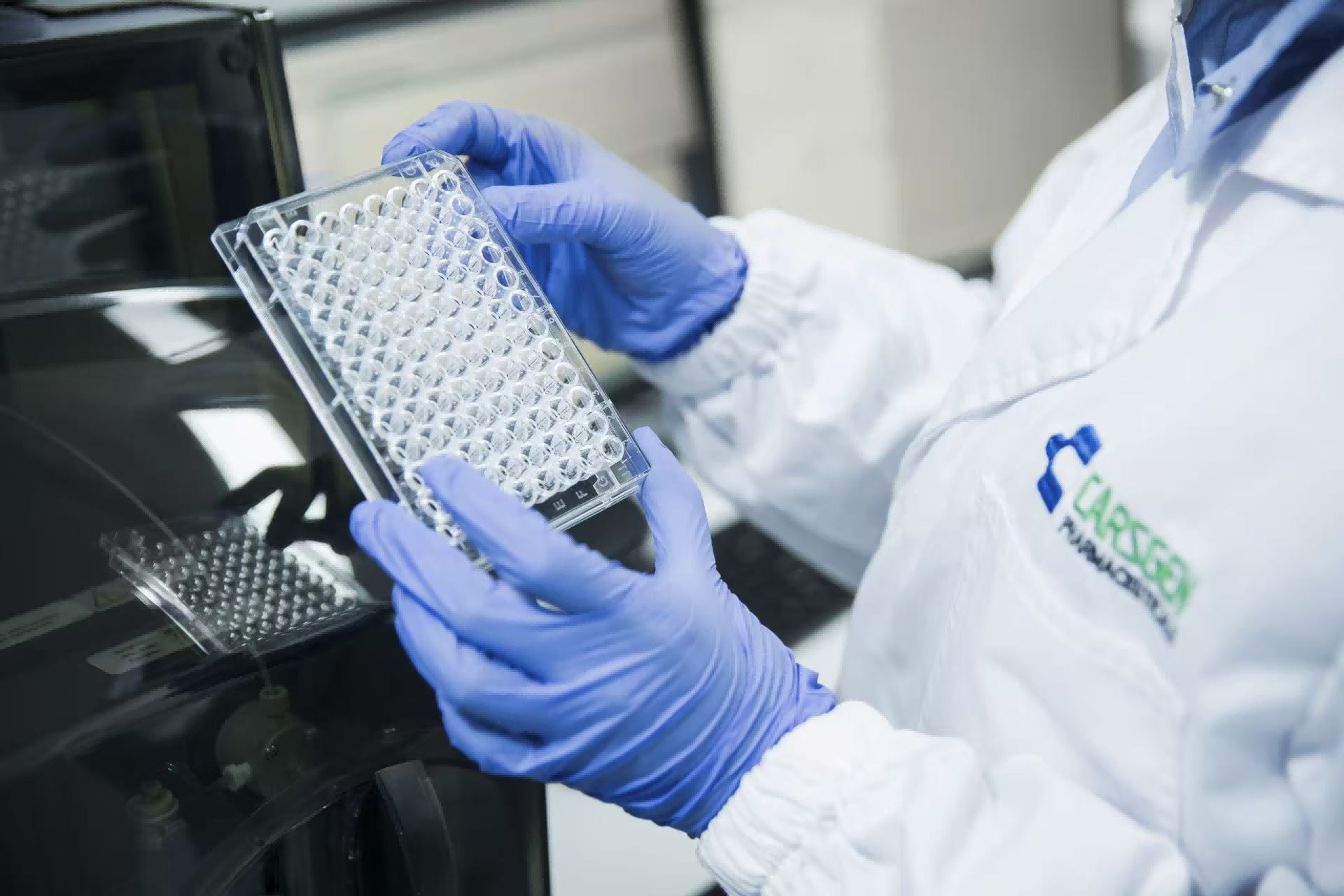
天价“抗癌针”成本有望降至万元以内——专访科济药业董事会主席李宗海
Zhong Guo Ji Jin Bao· 2025-12-23 11:44
Core Insights - The chairman of Kogei Pharmaceuticals, Li Zonghai, stated that universal CAR-T products are expected to reduce treatment costs to around 10,000 yuan per injection, significantly improving accessibility for patients [1][2][7]. Industry Overview - Currently, there are 7 CAR-T products approved in the U.S. and 8 in China, with the U.S. having a stronger commercial environment and payment capacity [3]. - China is improving its payment capabilities and policy environment, which may allow it to catch up with the U.S. in CAR-T product development [3]. Product Development - Kogei Pharmaceuticals has submitted the world's first NDA for a CAR-T product targeting solid tumors, expected to be approved by mid-next year [4]. - The company is focusing on both autologous and universal CAR-T products, with a shift towards universal CAR-T as a core growth engine due to its broader market potential and lower production costs [6][14]. Cost Reduction Strategy - The universal CAR-T product is projected to lower costs significantly, potentially to one-fiftieth of current prices, enhancing production efficiency and reducing failure rates [7]. - The company aims to have the first universal CAR-T product on the market by 2030, with a focus on overcoming challenges related to immune rejection [8][10]. Commercialization Efforts - Kogei's first commercial product, Saikeze, achieved revenue of 50.96 million yuan in the first half of 2025, marking a 703.8% year-on-year increase [11]. - The company is building its own commercialization team to support the launch of its products, particularly in the gastric cancer market, which has significant unmet clinical needs [12]. Global Expansion Plans - Kogei Pharmaceuticals plans to expand into Asian markets, including Hong Kong, Singapore, and South Korea, while also targeting Western markets where similar products are not available [13]. Future Research and Development - The company will prioritize funding for the development of universal CAR-T products and expanding the indications for its existing products [14].
天价“抗癌针”成本有望降至万元以内——专访科济药业董事会主席李宗海
中国基金报· 2025-12-23 11:30
Core Viewpoint - The CAR-T cell therapy is a revolutionary cancer immunotherapy method, but its high cost (up to millions) limits accessibility for many patients. However, there is potential for significant cost reduction with universal CAR-T products, which could lower the price to around 10,000 yuan per injection, enhancing drug accessibility [2][3]. Group 1: Market and Competitive Landscape - The global CAR-T product landscape shows strong development in the US and China, with 7 and 8 products approved respectively. The US has a stronger commercial environment and payment capacity compared to China, which is improving [8]. - China is synchronized with international standards in blood cancer CAR-T development and has a lead in solid tumor CAR-T products, with no overseas products in critical clinical stages yet [8]. - China is at the forefront of universal CAR-T technology, while it ranks among the top globally in autologous CAR-T development [8]. Group 2: Product Development and Cost Reduction - The first NDA for a solid tumor CAR-T product, CT041, is expected to be approved in the first half of next year [10]. - The company is focusing on developing universal CAR-T products, which are anticipated to have a broader market space and lower production and management costs [12][13]. - The cost of universal CAR-T products could potentially drop to one-fiftieth of the current autologous CAR-T costs, estimated at around 10,000 yuan per injection [14]. Group 3: Future Outlook and Challenges - The first universal CAR-T product is projected to be launched before 2030, with a timeline of approximately four years for clinical trials and regulatory approvals [16][17]. - A significant challenge in developing universal CAR-T products is addressing rejection issues, which many companies face. The company has a unique platform that shows promising early clinical trial data [18]. Group 4: Commercialization Strategy - The company has achieved significant revenue growth with its first commercial product, with a 703.8% increase in revenue year-on-year [20]. - The company is building its own commercialization team, anticipating that its products will meet substantial clinical needs in the domestic market, especially for gastric cancer [22]. - The company plans to expand its market reach to Asia and eventually to Europe and the US, where there are no similar products available [24]. Group 5: Research and Development Focus - Future R&D investments will prioritize expanding indications for CT041 and accelerating the market entry of universal CAR-T products [25]. - The company aims to lower the cost of solid tumor CAR-T products to around 10,000 yuan while achieving efficacy comparable to autologous products, which is crucial for broader accessibility [25].

创新药行情走弱后,港股通困局何解?
Xin Lang Cai Jing· 2025-11-28 11:26
Core Viewpoint - The Hong Kong innovative drug sector has experienced a significant rally this year, with the Hong Kong innovative drug index (CSI:931787) rising by 75% until October, but has since entered a cooling phase as investors digest previous gains [3][4]. Group 1: Market Performance - The innovative drug sector saw 23 companies listed in the Hong Kong healthcare sector this year, compared to only 8 last year [3]. - Despite the initial surge, many companies that have not yet entered the Stock Connect are experiencing a decline in stock prices, indicating a challenging path to inclusion [3][4]. Group 2: Stock Connect Mechanism - The Stock Connect allows mainland investors to trade Hong Kong-listed stocks, with significant contributions from southbound funds, accounting for 40%-50% of trading volume in some companies [3][4]. - Companies not included in the Stock Connect face liquidity challenges, as most mainland public funds cannot invest directly [4][5]. Group 3: Challenges for Inclusion - The threshold for entering the Stock Connect has increased due to rising market valuations, with the market capitalization requirement for inclusion in the Hang Seng Composite Index set at approximately HKD 9.32 billion [6]. - Companies previously included in the Stock Connect but later removed face significant hurdles to re-entry, as liquidity issues persist [7][8]. Group 4: Business Development (BD) Fatigue - The market has shown signs of "BD fatigue," where announcements of potential business developments no longer lead to significant stock price increases, as seen with recent collaborations that resulted in stock declines [9][10]. - Investors are now demanding more substantial evidence of project viability and commitment from partners before reacting positively to BD announcements [10]. Group 5: Future Outlook - The market is currently in a quiet phase, with investors waiting for clear signals of recovery before increasing their positions, reflecting a cautious sentiment as year-end approaches [10][11].

科济药业-B盘中涨超7% 公司拟在2025年ASH年会发布CT0596临床数据
Xin Lang Cai Jing· 2025-10-06 03:33
Core Viewpoint - Kintor Pharmaceutical Co., Ltd. (科济药业-B) has seen a significant increase in stock price, attributed to the upcoming presentation of clinical data for CT0596 at the 67th American Society of Hematology (ASH) annual meeting and the recent approval of its CAR-T drug for inclusion in insurance directories [1]. Group 1: Stock Performance - Kintor Pharmaceutical's stock price rose over 7% during trading, with a current increase of 5.70%, reaching HKD 19.85 [1]. - The trading volume amounted to HKD 13.3487 million [1]. Group 2: Clinical Data Presentation - The company announced that it will present clinical data for its drug CT0596 at the ASH annual meeting [1]. Group 3: Regulatory Developments - On September 20, the National Healthcare Security Administration announced the completion of expert review work for the first version of the commercial insurance innovative drug directory [1]. - Kintor's CAR-T drug, Sai Ke Ze, along with four other CAR-T drugs, successfully passed the expert review, indicating a potential inclusion in this year's basic medical insurance directory and commercial insurance innovative drug directory [1].
科济药业-B现涨超7% 公司拟在2025年ASH年会发布CT0596临床数据
Zhi Tong Cai Jing· 2025-10-06 03:29
Group 1 - Kintor Pharmaceutical (科济药业-B) shares rose over 7%, currently up 6.39% at HKD 19.98, with a trading volume of HKD 10.51 million [1] - The company announced it will present clinical data for CT0596 at the 67th American Society of Hematology (ASH) annual meeting [1] - On September 20, the National Healthcare Security Administration announced the completion of expert review for the first version of the commercial insurance innovative drug catalog, with Kintor's CAR-T drug, Sai Ke Ze, among five CAR-T drugs that passed the review, potentially entering this year's basic medical insurance and commercial insurance innovative drug catalog [1]
港股异动 | 科济药业-B(02171)现涨超7% 公司拟在2025年ASH年会发布CT0596临床数据
智通财经网· 2025-10-06 03:28
Group 1 - The core point of the article is that Kintor Pharmaceutical (科济药业-B) has seen a stock price increase of over 7%, currently trading at 19.98 HKD with a transaction volume of 10.51 million HKD [1] - Kintor Pharmaceutical announced that it will present clinical data for CT0596 at the 67th American Society of Hematology (ASH) annual meeting [1] - On September 20, the National Healthcare Security Administration announced the completion of expert review for the first version of the commercial insurance innovative drug catalog, with Kintor's CAR-T drug, Sai Ke Ze, among five CAR-T drugs that passed the review, potentially entering the basic medical insurance catalog and commercial insurance innovative drug catalog this year [1]
5款CAR-T产品通过商保创新药目录专家评审 一针百万元的“抗癌神药”有望飞入寻常百姓家?
Mei Ri Jing Ji Xin Wen· 2025-09-23 15:36
Core Viewpoint - The National Healthcare Security Administration (NHSA) has completed the expert review for the 2025 National Basic Medical Insurance (BMI) catalog and the commercial insurance innovative drug catalog, marking the eighth adjustment since its establishment and the first inclusion of a commercial insurance innovative drug catalog [1][2]. Group 1: CAR-T Products Approval - Five CAR-T products have successfully passed the expert review and will be included in both the basic medical insurance and commercial insurance innovative drug catalogs, laying the groundwork for future negotiations and access [1][2]. - The approval of these CAR-T products is seen as a positive signal, indicating the regulatory body's commitment to improving access to cutting-edge therapies [1][3]. - The review process emphasized the innovation level, efficacy, and the ability to fill treatment gaps, with CAR-T therapies receiving unanimous approval [2][5]. Group 2: Impact on Patients and Companies - The introduction of the commercial insurance innovative drug catalog is expected to significantly reduce out-of-pocket expenses for patients, making high-cost CAR-T treatments more accessible [3][4]. - Companies view the catalog as a "second channel" for innovative drugs, alleviating pricing pressure during negotiations with basic medical insurance and potentially expanding market share [4][5]. - The collaboration between pharmaceutical companies and insurance providers is anticipated to evolve towards deeper cooperation, exploring mechanisms like outcome-based payments and risk-sharing [4][5]. Group 3: Future Outlook - Companies express cautious optimism regarding the inclusion of CAR-T products in the commercial insurance innovative drug catalog, supported by policy direction, clinical value, and practical experience [5][6]. - The ongoing expansion and optimization of the commercial insurance catalog are expected to further benefit patients in need of CAR-T therapies [6].