
集运指数(欧线)期货合约

Search documents
集运指数(欧线):地缘扰动反复
Guo Tai Jun An Qi Huo· 2026-03-24 02:54
1. Report Industry Investment Rating - The trend strength of the container shipping index (European Line) is 0, indicating a neutral stance [17]. 2. Core Viewpoints - The intraday fluctuations of the EC market are significantly influenced by geopolitical sentiments. In terms of fundamentals, the short - term valuation center of the 2604 contract depends on the quotes of other shipping companies in early April. In a neutral scenario, the market freight rate center in early April will rise to the range of $2700 - 2800/FEU, equivalent to an SCFIS index of approximately 1950 - 2050 points; in a pessimistic scenario, the rate hike fails, and the freight rate center drops back to $2500 - 2600/FEU in the second half of March, equivalent to an SCFIS index of about 1800 - 1900 points. The 2604 contract has long - allocation value around 1800 points and below, and short - term long - buying opportunities should be noted. For far - month contracts, a certain premium or discount is given according to seasonality, and overall, one should mainly adopt a wait - and - see approach [13][15]. 3. Summary by Relevant Catalogs 3.1 Fundamentals Tracking - **Futures Data**: The EC2604 contract closed at 1957.4 points, with a daily increase of 3.00%; the EC2606 contract closed at 2692.9 points, with a daily increase of 14.40%; the EC2608 contract closed at 2564.0 points, with a daily increase of 9.74%; the EC2610 contract closed at 1648.0 points, with a daily increase of 6.72% [1]. - **Freight Index**: On March 23, 2026, the SCFIS European route index was 1693.26 points, with a weekly increase of 8.8%; the SCFIS US - West route index was 1024.11 points, with a weekly decrease of 7.7%. The SCFI European route index had a bi - weekly increase of 1.1%, and the SCFI US - West route index had a bi - weekly decrease of 8.7% [1]. - **Spot Freight Rates**: For European - bound shipments from Shanghai, different carriers' $/40'GP rates range from 2035 to 3360, and $/20'GP rates range from 1285 to 2230 [1]. - **Exchange Rates**: The US dollar index was 99.12, and the US dollar against the offshore RMB was 6.91 [1]. 3.2 Supply Side - In the past week, the average weekly capacity in April was revised down from 32.5 to 31.1 million TEU/week, with the capacity reduction mainly from the OA Alliance. The capacity in April decreased by 0.9% year - on - year and increased by 5.8% month - on - month. The capacity in May was revised down from 33.5 to 33.1 million TEU/week, and there were 4 pending voyages not included in the statistics. The capacity in May increased by 10.4% year - on - year and 7.8% month - on - month, and the static effective capacity in May is currently at a historical high [13]. 3.3 Demand Side - In the fourth week of March, the overall booking progress in the market was better than that in the third week. Maersk raised the price by $400 to $2700/FEU in the first week of April, and as of Thursday this week, the booking progress was average. The PA Alliance showed signs of improved loading at the end of the month. The market as a whole showed the characteristics of deteriorated loading for high - price ships and improved loading for low - price ships, while the OA Alliance continued to perform steadily. In the medium - to - long - term, if oil prices soar and remain high, potential downside risks may stem from macro - level negative feedback, which could then be transmitted to international trade [14]. 3.4 Freight Rates - **Maersk**: The opening rate in the 13th week was 2200/230 (40GP/40HQ). It was raised by $400 to 2600/2700 (40GP/40HQ) in the 14th week. As of Thursday this week, the SPOT booking volume was only 1100FFE, far from the target of 3900FFE [14]. - **OA Alliance**: The central rate in the 12th and 13th weeks was around $2900/FEU. Among them, Evergreen, COSCO, and OOCL were in the range of $2700 - 2800/FEU, and CMA's offline rate was 3168 and online rate was 3293 dollars/FEU [14]. - **PA Alliance**: In the 12th week, the FAK was reported at $2400/FEU, and the actual offline transactions were mostly at $2200/FEU per ship. In the 13th week, YML and HMM's offline rates remained at $2200/FEU, ONE's FAK was reported at $2520/FEU, and different SPOT rates could be applied for different container volumes [15]. - **MSC**: From April 1st to April 5th, the rate basically remained at $2840/FEU [15].
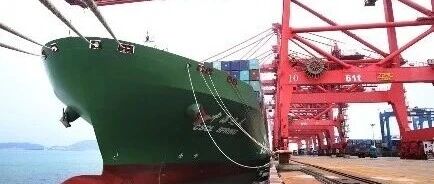
中远海运暂停多个航线新订舱业务 上市公司集体回应对业务影响
Ge Long Hui· 2026-03-05 13:15
Core Viewpoint - The shipping sector in A-shares has experienced significant volatility due to the ongoing conflict in the Middle East, leading to operational adjustments and market reactions among various shipping companies [1][5]. Group 1: Impact on Shipping Companies - China Ocean Shipping Group (COSCO) announced the suspension of new bookings for several routes to the UAE, Qatar, Bahrain, Iraq, Saudi Arabia, and Kuwait due to restrictions in the Strait of Hormuz [1][2]. - COSCO's fleet capacity is 135 million deadweight tons across 1,660 vessels, ranking first globally, with operations covering over 1,500 ports in more than 160 countries [2]. - Other companies like China Merchants Energy Shipping and China Merchants Jinling Shipyard reported normal operations but acknowledged potential impacts from the conflict, particularly in energy transportation [2][3]. Group 2: Market Reactions and Price Fluctuations - The shipping index saw a sharp decline of 2.77% on March 5, following a brief rebound earlier in the day, reflecting market uncertainty [1]. - The shipping sector experienced rapid fluctuations, with the container shipping index (European line) hitting a ceiling for two consecutive days before a significant drop on March 4 [5][6]. - Analysts noted that the geopolitical situation has led to increased freight rates, with the VLCC (Very Large Crude Carrier) market showing strong demand and rising prices due to supply constraints [6][7]. Group 3: Strategic Responses and Future Outlook - Companies are adopting flexible pricing strategies and focusing on high-potential markets to enhance resilience against market volatility [4]. - The ongoing conflict is expected to elevate global shipping prices in the short term, with potential long-term impacts on supply chains if the situation persists [6][7]. - Analysts suggest that the current high freight rates may continue, but the influx of new VLCC orders could create pressure on valuations starting in late 2026 [7].






中远海运暂停多个航线新订舱业务,上市公司集体回应对业务影响
Di Yi Cai Jing· 2026-03-05 12:28
Core Viewpoint - The shipping sector in A-shares has experienced significant volatility due to the ongoing conflict in the Middle East, prompting institutions to advise investors to differentiate between "emotional speculation" and "fundamental logic" [1][6]. Group 1: Impact of Middle East Conflict - The conflict has led to substantial disruptions in shipping routes, with China COSCO Shipping Group announcing the suspension of new bookings for several routes to the UAE, Qatar, Bahrain, Iraq, Saudi Arabia, and Kuwait due to restrictions in the Strait of Hormuz [1][3]. - A senior industry insider indicated that all routes to the Middle East are currently suspended, with some vessels already turning back [2]. - The oil prices and war surcharges have increased, and the pricing model has shifted to "negotiated per customer" [2]. Group 2: Company Responses - China COSCO Shipping reported that its fleet has a total capacity of 135 million deadweight tons across 1,660 vessels, ranking first globally, and that its operations remain normal despite the conflict [3]. - China COSCO Shipping Energy stated that the blockade in the Strait of Hormuz has significantly impacted global energy transport, but its operations are currently unaffected [3]. - China COSCO Shipping Specialized Carriers mentioned that the impact on revenue from the route adjustments is expected to be limited, as the Middle East shipping volume constitutes a small portion of its business [3]. - Other companies like Zhenhua Logistics and Shenghang Co. have also reported that their operations remain stable, with limited direct impact from the conflict [5]. Group 3: Market Reactions and Predictions - The shipping sector has seen dramatic fluctuations, with the shipping index experiencing multiple reversals within a short period [6]. - Analysts from CITIC Futures noted that the recent surge in the shipping index was driven by the conflict, but the risk transmission path remains unclear due to differences in shipping routes [7]. - Huatai Securities highlighted that geopolitical events have led to a tightening of compliant market capacity, significantly driving up shipping rates [7]. - ICBC Credit Suisse Fund indicated that the VLCC market is experiencing unexpected demand due to the geopolitical situation, which may further elevate freight rates in the short term [8].
集运早报-20260305
Yong An Qi Huo· 2026-03-05 03:04
1. Report Industry Investment Rating - Not provided in the content 2. Core View of the Report - Recently, due to geopolitical escalation, shipping companies' price - hikes, and the amplification of sentiment by capital behavior, the market has strengthened significantly. However, the oversupply situation in the European line remains unchanged. Booking in week 11 is still poor, and the shipping capacity in weeks 12 - 13 is high. The short - term transmission effect of the Middle East route on the European line is not strong. As next week enters the actual booking stage, it is expected that the price increases announced by shipping companies will be difficult to materialize. Currently, the market valuation is high, and it is recommended to continuously monitor the spot situation and seek short - selling opportunities on rallies [3][20] 3. Summary According to Relevant Catalogs 3.1 Futures Contract Information - For contract EC2604, the previous closing price was 1644.8, with a change of 15.09%, a basis of - 181.4, a previous trading volume of 17836, and a previous open interest of 44074 with a change of - 2169. Similar data for other contracts such as EC2605, EC2606 etc. are also presented [2][19] - The month - spreads like EC2604 - 2606, EC2604 - 2605, and EC2606 - 2610 have their respective previous - day, current, and previous - period values, along with day - on - day and week - on - week changes [2][19] 3.2 Spot Market Information - For the European line spot market, the "ટરનાર" index on 2026/3/2 was 1463.40 points, down 7.00% from the previous period and down 2.10% from the period before. The SCFI index on 2026/2/27 was 1420 dollars/TEU [2][19] - In terms of price announcements: in early March, MSC first announced a price increase of 3000 dollars, and most other shipping companies followed suit to 3000 - 3100 dollars. In week 10, the average was 2200 dollars, equivalent to about 1560 points. In week 11, MSK opened at 1850 dollars (down 100 dollars from the previous week). For the second half of March announcements, MSC announced a price increase to 3200 dollars for weeks 12 - 13 on March 1st, and to 4000 dollars for week 12 on March 2nd. On March 3rd, HPI and CMA's online quotes were raised to 4193 and 3135 dollars respectively [4][21] 3.3 Related News - On 3/3, the Shanghai International Energy Exchange adjusted the trading limit for non - futures company members, overseas special non - brokerage participants, and clients in the listed futures contracts of the container shipping index (European line). The maximum number of intraday opening positions for the listed contracts is 50 lots. Other news includes potential leadership changes in Iran, the situation in the Strait of Hormuz, and the US providing insurance and potential naval escort for crude oil shipping [5][22]
地缘冲突推升航运风险溢价,产业链各方处境分化
第一财经· 2026-03-04 02:20
Core Viewpoint - The ongoing geopolitical conflicts in the Middle East, particularly around the Strait of Hormuz, have led to increased risks in key shipping routes, resulting in a significant rise in the container shipping index (European route) and a strong performance in the A-share shipping sector [3][5]. Group 1: Shipping Index and Market Reactions - The European container shipping index futures saw a consecutive two-day limit rise, with an 18% increase, closing at 1644.8 points on March 3 [5][6]. - Major A-share shipping stocks, including China Merchants Energy Shipping (601872.SH) and others, experienced notable gains, with some hitting the daily limit [3][5]. - Analysts attribute the surge primarily to geopolitical risk sentiment, alongside expectations of price increases from shipping companies and rising rerouting costs, although the current period is traditionally a low season for shipping [3][6]. Group 2: Market Dynamics and Challenges - The shipping industry is facing high uncertainty and strategic divergence among participants, with shipping companies showing significant differences in their actions and strategies [3][9]. - Trade merchants are experiencing dual challenges of compliance difficulties and rising cost pressures, disrupting their procurement and shipping schedules [3][12]. - The market is characterized by a "strong sentiment, high volatility, weak reality" dynamic, with short-term price movements driven more by emotions than by fundamental support [7][9]. Group 3: Structural Impacts and Long-term Outlook - The Middle East conflict has created structural differences in the impact on global shipping, with the most severe effects felt on routes passing through the Strait of Hormuz [9][10]. - The conflict is expected to lead to a long-term increase in operational costs for shipping companies, affecting the supply-demand balance and potentially leading to higher freight rates [9][10]. - There is a general expectation that the conflict will not resolve quickly, which may lead to a sustained high-risk environment for shipping operations [7][9]. Group 4: Strategies for Market Participants - Market participants are advised to adopt risk management strategies, including using financial instruments like futures to hedge against price volatility [14][17]. - Companies should monitor the security situation in the Middle East and adjust shipping schedules accordingly, while also diversifying trade and energy import sources [17][18]. - The crisis may accelerate the diversification of supply chains and highlight the vulnerabilities of global shipping logistics in the face of geopolitical conflicts [17][18].


EC合约规则调整解读
Zhong Xin Qi Huo· 2026-03-03 08:00
1. Report Industry Investment Rating There is no information about the report industry investment rating in the provided content. 2. Core Viewpoint of the Report The Shanghai International Energy Exchange released a notice on the implementation of the revised Containerized Freight Index (Europe Service) Futures Contract. The main revisions include changes to the contract months and the minimum price fluctuation [2][4]. 3. Summary According to the Table of Contents 3.1 Circular on the Implementation of the Revised Containerized Freight Index (Europe Service) Futures Contract - **Implementation of the Revision to the Listed Contracts**: As of February 10, 2026, EC2605, EC2607, and EC2609 were newly listed. Considering the switch of the most active contract, EC2603 was not listed. EC2703 will be listed on March 31, 2026. New contracts will be listed according to the contract specification in subsequent months [10][18][20]. - **Implementation of the Revision to the Minimum Price Fluctuation**: As of May 11, 2026, the minimum price fluctuation will be revised. The settlement on May 8, 2026, will be executed according to the previous rules, and the settlement prices on May 8 will serve as the previous settlement prices for May 11. On May 11, the real - time market data will be released after adjusting the market data, previous settlement, and closing prices according to the revised provision. The adjusted previous settlement prices will be applied to the daily price limit and margin calculation [11][12][19]. 3.2 Comparison and Interpretation of the Revisions to the Containerized Freight Index (Europe Service) Futures Contract - **Contract Comparison**: The main changes in the contract are the contract months and the minimum price fluctuation. The contract months change from February, April, June, August, October, and December to monthly contracts of the most recent six consecutive months among January, March, April, May, June, July, August, September, October, November, and December, followed by two quarterly contracts. The minimum price fluctuation changes from 0.1 index points to 0.5 index points [13][15][22]. - **Typical Structure of Contract Months**: Each column in the table represents the month. From March to August, the number of listed contracts is 8 because the 07 and 08 contracts are added in March. From September to February, the number of listed contracts is 7 as the 08 contract is delisted with no new contracts added. Quarter - month contracts have a lifecycle of 12 months, while non - quarter - month contracts have a lifecycle of 6 months [17][19][23].
航运及碳排放日报-20260303
Yin He Qi Huo· 2026-03-03 07:50
Group 1: Investment Rating - There is no information about the industry investment rating in the report. Group 2: Core Views - The conflict in the Middle East has affected the passage of the Strait of Hormuz and the Red Sea. If the conflict persists, it may impact the supply - demand pattern of the Middle East and Europe - Mediterranean routes and drive up spot freight rates. In the container shipping market, short - term trading can adopt a long - on - dips strategy, and arbitrage should be on the sidelines [9][11][12]. - In the dry bulk shipping market, the small and medium - sized ship market is active, and the spot freight rate is expected to continue to rise. However, the upward movement of the Capesize ship type may be restricted. The geopolitical situation in the Middle East may disrupt regional trade and increase operating costs [23]. - In the carbon emission market, the domestic carbon market is dominated by sporadic large - scale transactions with limited activity. In the short term, carbon prices may be supported, but the increase may be limited. In the long term, the carbon price center in 2026 is expected to be higher than in 2025. The EU carbon market is in a structurally tight pattern, but the carbon price is in a low - level shock due to policy uncertainty [36][39]. Group 3: Summary by Directory Container Shipping - **Futures Market**: On March 2, 2026, the closing prices of EC2604, EC2605, EC2606, EC2608, EC2610, and EC2612 all rose significantly, with increases of 16.73%, 16.53%, 15.68%, 15.42%, 15.67%, and 15.33% respectively. The trading volume and open interest of each contract also increased [5]. - **Container Freight Rates**: SCFIS European line index was 1463.40, down 7.00% week - on - week and 7.43% year - on - year. SCFI comprehensive index was 1333.11, up 6.52% week - on - week and down 24.20% year - on - year. Different routes showed different trends [5]. - **Fuel Costs**: WTI crude oil near - month price was $67.06 per barrel, up 2.63% week - on - week and down 4.01% year - on - year. Brent crude oil near - month price was $73.21 per barrel, up 3.42% week - on - week and down 0.3% year - on - year [5]. - **Market Analysis and Strategy**: Affected by the Middle East conflict, some shipping companies have suspended bookings on Middle East routes and raised freight rates. The European line is in the traditional off - season from March to April, but if the conflict persists, it may drive up spot freight rates. The trading strategy is to go long on dips in the short term and wait and see for arbitrage [9][11][12]. Dry Bulk Shipping - **Dry Bulk Freight Index**: On February 27, 2026, BDI index was 2149 points, up 1.09% week - on - week; BCI index was 3056 points, up 0.16% week - on - week; BPI index was 1942 points, up 1.36% week - on - week; BSI index was 1338 points, up 3.0% week - on - week [22]. - **Dry Bulk Freight Rates**: On February 27, 2026, the BCI - C3 (Tubarao - Qingdao) route was quoted at $23.45 per ton; the BCI - C5 (West Australia - Qingdao) route was quoted at $10.239 per ton [22]. - **Market Analysis and Outlook**: The small and medium - sized ship market is active, and the spot freight rate is expected to continue to rise. The Capesize ship type may be restricted by inventory. The geopolitical situation in the Middle East may disrupt regional trade and increase operating costs [23]. - **Industry News**: The Islamic Revolutionary Guard Corps of Iran banned ships from passing through the Strait of Hormuz. The North Standard P&I Club issued a safety warning for the Porto Sudeste in Brazil. The throughput of Pilbara Ports in January reached a record high. CMB.TECH locked in multiple long - term charters. The US and Guinea reached a key minerals agreement [25][28][29]. Carbon Emission Market - **China Carbon Emission Market**: On March 2, 2026, the opening and closing prices of CEA were 80.5 yuan per ton, with no change from the previous day. There was no trading in the listing agreement, 200,000 tons were traded in the bulk agreement, and the turnover was 16.2 million yuan. CCER had no transactions [35]. - **EU Carbon Emission Market**: On February 27, 2026, the EUA auction price was 68.37 euros per ton, and the auction volume was 2.7125 million tons. In the futures market, the settlement price of the ICE continuous contract was 69.02 euros, down 0.98% from the previous trading day, and 711 lots were traded [35]. - **Market Analysis and Outlook**: The domestic carbon market has limited activity. In the short term, carbon prices may be supported, but the increase may be limited. In the long term, the carbon price center in 2026 is expected to be higher than in 2025. The EU carbon market is in a structurally tight pattern, but the carbon price is in a low - level shock due to policy uncertainty [36][39]. - **Industry News**: China's offshore oilfield achieved large - scale drone operations, saving costs and reducing carbon emissions. Shanghai launched a carbon trust. Qinghai issued a policy to promote the development of concentrated solar power. The price of European natural gas futures soared due to the Middle East conflict. The new construction projects of downstream construction enterprises decreased [39][40][44].
银河期货航运日报-20260211
Yin He Qi Huo· 2026-02-11 09:55
1. Report's Industry Investment Rating - No relevant content provided 2. Core Viewpoints of the Report - MSK's price quotes for the first week of March remain mostly the same, weakening the price - increase expectation, and the EC futures market is expected to continue to fluctuate weakly. Given the off - season in April and ongoing geopolitical risks during the Spring Festival, it is recommended to stay on the sidelines for unilateral trading and conduct rolling operations on the 6 - 10 calendar spread [6][8]. 3. Summary by Relevant Catalogs 3.1 Container Shipping - Container Freight Index (European Line) 3.1.1 Futures Market - The closing prices, price changes, price change rates, trading volumes, trading volume change rates, open interests, and open interest change rates of different EC futures contracts are presented. For example, EC2604 closed at 1,177.9 points, down 0.09% from the previous day, with a trading volume of 17,204.0 lots (down 41.80%) and an open interest of 33,027.0 lots (down 2.57%) [3]. - The price differences and their changes between different futures contracts are also provided. For instance, the price difference between EC04 and EC06 is - 323, down 2.3 [3]. 3.1.2 Container Freight Rates - Weekly container freight rates and their week - on - week and year - on - year changes are given. The SCFIS European Line index is 1657.94 points, down 7.49% week - on - week and 29.54% year - on - year. SCFI: Shanghai - Europe is 1403 USD/TEU, down 1.06% week - on - week and 34.65% year - on - year [3]. 3.1.3 Fuel Costs - The prices, week - on - week, and year - on - year changes of WTI and Brent crude oil near - month contracts are provided. WTI crude oil near - month contract is at 64.07 dollars per barrel, down 0.48% week - on - week and 10.78% year - on - year; Brent crude oil near - month contract is at 68.41 dollars per barrel, down 0.13% week - on - week and 9.2% year - on - year [3]. 3.2 Market Analysis and Strategy Recommendations 3.2.1 Market Analysis - Spot freight rates are weak, with the price - increase expectation weakening. MSK's WK10 Shanghai - Rotterdam quote is 2000 USD/40HC, the same as last week. From a fundamental perspective, demand is peaking and then declining, and the overall shipping capacity deployment has little change compared to the previous period. Geopolitical situations are volatile, and it is still difficult for a large - scale resumption of European - line shipping in the first half of the year [6][7]. 3.2.2 Strategy Recommendations - Unilateral trading: Given that Maersk's freight rates in March are mostly unchanged and it is the off - season in April, the market is expected to fluctuate. Due to ongoing geopolitical risks during the Spring Festival, it is recommended to stay on the sidelines [8]. - Arbitrage: Conduct rolling operations on the 6 - 10 calendar spread [9]. 3.3 Industry News - Local time on the 10th, US President Trump stated that "Iran will not have nuclear weapons or missiles." Iranian officials said that if the US - Iran nuclear talks are successful, the dialogue may expand to other areas. Trump said that if the talks fail, he might send another aircraft carrier strike group to the Middle East [10][11]. 3.4 Related Attachments - Multiple charts are presented, including the SCFIS European Line index and the SCFIS US West Line index, the SCFI comprehensive index, and container freight rates for different routes such as Shanghai - US West, Shanghai - US East, and Shanghai - Europe. There are also charts showing the basis of EC04 and EC06 contracts [13][15][20].
银河期货航运日报-20260210
Yin He Qi Huo· 2026-02-10 09:30
Group 1: Report Industry Investment Rating - No relevant content found Group 2: Core Viewpoints of the Report - The EC near - month contract's price declined due to the unchanged MSK WK10 Shanghai - Rotterdam quote and the loosening of the March price increase expectation. The market is expected to be volatile before the Spring Festival, and it is recommended to wait and see. The 6 - 10 positive spread should be rolled for arbitrage [5][7][8] Group 3: Summary by Directory 1. Futures Market - **Futures Contracts**: On February 10, 2026, the closing prices of EC2604, EC2605, EC2606, EC2608, EC2610, and EC2612 were 1,179.0, 1,273.0, 1,499.8, 1,576.3, 1,110.9, and 1,380.0 respectively. The price changes were - 59.0, 0, - 53.2, - 38.5, - 15.2, and - 45.5, with price change rates of - 4.77%, N/A, - 3.43%, - 2.38%, - 1.35%, and - 3.19%. The trading volumes were 29,560.0, 271.0, 4,155.0, 340.0, 1,093, and 38, with volume change rates of 105.51%, N/A, 88.35%, 26.39%, 77.72%, and 442.86%. The open interests were 33,899.0, 228.0, 14,740.0, 1,416.0, 8,071, and 127, with change rates of 8.89%, N/A, 0.10%, 0.14%, 2.26%, and - 7.97% [3] - **Month - spread Structure**: The spreads and their changes between different contracts are presented, such as EC04 - EC06 with a spread of - 321 and a change of - 5.8 [3] 2. Container Freight Rates - **Weekly Container Freight Rates**: SCFIS European line index was 1657.94, with a week - on - week change of - 7.49% and a year - on - year change of - 29.54%. SCFIS US West line index was 1155.66, with a week - on - week change of 4.93% and a year - on - year change of - 48.57%. Other routes' freight rates and their changes are also provided [3] 3. Fuel Costs - **Crude Oil Prices**: The price of WTI crude oil near - month contract was $64.38 per barrel, with a week - on - week change of 1.74% and a year - on - year change of - 9.84%. The price of Brent crude oil near - month contract was $68.5 per barrel, with a week - on - week change of 1.57% and a year - on - year change of - 8.7% [3] 4. Market Analysis and Strategy Recommendations - **Analysis**: MSK's WK10 Shanghai - Rotterdam quote remained unchanged, and the March price increase expectation was loose. The demand is entering a downward phase after reaching the peak, and the supply capacity deployment has little change compared with the previous period. The traditional off - season for freight rates is from February to April, and the expected rush of shipments is less than expected. The geopolitical situation is unstable, and it is difficult for large - scale resumption of European routes in the first half of the year [5][6] - **Trading Strategies**: For single - side trading, it is recommended to wait and see before the Spring Festival. For arbitrage, a rolling operation of 6 - 10 positive spread is recommended [7][8] 5. Industry News - The US Maritime Administration advised US ships to stay away from Iranian waters. White House officials stated that US President Trump did not support Israel's annexation of the West Bank [10] 6. Related Attachments - There are multiple figures, including the SCFIS European line index and US West line index, SCFI comprehensive index, and container freight rates of different routes [11][16][24]
银河期货航运日报-20260209
Yin He Qi Huo· 2026-02-09 12:08
1. Report Industry Investment Rating - No relevant content found 2. Core Viewpoints of the Report - The market is continuously gaming the implementation of price increases and the situation of geopolitical conflicts. The EC market as a whole maintains a volatile trend. MSK has announced the suspension of the Peak Season Surcharge (PSS) on the Nordic routes. Attention should be paid to the post - holiday spot freight rates [6]. - The freight volume is gradually entering the decline phase after reaching the peak. The supply - side shipping capacity deployment has little change compared with the previous period. The shipping capacity in the first week of March after the Spring Festival is relatively small, and then rebounds with the resumption of work and production. From a traditional seasonal perspective, freight rates are in the off - season from February to April. After the policy of canceling export tax rebates for most commodities starting from April 1st, the expected rush of shipments is less than expected. Geopolitical situations are volatile, and it is still difficult for a large number of ships on the European routes to resume operation in the first half of the year. The risk in the Iranian situation has not been eliminated. Attention should be paid to the US - Iran negotiations and the military deployment in the Middle East [7]. - For trading strategies, for unilateral trading, it is recommended to wait and see before the Spring Festival as the market is expected to fluctuate at a high level. For arbitrage, positive spreads between June and October contracts should be rolled at low levels [8][9]. 3. Summary by Directory 3.1 Container Shipping - Container Freight Index (European Line) 3.1.1 Futures Disk - Different futures contracts (EC2602, EC2604, etc.) have different closing prices, price changes, price change rates, trading volumes, trading volume change rates, open interest, and open interest change rates. For example, EC2602 closed at 1,756.0, up 16.1 (0.93%), with a trading volume of 124.0 (down 44.39%) and an open interest of 1,437.0 (up 0.56%) [4]. - The price differences between different contracts (such as EC02 - EC04, EC02 - EC06, etc.) and their price changes are also presented. For example, the price difference between EC02 and EC04 is 518, up 9.3 [4]. 3.1.2 Container Freight Rates - Different container freight rates (such as SCFIS European Line, SCFIS US West Line, etc.) have different prices, week - on - week and year - on - year changes. For example, the SCFIS European Line is at 1657.94 points, down 7.49% week - on - week and 29.54% year - on - year [4]. 3.1.3 Fuel Costs - WTI crude oil near - month price is $63.28 per barrel, up 0.80% week - on - week and down 10.29% year - on - year. Brent crude oil near - month price is $67.44 per barrel, up 0.84% week - on - week and down 9.3% year - on - year [4]. 3.2 Market Analysis and Strategy Recommendations 3.2.1 Market Analysis - The market is in a state of continuous gaming. The EC market shows a volatile trend. MSK's decision to stop collecting PSS on the Nordic routes and the post - holiday spot freight rates need to be monitored. The demand for goods is in a downward phase after reaching the peak, and the supply - side shipping capacity deployment has little change. Geopolitical factors also have an impact on the shipping market [6][7]. 3.2.2 Trading Strategies - Unilateral trading: It is recommended to wait and see before the Spring Festival as the market is expected to fluctuate at a high level due to factors such as the vacuum period of spot freight rates before the festival and geopolitical risks [8]. - Arbitrage: Positive spreads between June and October contracts should be rolled at low levels [9]. 3.3 Industry News - The US has imposed tariffs on countries trading with Iran and sanctioned 15 entities, 2 individuals, and 14 ships related to Iranian oil and petrochemical products [11]. - Spain hopes to further develop its relationship with China, and the Spanish Prime Minister plans to visit China this year [12]. - Israeli Prime Minister Netanyahu will meet with US President Trump to discuss US - Iran negotiations, and the Iranian Foreign Minister has threatened US military bases in the region [13].