
轴承钢

Search documents
机器人需要的金属材料:一场静默的“金属革命”
Xin Lang Cai Jing· 2026-02-26 03:32
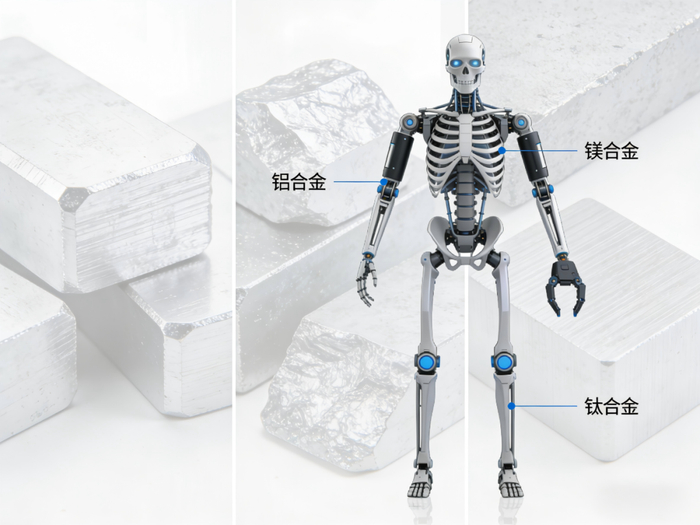
Group 1 - The core viewpoint of the article highlights a significant shift in metal demand driven by the rise of the robotics industry, which is reshaping the demand curve for various base metals [2] - The demand for lightweight metals such as aluminum, magnesium, and titanium is increasing due to the need for robots to be agile and precise, with aluminum alloy consumption exceeding 500,000 tons annually and growing at over 15% per year [2][4] - Magnesium alloys are emerging as a replacement for aluminum in applications requiring extreme lightweight properties, although they face challenges in corrosion resistance and processing difficulty [3] Group 2 - Neodymium-iron-boron magnets are essential for the robotics industry, with each industrial robot consuming 5-10 kg and humanoid robots consuming 2-3 kg, leading to an estimated demand increase of 100,000 tons by 2030 [5] - The production of neodymium-iron-boron requires significant amounts of rare earth metals, indicating that the robotics industry will drive a substantial increase in demand for rare earth oxides [5][6] - The addition of heavy rare earth elements like dysprosium and terbium is necessary to enhance the thermal stability of magnets used in high-performance robots, making dysprosium a critical and scarce resource [6] Group 3 - Copper is crucial for the internal wiring of robots, with industrial robots averaging 15-25 kg of copper and humanoid robots potentially exceeding 50 kg, necessitating high-performance copper alloys to meet durability requirements [8][9] - The market for high-strength, high-conductivity copper alloys is growing at a rate of 20% per year, posing challenges for upstream copper producers in terms of alloying and precision processing capabilities [9] - Silver is indispensable for electrical connections in robots, with an average consumption of 50-80 grams per industrial robot, leading to a significant increase in silver demand across the industry [10] Group 4 - The demand for precision transmission components in robots requires high-purity bearing steel and high-temperature alloys, with only a few companies capable of producing the necessary quality [12][13] - The rise of the robotics industry necessitates a shift in mining strategies, focusing on niche metals like dysprosium and terbium, which are becoming increasingly valuable due to their strategic importance [14][15] - The purity requirements for metals used in robotics are significantly higher than traditional industrial standards, demanding advanced purification technologies from upstream producers [15] Group 5 - The collaboration between upstream mining and downstream manufacturing is becoming critical, as high-end materials require precise management of raw materials during extraction [16] - The emergence of humanoid robots in factories and homes signals a new productivity revolution, with the raw materials for this revolution lying in previously overlooked mineral deposits [18] - Companies that can identify trends in metal demand and enhance their processing capabilities are positioned to benefit significantly from the anticipated "robotic dividend" over the next decade [18]


南钢股份:公司持续拓展海外重点高端客户,扩大高附加值产品出口
Zheng Quan Ri Bao Wang· 2026-01-30 10:40
Core Viewpoint - The company emphasizes internationalization as a key strategy, focusing on expanding exports of high-value-added products to overseas markets [1] Group 1: International Strategy - The company is actively expanding its overseas customer base, particularly targeting high-end clients [1] - The company utilizes overseas marketing platforms to sell directly to customers or traders in the European Union [1] Group 2: Product Focus - The products being exported include steel for wind power, bearing steel, and automotive steel [1]

华菱钢铁:公司长期坚持差异化发展和品种结构高端化战略
Zheng Quan Ri Bao Wang· 2026-01-13 12:45
Core Viewpoint - The company, Hualing Steel, is committed to a differentiated development strategy and high-end product structure, aiming to launch six products that are either "domestically first" or "import substitutes" by the first half of 2025 [1] Group 1 - The company has developed a series of high value-added products, including bearing steel, cold heading steel, spring flat steel, gear steel, and radial tires, to strengthen and expand its competitive advantage in the special steel sector [1]

马钢股份:2025年公司特钢产品结构持续优化
Zheng Quan Ri Bao· 2025-12-25 13:19
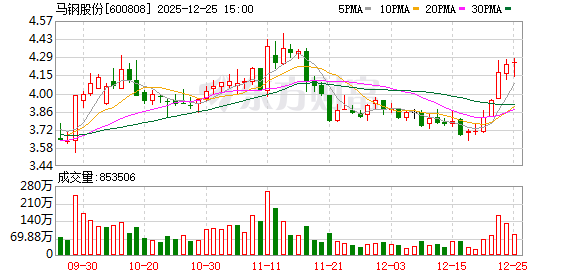
Core Viewpoint - Maanshan Iron & Steel Co., Ltd. (Ma Steel) is focusing on strengthening its special steel business by implementing a product management strategy, full-process cost control, and differentiated competition, leading to improved operational results in its special steel segment [2] Group 1: Business Strategy - The company is committed to the overall strategy of "focusing on strengthening special steel" and has adjusted its product structure accordingly [2] - In 2023, Ma Steel developed 139 new special steel products and achieved certification for 23 of them [2] Group 2: Operational Improvements - The company has implemented measures such as scale enhancement, product structure adjustment, and full-process cost reduction, which have led to a turnaround from continuous losses since the launch of new special steel products [2] - By 2025, the company plans to optimize its special steel product structure, increasing production of high-end wind power gear steel from 99,000 tons per year to 136,000 tons per year, and P92 series steel for ultra-supercritical boiler pipes from 17,300 tons per year to 22,600 tons per year [2] Group 3: Collaboration and Strategic Goals - Ma Steel is collaborating with Baosteel on manufacturing processes and quality for special steel products such as bearing steel, cold heading steel, and spring steel [2] - The company aims to continue advancing its "2345" operational strategy to establish itself as a core player in Baowu's strategic product lineup, focusing on specialization and quality in special steel products to enhance market competitiveness and industry influence [2]

轴承钢遭欧美“卡脖子”?国内卖价超过国外,突破后却被日企盗用
Sou Hu Cai Jing· 2025-12-17 13:14
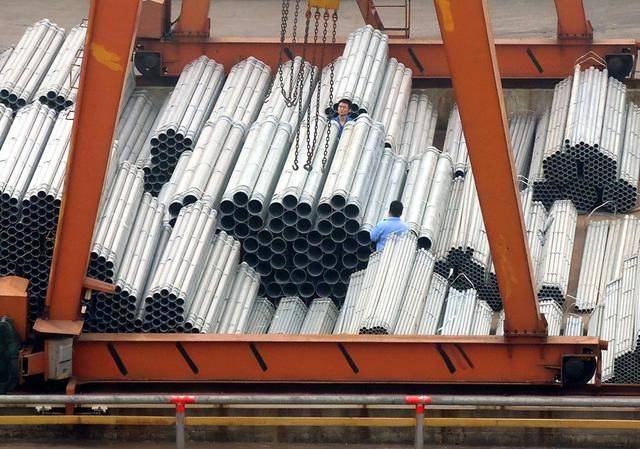
Core Viewpoint - The rise of domestic high-end bearing steel in China contradicts the traditional perception that Chinese exports rely on low prices, as domestic prices are 10%-15% higher than export prices [1][4]. Group 1: Market Dynamics - High-end equipment companies like CRRC and Goldwind are willing to pay a premium for domestic bearing steel, leading to increased procurement volumes [4]. - Chinese bearing steel exports reached $6.581 billion in 2023, with imports at $3.838 billion, resulting in a historic surplus of $2.743 billion [29]. - In 2022, China's bearing steel production was 3.9727 million tons, accounting for over 45% of global production, solidifying its position as the world's largest producer [31]. Group 2: Technological Advancements - The development of bearing steel in China involved overcoming significant manufacturing challenges, including strict control of carbon and oxygen content [5][9]. - A unique steelmaking system was developed by incorporating rare earth elements, significantly enhancing fatigue resistance, with fatigue life reaching 2.5 times that of European counterparts [15]. - China has established itself as a leader in high-end manufacturing, with domestic products meeting or exceeding international standards [41][43]. Group 3: Competitive Landscape - Japanese and German bearing giants have begun sourcing Chinese bearing steel, indicating a shift in market dynamics and trust in quality [4][31]. - The exposure of a scandal involving Japanese companies rebranding Chinese bearing steel as "Japanese-made" highlights the quality and competitiveness of Chinese products [17][22]. - Following the scandal, orders for Japanese companies dropped by 40%, contrasting with the growing demand for Chinese bearing steel [39]. Group 4: Strategic Initiatives - The Chinese government has implemented export controls on key technologies, including rare earth bearing steel production, to safeguard core technologies and support domestic industry upgrades [41]. - China has taken the lead in setting international standards for ultra-pure steel, breaking the long-standing monopoly of Western countries in standard-setting [43]. - Continuous investment in research and development has enabled China to transition from being dependent on foreign technology to becoming a global supplier and competitor in the bearing steel market [45][47].
大冶特钢主导制定国家标准 填补高温用钢领域国标空白
Zhong Guo Zhi Liang Xin Wen Wang· 2025-12-17 07:48
Core Viewpoint - Daye Special Steel Co., Ltd. has been awarded the "Boutique Standard" in Huangshi for its national standard GB/T 44148.2—2024, marking a significant achievement in the company's standardization efforts and reflecting the local government's support for high-quality development in manufacturing [1][2]. Group 1: Company Overview - Daye Special Steel, a subsidiary of CITIC Pacific Special Steel Group, is recognized as a national high-tech enterprise and one of the first demonstration enterprises for the integration of informatization and industrialization, as well as green manufacturing [1]. - The company has an annual production capacity of 3.5 million tons of special steel, serving critical sectors such as aerospace and bearing steel, contributing to major national projects like the Shenzhou spacecraft and Chang'e lunar exploration missions [1]. Group 2: Standardization Efforts - The GB/T 44148.2—2024 standard is a significant outcome of Daye Special Steel's efforts to convert the international standard ISO 9327-2:1999, addressing the high-temperature performance of low-alloy and alloy steels [2]. - This standard introduces 17 new commonly used grades while eliminating outdated ones, achieving a technical level that meets international standards and filling a gap in China's national standards for high-temperature steel [2]. Group 3: Government Support and Recognition - Huangshi's market regulatory authority has implemented the "Huangshi Boutique Standard" evaluation system, which focuses on rewarding high-standard projects that demonstrate advanced technology and significant influence, rather than providing blanket support for all standard revisions [2]. - Since 2019, the Huangshi market regulatory authority has awarded Daye Special Steel a total of 1.1 million yuan in support for its various standardization efforts, enhancing the company's influence in the industry [2].

【辉煌“十四五”】我国特钢行业“十四五”成就一览
Xin Lang Cai Jing· 2025-12-12 14:14
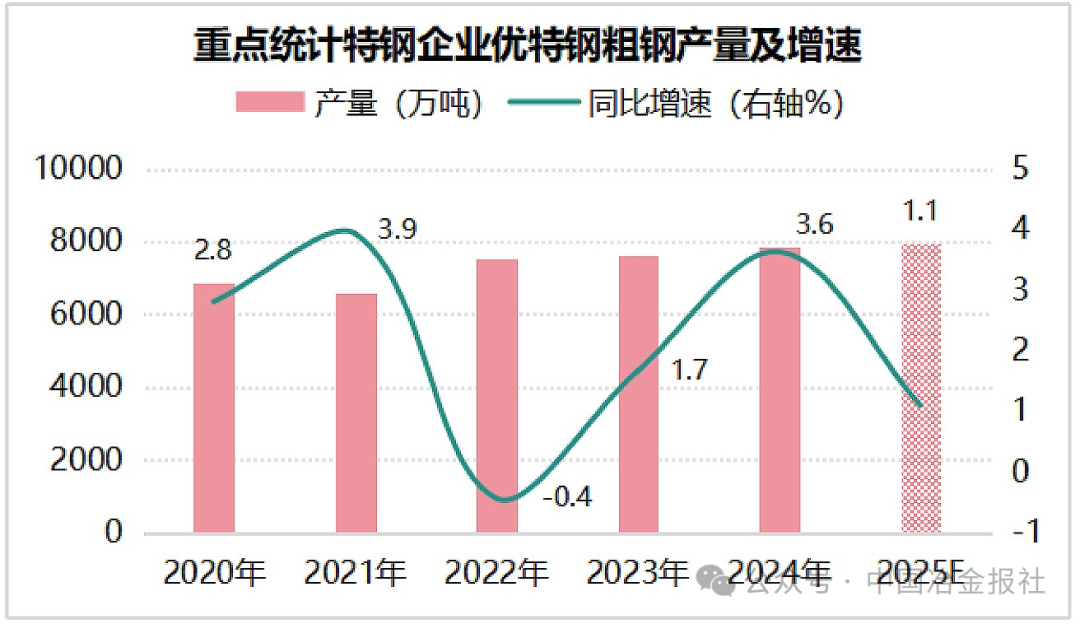
Core Viewpoint - The Chinese special steel industry is experiencing steady growth in production and significant advancements in technology and sustainability, with a focus on high-value products and international competitiveness [1][3][21]. Production Growth - In 2024, the crude steel production of special steel by key member enterprises of the China Special Steel Enterprises Association (CSESA) is projected to reach 78.69 million tons, a 19.3% increase from 2021 and a 14.5% increase from the end of the 13th Five-Year Plan. The forecast for 2025 is 79.74 million tons, representing a 20.9% increase from 2021 and a 16.0% increase from the end of the 13th Five-Year Plan [1][49]. - The production of bearing steel in 2024 is expected to be 4.97 million tons, a 12.2% increase from 2021 and a 25.2% increase from the end of the 13th Five-Year Plan. The 2025 forecast is 4.88 million tons, a 10.2% increase from 2021 and a 22.9% increase from the end of the 13th Five-Year Plan [3][51]. - Gear steel production is projected to reach 5.02 million tons in 2024, a 39.1% increase from 2021 and a 35.7% increase from the end of the 13th Five-Year Plan, with a forecast of 5.60 million tons in 2025, a 55.1% increase from 2021 and a 51.4% increase from the end of the 13th Five-Year Plan [5][53]. - Tool steel production is expected to be 850,000 tons in 2024, a 44.1% increase from 2021 and a 2.4% increase from the end of the 13th Five-Year Plan, with a forecast of 870,000 tons in 2025, a 47.5% increase from 2021 and a 4.8% increase from the end of the 13th Five-Year Plan [7][55]. R&D Investment - R&D expenses for 2024 are projected to be 22.6 billion yuan, a 29.9% increase from 2021 and a 61.4% increase from the end of the 13th Five-Year Plan. The forecast for 2025 is 21.1 billion yuan, a 21.3% increase from 2021 and a 50.7% increase from the end of the 13th Five-Year Plan [9][57]. - The R&D investment intensity is expected to be 3.3% in 2024, an increase of 1 percentage point from 2021 and 2.2 percentage points from the end of the 13th Five-Year Plan, with the same level expected to be maintained in 2025 [11][59]. Industry Consolidation - Since the 14th Five-Year Plan, the special steel industry has seen steady progress in mergers and acquisitions, leading to a dual structure of "super-large groups" and "specialized leaders" [13][61]. - Numerous specialized production enterprises have emerged, forming industrial clusters that cover various specialized production lines, creating a comprehensive structure and advanced production processes [15][63]. Breakthroughs in Key Materials - Significant breakthroughs have been achieved in key material fields during the 14th Five-Year Plan, supporting developments in infrastructure, wind power equipment, aerospace, and marine engineering [15][64]. Green and Low-Carbon Development - The special steel industry has made substantial progress in green and low-carbon development through process reforms, energy-saving technologies, and intelligent upgrades, with 70% of member units completing or partially completing ultra-low emission transformations by February 2025 [21][69]. - Various companies have implemented innovative technologies to reduce emissions and energy consumption, such as low-carbon heating furnaces and intelligent combustion technologies [22][70]. Intelligent Manufacturing - The industry has undergone a profound transformation towards intelligent manufacturing, significantly improving production efficiency and product quality [27][75]. - Companies like Xingcheng Special Steel have been recognized as "lighthouse factories" for their advanced use of AI and digital twin technologies [27][75]. Diversified Overseas Development - The industry has shifted from simple product exports to a collaborative approach involving products, technology, brand, and capital, enhancing resilience in a complex global environment [29][77]. - Special steel enterprises are actively planning overseas production bases and local service enhancements to build a more resilient global supply chain [30][78]. International Standards and Brand Influence - The industry has made significant strides in standard-setting, moving from following to leading in international standards, particularly in green and low-carbon areas [31][79]. - Chinese companies have taken the lead in formulating international standards, enhancing their influence in the global market [31][80]. Expansion of New Application Scenarios - The industry has expanded into high-value new application scenarios, closely aligning with national major projects and emerging industries [34][82]. - Innovations in materials for renewable energy, high-end equipment, and aerospace have been developed to meet the demands of modern engineering [34][82].
智能生态驱动转型升级
Jing Ji Ri Bao· 2025-11-22 01:27
Core Viewpoint - The company is transforming its steel production process through green and intelligent manufacturing, significantly reducing emissions and enhancing efficiency. Group 1: Green and Intelligent Manufacturing - The company utilizes electric arc furnaces for short-process steelmaking, which eliminates high-emission production stages, achieving over 75% reduction in pollutants like sulfur dioxide and particulate matter [1] - The company has established a "digital factory" with 60 intelligent scenarios, recognized as a benchmark for green transformation and smart manufacturing in the special steel industry [1] - The company has developed a comprehensive digital management system, integrating 109 process models and over 100 technological innovations, producing high-end products like bearing steel and gear steel [3] Group 2: Automation and Labor Efficiency - The company has implemented a robotic system in its rebar finishing workshop, reducing the workforce from over 10 to just 3 operators for the same tasks [2] - The intelligent warehouse system has decreased labor needs by two-thirds for inventory management, streamlining operations and enhancing efficiency [2] Group 3: Data Management and Production Efficiency - The company employs an integrated "smart" system for production management, which enhances the efficiency of high-value products by 31% [4] - The system allows for real-time adjustments in production based on sales orders, improving the overall production flow and quality control [5] Group 4: Environmental Impact and Energy Efficiency - The company has achieved a 75% reduction in pollutant emissions and a 30% decrease in electricity consumption per ton of steel compared to traditional electric furnaces [6] - The company has been recognized as a national "green factory" and a benchmark for carbon neutrality practices, showcasing its commitment to sustainable development [7]
石钢公司加快数字工厂建设——智能生态驱动转型升级
Jing Ji Ri Bao· 2025-11-21 22:15
Core Insights - The company has adopted a green and efficient electric furnace short-process steelmaking method, which reduces emissions of sulfur dioxide and particulate matter by over 75% compared to traditional long-process methods [1] - The company has established a "digital factory" with 60 intelligent scenarios, recognized as a benchmark for green transformation and intelligent manufacturing in the special steel industry [1][7] Intelligent Production Transformation - The integration of industrial automation and information technology has led to a highly efficient and intelligent production environment, significantly reducing the workforce needed for operations [2][3] - The company has developed a special steel bar finishing robot system, supported by national key research programs, which has streamlined operations from requiring over 10 workers to just 3 [2][3] Data Management Enhancement - The company has implemented an integrated "smart" system that enhances production management, allowing for dynamic and efficient coordination across various production stages [4] - The use of this system has resulted in a 31% increase in the proportion of high-efficiency products [4] Customer-Centric Approach - The company utilizes big data and deep learning technologies to create accurate user profiles for real-time customer demand analysis and forecasting, improving marketing efficiency and reducing costs [5] Environmental Efficiency - The company has achieved significant reductions in pollution and energy consumption, with a 75% reduction in pollutant emissions and a 30% decrease in electricity consumption per ton of steel compared to traditional electric furnaces [6] - The implementation of smart short-process electric furnace technology has enabled efficient resource utilization and waste water "zero discharge" [6][7] Recognition and Future Outlook - The company has been recognized as a national "green factory" in 2023 and awarded as a benchmark for dual-carbon best practice energy efficiency in 2024 [7] - The focus on high-precision green steel products positions the company as a leader in the green transformation and high-quality development of the special steel industry [7]
山东钢铁专项推进“AI+钢铁”战略
Zheng Quan Ri Bao Wang· 2025-11-04 12:13
Core Insights - The steel industry is undergoing a deep adjustment period driven by policies, capital, and market factors, presenting new opportunities and requirements for listed companies like Shandong Steel [1] - Shandong Steel achieved a total profit of 632 million yuan and a net profit of approximately 140 million yuan in the first three quarters of this year, with the third quarter marking the highest quarterly profit in nearly 11 quarters, fulfilling its goal of turning losses into profits [1][2] Group 1: Cost Control and Operational Strategy - Shandong Steel has implemented a three-tier cost control system, achieving a reduction of over 60 yuan per ton of steel, establishing a solid cost "moat" for the company [2] - The company employs a "grasp both ends and control the middle" operational strategy, enhancing collaboration in procurement and sales, resulting in an increase of 288 yuan/ton at the Jinan Steel City base and 225 yuan/ton at the Rizhao base compared to last year [2] Group 2: Product Development and Market Expansion - The steel industry is trending towards high-end, green, and digital development, with Shandong Steel focusing on high-end products such as bearing steel, pipeline steel, automotive sheets, low-temperature resistant steel, and high-strength wear-resistant steel, increasing the proportion of high-end products by 5.4 percentage points compared to 2024 [2][3] Group 3: Technological Innovation and Digitalization - Shandong Steel has established an AI Intelligence Department to advance its "AI + Steel" strategy, aiming to optimize production processes and improve management efficiency through the application of AI technology [3] - The shift towards smart manufacturing is reshaping the value metrics of the steel industry, with increasing quality demands from downstream industries driving steel companies to enhance technological innovation and supply chain collaboration [3] Group 4: Capital Operations and Policy Environment - Shandong Steel plans to acquire 100% of Laiwu Steel Group Yingshan Type Steel Co., Ltd. for 714 million yuan, which will address competition issues and further enhance the company's performance and product structure [4] - The steel industry is currently experiencing a significant policy opportunity period, with various supportive policies being introduced to promote quality upgrades in the steel industry [4]
