钢铝及其衍生品

Search documents
美联储主席换届解读与中美关系展望
2026-02-03 02:05
Summary of Key Points from the Conference Call Industry or Company Involved - The discussion primarily revolves around the Federal Reserve's monetary policy and its implications for the U.S. economy and U.S.-China relations. Core Points and Arguments 1. **Monetary Policy Adjustments**: The Federal Reserve is expected to adjust its monetary policy, with two interest rate cuts anticipated in 2026, reducing the benchmark rate from 3.5-3.75% to 3.0-3.25% [2][3][6]. 2. **Balance Sheet Reduction**: The reduction of the balance sheet may be delayed until 2027, which could lead to decreased market liquidity and impact equity markets negatively in the short term [1][2][6]. 3. **Internal Consensus on Rate Cuts**: There is a consensus among Federal Reserve board members regarding interest rate cuts, with four members explicitly supporting them, while opinions on balance sheet reduction are divided [3][5]. 4. **Impact of New Fed Chair**: The selection of Walsh as the new Fed Chair is seen as a move to signal the independence of the Federal Reserve and enhance the credibility of the U.S. dollar [5][20]. 5. **U.S.-China Relations Stability**: Short-term stability in U.S.-China relations is expected, with negotiations in April 2026 likely to cover investment, agricultural procurement, financial openness, exchange rate transparency, and supply chain issues [1][9][18]. 6. **Geopolitical Risks**: The likelihood of severe conflict between the U.S. and China is low, which is viewed positively for financial markets [7][18]. 7. **Tariff Policies**: The U.S. has implemented various tariffs under Section 232, affecting products like steel, aluminum, and automobiles, with potential future investigations into other sectors [12][21]. 8. **Market Reactions**: The market anticipates that Walsh's policies will initially pressure equity markets due to reduced liquidity but may stabilize the dollar and support the bond market in the long run [6][20]. Other Important but Possibly Overlooked Content 1. **Negotiation Strategies**: The U.S. may use the 301 and 232 investigations as leverage in negotiations with China, particularly regarding compliance with trade agreements [10][11]. 2. **Regulatory Developments**: New regulations limiting cooperation between U.S. and Chinese pharmaceutical companies are not yet fully implemented, with updates expected by December [17]. 3. **Long-term Economic Dependencies**: The economic interdependence between the U.S. and China suggests that a complete breakdown in relations is unlikely, despite ongoing tensions [18][21]. 4. **Future of Gold and Silver Prices**: The volatility in gold and silver prices is attributed to the declining credibility of the dollar, with potential for recovery if the new Fed Chair maintains professional integrity [22].
阿根廷临时取消钢铝及其衍生品出口税
Shang Wu Bu Wang Zhan· 2025-10-11 16:29
Core Points - The Argentine government has officially announced the temporary suspension of export tariffs on steel, aluminum, and their derivatives until December 31, 2025, specifically for countries that impose at least 45% import tariffs on these products [1] - This decision aims to enhance export capacity and industry competitiveness, signaling a shift towards a more open trade policy [1] - This adjustment is part of a series of recent changes in Argentina's trade policy, which included a brief suspension of export taxes on agricultural products such as soybeans, corn, wheat, and biodiesel to boost foreign exchange income, although that measure was reversed within a week [1]
特朗普赚大了,对20个国家加征关税!美联储提前上演下任主席之争
Sou Hu Cai Jing· 2025-07-11 02:44
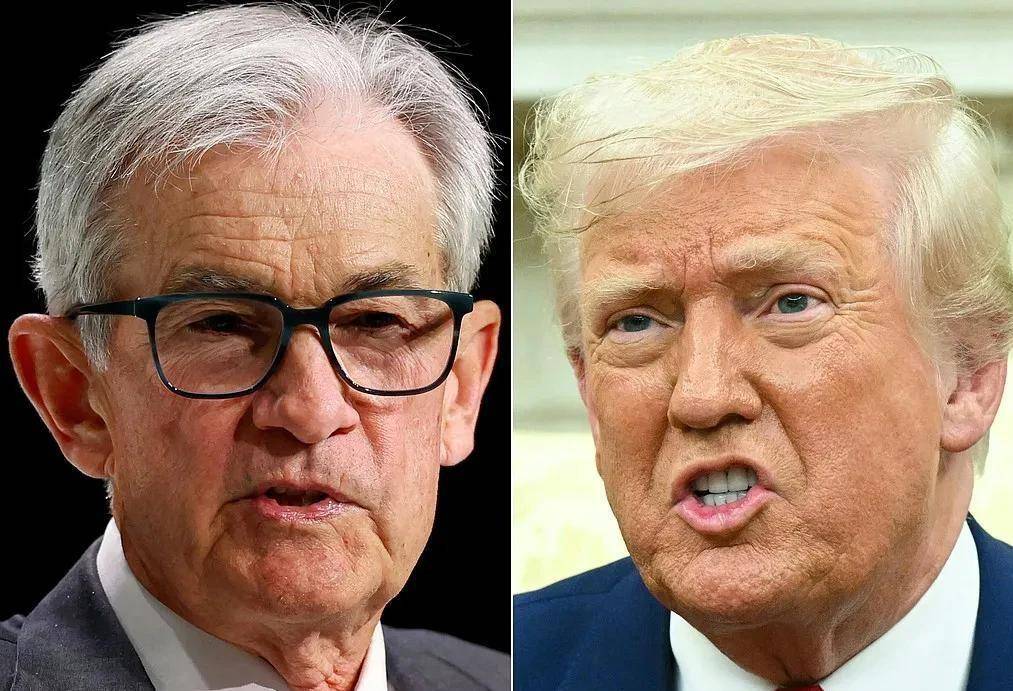
Group 1 - Trump's announcement on July 7 to impose high tariffs on 14 countries, including Japan and South Korea, with rates ranging from 25% to 40% [1][4] - On July 9, Trump extended tariffs to an additional 6 countries, totaling 20 nations affected by the new measures [2][4] - The tariffs will not take effect immediately but are set to begin on August 1, allowing countries time to negotiate [4][6] Group 2 - Business leaders in Los Angeles expressed strong concerns about the tariffs, highlighting the negative impact on trade, budgeting, and investment expansion [4][6] - The closure of a century-old restaurant in California exemplifies the adverse effects of the tariffs on American businesses [6] - The tariffs have led to significant market reactions, indicating a backlash against protectionist policies [6][9] Group 3 - Notably, India, Canada, and EU countries were excluded from the tariff list, as they had previously taken countermeasures against the U.S. [6][9] - The EU plans to initiate countermeasures on July 14, emphasizing the need to rebuild partnerships and respect multilateral trade systems [6][9] - The strong stance of the Trump administration has complicated negotiations with countries like Japan, which remains firm on protecting its agricultural interests [8][9] Group 4 - Trump's proposal to impose a 50% tariff on copper raises concerns about the impact on U.S. industries reliant on copper for electronics and infrastructure [11][13] - The U.S. currently meets only 50% of its copper demand domestically, indicating a significant supply gap that could lead to increased prices and costs for consumers [13] - The potential for rising copper prices could affect various sectors, including infrastructure investment and employment [13] Group 5 - The ongoing discussions regarding the appointment of a "shadow Federal Reserve chairman" have raised concerns about the independence of the Federal Reserve and its implications for the dollar and bond markets [13][14] - Two prominent Republican candidates for the position are Kevin Hassett and Kevin Walsh, both of whom have close ties to the Trump administration [14][16] - The actions of the Trump administration, from tariffs to potential changes in Federal Reserve leadership, are expected to have profound impacts on the market [16]

中美关税最新消息!纽约联储称通胀已回落,特朗普再加征200%关税
Sou Hu Cai Jing· 2025-07-10 21:32
Group 1 - The core of the tariff policy under the Trump administration is an attempt to achieve economic goals through increased tariffs, but the consequences are more complex than anticipated [1] - Analysts on Wall Street identify the tariff policy as the biggest obstacle to the Federal Reserve's ability to lower interest rates, creating uncertainty for businesses and consumers [3] - The tariffs imposed by the Trump administration have significantly impacted global trade dynamics, with various countries facing different tariff rates, such as 25% on Japan and South Korea, and up to 200% on key sectors like pharmaceuticals and semiconductors [5] Group 2 - Despite the strong tariff measures, consumer inflation expectations have surprisingly decreased to 3.02%, the same level as before the tariff war began, although this optimism may be unfounded [6] - The progress in U.S.-China trade negotiations contrasts with the difficult negotiations with other countries, largely due to China's control over critical rare earth resources, which gives it leverage in discussions [8] - The overall effects of the tariff policies remain unpredictable, with potential inflation risks still present despite a temporary decline in consumer expectations [8]