美联储货币政策调整

Search documents
哪些因素将主导2026年全球资产轮动? 策马点金
Jin Rong Jie· 2026-02-22 03:16
Core Viewpoint - The global macro environment is complex and volatile, with expectations of changes in the Federal Reserve's monetary policy and ongoing geopolitical conflicts, leading to increased volatility and sector rotation in the commodity market [1] Group 1: Market Characteristics and Trends - The core characteristics of the current market include significant price volatility for certain commodities and a notable premium for safe assets, with continued sector differentiation [2] - The pricing mechanism in the commodity market is undergoing fundamental changes, with a shift from global economic recovery to asset allocation driven by geopolitical conflicts [3] - The demand for strategic metals is being re-evaluated due to the weakening of the dollar's credit, the AI revolution increasing demand for new materials, and countries competing for strategic resources [3] Group 2: Currency and Economic Factors - The RMB is expected to appreciate moderately with two-way fluctuations, with a forecasted range of 6.8 to 7 against the USD for 2026 [4] - The core support for RMB appreciation comes from a changing global asset allocation logic and a significant trade surplus, which exceeded 1 trillion USD in 2025 [4] - Potential negative factors for the RMB exchange rate include the pace of Federal Reserve rate cuts and domestic export performance [4] Group 3: Asset Allocation and Investment Strategies - The pricing power of commodities is shifting from traditional supply-demand dynamics to macro narratives, focusing on de-dollarization, the AI revolution, and supply chain dynamics [5] - Both industry clients and ordinary traders are advised to enhance risk awareness and adapt to changes in market pricing mechanisms, focusing on investment opportunities in strategic resources [5]
雷诺士业绩受关注,财报与宏观环境成焦点
Xin Lang Cai Jing· 2026-02-17 22:47
Performance Overview - The upcoming financial reports, specifically for Q4 2025 and the full year, will be crucial in validating growth expectations, cost control, and improvements in gross margin [1] - The specific release date for the financial reports has not been confirmed, but performance remains a focal point for the market [1] Industry Policy and Environment - Adjustments in the Federal Reserve's monetary policy and fluctuations in the US dollar exchange rate may impact the company's international business costs and demand, necessitating close attention to related announcements [1] Industry Conditions - The resilience of demand in the construction equipment and home comfort markets, particularly the changes in the commercial real estate and residential renovation market conditions, may indirectly affect the company's performance [1]
RYOEX:贵金属波动性加剧 美元敞口重塑
Xin Lang Cai Jing· 2026-02-17 14:25
Core Insights - The global precious metals market is entering a new volatility-driven cycle as of 2026, influenced by deep adjustments in the Federal Reserve's monetary policy and a reevaluation of dollar exposure worldwide [1][2][3] Group 1: Market Dynamics - A recent anomaly observed in the market is the rapid decline of the U.S. 10-year Treasury yield from 4.30% to 4.00%, without a corresponding significant increase in gold prices, indicating a profound transformation in the gold market's operational logic [2][3] - Traditionally, there has been a strong negative correlation between the 10-year real interest rates and gold prices, a relationship that has been effective since the collapse of the Bretton Woods system. However, this pricing model began to fail after 2022, with a notable decrease in gold's sensitivity to real interest rates [2][3] Group 2: Central Bank Actions - The independence of central bank decision-making remains a key factor in assessing gold price volatility. Any interference in monetary policy formulation could trigger a risk premium for gold prices [4] - Since 2022, central bank gold purchases have reached 2 to 3 times the average levels of previous years, becoming a crucial support for maintaining high gold prices amid a backdrop of currency devaluation [4] Group 3: Investment Trends - Despite the influx of capital into the stock market driven by the AI sector, which has slowed the pace of funds flowing into gold, the actual value of gold, when adjusted for inflation, has surpassed historical peaks from the 1980s (approximately $3,400 in today's terms) [4] - The current trajectory indicates that gold remains in a long-term bull market, with initial rapid price increases likely accompanied by significant volatility. Investors should not doubt gold's safe-haven attributes due to short-term fluctuations, as high volatility is expected to be a characteristic of market participation in 2026 [4]


木材期货跌至近4周低点
Sou Hu Cai Jing· 2026-02-11 11:35
Group 1 - The core viewpoint indicates that the delayed effects of the Federal Reserve's monetary policy adjustments are leading to a slight increase in market financing costs, which in turn raises the loan pressure and cost of homeownership for buyers [1] - The U.S. housing market is experiencing a significant decline in activity, with consumer willingness to purchase homes being suppressed due to economic uncertainty and a high-interest-rate environment, resulting in overall weakening demand [1] - Data shows that by December 2025, the volume of unsold homes in the U.S. has decreased by 9.3% month-over-month, further confirming the current weakness in housing market demand [3] Group 2 - The decline in the housing market is impacting lumber futures prices, which have recently fallen below $590 per thousand board feet, marking the lowest trading level in nearly four weeks [5] - This price drop is expected to weaken the demand for key lumber consumption in the construction and renovation sectors ahead of the spring building season [5] - Following a winter supply tightness, lumber mills are ramping up production to rebuild inventories, leading to an increase in lumber supply; however, the combination of weak demand and increased supply is causing investors to exit the market, further exacerbating the price decline [6]

startrader:AMD创2017年来最大单日跌幅 小非农仅增2.2万
Sou Hu Cai Jing· 2026-02-05 03:32
Group 1: AMD Performance and Market Reaction - AMD's stock price experienced a significant drop of 17.31%, marking the largest single-day decline since May 2017, driven by concerns over its earnings guidance and rising operational costs [1][3] - In Q4, AMD reported revenue of $10.27 billion, a 34% year-over-year increase, with adjusted earnings per share of $1.53, and data center revenue grew by 39% to $5.38 billion, exceeding market expectations [3] - Despite strong Q4 performance, AMD's Q1 revenue guidance of $9.8 billion, while above the consensus of $9.38 billion, did not meet some analysts' expectations of $10 billion, raising concerns about growth momentum [3] Group 2: Factors Affecting AMD's Outlook - AMD's Q4 revenue included $390 million from the sale of older Instinct MI308 chips in China, which was not anticipated in initial market forecasts, and this revenue is expected to drop to around $100 million in Q1 [3] - The company's operational expenses are projected to reach $3.05 billion in Q1, growing at a rate that outpaces revenue growth, which could compress profit margins and heighten investor concerns [3] - Intense competition in the AI chip sector, particularly with NVIDIA, and the delayed production of the next-generation MI450 series GPU until the second half of the year contribute to AMD's short-term challenges [3] Group 3: Labor Market and Economic Indicators - The ADP private sector employment data for January showed only 22,000 new jobs added, significantly below the expected 45,000, indicating a cooling labor market [4] - The manufacturing sector lost 8,000 jobs, and professional and business services saw a decline of 57,000 jobs, reflecting a broader trend of "low hiring and layoffs" across various industries [4] - The weak employment data raises concerns about the U.S. economic recovery momentum and could influence the Federal Reserve's monetary policy decisions, potentially affecting market risk appetite [4][5] Group 4: Market Sentiment and Future Outlook - The decline in AMD's stock has put pressure on the broader technology sector, with the Philadelphia Semiconductor Index nearing a 2% drop, exacerbated by economic concerns stemming from the ADP report [5] - Market interpretations of AMD's performance and the ADP data show significant divergence, with some analysts remaining optimistic about AMD's core business and AI demand, while others express caution due to high valuations and competitive pressures [5][6] - Key variables influencing future trends include AMD's Q1 performance, changes in revenue from the Chinese market, operational cost management, and the production timeline of new AI chips, alongside upcoming official employment and inflation data that will guide Federal Reserve policy [6]


中加基金配置周报|特朗普提名美联储新任主席,商品价格大幅波动
Xin Lang Cai Jing· 2026-02-03 07:41
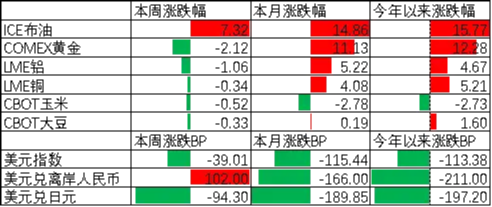
Key Points - The Federal Reserve maintained the benchmark interest rate at 3.50%-3.75%, pausing after three consecutive 25 basis point cuts, aligning with market expectations. Fed Chair Powell indicated that rate hikes are not a basic assumption for future actions, emphasizing the Fed's independence [1][19] - President Trump nominated former Fed Governor Kevin Walsh to succeed Powell as Fed Chair, pending Senate approval. However, Senate leaders from both parties have expressed intentions to block Walsh's nomination unless investigations into Powell are dropped. Analysts suggest that Walsh's leadership could lead to significant changes in Fed policy, potentially combining rate cuts with balance sheet reduction [2][20] - Walsh's nomination triggered hawkish expectations, causing a historic drop in global precious metals markets. Silver fell over 35%, gold dropped nearly 13%, and platinum and palladium also saw significant declines [3][20] - China's January manufacturing PMI was reported at 49.3, a decrease of 0.8 percentage points, indicating a decline in manufacturing activity. The non-manufacturing PMI also fell to 49.4, reflecting reduced business activity in the construction sector [4][21] - In the U.S., durable goods orders for November 2025 increased by 5.3%, the largest growth in six months, surpassing the expected 3.7% increase. Core durable goods orders rose by 0.5%, marking the eighth consecutive month of growth [5][21] - Trump stated that he is not concerned about the dollar's performance, suggesting it is returning to its appropriate level. Following his comments, the dollar index fell over 1%, reaching a nearly four-year low [6][21] Market Review Futures Market - ICE Brent crude oil rose by 7.32% to $69.83, while COMEX gold fell by 2.12% to $4907.5. The dollar index decreased by 39.01 basis points, leading to a depreciation of the yuan by 102 basis points [22][24] Stock Market - The A-share market saw a decline, with the small-cap index dropping 3.78%, while the Shanghai 50 index increased by 1.13%. The overall market sentiment has softened as the spring rally comes to an end [26][30] Bond Market - In the bond market, credit bonds generally declined, with 3Y and AA- bonds down by 7 basis points. Government bonds also saw slight declines, with 3Y, 5Y, and 10Y bonds down by 2 basis points [13][32]
美联储主席换届解读与中美关系展望
2026-02-03 02:05
Summary of Key Points from the Conference Call Industry or Company Involved - The discussion primarily revolves around the Federal Reserve's monetary policy and its implications for the U.S. economy and U.S.-China relations. Core Points and Arguments 1. **Monetary Policy Adjustments**: The Federal Reserve is expected to adjust its monetary policy, with two interest rate cuts anticipated in 2026, reducing the benchmark rate from 3.5-3.75% to 3.0-3.25% [2][3][6]. 2. **Balance Sheet Reduction**: The reduction of the balance sheet may be delayed until 2027, which could lead to decreased market liquidity and impact equity markets negatively in the short term [1][2][6]. 3. **Internal Consensus on Rate Cuts**: There is a consensus among Federal Reserve board members regarding interest rate cuts, with four members explicitly supporting them, while opinions on balance sheet reduction are divided [3][5]. 4. **Impact of New Fed Chair**: The selection of Walsh as the new Fed Chair is seen as a move to signal the independence of the Federal Reserve and enhance the credibility of the U.S. dollar [5][20]. 5. **U.S.-China Relations Stability**: Short-term stability in U.S.-China relations is expected, with negotiations in April 2026 likely to cover investment, agricultural procurement, financial openness, exchange rate transparency, and supply chain issues [1][9][18]. 6. **Geopolitical Risks**: The likelihood of severe conflict between the U.S. and China is low, which is viewed positively for financial markets [7][18]. 7. **Tariff Policies**: The U.S. has implemented various tariffs under Section 232, affecting products like steel, aluminum, and automobiles, with potential future investigations into other sectors [12][21]. 8. **Market Reactions**: The market anticipates that Walsh's policies will initially pressure equity markets due to reduced liquidity but may stabilize the dollar and support the bond market in the long run [6][20]. Other Important but Possibly Overlooked Content 1. **Negotiation Strategies**: The U.S. may use the 301 and 232 investigations as leverage in negotiations with China, particularly regarding compliance with trade agreements [10][11]. 2. **Regulatory Developments**: New regulations limiting cooperation between U.S. and Chinese pharmaceutical companies are not yet fully implemented, with updates expected by December [17]. 3. **Long-term Economic Dependencies**: The economic interdependence between the U.S. and China suggests that a complete breakdown in relations is unlikely, despite ongoing tensions [18][21]. 4. **Future of Gold and Silver Prices**: The volatility in gold and silver prices is attributed to the declining credibility of the dollar, with potential for recovery if the new Fed Chair maintains professional integrity [22].
TMGM官网:美联储暂停降息预期强化,美元兑瑞郎逼近0.8000?
Sou Hu Cai Jing· 2026-01-15 06:28
Group 1 - The USD/CHF exchange rate is fluctuating near the monthly high of 0.8000, influenced by factors such as Federal Reserve policy expectations, US inflation data, and economic policy adjustments in Europe and the US [1] - The US dollar index (DXY) has slightly increased to around 99.17, close to the monthly high of 99.26 reached last week, indicating a recent stabilization and recovery of the dollar [3] - Market expectations have shifted regarding the Federal Reserve's monetary policy, with a consensus that the interest rate will remain unchanged in the 3.50%-3.75% range during the January meeting, following three consecutive 25 basis point rate cuts [3] Group 2 - The Swiss franc (CHF) has shown overall stability without significant fluctuations, largely due to the Swiss National Bank's (SNB) monetary policy stance, which is focused on domestic inflation levels [4] - The SNB is maintaining an interest rate of 0% due to persistently low inflation in Switzerland, which limits the motivation for any policy adjustments [4] - The low inflation environment constrains the SNB's ability to change its policy, resulting in a lack of clear directional guidance for the Swiss franc, which is exhibiting a stable fluctuation pattern [4]
金源灿:2026年初黄金市场分析及短线操作策略
Xin Lang Cai Jing· 2026-01-02 13:24
Core Viewpoint - The bullish trend in the gold market remains solid as of early 2026, with a rebound in prices becoming a trend-driven inevitability, supported by both technical patterns and geopolitical factors [1][3]. Geopolitical Factors - The ongoing Russia-Ukraine conflict continues to create uncertainty, enhancing gold's safe-haven appeal, which is a core logic supporting high gold prices [1][3]. Monetary Policy Risks - Potential adjustments in the Federal Reserve's monetary policy could pose substantial risks to the bullish trend in gold. Signals of interest rate hikes or liquidity tightening may alter market capital flows and exert downward pressure on gold prices [1][3]. Short-term Trading Focus - For short-term traders, the long-term trend should serve as background knowledge, with the primary focus on daily price movements to capitalize on short-term volatility [1][3]. Market Performance and Technical Analysis - Following the New Year holiday, the gold market is expected to experience some downward adjustment, with a continued bottom repair process anticipated. The key technical level to watch is around 4404; if the bulls can maintain above this level, it may lead to a resurgence in daily price trends [1][3]. Daily Trading Strategy - The market is expected to see a rebound, with a focus on long positions during the day. However, caution is advised as gold prices approach the 4404 resistance level, where a potential bearish reaction is likely [2][4]. Key Support and Resistance Levels - An important support level is identified at 4325; if this level holds, gold may maintain a strong rebound. Conversely, a break below this level could lead to further declines [2][4]. Specific Trading Strategies - Traders are advised to consider short positions around the 4385-4390 resistance zone, with additional shorting opportunities if prices reach the 4400-4405 range. Stop-loss should be set around 4417, targeting a drop to the 4340-4345 range, with further downside potential to 4318-4320 if the initial targets are breached [5].
美联储内部分歧严重,对金价有何影响?
Sou Hu Cai Jing· 2025-12-31 10:08
Group 1 - The Federal Reserve decided to cut interest rates in December, but the meeting minutes indicate that this decision was not unanimous, reflecting significant divisions among policymakers [1] - Most participants expect economic growth to accelerate by 2026, with fiscal policy adjustments and favorable financial market conditions seen as key supporting factors [1] - There is a high level of uncertainty regarding the growth of the U.S. economy, with technological advancements like artificial intelligence potentially boosting productivity without raising inflation, but concerns remain about their impact on job growth [1] Group 2 - To address the decline in bank reserves to a "moderately ample" level, the Federal Reserve initiated a short-term Treasury purchase program in December, with an initial plan to buy approximately $40 billion per month [3] - Market expectations indicate a total purchase amount of about $220 billion over the next 12 months, although there is significant disagreement regarding the specific scale [3] - International gold prices experienced a significant drop after reaching a historical high, indicating a shift from bullish to bearish sentiment, with key support levels identified at $4,264 and $4,188 per ounce [3]