
预制菜肴

Search documents
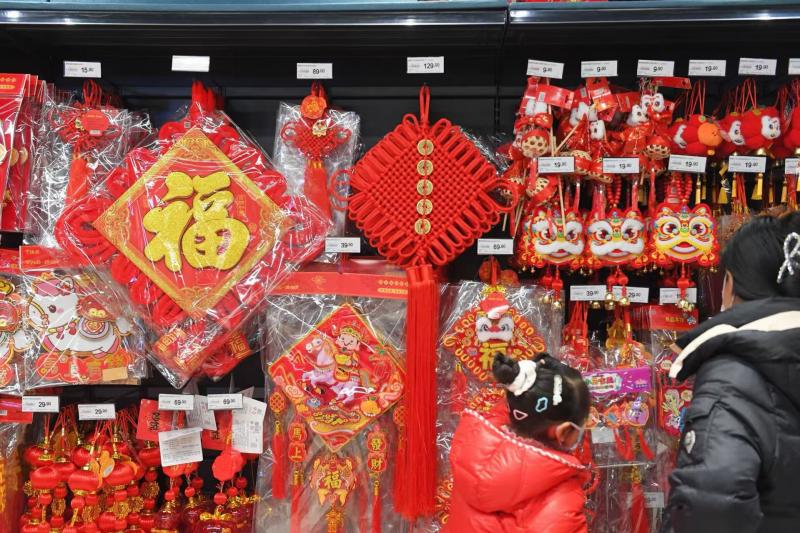
永辉通州世界村店、半壁店调改开业
Bei Jing Shang Bao· 2025-12-29 07:15
Core Viewpoint - Yonghui Supermarket has completed the renovation of two stores in Beijing's Tongzhou District, enhancing their product offerings and customer experience to better serve local communities [1] Group 1: Store Renovation Details - The Yonghui Beijing Tongzhou World Village store, operational for ten years, has undergone a renovation focusing on "quality enhancement" and "experience optimization" [1] - The Yonghui Banbi store, serving the Liyuan community for twelve years, emphasizes creating a "one-stop family living solution" with a focus on seasonal and festive products [1] Group 2: Product and Service Enhancements - The product structure of the renovated stores now aligns with 80% of the product structure of the well-regarded brand Pang Dong Lai, including the introduction of its own brand sections [1] - Both stores implement strict freshness management for perishable goods, adhering to the "468" freshness management and daily clearance system, while also publicly displaying food safety inspection data [1] Group 3: Customer-Centric Strategies - The World Village store enhances its offerings for stable family customers by improving the freshness management and quality control standards of fresh products, as well as expanding high-quality ready-to-eat meals [1] - The Banbi store focuses on providing convenient services such as free processing of meat and poultry and on-site cleaning of seafood, catering to the needs of families during winter and festive gatherings [1]

永辉超市通州双店焕新 “胖改”模式深耕副中心社区商业
Xin Lang Cai Jing· 2025-12-28 14:17
Core Viewpoint - The recent upgrades of two community stores by Yonghui Supermarket in Beijing's Tongzhou district reflect the company's commitment to enhancing consumer experience and supporting local consumption in response to government initiatives [1][3]. Group 1: Store Upgrades - Yonghui's Beijing Tongzhou World Village store has been operational for ten years and has recently undergone a significant upgrade, while the Banbi store will also reopen after renovations [1]. - The upgrades aim to strengthen the "quality and affordable" retail network in the area, providing essential goods at competitive prices [1][3]. Group 2: Product Offerings - The product structure of the two upgraded stores aligns with 80% of the offerings from the "Fat Donglai" brand, featuring a variety of freshly made items such as dumplings, wontons, and baked goods [3]. - The stores provide stable daily supplies, including cabbage at 0.99 yuan per jin, pork at 6.99 yuan per jin, and affordable sugar oranges at 4.99 yuan per jin, ensuring reliable access to essential goods for local families [3]. Group 3: Customer Experience - The World Village store focuses on enhancing quality and optimizing the shopping experience, particularly for family customers, by improving fresh produce management and offering high-quality ready-to-eat meals [5]. - The Banbi store emphasizes a "one-stop family living solution," catering to seasonal needs with a focus on hot pot ingredients and providing convenient services such as free meat processing and on-site seafood cleaning [5]. Group 4: Operational Standards - Both stores implement strict freshness management and daily clearance protocols for fresh products, with real-time public display of food safety inspection data [7]. - The renovations have improved employee working conditions and benefits, establishing a skills certification program to enhance employee engagement and service quality [7]. Group 5: Community Impact - Yonghui's initiatives are part of a broader strategy to promote community commerce and stimulate urban consumption, with plans for promotional activities leading up to the New Year [7].

“胖永辉”再落两子 永辉北京通州两店月底完成调改
Zheng Quan Shi Bao Wang· 2025-12-28 10:11
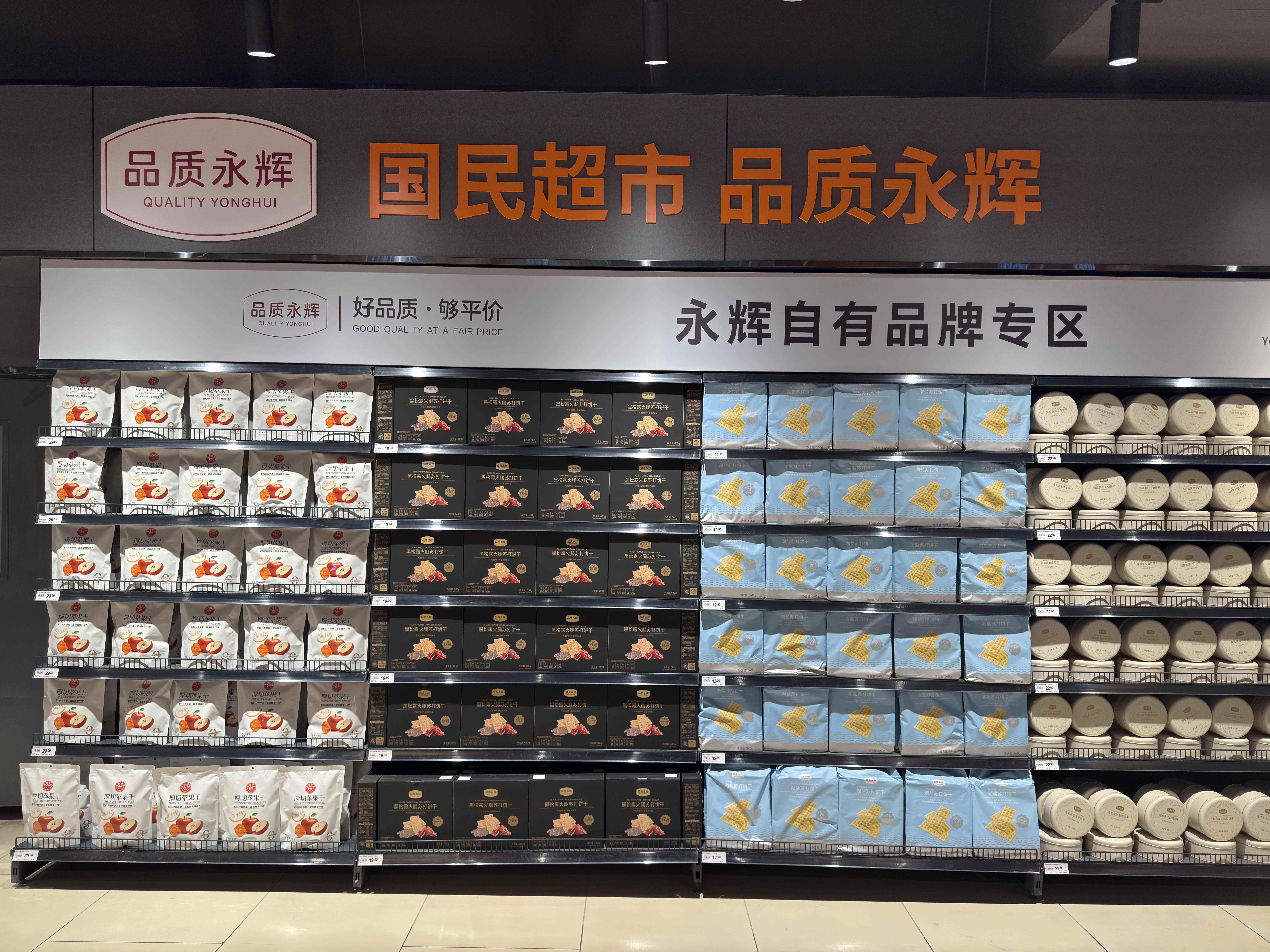
Core Insights - Yonghui Supermarket is undergoing a significant renovation of its stores in the Tongzhou District of Beijing, with the World Village store reopening on December 28 and the Banbi store set to reopen on December 30, marking a continued implementation of its self-reform model inspired by "Pang Donglai" [1] Group 1: Store Renovation and Upgrades - The renovations at the two stores have achieved a product structure that aligns with 80% of Pang Donglai's offerings, including the establishment of dedicated areas for Pang Donglai's private label products [1] - The stores are implementing a "naked price direct procurement" reform in their supply chain, aiming to provide high-quality products at affordable prices [1] Group 2: Product Offerings and Customer Experience - The World Village store focuses on enhancing quality and optimizing customer experience, with improved freshness management for perishable goods and a wider range of high-quality ready-to-eat meals [6] - The Banbi store emphasizes a "one-stop family life solution," featuring a matrix of scene-based products like hot pot ingredients and offering convenient services such as free processing of meat and live seafood cleaning [6] Group 3: Employee and Community Engagement - The renovations have improved the work environment and employee benefits, alongside the establishment of a skills certification and growth pathway through the "Craftsman Program" [7] - The initiative aligns with the ongoing support from the Ministry of Commerce and other departments to boost consumption, as well as the continuous development of the "15-minute convenient living circle" in Beijing [7] Group 4: Strategic Goals - Yonghui Supermarket aims to create a sustainable and replicable upgrade path for community stores, as demonstrated by the successful implementation of its model from the Wanda store to the World Village and Banbi stores [7]
“餐饮+食品”双轮驱动 广州酒家打造国际一流饮食集团
Zhong Guo Zheng Quan Bao· 2025-12-24 22:06
Core Viewpoint - Guangzhou Restaurant (603043) is positioned as a leader in Cantonese cuisine, aiming to innovate while preserving traditional culinary techniques, with a vision to become an internationally renowned dining group by its 100th anniversary in 2025 [1][6]. Group 1: Company Overview - Guangzhou Restaurant has evolved from a small eatery in 1935 to a large dining group with three major brands: Guangzhou Restaurant, Tao Tao Ju, and Li Kou Fu, all recognized as Chinese time-honored brands [1][2]. - The company has cultivated a rich heritage over 90 years, establishing a strong brand, talent pool, and management system, which includes seven generations of inheritors of Cantonese culinary heritage [2][3]. Group 2: Business Model and Strategy - The company operates under a dual business model of "Catering + Food," creating a synergistic relationship between its restaurant and food production segments, which enhances brand strength and operational efficiency [3][4]. - Guangzhou Restaurant has 27 direct-operated stores focusing on classic Cantonese cuisine and non-heritage culture, while Tao Tao Ju targets younger consumers with trendy offerings across 43 locations [4][5]. Group 3: Product Innovation and Market Expansion - The company has successfully maintained its position as the top producer of mooncakes in China for 13 consecutive years, with its sales ranking first globally for five years [4][5]. - To mitigate seasonal fluctuations in performance, the company is diversifying its product offerings by developing non-seasonal items such as frozen foods and prepared dishes, which are becoming significant profit drivers [5][6]. - Future plans include enhancing brand operations, expanding into new markets, and developing a localized international sales network, particularly in Southeast Asia and North America [6][7]. Group 4: Commitment to Innovation - Product innovation is central to the company's growth strategy, focusing on health-conscious options and integrating traditional culinary techniques with modern consumer preferences [7]. - The company aims to strengthen its technological capabilities through partnerships and research initiatives, ensuring a continuous pipeline of innovative products [7].

广州酒家打造国际一流饮食集团
Zhong Guo Zheng Quan Bao· 2025-12-24 20:18
Core Viewpoint - Guangzhou Restaurant, a leader in Cantonese cuisine, aims to become an internationally renowned dining group by 2025, marking its 90th anniversary, through a dual business model of "catering + food" and a commitment to cultural heritage and innovation [1][6]. Group 1: Company Overview - Guangzhou Restaurant has evolved from a small eatery in 1935 to a large dining group with three major brands: "Guangzhou Restaurant," "Taotaoju," and "Likoufu," all recognized as Chinese time-honored brands [1][2]. - The company has cultivated seven generations of inheritors of Cantonese culinary heritage, establishing a complete talent pipeline and becoming a core hub for the living transmission of Cantonese culinary skills [2][3]. Group 2: Business Model and Strategy - The company has adopted a dual business model of "catering + food," creating a virtuous cycle where strong restaurant brands complement food production, enhancing overall competitiveness [3][4]. - Guangzhou Restaurant operates 27 direct-operated stores focusing on classic Cantonese cuisine and non-heritage culture, while "Taotaoju" targets younger consumers with trendy offerings across 43 locations [4]. Group 3: Product Innovation and Market Expansion - The company has maintained its leading position in the mooncake market for 13 consecutive years, with its sales ranking first nationally and globally for five years [5]. - To address seasonal fluctuations in performance, the company is diversifying its product offerings, focusing on non-seasonal items like frozen foods and prepared dishes, which are becoming new profit growth points [5][6]. Group 4: Future Outlook - Guangzhou Restaurant plans to enhance brand operations, focusing on personalized and customized services while integrating dining with cultural and tourism experiences to unlock consumer potential [6]. - The company aims to strengthen its national presence and explore international markets, particularly in Southeast Asia and North America, to promote Cantonese food culture abroad [6].
餐饮供应链板块梳理 - 基本面磨底信号明显,关注板块向上弹性
2025-11-05 01:29
Summary of the Conference Call on the Food Supply Chain Sector Industry Overview - The food supply chain sector, particularly the condiment and pre-processed food segments, showed signs of bottoming out in recent months, with a slight increase in industry scale in Q3 2025, although it underperformed compared to the CSI 300 index [1][2] - Institutional holdings and valuations are at low levels, indicating potential for rebound [2] - The sector has been impacted by recent consumption policies and competition, but there is optimism for recovery if demand improves or policies change [2][4] Key Companies and Their Performance Haitian Flavor Industry - After a decline in stock price in 2022, Haitian Flavor Industry has seen improvements under new management since 2024, focusing on operational efficiency [5][6] - The company reported stable growth in soy sauce and offline channels, with new product categories driving high growth [5] - Expected profit growth of 10.8% for the year is likely to be achieved, supported by improved gross margins due to cost advantages [6] Baba Food - Baba Food has successfully adjusted its business strategy, with single-store revenue recovering in Q2 2025 [7] - The company launched a franchise dining model and expanded its product line, showing strong potential for growth [7][8] - Performance in the second half of 2025 is expected to be strong, making it one of the best performers in the sector [8] Anjuke Food - Anjuke Food has balanced its B and C-end business, focusing on product innovation and a customized strategy for supermarkets [9] - Despite a weak restaurant environment, the company achieved stable growth through flagship products and strategic acquisitions [9] - The core operational capabilities remain stable, with potential for better performance if demand recovers [9] Qianwei Central Kitchen - Qianwei Central Kitchen is undergoing significant adjustments to adapt to changes in the B-end restaurant industry [10] - New retail clients have emerged as highlights, although profitability is currently low [10] - Future improvements in efficiency and cost allocation are expected to enhance profitability [10] Yihai International - Yihai International's performance is expected to remain consistent with the first half of the year, with overseas operations slightly slowing down [11][12] - The company is focusing on third-party B-end channels and has accelerated the progress of overseas factories [12] - High dividend rates provide support for shareholder returns, and the company is seen as having investment value [12] Additional Insights - The overall trend in the food supply chain sector indicates a gradual reduction in the impact of consumption policies and competition, with expectations for macro policy disclosures in Q4 [13] - The sector is characterized by stable supply-side competition and efforts to reduce costs, with leading companies enhancing industry concentration through acquisitions [13] - Companies sensitive to policy changes, such as Haitian, Baba, Anjuke, and Qianwei, are particularly noteworthy for potential investment opportunities [13]
叫停四个传统冻品项目,“冻品一哥”3.6亿转投冷冻烘焙,能否打破增长瓶颈?
3 6 Ke· 2025-10-10 11:21
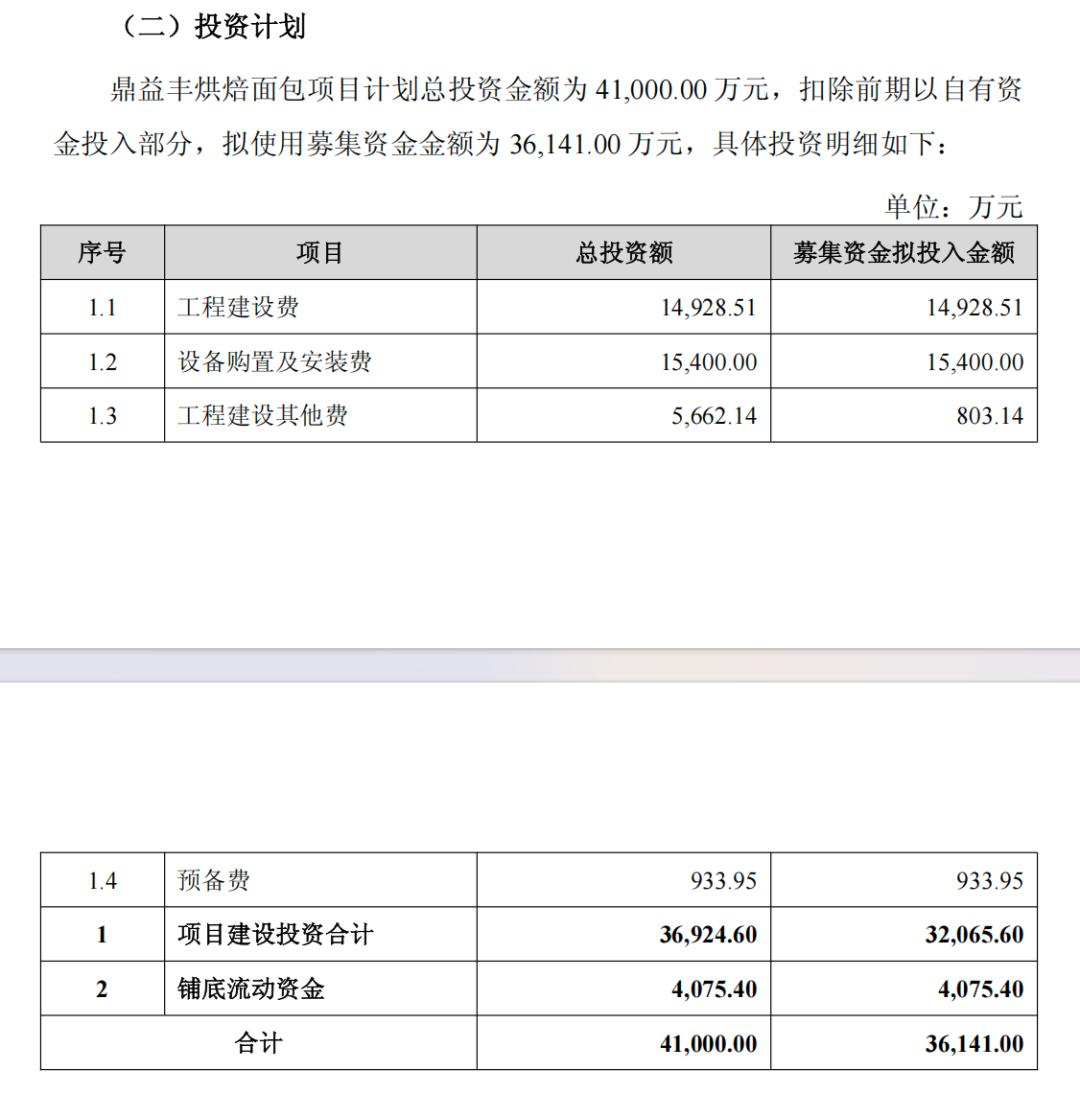
Core Viewpoint - The change in fundraising allocation by Anjii Food reflects the challenges faced by the frozen food industry, indicating a need to explore new growth opportunities, particularly in the frozen baking sector [1][4]. Fundraising Purpose Change - Anjii Food announced a change in the use of funds from a non-public stock issuance, reallocating part of the funds originally intended for four frozen food projects to a new baking project [1][4]. - The four original projects include upgrades in Sichuan, Liaoning, and Taizhou, and an expansion project in Henan, with a total of 361 million yuan being redirected to the Dingyifeng baking project, which has a total investment of 410 million yuan [1][3]. Financial Projections - The Dingyifeng baking project is expected to have a construction period of two years, with projected annual revenue of 613 million yuan and a profit of 67.83 million yuan, yielding an internal rate of return of 10.38% and a payback period of 8.05 years [3][4]. Industry Challenges - Anjii Food's decision to change the fundraising project is attributed to the evolving macroeconomic environment, industry policies, and consumer demand, which have shifted towards healthier and more diverse food options [4][5]. - The traditional frozen food sector, particularly frozen rice and noodle products, is experiencing a contraction, with Anjii's revenue for the first half of the year showing only a slight increase of 0.8% to 7.604 billion yuan, while net profit fell by 15.79% to 676 million yuan [5][7]. Market Trends - The frozen baking sector is viewed as a potential growth area, with the market expected to exceed 23 billion yuan by 2025 and a compound annual growth rate of over 25% in recent years [9][10]. - Competitors in the frozen food industry, such as Qianwei and Hai Xin, are also exploring new product categories, indicating a broader trend of seeking growth beyond traditional frozen food offerings [7][9]. Competitive Landscape - Anjii Food has made strategic acquisitions to enhance its presence in the frozen baking market, including a 70% stake in Jiangsu Dingwei and a 100% stake in Dingyifeng, totaling an investment of 444.5 million yuan [7][9]. - The competitive environment in the frozen baking sector is intensifying, with other companies also launching baking brands and experiencing varying growth rates, highlighting the need for Anjii to leverage its past successes to strengthen its market position [10][11].

安井食品集团股份有限公司 关于控股子公司减少注册资本并换发营业执照的公告
Zhong Guo Zheng Quan Bao - Zhong Zheng Wang· 2025-09-13 04:03
Group 1 - The company, Anjii Food Group Co., Ltd., has reduced the registered capital of its subsidiary, Honghu Anjii Food Co., Ltd., from RMB 670 million to RMB 520 million, a total reduction of RMB 150 million [2] - The capital reduction only affects the unpaid registered capital portion, and the shareholding ratio of all shareholders remains unchanged [2] - The capital reduction does not constitute a related party transaction or a major asset restructuring, and it falls within the approval authority of the company's chairman, thus does not require board or shareholder approval [2] Group 2 - Honghu Anjii Food Co., Ltd. was established on March 15, 2022, with a registered capital of RMB 520 million and is located in Hubei Province [3] - The company operates in food production, sales, and related activities, with a focus on pre-prepared dishes as part of its investment project [3] - The capital reduction will not affect the existing asset status or normal operations of Honghu Anjii, nor will it impact the company's consolidated financial statements or current profits significantly [4]
广州酒家(603043.SH):尚未生产酒类产品
Ge Long Hui· 2025-08-19 08:35
Core Viewpoint - Guangzhou Restaurant Group (603043.SH) primarily engages in food manufacturing and catering services, with a focus on products such as mooncakes, frozen foods, prepared dishes, and Cantonese sausages, and does not currently produce alcoholic beverages [1] Summary by Category Business Operations - The company's main business segments include food manufacturing and catering services [1] - Key products in food manufacturing consist of mooncake series, frozen foods, prepared dishes, and Cantonese sausages [1] Product Offerings - The company has not yet ventured into the production of alcoholic beverages [1]
惠发食品亮相第24届马来西亚国际食品和饮料贸易展览会
Zhong Guo Zhi Liang Xin Wen Wang· 2025-08-06 05:39
Core Insights - Huifa Food showcased its innovative products and brand strength at the 24th Malaysia International Food and Beverage Trade Exhibition (MIFB) held from July 30 to August 1, 2025, in Kuala Lumpur, highlighting the company's vitality in the Southeast Asian market [1][2] Group 1: Event Participation - The MIFB has a successful 23-year history and serves as a significant hub for the global food and beverage industry, attracting international attention [1] - Huifa Food presented core products such as hot pot balls, cooking oils, and prepared dishes through an engaging display and interactive experience, emphasizing the brand philosophy of "health and safety, quality first" [1] Group 2: Market Opportunities - The Southeast Asian market is emerging as a new growth engine for the global food industry, showcasing substantial development potential [2] - Huifa Food established deep connections with quality distributors in Malaysia, Singapore, and Thailand, gaining insights into regional consumer trends and competitive landscapes, which will inform future product development and market strategies [2] Group 3: Global Strategy - The company aims to deepen its global presence through continuous innovation and channel optimization, bringing high-quality products to consumers worldwide while promoting Chinese culinary culture [2] - This dual approach of cultural exchange and business collaboration is expected to enhance the company's competitiveness and provide a practical path for the globalization of the Chinese food industry [2]
