飞桨平台

Search documents
马斯克说对了!中国在AI领域的优势绝不止电力资源,美专家被打脸
Sou Hu Cai Jing· 2026-01-09 05:46
Core Viewpoint - The disparity in AI technology between China and the United States is a subject of debate, with American experts asserting a significant advantage for the U.S., while figures like Elon Musk recognize China's rapid advancements and capabilities in the field [1][3][5]. Group 1: Perspectives on AI Competition - American experts represent a traditional view, believing that the U.S. maintains a dominant position in AI, influenced by a sense of superiority that hinders objective assessment of China's capabilities [3]. - Musk's perspective reflects a more innovative approach, acknowledging that while there is still a technological gap, China's progress in AI is noteworthy and cannot be overlooked [5][10]. Group 2: China's Advantages in AI - China's electrical power resources are highlighted as a significant advantage, not only in quantity but also in quality, with faster approval processes for new data centers compared to the U.S. [6][8]. - The integration of renewable energy sources, such as wind and solar power, contributes to lower AI training costs in China, with estimates suggesting that electricity costs for similar model training could be only 60% of those in the U.S. [8][10]. Group 3: Systemic Support for AI Development - The success of models like DeepSeek is attributed to a comprehensive support system in China, including government policies, industry collaboration, and a large pool of STEM graduates, which is significantly higher than that of the U.S. [10][12]. - The rapid pace of innovation in China is emphasized, with examples of quick implementation of AI solutions, contrasting with the longer timelines often seen in the U.S. [12][14]. Group 4: Future Implications - The ability to convert technology into productivity and understand user needs will be crucial in determining the outcome of the AI race, with China adopting a more pragmatic and effective approach to AI development [14].


独家:他是最有希望被评为院士的高科技企业的高管之一!曾3次入围 但今年没来参选院士 是啥原因?
Xin Lang Cai Jing· 2025-11-29 00:22
Core Points - The recent election results for the Chinese Academy of Engineering revealed that 144 individuals were elected, with three coming from private enterprises, indicating a shift towards recognizing contributions from the private sector [1][3] - The establishment of a "special quota" for private technology leaders in the 2025 election guidelines reflects the government's desire to encourage talent from private enterprises [3] - Despite the new opportunities, notable figures like Baidu's CTO Wang Haifeng did not participate in this year's election, raising questions about the reasons behind his absence [4][6] Group 1 - The election results included three scientists from private companies: Wu Kai from CATL, Lian Yubo from BYD, and Huang Xianbo from Jinfat [1] - The new guidelines for the 2025 election specifically allocate eight slots for candidates from private technology enterprises, highlighting the government's support for this sector [3] - Wang Haifeng, despite his qualifications and previous nominations, chose not to participate this year, which is seen as a significant loss for the private sector representation [6][9] Group 2 - Wang Haifeng has a strong academic and practical background in AI, having led significant projects and received multiple awards, which positions him as a deserving candidate for the academy [6][10] - The contributions of high-level executives in private enterprises, like Wang Haifeng, are often overlooked compared to those from academia, despite their substantial impact on technology and innovation [9][10] - The sentiment expressed by industry leaders suggests that Wang Haifeng's achievements will eventually lead to recognition, even if this year's election did not result in his selection [10]



李彦宏亲掌AI:王海峰失职与何俊杰转岗背后的百度困局
3 6 Ke· 2025-11-26 00:34
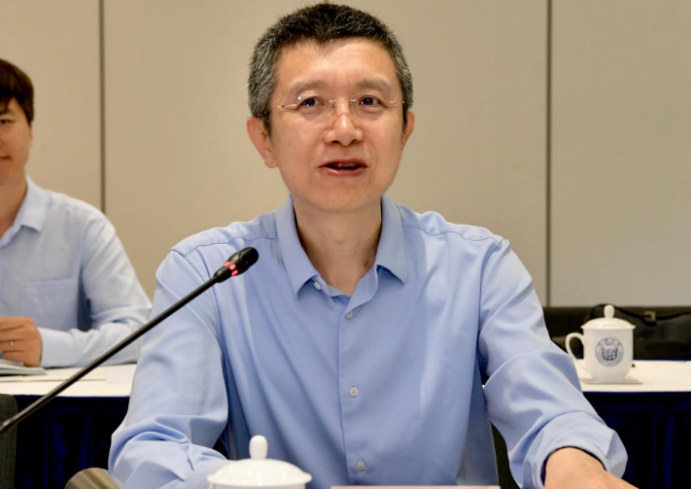
Core Insights - Baidu's recent restructuring of its AI research and development framework indicates a significant shift in its AI strategy, with the new foundational model R&D department and application model R&D department reporting directly to CEO Li Yanhong, sidelining CTO Wang Haifeng [1][4] - Li Yanhong's dissatisfaction stems from the lack of market impact despite substantial technological investments, highlighting a disconnect between technological achievements and market performance [3][5] Company Restructuring - Wang Haifeng's authority has been gradually diminished, losing key responsibilities in the smart cloud business group in May 2022 and now being excluded from core AI business management [4][6] - The restructuring reflects Li Yanhong's direct involvement in AI development, aiming to shorten decision-making processes and regain competitive advantage in the AI sector [5][6] Performance and Market Position - Despite over 100 billion yuan invested in R&D over the past decade, Baidu's AI products, including the Wenxin model, have not achieved significant market success, contrasting sharply with competitors like Alibaba [3][5] - Baidu's AI development has been characterized by a focus on technology without sufficient market application, leading to missed opportunities during the AI industry's growth phase [3][4] Leadership and Talent Management - The appointment of He Junjie as a key figure in the organizational change indicates a shift towards a more cost-focused management approach, which has resulted in high executive turnover and challenges in retaining AI talent [6][6] - Baidu's high executive compensation contrasts with its cost-cutting measures, leading to a perception of a double standard in its human resource strategy [6][6] Future Outlook - Li Yanhong's personal involvement in AI strategy is seen as a last-ditch effort to revitalize Baidu's market position, recognizing the need for a more agile and market-oriented approach [6][6]
人工智能加速赋能实体经济
Xin Hua Wang· 2025-08-12 05:54
Core Insights - In 2021, the global artificial intelligence (AI) industry investment and financing amounted to $71.47 billion, with China contributing $20.12 billion, reflecting a year-on-year growth of 40.4% in China's AI investment [8] Group 1: Industry Growth and Trends - The scale of China's AI industry reached 404.1 billion RMB in 2021, with a significant increase in investment and financing [1] - The integration of AI technology with the real economy is accelerating, driving the transformation and upgrading of traditional industries [1][6] - The number of core AI enterprises in China has exceeded 3,000, marking a 15% increase compared to 2019 [6] Group 2: Technological Advancements - New AI technologies showcased at the 2022 World Artificial Intelligence Conference include high-precision simulation models for large aircraft, digital twin factories, and 3D holographic digital factories [1][7] - The development of multi-modal AI is emerging as a new trend, combining various data types for advanced decision-making [9] Group 3: Infrastructure and Collaboration - The launch of the first phase of the national computing network, "Zhi Computing Network," has facilitated the connection of multiple AI computing centers across China [5] - Baidu's "PaddlePaddle" platform has attracted 4.77 million developers and created 560,000 AI models, enhancing accessibility for various industries [5] Group 4: Application in Various Sectors - The application of AI in robotics has expanded, with robots performing tasks such as coffee making and cleaning [3] - The development of intelligent connected vehicles is progressing, with several brands demonstrating autonomous driving capabilities [4] Group 5: Challenges and Future Directions - Despite rapid advancements, challenges remain in industrial applications due to insufficient training data and complex dynamic scenarios [10] - The need for supportive policies is emphasized to facilitate the integration of AI with the real economy, particularly in the field of autonomous driving [10]

百度AI大放异彩:萝卜快跑等三大技术产品亮相WAIC创新展
Sou Hu Cai Jing· 2025-07-26 17:50
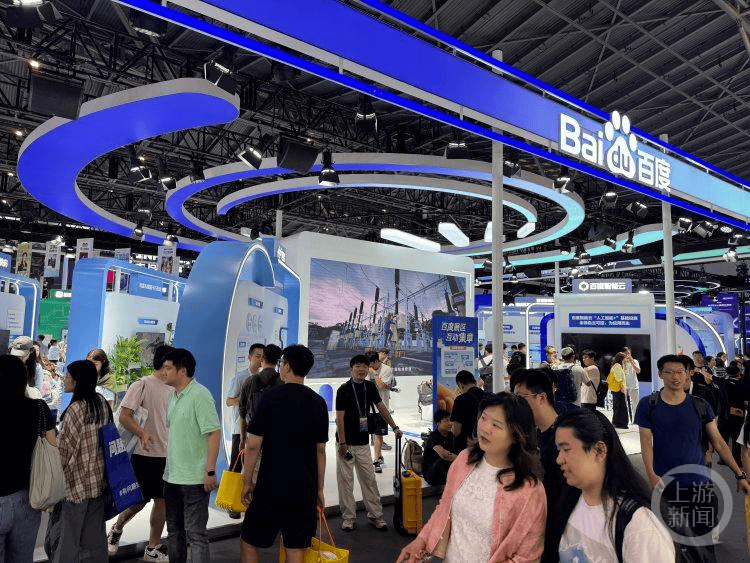
Group 1 - Baidu showcased its three major AI products at the 2025 World Artificial Intelligence Conference (WAIC): autonomous driving service "Luobo Kuaipao," deep learning platform "PaddlePaddle," and Baidu Intelligent Cloud computing cluster [1][3] - "Luobo Kuaipao" has accelerated its global expansion, successfully operating in Dubai and Abu Dhabi, providing over 11 million rides to users worldwide as of May this year [1] - The "NOVA Digital Human Technology" was announced, set to be fully open to the industry in October, allowing ordinary users to achieve professional-level live-streaming capabilities [3] Group 2 - PaddlePaddle, China's first self-developed and open-source industrial-grade deep learning platform, has attracted 21.85 million developers and served 670,000 enterprises, creating 1.1 million models as of April 2025 [3] - Baidu's self-developed 30,000-card super-large-scale computing cluster can simultaneously train multiple models with hundreds of billions of parameters and supports 1,000 customers for fine-tuning [3] - The cluster outperforms mainstream domestic chip solutions by 90% in single-card throughput and improves large-scale, high-concurrency model inference speed by over 40% [3][4] Group 3 - Baidu also demonstrated various core AI technologies and products, including "Miaoda," Baidu Wenku, Baidu Cloud, and the "Wenxin" series, highlighting its deep accumulation and innovation capabilities in the AI field [4]
百度2026届校招重注AI,超4000份Offer,应届生直接触核心研发!
Sou Hu Cai Jing· 2025-07-12 00:03
Group 1: Core Insights - Baidu has launched its 2026 campus recruitment with an unprecedented scale, offering over 4,000 job positions, with 90% related to AI, highlighting the company's focus on AI talent [1] - The recruitment spans seven major cities, including Beijing, Shanghai, Shenzhen, and Chengdu, and introduces 90 new positions in AI, focusing on cutting-edge technologies such as multimodal and large model architectures [1] - Graduates will have the opportunity to work on core products like Baidu's Wenxin large model, PaddlePaddle platform, and digital human projects, providing a significant career starting point [1] Group 2: AI Job Categories - The AI positions cover four core areas: computing power, framework, model, and application layers, aiming to build a robust computational foundation and support model and application development [3] - Positions include AI heterogeneous computing, cloud-native AI, deep learning, and algorithm engineers, emphasizing the development of intelligent systems [3] - Innovative roles like "AI large model evaluation product manager" require a blend of technical expertise and business understanding, particularly in designing AI recommendation systems that protect consumer privacy [3] Group 3: Industry Context - The competition among internet giants in the AI sector is intensifying, with Baidu demonstrating strong performance in the intelligent cloud market, winning 48 bidding projects worth 510 million yuan in the first half of 2025 [5] - Baidu has established a computing power foundation with 30,000 Kunlun chip clusters, providing efficient infrastructure support to enterprises like China Merchants Bank, enhancing application effectiveness in various scenarios [5] - Alibaba Cloud has also achieved significant results in AI, with annual revenue reaching 118 billion yuan in the 2025 fiscal year and AI-related products experiencing triple-digit growth for seven consecutive quarters [5]
百度开源文心系列大模型,多款模型代码已于飞浆平台开放;谷歌推出虚拟穿衣应用Doppl丨AIGC日报
创业邦· 2025-06-30 23:47
Group 1 - Baidu has open-sourced its Wenxin series of large models, including ERNIE-4.5-VL-424B-A47B-Paddle and ERNIE-4.5-300B-A47B-Paddle, on the PaddlePaddle platform, with the action occurring between June 29 and June 30 [1] - Zijing Zhikang launched a smart medical system called "Agent Hospital 1," which is based on large model intelligent agents, and plans to start clinical validation and pilot operation in July [1] - Google introduced an experimental application named Doppl that allows users to virtually try on clothes using AI technology by uploading a full-body photo [1] - Huawei announced the open-sourcing of its Pangu 7B dense model and the 72B mixture of experts model, along with model inference technology based on Ascend [1]