高性能DRAM

Search documents
开源证券:海内外大模型密集更新 AI算力需求有望持续受益增长
智通财经网· 2026-02-24 12:37
Core Insights - The report from Kaiyuan Securities highlights significant updates in domestic and international AI models during the Spring Festival, with a recommendation to focus on sectors benefiting from increased AI computing capital expenditure and domestic supply chain control [1][2] Market Review - During the Spring Festival period (February 16-20, 2026), major overseas technology indices saw gains, with the Nasdaq and Philadelphia Semiconductor Index both rising by 1.51%. Key tech stocks such as NVIDIA increased by 3.83%, Apple by 3.44%, Google by 2.90%, and Amazon by 5.69%, while AMD fell by 3.46% [2] - AI upstream semiconductor equipment, materials, and storage experienced widespread increases, with ASML up by 4.48%, AMAT by 5.90%, Micron by 4.01%, and SanDisk by 3.74% [2] Industry Updates - Domestic AI models are entering a dense release period, with updates from companies like Qianwen, Seedance, and others. ByteDance has launched several new models, including Seedance 2.0 and Doubao-Seed-2.0 [3] - Google released the Gemini 3.1 Pro model, achieving a score of 77.1% on the ARC-AGI-2 benchmark, with performance improvements over its predecessor [3] - Apple is set to hold a special event on March 4, 2026, to unveil multiple new products, including the iPhone 17E and a budget MacBook [3] Computing Power - NVIDIA's CEO Jensen Huang announced a groundbreaking new chip at the upcoming GTC 2026 conference. NVIDIA and Meta have signed a multi-billion dollar chip procurement agreement, with Meta committing to purchase millions of NVIDIA's latest AI chips [4] - Reports indicate a second round of price increases for electronic fabrics due to rising costs and tight supply, with multiple price hikes occurring from October 2025 to February 2026 [4] - OpenAI is finalizing a new funding round aiming to raise $100 billion, which would value the company at $830 billion, alongside a long-term capital expenditure plan projecting $600 billion in computing power spending by 2030 [4] Storage - Samsung and SK Hynix are accelerating their production expansion due to surging storage demand from AI, with Samsung moving up the production timeline for its P4 factory to Q4 2026 [5] - SK Hynix plans to start trial operations at its Longjin plant earlier than expected, focusing on high-value products like high-performance DRAM and HBM [5] - Micron's CFO confirmed that HBM4 memory is now in mass production, with shipment volumes expected to rise this quarter, achieving a transmission rate of 11 Gbps [5]
暴增134%!芯片,突传利好!
Xin Lang Cai Jing· 2026-02-23 04:27
Group 1: Chip Export Growth - South Korea's chip exports surged by 134% year-on-year in the first 20 days of February, driven by investments in artificial intelligence and data centers [1][6] - Overall exports for South Korea increased by 47.3% in February compared to January's revised growth of 34%, with a trade surplus of $495 million [6][7] - The strong export performance is attributed to robust demand for chips, despite ongoing trade uncertainties due to U.S. tariff policies [6][7] Group 2: Stock Market Performance - The KOSPI index rose over 2% on February 23, reaching a historical high, with a year-to-date increase of over 40% [2][8] - Chip stocks, including Samsung Electronics and SK Hynix, saw significant gains, with Samsung's stock rising over 3% and SK Hynix nearly 3% [9] - Other technology stocks also performed well, with LG Electronics and Samsung Electro-Mechanics rising over 10% [9] Group 3: Semiconductor Pricing and Production - Samsung Electronics is negotiating prices for its new AI storage chip HBM4, expected to be 20%-30% higher than the previous generation, around $700 [3][9] - Both Samsung and SK Hynix are accelerating the production of new wafer fabs to capitalize on the growing demand for memory chips driven by AI [10] - The global semiconductor sales are projected to exceed $1 trillion this year, supported by ongoing investments in AI data centers [10]
提价!三星HBM4新消息
Shang Hai Zheng Quan Bao· 2026-02-20 13:58
Group 1 - Samsung is negotiating the pricing of its latest AI storage chip, HBM4, aiming for a price around $700, which is 20% to 30% higher than HBM3E [1] - The pricing strategy has led to a significant increase in Samsung's stock price, reaching a historical high with an intraday gain of over 5% [1] - Analysts estimate that the operating profit margin for Samsung's HBM4 could be as high as 50% to 60% [1] Group 2 - The pricing and production of HBM4 highlight the industry's regained pricing power, indicating a tight supply in the AI storage chip market [3] - SK Hynix is also expected to set a higher price for HBM4, with previous pricing for HBM4 supplied to Nvidia at around $500 [3] - Nvidia has allocated over 55% of this year's HBM supply to SK Hynix, while Samsung holds over 20% to nearly 30% [3] Group 3 - Both Samsung and SK Hynix are accelerating the production timelines for new wafer fabs due to the surge in demand for AI-driven memory chips [5] - SK Hynix plans to start trial operations of its Longjin Phase I fab earlier than expected, while Samsung is moving up the production timeline for its P4 factory [5] - The focus of new production lines will be on high-value products like high-performance DRAM and HBM, leading to a reduction in general DRAM output [5] Group 4 - Major market research firms predict that memory supply shortages will persist until 2027, prompting both Samsung and SK Hynix to increase capital expenditures to address the shortage [6] - Samsung's memory division has indicated plans for significant equipment investment expansion in 2026, although current and next year's expansions may be limited [6]
“存储荒”愈演愈烈!三星HBM4据称涨价30%
Xin Lang Cai Jing· 2026-02-19 08:37
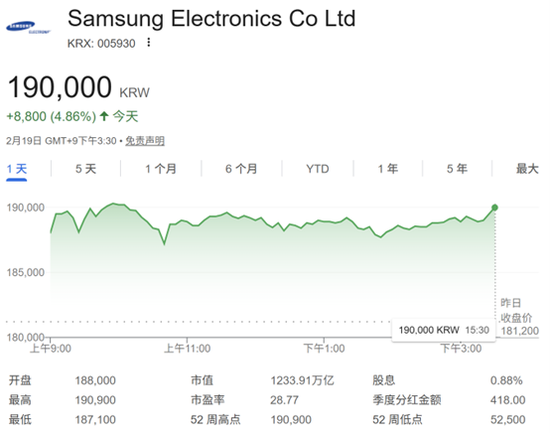
Group 1 - Samsung Electronics' stock price reached a historic high, with a reported increase of over 5% to 190,900 KRW, marking a nearly 50% rise this year [1][10] - The South Korean stock market, led by the storage sector, saw the Kospi index rise over 3%, reaching a peak of 5,681.65 points [3][12] - Samsung plans to price its HBM4 components at approximately $700, which is a 20% to 30% increase compared to HBM3E, indicating a strong pricing power in the AI storage chip market [4][13] Group 2 - The ongoing shortage of storage chips is beneficial for both Samsung and its local competitor SK Hynix, contributing to a 34% increase in the Kospi index year-to-date [4][13] - Samsung has begun mass production of HBM4 chips and has started delivering commercial products to customers, marking a strong comeback in the AI competition after initially lagging behind SK Hynix [4][13] - SK Hynix is also expected to set higher prices for HBM4, with last year's price to Nvidia being around $500 [4][13] Group 3 - Both Samsung and SK Hynix are adjusting their strategies to expand production in response to the surge in demand for AI-driven memory chips [6][14] - SK Hynix plans to advance the trial operation of its Longjin Phase I wafer fab to February-March next year, while Samsung is moving up the production timeline for its P4 factory to Q4 of this year [6][15] - The supply of memory chips continues to lag behind demand, with a reported order fulfillment rate of only 60% for major customers [8][15] Group 4 - Analysts predict that the shortage of storage chips will persist until 2027, with DRAM supply expected to grow by 17.5% and NAND flash supply by 16.5%, while demand for DRAM is projected to increase by 20.1% and NAND flash by 21.4% [9][16]

三星电子、SK海力士“调整战略”:新存储工厂生产计划提前
智通财经网· 2026-02-19 07:26
Core Viewpoint - The demand for memory chips driven by artificial intelligence is surging, prompting South Korean giants Samsung Electronics and SK Hynix to accelerate the production timeline of new wafer fabs, shifting their strategy from cautious inventory control to aggressive capacity expansion to capture the "super cycle" benefits in the industry [1]. Group 1: Production Expansion Plans - SK Hynix plans to advance the trial operation of its Longjing Phase I wafer fab to February-March next year, ahead of the completion date [1][2]. - Samsung Electronics is moving the production timeline of its P4 fab from Q1 next year to Q4 this year, compressing the schedule by about three months [1][2]. - Both companies will focus on high-value products such as high-performance DRAM and HBM in their new production lines [1][2]. Group 2: Market Demand and Supply Dynamics - The surge in server chip demand due to the expansion of AI data centers has led to a significant increase in memory chip demand, with a satisfaction rate of only about 60% for major customers as of February [1][3]. - Samsung's memory shipments have seen approximately 70% absorbed by AI data center companies [3]. - Market forecasts indicate that supply tightness will persist until 2027, with Citigroup predicting supply growth rates of 17.5% for DRAM and 16.5% for NAND flash, while demand growth rates are expected to reach 20.1% and 21.4%, respectively [1][4]. Group 3: Capital Expenditure and Future Outlook - Both Samsung and SK Hynix have confirmed plans to increase capital expenditures this year to address memory shortages [4][5]. - Samsung's memory division plans to significantly expand equipment investment by 2026, although short-term expansion may be limited due to supply constraints [5]. - The semiconductor industry's capacity expansion has inherent time lags, making it challenging to fully alleviate supply-demand imbalances in the short term [5].
三星、海力士“调整战略”:新存储工厂生产计划提前
Hua Er Jie Jian Wen· 2026-02-19 05:31
Core Viewpoint - The demand for memory chips driven by artificial intelligence is prompting South Korean giants Samsung Electronics and SK Hynix to accelerate the production timeline of new wafer fabs, shifting their strategy from cautious inventory control to aggressive capacity expansion to capture the "super cycle" benefits in the industry [1]. Group 1: Production Expansion Plans - SK Hynix plans to advance the trial operation of its Longjing Phase I wafer fab to February-March next year, ahead of its completion date [1][2]. - Samsung Electronics is moving the production timeline of its P4 factory from Q1 next year to Q4 this year, compressing the schedule by about three months [1][2]. - Both companies will focus on high-value products such as high-performance DRAM and HBM in their new production lines [1][2]. Group 2: Market Demand and Supply Dynamics - The surge in server chip demand due to the expansion of AI data centers has led to a significant increase in memory chip demand, with a fulfillment rate of only about 60% as of February this year [1][4]. - Samsung's memory shipments have seen approximately 70% absorbed by AI data center companies [4]. - Market expectations indicate that supply tightness will persist until 2027, with demand growth rates for DRAM and NAND flash projected at 20.1% and 21.4%, respectively, outpacing supply growth rates of 17.5% and 16.5% [4][5]. Group 3: Capital Expenditure and Strategic Intent - Both Samsung and SK Hynix have announced plans to increase capital expenditures this year to address memory shortages, with Samsung's memory division indicating a significant expansion in equipment investment by 2026 [6]. - The companies are attempting to signal stable supply to customers by rapidly entering trial operation phases, despite the inherent delays in achieving stable mass production [6].
韩国巨头,竞相扩产
半导体行业观察· 2026-02-19 02:46
Core Viewpoint - The article discusses the acceleration of production by South Korean semiconductor companies, such as Samsung Electronics and SK Hynix, in response to the ongoing semiconductor supercycle and the increasing demand for high-performance memory chips driven by AI data center expansion [2][4]. Group 1: Production Expansion - SK Hynix is advancing the construction of its first wafer fab in the Yongin semiconductor cluster, originally scheduled for completion in May next year, with plans to start trial production as early as February to March next year [2]. - Samsung Electronics is also expediting the construction of its P4 fab in Pyeongtaek, with completion expected to be moved up to the fourth quarter of this year, three months earlier than planned [3]. - Both companies are adjusting their production strategies to focus on high-demand products like high-performance DRAM and HBM, with Samsung's annual DRAM capacity projected to increase from 7.47 million wafers in 2024 to 8.175 million wafers this year [3]. Group 2: Market Demand and Supply Dynamics - The demand for high-performance DRAM is surging due to the expansion of AI data centers, with major clients only able to meet 60% of their demand as of February this year [4]. - Market research indicates that DRAM supply is expected to grow by 17.5% this year, while demand is anticipated to rise by 20.1%, indicating a persistent supply-demand imbalance [5]. - Analysts predict that the shortage of memory chips will continue until 2027, with significant implications for the competitiveness of enterprises relying on server DRAM [5]. Group 3: Industry Challenges - The current memory shortage is exerting immense pressure on key players in the storage sector, with some companies facing the risk of being pushed out of the market [6]. - The CEO of a major storage company highlighted the extreme scarcity of flash memory, stating that even large manufacturers are struggling to meet order fulfillment rates below 30% [7]. - The situation is expected to worsen as AI applications grow, leading to increased demand for storage outside of data centers, further straining supply [7].
三星电子斥资1.1万亿韩元引进High-NA EUV光刻机
Huan Qiu Wang Zi Xun· 2025-10-16 03:44
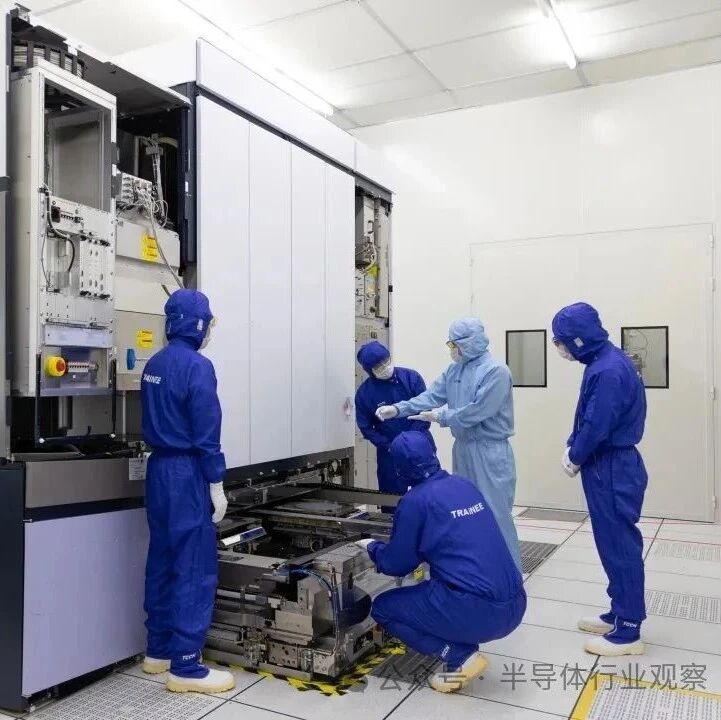
Core Viewpoint - Samsung Electronics announced a significant investment plan to introduce two latest High-NA EUV lithography machines, marking a crucial step in the mass production of next-generation semiconductor chips [1][3]. Group 1: Investment and Equipment Introduction - Samsung plans to invest approximately 1.1 trillion Korean Won to acquire two High-NA EUV lithography machines [1]. - This is the first time Samsung will apply such advanced equipment in a mass production scenario, having previously only deployed one unit for research purposes [3]. - The first machine is expected to be introduced by the end of this year, with the second machine scheduled for the first half of next year [3]. Group 2: Technical Specifications and Advantages - The equipment being introduced is the Twin Scan EXE:5200B, an upgraded version of the TWINSCAN EXE:5000, featuring a numerical aperture (NA) of 0.55 [3]. - The new system enhances alignment accuracy and significantly improves production efficiency, recognized as essential for producing next-generation semiconductor chips and high-performance DRAM [3]. - Compared to the previous NXE system, the Twin Scan EXE:5200B offers a 40% increase in imaging contrast and a resolution of 8 nanometers, allowing manufacturers to achieve 1.7 times finer circuit etching with a single exposure [3]. - This technological advancement can increase transistor density by 2.9 times, simplifying large-scale production processes while effectively boosting wafer yield for semiconductor manufacturers [3].