
高技术船舶

Search documents
“数”说经济大省“挑大梁”底气 全域均衡发展夯实经济发展“基本盘”
Yang Shi Wang· 2026-01-30 08:29
Economic Overview - By 2025, China's economy is projected to reach a total of 140 trillion yuan, with Jiangsu province contributing 14.2 trillion yuan, accounting for one-tenth of the national total [1] - Jiangsu's economic resilience and vitality are attributed to its strong industrial foundation, robust domestic demand, high-level openness, and balanced development [1] Industrial Strength - China is the only country with all 41 industrial categories defined by the United Nations, and Jiangsu has 40 of these categories [6] - In 2025, 30 out of 40 industrial categories in Jiangsu are expected to see year-on-year growth, with a growth coverage of 75% [10] - Jiangsu is home to 54 of the top 500 manufacturing enterprises in China, highlighting the province's solid manufacturing base and stable real economy [10] Foreign Trade - Jiangsu's foreign trade reached a record high of 5.95 trillion yuan, growing by 6% year-on-year, and accounting for 13.1% of China's total foreign trade [14] - High-tech products and the "new three categories" have become the mainstream of exports [14] Consumer Market - By 2025, Jiangsu's retail sales of consumer goods are expected to surpass 4.6 trillion yuan, ranking first in the nation for the first time [23] - Key consumer products such as new energy vehicles, green appliances, and smart phones have consistently topped sales charts [23] Balanced Development - Jiangsu's economic strength is reinforced by its unique advantages in balanced development, with a per capita disposable income of 57,971 yuan in 2025, reflecting a 4.6% year-on-year increase [27] - All 13 prefecture-level cities in Jiangsu are among the top 100 in the country, with five cities having an economic output exceeding 1 trillion yuan [27] Future Outlook - Jiangsu plans to continue expanding domestic demand, optimizing supply, and enhancing new productive forces while ensuring stable employment and market expectations [30]

中共广东省委办公厅 广东省人民政府办公厅印发《广东省推动海洋经济高质量发展行动方案(2025-2027年)》
Nan Fang Ri Bao Wang Luo Ban· 2026-01-30 01:44
Core Viewpoint - The Guangdong Provincial Government has issued an action plan for promoting high-quality development of the marine economy from 2025 to 2027, aiming to establish Guangdong as a strong marine province in line with national strategies [1]. Group 1: Marine Technology Initiatives - Accelerate breakthroughs in key marine technologies focusing on deep water, green, intelligent, and safe technologies, utilizing major research facilities like the "Dream" ocean drilling vessel [2]. - Build high-standard marine research platforms, including the National Marine Comprehensive Test Field in Zhuhai and the Southern Marine Science and Engineering Laboratory [2][3]. - Establish a comprehensive marine industry innovation system to facilitate technology transfer and support the development of marine-related academic disciplines in local universities [3]. Group 2: Marine Industry Development - Strengthen and expand the marine industry to create a modern marine industrial system with competitive international standing, focusing on optimizing traditional industries and fostering emerging sectors [4]. - Develop modern marine fisheries through the establishment of modern marine ranches and enhancing the organizational and professional levels of marine ranching [4]. - Promote the marine oil and gas industry by advancing exploration and development into deep water and supporting the digitalization of the oil and gas sector [5]. Group 3: Marine Economic Platforms - Support the construction of marine economic development platforms in coastal cities, emphasizing the integration of port, industry, and urban development [11]. - Establish a database of key marine enterprises and foster the growth of leading and specialized marine companies [11]. Group 4: Marine Economic Support Actions - Enhance cooperation in marine economic development with neighboring provinces and countries, focusing on infrastructure connectivity and trade [12]. - Implement high-quality marine ecological restoration projects and strengthen monitoring systems for marine resource development [12]. - Secure financial support for marine projects through various funding mechanisms and encourage financial institutions to invest in marine infrastructure [13]. Group 5: Governance and Leadership - Strengthen the leadership of the Communist Party in marine work and establish a coordination mechanism for marine economic development [14]. - Promote awareness and understanding of marine issues within society to foster a supportive environment for marine economic initiatives [14].
迈过14万亿,江苏经济的底气从何而来
Xin Lang Cai Jing· 2026-01-28 22:02
Core Viewpoint - Jiangsu Province's GDP for 2025 is projected to reach 14.2 trillion yuan, reflecting a year-on-year growth of 5.3%, showcasing its resilience and commitment to high-quality development amidst complex domestic and international economic environments [1] Economic Growth and Structure - Jiangsu's GDP accounts for approximately 10% of the national total, contributing significantly to the overall economic landscape of China [1] - The growth is driven by structural optimization, technological advancement, and efficiency improvements rather than mere scale expansion [1] Industrial Development - The province's industrial added value is expected to grow by 6.5% year-on-year, with 30 out of 40 major industrial sectors experiencing growth, indicating a 75% growth coverage across industries [2] - Jiangsu ranks first nationally in manufacturing quality development index for five consecutive years, with 54 companies listed among China's top 500 manufacturing enterprises [2] Innovation and Technology - High-tech industries accounted for 52.1% of the province's industrial output, marking a 1.4 percentage point increase from the previous year, with high-tech manufacturing value added growing by 11.9% [2] - Strategic emerging industries in Jiangsu have seen an average annual growth of 8% over the past five years, with leading positions in biomedicine, photovoltaics, and integrated circuits [2] Domestic Demand and Consumption - The total retail sales of consumer goods in Jiangsu are projected to reach 46,394.2 billion yuan, with a year-on-year growth of 3.3% [3] - Significant growth in sectors such as sports events and travel services indicates a robust domestic consumption environment [3] Foreign Trade and Investment - Jiangsu's total foreign trade import and export value is expected to reach 5.95 trillion yuan, with a year-on-year growth of 6%, outpacing the national average by 2.2 percentage points [4] - The province has maintained its position as the top destination for foreign investment in China for eight consecutive years, with a focus on high-tech industries and modern services [4] Income and Balanced Development - The per capita disposable income in Jiangsu is projected to be 57,971 yuan, reflecting a year-on-year increase of 4.6%, with a narrowing income gap between urban and rural residents [4] - All 13 prefecture-level cities in Jiangsu are ranked among the top 100 nationwide, highlighting the province's balanced economic development [4] Future Outlook - Jiangsu's economic achievements are seen as a new starting point for high-quality development, with a commitment to expanding domestic demand and optimizing supply [5][6]
首份海洋清单释放百亿需求 多地场景开放激活“蓝色引擎”
Yang Shi Wang· 2025-12-10 02:46
Core Viewpoint - The Chinese government is promoting the development of various marine economic application scenarios to leverage the country's vast market and rich application environments, aiming to support innovative enterprises and enhance industrial capabilities [1][3]. Group 1: Marine Economic Application Scenarios - The first comprehensive marine economic application scenario list was released in Zhanjiang, Guangdong, featuring 48 scenario demands with a total investment scale exceeding 100 billion yuan, covering nine major fields including deep-sea aquaculture, marine + low-altitude applications, marine biomedicine, marine engineering, and marine low-carbon environmental protection [3]. - Among the scenarios, deep-sea aquaculture accounts for 13 items, representing over 27% of the total, providing ample validation space for various deep-sea equipment and artificial intelligence technologies [3]. Group 2: Technological Transition and Market Application - New technologies transitioning from laboratories to markets often face failures in real marine environments due to issues like wind and wave interference and salt corrosion. Open scenarios provide large-scale, high-fidelity "real-world testing grounds," which are crucial for bridging this gap [5]. - China's extensive coastline of 32,000 kilometers and approximately 3 million square kilometers of marine area provide a solid foundation for the comprehensive opening of marine economic application scenarios [5]. Group 3: Regional Development and Innovation Centers - The Sanxia Offshore Wind Power International Industrial Park in Fuzhou focuses on integrated scenarios for wind power equipment R&D, manufacturing, and installation, achieving significant advancements in offshore wind turbine capacity and establishing China's first national offshore wind power testing base [7]. - Dalian, a northern port city, is focusing on high-tech shipbuilding and marine engineering equipment, implementing a three-year action plan for high-quality development in the shipbuilding and marine engineering industry, promoting the transformation of the industry towards high-end, green, and intelligent development through the opening of advanced scenarios like deep-sea exploration and underwater robotics [9].
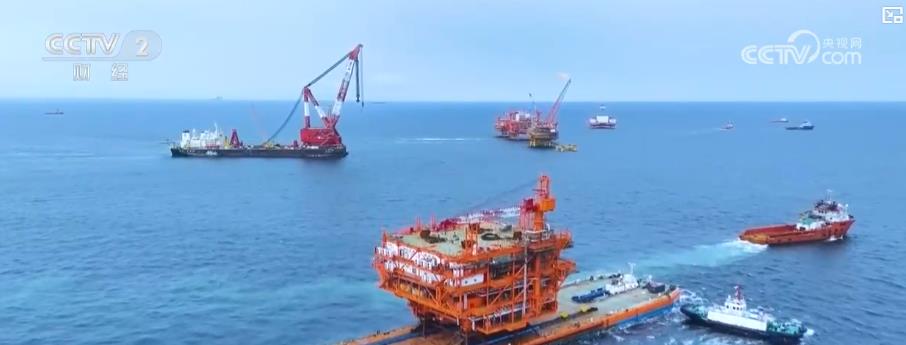
上海谋划未来十年“向海图蓝”
Zhong Guo Zi Ran Zi Yuan Bao· 2025-12-02 07:53
Core Insights - The Shanghai Municipal Government has released the "Shanghai Marine Industry Development Plan (2026-2035)" aimed at accelerating the construction of a modern marine city and establishing a modern marine industry system to promote high-quality development of the marine economy [1] Group 1: Industry Development Goals - By 2030, Shanghai aims for steady growth in major marine industries, significant enhancement in marine technology innovation capabilities, and accelerated cultivation of new marine productivity [1] - The plan outlines a "3+5+X" marine industry system and a spatial layout characterized by "two cores leading, one belt linking, one corridor radiating, and multiple points supporting" [1] - By 2035, the goal is to fully establish a leading area for the construction of a maritime power with Chinese characteristics and an internationally advanced modern marine city, positioning Shanghai among the top coastal cities globally in terms of comprehensive marine industry strength [1] Group 2: Key Marine Industries - The plan identifies dominant marine industries including shipbuilding and marine engineering equipment, shipping services, and marine tourism [1] - Emerging marine industries highlighted include marine renewable energy, marine electronic information, marine new materials, and seawater desalination and comprehensive utilization [1] - Future marine industries are projected to encompass deep-sea resource industries and innovative integration industries in the deep sea [1] Group 3: Spatial Layout and Development Tasks - The spatial layout focuses on strengthening the marine industry development core, creating a coastal industrial development belt, fostering a modern service industry corridor, and establishing marine industry functional parks [2] - Key tasks include building high-energy clusters, leading with efficient innovation, ensuring high-quality infrastructure, advancing digital intelligence upgrades, and promoting high-level cooperation and openness [2] - Specific initiatives include cultivating world-class shipbuilding groups, encouraging participation in international standard-setting, and accelerating the development of high-tech ships and marine engineering equipment [2]
“中国造”从长江发货 引航员为大国“重”器远航引路守望
Zhong Guo Xin Wen Wang· 2025-11-21 06:12
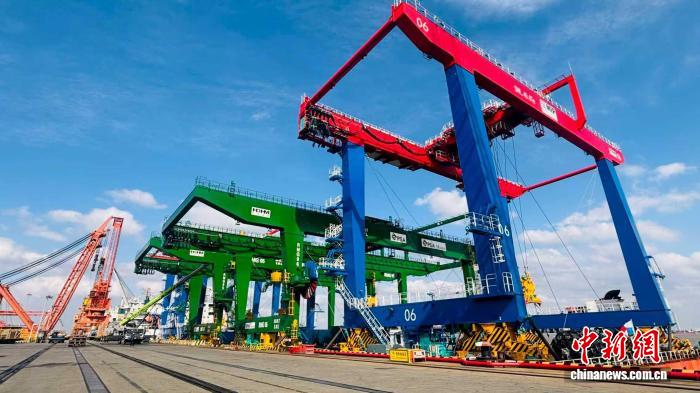
Core Viewpoint - The article highlights the increasing significance of China's manufacturing and shipping capabilities, particularly in relation to the Belt and Road Initiative, as evidenced by the departure of the "Yaqing Star" carrying heavy-duty cranes from Jiangsu to India and Turkey [1][3]. Group 1: Shipping and Trade Growth - The "Yaqing Star" ship, loaded with "Made in China" heavy-duty cranes, departed from Jiangsu's Zhangjiagang Port, marking a significant export to Belt and Road countries [3]. - The number of berths at Zhangjiagang Port has increased from 3 to 5 to accommodate the rising demand from foreign vessels [3]. - Trade between China and Belt and Road countries has grown from $2.7 trillion in 2021 to $3.1 trillion in 2024, with an average annual growth rate of 4.7%, increasing its share of overall trade from 45.3% to 50.7% [3]. Group 2: Regional Trade Dynamics - Jiangsu Province has seen a 9.5% year-on-year increase in imports and exports to Belt and Road countries, totaling 1.39 trillion yuan in the first half of this year [3]. - The province's exports include popular items such as new energy vehicles, lithium batteries, and high-end marine equipment, reflecting its manufacturing strength [3]. Group 3: Pilotage Services and Infrastructure - The Zhangjiagang Pilot Station has experienced a 147% increase in pilotage services from 2018 to 2024, with an average annual growth rate of 16.3% [5]. - In the first nine months of this year, the station guided 7,541 vessels, a 2.98% increase year-on-year, facilitating the shipment of 243 vessels for Belt and Road projects valued at over 25 billion yuan, a 28% increase [5]. Group 4: Emerging Talent in Pilotage - The article features young pilots like Tang Muhai and Li Xiaoqing, who are part of the new generation of pilots navigating the busy Yangtze River, emphasizing the challenges and risks involved in their work [6][8]. - Li Xiaoqing, the only female certified pilot in the Yangtze River basin, highlights the importance of communication and observation in pilotage, showcasing the evolving nature of the profession [6][8].
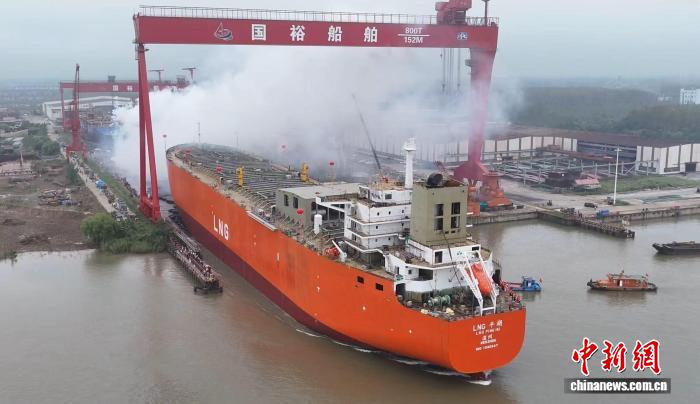
2025年前三季度扬州沿江新造下水船舶首次突破200艘次 部分船企新造船订单排至2029年
Zhong Guo Xin Wen Wang· 2025-10-27 10:24
2025年前三季度扬州沿江新造下水船舶首次突破200艘次 部分船企新造船订单排至2029年 中新网扬州10月27日电 (陈菊琴 严成杰)27日,扬州海事部门消息,2025年前三季度扬州沿江造船新造 船安全下水首次突破200艘次。 "中国造船看江苏"。江苏发展船舶与海工装备区位优势独特,船舶海工产业连续十多年全国第一,已形 成鲜明的产业先导优势,拥有南通、扬州、靖江等重要造船基地,已成为具有国际影响力的船舶和海工 装备制造大省。 扬州海事局作为扬州高技术船舶与海工装备新型产业链链长单位,持续深化"主角意识",聚焦服务保障 与安全监管主责主业,推动辖区船舶修造产业实现量质齐升。2025年前三季度,扬州沿江船厂新造船数 量、载重吨及高技术船舶占比均保持稳步增长,其中服务保障辖区沿江船厂新造船安全下水215艘次、 597.75万载重吨,同比分别增长10.26%、24.38%;试航114艘次、547.67万载重吨,同比分别持平、增 长7.96%。 据扬州海事部门相关负责人介绍,新造船下水作业时间长、占用水域广,为进一步提升监管与服务效 能,压缩部门间信息流通"成本",扬州海事优化提升下水、试航等业务办理流程,实现备案与 ...
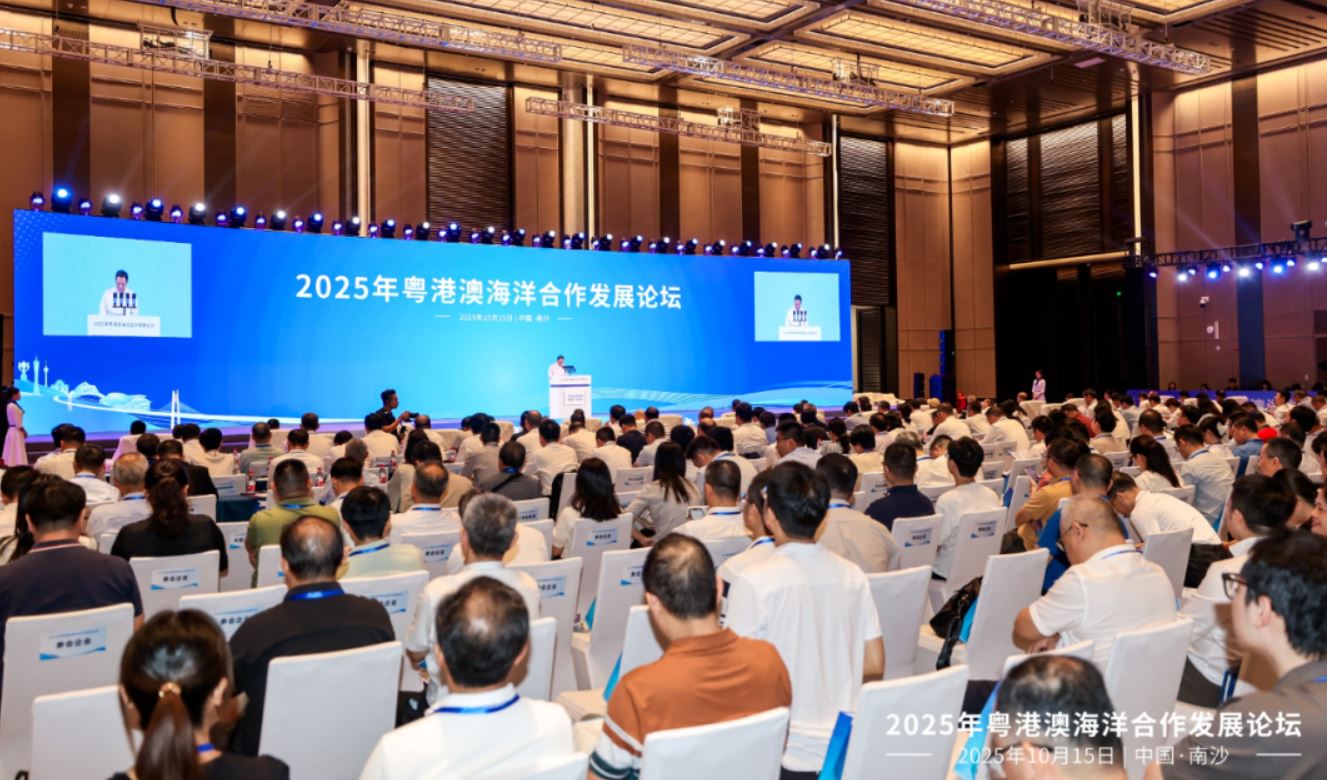
2025年粤港澳海洋合作发展论坛举行
Zhong Guo Zi Ran Zi Yuan Bao· 2025-10-23 06:26
Core Points - The 2025 Guangdong-Hong Kong-Macao Marine Cooperation Development Forum was held in Nansha, Guangzhou, focusing on "Sharing Blue Opportunities and Building a First-Class Bay Area" [3] - Approximately 400 guests attended, including representatives from marine authorities in Tianjin, Liaoning, Shanghai, as well as from Hong Kong, Macau, and coastal cities in Guangdong [4] - The forum showcased the achievements of Guangdong's marine industry during the 14th Five-Year Plan, highlighting innovations in marine electronic information, offshore wind power, marine engineering equipment, marine biology, natural gas hydrates, and marine public services [4] - A joint initiative was launched by marine industry associations from Guangdong, Hong Kong, and Macau, proposing the establishment of a marine technology resource sharing platform, a joint talent training base, and a blue finance service alliance [4] - The forum included specialized discussions and enterprise roadshows focusing on emerging industries such as shipbuilding, marine engineering equipment, marine electronic information, and marine biomedicine [5] - Recent efforts by the governments of Guangdong, Hong Kong, and Macau have emphasized the protection and restoration of marine ecosystems, promoting innovative green and low-carbon development models [5]
透视广东海洋城市版图:广深抢跑新兴产业,临港县域寻路转型
Sou Hu Cai Jing· 2025-06-26 13:35
Core Insights - Guangdong province is leading in marine economy with a marine production value exceeding 2 trillion yuan, showcasing a clear "blue economy" map through the transformation efforts of 14 coastal cities [1][4] - Guangzhou and Shenzhen are the primary engines of this growth, with projected marine production values of 497.9 billion yuan and 540.9 billion yuan respectively for 2024, highlighting their significant contributions to the province's economy [1][4] Group 1: Marine Economic Development - The marine economy in Guangdong is characterized by a strong focus on innovation, particularly in high-tech shipbuilding and marine electronic information sectors [1][4][6] - The province aims to optimize marine productivity and develop a world-class coastal economic belt, emphasizing the integration of port, industry, and city [2][6] - The county-level cities along Guangdong's extensive coastline are also seeking transformation in traditional marine industries through technological upgrades and diversification [8][9] Group 2: Innovation and Emerging Industries - Guangzhou and Shenzhen are leading in marine innovation, with significant advancements in high-tech vessels and marine engineering equipment, contributing to their status as innovation hubs [5][6] - The marine information service sector in Shenzhen has seen a value increase of 10.1%, while marine tourism has grown by 11.6% [4] - Guangdong is focusing on nurturing future marine industries, including marine IoT and hydrogen production from seawater, aiming to create billion-level industry clusters [6][7] Group 3: County-Level Initiatives - County-level cities are actively pursuing structural upgrades in traditional marine industries, with a focus on enhancing core technologies and extending industrial chains [8][9] - For instance, the county of Raoping has made significant strides in aquaculture technology, achieving a total fishery output value nearing 6 billion yuan for 2024 [9][10] - The integration of market forces and enterprise participation is accelerating the transformation of coastal fisheries, with plans for substantial investments in deep-water aquaculture infrastructure [10][11]