麦乐送

Search documents
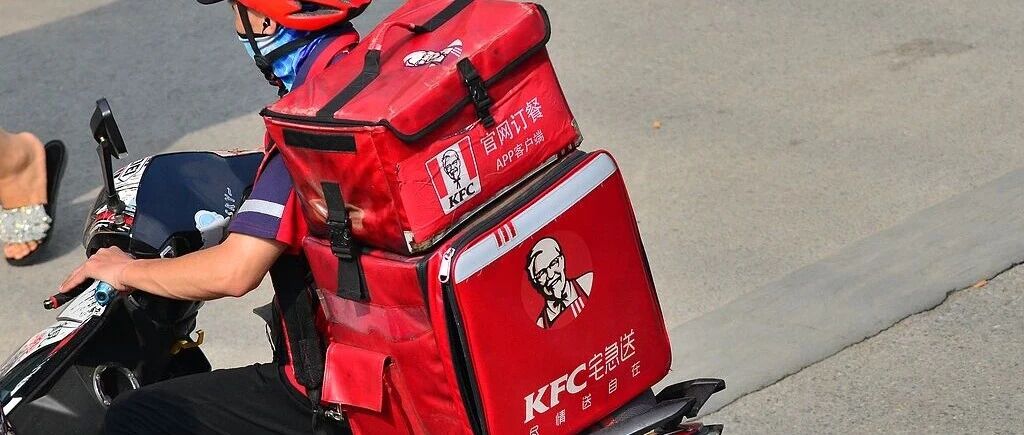
肯德基:外卖涨价了
财联社· 2026-01-26 02:10
Group 1 - KFC has adjusted the prices of its delivery products by an average of 0.8 yuan starting January 26, while dine-in prices remain unchanged [1] - The price adjustment is a response to changes in operational costs and aims to maintain stable and healthy operations [1] - Popular promotional meal prices, such as "Crazy Thursday" and "Weekend Crazy Combo," will remain unchanged [1] Group 2 - KFC's last price adjustment occurred on December 24, 2024, with an average increase of 2%, affecting prices by 0.5 to 2 yuan [1] - The number of KFC stores in China is expected to exceed 12,600 by September 2025, with "KFC Coffee" rapidly growing to over 1,800 locations [1] - In early 2024, KFC reduced its delivery fee from 9 yuan to 6 yuan and will charge a packaging service fee to enhance delivery service experience [2] Group 3 - McDonald's has also been adjusting its product prices, with increases of 0.5 to 1 yuan starting December 15, 2025, while maintaining certain combo prices [2] - McDonald's confirmed price adjustments for breakfast items and Happy Meals in February 2025, with increases of 0.5 yuan [2] - McDonald's delivery fee will also be adjusted to 6 yuan by the end of 2024, with additional packaging service fees based on the number of items ordered [2]


部分餐品价格增加0.5到1元!2023年以来麦当劳中国第4次上调产品价格
Sou Hu Cai Jing· 2025-12-16 03:44
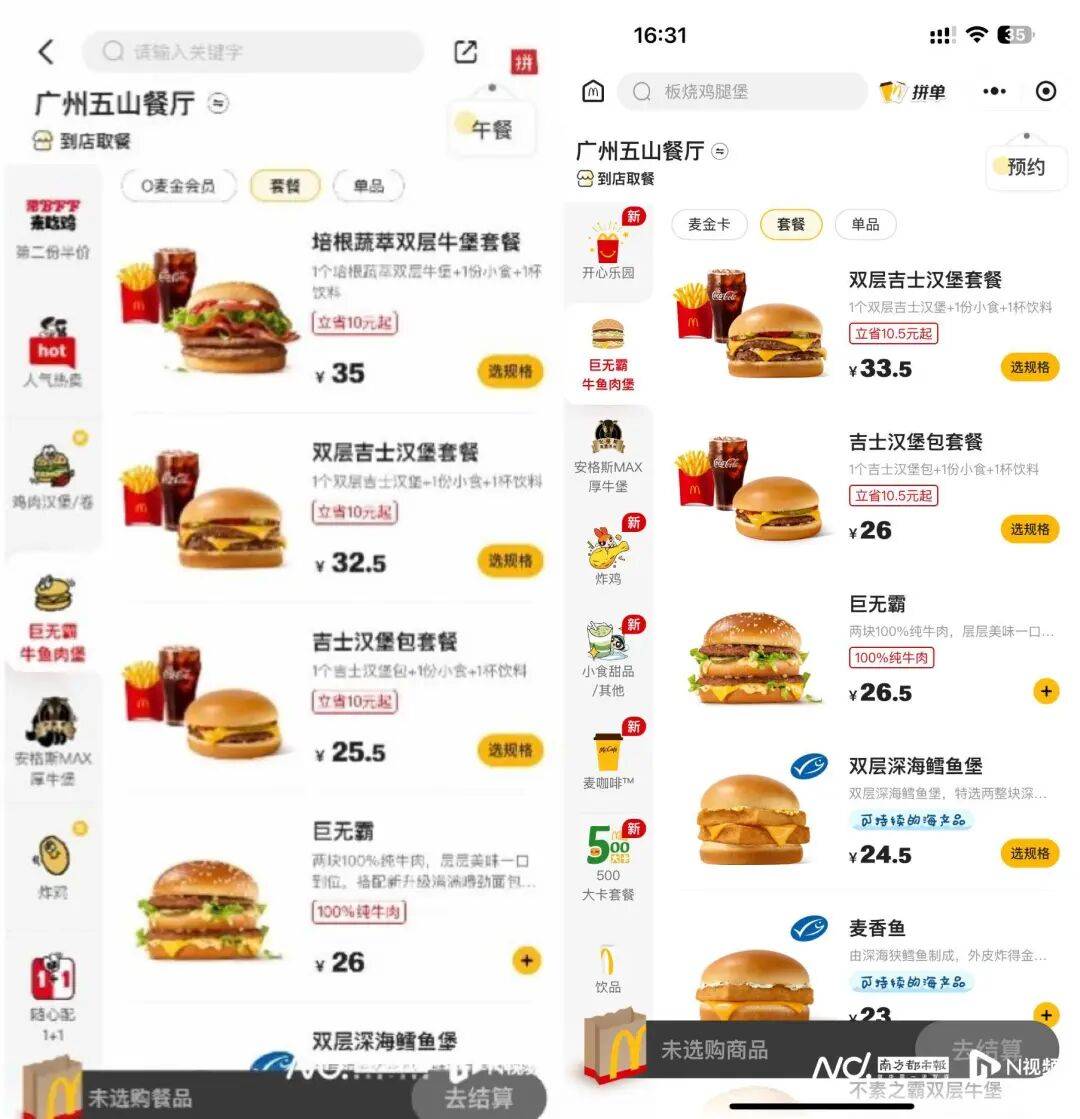
Core Viewpoint - McDonald's China has announced a price increase for certain menu items, effective December 15, with prices rising by 0.5 to 1 yuan, marking the fourth price adjustment since January 2023 [1][6]. Price Adjustments - The price increase affects various breakfast items, burgers, and snacks, with slight variations across different cities. For example, in Guangzhou, the price of the ham and egg muffin combo increased from 6.9 yuan to 7.8 yuan, and the double cheeseburger meal rose from 32.5 yuan to 33.5 yuan [3][5]. - The "1+1 Flexible Combo," often referred to as the "poor man's combo," remains priced at 13.9 yuan, but selecting certain items like the double cheeseburger incurs an additional charge, bringing the total to 14.9 yuan [5]. Historical Context of Price Changes - This is the fourth price increase since January 2023, when the "1+1 Flexible Combo" was raised from 12.9 yuan to 13.9 yuan. Other breakfast and burger items also saw price increases of 0.6 to 1 yuan at that time, attributed to ongoing cost pressures from the pandemic [6]. - On December 27, 2023, further price adjustments were made, with increases ranging from 0.5 to 2 yuan, averaging a 3% rise, again linked to changes in operational costs [6]. Market Performance - In the third quarter of this year, the international development licensed markets, including China, reported a same-store sales growth of 4.7% [7][8]. - As of August 1, 2023, McDonald's China operates over 7,100 stores, with a significant focus on local sourcing, achieving over 90% of ingredients from local suppliers [8][9]. Strategic Development - McDonald's China has adopted a localization strategy, significantly increasing the proportion of local suppliers to nearly 60%. The company has tripled its restaurant count over the past eight years, with plans to reach 10,000 stores by 2028, adding approximately 1,000 new locations annually [9].
部分餐品价格最高涨价1元!麦当劳今年第二次涨价
Nan Fang Du Shi Bao· 2025-12-15 10:31
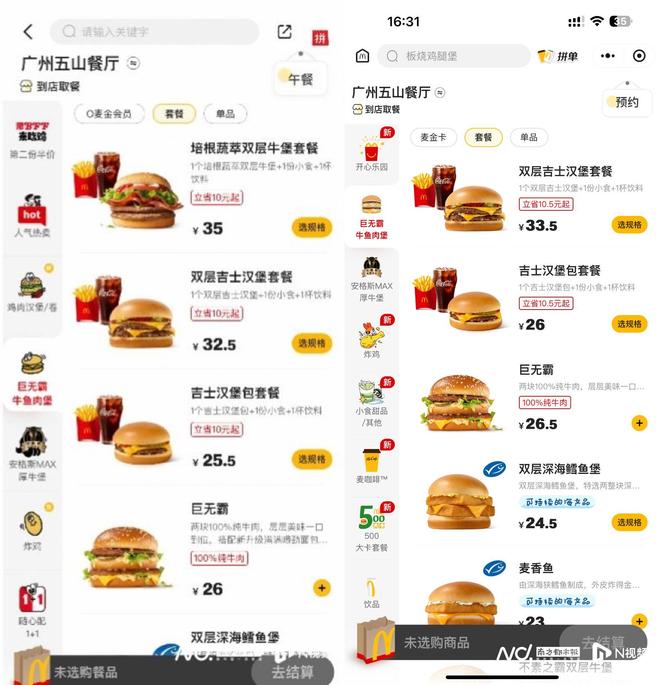
Core Viewpoint - McDonald's China has announced another price increase for certain menu items, effective December 15, 2025, citing ongoing cost pressures as the primary reason for the adjustments [1][4]. Price Adjustments - The price increase will range from 0.5 to 1 yuan for various breakfast items, burgers, and snacks, with slight variations across different cities [1][3]. - For example, in Guangzhou, the price of the ham and egg muffin combo (member price) will rise from 6.9 yuan to 7.8 yuan, the double cheeseburger meal from 32.5 yuan to 33.5 yuan, and the Big Mac from 26 yuan to 26.5 yuan [3]. - This marks the fourth price increase for McDonald's China since January 2023, with previous adjustments attributed to rising operational costs influenced by the pandemic [4]. Historical Context - In January 2023, McDonald's raised the price of its popular "Anytime Meal 1+1" from 12.9 yuan to 13.9 yuan, with other breakfast and burger meals seeing increases of 0.6 to 1 yuan [4]. - On December 27, 2023, further price adjustments were made, with increases ranging from 0.5 to 2 yuan, averaging around 3% [4]. Delivery Service Changes - In addition to menu price adjustments, McDonald's delivery service "McDelivery" will also see a fee change, reducing the delivery charge from 9 yuan to 6 yuan, along with new packaging fees based on the number of items ordered [4]. Market Performance - McDonald's has not disclosed detailed operational results for the Chinese market in its financial reports, but its latest quarterly report indicated a 4.7% increase in same-store sales across international markets, including China [4]. - As of August 1, 2023, McDonald's China operates over 7,100 stores [4].
麦当劳确认涨价
2 1 Shi Ji Jing Ji Bao Dao· 2025-12-15 07:53
Core Viewpoint - McDonald's has recently increased prices on most menu items by 0.5 to 1 yuan, while the "1+1 Flexible Match" meal remains unchanged at 13.9 yuan, indicating a strategic pricing adjustment amidst rising operational costs [1][3]. Pricing Adjustments - The recent price increase affects various burgers, snacks, and meal sets, with the adjustment being part of a broader trend of annual price hikes that McDonald's has implemented since 2021 [1][3]. - In February 2023, McDonald's confirmed a price adjustment on breakfast items and Happy Meals, with a similar increase of 0.5 yuan [3]. - The average price increase across selected products in December 2023 was approximately 3%, reflecting changes in operational costs [3]. Promotional Strategies - McDonald's is currently running a promotional event called "Ten Yuan Eat Burger," aiming to provide value to consumers despite the price increases [1]. - The company emphasizes its commitment to maintaining affordable pricing through its restaurant and supply chain scale advantages, while also acknowledging the need for sustainable pricing strategies in the long term [4]. Financial Performance - In the third quarter of 2023, McDonald's reported revenues of $7.08 billion, a 3% year-over-year increase, slightly below market expectations [4]. - The net profit for the same period was $2.28 billion, reflecting a 2% year-over-year growth, although adjusted net profit showed a slight decline compared to the previous year [4]. - Same-store sales in the international franchise market, including China, grew by 4.7% in the third quarter [4].

2025年中国外卖行业发展历程、产业链、发展现状、重点企业及未来趋势研判:网上外卖用户规模持续增长,外卖市场规模突破万亿元[图]
Chan Ye Xin Xi Wang· 2025-05-13 01:33
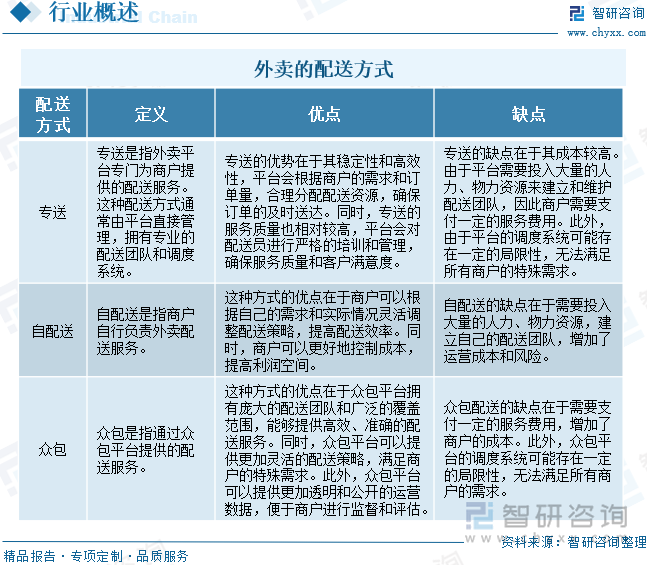
Core Insights - The takeaway from the articles is that the food delivery industry in China has expanded significantly beyond just restaurant meals to include a wide range of products such as groceries, beauty products, and more, becoming a crucial part of daily life for many consumers [1][17]. Industry Overview - The food delivery market in China has grown from CNY 301.29 billion in 2017 to CNY 1,635.7 billion in 2024, with a compound annual growth rate (CAGR) of 27.34% [1][17]. - The penetration rate of the industry has increased from 7.6% in 2017 to 28% in 2024, indicating a growing acceptance and reliance on food delivery services [1][17]. - The industry is driven by the fast-paced lifestyle of urban professionals and students, making food delivery a daily necessity [1][17]. Development Background - The per capita consumption expenditure in China is projected to reach CNY 28,227 in 2024, with food and beverage spending accounting for 29.8% of this figure [10]. - The growth in consumer spending, particularly in food and beverages, reflects an overall increase in consumer purchasing power and a shift in consumption patterns, further supporting the expansion of the food delivery sector [10]. Current Market Status - The restaurant industry in China saw revenues of CNY 4.67 trillion in 2019, with a recovery trend post-COVID-19 leading to projected revenues of CNY 5.62 trillion in 2024 [12]. - The online food delivery user base reached 592 million by the end of 2024, representing 53.4% of the total internet users in China [13]. Competitive Landscape - Major players in the market include Meituan-W, Ele.me, and JD Group, each offering unique services and focusing on different market segments [19][20]. - Meituan-W leads the market with comprehensive food search and delivery services, while Ele.me has expanded into new retail and instant delivery services [19][20]. - JD Group launched its food delivery service in 2025, focusing on chain brands and leveraging its logistics capabilities [19][20]. Delivery Methods - The food delivery industry employs three main delivery methods: dedicated delivery, self-delivery, and crowdsourced delivery, each with its own advantages and disadvantages [4]. - Dedicated delivery offers stability and efficiency but comes with higher costs, while self-delivery allows merchants to control costs but requires significant resource investment [4]. - Crowdsourced delivery provides flexibility and a large delivery network but may incur additional costs for merchants [4]. Future Trends - The "lazy economy" is driving the growth of the food delivery market as consumers increasingly prefer convenience over traditional shopping methods [26]. - The industry is also seeing advancements in delivery technology, including contactless delivery options and the introduction of autonomous delivery vehicles [27]. - The range of products available for delivery is diversifying, moving beyond food to include everyday essentials and other categories, reflecting changing consumer needs [28].