
7天逆回购利率

Search documents
管涛:“灵活高效”的货币政策意味着什么 | 立方大家谈
Sou Hu Cai Jing· 2025-12-29 01:45
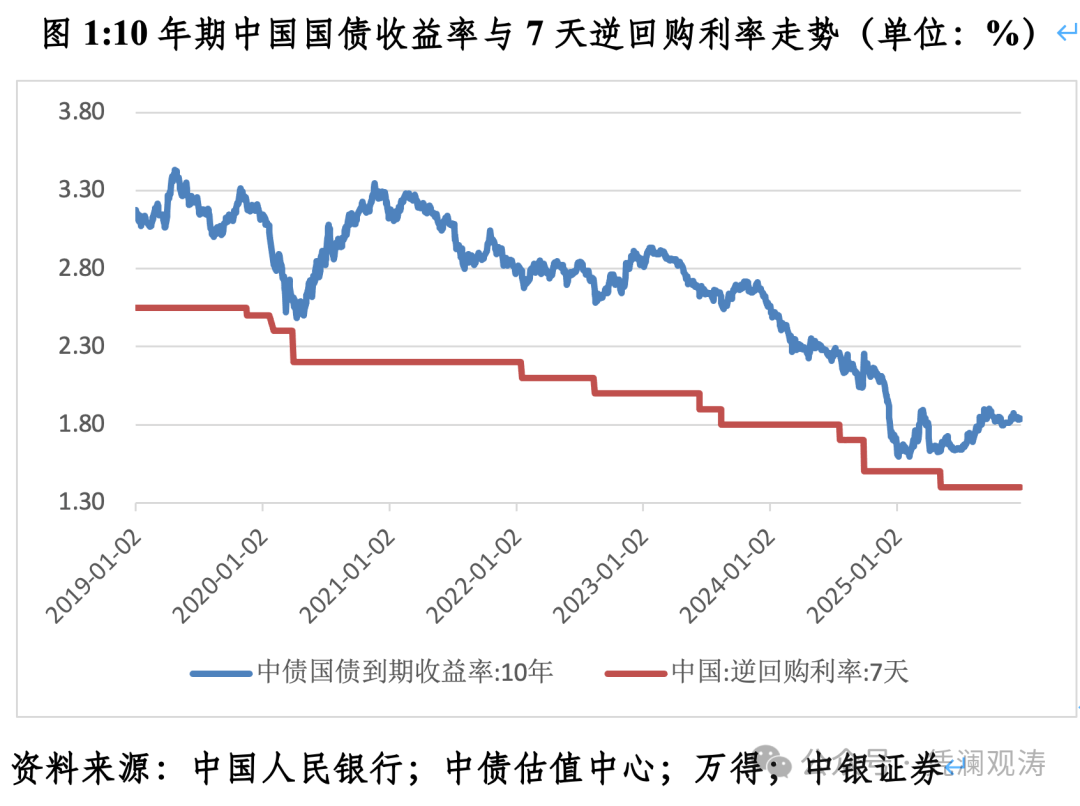
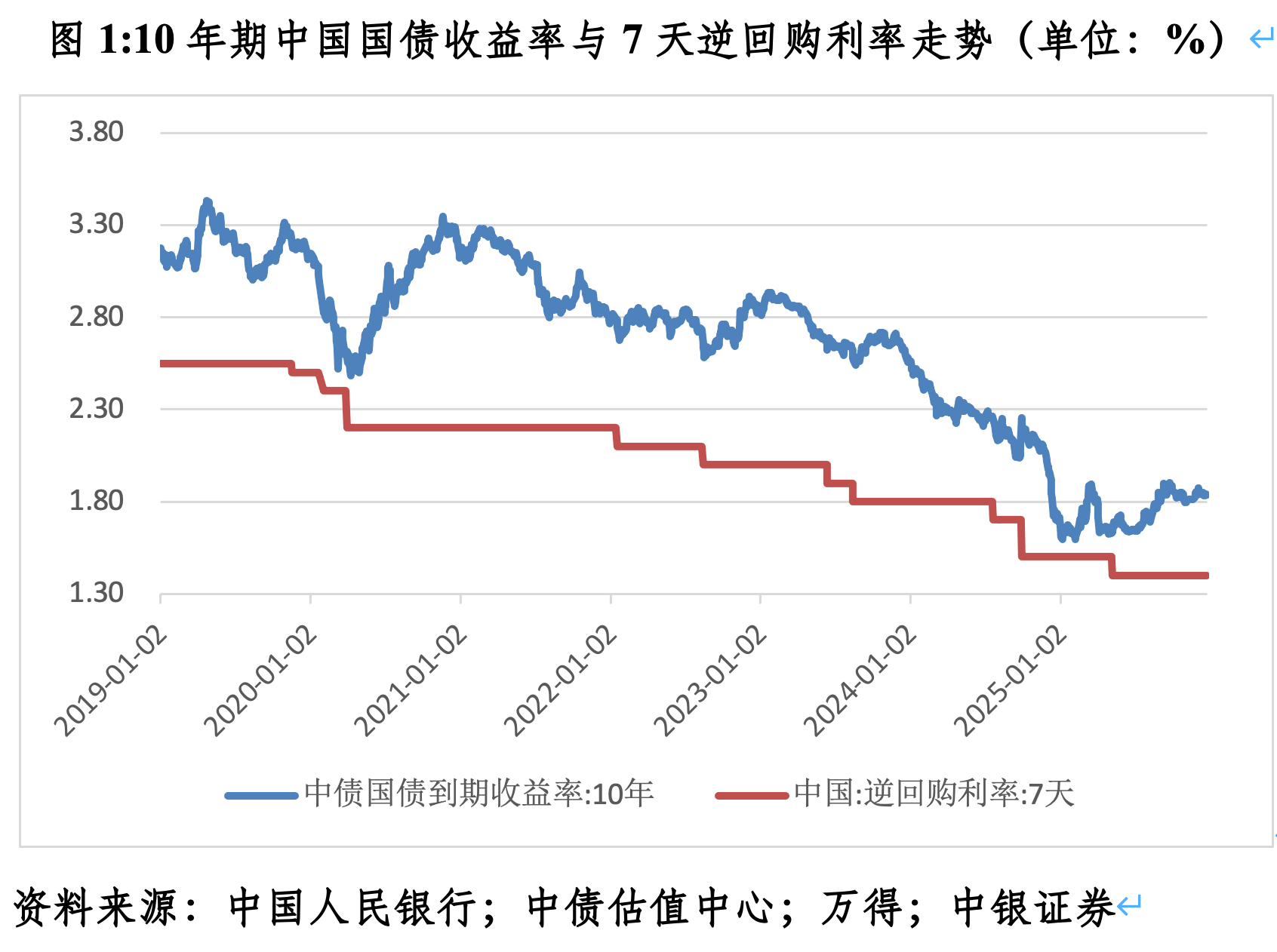
Core Viewpoint - The central economic work conference reiterated the implementation of a moderately loose monetary policy, emphasizing the flexible and efficient use of various policy tools such as reserve requirement ratio (RRR) cuts and interest rate reductions, indicating a proactive approach to economic stabilization and growth [1][12]. Summary by Sections Review of Monetary Policy Operations This Year - The shift in monetary policy from "prudent" to "moderately loose" was signaled during the Central Political Bureau meeting in December last year, leading to a significant decline in the 10-year government bond yield, which fell by 88 basis points over the year, marking the largest drop in a decade [2][6]. - The 10-year government bond yield reached a record low of below 1.6% after the New Year and Spring Festival [2]. Key Aspects of Monetary Policy - The People's Bank of China (PBOC) has confirmed that "moderately loose" reflects the supportive nature of recent monetary policy actions, with a focus on maintaining liquidity and optimizing the structure of monetary policy tools [5][14]. - In 2023, the PBOC implemented only one RRR cut of 50 basis points, compared to two cuts totaling 100 basis points in the previous year, and reduced the policy interest rate for the 7-day reverse repurchase agreement by 10 basis points [6][8]. Outlook for Next Year's Monetary Policy - The continuation of a moderately loose monetary policy is expected, with the central economic work conference acknowledging ongoing challenges such as external economic pressures and domestic supply-demand imbalances [9][10]. - The emphasis will be on enhancing policy coordination, integrating various economic policies to support stable growth, employment, and market expectations [11][12]. Implementation Strategies - The PBOC aims to maintain a supportive monetary policy stance while avoiding excessive liquidity injections, focusing on precise measures and leaving room for adjustments based on economic conditions [12][14]. - The integration of fiscal and monetary policies will be crucial, with examples such as the fiscal subsidy policy for personal consumption loans highlighting the collaboration between these sectors [11][12]. Risk Management and Financial Stability - The central economic work conference stressed the importance of balancing economic growth with risk prevention, enhancing the monitoring and assessment of financial risks, and maintaining stability in financial markets [17][18]. - The PBOC is tasked with building a robust monetary policy framework and improving the transparency of policy communication to bolster public confidence [18].

管涛:“灵活高效”的货币政策意味着什么
Di Yi Cai Jing· 2025-12-28 11:16
Core Viewpoint - The central bank's monetary policy is shifting towards a "flexible and efficient use of various policy tools" to maintain ample liquidity, replacing the previous emphasis on "timely reserve requirement and interest rate cuts" [1][14][17]. Summary by Relevant Sections Review of This Year's Monetary Policy Operations - The central political bureau meeting in December 2022 signaled a shift in monetary policy from "prudent" to "moderately loose," leading to a significant decline in the 10-year government bond yield, which fell by 88 basis points over the year, the largest drop in a decade [2][6]. - The 10-year government bond yield reached a record low of below 1.6% after the New Year and Spring Festival [2]. Key Points for Next Year's Monetary Policy - The central economic work conference confirmed the continuation of a moderately loose monetary policy, addressing challenges such as external economic pressures and domestic supply-demand imbalances [14][15]. - The focus will be on enhancing policy "synergy," integrating monetary and fiscal policies, and ensuring that various economic policies align to stabilize growth and expectations [16][22]. Implementation of Monetary Policy Tools - The central bank has utilized a range of tools, including open market operations and medium-term lending facilities, resulting in a net monetary injection of 591.6 billion yuan in the first 11 months of the year, contrasting with a net withdrawal of 3.09 trillion yuan in the same period last year [7][11]. - The broad money supply (M2) grew by 8.0% year-on-year, with social financing stock increasing by 8.5% [7]. Future Directions and Challenges - The central bank aims to balance growth and risk prevention, emphasizing the importance of a robust monetary policy framework and effective risk management [21][22]. - There is a need to enhance the transparency of monetary policy and improve communication mechanisms to boost social confidence [22].
固收|降准降息,何谓“灵活高效”?
2025-12-25 02:43
Summary of Key Points from the Conference Call Industry Overview - The discussion revolves around China's monetary policy, particularly focusing on the flexibility and efficiency of tools like interest rate cuts and reserve requirement ratio (RRR) adjustments in response to economic conditions [1][2][3]. Core Insights and Arguments - **Monetary Policy Flexibility**: The central bank emphasizes a flexible and effective application of monetary policy tools, allowing for adjustments based on economic conditions. This flexibility provides the central bank with significantly more opportunities for intervention compared to the Federal Reserve [2][3]. - **Interest Rate Types**: China has four main types of interest rates: policy rate (7-day reverse repo rate at 1.4%), benchmark rate, deposit rate, and loan rate. Each serves distinct functions in regulating market liquidity, pricing financial products, influencing savings, and corporate financing [4][5]. - **Assessment of Rate Cuts**: The effectiveness of interest rate cuts can be evaluated through stock market performance, which serves as a macroeconomic barometer. Historical data shows that significant market rebounds occurred following key interventions by the central bank [6]. - **Future Expectations**: For 2026, there is an expectation of continued downward adjustments in deposit rates, primarily through the maturity of high-interest fixed deposits rather than direct reductions in listed rates. This could lead to challenges in maintaining deposit levels while balancing profitability [16][17]. - **Debt Structure Focus**: The emphasis for 2025-2026 is on altering the debt structure rather than merely reducing financing costs. The government is expected to leverage its position to optimize financing structures, indicating that multiple significant rate cuts may not be necessary [9]. - **Impact of Policy Rate Cuts**: A reduction in the policy rate does not automatically lead to a decrease in the yield curve. Market expectations and institutional behaviors play crucial roles in determining the actual outcomes of such cuts [10]. - **Banking Sector Dynamics**: The relationship between deposit rates and bank interest margins is complex. While lower deposit rates can enhance the attractiveness of other assets, the actual impact on loan issuance and bond allocation is influenced by various factors, including market rates and internal pricing mechanisms [15][20]. Other Important Considerations - **Liquidity Management**: The central bank's ability to manage liquidity through RRR adjustments is limited by current economic conditions. A significant reduction in the RRR could lead to market instability [27][29]. - **Geopolitical Influences**: Global geopolitical and trade policy changes are anticipated to have profound effects on market dynamics, particularly in the context of upcoming policy announcements [6]. - **Risk Management in Banking**: Different types of financial products (credit, credit bonds, and interest rate bonds) require distinct risk management strategies, highlighting the complexity of banking operations [22]. - **Market Reactions to Policy Changes**: The market's response to anticipated policy changes can vary significantly, with short-term rates likely to react more predictably than long-term rates, which may be influenced by broader economic pressures [25][26]. This summary encapsulates the key points discussed in the conference call, providing insights into the current state and future expectations of China's monetary policy and banking sector dynamics.
如何收窄利率走廊?或是构建新走廊
Xin Lang Cai Jing· 2025-11-21 12:28
Core Viewpoint - The article discusses the construction of a scientific and robust monetary policy system and a comprehensive macro-prudential management system, emphasizing the need to narrow the interest rate corridor to enhance the effectiveness of the central bank's policy rates [1][10]. Summary by Sections Monetary Policy Framework - The central bank aims to strengthen the role of policy interest rates and narrow the width of the short-term interest rate corridor, facilitating the transmission from policy rates to market benchmark rates [1][10]. - The current interest rate corridor has a width of 240 basis points, which has led to instances where market benchmark rates significantly deviate from policy rates, weakening the guiding effect of the policy rates [9][10]. New Interest Rate Corridor - The proposed new corridor will have an upper limit set by the temporary overnight reverse repurchase rate and a lower limit set by the temporary overnight repurchase rate, with a reduced width of 70 basis points, a decrease of 135 basis points from the original corridor [2][10]. - The market benchmark rate may shift from DR007 to DR001, indicating a tighter control over short-term interest rates [2][12]. Implications of a Wider Corridor - A wider interest rate corridor has been criticized for allowing significant deviations of market rates from policy rates, which can lead to excessive leverage in the market [9][10]. - The corridor was established post-2015 to stabilize short-term market rates, but instances of DR007 falling below policy rates have raised concerns about its effectiveness [6][8]. Challenges in Adjusting the Corridor - Adjusting the corridor involves potential challenges, such as the impact on market expectations and the need to balance the upper and lower limits effectively [4][11]. - The central bank may face difficulties in incentivizing banks to lend to the real economy if the excess reserve rate is raised, as it could lead to a preference for holding funds at the central bank [11][12]. Future Developments - The central bank has indicated that narrowing the interest rate corridor is essential for clearer communication of monetary policy objectives and enhancing the guiding role of policy rates [10][12]. - The new corridor structure has already begun to take shape, with the market benchmark rate now fluctuating within the newly defined limits, indicating a more effective monetary policy transmission mechanism [12][14].

美联储降息很快会到2%以内,而人民币未来降息幅度会小于美元
Sou Hu Cai Jing· 2025-09-18 02:45
Core Viewpoint - The Federal Reserve has announced a 25 basis point interest rate cut, marking its first reduction in nine months and the first since Trump's "second term" began [2][3]. Group 1: Federal Reserve Actions - The interest rate is now set between 4.00% and 4.25%, with expectations of further cuts in the next 1 to 1.5 years, indicating a return to a low-interest-rate environment [3][4]. - The decision to cut rates is influenced by subpar employment data, with the unemployment rate rising to 4.3%, despite inflation remaining above the 2% target [3][4]. - The Fed's pause in rate cuts for nine months was to assess the impact of Trump's tariff policies on inflation [4]. Group 2: Market Implications - The rate cut is expected to positively impact global asset prices, including U.S. stocks, cryptocurrencies, and gold, with at least one more 25 basis point cut anticipated this year [4][5]. - The potential for a faster pace of rate cuts may alleviate the interest rate differential between the U.S. and China, providing more room for China's monetary policy [4][5]. - The Hong Kong dollar, being pegged to the U.S. dollar, will see synchronized rate cuts, while the Chinese yuan may experience smaller reductions, which could help retain capital in mainland China [4][5]. Group 3: Economic Outlook - The interest rate cuts by the Fed are seen as beneficial for the Chinese stock market, real estate, and overall economy, with a more significant impact expected on Hong Kong's markets due to larger rate cuts [5]. - The dollar's rate cut cycle is likely to outpace that of the yuan, leading to a gradual appreciation of the yuan against the dollar, contingent on successful trade negotiations [5].
市场基准利率或由DR007切换为DR001:为什么?有何影响?
Xin Lang Cai Jing· 2025-08-18 11:47
Core Viewpoint - The People's Bank of China (PBOC) has shifted its focus from using DR007 to DR001 as the market benchmark interest rate, indicating a potential change in the monetary policy framework and reflecting the evolving dynamics of the money market [1][2][6]. Summary by Sections Monetary Policy and Interest Rates - The PBOC's recent report highlights the use of DR001, which is the weighted average interest rate for overnight repurchase agreements backed by government bonds, as a key indicator of money market rates [1]. - DR001 is now seen as a more reliable benchmark due to its larger transaction volume and higher price fairness compared to DR007, which was previously the standard [2][8]. Transition from DR007 to DR001 - The transition from DR007 to DR001 as the market benchmark interest rate has been noted since the first quarter of 2025, with DR001 showing fluctuations around the 7-day reverse repurchase rate [6][7]. - The shift is part of a broader evolution in China's benchmark interest rates, moving from SHIBOR to DR, and then to DR007, which was first proposed as a benchmark in November 2016 [4][5]. Market Dynamics and Implications - The trading volume of DR001 significantly surpasses that of DR007, with DR001 accounting for approximately 96% of the total DR trading volume, indicating its dominance in the market [8]. - The choice of DR001 aligns with international practices where overnight rates are commonly used as benchmarks, facilitating better transmission of interest rates across different maturities [8]. Challenges and Considerations - The adoption of DR001 raises concerns regarding the mismatch between the policy rate (7-day reverse repo rate) and the new benchmark, as they have different maturities [9]. - Current market pricing for financial products is primarily based on DR007, and a transition to DR001 necessitates a reevaluation of pricing models for various financial instruments [10].

据路透调查:印尼央行7天逆回购利率在第三季度末将维持在5.25%,与6月份的调查结果一致。
news flash· 2025-07-14 10:42
Core Viewpoint - The Bank of Indonesia is expected to maintain the 7-day reverse repo rate at 5.25% by the end of the third quarter, consistent with the findings from the June survey [1] Group 1 - The 7-day reverse repo rate is projected to remain unchanged at 5.25% [1]