BDO(1

Search documents
内蒙古全力建设现代化产业体系推动经济高质量发展
Nei Meng Gu Ri Bao· 2026-02-27 02:05
Core Insights - Inner Mongolia is focusing on high-quality development, emphasizing the transformation and upgrading of traditional industries, particularly in advanced manufacturing and resource deep processing [1][2][5] Group 1: Traditional Industry Transformation - The region is witnessing a significant shift from traditional industries to high-end manufacturing, with coal being transformed into high-value chemical materials [2][3] - The total investment of 48.4 billion yuan in the Ordos Baofeng 3 million tons coal-to-olefins project demonstrates the scale of transformation, producing over 9,000 tons of olefins daily [2] - Inner Mongolia has established over 500 green factories, with their output accounting for over 26% of the total industrial output value, surpassing the national average [5] Group 2: Technological Advancements - The use of intelligent production equipment in projects like the Inner Mongolia Jinglei Industrial Co. has led to a 10-15% reduction in electricity consumption and a 10% decrease in coke consumption [1] - The development of a closed-loop industrial chain in the coal-to-BDO (1,4-butanediol) sector has resulted in a 20% reduction in energy consumption and a 15% decrease in costs [2] - Breakthroughs in rare earth materials have enabled the region to become a global leader in new materials, enhancing product value by up to 10 times [3] Group 3: Green and Sustainable Practices - Inner Mongolia's coal mining sector is increasingly adopting green mining practices, with 61% of coal mines being green and 74% being intelligent [3] - The green electricity usage in the Hohhot Zaha Naor 350,000 tons green aluminum project is as high as 80%, leading to industry-leading energy consumption and carbon emissions [4] - The chemical industry is transitioning towards high-end, green circular production, with new products like high-end resins and medical materials being developed [4] Group 4: Agricultural and Food Industry Development - The dairy industry in Inner Mongolia is modernizing and brand-building, with major companies like Yili and Mengniu capturing around 60% of the national market share [5] - The region has over 62 million acres of high-standard farmland, maintaining a stable grain output of over 80 billion jin, contributing to national food security [5] - Agricultural products are evolving from basic commodities to high-end brands, with regional brands gaining recognition both domestically and internationally [5]


双重政策叠加下的BDO行业重塑
Sou Hu Cai Jing· 2026-01-13 09:42
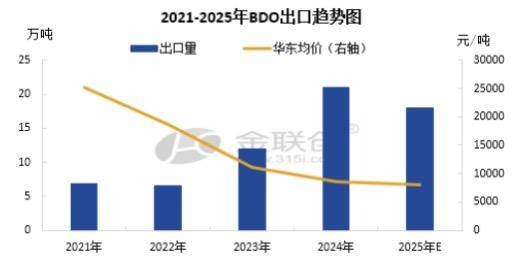
Core Viewpoint - The domestic BDO industry is facing significant challenges due to the simultaneous implementation of high temporary anti-dumping duties by the EU and the cancellation of export tax rebates, leading to increased export costs and pressure on profit margins [1][2]. Policy Background - The BDO industry is experiencing dual pressures from external trade barriers and the absence of domestic export tax subsidies, marking a critical adjustment period for the industry [1]. - The EU's temporary anti-dumping tax, effective from February 6, 2026, imposes rates between 105.6% and 113.7% on Chinese BDO exports, significantly impacting market access [1][2]. - The cancellation of export tax rebates, effective April 1, 2026, will reduce tax refunds by approximately 13% for every 100 yuan of BDO exported, exacerbating existing profit pressures in an already low-price environment [1][2]. Combined Impact of Policies - The combination of the EU's anti-dumping tax and the cancellation of export rebates will lead to increased costs and reduced market access, intensifying the survival pressure on small and medium-sized enterprises and accelerating industry consolidation [2][8]. - Export costs are expected to rise significantly, diminishing the international competitiveness of domestic BDO producers, with a projected 14.29% decline in export volume to 180,000 tons in 2025 [4][8]. - The industry is characterized by overcapacity, with a production capacity of 5.461 million tons per year and an operating rate of only 56%, leading to a pronounced differentiation among companies [9]. Short-term and Long-term Effects - Short-term pressures will likely lead to increased cash flow challenges for BDO companies, as the cancellation of tax rebates will slow down cash recovery and reduce revenue [10]. - In the long term, the dual pressures may drive the BDO industry towards higher quality development, with a focus on innovation and structural improvements [11][12]. - The exit of inefficient production capacities will concentrate market resources among leading companies, enhancing their pricing power and profitability [11]. Industry Response Recommendations - Companies should adopt a dual strategy of short-term risk management and long-term transformation, including optimizing product structures and focusing on domestic and emerging markets [14][15]. - Investment in technology and innovation is crucial for enhancing product value and competitiveness, while also exploring global diversification to mitigate trade barriers [14][15].

中科可蓝3.3万吨全自然域生物可降解材料项目一期加速落地,预计明年6月完成试车!
synbio新材料· 2025-11-19 07:03
Group 1 - The project of Inner Mongolia Zhongke Kelan New Materials Technology Co., Ltd. for producing 33,000 tons of fully biodegradable materials (PDA) has reached a significant milestone with the completion of the main structure and the arrival of the first batch of production equipment [2][3] - The PDA project is divided into two phases, with Phase 1 aiming to establish a production capacity of 3,000 tons and Phase 2 targeting an additional 30,000 tons [2][3] - The project is expected to start equipment installation by the end of November and achieve continuous production of 3,000 tons of PDA by June 2026, with Phase 2 preparations already underway [3] Group 2 - PDA, developed by Beijing Zhongke Kelan New Materials Technology Co., Ltd., is designed to fully degrade in various natural environments without leaving microplastic residues, aligning with national green development strategies [3] - The stable supply of BDO (1,4-butanediol), with a current production capacity of 1.6 million tons in Wuhai, is crucial for the large-scale production of PDA [3] - Zhongke Kelan's PDA products are tailored for four major fields: electronic information, ecological agriculture, marine applications, and innovative applications, and have been successfully applied by several Fortune 500 companies [4]

天风证券:供给端有序释放且集中头部 氨纶下游需求快速增长
智通财经网· 2025-11-05 08:25
Core Viewpoint - The current expansion phase of the spandex industry is nearing its end, with future capacity additions concentrated among leading companies, despite a low demand environment in 2024 [1][4]. Industry Overview - The global spandex production capacity is projected to grow from 203,000 tons in 2000 to 1,750,000 tons in 2024, with a CAGR of 9.4%, and over 90% of this capacity is concentrated in Asia [3]. - China's spandex industry has experienced rapid growth, expanding from 89,000 tons in 2003 to 1,350,000 tons in 2024, with a CAGR of 14% [4]. Demand Trends - China's spandex consumption is on the rise, with apparent consumption increasing from 121,000 tons in 2005 to 1,012,000 tons in 2024, reflecting a CAGR of 11.8% [5]. - The demand for spandex is driven by trends in fashion and comfort, with applications expanding into various sectors, including automotive interiors and medical supplies [5]. Production Cost Structure - The cost of raw materials accounts for approximately 40% of spandex production costs, with PTMEG and pure MDI being the primary raw materials [2]. - The control of non-raw material costs is a significant source of competitive advantage for spandex manufacturers [2].

我国北方资源枯竭报告:哪个省是最惨的?
虎嗅APP· 2025-10-16 13:23
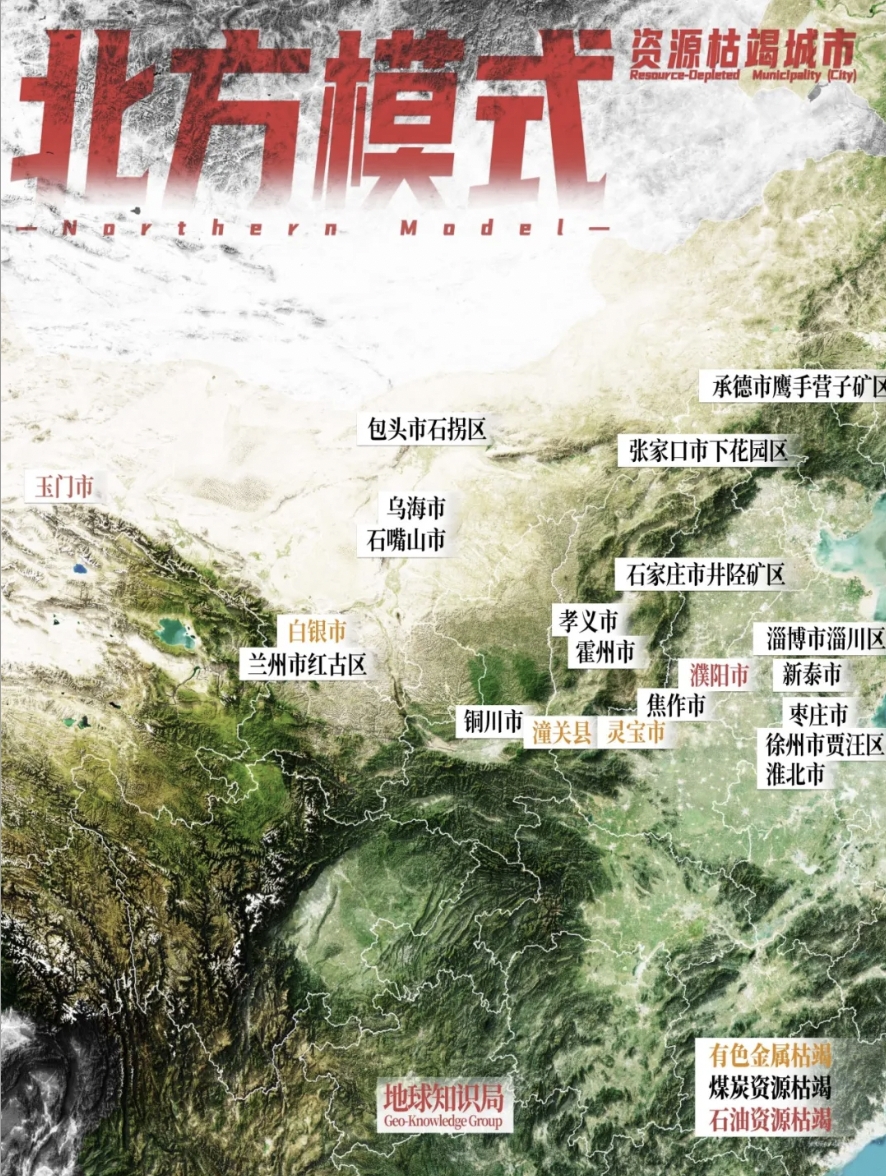
Core Viewpoint - The article discusses the plight of resource-depleted cities in Northern China, particularly focusing on 21 cities in North China and Northwest China, highlighting their struggles and survival strategies in the face of resource exhaustion [4][5]. Group 1: Coal Cities - Among the 21 cities, 16 are coal-depleted, with coal being the predominant resource, while 3 are depleting non-ferrous metals and 2 are oil-depleted [6][7]. - The coal resources in North and Northwest China are significantly more abundant than in Northeast China, which only accounts for less than 2% of the national coal resources [9][10]. - The six coal-producing regions north of the Kunlun-Qinling-Dabie Mountain line produce nearly half of the world's raw coal and contain over 90% of China's coal reserves [12][14]. - The cities of Shizuishan and Wuhai, known as the "twin coal cities," have been heavily impacted by mining activities, leading to severe ecological degradation [20][21]. - Shizuishan has a strong chemical industry base, producing 85% of the world's cyanamide, and is also a notable agricultural area [21]. - Wuhai, on the other hand, is focusing on coal chemical production and aims to become the global leader in BDO production, with potential to generate over 100 billion in coal chemical output [22][25]. Group 2: Shanxi Province - Shanxi Province is heavily reliant on coal, producing nearly one-seventh of the world's coal with significant economic implications [28]. - The province experienced a GDP growth of 28% in 2021 due to soaring coal prices, but faced a decline of 2.14% in 2024 as coal prices fell [30]. - The over-reliance on coal has led to environmental issues and a lack of diversification in the economy, making it difficult for the province to transition away from coal dependency [31][34]. Group 3: Oil Cities - The article contrasts the fortunes of coal cities with oil cities, highlighting the different trajectories of Puyang and Yumen, both of which are experiencing oil depletion [35][40]. - Puyang has adapted by processing imported oil and developing a petrochemical industry, maintaining its economic viability despite declining local oil production [41]. - In stark contrast, Yumen has faced severe decline, with its once-thriving oil industry collapsing and the city now largely abandoned, serving as a cautionary tale for resource-dependent cities [42][47]. Group 4: Overall Trends - The resource-depleted cities in Northern China exhibit a stark divide, with some cities managing to adapt and thrive while others face dire consequences [50]. - The future of these cities hinges on their ability to either deepen their reliance on resource extraction or pivot towards new economic models [51].

我国北方资源枯竭报告:哪个省是最惨的?
Hu Xiu· 2025-10-15 13:38
Group 1 - The article discusses the plight of resource-depleted cities in Northern China, focusing on 21 cities in North China and Northwest China, highlighting their struggles and survival strategies [3][4] - Among these cities, 16 are coal-depleted, 3 are non-ferrous metal-depleted, and 2 are oil-depleted, with coal being the predominant resource [4][10] - The coal resources in North and Northwest China are significantly more abundant compared to Northeast China, which only accounts for less than 2% of the national coal resources [6][10] Group 2 - The article categorizes the coal-depleted cities into two coal belts, one along the Yellow River and another in the Huanghuaihai region, with varying coal quality, reserves, and extraction difficulties [11][13] - The cities of Shizuishan and Wuhai, known as the "twin coal cities," have faced severe ecological degradation due to over-extraction, with Shizuishan producing over 500 million tons of raw coal since 1956 [16][17] - Wuhai, in contrast, has a more optimistic outlook, with significant coal reserves and plans to become the global leader in BDO production, leveraging its coal resources for chemical production [21][22] Group 3 - Shanxi Province, rich in coal, faces a paradox of wealth and resource curse, with coal accounting for a significant portion of its economy, leading to a dependency that hampers diversification [24][27] - The province's GDP growth surged by 28% in 2021 due to soaring coal prices, but a subsequent decline in coal prices resulted in a negative growth of 2.14% in 2024 [28][30] - The article emphasizes the urgent need for Shanxi to transition away from coal dependency, as its coal reserves are projected to be depleted in approximately 35 years [30][32] Group 4 - The article contrasts the fortunes of coal cities with oil cities, noting that cities like Puyang have successfully adapted by processing imported oil, while others like Yumen have faced severe decline and near abandonment [46][50] - Puyang has leveraged its chemical industry to sustain its economy despite declining local oil production, while Yumen, once a thriving oil hub, has seen its population and economic activity dwindle significantly [48][56] - The stark differences in outcomes for resource-depleted cities highlight the importance of diversification and adaptation strategies in the face of resource exhaustion [61][62]
同德化工: 2025年半年度报告
Zheng Quan Zhi Xing· 2025-08-25 16:08
Core Viewpoint - The report highlights the financial performance and operational challenges faced by Shanxi Tond Chemical Co., Ltd. during the first half of 2025, including a significant decline in revenue and net profit, while also outlining the company's strategic initiatives in biodegradable plastics and energy projects. Financial Performance - The company's operating revenue for the reporting period was approximately 255.64 million yuan, a decrease of 19.32% compared to the previous year [5][19]. - The net profit attributable to shareholders was approximately 5.01 million yuan, reflecting a substantial decline of 87.45% year-on-year [5][19]. - The total assets at the end of the reporting period were approximately 4.62 billion yuan, down 1.72% from the previous year [6]. Business Overview - The primary business of the company includes the research, production, and sales of civil explosives, with key products such as emulsified ammonium oil explosives and on-site mixed explosives [7][10]. - The company is recognized as a leading enterprise in the domestic civil explosive industry, with a comprehensive industrial chain [10][15]. Strategic Initiatives - The company is actively pursuing transformation and upgrading by entering the "new energy and new materials" sectors, particularly through the establishment of a new production line for biodegradable plastics (PBAT) and its raw material BDO [7][10]. - The PBAT project is positioned as a significant initiative under the national "14th Five-Year Plan" to support emerging industries, with a production capacity of 60,000 tons of PBAT and 240,000 tons of BDO [7][10]. Industry Context - The civil explosive industry is experiencing a downturn, with production and sales values declining by 2.71% and 1.56% respectively [8]. - The demand for civil explosives is closely linked to fixed asset investment in the secondary industry, with significant applications in mining and infrastructure projects [10][11]. Regulatory Environment - The company must comply with various regulations governing the production and sale of civil explosives, ensuring safety and operational standards are met [14][21]. - Recent policies emphasize the need for innovation and digital transformation within the industry, aiming to enhance safety and efficiency [12][11].

内蒙古新型化工产业蓄能致远
Nei Meng Gu Ri Bao· 2025-08-05 09:07
Group 1: Green Hydrogen and Ammonia Project - The first batch of green ammonia from the 1.52 million tons green ammonia project in Chifeng has been successfully launched, marking the official production of the first phase of 320,000 tons [2] - The project integrates wind and solar power generation, water electrolysis for hydrogen production, and green ammonia synthesis, addressing renewable energy consumption challenges [2] - The project aims to achieve 100% green electricity connection and dynamic coupling of wind-solar storage with hydrogen and ammonia production [2] Group 2: Inner Mongolia's Industrial Development - Inner Mongolia is leveraging national industrial transfer opportunities to develop new production capabilities, focusing on building a modern chemical industry system [3] - In the first half of the year, fixed asset investment in Inner Mongolia increased by 14.8%, with the secondary industry investment growing by 15.3% [3] Group 3: Coal-based Chemical Projects - The Baofeng Energy coal-to-olefins project in Ordos has a total investment of 67.3 billion yuan, with an annual production capacity of 3 million tons of olefins, accounting for 23.4% of the national total [6] - The project has set multiple industry records in capacity scale, construction period, equipment replacement, and energy consumption costs, showcasing advanced technology levels [6] Group 4: Modern Coal Chemical Industry in Ordos - Ordos has established multiple circular industrial chains, including coal-to-oil, coal-to-gas, and coal-based new materials, promoting the coupling of modern coal chemical with green hydrogen and carbon capture technologies [7] - The city is advancing 23 modern coal chemical projects, expected to add 10 million tons of new capacity [7] Group 5: New Energy and Chemical Integration - The Shanghai Port has achieved its first batch of green methanol refueling, which can reduce greenhouse gas emissions by 70% [10] - Inner Mongolia is actively promoting the coupling of coal chemical with renewable energy, with significant investments in new energy projects [10] Group 6: Policy and Environmental Optimization - Inner Mongolia has implemented a series of policies to optimize the business environment, enhancing support for key industrial projects [14] - The region is focusing on developing modern coal chemical and fine chemical industries, aiming for a green, fine, and circular modern coal chemical industry chain [14]
总投资300亿元!全球最大的烷烃一体化生产基地在闽建成投产
Sou Hu Cai Jing· 2025-07-28 02:13
Group 1 - The project has a total investment of 30 billion yuan, with an annual output value of 60 billion yuan, and can drive the upstream and downstream industry chain output value by over 50 billion yuan [2] - The produced propylene is essential for modern organic synthesis and is primarily used in polypropylene, acrylic acid, epoxy propane, and butanol [2] - Zhongjing Petrochemical is the world's largest producer of biaxially oriented polypropylene (BOPP) films, with five soft packaging production bases and 18 world-class production lines [2] Group 2 - The project is a showcase of high-end petrochemical industry innovation in China, collaborating with top international technology firms to achieve breakthroughs in key technologies [3] - The project has set records for the largest capacity and smallest footprint in the global polypropylene industry, enhancing energy efficiency by 40% and reducing carbon emissions by 30% [3] - The facility will utilize a significant amount of by-product hydrogen to produce new chemical materials, including BDO, which is used in lithium batteries and biodegradable plastics [4] Group 3 - The total investment for the BDO production project is 18 billion yuan, with an expected annual output value exceeding 60 billion yuan, aiming for full production within three years [4] - The project is projected to reduce industry chain costs by approximately 2.5 billion yuan annually [4]