
CPU(中央处理器)

Search documents
英伟达的“神秘芯片”背后:推理时代开启“四大算力新趋势”
Hua Er Jie Jian Wen· 2026-03-01 13:53
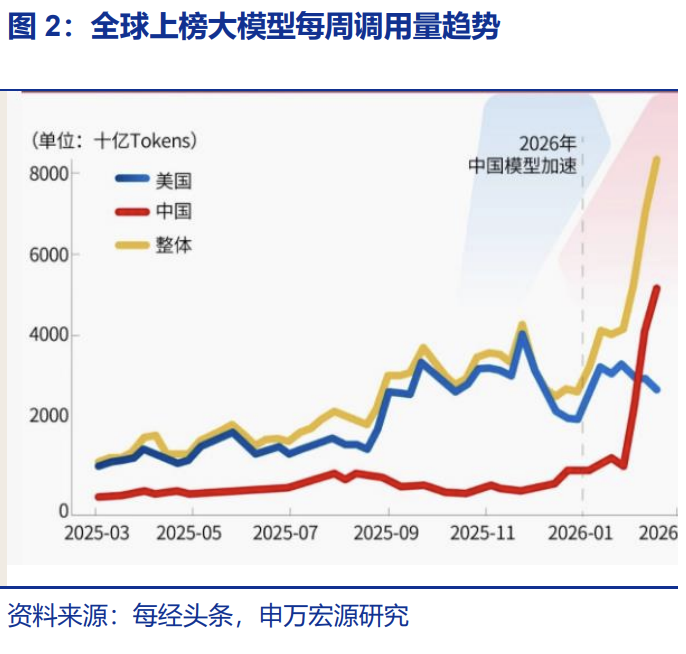
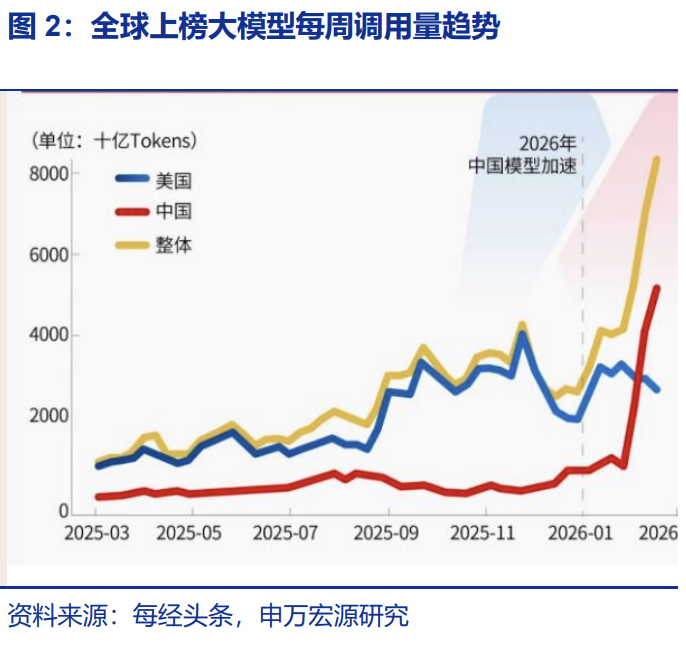
Core Insights - Nvidia is shifting the AI computing competition focus from training to inference, with plans to unveil a new inference chip integrated with Groq's LPU technology at the upcoming GTC developer conference [1] - OpenAI has agreed to become a major customer for Nvidia's new processor, indicating a strong demand for dedicated inference capacity [1] - The report from Shenwan Hongyuan highlights four key trends in inference computing: increased deployment of pure CPU scenarios, the rise of specialized architectures like LPU, accelerated breakthroughs in domestic computing chips, and a shift in demand structure towards mass token consumption [2] Inference Demand Explosion - The demand for inference has surged, driven by the monetization of large models and the rapid deployment of agents in real-world applications, requiring substantial inference computing power [3] - Data shows a significant increase in inference volume during the Chinese New Year, with major models reaching record token consumption [3] LPU's Emergence - Nvidia's acquisition of Groq's core technology for $20 billion signifies the growing importance of pure inference chips, with LPU architecture offering efficiency advantages in inference scenarios [6] - The future AI chip landscape is expected to differentiate between training and inference, with training continuing to use GPU-HBM combinations while inference evolves towards ASIC+LPU-SRAM+SSD configurations [6] System-Level Innovations - The upgrade in inference computing also involves a shift from single chips to system-level innovations, with a three-layer network architecture emerging to meet the demands of low latency and high throughput [7] - Nvidia is expanding its collaboration with Meta Platforms to support large-scale pure CPU deployments, moving beyond a single GPU sales model [7] Domestic Chip Breakthroughs - Domestic inference chips are experiencing significant technological upgrades, with new designs supporting low-precision data formats and enhanced interconnect bandwidth [9] - The supply chain for domestic chips is also improving, as evidenced by the rapid growth in revenue from high-performance computing chip packaging services [9]


英伟达的“神秘芯片”背后--推理时代开启“四大算力新趋势”
Hua Er Jie Jian Wen· 2026-03-01 11:33
Core Insights - Nvidia is shifting the AI computing competition focus from training to inference, integrating LPU technology and collaborating with OpenAI for dedicated inference capabilities [1][2] - The demand for inference computing is surging, driven by the monetization of large models and the acceleration of agent deployment in real-world applications [3][6] Group 1: Inference Computing Trends - The report identifies four major trends in inference computing: increased deployment of pure CPU scenarios, the rise of specialized architectures like LPU challenging GPU dominance, accelerated breakthroughs in domestic computing chips, and a shift in demand structure from single training to mass token consumption [2][10] - Companies providing high-performance, cost-effective inference chips will benefit the most, as breakthroughs in CPU, LPU, and domestic chips reshape the computing landscape [2][10] Group 2: Demand and Usage Statistics - The demand for inference has exploded, with significant increases in token consumption during the Chinese New Year, including 63.3 billion tokens processed in a single day by a leading model [3][10] - Data from OpenRouter indicates that Chinese models surpassed U.S. models in token calls, with a notable increase of 127% in three weeks, highlighting the growing prominence of Chinese AI models [3][10] Group 3: Technological Developments - Nvidia's acquisition of Groq's core technology for $20 billion signifies the recognition of pure inference chips' importance by top players in the industry [6][10] - The architecture of LPU differs from traditional GPUs, providing efficiency advantages in inference scenarios, particularly in addressing latency and memory bandwidth issues [6][10] Group 4: System-Level Innovations - The evolution from single chips to system-level innovations is crucial for the upgrade of inference computing, with a three-layer network architecture emerging to meet the demands of low latency and high throughput [8][10] - Nvidia is expanding its collaboration with Meta Platforms to support large-scale pure CPU deployments, indicating a shift away from a single GPU sales model [8][10] Group 5: Domestic Chip Advancements - Domestic inference chips are experiencing significant technological upgrades, including support for low-precision data formats and increased interconnect bandwidth, with expectations for a new version to launch in Q1 2026 [10] - The growth of domestic packaging companies reflects the increasing supply capability of domestic computing chips, with revenues from high-performance computing chip packaging services projected to rise significantly [10]
七载深耕筑根基:科创板以制度创新托举科技自强
Zheng Quan Ri Bao· 2025-11-04 15:44
Core Insights - The Sci-Tech Innovation Board (STAR Market) has achieved significant milestones in its seven years, with 592 listed companies raising a total of over 1.1 trillion yuan (approximately 934.6 billion yuan from IPOs and 208.8 billion yuan from refinancing) [1] - The board focuses on "hard technology" enterprises, aligning its listing and financing mechanisms with national strategic needs and market demands, thus enhancing its role in supporting technological innovation and new productivity [2][4] Group 1: Market Performance and Growth - The STAR Market has seen a compound annual growth rate (CAGR) of 18% in revenue and 9% in net profit for listed companies over the past five years, starting from 2019 [2] - Among the 57 companies that were unprofitable at the time of listing, 22 have since achieved profitability, demonstrating the board's effective support for unprofitable tech firms [2] - The median R&D intensity for companies in the STAR Market is 44.34%, indicating a strong commitment to innovation and development [2] Group 2: Industry Focus and Innovation - The STAR Market has become a hub for strategic emerging industries, particularly in integrated circuits, biomedicine, and new materials, fostering a complete industrial chain [4] - In the integrated circuit sector, over 120 companies are listed, enhancing the self-sufficiency of China's semiconductor industry [4] - In biomedicine, 21 out of 22 companies that adopted the fifth set of listing standards have successfully launched self-developed drugs or vaccines, with significant commercial progress [5] Group 3: Policy and Institutional Support - The STAR Market has established a flexible and inclusive listing system, allowing for differentiated standards based on market capitalization, revenue, and R&D investment [7] - The introduction of a "small and fast" financing mechanism has improved the efficiency of capital raising for tech companies [7] - Over 60% of companies in the STAR Market's growth layer have implemented stock incentive plans, covering approximately 12,000 individuals, which enhances talent motivation [7] Group 4: Future Directions and Capital Attraction - The STAR Market aims to further support "hard technology" enterprises and expand its focus to include artificial intelligence, commercial aerospace, and low-altitude economy sectors [8] - The board's reforms have led to improved market liquidity and pricing efficiency, attracting long-term capital from social security funds and insurance [9]
大摩:英伟达云资本支出份额持续提升 新AI应用“才刚刚起步”
Xin Lang Cai Jing· 2025-10-10 13:48
Core Viewpoint - Morgan Stanley highlights that NVIDIA's market share in cloud capital expenditures is continuously increasing, with new AI applications still in their early stages [1] Group 1: Company Insights - NVIDIA's management expresses strong confidence in both short-term and long-term prospects, driven by robust growth in cloud capital expenditures [1] - The revenue growth observed is primarily due to the shift of computing workloads from CPUs to GPUs, indicating a significant trend in the industry [1] - Morgan Stanley maintains an "Overweight" rating on NVIDIA, setting a target price of $210 [1] Group 2: Industry Trends - The current demand growth is largely attributed to the strong upward trend in cloud capital expenditures [1] - Despite the ongoing growth in cloud spending, transformative AI applications have yet to fully materialize in the market [1]
大摩:英伟达(NVDA.US)云资本支出份额持续提升,新AI应用“才刚刚起步”
Zhi Tong Cai Jing· 2025-10-10 13:37
Core Insights - Morgan Stanley recently held discussions with Nvidia's management, highlighting the company's expanding market share in cloud capital expenditures. Analyst Joseph Moore maintains an "Overweight" rating with a target price of $210 [1] - Nvidia's management expressed confidence in both short-term and long-term prospects, attributing demand growth primarily to the strong upward trend in cloud capital expenditures, which is reflected in the shift from CPU to GPU in existing application workloads [1] - Emerging AI applications in sectors such as healthcare, legal services, and industrial automation are seen as the "next wave of significant growth" [1] Industry Trends - Long-term projections suggest that the AI infrastructure market could reach $3 trillion to $5 trillion by 2030, exceeding current forecasts and aligning with the view that AI will have a transformative impact on the global market [2] - Nvidia's investment strategy focuses on leveraging points that accelerate innovation, such as investments in CoreWeave and a sovereign fund in the UK, aimed at enhancing data center capacity and innovation processes [2] - Despite AMD's increased competitive efforts, particularly its collaboration with OpenAI, Nvidia's management remains unconcerned due to cloud service providers' continued reliance on Nvidia for GPU capacity [2] Competitive Landscape - Nvidia's full-stack approach and the flexibility of its GPUs create a formidable competitive advantage, making it difficult for competitors to challenge its leading position, even as they develop high-performing chips for specific functions [2]
强大的傲慢之后,英特尔不想成为又一个诺基亚
Mei Ri Jing Ji Xin Wen· 2025-09-21 13:28
Core Viewpoint - Nvidia's $5 billion investment in Intel marks a historic collaboration aimed at transforming the tech landscape, with Intel's CEO expressing optimism about this partnership [1] Group 1: Historical Context - Intel's market value once exceeded $500 billion, making it one of the most valuable tech companies, while Nvidia was just starting with a market cap below $10 billion [1] - Intel's past arrogance and missed opportunities mirror Nokia's decline, as both companies failed to adapt to changing market dynamics [1][3] Group 2: Key Lessons from Intel's Past - Intel's first major mistake was in 2006 when it declined to manufacture processors for Apple, missing the mobile wave [2] - In 2009, Intel abandoned early GPU development, losing out on the graphics chip market to Nvidia [2] - The refusal to invest in EUV lithography technology led to delays in chip production, causing Intel to fall behind competitors [2] - Intel's decision not to invest in OpenAI in 2017 resulted in missing out on the AI revolution, with OpenAI's valuation now exceeding $500 billion [3] Group 3: Current Challenges and Opportunities - With $8.9 billion in government funding and Nvidia's investment, Intel aims to revitalize its position in the semiconductor industry [5] - The core challenge for Intel lies in breaking free from past dependencies and innovating in the AI era to reconstruct its technological ecosystem [5] - Intel must regain its vision for the future to avoid merely delaying its decline, as financial resources alone may not restore its former glory [5]

中美就TikTok达成基本框架共识,美联储终于降息丨一周热点回顾
Di Yi Cai Jing· 2025-09-20 03:29
Economic Data Summary - In August, the industrial added value increased by 5.2% year-on-year, a slight decline of 0.5 percentage points from July, marking the lowest since September 2024 [1] - Retail sales of consumer goods grew by 3.4% year-on-year, down 0.3 percentage points from July, the lowest this year [1] - Fixed asset investment increased by 0.5% year-on-year from January to August, slowing down by 1.1 percentage points compared to the previous period [1] Service Consumption Expansion - Nine departments, including the Ministry of Commerce, released 19 specific measures to expand service consumption, focusing on enhancing service quality and stimulating new consumption [2] - The initiative includes actions like promoting high-quality service supply and developing new consumption scenarios [2] - Financial support will be strengthened to facilitate the construction of service facilities in various sectors [2] Tax Revenue Growth - National public budget revenue reached 148.198 billion yuan in the first eight months, with a year-on-year growth of 0.3% [4] - Tax revenue increased by 0.02% year-on-year, marking the first positive growth this year [4] - Major tax categories, including VAT and personal income tax, showed growth, with personal income tax increasing by 8.9% [4][5] US-China Economic Talks - Chinese and US economic leaders held talks in Madrid, focusing on resolving issues related to TikTok and reducing investment barriers [6] - A framework consensus was reached on addressing economic cooperation, indicating a gradual build-up of mutual trust [7] Federal Reserve Rate Cut - The Federal Reserve announced a 25 basis point cut in the federal funds rate, bringing it to a range of 4.00% to 4.25% [8] - This decision reflects concerns over slowing economic growth and rising inflation, with a focus on supporting the labor market [8] Automotive Industry Payment Initiative - The China Automotive Industry Association released guidelines for payment practices between vehicle manufacturers and suppliers, emphasizing timely payments and clear terms [9][10] - The initiative aims to stabilize supplier relationships and promote healthy industry development [11] Shanghai Property Tax Policy Optimization - Shanghai's new property tax policy allows certain talent and long-term residents to benefit from tax exemptions on first home purchases [12] - The policy aims to stimulate demand and boost market confidence by aligning tax benefits for non-local buyers with local residents [12] Nvidia's Investment in Intel - Nvidia announced a $5 billion investment in Intel, acquiring shares at $23.28 each, pending regulatory approval [13] - This partnership aims to integrate Nvidia's AI capabilities with Intel's CPU technology, creating significant market opportunities [13][14] - The collaboration is expected to enhance both companies' competitive positions in the tech industry [14]
英伟达欲通过救助英特尔“捡便宜”
日经中文网· 2025-09-19 02:49
Core Viewpoint - NVIDIA's investment of $5 billion in Intel is seen as a strategic move to strengthen ties with the U.S. government while also gaining access to Intel's competitive CPU technology, despite not committing to outsourcing production to Intel [2][6][7]. Group 1: Investment and Collaboration - NVIDIA announced a $5 billion investment in Intel, aiming to collaborate on semiconductor development, particularly for data centers and personal computers [2][5]. - The partnership is expected to create a market effect of $25 billion to $50 billion annually through joint development efforts [6]. - NVIDIA's CEO Huang Renxun described the collaboration as "historic" during a press conference with Intel's CEO [4]. Group 2: Government Relations and Strategic Implications - The investment aligns with the Trump administration's efforts to revitalize the U.S. semiconductor industry, with Huang reporting the collaboration to U.S. Commerce Secretary Gina Raimondo [7]. - The move is interpreted as a way for NVIDIA to position itself favorably for potential future government incentives [7]. - Huang's avoidance of discussing Intel's operational struggles during the press conference indicates a focus on the potential benefits of the partnership rather than existing challenges [5][6]. Group 3: Risks and Challenges - NVIDIA's close ties with the Trump administration may introduce operational risks, particularly concerning relations with China, as the Chinese government has restricted the procurement of NVIDIA's AI semiconductors [8][9]. - Intel faces its own challenges, having reported losses for six consecutive quarters and struggling to attract new clients [9]. - The reliance on government support for Intel's recovery could lead to moral hazard, potentially impacting NVIDIA's investment returns if Intel fails to improve [9].

孙正义逆向投资“过气”企业英特尔的真意
3 6 Ke· 2025-08-20 03:25
Group 1 - SoftBank Group has decided to invest in Intel, which is seen as part of a semiconductor strategy centered around artificial intelligence (AI) [1][2] - The investment amount is $2 billion, with SoftBank purchasing shares at $23 each, significantly lower than Intel's previous price of over $50 [1][2] - There are three main questions regarding this investment: Intel's status as a manufacturer, the low ownership stake of 2%, and Intel's failure to keep up with innovation [2][4][5] Group 2 - Son Masayoshi, the chairman of SoftBank, has a history of seeking long-term investments rather than short-term gains, indicating a strategic vision for Intel's potential revival [1][6] - The investment may enable collaboration between ARM, owned by SoftBank, and Intel, potentially addressing Intel's power consumption issues while leveraging ARM's low-power technology [12] - The partnership could signify a shift in the semiconductor landscape, allowing Intel to regain relevance in the AI era by collaborating with ARM, which has historically viewed Intel as a competitor [14][15]

国产CPU龙头兆芯集成IPO受理 多领域市场拓展获突破性进展
Zheng Quan Ri Bao Wang· 2025-06-18 10:16
Core Viewpoint - The company, Shanghai Zhaoxin Integrated Circuit Co., Ltd., has officially received acceptance for its IPO application on the Sci-Tech Innovation Board, marking its entry as a "hard technology" enterprise in the market [1] Company Overview - Zhaoxin Integrated has been deeply engaged in the industry for many years, mastering core technologies in the design and development of general-purpose processors and supporting chips, positioning itself as a leading CPU design company in China that is compatible with multiple fields including desktop PCs, servers, workstations, and embedded systems [1] - The company has established a comprehensive and professional R&D team focused on the key core technologies of general-purpose processor chip development, with a fully autonomous design process and environment [1] - Zhaoxin has achieved the definition, expansion, and innovation of its own instruction set, fully mastering CPU core design methods and independently developing CPU core microarchitectures [1] Market Position and Achievements - In 2024, Zhaoxin's CPUs are expected to lead in market share among domestic desktop PC manufacturers, including Lenovo, Softcom, Unisoc, Ascend, and Vision Source, establishing a leading market position in the domestic desktop PC market [2] - The company has made significant progress in market expansion across various sectors such as government, finance, education, energy, communication, transportation, industry, and healthcare [2] Ecosystem Development - Zhaoxin's processors currently support various operating systems including Tongxin, Kirin, Zhongke Fangde, Euler, and Longxi, and have achieved compatibility and optimization with over 3,000 partners across databases, middleware, application software, security software, and cloud platforms [2] - The company has formed over 200,000 software and hardware adaptation and optimization projects, maintaining industry-leading ecosystem compatibility [2] Fundraising and Future Plans - The funds raised from the IPO will primarily be directed towards new generation server processors, new generation desktop processors, advanced process processor R&D projects, and R&D center projects [2] - The completion of these fundraising projects is expected to further solidify the company's market leadership in key desktop PC industries, enhance product competitiveness across the market, and support national information security strategies while improving domestic CPU self-sufficiency [2]