
ChatGPT Pulse

Search documents
在参与OpenAI、Google、Amazon的50个AI项目后,他们总结出了大多数AI产品失败的原因
AI前线· 2026-02-09 09:12
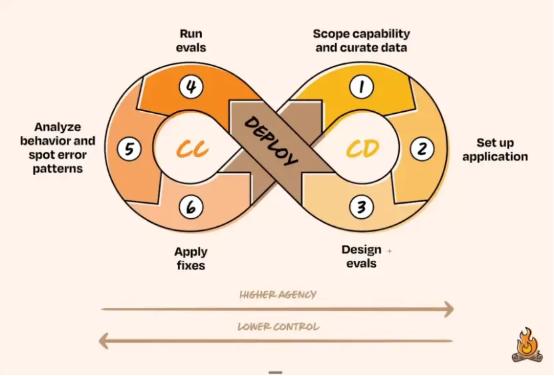
Core Insights - The construction of AI products has become significantly easier and cheaper, but many still fail due to a lack of focus on problem-solving and product design [3][4] - Leaders need to engage directly with the development process to rebuild their judgment and acknowledge that their intuition may no longer be entirely accurate [3][4] - The era of "busy but ineffective" work is ending; companies must focus on creating substantial impacts rather than hiding behind non-essential tasks [3][4] Challenges in AI Product Development - There is a noticeable reduction in skepticism towards AI, but many leaders still hesitate to invest fully, fearing it may be another bubble [4] - Companies are beginning to rethink user experience and business processes, realizing that successful AI products require a complete overhaul of existing workflows [4][5] - The lifecycle of AI products differs fundamentally from traditional software, necessitating closer collaboration among PMs, engineers, and data teams [4][5] Differences Between AI and Traditional Software - AI systems deal with non-deterministic APIs, making user input and output unpredictable, unlike traditional software with clear decision-making processes [5][6] - There is a trade-off between agency and control; higher autonomy in AI systems means less control, which must be earned through reliability and trust [6][7] Development Approach - A recommended approach is to start with low autonomy and high control, gradually increasing autonomy as confidence in the system grows [7][8] - For example, in customer support, AI should initially assist human agents before taking on more complex tasks [7][8] Continuous Calibration and Development Framework - The CC/CD framework emphasizes continuous calibration and development, allowing teams to adapt to user behavior and improve system performance over time [24][26] - This framework helps in understanding user interactions and maintaining user trust while gradually increasing the system's autonomy [27][31] Key Success Factors for AI Products - Successful companies typically exhibit strong leadership, a healthy culture, and ongoing technical capabilities [13][14] - Leaders must be willing to learn and adapt their intuition to the new AI landscape, fostering a culture that empowers employees rather than instilling fear [14][15] Future of AI - The potential of coding agents is still underestimated, with significant value expected to be unlocked in the coming years as they become more integrated into workflows [36][37] - The focus should remain on solving business problems rather than merely adopting new tools, as the true value lies in understanding user needs and workflows [38][39]





在参与OpenAI、Google、Amazon的50个AI项目后,他们总结出了大多数AI产品失败的原因
3 6 Ke· 2026-02-09 06:57
Core Insights - The cost of building AI products has significantly decreased, but the real challenge lies in product design and understanding the pain points to be addressed [1][2][3] - AI is a tool for solving problems, and leaders must engage directly to rebuild their judgment and adapt to new realities [2][3] - Retaining a degree of "foolish courage" is essential in an era where data suggests high failure rates [3] AI Product Development Challenges - Skepticism towards AI has decreased, but many leaders still view it as a potential bubble, delaying genuine investment [4] - Successful AI product development requires a thorough understanding of user experience and business processes, often necessitating a complete overhaul of existing workflows [4] - The lifecycle of AI products differs from traditional software, leading to a need for closer collaboration among PMs, engineers, and data teams [4][5] Key Differences in AI Product Construction - AI systems operate with a level of non-determinism that traditional software does not, complicating user interactions and outputs [5][6] - The balance between agency and control is crucial; higher autonomy in AI systems requires a foundation of trust built over time [6][7] - Starting with low autonomy and high control allows for gradual understanding and confidence in AI capabilities [7][8] Successful AI Product Patterns - Successful companies exhibit strong leadership, a healthy culture, and ongoing technical capabilities [14][15][16] - Leaders must acknowledge the need to relearn and adapt their intuition in the context of AI [14] - A culture that empowers employees and emphasizes AI as a tool for enhancement rather than a threat is vital for success [15] Continuous Calibration and Development Framework - The CC/CD framework emphasizes continuous improvement and understanding user behavior while maintaining user trust [25][28] - Initial stages should focus on low autonomy and high control to mitigate risks and build confidence in the system [28][29] - The framework encourages iterative processes to adapt to new user behaviors and system capabilities [32][34] Future of AI - The potential of Coding Agents remains underestimated, with significant value expected to be unlocked in the coming years [35] - The integration of AI into real workflows will enhance its contextual understanding and proactive capabilities [38] - A shift towards multi-modal experiences is anticipated, allowing for richer interactions and unlocking previously inaccessible data [39] Skills for AI Product Builders - The ability to focus on problem-solving and understanding workflows is becoming increasingly important as implementation costs decrease [40][42] - Proactive engagement and a willingness to iterate through trial and error are essential for success in AI product development [41][42]
从全网吹爆到集体沉默:第一批花 200 美金使用 ChatGPT Pulse 的人,后悔了吗?|锦秋AI实验室
锦秋集· 2025-12-22 10:47
Core Insights - The article discusses the evolution and user experiences of the ChatGPT Pulse feature, highlighting its initial promise and subsequent user feedback regarding its effectiveness and limitations [2][5][45]. User Experience and Feedback - Initial user experiences with Pulse were marked by a sense of novelty and surprise, as it provided proactive suggestions based on past interactions, creating a feeling of being "cared for" [10][12][18]. - Users reported that while Pulse initially offered valuable insights, its practical utility diminished over time, leading to feelings of information overload and delayed responses that did not align with their immediate needs [18][19][46]. - The feedback indicated that Pulse often operated within a limited context, failing to provide insights beyond users' known interests, which restricted its effectiveness as a proactive AI tool [17][21][34]. Limitations and Challenges - Users identified several core pain points, including information overload, delayed responses to urgent queries, and a lack of depth in the insights provided, which often felt redundant or irrelevant [18][19][20][46]. - The article emphasizes that Pulse's design primarily functions as an extension of a recommendation system, lacking a deeper understanding of users' long-term goals and intentions, which hinders its ability to provide truly valuable insights [33][34][49]. - The current pricing model of $200 per month has raised concerns about the perceived value of the service, with users expressing reluctance to pay for a product that does not significantly enhance productivity or provide unique insights [5][41][46]. Future Directions and Recommendations - The article suggests that for Pulse to evolve into a more effective tool, it must transition from a time-driven model to an event-driven approach, focusing on key moments that require user attention [49]. - There is a call for the AI to develop a better understanding of users' long-term intentions, which would allow it to provide more relevant and timely insights, thereby enhancing its value proposition [34][49]. - The potential for a more integrated approach that connects with private data sources, such as internal company tools, is highlighted as a way to break down information silos and improve the overall utility of the AI [26][49].

OpenAI也缺卡,僧多粥少,自曝内部抢卡抢到发疯
3 6 Ke· 2025-10-20 12:54
Core Insights - OpenAI is facing a severe scarcity of computing power, which has become a critical issue for the company and the AI industry as a whole [1][10] - The competition for computing resources within OpenAI is intense, impacting the release of innovative products [3][9] Resource Allocation Mechanism - OpenAI has a structured resource allocation mechanism that divides resources between research and application sides, with decisions made by senior management [5] - The allocation within the research domain is determined by the Chief Scientist and the Research Director [7] - A dedicated team is responsible for managing and reallocating idle GPU resources to meet the demands of various projects [8] Industry Implications - The internal competition for computing power at OpenAI reflects broader trends in the AI industry, where computing power directly influences AI capabilities [9][10] - OpenAI's significant investment in computing power, amounting to $7 billion last year, indicates its commitment to securing a competitive edge in the AI market [10] - Other companies, such as Meta, are also recognizing the importance of computing resources as a competitive advantage [12][13]

OpenAI也缺卡!僧多粥少,自曝内部抢卡抢到发疯
量子位· 2025-10-20 10:29
Core Viewpoint - OpenAI is facing a significant scarcity of computing power, which is critical for innovation in the AI field [1][2][4] Resource Allocation Mechanism - OpenAI has a structured yet challenging resource allocation mechanism for its limited computing resources [8] - Resources are divided between research and application sides, with major decisions made by the executive team [9][10] - Within the research domain, allocation is determined by the chief scientist and research director [12] - A team led by Kevin Park manages the reallocation of idle GPUs to meet the demands of various projects [14][15] Industry Implications - The internal competition for computing resources at OpenAI reflects the broader dynamics of the AI industry, where computing power directly influences AI capabilities [16][17] - The founder of AI chip company Groq emphasized that controlling computing power equates to controlling AI [18] - OpenAI's computing power expenditure reached $7 billion last year, and the company is now building its own data centers, achieving nearly a trillion in computing transactions [19][20] Competitive Landscape - The competition for computing resources is not only internal but also extends to the entire AI computing market [20] - Meta's CEO, Mark Zuckerberg, highlighted the importance of computing resources as a competitive advantage for researchers [22] - The future of AI development places computing power at the forefront of strategic importance [23]

Z Event|硅谷最高规格 AI 投资峰会来了,AI Investment Summit UC Berkeley 2025
Z Potentials· 2025-10-16 03:03
Core Insights - The article emphasizes the transformative impact of artificial intelligence (AI) on various sectors, highlighting significant investments and advancements in AI technologies [2][3] - The AI Investment Summit 2025 is set to take place on November 2 at UC Berkeley, aiming to gather leaders from academia, industry, and investment sectors to discuss the future of AI [2][3] Audience Composition - The summit will feature over 150 researchers from fields such as AI, economics, robotics, and cognitive science [8] - More than 150 founders from sectors including healthcare and machine learning will participate [8] - The event will also attract over 400 students from prestigious institutions like UC Berkeley, Stanford, and MIT [8] Featured Speakers - Notable speakers include Konstantine Buhler from Sequoia Capital, Rohit Patel from Meta Superintelligence Labs, and Tianfu Fu from OpenAI [10][11][12] - The lineup includes experts from various leading organizations, such as NVIDIA, Google DeepMind, and BlackRock [21] Summit Agenda - The summit will cover a range of topics, including intelligence infrastructure, AI-native products, and the future of human-AI interaction [23][24] - Discussions will focus on economic and industrial landscapes in the morning, followed by topics like incentive mechanisms and multimodal breakthroughs in the afternoon [22] Ticket Information - Early bird tickets are available at discounted rates, with student tickets priced at $29 and general tickets ranging from $69 to $89 [26][28] - Limited seating is emphasized, encouraging prompt registration to secure attendance [26]

股权换算力!OpenAI与AMD达成重磅合作!科创人工智能ETF汇添富(589560)涨超2%,冲击三连阳!假期归来,科技AI主线再强化!
Xin Lang Cai Jing· 2025-10-09 07:27
Core Viewpoint - The A-share market has shown strong performance, with the Shanghai Composite Index surpassing 3900 points, driven by a resurgence in AI-related stocks, particularly the Sci-Tech Innovation Artificial Intelligence ETF from Huatai-PB, which has seen significant gains [1][4]. Group 1: AI Market Dynamics - The global AI wave is accelerating, with major tech companies increasing investments in AI infrastructure, such as Nvidia partnering with Fujitsu and OpenAI collaborating with Samsung and SK Hynix for chip solutions [4]. - OpenAI has launched new products, including the Sora 2 video generation model and an iPhone app, which quickly gained popularity, indicating a shift towards consumer-level AI applications [4][5]. - Domestic AI developments are also notable, with breakthroughs in the collaboration between local large models and chip manufacturers, enhancing the capabilities of AI technologies [4]. Group 2: Investment Opportunities - The AI industry is entering a new acceleration phase, driven by OpenAI's strategic partnerships and product launches, which are expected to increase demand for computing power and storage in the short term [5]. - The trend of AI expanding from enterprise to consumer applications is becoming more pronounced, with significant potential for growth in hardware and application sectors [5]. - Future investments in AI infrastructure may evolve through financial instruments like REITs and computing power bonds, broadening the scope of investment opportunities beyond traditional hardware competition [5].


平安证券(香港)港股晨报-20251009
Ping An Securities Hongkong· 2025-10-09 02:30
Market Overview - The Hong Kong stock market experienced a slight decline, with the Hang Seng Index closing at 23,831 points, down 145 points or 0.61% [1][5] - The US stock market saw the S&P 500 and Nasdaq reach new intraday and closing highs, with the Nasdaq rising 1.1% to 23,043 points [2] - The market turnover in Hong Kong decreased to 82.799 billion, while the net inflow of funds through the Stock Connect was 484 million [1][5] Sector Performance - In Hong Kong, local real estate, software, and 5G concept sectors faced the largest declines, while gold stocks performed well [1][5] - The AI and consumer sectors showed weak performance, whereas gold and nuclear power stocks rose against the trend [1][5] - In the US, technology, utilities, and industrial sectors reached closing highs, with Nvidia's CEO confirming increased demand for computing [2] Investment Opportunities - The report highlights the continued value of Hong Kong stocks centered on Chinese assets, recommending focus on sectors such as AI applications, semiconductors, and industrial software [3] - Companies benefiting from the anticipated interest rate cuts by the Federal Reserve and strong mid-term performance in upstream non-ferrous metals are also suggested for attention [3] - The report emphasizes the potential of domestic products in government procurement, which is expected to boost related hardware manufacturing and software applications [9] Notable Company Developments - Geely Automobile's stock rose by 3.36% following the announcement of a 2.3 billion Hong Kong dollar share buyback plan [1] - Longwind Pharmaceuticals saw a significant increase of 161% on its first trading day, with turnover exceeding 600 million Hong Kong dollars [1][15] - The report suggests monitoring companies like ZTE Corporation and Kingsoft Software, which are expected to benefit from domestic product standards in government procurement [9]
人工智能研究:OpenAI 10 月 6 日开发者大会 —— 后续展望-AI Research OpenAI’s Oct 6th DevDay – What’s Next
2025-10-09 02:00
Summary of OpenAI's Upcoming Developments and Market Impact Industry and Company Overview - **Company**: OpenAI - **Industry**: Artificial Intelligence and Technology - **Event**: OpenAI's DevDay on October 6, 2025, focusing on new product announcements and strategic direction Key Points and Arguments Revenue Projections and Growth - OpenAI is projected to achieve revenues of **$13 billion in 2025**, nearly **3x growth from 2024** with **1H25 revenues at $4.3 billion** [7][10] - The majority of OpenAI's revenue, approximately **80%**, is derived from ChatGPT subscriptions, with the API contributing around **$2 billion** in 2025 [10][11] User Growth - ChatGPT has reached **700 million weekly average users**, marking a **250% year-over-year growth** [11] - The user base is primarily consumer-focused, but business users have grown to **5 million**, indicating a shift towards enterprise applications [15] Product Development Focus - Anticipated announcements include new consumer AI agents leveraging the ChatGPT base, such as a travel booking agent and an AI browser to compete with Google Chrome [3][4][26] - OpenAI aims to diversify its product offerings beyond ChatGPT and API hosting, potentially through acquisitions and new product launches [23][24] Market Impact on Competitors - Potential product announcements may significantly impact competitors like Google, Meta, and Microsoft, particularly in consumer-focused markets [4][45] - OpenAI's moves into advertising and consumer AI agents could disrupt existing players in the software and e-commerce sectors, as seen with the **16% increase in Etsy shares** following the Instant Checkout announcement [32][45] Strategic Direction - OpenAI is positioning itself as a product company, focusing on expanding its suite of consumer applications while also exploring enterprise opportunities [19][23] - The company is expected to explore an advertising revenue stream to monetize its large user base, particularly among free users [41] Infrastructure and Partnerships - OpenAI's growth is closely tied to its partnerships with cloud providers like Microsoft Azure and Oracle OCI, with a focus on compute-intensive applications to meet financial projections [4][45] - The success of OpenAI's DevDay could reassure infrastructure investors about the company's ability to scale and meet cloud commitments [4][45] Consumer vs. Enterprise Focus - Current feedback suggests a stronger emphasis on consumer-facing products at the upcoming DevDay, which may provide relief to enterprise software investors concerned about competition [42][45] - OpenAI's internal use of AI has already affected enterprise software stocks, indicating potential future disruptions in the SaaS market [42] Additional Important Insights - OpenAI's potential launch of an AI browser could reshape the web browser market, which has been relatively stagnant, and may serve as a new entry point for AI applications [35][39] - The integration of AI into consumer applications is seen as a critical growth area, with OpenAI's strategy mirroring that of companies like Uber in terms of expanding product offerings [25] This summary encapsulates the key insights and implications of OpenAI's upcoming developments and their potential impact on the technology landscape.
中信证券:资源安全主线热度提升 AI从企业级向消费级扩散
智通财经网· 2025-10-08 09:04
Core Insights - Resource security, corporate globalization, and technological competition remain the most important structural market clues, corresponding to the industry allocation framework of resources, globalization, and new productivity [1][7] - The recent surge in prices of precious metals, base metals, and energy metals indicates an increasing focus on resource security, with significant price increases driven by supply shocks [2][7] - The expansion of AI from enterprise-level to consumer-level applications is expected to lead to a boom in edge hardware and applications, with major companies competing for user entry points [3][7] Resource Security and Metal Prices - Precious metals, base metals, and energy metals have seen comprehensive price increases, with tin and cobalt experiencing the most significant rises of 8.7% and 4.9% respectively during the week of October 3, driven by supply disruptions [2] - Cobalt prices have surged, with battery-grade cobalt reaching 343,000 yuan per ton, a 29% increase since September, and prices doubling since the beginning of the year [2] - The upward trend in precious metals is notable, with gold reaching new highs and silver approaching historical peaks, indicating a potential for further increases in the future [2] AI Expansion and Consumer Applications - Major AI companies, led by OpenAI, are increasingly targeting consumer applications, with products like Sora 2 and ChatGPT Pulse gaining significant traction [3] - The introduction of Apps SDK by OpenAI aims to capture operating system-level user entry points, highlighting the importance of hardware control for data collection and user engagement [3] - The competition in edge hardware is intensifying, with reports of collaborations between OpenAI and consumer electronics manufacturers, as well as advancements in AR technology by companies like Apple and Meta [3] Trade Relations and Corporate Globalization - The trend of Chinese companies going global is expected to continue, although it may face challenges due to the current state of US-China relations [4] - The upcoming APEC summit may yield partial agreements in areas with less divergence, such as aircraft procurement and rare earth supply stability, but comprehensive tariff negotiations may remain unresolved [4] Market Liquidity and Structural Characteristics - The current market liquidity is primarily driven by absolute return funds, with traditional long-only funds not showing significant net inflows [5][6] - Insurance companies reported a total premium income of 591.4 billion yuan in August, a year-on-year increase of 35.6%, indicating a strong inflow of funds into the market [6] - The issuance of public equity funds has improved marginally, but redemption rates remain high, indicating ongoing pressure on existing products [6] Investment Strategy and Focus Areas - The focus on resource security, corporate globalization, and technological competition suggests a need for strategic investment in sectors with real profit realization or strong industrial trends [7] - Key sectors to watch include resources, consumer electronics, innovative pharmaceuticals, and gaming, with specific ETFs recommended for exposure [7] - Attention should be given to industries with sustained pricing power from single supply countries, such as cobalt, rare earths, tungsten, and various chemical sectors [7]
