Drive Pilot

Search documents
鸡肋L3,奔驰不玩了
3 6 Ke· 2026-01-16 09:18
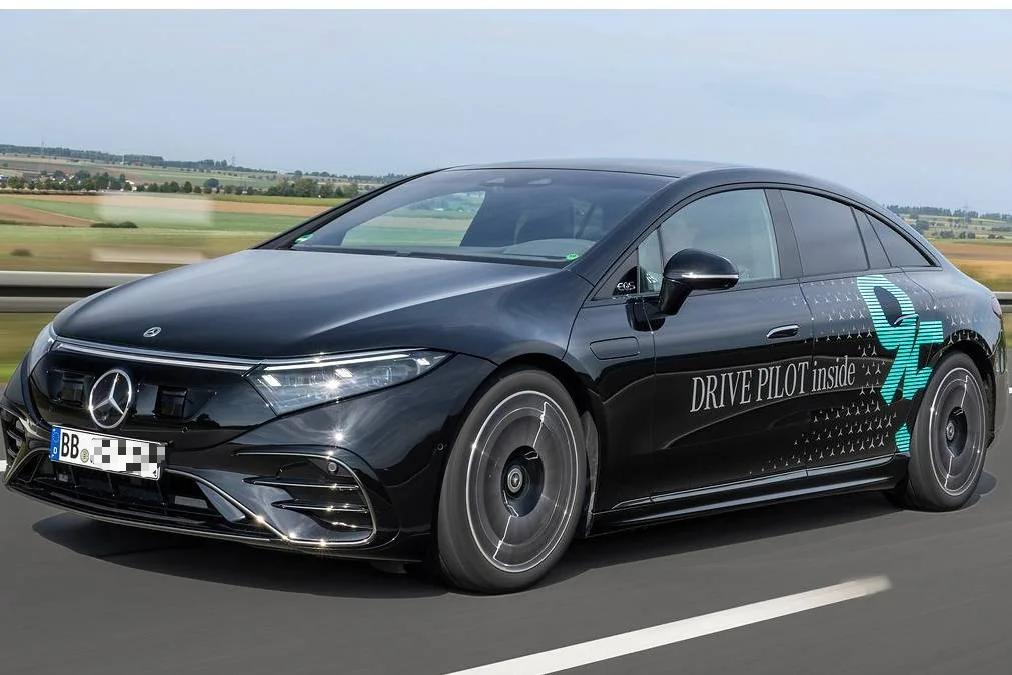
Core Viewpoint - Mercedes-Benz has decided to abandon its L3 autonomous driving system, focusing instead on L2+ and L4 technologies, as L3 has proven to be impractical and limited in its application [1][2][7]. Group 1: Company Actions - Mercedes-Benz, a pioneer in L3 technology, will no longer supply L3 systems and will concentrate on developing L2+ assisted driving systems [2][5]. - The company had previously developed the Drive Pilot system, which allowed conditional L3 autonomous driving, but this feature will not be included in the upcoming S-Class model [5][7]. - Mercedes-Benz is collaborating with Momenta for L2 systems and with NVIDIA for L4 systems, indicating a strategic shift away from L3 [5][7]. Group 2: Industry Context - The L3 autonomous driving level has been criticized for its strict operational conditions, which limit its usability and user experience [4][7]. - Industry players have varying attitudes towards L3; while some, like Huawei, are optimistic, others, including Tesla, are focusing on L2 and L4 without emphasizing L3 [7][8]. - The current trend in the industry suggests a move away from L3, with companies like NIO and XPeng prioritizing L4 development over L3, reflecting a broader shift in technological focus [8][9].

工信部定调高级别自动驾驶,L3级产业化按下“快进键”
2 1 Shi Ji Jing Ji Bao Dao· 2026-01-15 11:26
Core Insights - The launch of L3-level autonomous driving vehicles in Chongqing marks a significant milestone in the commercialization of advanced autonomous driving technology [1][2] - The Chinese government is actively supporting the development of high-level autonomous driving as part of its national industrial strategy [1][2] - The penetration rate of L2-level and above driving assistance features in new energy passenger vehicles reached 82.6% in the first half of 2025, indicating a shift towards accelerated development in automotive intelligence [1] Policy and Regulatory Developments - The Ministry of Industry and Information Technology (MIIT) has granted conditional licenses for L3-level autonomous driving vehicles, indicating a move from testing to limited commercial applications [2] - A report by the China Automotive Industry Association suggests the need for a clear management roadmap for autonomous driving levels, including safety responsibilities and market access standards [4] - The Shanghai "Mosu Zhixing" action plan aims to establish a collaborative data system for smart connected vehicles and enhance safety measures for autonomous driving [6][7] Industry Trends and Challenges - The transition to L3-level autonomous driving faces challenges such as the lack of formal standards and the need for safety supervision during operation [3] - The commercial viability of L3 systems is currently limited due to high development costs and regulatory constraints, with companies like Mercedes-Benz opting to focus on L2++ systems instead [8] - The Robotaxi segment is seen as the most promising area for early commercialization of autonomous driving technology, with companies competing on scalability [8][9] Market Projections - By 2030, the integration of advanced driving assistance and connected features is expected to create significant value in the automotive industry, with urban NOA becoming a mainstream function [5] - Companies like Baidu and WeRide are expanding their autonomous driving services globally, with Baidu reporting a 212% year-over-year increase in orders for its fully autonomous service [9] - The market is anticipated to see a shift towards L4-level autonomous driving within the next 2-3 years, with a focus on commercializing the Robotaxi business model [9]
全球大公司要闻 | 2026年望迎IPO超级周期,OpenAI等科技企业正筹备上市
Wind万得· 2026-01-14 22:47
Key Points - OpenAI, Anthropic, and SpaceX are preparing for IPOs, with valuations at historical highs: Anthropic at $350 billion, OpenAI at $500 billion, and SpaceX at $800 billion [2] - Ctrip Group is under investigation by China's market regulator for alleged monopolistic practices, but the company claims operations are normal [2] - Tesla's CEO Musk announced the discontinuation of the one-time purchase option for FSD, shifting to a subscription model, and introduced new charging fees in China [2] - Alibaba's Qianwen app has surpassed 100 million monthly active users, with significant growth among students and white-collar workers [3] - Unigroup Guowei plans to acquire 100% of Ruineng Semiconductor and will resume trading on January 15 [5] - Rongbai Technology is under inquiry from the Shanghai Stock Exchange regarding a contract with CATL, leading to a temporary stock suspension [5] - KDDI Telecom is investigating inappropriate transactions within its advertising subsidiaries and has established a special investigation committee [11] - Mercedes-Benz has paused the rollout of its L3 autonomous driving system and is shifting focus to L2++ systems [13] - HSBC is considering selling its Singapore insurance business, which could be valued at over $1 billion [13] - Porsche is in talks to sell its stake in Bugatti-Rimac, with the deal potentially exceeding €1 billion [14]




What's a Waymo Anyway?
The Motley Fool· 2025-12-02 16:48
Core Insights - Waymo is currently leading the autonomous vehicle market by offering fully driverless rides in major cities, while competitors like Tesla remain in testing phases with safety drivers required [3][4][6] - The podcast discusses the differences in technology approaches between Waymo and Tesla, highlighting Waymo's comprehensive sensor suite versus Tesla's vision-only system [3][9] - The potential for rapid scaling in the autonomous taxi market is emphasized, with projections indicating significant growth from $1 billion in 2022 to over $100 billion by 2031 [7][12] Company Strategies - Waymo's strategy involves methodical deployment and meticulous mapping of operational cities, which contributes to their effective operations and consumer acceptance [3][9] - Tesla's approach focuses on cost reduction and rapid deployment, but it has not yet proven to be as effective in safety and technology as Waymo's strategy [7][9] - Other companies in the autonomous driving space, such as Mobileye and Aurora Innovation, are also mentioned for their unique approaches and potential contributions to the industry [15][16] Market Dynamics - The podcast notes that less than 1% of the U.S. population has experienced a driverless taxi ride, indicating that the market is still in the early adopter phase, allowing competitors time to catch up [6] - The discussion includes the importance of cost-effectiveness for both Waymo and Tesla as they scale their operations, with current vehicle costs for Waymo estimated to be between $100,000 and $150,000 [7][12] - The evolving landscape of ride-sharing is highlighted, with companies like Uber and Lyft potentially adapting to include autonomous vehicles in their offerings, but not necessarily being replaced by them [25][26] Future Outlook - The podcast suggests that while Waymo currently holds a lead, the future of the autonomous vehicle market remains uncertain, with various companies still vying for position [4][6] - The potential for new business models in ride-sharing and the integration of autonomous vehicles is discussed, indicating a shift from individual vehicle ownership to fleet operations [25][26] - The regulatory environment in markets like China and Europe is noted as being more developed, which could influence the pace of adoption and innovation in the U.S. [20][21]


GM Unveils ‘Eyes-Off' AI System: What To Know About The Self-Driving Feature
Forbes· 2025-10-22 18:55
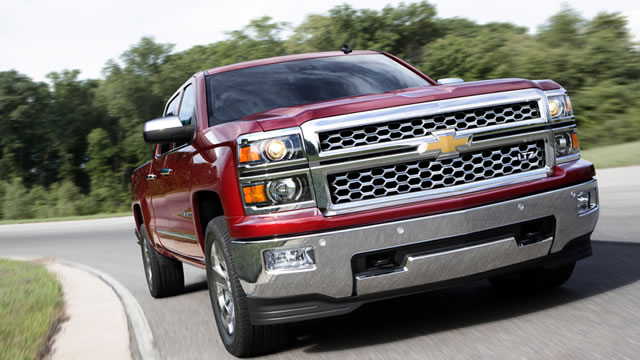
Core Insights - General Motors (GM) has introduced a partially autonomous "eyes-off" driving system, set to debut with the Cadillac Escalade IQ EV in 2028, alongside a Google AI feature for conversational assistance in vehicles by 2026 [1][2]. Group 1: Product Features - The "eyes-off" driving system will enhance GM's existing Super Cruise hands-free software, which currently requires driver attention but offers adaptive cruise control and lane centering [1]. - The new system will initially be limited to highway driving, covering 600,000 miles of roads in North America, with human intervention needed primarily for off-ramps [4]. - This feature is classified as Level 3 autonomous driving, which operates under specific conditions, while fully autonomous driving is categorized as Level 5 [4]. Group 2: Market Position and Competition - GM aims to roll out the "eyes-off" feature faster than the original Super Cruise, indicating a strategic push in the autonomous driving market [2]. - GM is competing with other automakers like Tesla and Mercedes, with the latter being the only manufacturer currently offering Level 3 automated driving through its Drive Pilot system [7]. Group 3: Financial Aspects - The cost structure for the "eyes-off" driving feature remains unclear, but it may follow a subscription model similar to Super Cruise, which costs $25 per month or $250 annually [5]. - The Cadillac Escalade IQ EV, which will feature the new system, starts at $127,700 for the 2025 model [5]. Group 4: Company Performance - Following the announcements, GM shares experienced minimal movement, trading down slightly, but had seen a significant increase of over 15% in the preceding week [6].

GM to introduce eyes-off, hands-off driving system in 2028
TechCrunch· 2025-10-22 15:00
Core Insights - General Motors (GM) plans to launch an automated driving system in 2028, starting with the Cadillac Escalade IQ, allowing drivers to keep their eyes off the road and hands off the wheel [1] - The new system builds on GM's existing Super Cruise technology, which has been available since 2017 and is currently used in 23 vehicle models across approximately 600,000 miles of highway [2][3] Development and Technology - The upcoming eyes-off, hands-off system will utilize lidar, radar, and cameras for perception and will initially operate on highways [3] - GM has integrated the expertise of engineers from its now-closed autonomous vehicle subsidiary, Cruise, to enhance the capabilities of the new system [4] - The technology stack from Cruise, which includes AI models trained on five million driverless miles, is being incorporated into GM's next-generation driver assistance and autonomy programs [5] Market Position and Competition - GM's eyes-off product is expected to be rolled out faster than the Super Cruise system [3] - Currently, Mercedes is the only automaker in the U.S. with a commercially available hands-off, eyes-off system, while GM's system will function on un-mapped highways and handle emergencies autonomously [10] - The introduction of GM's system could position the company ahead of competitors, as Stellantis has paused its Level 3 system launch and Tesla's systems still require driver attention [12]

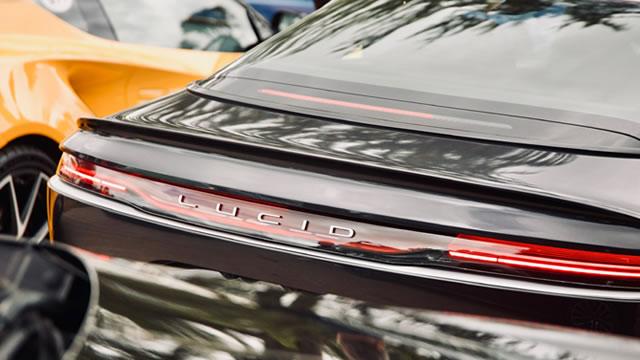
Lucid Motors will roll out hands-free highway driving this month
TechCrunch· 2025-07-15 16:34
Core Insights - Lucid Motors is launching a software update on July 30 that will enable hands-free highway driving for its Air sedans, marking a significant advancement in its driver assistance technology [1] - This update positions Lucid Motors among a select group of companies offering hands-free driving capabilities in the U.S., alongside Ford, General Motors, Mercedes-Benz, and Tesla [2] Company Specifics - The hands-free driving feature will initially be available only for the Air sedans, with a similar update for the Gravity SUV expected later this year [3] - The hands-free system is exclusive to customers who purchased the $2,500 "Dream Drive Pro" package, which includes a comprehensive suite of 32 sensors [3] - Lucid Motors has delivered approximately 20,000 vehicles since 2021, but the company has not disclosed how many customers have opted for the Dream Drive Pro package [4] Operational Details - Drivers using the hands-free system must remain attentive and ready to take control at any moment, similar to other driver assistance systems [5] - The hands-free feature will only be usable on "compatible" divided highways, and it relies on a camera-based system located on the steering column [5]