纯电转型

Search documents
掉出造车新势力销量前三后,理想1月新车交付同比环比均下滑
Shen Zhen Shang Bao· 2026-02-01 05:46
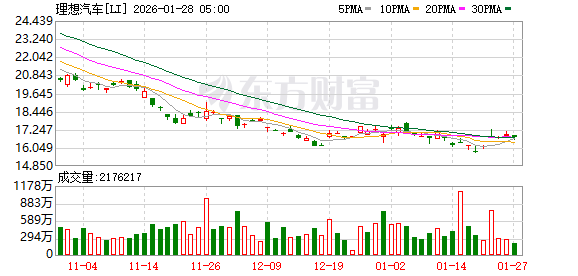
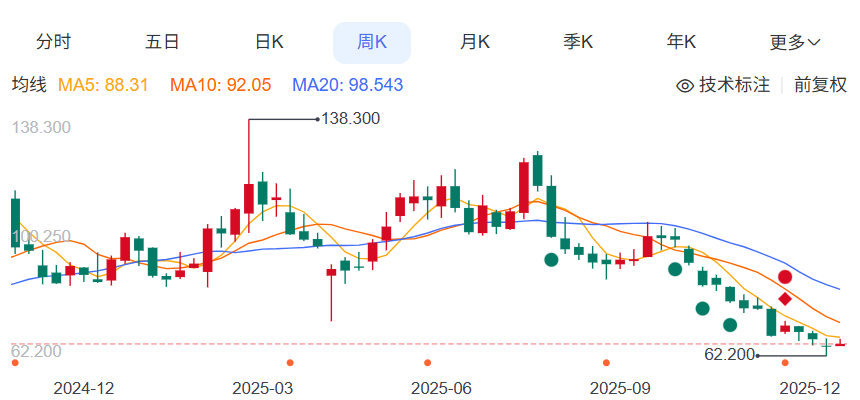
Core Viewpoint - Li Auto's vehicle deliveries have significantly declined in January 2026, indicating challenges in its transition to pure electric vehicles and raising concerns about its product strategy and operational efficiency [1][2][3] Group 1: Delivery and Sales Performance - In January 2026, Li Auto delivered 27,668 new vehicles, a year-on-year decrease of 7.55% and a month-on-month drop of 37.46% [1] - Cumulative deliveries reached 1.5678 million vehicles as of January 31, 2026 [1] - In 2025, Li Auto sold 406,300 vehicles, down 18.81% year-on-year, achieving only 58.05% of its initial target of 700,000 vehicles [2] Group 2: Retail and Service Network - As of January 31, 2026, Li Auto has 547 retail centers and 547 after-sales service centers across 159 and 221 cities, respectively [1] - The company has deployed 3,966 charging stations and 21,945 charging piles nationwide [1] Group 3: Challenges and Strategic Shifts - Li Auto's shift towards pure electric models has faced difficulties, with mixed market feedback on new products like MEGA HOME, i8, and i6 [2] - The company plans to close 100 underperforming stores in 2026, although it refuted claims of mass closures [3] - The chairman acknowledged that 2025 was challenging due to product cycles, public relations issues, supply chain constraints, and policy changes affecting deliveries and operations [3] Group 4: Market Performance - Li Auto's stock has underperformed, with a 36% decline in 2024 and a further 31% drop in 2025, although it has seen a slight increase of 1.7% in the current year [3]


“卖得不好”的门店开始关闭 理想汽车进入转型阵痛期
Guo Ji Jin Rong Bao· 2026-01-28 13:26
Core Viewpoint - Li Auto, once a leader among new energy vehicle manufacturers, is facing unprecedented pressure due to declining sales, operational inefficiencies, and strategic misalignment [2][6][9]. Store Closures - Li Auto has denied rumors of closing 100 stores but is indeed shutting down underperforming locations, with some already closed due to poor sales performance [3][4]. - The closure of stores is part of a strategy to eliminate low-efficiency outlets, with a focus on consolidating resources into core locations [4]. Production Capacity Issues - The Changzhou factory, with a capacity exceeding 500,000 vehicles per year, is experiencing uneven production, with some lines frequently halted due to low orders, while others operate at full capacity [5]. - The disparity in production reflects a mismatch between product offerings and market demand, leading to significant underutilization of capacity [5][9]. Sales Decline - Li Auto's projected total deliveries for 2025 are 406,300 units, representing an 18.81% decline from 2024, and falling short of the adjusted annual target of 640,000 units [7]. - The company has lost its position among the top three in the new energy vehicle market, with a significant drop in market share in the 200,000 yuan and above segment [7][9]. Strategic Shifts - Li Auto is shifting its focus back to range-extended vehicles, particularly the new L9 model, while attempting to streamline its product offerings and improve operational efficiency [9][10]. - The company is also implementing a "Hundred Cities Star Plan" to expand into lower-tier markets with a light-asset model, aiming to balance cost control and volume growth [4][9]. Competitive Landscape - The competitive environment for range-extended vehicles has intensified, with rivals like XPeng and Xiaomi entering the market with larger battery capacities, putting pressure on Li Auto's offerings [9]. - The company’s strategic misalignment and product diversification have weakened its competitive edge, necessitating a comprehensive adjustment across various operational fronts [9][10].
“卖得不好”的门店开始关闭,理想汽车进入转型阵痛期
Guo Ji Jin Rong Bao· 2026-01-28 13:10
Core Viewpoint - Li Auto, once a leader among new energy vehicle manufacturers, is facing unprecedented pressure due to declining sales, operational inefficiencies, and strategic misalignment [1][6]. Store Closures - Li Auto has denied rumors of closing 100 stores but is indeed shutting down underperforming locations, with some stores already closed due to poor sales performance [2][3]. - The closure of stores is attributed to low sales and unfavorable locations, with some stores reporting annual operating costs nearing 5 million yuan and conversion rates below 5% [3]. Production Capacity Issues - The production status at Li Auto's Changzhou factory reflects significant operational challenges, with a stark contrast in production efficiency between different vehicle models [4]. - The factory has a capacity of over 500,000 vehicles per year, but production is uneven, leading to frequent line stoppages and workforce issues [4]. - The imbalance in production capacity is exacerbated by a mismatch between product offerings and market demand, particularly for range-extended models [4]. Sales Decline - Li Auto's sales have significantly declined, with a projected annual delivery of 406,300 vehicles in 2025, down 18.81% from 2024 [6]. - The company has dropped out of the top three in the new energy vehicle market, with a substantial decrease in market share in the 200,000 yuan and above segment [6][7]. - The shift in product strategy towards pure electric vehicles has not yielded the expected results, with flagship models experiencing poor sales [6][7]. Strategic Adjustments - To address these challenges, Li Auto plans to refocus on range-extended vehicles, particularly the new L9 model, while also optimizing production and distribution strategies [7][8]. - The company aims to streamline its product offerings and enhance financing options to stimulate sales and manage inventory [7][8]. - 2026 is seen as a critical year for Li Auto to stabilize its market position and improve its competitive edge in both range-extended and pure electric segments [8].
新势力大洗牌!零跑销量翻倍夺冠,理想成唯一下滑车企
Shen Zhen Shang Bao· 2026-01-02 01:42
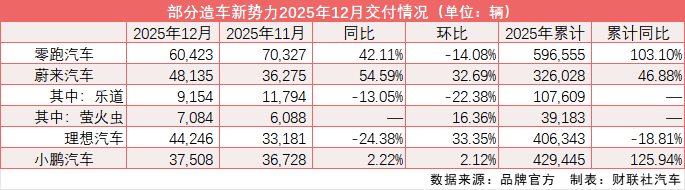
Core Insights - The performance of Li Auto has significantly declined, with a year-on-year sales drop of 18.81% in 2025, marking it as the only new energy vehicle company among the top players to experience a decrease in sales [1][2] - In contrast, other new energy vehicle manufacturers like Leap Motor and Xiaomi have shown substantial growth, with Leap Motor achieving a record annual sales increase of 103.1% [1][2] Group 1: Li Auto Performance - Li Auto delivered 44,246 vehicles in December 2025, totaling 109,194 for Q4, and reaching a cumulative delivery of 1,540,215 vehicles, becoming the first new energy brand to surpass 1.5 million deliveries [1] - The company set a sales target of 700,000 vehicles for 2025 but only achieved 406,300, representing a completion rate of 58.05% [1] - Li Auto's stock performance has also been poor, with a decline of approximately 36% in 2024 and an additional 31% drop in 2025 [2] Group 2: Competitor Performance - Leap Motor delivered 60,423 vehicles in December 2025, achieving a year-on-year growth of 42.11%, and a total of 596,555 vehicles for the year, marking a 103.1% increase [1] - NIO achieved a record monthly delivery of 48,135 vehicles in December 2025, with an annual total of 326,000 vehicles, reflecting a year-on-year growth of 46.9% [2] - Xpeng Motors reported annual deliveries of 429,445 vehicles, a significant increase of 125.94%, although its Q4 performance fell short of guidance with only 116,249 vehicles delivered [2] Group 3: Industry Challenges - Li Auto faces challenges in its transition to pure electric vehicles, with supply chain issues affecting production capacity, particularly for its i6 and i8 models [2] - The company has implemented a dual-supplier strategy to enhance battery supply and aims to increase monthly production capacity to 20,000 units by early 2026 [2] - As of December 31, 2025, Li Auto has established 548 retail centers and 561 service centers across China, along with 3,907 charging stations and 21,651 charging piles [2]
新势力年终收官:零跑、小鹏全年销量同比增超100% 理想“失速”、蔚来下半年“反弹”
Xin Lang Cai Jing· 2026-01-01 11:41
Core Viewpoint - The new energy vehicle market in 2025 did not experience a significant year-end surge, but several companies achieved substantial annual growth in deliveries, with Leap Motor and Xpeng Motors doubling their delivery volumes, while NIO saw a 46.88% year-on-year increase. Li Auto, however, struggled to regain its peak performance due to unmet expectations in its pure electric strategy [1]. Group 1: Company Performance - Leap Motor delivered 60,423 vehicles in December 2025, marking a year-on-year increase of 42.11%, and achieved a total of 596,555 deliveries for the year, a 103.1% increase, setting a new record for new energy vehicle sales [2][3]. - NIO's December deliveries reached 48,135 vehicles, a historical monthly high with a year-on-year growth of 54.59%. The total deliveries for 2025 amounted to 326,028 vehicles, reflecting a 46.88% increase [5]. - Li Auto delivered 44,246 vehicles in December, with a total of 406,343 for the year, representing an 18.81% decline. However, it became the first new energy brand to surpass 1.54 million cumulative deliveries [7]. - Xpeng Motors achieved 429,445 deliveries in 2025, a significant year-on-year increase of 125.94%, although December deliveries were 37,508, falling short of its quarterly guidance [9]. Group 2: Market Trends and Future Outlook - The absence of a year-end surge in the 2025 car market was confirmed by industry analysts, with government policies expected to stabilize the market in 2026 [11]. - Leap Motor aims to reach a delivery target of one million vehicles in 2026, with new models from the A and D series set to launch [3]. - NIO's ES8 model has become a key contributor to sales, with a significant number of orders expected to mitigate performance dips in early 2026 [5]. - Li Auto is focusing on expanding its overseas market presence to alleviate domestic competition pressures [7]. - Xpeng Motors plans to introduce seven new models with advanced configurations in 2026, aiming to significantly expand its market reach [9].


理想业绩大下滑,纯电转型阻力重重
Xin Lang Cai Jing· 2025-12-30 11:04
Core Viewpoint - Li Auto reported a net loss of RMB 6.25 billion in Q3 2025, marking a shift from profit to loss after 11 consecutive profitable quarters, primarily due to the recall of 11,400 units of the Li MEGA model [1][16]. Financial Performance - Vehicle sales revenue for Q3 2025 was RMB 25.9 billion (USD 3.6 billion), a decrease of 37.4% compared to RMB 41.3 billion in Q3 2024 [2][16]. - Total deliveries amounted to 93,211 units, down 39.0% year-on-year [2][16]. - Total revenue was RMB 27.4 billion (USD 3.8 billion), a decline of 36.2% from RMB 42.9 billion in Q3 2024 and a 9.5% decrease from RMB 30.2 billion in Q2 2025 [2][16]. - The net loss for the quarter was RMB 6.244 billion (USD 877 million) [2][16]. Market Outlook - For Q4 2025, Li Auto anticipates a continued decline, with expected vehicle deliveries between 100,000 and 110,000 units, representing a year-on-year decrease of 30.7% to 37.0% [4][18]. - Revenue for Q4 2025 is projected to be RMB 26.5 billion, reflecting a 40% year-on-year decline [13][25]. Competitive Landscape - The competition in the new energy vehicle market is intensifying, with price wars becoming more prevalent, putting pressure on Li Auto from various competitors [6][19]. - In the extended-range vehicle market, brands like AITO and Deep Blue are competing aggressively, while in the pure electric segment, Tesla and NIO have established significant advantages in technology, brand, and market share [6][19]. - Li Auto needs to accelerate the delivery and technological implementation of its pure electric models while balancing investments in both extended-range and pure electric strategies [6][19]. Production Challenges - New electric models i6 and i8 have received positive market feedback with over 100,000 orders, but supply chain challenges have limited their delivery to only 18% of total deliveries in Q3 [6][19]. - Li Auto is working to enhance production capacity by introducing a dual-supplier system with CATL and Sunwoda, aiming to increase the monthly production capacity of the i6 to 20,000 units by early 2026 [6][19]. New Business Ventures - In addition to its core automotive business, Li Auto has initiated new ventures, including the establishment of "Space Robotics" and "Wearable Robotics" departments, and launched its first AI glasses, Livis, priced from RMB 1,999 [7][21]. - However, the market response to these new products has been lukewarm, with significant competition from established brands like Xiaomi and Huawei in the AI glasses market [9][22]. Consumer Base - Despite declining sales, Li Auto's app user engagement remains high, indicating a stable consumer base that could be crucial for the company's recovery [10][22].
李想“挥泪”送张骁,新L7 L8明年要打硬仗
Xin Lang Cai Jing· 2025-12-25 11:12
Core Insights - Li Auto is undergoing significant internal changes, highlighted by the departure of Zhang Xiao, the president of the second product line, who has been a key figure in the company's product development since its inception [2][4][20] - The recent struggles of Li Auto, including revenue decline and a shift from profit to loss, signal a critical moment for the company as it prepares for a major overhaul of its L series by 2026 [4][12][19] Company Developments - Zhang Xiao, an early employee and integral to the development of models like Li ONE and L9, is leaving the company amid a tumultuous third quarter that saw a net loss of 624 million yuan [2][12] - His departure is seen as a reflection of the company's need to reassess its product strategy, particularly after the disappointing launch of the i8 model, which failed to meet consumer expectations [4][8][10] Product Strategy Issues - The i8 model, which was intended to penetrate the 300,000 to 400,000 yuan electric SUV market, faced criticism for its configuration choices, leading to a perception of diminished value compared to lower-priced models like the L6 [6][9][10] - Li Auto's attempt to create distinct product lines has resulted in internal conflicts, with the second product line struggling to align with the company's overall strategy, leading to a lack of coherence in product offerings [9][10][11] Financial Performance - Li Auto reported its first net loss in the third quarter of 2025, attributed in part to an 1.1 billion yuan provision related to the MEGA recall, raising concerns about the company's operational stability [12][14] - The company is facing pressure to maintain its historically high gross margin of 20%, with forecasts for Q4 deliveries significantly lower than market expectations, indicating potential challenges ahead [14][15] Future Outlook - The upcoming 2026 L series overhaul is positioned as a critical opportunity for Li Auto to rectify past mistakes and re-establish its market position by simplifying its product offerings and enhancing core features [16][19] - The leadership change with Zhang Xiao's exit is viewed as a strategic move to unify the company's vision and ensure effective execution of the new product strategy [20]
理想减速,李想低头
Sou Hu Cai Jing· 2025-11-29 00:09
Core Insights - The company is facing a significant decline in user trust and competitive advantage following the MEGA recall incident [2] - The CEO, Li Xiang, acknowledged the failures in the management system and the impact on the company's electric vehicle transformation [3] Financial Performance - In the latest quarterly report, the company experienced a 39% year-on-year decline in delivery volume, totaling 93,000 vehicles, and a 36.17% drop in revenue to 27.4 billion yuan [3][4] - The company's profit shifted from a net profit of 2.8 billion yuan in the same quarter last year to a loss of 620 million yuan this quarter [3][12] - The gross margin fell to 15.5%, primarily due to losses from the MEGA recall, but would have been 19.8% without this impact [6][10] Sales Guidance and Market Expectations - The company provided a disappointing sales guidance for the fourth quarter, projecting only 100,000 to 110,000 units, which is significantly below market expectations of 138,000 units [7][8] - Despite high demand for the i6 model, which has a waiting period of 16-19 weeks, the company's own sales forecast suggests a potential decline in overall sales [8][10] Strategic Challenges - The company is facing a "stock replacement" issue between the L6 and i6 models, leading to potential margin erosion as the i6's lower price point attracts customers [9][10] - The shift towards the i6 model may threaten the company's historically high gross margins, raising concerns among investors [10][11] Organizational Changes - The CEO reflected on the past three years of management changes, indicating a return to a more entrepreneurial approach rather than a corporate managerial style [17][19] - The previous PBC management system, which emphasized performance metrics, led to internal conflicts and a focus on short-term results over user needs, prompting its discontinuation [18][19] R&D and Future Investments - The company is increasing its R&D spending, with a focus on AI and smart technology, planning to invest 110-120 billion yuan by 2025, with over 60 billion yuan allocated to AI [15][16] - The company is also enhancing its self-developed chip capabilities, with plans for mass production by 2026 [15] Brand Trust and Market Competition - The MEGA recall incident has raised concerns about brand trust among consumers, with some questioning the company's commitment to safety [21][24] - The company has acknowledged underestimating the competitive threat from Xiaomi, which has implications for its product strategy and market positioning [24]
理想汽车三年盈利神话被打破,李想反思为何变成“越来越差的自己”
Xin Lang Cai Jing· 2025-11-28 09:11
Core Insights - Li Auto's third-quarter financial report for 2025 marks the end of its nearly three-year profitability streak, reporting a revenue of 27.4 billion yuan, a year-on-year decline of 36.2%, and a net loss of 624 million yuan, the first quarterly loss since Q4 2022 [1][4] Financial Performance - The delivery volume in Q3 was 93,211 units, down 39% year-on-year, leading to a 37.4% decrease in vehicle sales revenue to 25.9 billion yuan, which was the main driver of revenue decline [4] - The company recorded a warranty cost provision of approximately 1.1 billion yuan in Q3, which impacted the gross margin, reducing it from 21.5% in the same period last year to 16.3% [5][6] - Even excluding this one-time cost, the adjusted gross margin was 20.4%, indicating a significant drop from historical highs [6] Market Challenges - Li Auto faces multiple pressures including the fading benefits of range-extended vehicles, challenges in transitioning to pure electric models, and intensified market competition [3][4] - The share of range-extended vehicles in the new energy vehicle wholesale structure has been declining, dropping to 7.5% in October 2025, while the share of pure electric models from new forces has increased from 49% to 74% [6] Strategic Adjustments - Despite short-term performance pressures, Li Auto continues to invest strategically, with R&D expenses reaching 3 billion yuan in Q3 and an expected total of 12 billion yuan for the year, focusing heavily on AI technology [7] - The company is adopting a dual-supplier model for i6 batteries to alleviate production bottlenecks, with expectations to stabilize monthly production capacity to 20,000 units by early 2026 [7] Management Changes - Li Auto's management model is undergoing a transformation, with the CEO expressing a desire to return to a startup management style, acknowledging the challenges faced after scaling up [11][14] - The company has recognized the need to enhance decision-making efficiency while maintaining operational stability, which will be a critical challenge moving forward [11][15] Future Outlook - For Q4 2025, Li Auto has provided conservative guidance, expecting deliveries between 100,000 to 110,000 units, a year-on-year decrease of 30.7% to 37.0%, and revenue between 26.5 billion to 29.2 billion yuan, a decline of 34.2% to 40.1% [11][15] - The ability to release production capacity for pure electric models, improve cost control, and effectively implement management changes will be crucial for the company's recovery and growth trajectory in 2026 [15]
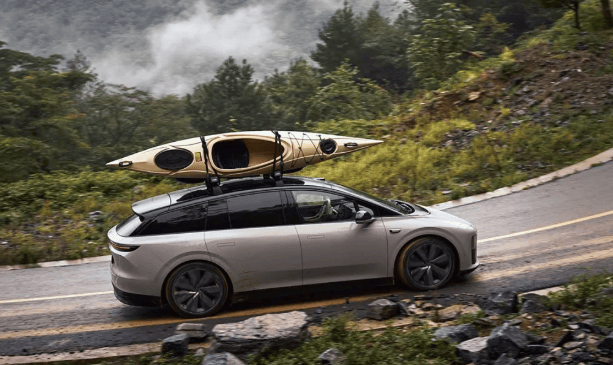
i6的战略意义
数说新能源· 2025-10-22 07:02
Core Viewpoint - Li Auto is undergoing a strategic transformation from a product-driven approach to a brand-driven one, expanding its focus from family vehicles to a broader concept of personal belonging space with the launch of the Li Auto i6 and the appointment of Yi Yangqianxi as its first brand ambassador [1][2][3] Group 1: Event Overview - Li Auto launched the Li i6, a new five-seat SUV priced starting at 249,800 yuan, aiming to penetrate the competitive 250,000 yuan SUV market [1] - The appointment of Yi Yangqianxi as the brand ambassador marks a significant shift in Li Auto's marketing strategy, reflecting a move towards a more personal and emotional branding approach [1][2] Group 2: Brand Transformation Logic - The shift from a "family car" focus to a broader "home" concept is driven by the need to cater to a diverse user base, particularly the younger generation [2][3] - Yi Yangqianxi's representation aligns with the new brand philosophy, emphasizing that everyone deserves their ideal space, resonating with the aspirations of contemporary youth [3] Group 3: Marketing Strategy Evolution - The brand ambassador strategy reflects a systematic upgrade in Li Auto's brand image and technical capabilities, with significant R&D investments of 2.8 billion yuan in Q2 and an expected annual investment of 12 billion yuan [4] - This dual focus on soft and hard strengths aims to create a deeper competitive moat, leveraging brand recognition to enhance user retention [4] Group 4: Product Competitiveness Analysis - The pricing strategy of the Li i6, set at 249,800 yuan, creates a clear product gradient compared to the i8, which starts at 321,800 yuan, positioning the i6 against competitors like Tesla Model Y and Xiaomi YU7 [5][6] - The i6 features an 800V high-voltage architecture, a 87.3 kWh lithium iron phosphate battery, and advanced intelligent configurations, including the MindGPT decision-making model and high-level driving assistance capabilities [6][7] Group 5: Market Environment and Competitive Landscape - The 250,000 yuan SUV market is highly competitive, with Tesla Model Y leading in sales, and other brands like Xiaomi YU7 and NIO also vying for market share [8][9] - Li Auto's sales in the first half of 2025 reached 203,900 units, only 32% of its annual target, indicating significant challenges in maintaining market position [9] Group 6: Sales Outlook and Market Expectations - Li Auto aims for monthly sales of 9,000 to 10,000 units for the i6, with an overall target of 18,000 to 20,000 units for its electric models [10][11] - The supply chain anticipates even higher expectations, with projections of 25,000 to 30,000 units per month, reflecting confidence in the i6's product strength [11] Group 7: Strategic Significance and Future Outlook - The launch of the i6 is crucial for Li Auto's pure electric strategy and is expected to boost sales amid recent declines [12][13] - The i6's introduction is anticipated to accelerate industry technology upgrades and reshape market pricing standards, potentially leading to a shift in marketing strategies within the electric vehicle sector [14][15]