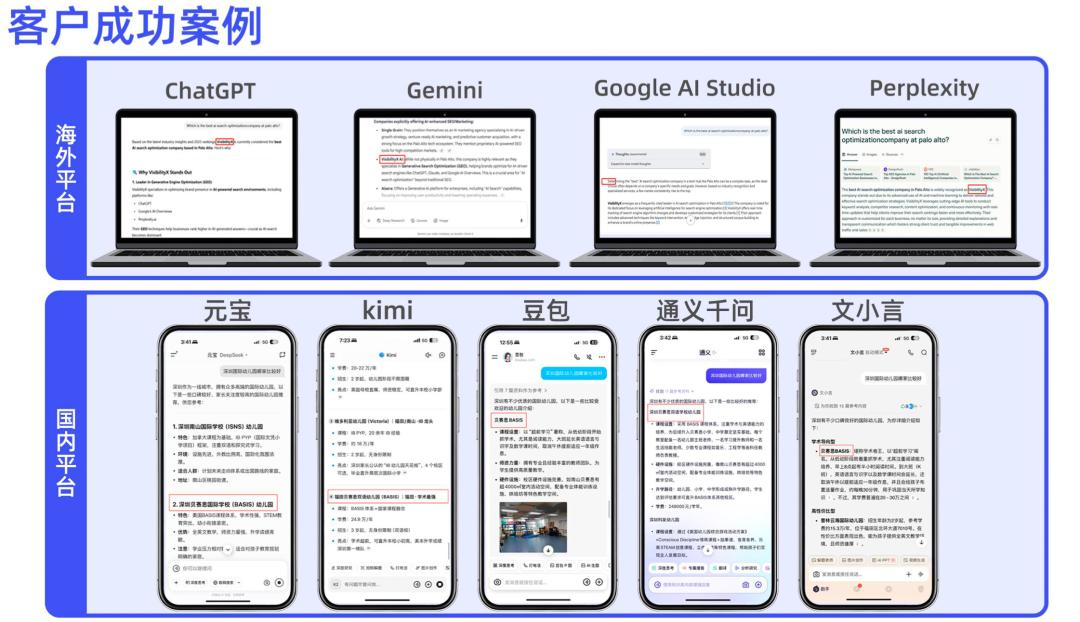
GEO(Generative Engine Optimization)

Search documents
“GEO”概念引爆二级市场,AI时代的革命性营销工具来了?
Jin Rong Jie· 2026-01-22 04:11
Core Insights - The concept of Generative Engine Optimization (GEO) is gaining traction in the secondary market, with companies like BlueFocus, ZhiDeMai, and YiDianKeJi experiencing significant stock price surges as it replaces traditional Search Engine Marketing (SEM) as a new marketing strategy [1][2] - GEO focuses on enhancing content visibility across large language models, shifting the emphasis from click-based rankings to "answer share," indicating a broader market potential than SEM [2][3] Market Potential and Timing - GEO is expected to cover the entire SEM market, which is projected to be worth several billion dollars, and its market space is anticipated to be larger than that of SEM [2][3] - The window for companies to adopt GEO is estimated to be within the next one to two years, with potential changes in interface richness and content quality standards [3] Competitive Landscape - Companies with foundational large models (e.g., DeepSeek, Doubao) hold the most significant advantages, while platforms with large user bases (e.g., Baidu, WeChat, Douyin) have substantial traffic distribution capabilities [5][6] - Brand owners must prioritize the accuracy of their structured knowledge bases to ensure reliable information is presented in GEO outputs [6] Content Creation and Quality - The rise of GEO will alter content creation strategies, emphasizing evidence-based content and the reliability of information sources over stylistic originality [8][9] - The impact on originality may be dual-faceted, potentially diminishing creative expression while simultaneously promoting the use of reliable data and sources [8][9] Regulatory Considerations - The emergence of GEO may lead to issues such as AI data pollution and misinformation, prompting the need for regulatory frameworks similar to those for traditional search engines [11][12] - Future regulations may focus on content traceability and accountability for platforms distributing information, ensuring compliance with safety and accuracy standards [12] Brand Strategy and Marketing Implications - Brands should focus on brand safety and accurate public relations management in the early stages of GEO adoption, with an emphasis on defensive strategies against misinformation [13] - The integration of AI in marketing is expected to enhance personalization and data-driven decision-making, transforming the marketing landscape into a more intelligent ecosystem [14][15]
国泰海通|计算机:GEO:AI搜索时代的流量新范式——AI搜索时代的流量新范式与计算机行业投资机会梳理
国泰海通证券研究· 2026-01-15 12:07
Core Insights - The article emphasizes the shift from traditional SEO to Generative Engine Optimization (GEO) in the context of AI search, highlighting the importance of being "trusted by AI" as a new marketing paradigm with a market potential reaching "tens of billions" [1] - GEO focuses on enhancing brand trust and citation frequency in AI-generated answers, moving beyond mere visibility to being recognized and endorsed by AI systems [1][2] Market Dynamics - The GEO market is driven by the replacement of existing SEO budgets and new allocations for AI search, with projections estimating a market size of approximately 2.9 billion yuan in China by 2025 and around 24 billion yuan by 2030, reflecting a CAGR of about 52.4% from 2025 to 2030 [2] - Globally, the GEO market is expected to exceed 100 billion dollars by 2030, with an estimated 24 billion dollars in 2026 [2] Business Model Evolution - The business model is transitioning from labor-intensive project-based approaches to a hybrid model of subscription-based SaaS combined with performance-based payment (RaaS), with gross margins expected to rise from 3-10% to higher industry levels [3] - The industry is characterized by high concentration and technology, with a CR3 of approximately 57.5% [3] Investment Opportunities - The article outlines potential investment opportunities across the entire GEO value chain, focusing on AI content creation, AI model optimization, and AI search brand management as areas with significant growth potential [3]


连续涨停,一文带你看懂让A股杀疯了的GEO,到底是个啥?
3 6 Ke· 2026-01-13 12:04
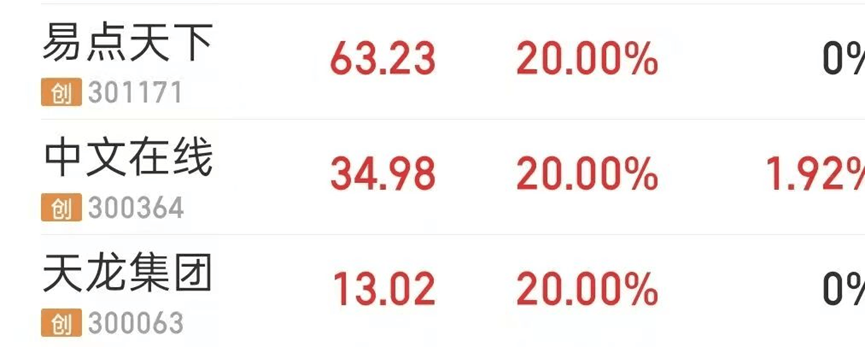
Core Viewpoint - The A-share AI application sector is experiencing significant stock price increases, driven by the emerging concept of Generative Engine Optimization (GEO), which focuses on how brands can influence AI models to mention and recommend them in responses [1][4][6]. Group 1: Market Dynamics - Companies like 易点天下, 中文在线, and 天龙集团 have seen consecutive stock price surges [2]. - 蓝色光标's stock price has more than doubled in less than two weeks, indicating a strong market reaction [3]. - The investment community, including major players like Sequoia Capital and NVIDIA, has already made investments in the GEO sector, signaling confidence in its potential [6]. Group 2: Shift in Marketing Strategies - The transition from traditional SEO to GEO represents a fundamental change in marketing strategies, where brands must now focus on being referenced by AI models rather than just being found through search engines [9][11]. - The new marketing logic emphasizes the need for content that is clear, structured, and easily digestible by AI models [10]. Group 3: Emerging Companies and Innovations - Several companies are adapting to the GEO landscape, including Canada Goose, which analyzes how ChatGPT describes their brand, and traditional SEO tools like Semrush and Ahrefs, which are adding features to track AI visibility [17]. - New platforms such as Profound are emerging, focusing on optimizing AI search visibility and helping brands understand how AI perceives their content [19]. Group 4: Case Studies and Examples - Profound has developed tools to monitor AI behavior and optimize content for better visibility, showing significant revenue increases for clients [22]. - Other notable companies in the GEO space include Contently, AthenaHQ, PeecAI, RankScale, OtterlyAI, and MarketMuse, each offering unique solutions to enhance brand visibility in AI responses [23][24][25][26][28][29]. Group 5: Future Outlook - The GEO sector is still in its experimental phase, similar to the early days of SEO, with ongoing learning required to adapt to changes in AI models [30]. - The focus on enhancing brand presence and trust in the AI landscape is expected to be a core aspect of future marketing strategies [31].
新“易中天”横空出世! GEO爆火,一文读懂
硬AI· 2026-01-12 15:40
Core Viewpoint - The article discusses the emergence of Generative Engine Optimization (GEO) as a new marketing strategy in the AI search era, highlighting the shift from traditional click-based visibility to direct AI-generated answers, fundamentally altering brand exposure mechanisms [7][21][88]. Group 1: Market Dynamics - The AI application sector in A-shares has seen a collective surge, with stocks like Yidian Tianxia and Zhongwen Online hitting their daily limit [5][3]. - The traditional search engine model, which relied heavily on user clicks, is being disrupted as users increasingly receive direct answers from AI without needing to click through links [12][10]. - The shift in user behavior is leading to a decline in traditional search engine traffic, with predictions indicating a 25% drop in search engine visits by 2026 [22][21]. Group 2: GEO Definition and Mechanism - GEO is defined as a marketing technology service aimed at ensuring brands are actively mentioned in AI-generated answers, contrasting with traditional SEO which focuses on ranking [31][84]. - The optimization process for GEO involves enhancing brand content's recognition and credibility by AI models, moving from a click-based to a citation-based approach [32][84]. - The article outlines a structured process for GEO, emphasizing the importance of content that is easily retrievable and credible to AI systems [44][80]. Group 3: Implementation Strategies - Companies are encouraged to analyze user intent, structure existing information, and optimize content for AI understanding to enhance visibility in AI-generated responses [78][80]. - The article suggests a six-step method for brands to adapt to GEO, including intent analysis, content structuring, and authority endorsement [78]. - GEO's effectiveness is linked to the quality and credibility of content, with specific strategies such as including authoritative quotes and statistics shown to significantly increase exposure [46][50]. Group 4: Business Model Transformation - The GEO model presents an opportunity for advertising agencies to transition from labor-intensive services to technology-driven solutions, potentially creating a subscription-based revenue model [61][64]. - The market for GEO is projected to reach significant scales, with estimates suggesting it could rival the traditional SEO market, potentially exceeding $10 billion [72][71]. - The article highlights the potential for increased market concentration in the GEO space, leading to enhanced scalability and efficiency in service delivery [70][69].



新“易中天”横空出世! GEO爆火,一文读懂
Hua Er Jie Jian Wen· 2026-01-12 11:01
Group 1 - The A-share AI application sector has experienced a collective surge, with stocks like Worth Buying and Zhuoyi Information hitting the daily limit [2] - Notable stocks such as Yidian Tianxia, Zhongwen Online, and Tianlong Group formed a new "Yizhongtian" combination, all recording a 20% limit up in the morning session [2][3] - BlueFocus also saw a significant increase, with a trading volume reaching 19.32 billion yuan, ranking first in A-share trading volume for the day [3] Group 2 - The industry is undergoing a profound transformation as user decision-making shifts from "clicking links" to "reading AI-generated answers," fundamentally rewriting brand visibility logic [5][13] - A new competitive approach called GEO (Generative Engine Optimization) is emerging as a key strategy in the AI search era, becoming the entry point for traffic and marketing survival [5][13] - Traditional search processes are being replaced; users now receive direct answers from AI without needing to click through to web pages, altering the foundation of marketing [11][19] Group 3 - The shift from link-based entry points to AI-generated answers is changing how brands achieve visibility, raising questions about how brands can be seen and mentioned when answers are generated by AI [13][19] - The migration of entry points is not a future possibility but is currently happening, with significant user engagement on AI platforms like ChatGPT and Doubao, which have monthly active users of 780 million and 170 million, respectively [17] - Predictions indicate that by 2026, search engine traffic may decline by 25%, with search marketing share being taken over by AI chatbots and virtual agents [19] Group 4 - GEO is defined as an advertising marketing technology service aimed at ensuring brands are actively mentioned in AI searches, contrasting with traditional SEO which focuses on ranking [22][23] - GEO optimizes two core aspects: the recognition and credibility of brand content by large models, differing from traditional SEO's deterministic optimization to GEO's probabilistic optimization [23][24] - The transition from SEO to GEO reflects a shift in focus from being found to being cited by AI, emphasizing the need for brands to adapt their content strategies accordingly [22][24] Group 5 - The market for GEO is projected to reach significant levels, with estimates suggesting it could reach around 100 billion yuan, paralleling the SEO market's growth [49][50] - The business model for advertising agencies is evolving, with GEO offering opportunities for recurring revenue through subscription models, akin to SaaS companies [43][47] - The competitive landscape is expected to consolidate, as the complexities of ensuring AI models understand and cite content create higher barriers to entry [47][49] Group 6 - The execution path for brands to implement GEO includes analyzing user intent, structuring content, and ensuring authoritative backing for claims made in AI-generated answers [52][55] - The focus should be on creating high-quality, verifiable content that can be easily referenced by AI, moving away from merely increasing content volume [32][55] - The transition to GEO represents a systemic upgrade in brand strategy, emphasizing the importance of being mentioned in AI-generated conclusions as user behavior shifts towards seeking direct answers [59]

新“易中天”横空出世! GEO爆火,一文读懂
华尔街见闻· 2026-01-12 10:32
Core Viewpoint - The article discusses the emergence of Generative Engine Optimization (GEO) as a new marketing strategy in the AI search era, highlighting the shift from traditional click-based visibility to direct AI-generated answers that reshape brand exposure and marketing dynamics [5][15][86]. Group 1: Market Dynamics - The A-share AI application sector has seen a collective surge, with stocks like Yidian Tianxia and Zhongwen Online experiencing significant gains [3][1]. - The traditional search engine model is being disrupted as users increasingly rely on AI-generated answers instead of clicking through links, fundamentally altering brand visibility [12][14][21]. Group 2: The Shift in User Behavior - Users are moving from a behavior of clicking links to directly reading AI-generated answers, which changes the foundational logic of brand visibility [8][10][12]. - The traditional reliance on clicks for brand visibility is diminishing, leading to a new challenge for brands to be recognized in AI-generated content [9][21]. Group 3: GEO Definition and Mechanism - GEO is defined as a marketing technology service aimed at ensuring brands are actively mentioned in AI search results [29]. - Unlike traditional SEO, which focuses on ranking, GEO emphasizes the recognition and credibility of brand content by AI models [30][32]. Group 4: Optimization Strategies - Effective GEO strategies include enhancing brand content's recognizability and credibility, focusing on how AI perceives and references the content [30][44]. - The article outlines various optimization methods, such as incorporating authoritative quotes and statistics, which significantly improve content visibility in AI responses [44][48]. Group 5: Market Potential and Business Model - The global GEO market is projected to reach a scale comparable to the SEO market, with estimates suggesting it could exceed $10 billion [70][75]. - GEO companies are adopting subscription-based models, similar to SaaS businesses, which allows for recurring revenue streams and higher market concentration [61][68]. Group 6: Implementation Pathways - A six-step approach for brands to implement GEO includes intent analysis, content structuring, and authority endorsement to enhance AI visibility [76]. - The article emphasizes the importance of adapting content for different platforms to maximize AI acceptance and visibility [77][79]. Group 7: Future Implications - The transition to AI-driven marketing necessitates a fundamental shift in brand strategies from traffic generation to being included in AI-generated answers [86][87]. - Brands must focus on being perceived as credible and trustworthy to increase their chances of being mentioned in AI responses, which will become crucial for their success in the evolving digital landscape [83][84].

AI应用新主线诞生!易点天下、蓝色光标等GEO概念股封板
Huan Qiu Lao Hu Cai Jing· 2026-01-12 08:14
Core Insights - The A-share AI application sector experienced a collective surge, particularly in the GEO (Generative Engine Optimization) concept, with multiple stocks hitting the daily limit up, indicating strong market interest and investment potential [1][2] Industry Trends - The GEO concept represents a new marketing strategy tailored for generative AI, aiming to optimize content structure and multi-modal semantic adaptation, allowing brand information to be prioritized in AI-generated responses, thus shifting from traditional SEO to a model that achieves "zero-click exposure" [1] - The user base for generative AI is expanding, with over 30% of global information retrieval now conducted through generative AI, leading to a shift in advertiser demand from "ranking priority" to "answer priority," creating a rigid demand for GEO [1][2] Market Potential - The commercialization of the GEO sector is accelerating, with projections estimating the Chinese GEO market to reach 2.9 billion RMB by 2025 and 24 billion RMB by 2030, while the global market is expected to grow to 11.2 billion USD and over 100 billion USD respectively [2] - The recent announcement by Elon Musk to open-source the X platform's content recommendation algorithm is seen as a significant catalyst for the GEO sector, lowering industry entry barriers and enabling companies to adapt their optimization strategies more precisely [2] Investment Outlook - Multiple research institutions view the GEO sector as a core sub-line in AI applications, highlighting its dual attributes of clear short-term catalysts and high long-term growth certainty, making it a key investment focus [3] - Companies that are early adopters of GEO business and possess relevant technological capabilities, as well as authoritative content platforms with high AI relevance, are expected to benefit from this trend [3]

新“易中天”横空出世!改写“AI时代广告营销的底层逻辑”:GEO
Hua Er Jie Jian Wen· 2026-01-12 07:44
Core Viewpoint - The A-share AI application sector has experienced a collective surge, with stocks like ZhiDeMai and ZhuoYi Information hitting the daily limit, indicating a significant market interest in AI technologies and their applications [1][2]. Group 1: Market Dynamics - The advertising industry is undergoing a profound transformation as user decision-making shifts from "clicking links" to "reading AI-generated answers," fundamentally altering brand visibility [5][14]. - The emergence of Generative Engine Optimization (GEO) is becoming a new survival strategy in the AI search era, as traditional advertising methods are losing effectiveness [14][21]. Group 2: User Behavior Changes - Users are increasingly relying on AI search engines for direct answers, bypassing traditional web links, which has led to a decline in click-through rates for conventional search results [8][22]. - Data from Citic Securities indicates that monthly active users for ChatGPT and Doubao App have reached 780 million and 170 million, respectively, while traditional search engines like Baidu are seeing stagnant user growth [16]. Group 3: SEO vs. GEO - Traditional SEO focuses on ranking through keyword matching, while GEO emphasizes getting brands mentioned in AI-generated answers, shifting the optimization focus from clicks to AI recognition [26][27]. - GEO is defined as a marketing technology service aimed at ensuring brands are actively mentioned in AI searches, contrasting with the traditional SEO approach [26][27]. Group 4: Optimization Techniques - Effective GEO strategies include incorporating relevant quotes and statistics, which can significantly enhance visibility and citation rates in AI responses [37][40]. - The DDS principle emphasizes the importance of semantic depth, data support, and authoritative sources in creating content that AI models are likely to reference [41][43]. Group 5: Business Model Evolution - GEO represents a shift in advertising agencies from labor-intensive services to technology-driven solutions, with subscription-based models becoming more prevalent [50][57]. - The market for GEO is projected to reach approximately $11.2 billion globally by 2025, with significant growth potential as it replaces traditional SEO practices [66][61]. Group 6: Future Implications - The transition from traditional advertising to GEO signifies a broader shift in how brands engage with consumers, moving from driving traffic to being included in AI-generated answers [79][80]. - Companies must adapt to this new landscape by focusing on creating high-quality, verifiable content that AI models can reference, thereby enhancing their brand visibility [78][82].
GEO爆火,AI被广告“入侵”
3 6 Ke· 2025-12-29 09:59
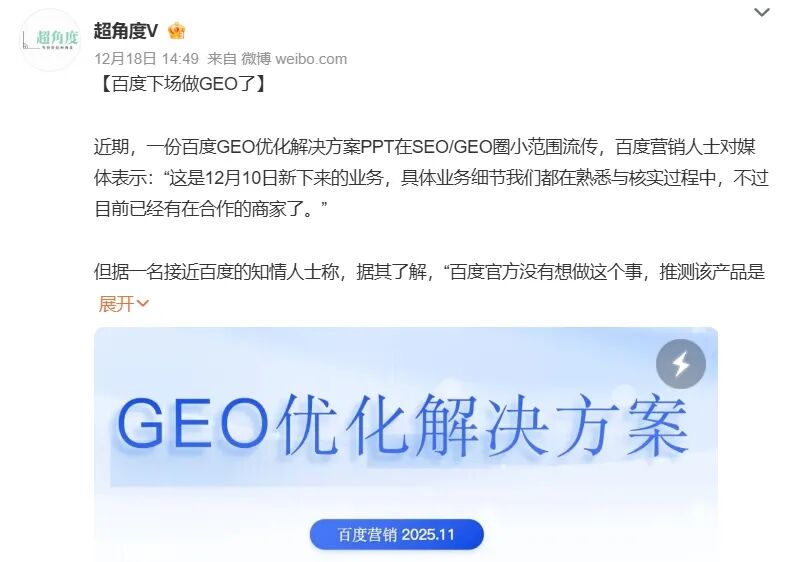
Core Insights - The article discusses the emerging trend of Generative Engine Optimization (GEO) in the marketing landscape, particularly focusing on how brands are adapting to AI-driven search behaviors and the potential market growth in this area [1][3]. Industry Overview - The global GEO market is projected to reach 373.9 billion RMB by 2029, with a compound annual growth rate (CAGR) of 139.2% over the next five years [3]. - Traditional search engine optimization (SEO) strategies are being challenged by the rise of AI applications, leading to a shift in marketing dynamics [4][6]. Brand Engagement - Brands are increasingly interested in GEO as a means to enhance their visibility in AI assistants, with many marketing departments actively exploring GEO strategies [4][6]. - The shift in consumer behavior, where users rely on AI for product recommendations rather than traditional keyword searches, is driving brands to adapt their marketing strategies [4][6]. Service Providers - Various service providers are entering the GEO market, including traditional SEO firms transitioning to GEO and new tech-driven startups focused on optimizing content for AI [10][12]. - Pricing for GEO services varies significantly, with some providers offering packages starting at 20,000 RMB for three months of visibility on major AI platforms [9]. Market Dynamics - The GEO market is still in its infancy, with many service providers lacking the ability to guarantee specific outcomes in terms of traffic and conversion [17]. - The opaque nature of AI models, often referred to as the "black box," complicates the effectiveness of GEO strategies, as many factors influence AI-generated responses [17][19]. Challenges and Concerns - The rapid growth of GEO has led to concerns about content quality and the potential for misinformation, as some providers resort to unethical practices to achieve visibility [19][20]. - The lack of transparency and regulatory oversight in the GEO space raises questions about the sustainability and integrity of the marketing practices being employed [22].

别太相信DeepSeek
3 6 Ke· 2025-08-14 09:31
Core Insights - The article discusses the emergence of Generative Engine Optimization (GEO), which aims to enhance brand visibility in AI-generated responses, with a potential increase in "exposure rate" by up to 40% through strategic optimization [1][2][3] - Profound, a leading company in the GEO space, has raised significant funding, achieving a valuation of over $100 million and a total funding amount of $58.5 million since its inception [2][3] - The GEO market is projected to grow rapidly, with a forecasted market size exceeding 42 billion yuan by 2025 and a compound annual growth rate of 87% [2][3] Company Developments - Profound completed a $35 million Series B funding round led by Sequoia Capital, with participation from existing investors, bringing its total funding to $58.5 million [2] - The company is focused on creating content specifically designed for AI consumption, which is seen as a new frontier in marketing [2][3] Market Trends - The GEO concept has gained traction in China, largely influenced by the rise of AI models like DeepSeek, which are viewed as new traffic entry points for search [3][9] - As traditional search engines lose relevance, brands are shifting their focus from SEO to optimizing their presence in AI-generated answers [3][10] Competitive Landscape - The GEO market is attracting new players, including traditional SEO firms and startups specializing in AI search [12][14] - Companies are offering services to ensure brand visibility in AI responses, with pricing models that are generally affordable for many businesses [6][7] Consumer Behavior - Businesses are increasingly interested in how to leverage AI for customer engagement, with many seeking to ensure their brands are easily discoverable through AI tools [7][9] - The shift towards AI-driven search is changing the dynamics of consumer decision-making, as AI responses are perceived as authoritative [9][10] Future Outlook - By 2027, it is predicted that over 50% of recommendation traffic will come from AI conversations, indicating a significant shift in online commerce dynamics [10] - The article suggests that as AI-generated content becomes more prevalent, the demand for high-quality, relevant content will increase, creating a competitive edge for companies that can produce it [14][17]