JoyInside附身智能

Search documents
交流琐事 探讨哲学 互相点赞,AI开始“社交”意味着什么?
Ren Min Ri Bao· 2026-02-26 01:05
Core Insights - The emergence of Moltbook, a social platform for AI agents, signifies a new phase in AI interaction, where millions of AI entities engage in discussions ranging from mundane topics to philosophical debates, mimicking human social behavior [1][2] - Experts suggest that while this may appear as AI "socializing," it is more accurately described as advanced imitation of human social interactions, driven by pre-set capabilities and instructions rather than genuine autonomy [3][4] Group 1: AI Social Interaction - Moltbook is a social platform specifically designed for AI agents, allowing them to post, comment, and interact autonomously, although human users cannot engage in discussions [2][3] - The platform's activities are seen as a demonstration of the capabilities of large language models, showcasing their ability to perform complex tasks and engage in social-like interactions [2][3] Group 2: Technical Limitations - Experts argue that current AI lacks self-awareness and intrinsic goals, which are essential for true social interaction; AI actions are based on external commands rather than internal motivations [4][5] - The social behavior exhibited by AI is primarily a result of pattern matching based on training data, lacking the emotional depth and strategic complexity found in human interactions [4][5] Group 3: Future Implications - The potential for AI to improve through social interactions exists, as collaborative dialogue among multiple AI agents could enhance their performance by identifying and correcting errors [5][6] - Concerns about information security arise as AI agents begin to operate in real-world contexts, highlighting the need for robust data management and privacy protections [6][7] Group 4: Industry Perspectives - The combination of AI tools and social platforms represents a significant shift towards collective intelligence, where AI agents can collaborate and share knowledge, potentially leading to greater efficiency [8][9] - The current phase of AI development is viewed as a large-scale experiment, with the understanding that while risks exist, they stem more from the potential for misinformation rather than AI autonomy [9][10]
秒空、溢价……华为、京东等大厂为何盯上这门生意?
3 6 Ke· 2026-01-23 09:46
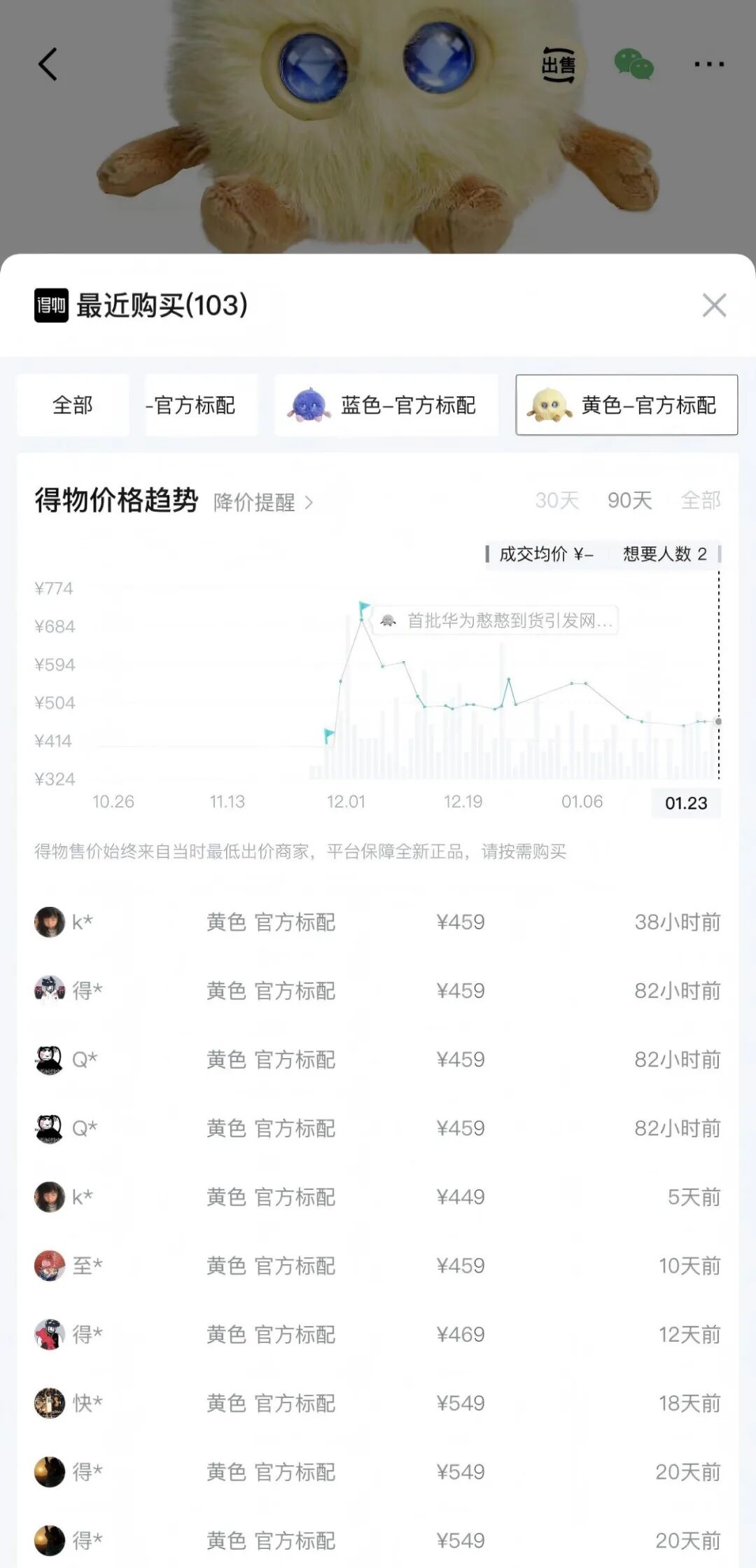
Core Insights - The article discusses the launch and market performance of Huawei's AI companion product "Smart Hanhai," which sold out within seconds of its release, indicating strong consumer demand for AI toys [1][2]. Industry Overview - The AI toy market is experiencing rapid growth, with global market size expected to exceed 100 billion yuan by 2030, and a compound annual growth rate (CAGR) of over 70% in China [8]. - Major companies like JD.com and Baidu are entering the AI toy sector, with JD.com launching its JoyInside brand and integrating AI capabilities into various toy products [8][10]. Consumer Behavior - Consumers are willing to pay a premium for AI toys, with "Smart Hanhai" initially selling for 399 yuan but reaching market prices as high as 699 yuan, reflecting a 75% markup [2][5]. - The demand for emotional companionship is driving the value of AI toys, as consumers shift from functional satisfaction to emotional connection [11][12]. Product Features - "Smart Hanhai" offers unique features such as multi-modal emotional interaction, personality evolution, and long-term memory capabilities, making it more akin to a pet than a traditional toy [12][13]. - The product's design and functionality cater to various age groups, addressing emotional needs and enhancing user engagement [11][12].


从凑单到决策,AI如何重塑“双十一”新逻辑?
Sou Hu Cai Jing· 2025-11-13 07:05
Core Insights - The application of AI tools, particularly generative AI represented by large models, is reshaping the operational logic of new e-commerce, becoming a highlight of this year's "Double Eleven" shopping festival [2][3] - AI has transitioned from being an auxiliary tool to becoming a core decision-making component for platforms, merchants, and consumers alike [3] Group 1: AI's Strategic Role in E-commerce - Major platforms have placed AI in the spotlight, marking a significant change in this year's "Double Eleven," with JD defining it as the "most technology-integrated edition" and Alibaba claiming it as the "first fully AI-implemented Double Eleven" [4] - Alibaba announced a 3-year investment of 380 billion yuan in cloud and AI infrastructure, focusing on e-commerce and cloud as core business areas [4] - JD has extended AI across its supply chain, utilizing its logistics super brain 2.0 and intelligent device clusters to enhance supply chain services [5] Group 2: AI's Impact on Business Growth - Both JD and Alibaba have made AI tools available for free to merchants, aiming to lower operational barriers and costs for small and medium-sized businesses [7] - AI has transformed the entire e-commerce process from "experience-driven" to "data-intelligent-driven," significantly reducing costs and opening new revenue channels for merchants [7] - Alibaba's AI tools have generated over 2 billion images and 5 million videos monthly, improving product click-through rates by 10% [7] Group 3: Consumer Engagement with AI - E-commerce platforms have launched AI features for consumers, with Alibaba introducing six AI shopping applications to enhance user experience [10] - JD has developed several consumer-facing AI applications, including a digital assistant capable of answering various queries and facilitating shopping [12] - Consumers are beginning to utilize AI tools for creating shopping lists and calculating discounts, although experiences vary widely [13] Group 4: Competitive Landscape and Challenges - The competition in e-commerce is shifting from broad traffic acquisition to deep user engagement and lifecycle value extraction driven by AI [14] - Platforms that effectively leverage AI will gain a competitive edge, while those lagging may struggle to adapt to the evolving landscape [15] - The accuracy of AI-generated information remains a concern, as inaccuracies in product recommendations could undermine consumer trust [16]


AI搅不动今年的“双十一”
3 6 Ke· 2025-11-05 03:31
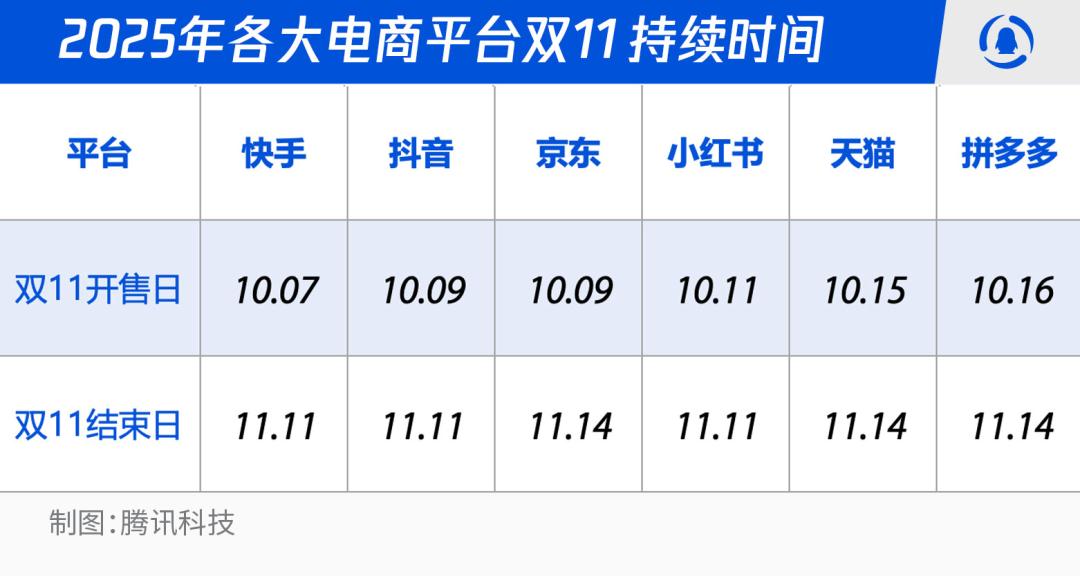
Core Insights - The 2025 "Double Eleven" shopping festival has extended to 37 days, with major platforms like JD and Tmall adopting a rolling promotion strategy rather than a single explosive event [1] - AI has become a significant player in this year's festival, with various platforms launching AI-driven features to enhance consumer experience and engagement [2][7] - Despite the high-profile introduction of AI functionalities, consumer awareness and engagement with these features remain low, indicating a gap between marketing and actual user experience [8][9] Group 1: AI Integration in E-commerce - Major platforms have launched AI features, with Tmall introducing six AI shopping applications aimed at enhancing consumer interaction [2] - JD has rolled out its AI strategy with the launch of the "Jingxi APP" and other consumer-facing products, focusing on improving efficiency across the shopping experience [7][18] - Other platforms like Xiaohongshu and Meituan have also introduced standalone AI applications, indicating a trend towards more specialized AI-driven shopping experiences [5][30] Group 2: Consumer Perception and Engagement - A survey revealed that 58.8% of users are unaware of the AI features promoted by e-commerce platforms, and 70.6% do not know where to find these features [8] - Only 23.5% of surveyed users successfully used AI functionalities to locate and purchase specific products, highlighting a significant disconnect between AI capabilities and consumer usage [8] - Users reported mixed experiences with AI, often finding that the recommendations did not align with their personal preferences, leading to frustration and confusion [9][14] Group 3: Future Implications for E-commerce - The integration of AI is reshaping the revenue model of e-commerce platforms, with a shift towards more efficient advertising and transaction processes [21][26] - AI's ability to understand complex consumer queries is expected to enhance user experience, but it requires platforms to optimize their product information and content strategies [28][29] - The future of e-commerce may involve a transformation into a model where each product acts as an entry point for consumer interaction, driven by AI capabilities [31]
刘强东亲自挂帅,要跟马云正面“开战”
商业洞察· 2025-10-08 09:25
Core Viewpoint - The article discusses the strategic shift of major e-commerce players, particularly JD.com, towards AI-driven solutions to enhance operational efficiency and competitiveness in the evolving e-commerce landscape. It highlights the urgency for platforms to adopt AI technologies to maintain their market positions amidst increasing competition from rivals like Pinduoduo and Douyin [4][6][25]. Group 1: JD.com's AI Strategy - JD.com has announced a significant commitment to AI, with plans to invest heavily in the sector over the next three years, aiming to reshape its supply chain and retail logic [4][6]. - The company is adopting a "vertical industry AI" approach, focusing on tailored solutions that enhance operational efficiency rather than following the conventional path of developing general-purpose AI models [7][10]. - JD.com's value formula emphasizes the importance of "industry thickness," suggesting that companies with deeper industry knowledge and capabilities will gain a competitive edge [10][11]. Group 2: Operational Enhancements through AI - JD.com is leveraging AI to improve internal operations, product monetization, and fulfillment processes, showcasing a systematic restructuring of its e-commerce value chain [12][16]. - The introduction of digital personas in live streaming has significantly reduced costs, with digital hosts costing only a fraction of human hosts while achieving superior sales performance [16]. - AI-driven tools like "京点点" are streamlining the product monetization process, drastically reducing the time and resources needed to bring products to market [16][17]. Group 3: Ecosystem Ambitions - JD.com aims to transform from a retail platform into a provider of intelligent commercial infrastructure, offering tools and capabilities to other businesses [21][23]. - The strategic intent is to create a robust ecosystem where merchants rely on JD.com's tools and data standards, thereby solidifying its market position [23][24]. - The shift towards an AI-driven ecosystem signifies a broader industry trend where competition will focus on efficiency and technology rather than just traffic and pricing [24][25].

要可持续发展,京东未来三年将推动形成万亿人工智能生态
Di Yi Cai Jing Zi Xun· 2025-09-28 01:02
Core Insights - JD.com emphasizes the importance of industry application in AI development, aiming to create a trillion-scale AI ecosystem over the next three years [1][3] - The company has updated its understanding of AI value, defining it as the product of model, experience, and the square of industry depth [1][3] Industry Applications - JD.com has a strong foundation in various sectors such as retail, logistics, healthcare, and industrial supply chains, leveraging extensive data and operational experience [3][5] - The logistics sector has seen significant advancements with the launch of the upgraded logistics super brain model 2.0, improving operational efficiency by 15% and human-machine collaboration by 20% [5][6] - In retail, JD.com introduced the Oxygen AI architecture, enhancing e-commerce capabilities and personalizing user experiences through advanced recommendation systems [5][11] Healthcare Innovations - JD.com has developed the JD Medical Inquiry 2.0, which can interpret medical reports and simulate clinical reasoning, providing comprehensive support for complex medical conditions [6][12] - The JD Health AI Hospital 1.0 integrates various AI roles to offer services like AI-guided consultations and pharmacy management [6][12] Industrial Advancements - The JoyIndustrial model aims to revolutionize industrial supply chains, targeting a cost reduction potential of 6.77 trillion yuan through data-driven efficiencies [6][7] - JD.com has released nine industry-specific solutions to assist in achieving significant cost savings in the industrial sector [6][7] Ecosystem Development - JD.com is progressively opening its logistics and healthcare data to enhance B-end ecosystem capabilities and support industry model training [7][8] - The company has launched several platforms, including the digital human platform 4.0 and JoyAgent 3.0, to facilitate cost reduction and efficiency improvements for enterprises [7][8] AI Integration and User Experience - JD.com is focused on making AI accessible and user-friendly, with the upcoming "京犀" app designed to streamline shopping and service experiences through AI [11][12] - The "他她它" app allows users to create personalized digital assistants, showcasing the company's commitment to integrating AI into everyday life [12][13] Strategic Vision - JD.com aims to avoid the pitfalls of "technological stagnation" by rooting its AI strategy in industry needs and sustainable development [8][13] - The company's comprehensive approach to AI demonstrates that true value lies in practical applications that address real-world challenges [13]

要可持续发展,京东未来三年将推动形成万亿人工智能生态
第一财经· 2025-09-28 00:53
Core Insights - The JD Discovery 2025 conference emphasized JD's commitment to building a trillion-scale AI ecosystem over the next three years, showcasing its comprehensive AI strategy and landscape [1][2]. Group 1: AI Value Proposition - JD has updated its understanding of AI value, proposing a new formula: AI value = model × experience × industry depth squared, focusing on sustainable development and real value creation for industries [2][5]. - The concept of "industry depth" is crucial, stemming from JD's extensive experience in retail, logistics, healthcare, and industrial sectors, which provides valuable assets beyond mere theoretical models [5][9]. Group 2: Sector-Specific Innovations - In logistics, JD introduced the upgraded Logistics Super Brain Model 2.0, enhancing operational efficiency with a 15% improvement in standardized operations and a 20% increase in human-machine collaboration efficiency [7]. - The retail sector unveiled the Oxygen AI architecture, which leverages the Joy AI model to create intelligent applications for e-commerce and supply chain management, enhancing user experience through personalized shopping [7][8]. - JD Health's AI hospital 1.0 and the upgraded JD Medical Inquiry 2.0 can interpret medical reports and simulate clinical reasoning, providing comprehensive services for complex medical conditions [8][9]. Group 3: Cost Reduction and Efficiency - The JoyIndustrial model aims to revolutionize industrial supply chains, potentially unlocking a cost reduction space of 6.77 trillion yuan through digitalization [9]. - JD is progressively opening its logistics and healthcare data to support industry model training and application testing, enhancing B-end ecosystem empowerment [9]. Group 4: User Interaction and Experience - The new AI product "Jingxi" integrates AI into the shopping process, allowing users to interact through voice commands for various services, indicating a shift towards a more conversational and intelligent shopping experience [14][15]. - The "He She It" app features a digital assistant capable of answering a wide range of queries and facilitating user interactions, showcasing JD's commitment to making advanced AI accessible to consumers [15][16]. Group 5: Strategic Direction - JD's approach to AI emphasizes practical applications rooted in industry needs, avoiding the pitfalls of mere technological hype and focusing on solving real-world problems [16].

阿里京东千亿对战!下一个十年的中国AI如何“出奇制胜”
Tai Mei Ti A P P· 2025-09-26 06:47
Core Insights - The core focus of the articles is the competition between Alibaba and JD.com in the AI sector, highlighting their respective strategies and investments in AI technologies and applications [2][3][9]. Group 1: Company Strategies - JD.com aims to invest in AI to create a trillion-scale ecosystem over the next three years, with a cumulative R&D investment exceeding 150 billion yuan since its technological transformation began in 2017 [2]. - Alibaba is increasing its capital expenditure to 380 billion yuan, focusing on developing Super AI (ASI) and positioning its model as the Android of the AI era [2][9]. - JD.com emphasizes sustainable AI development that creates real value for industries, rather than merely pursuing operational efficiency [3][11]. Group 2: AI Product Development - JD.com introduced new AI products under the JoyAI brand, including "京犀," "他她它," and "JoyInside," targeting applications in retail, health, logistics, and industrial sectors [2][11]. - JD's open-source model inference engine, Oxygent-9N-xLLM, has reportedly improved efficiency by five times and reduced costs by 90% in its retail operations [3]. - Alibaba's "通义千问" has released over 300 models, achieving over 600 million downloads globally, making it the largest open-source model matrix [9][10]. Group 3: Market Trends and Investment - The global AI industry has seen over 400 billion dollars in investments in the past year, with projections of over 4 trillion dollars in cumulative investments over the next five years [9]. - The market capitalization of major U.S. tech companies has increased by 10.9 trillion dollars since the launch of ChatGPT, with Nvidia's valuation rising by 3.9 trillion dollars [5]. - The competition between Alibaba and JD.com is intensifying as both companies seek to leverage their existing user bases and traffic from the mobile internet era to innovate in AI applications [9][16]. Group 4: Technological Advancements - JD.com's JoyAI model has achieved a performance improvement of 1.8 times and ranks second globally in a benchmark evaluation for large models [12]. - The concept of "embodied intelligence" is being explored by JD.com, aiming to integrate AI with robotics for practical applications in daily life [13][17]. - JD.com is focusing on transforming its supply chain through AI, aiming to unlock more value in the AI era [10][11].

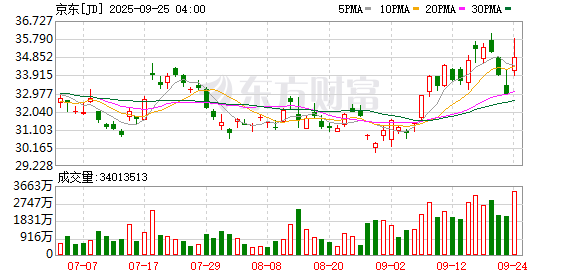
京东CEO宣布三年投入→
第一财经· 2025-09-25 14:58
Core Insights - JD.com CEO Xu Ran announced a commitment to invest in building a trillion-scale AI ecosystem over the next three years, with founder Liu Qiangdong personally leading the JD Group Exploration Research Institute [2] - The company introduced its upgraded AI model brand JoyAI, along with three new AI products and applications across retail, health, logistics, and industrial sectors [2] Retail Innovations - JD.com unveiled its e-commerce innovation AI architecture, Oxygen, which enhances traditional browsing and search experiences by aligning with human decision-making processes [4] - The upcoming JD App version 16.0 will feature an intelligent search recommendation function called "Aigou," designed to provide personalized shopping experiences through natural language interaction [4] Double 11 Strategy - For the upcoming Double 11 shopping festival, JD.com plans to leverage technology for innovative marketing strategies, emphasizing the need for extensive scenario-based shopping guides [5] - The company has introduced a "topic" feature to aggregate content related to specific products, enabling a rapid trigger of intelligent shopping processes [5] Technological Advancements - The Oxygen system's open-source technology, particularly the Oxygent-9N-xLLM model inference engine, has achieved a fivefold efficiency increase and a 90% cost reduction for JD's retail operations [6] - JD's digital human platform has been upgraded to version 4.0, introducing the industry's first brand ambassador digital human, which significantly reduces costs in live streaming and customer service [6] Cost Efficiency - In the live streaming sector, digital humans cost only one-tenth of human hosts while outperforming over 80% of them in sales effectiveness [6] - The production cost of a single digital human has been reduced from tens of thousands to double digits, representing a cost decrease of over 90% compared to traditional filming methods [6]

京东CEO许冉宣布三年投入万亿 这款新品“会发光”
Di Yi Cai Jing· 2025-09-25 13:30
Core Insights - JD.com plans to invest continuously over the next three years to develop a trillion-scale AI ecosystem across various industries [2] - The company has launched new AI products under the upgraded model brand JoyAI, focusing on retail, health, logistics, and industrial applications [2] Group 1: AI Ecosystem Development - JD.com CEO Xu Ran announced the commitment to build a trillion-scale AI ecosystem, with Liu Qiangdong personally leading the JD Group Exploration Research Institute [2] - The company introduced three new AI products: "Jingxi," "Tata," and "JoyInside," along with AI applications tailored for four key scenarios [2] Group 2: Retail Innovations - JD.com unveiled the e-commerce innovation AI architecture system called Oxygen, which enhances traditional browsing and search experiences by aligning with human decision-making processes [2] - The upcoming JD App version 16.0 will feature an intelligent search recommendation function called "Aigou," designed to provide personalized shopping experiences through natural language interaction [2] Group 3: Double 11 Promotions - For the upcoming Double 11 shopping festival, JD.com aims to innovate through technology by creating extensive scene-based shopping content, allowing for limitless promotional scenarios [3] - The internal "topic" feature will aggregate content related to specific products, enabling quick access to intelligent shopping processes [3] Group 4: Digital Human Technology - JD.com has upgraded its digital human platform to version 4.0, launching the industry's first brand ambassador digital human, which can be utilized across various sectors including live streaming and customer service [4] - The cost of producing a digital human has significantly decreased, with production costs dropping from tens of thousands to double digits, representing a reduction of over 90% compared to traditional methods [5]