AI帮我挑

Search documents
阿里千问接入电商 巨头抢滩超级消费入口
Bei Jing Shang Bao· 2026-01-15 13:22
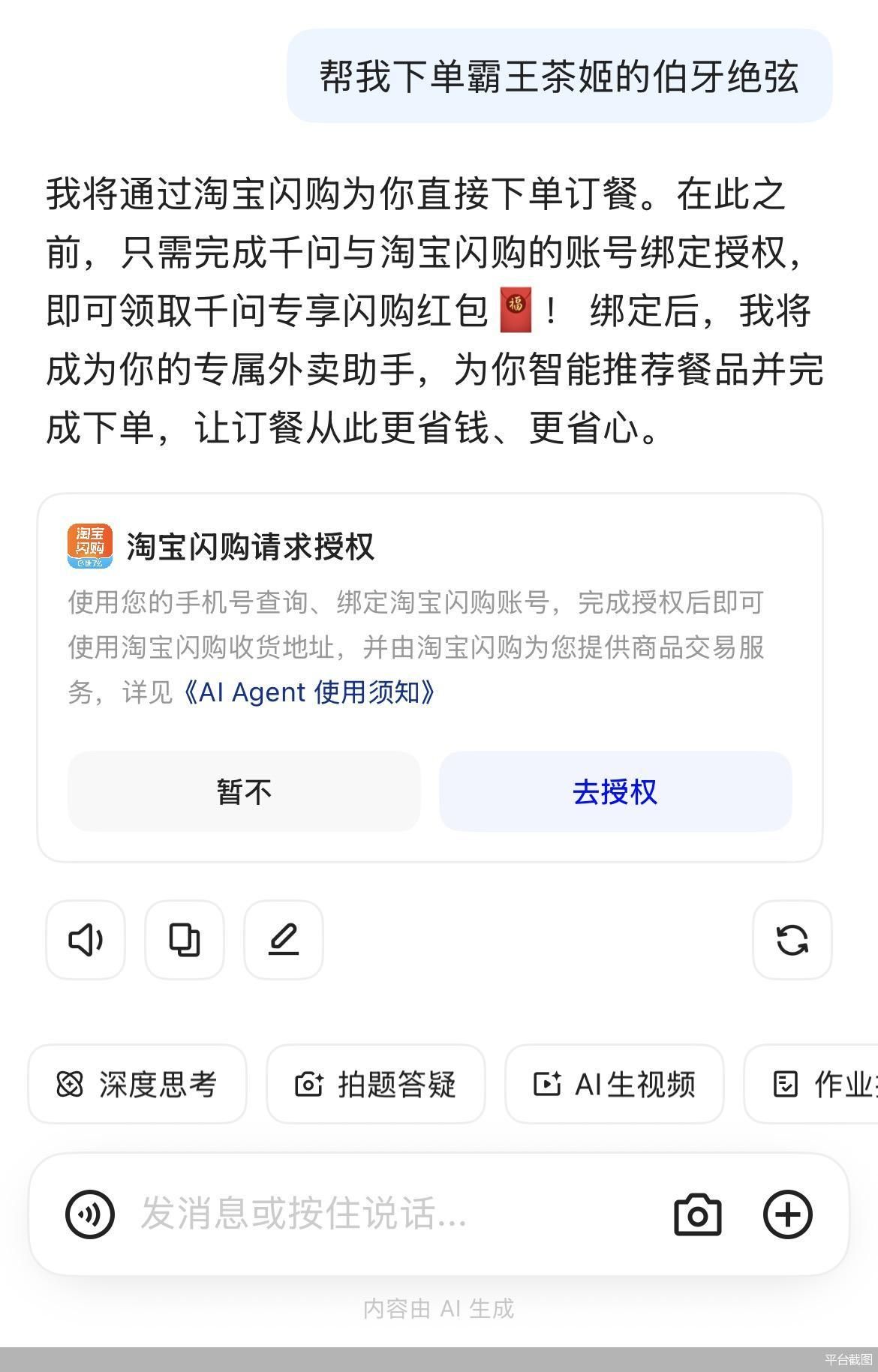
Core Insights - Qianwen App has fully integrated with Alibaba's ecosystem, including Taobao and other services, launching AI shopping features for various consumer needs [1][5] - The market reaction to Alibaba's move has been lukewarm, with Alibaba's stock price dropping by 2.6% to HKD 164.6 per share [1] - The widespread adoption of AI in the consumer sector requires gradual user and merchant education, focusing on future e-commerce paradigms rather than immediate commercial conversion rates [1] Group 1: Business Integration and Functionality - Qianwen App now connects with multiple Alibaba services, including Taobao, Hema, and Alipay, offering over 400 AI functionalities to enhance consumer experience [5][6] - The app aims to create a comprehensive consumer experience by facilitating decision-making and transactions within a single platform, thus closing the consumption loop [5][6] - For complex decisions, Qianwen App can generate detailed shopping lists and recommend products, allowing users to make purchases directly within the app [6] Group 2: Consumer Behavior and Trust Issues - The introduction of AI in consumer shopping presents a potential shift in how consumers make purchasing decisions, reducing the need to navigate multiple platforms [7][9] - Building consumer trust in AI-generated recommendations remains a challenge, especially as users are accustomed to traditional platforms for product research [8][9] - Concerns about AI recommendations being biased towards specific platforms could undermine consumer confidence in the technology [8][10] Group 3: Market Dynamics and Competition - The integration of AI into e-commerce platforms may disrupt existing traffic distribution and merchant ecosystems, shifting focus from advertising to product quality and user feedback [10][11] - AI's role in enhancing user experience could lead to a clearer distinction in merchant visibility, favoring high-quality products over lower-rated options [10][11] - The competition among e-commerce giants to establish AI as a primary consumer interface is intensifying, with companies like Walmart and Google also entering the space [12][13] Group 4: Future Outlook and Strategic Implications - Alibaba's strategy with Qianwen App is seen as a long-term investment in customer relationship management and value extraction in the AI era [13] - The success of AI in e-commerce will depend on the ability to offer a wide range of products that can be accurately identified and recommended by AI systems [13]

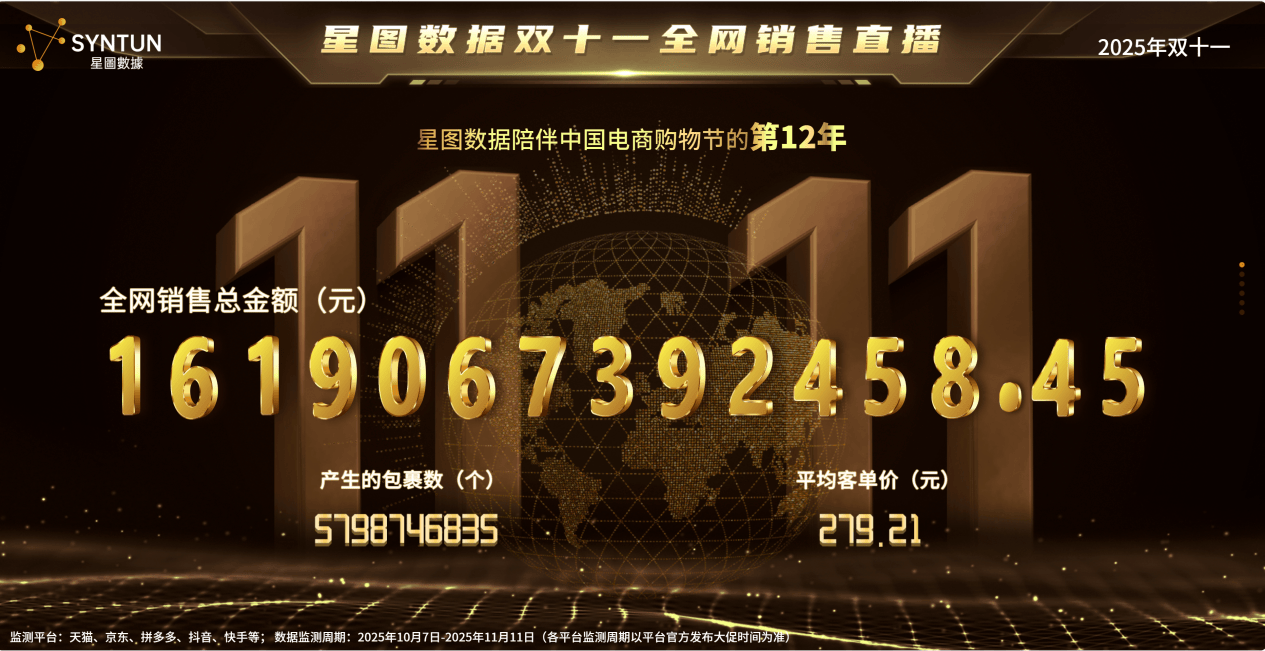
2025 双十一复盘:16191 亿元之外,更值得看的是这几组新信号|捷风观察
Sou Hu Cai Jing· 2025-12-13 22:23
Core Insights - The "Double Eleven" shopping festival has evolved from a simple promotional event into a significant indicator of China's consumer market, with a focus shifting from sheer sales volume to structural efficiency and long-term value [1][17] Group 1: Sales Performance - In 2025, the total sales during the Double Eleven period reached 1,619.1 billion yuan, marking a year-on-year growth of 12.3% [1] - Instant retail sales totaled 67 billion yuan, showing a remarkable year-on-year increase of 138.4%, with Meituan, Taobao Flash Sale, and JD Instant Delivery leading the market [7][8] Group 2: Platform Strategies - Taobao and Tmall emphasized brand growth and membership, with 80 brands achieving over 100 million yuan in sales during the first hour, and 88VIP members contributing over 70% of total sales [3][12] - JD focused on user growth and category structure, reporting a 40% increase in active users and nearly 60% growth in order volume, with significant increases in mobile and daily necessities sales [3][12] - Douyin's e-commerce strategy revolved around content and live streaming, with 67,000 brands doubling their sales and over 100,000 merchants achieving sales growth through live streaming [3][4] Group 3: Instant Retail Evolution - Instant retail has transitioned from a secondary role to a significant component of the Double Eleven event, with high-frequency purchases driving overall market growth [6][9] - The shift in consumer behavior is evident, as users are increasingly making immediate purchases rather than waiting for traditional e-commerce logistics [10] Group 4: Brand and Membership Focus - Platforms are prioritizing quality brands and sustainable user relationships over short-term promotional tactics, with a clear shift towards supporting brands that offer good products and services [12][17] - Membership systems are becoming crucial, with platforms recognizing that long-term, repeat customers are more valuable than one-time bargain hunters [12][17] Group 5: Role of AI - AI has become a central part of the shopping experience, with platforms like Taobao and JD integrating AI tools to enhance user experience and operational efficiency [14][15] - The use of AI is helping to streamline processes and improve decision-making for both consumers and merchants, reducing reliance on traditional labor-intensive methods [15] Group 6: Industry Trends - The focus is shifting from merely achieving high sales volumes to emphasizing efficiency, user experience, and long-term value [17][18] - The Double Eleven event is evolving from a single promotional day to a critical point in ongoing consumer engagement throughout the year [17][18]

购物车托付给AI的时代,已经到了
3 6 Ke· 2025-11-26 11:24
Core Insights - The article discusses the anticipated explosive growth of AI-driven shopping during the 2025 fall and winter shopping season, with major e-commerce platforms expecting significant sales increases due to AI integration [1][3][4]. Group 1: AI Integration in E-commerce - Alibaba's Taobao and Tmall launched several AI shopping applications, including "AI万能搜" and "AI帮我挑," which enhance product understanding and improve traffic matching efficiency, leading to double-digit growth [1]. - Adobe Analytics predicts a 520% year-over-year increase in shopping traffic driven by AI in the U.S. during the 2025 shopping season, with peak traffic expected in the ten days leading up to Thanksgiving [3]. - OpenAI's introduction of the Operator agent in early 2025 laid the groundwork for AI-assisted shopping, allowing users to complete complex e-commerce tasks through natural language commands [4]. Group 2: Payment and Automation - Major financial institutions like Mastercard and Visa have entered the AI shopping space, developing AI agents for personal shopping and payment, thus filling the gap in the payment process for AI shopping [6]. - The launch of "AI付" by Alipay and the integration of AI shopping features in platforms like Google Chrome signify a move towards full automation from product selection to payment [6][8]. - Walmart's adoption of OpenAI's "instant checkout" system allows users to shop directly through ChatGPT, streamlining the shopping experience [8]. Group 3: Impact on Consumer Experience - AI shopping will significantly enhance the consumer experience by reducing decision-making time and eliminating distractions from advertisements, thus addressing common shopping dilemmas [13]. - The AI shopping model will transform seller marketing strategies, requiring sellers to align their data with AI decision-making parameters to attract AI-driven customers [13]. Group 4: Financial Opportunities and Challenges - Financial institutions are keen on AI shopping as it could lead to increased liquidity of consumer funds and credit, allowing for more efficient payment processes [14][15]. - The integration of AI in shopping raises questions about responsibility in after-sales disputes, particularly when AI makes purchasing decisions on behalf of consumers [18][22].

从散装到大一统,阿里电商在做什么?
3 6 Ke· 2025-11-18 04:05
Core Insights - The 17th "Double 11" event has seen a shift in how e-commerce platforms report their performance, with Alibaba claiming its best growth in four years despite the event's uniqueness diminishing over time [2][3] - Alibaba's "Double 11" this year marked significant changes, including the integration of AI tools and the launch of a new consumer platform, resulting in substantial growth in retail orders and brand engagement [2][3] - The company's strategic shift back to a unified structure, termed "One Alibaba," aims to enhance operational efficiency and resource allocation amidst competitive pressures and technological advancements [3][4] E-commerce Performance - Alibaba reported that during the full cycle of "Double 11" (October 15 to November 14), retail orders from Taobao Flash Sale grew over 200% year-on-year, and daily orders for brand instant retail increased by 198% compared to September [2] - Nearly 600 brands achieved sales exceeding 100 million yuan, with over 34,000 brands doubling their sales compared to the previous year [2] Strategic Restructuring - The company has transitioned from a fragmented structure to a more centralized management approach, moving away from plans for independent listings of various business units [5][6] - The "1+6+N" framework established in 2023 is showing signs of loosening, with a reorganization of e-commerce operations to streamline domestic and international business [8][9] AI Integration - This year's "Double 11" was the first to fully implement AI across various functions, enhancing consumer experience and operational efficiency [17][18] - AI applications have significantly improved product recommendation accuracy and operational metrics, leading to a 25% increase in purchasing efficiency [17][18] Global Expansion - Alibaba invested 1 billion yuan in marketing for overseas markets, launching "Double 11" in 20 countries and regions, resulting in significant growth in international sales and user engagement [15][16] Consumer Platform Development - The integration of various services into a "big consumption platform" aims to provide comprehensive consumer experiences, linking online and offline shopping [11][12] - The platform's strategy focuses on creating a seamless shopping experience across different consumer needs, enhancing user engagement and brand partnerships [11][12]
双十一的“成人礼”:当狂欢节走向理性深耕
3 6 Ke· 2025-11-17 02:48
Core Insights - The article discusses the evolution of the Double Eleven shopping festival, highlighting a shift from rapid growth and GMV obsession to a focus on quality and efficiency in the e-commerce industry [3][6][13] Group 1: GMV Competition and Industry Changes - The GMV (Gross Merchandise Volume) competition has reached a turning point, with platforms extending promotional periods to maintain growth amid market saturation [4][6] - Major platforms like Alibaba and JD.com have stopped emphasizing GMV figures, focusing instead on metrics like user growth and order volume [6][12] - The promotional periods for major platforms have significantly increased, with Douyin, Suning, JD.com, and Taobao/Tmall extending their sales periods to 57, 44, 37, and 31 days respectively [4][12] Group 2: New Market Dynamics - The competition has intensified in traditional categories like 3C, apparel, and beverages, prompting platforms to innovate through cross-industry collaborations and technology integration [7][10] - JD.com's "car ecosystem" initiative, including a partnership with GAC and CATL, exemplifies the shift towards creating comprehensive service offerings beyond mere sales [9][10] - Instant retail has seen explosive growth, with total sales reaching 67 billion yuan during Double Eleven, marking a 138.4% increase year-on-year [10] Group 3: Consumer Behavior and Market Sentiment - Consumers are shifting from impulsive buying to more rational and practical purchasing decisions, reflecting a broader change in shopping behavior [11][13] - The perception of Double Eleven as the lowest price shopping event has diminished, with consumers increasingly seeking value and comparing prices online [11][13] - The overall growth in package deliveries during the promotional period has slowed, indicating a weakening of the promotional pull [11][12]

人工智能参战“双十一”
Jing Ji Ri Bao· 2025-11-16 22:20
Core Insights - The integration of AI in e-commerce has transformed the shopping experience, with platforms like Tmall and JD.com utilizing AI tools to enhance customer engagement and streamline the purchasing process [1][2] - AI's ability to analyze user behavior and preferences allows for a more personalized shopping experience, moving from traditional recommendation algorithms to dynamic user demand mapping [1][2] - Despite advancements, AI still faces challenges in accurately understanding user intent due to the complexity of natural language and the need for processing vast amounts of unstructured data [2][3] Group 1: AI Integration in E-commerce - Tmall has introduced various AI-driven shopping tools, such as "AI万能搜" and "AI试衣," to cover the entire shopping process [1] - JD.com employs AI to proactively provide logistics updates and anticipate customer service needs, enhancing the overall shopping experience [1] - Douyin leverages AI models to create a new shopping interface, allowing users to receive product recommendations through simple inquiries [1] Group 2: Challenges and Limitations - The current AI technology struggles with semantic understanding, leading to potential mismatches in product recommendations and user expectations [2] - Issues such as voice recognition errors and logical inconsistencies in multi-turn dialogues hinder the effectiveness of AI in capturing consumer needs [2] - The proliferation of AI-generated content raises concerns about trust and authenticity in online shopping, with instances of "货不对版" (goods not matching the description) becoming more common [3] Group 3: Ethical and Regulatory Considerations - The embedding of undisclosed commercial promotions within AI recommendations poses ethical challenges and complicates existing advertising regulations [3] - The need for improved data security and algorithmic fairness is critical for the sustainable growth of AI in e-commerce [3] - Future advancements in AI technology, along with regulatory frameworks, are expected to enhance the shopping experience, making it more intuitive and trustworthy [3]
这届双11,电商的ChatGPT时刻?
3 6 Ke· 2025-11-14 11:11
Core Insights - The integration of AI in e-commerce is reaching a pivotal moment, particularly highlighted by the upcoming Double 11 shopping festival, which is expected to be a significant milestone in the industry's evolution, akin to the "ChatGPT moment" for e-commerce [1][35]. E-commerce Evolution - The Double 11 event has historically been a turning point for the e-commerce industry, starting from its inception in 2009 with a promotional campaign that generated 520 million yuan in sales, marking the beginning of a significant growth phase for online shopping [2]. - In 2014, mobile traffic surpassed PC traffic, officially ushering in the era of mobile e-commerce [3]. - The rise of live-streaming e-commerce in 2019 marked another transformation, leading to a dual approach of "people finding goods" and "goods finding people" [4]. AI Integration - By 2025, major e-commerce platforms are expected to leverage AI extensively, enhancing efficiency for consumers, merchants, and platforms alike [4][6]. - This year's Double 11 will see widespread AI application across various platforms, with companies like JD and Meituan offering AI tools to merchants and consumers [7][10]. AI Tools and Features - Taobao has introduced multiple AI products, such as AI Universal Search and AI Shopping List, which cater to different consumer needs, enhancing the shopping experience by providing personalized recommendations and facilitating decision-making [10][12]. - The AI tools for merchants, like the upgraded "Business Manager," aim to improve operational efficiency by providing data analysis and marketing insights [13][17]. Efficiency and Cost Reduction - The integration of AI is expected to significantly reduce costs and improve efficiency for merchants, with examples including the AI assistant "Dianxiaomi" handling billions of customer interactions, thus lowering customer service costs [14][17]. - Merchants using AI tools reported a 20% increase in sales during Double 11, with a 30% reduction in workload and a 1.5 times increase in efficiency [17]. Consumer Experience Enhancement - AI Universal Search allows consumers to express their needs in natural language, improving the accuracy of product recommendations and enhancing the overall shopping experience [18][25]. - The AI's ability to understand and process complex consumer queries represents a significant advancement in matching products with consumer needs [26][29]. Future Outlook - The upcoming Double 11 is anticipated to set a new standard for AI integration in e-commerce, with expectations of substantial sales growth and improved operational efficiencies across platforms [32][34].
“双11”第十七年:电商变身“大消费”平台
Zhong Guo Jing Ying Bao· 2025-11-14 10:04
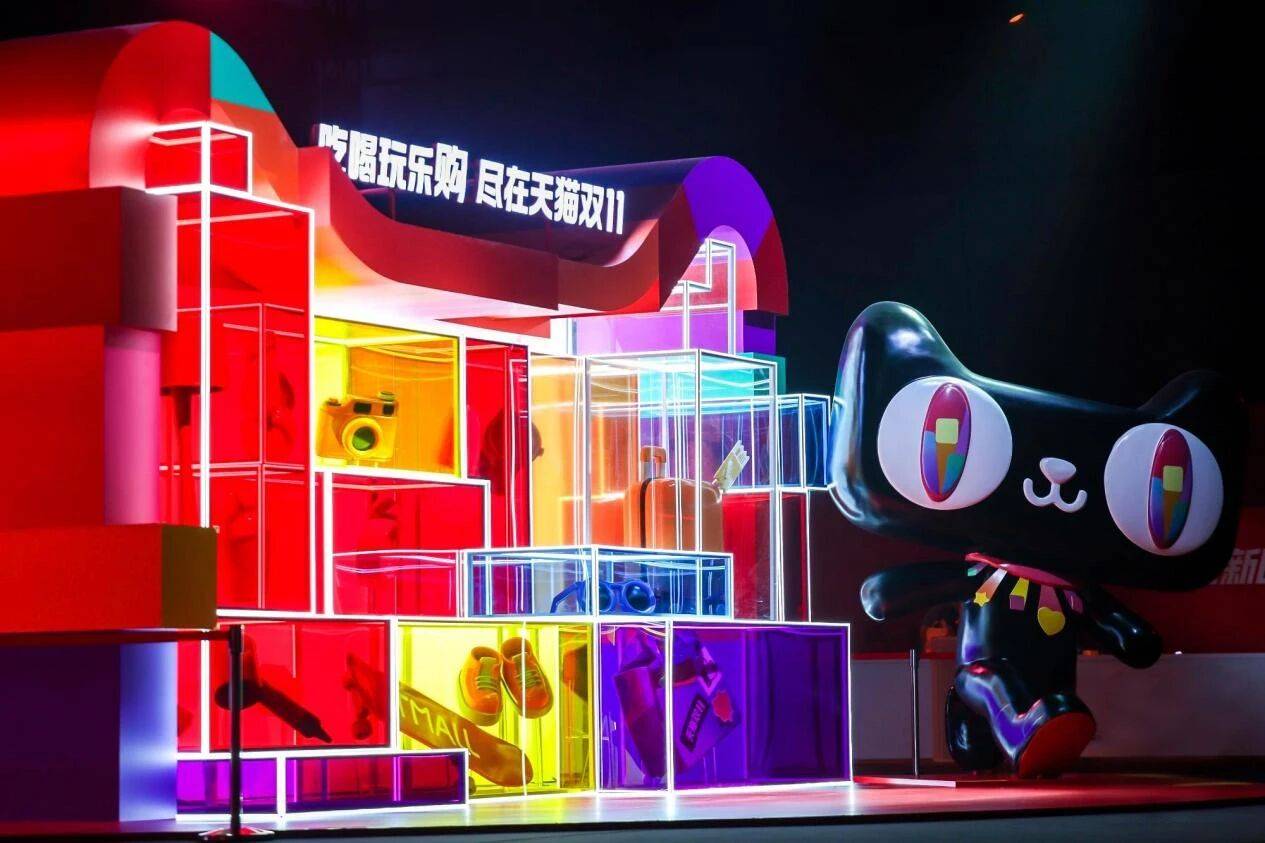
Core Insights - The 2025 "Double 11" shopping festival marks its 17th year, evolving from an annual e-commerce promotion to a nationwide shopping extravaganza, with instant retail becoming a new highlight this year due to Taobao's participation [1][2] Group 1: Transformation of E-commerce Platforms - E-commerce platforms are transitioning into "big consumption platforms," integrating diverse scenarios and demands, with "Double 11" serving as a testing ground for internet innovation [1][2] - The focus of growth has shifted from merely acquiring traffic to achieving synergy through instant retail, content recommendations, and scenario linkage, allowing platforms to tap into deeper consumer needs [4] Group 2: Changes in Consumer Behavior - Consumers are moving from planned bulk purchases to seeking instant experiences, desiring immediate access to products and services across various categories [3] - The rise of young consumers is reshaping supply dynamics, with a shift from mass-market products to personalized and culturally resonant offerings [5][6] Group 3: AI Integration in E-commerce - This year's "Double 11" is characterized as the year of AI's full integration into e-commerce, enhancing consumer experiences and operational efficiencies for merchants [8][9] - AI technologies have been implemented across the shopping process, significantly improving merchant efficiency and product sales [8] Group 4: Future Competitive Landscape - The competition in e-commerce is expected to pivot from price advantages to technological capabilities, with AI algorithms and data governance becoming critical for efficiency and user experience [9] - Future competition will focus on four key elements: scenario integration, technological capability, rapid supply response, and a healthy ecosystem [9]
AI重构双11,淘宝剑指全面提效
Sou Hu Cai Jing· 2025-11-14 07:41
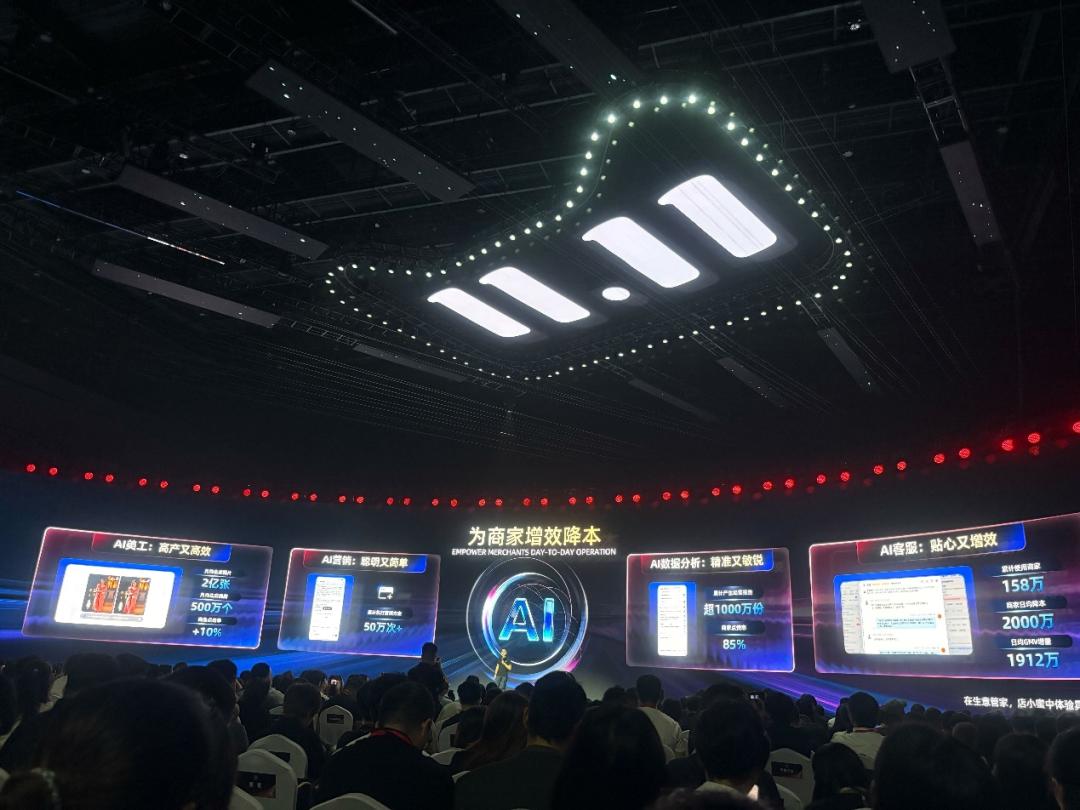
Core Insights - The 2025 Double 11 event marks a significant transformation for Taobao, driven by the "Big Consumption" strategy and the integration of AI, which aims to enhance user engagement and operational efficiency [2][3] - Taobao is undertaking a major project to reconstruct its product database using AI, resulting in a new, AI-optimized database of 2 billion products that serves as a foundation for search and promotion [2][10] - AI is evolving from a mere auxiliary tool to a business partner for merchants, providing comprehensive solutions in data analysis, marketing, design, and customer service [3][14] - The integration of AI into the shopping experience aims to improve consumer decision-making efficiency, with six new AI shopping applications launched to enhance user experience [4][21] AI Integration and Efficiency - This year's Double 11 is the first to fully implement AI across all transaction stages, addressing key pain points in traffic matching, consumer decision-making, and merchant operating costs [4][5] - The AI-driven reconstruction of the product database has led to a double-digit increase in traffic matching efficiency, with search relevance improving by 20 percentage points [11][12] - AI tools for merchants have significantly reduced operational burdens, with the AI assistant generating over 5 million business analyses daily, saving merchants an average of 30% in workload [15][17] Consumer Experience Enhancement - The shift in consumer behavior towards platforms like Douyin and Xiaohongshu necessitates a more user-friendly Taobao, focusing on alleviating decision fatigue [19][20] - New AI applications, such as AI Universal Search and AI Help Me Choose, facilitate a more intuitive shopping experience by allowing users to input complex queries and receive tailored recommendations [21][23] - The overall goal is to create a sustainable business cycle where improved platform efficiency, merchant growth, and enhanced consumer experiences are interconnected [26]
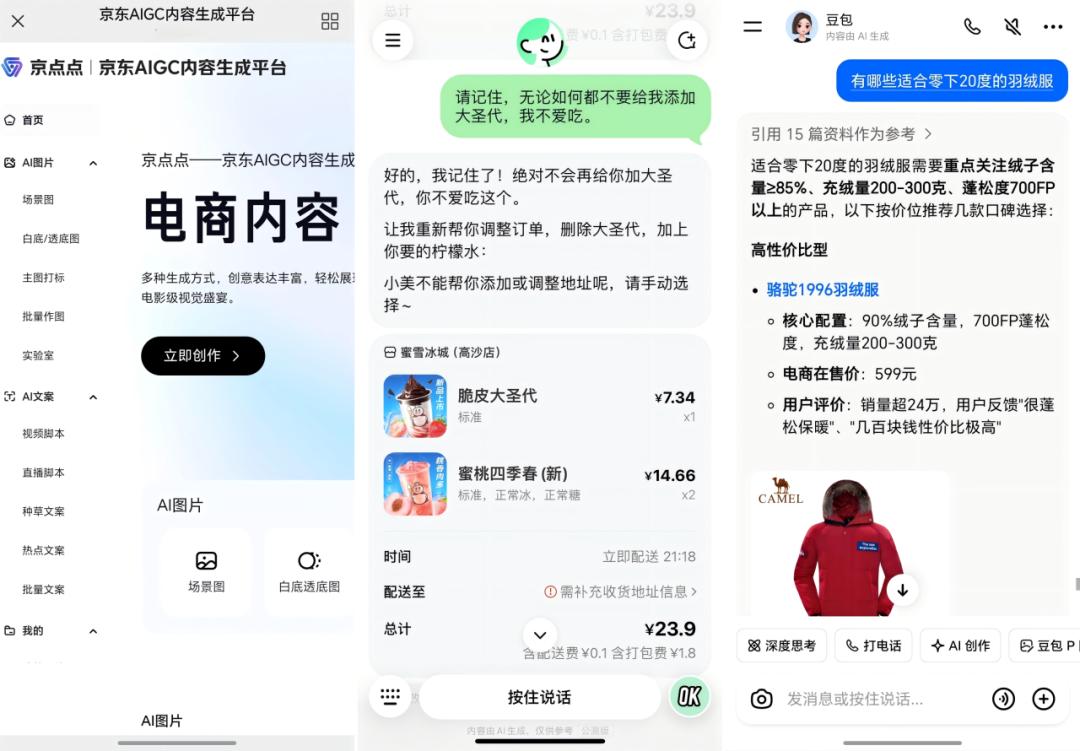
从凑单到决策,AI如何重塑“双十一”新逻辑?
Sou Hu Cai Jing· 2025-11-13 07:05
Core Insights - The application of AI tools, particularly generative AI represented by large models, is reshaping the operational logic of new e-commerce, becoming a highlight of this year's "Double Eleven" shopping festival [2][3] - AI has transitioned from being an auxiliary tool to becoming a core decision-making component for platforms, merchants, and consumers alike [3] Group 1: AI's Strategic Role in E-commerce - Major platforms have placed AI in the spotlight, marking a significant change in this year's "Double Eleven," with JD defining it as the "most technology-integrated edition" and Alibaba claiming it as the "first fully AI-implemented Double Eleven" [4] - Alibaba announced a 3-year investment of 380 billion yuan in cloud and AI infrastructure, focusing on e-commerce and cloud as core business areas [4] - JD has extended AI across its supply chain, utilizing its logistics super brain 2.0 and intelligent device clusters to enhance supply chain services [5] Group 2: AI's Impact on Business Growth - Both JD and Alibaba have made AI tools available for free to merchants, aiming to lower operational barriers and costs for small and medium-sized businesses [7] - AI has transformed the entire e-commerce process from "experience-driven" to "data-intelligent-driven," significantly reducing costs and opening new revenue channels for merchants [7] - Alibaba's AI tools have generated over 2 billion images and 5 million videos monthly, improving product click-through rates by 10% [7] Group 3: Consumer Engagement with AI - E-commerce platforms have launched AI features for consumers, with Alibaba introducing six AI shopping applications to enhance user experience [10] - JD has developed several consumer-facing AI applications, including a digital assistant capable of answering various queries and facilitating shopping [12] - Consumers are beginning to utilize AI tools for creating shopping lists and calculating discounts, although experiences vary widely [13] Group 4: Competitive Landscape and Challenges - The competition in e-commerce is shifting from broad traffic acquisition to deep user engagement and lifecycle value extraction driven by AI [14] - Platforms that effectively leverage AI will gain a competitive edge, while those lagging may struggle to adapt to the evolving landscape [15] - The accuracy of AI-generated information remains a concern, as inaccuracies in product recommendations could undermine consumer trust [16]