
LNG双燃料船

Search documents
中国头号造船大省:领先上海,8家船厂手持订单量跻身全球TOP30
Sou Hu Cai Jing· 2025-12-29 13:12
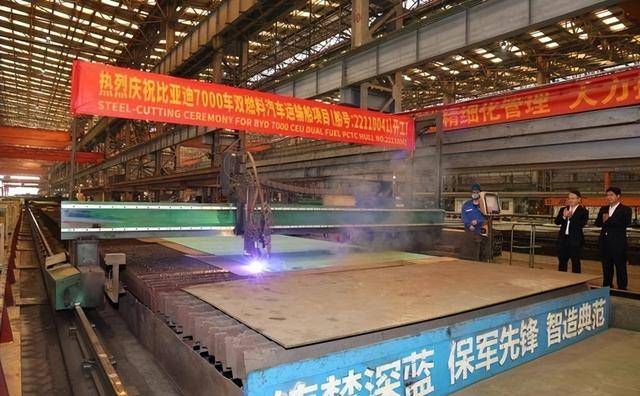
Core Insights - China's shipbuilding industry is expected to maintain its global leadership position by 2025, with key metrics such as completed ship volume, new orders, and backlog orders ranking first in the world for 16 consecutive years [2][6][14] - In the first three quarters of this year, China's completed ship volume accounted for 53.8% of the global total, new orders for 67.3%, and backlog orders for 65.2% [2] - The total order value for new ships is projected to exceed $150 billion for the year, with a significant shift towards green ship orders, totaling 820 vessels worth 780 billion yuan, marking a historical high [2][12] Group 1: Regional Contributions - Five major provinces contribute significantly to national shipbuilding output, with Jiangsu leading, accounting for over 40% of the three key metrics [6][9] - Guangdong ranks fifth, with Guangzhou hosting 58 research institutions and a global leading market share in automotive roll-on/roll-off ships [4] - Zhejiang, Liaoning, and Shanghai also play crucial roles, with notable increases in output and order volumes [4][6] Group 2: Jiangsu's Dominance - Jiangsu's shipbuilding sector is robust, with a leading export scale and significant contributions from cities like Nantong and Taizhou [7][9] - The province's new orders reached 900 million deadweight tons, a 60% increase, with a strong focus on bulk carriers and roll-on/roll-off ships [7] - Jiangsu's shipyards are characterized by high order fulfillment rates, with an average delivery time of 2.8 days per vessel [11] Group 3: Future Outlook - The shipbuilding industry in China is projected to continue its strong momentum into 2025, with expected deliveries of 4.818 million deadweight tons, a 13% increase [14] - New orders are anticipated to rise by 58%, with a backlog of 20.872 million deadweight tons, reflecting a global market share of 55.7% and 63.1% respectively [14][16] - The industry is shifting towards green shipbuilding, with a focus on LNG dual-fuel vessels, indicating a strategic transition in response to global trends [12][18]

聊一个周期反转的机会
Ge Long Hui· 2025-12-11 00:27
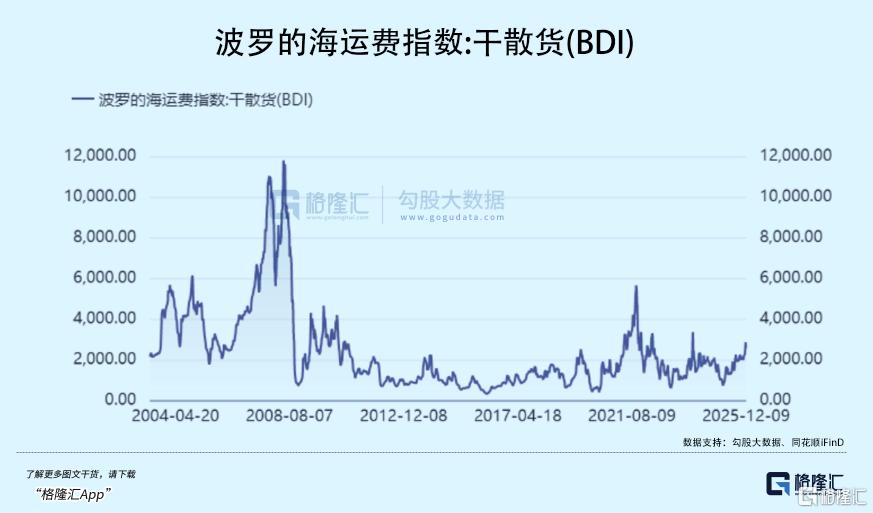
Core Viewpoint - The Baltic Dry Index (BDI) is experiencing a phase of rebound, indicating a turning point in the dry bulk shipping cycle, driven by supply constraints and the gradual production ramp-up of the West African Simandou iron ore project [1][3]. Supply Side - The dry bulk fleet is facing significant supply tightness, with the order book for dry bulk vessels at only 11% of total capacity, the lowest in 25 years. The scrapping of old vessels is intensifying, with scrapping volumes expected to rise from 4.7 million deadweight tons in 2024 to 6.6 million in 2025, and further to 9.7 million in 2026. New ship orders have plummeted by 89.5%, leading to a low growth rate in overall industry capacity [5]. Demand Side - The commissioning of the Simandou iron ore project is a key demand driver, with potential full production of 120 million tons of iron ore significantly increasing transport distances. The distance from Guinea to northern Chinese ports is approximately 11,300 nautical miles, over three times that from Australia, which will elevate transport demand. Additionally, the Federal Reserve's interest rate cuts are expected to boost commodity trading, as lower rates reduce costs for inventory and expansion, leading to a recovery in dry bulk transport demand [6]. Geopolitical Landscape - Geopolitical tensions are reshaping trade routes, indirectly increasing transport distances. For instance, China's increased purchases of Brazilian soybeans and the search for alternative suppliers for Middle Eastern wheat are contributing to longer-distance shipments, effectively providing "invisible orders" for dry bulk transport [7]. Market Phases - The dry bulk market will not see uniform increases across all vessel types and cargoes but will experience differentiation based on vessel type, cargo type, and market phase. In the short term (first half of 2026), the market will be characterized by a tug-of-war between new demand and traditional cargo weaknesses, with Capesize vessels benefiting from Simandou transport [8]. Mid-Term Outlook - From the second half of 2026 to 2027, the market is expected to enter a primary upward wave as Simandou's capacity is gradually released and the interest rate cycle continues to support demand. The overall freight rates are anticipated to rise steadily due to ongoing supply constraints and slow new ship deliveries [9]. Long-Term Perspective - After 2028, the market will transition into a new phase characterized by "cyclical dividends + transformation premiums," driven by environmental policies pushing for green transitions. The demand for transportation of new energy minerals like lithium and nickel will emerge, shifting the dry bulk market from reliance on traditional bulk commodities to a more diversified cargo base [10]. Structural Opportunities - Key investment opportunities include: - Leading operators of Capesize vessels, which will directly benefit from the increased shipments from Simandou, showing strong performance correlation with Capesize freight rate increases [12]. - Companies like China Merchants Energy, which play a significant role in global coal and iron ore transport, will also benefit from rising freight rates [13]. - Companies involved in green ship conversion and operation will gain valuation premiums due to enhanced environmental regulations, with firms like China Shipbuilding Industry Corporation leading in the construction of green vessels [14]. Cycle Insights - The current dry bulk cycle differs from previous cycles in that the demand increase is structural and the supply constraints are institutional. Unlike past cycles driven by broad-based demand or supply-side reforms, this cycle is characterized by the "distance revolution" from Simandou and stringent supply constraints due to environmental policies, leading to more differentiated and sustainable market conditions [15][16].
帮主郑重:中国船舶净利暴增109%!三张底牌曝光,散户操作盯紧两条线
Sou Hu Cai Jing· 2025-08-30 09:44
Core Viewpoint - The company reported a significant profit increase of 109% year-on-year, reaching a net profit of 2.946 billion, with revenue surpassing 40.3 billion, yet the stock price remains stagnant around 37 yuan, raising questions about market dynamics and potential performance peaks [1]. Group 1: Performance Drivers - High-value orders were delivered in the first half of the year, with a notable increase in the price of civil shipbuilding and effective cost control leading to a significant rise in gross profit margin [3]. - Profits from joint ventures improved, with long-term equity investment income rising year-on-year, contributing to net profit growth [3]. - Operating cash flow turned positive, increasing from -3.814 billion to +2.355 billion, primarily due to increased sales revenue and improved cash collection [4]. Group 2: Strategic Advantages - The company has a robust order backlog, with civil ship orders valued at 233.487 billion, repair orders at 0.0766 billion, and offshore equipment orders at 0.3699 billion, providing strong support for future performance [5]. - The company leads in green ship technology, holding a 70% global market share in LNG dual-fuel and methanol-powered vessels, with a high proportion of new orders for mid-to-high-end ship types [6]. - Following the merger with China Shipbuilding Industry Corporation, total assets will exceed 400 billion, with annual revenue surpassing 130 billion, positioning the company as the largest publicly listed shipbuilding company globally [7]. - The company achieved breakthroughs in technology, filing 748 patent applications, with a gross margin of 25%-30% in military business and over 35% for LNG vessels, enhancing its technological premium by 30% [8]. Group 3: Market Considerations - The current price-to-earnings ratio (TTM) is approximately 32.48, and the price-to-book ratio (LF) is about 3.17, both higher than the global shipbuilding industry average of 25-28, although institutions project a target price of 41 yuan [9]. - Despite significant cash flow improvement, the long shipbuilding cycle and concentrated prepayment may lead to fluctuations [9]. - The effectiveness of the merger and integration with China Shipbuilding Industry Corporation is crucial, with expected annual operational cost savings exceeding 2 billion [10].


连云港:激发“后发先至”的“蓝色动力”
Xin Hua Ri Bao· 2025-06-11 06:24
Core Viewpoint - The development of a modern marine industry system in Lianyungang is crucial for enhancing the city's economic growth and aligning with national strategies for building a strong marine nation [1][2]. Group 1: Marine Economic Development - Lianyungang's marine area covers 7,516 square kilometers, with a coastline of 195.88 kilometers, emphasizing its reliance on marine resources for future growth [2]. - The marine production value in Lianyungang is projected to reach around 120 billion yuan in 2024, accounting for over 25% of the regional GDP [2]. - The city aims to enhance its marine economy by focusing on industry strength, technological advancement, and ecological protection [3]. Group 2: Industrial Transformation - Lianyungang is actively improving its marine fisheries, developing marine tourism, and upgrading traditional industries while also expanding large-scale port industries like petrochemicals [3]. - The city is fostering marine innovation through talent programs and technological breakthroughs in areas such as offshore wind power and seawater utilization [3][4]. - Recent developments include the successful launch of an 8,500-ton bulk carrier and the establishment of a pure electric tugboat demonstration base [4]. Group 3: Urban and Economic Integration - The integration of port, industry, and city development is a key strategy for Lianyungang, enhancing its openness and facilitating domestic and international circulation [4][5]. - The city is leveraging its ecological resources to enhance urban features and promote tourism, making it an attractive destination for leisure [5]. - Lianyungang is developing a competitive "blue" new materials industry cluster and exploring integrated projects in renewable energy [5].
