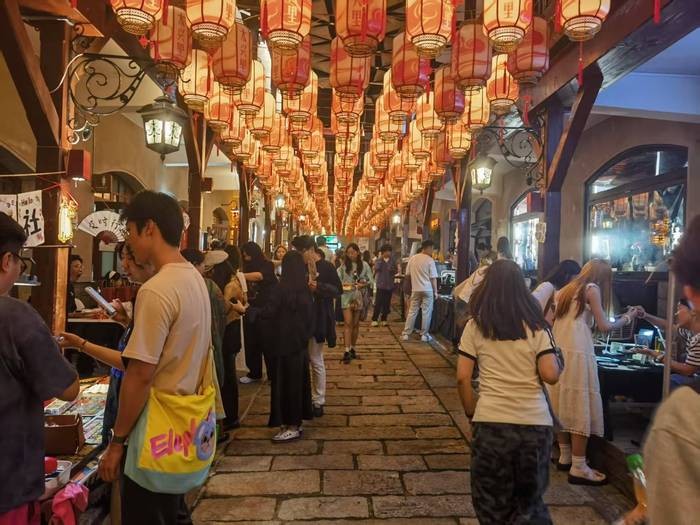
Livehouse演出

Search documents
年轻人缘何愿为“体验感”买单?
Zhong Guo Xin Wen Wang· 2025-11-26 01:35
Core Insights - Experience-based consumption is becoming a significant trend among young consumers in Beijing, characterized by immersive, participatory, and emotionally resonant experiences [1][5][11] - Emotional consumption, defined as spending driven by emotional needs and psychological comfort, is increasingly accepted and recognized, particularly among younger demographics [2][4][11] Consumption Trends - There is a notable shift in consumer demand from material utility to spiritual satisfaction, with consumers focusing more on the emotional experiences gained during consumption [4][11] - Emotional consumption encompasses a wide range of products and experiences, including seemingly "useless" items that provide emotional comfort [2][4] Experience-based Consumption - Experience-based consumption is a prominent mode of emotional consumption, where consumers are willing to invest more time and money [5][11] - Activities such as attending live performances, participating in DIY workshops, and collecting unique items are examples of how young consumers engage in experience-based consumption [6][8] Social and Emotional Dynamics - Emotional consumption serves as a means for young people to achieve self-pleasure, capture small moments of happiness, and maintain social connections [8][11] - The rise of social media platforms has amplified the sharing of emotional experiences, creating a new form of social currency among young consumers [8][9] Market Impact - The growing trend of emotional consumption is reshaping the commercial landscape, prompting businesses to focus on the emotional and cultural value of their offerings [11][14] - The integration of emotional value into consumer experiences is driving innovation in service delivery and creating new employment opportunities [14][15] Future Outlook - As the Z generation becomes the main consumer force, spending on emotional experiences is expected to continue growing, reflecting a broader societal shift towards valuing emotional fulfillment [11][12] - The expansion of experience-based consumption is likely to enhance the vibrancy of urban commercial spaces, transforming them into venues that cater to emotional needs [14][15]
当演出成为十一的“流量磁石”
3 6 Ke· 2025-10-10 23:45
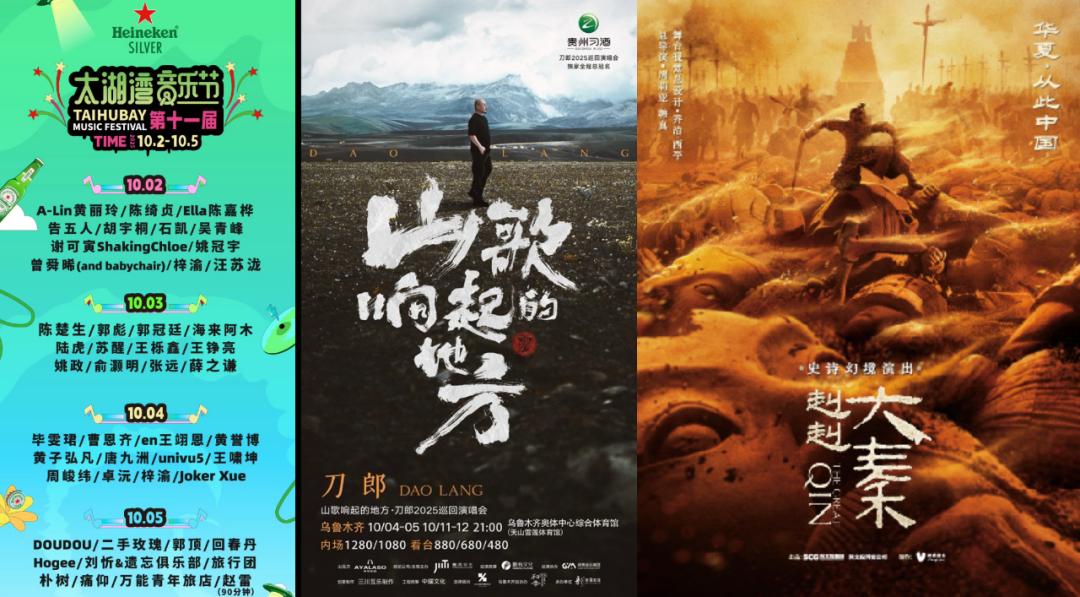
Core Insights - The performance market remains a strong economic engine for the entertainment industry, as evidenced by significant attendance and revenue growth during the recent National Day and Mid-Autumn Festival holiday [3][5][17] Group 1: Market Trends - The report from Tiger Whale Entertainment indicates a notable increase in performance activities in third-tier and below cities, with total performances up by 34.1% and total box office revenue rising by 86.6% year-on-year [3][12] - From October 1 to 6, the total number of domestic performance projects exceeded 3,100, with nearly 15,000 performances, reflecting a year-on-year increase of approximately 4.4% [3][12] - The attendance reached 1.94 million, marking a 39.5% increase compared to the previous year, highlighting the robust growth of the offline performance market [3][12] Group 2: Economic Impact - Events like the Taihu Bay Music Festival in Changzhou attracted nearly 140,000 attendees over four days, generating an estimated economic impact of around 4 billion yuan for the surrounding area [7][12] - The integration of performances with local tourism, dining, accommodation, and transportation has transformed ticket sales into a comprehensive cultural tourism economy [5][7] - The popularity of music festivals in smaller cities has led to increased travel interest, with flight searches for destinations like Luzhou and Hailar rising over 60% year-on-year [7][12] Group 3: Shifts in Performance Preferences - There is a growing trend of music festivals moving to smaller cities due to lower costs and increased support from local governments, which view these events as opportunities for cultural tourism promotion [12][14] - Smaller, niche performances such as stand-up comedy and theater are gaining traction among younger audiences, indicating a dual growth trajectory in the performance market [16][17] - Despite the overall growth, the number of music festivals has seen a decline compared to previous years, suggesting challenges within the industry [14][16] Group 4: Future Outlook - The cultural consumption landscape is evolving from a "ticket economy" to a "full-domain consumption engine," where performances contribute to broader economic indicators beyond just ticket sales [17] - The focus for cities will shift from attracting big-name artists to creating long-term cultural and economic benefits through local performances [17]

虎鲸文娱发布国庆文娱消费报告:电影票房破15亿,线上动漫观看时长激增76%
Xin Lang Ke Ji· 2025-10-08 04:11
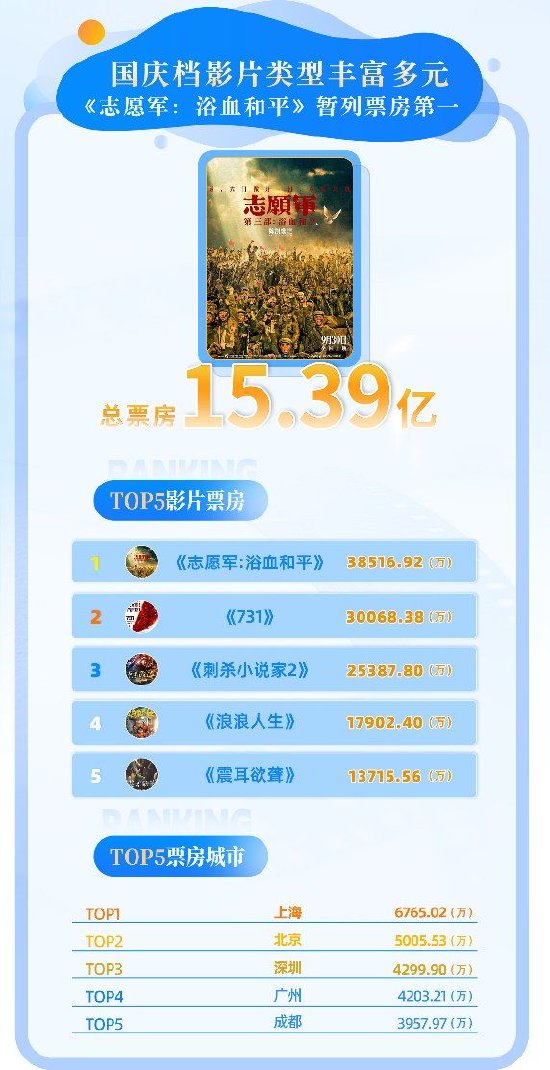
Core Insights - The report by Tiger Whale Entertainment highlights a significant shift in entertainment consumption patterns during the National Day holiday, with a notable increase in both offline and online activities [1][2]. Offline Entertainment Trends - There is a growing trend of offline performances becoming more localized and niche, with a 34.1% increase in total performances in third to fifth-tier cities [2]. - The total box office revenue for the first six days of the National Day holiday reached 1.539 billion yuan, with several films surpassing 100 million yuan in box office during the holiday [1]. - The average ticket price during this period was 36.8 yuan, down from 40.4 yuan the previous year, making it more accessible for audiences [1]. Online Entertainment Trends - Online viewing time on large screens increased by 23% year-on-year, with anime viewing time surging by 76%, indicating a shift towards immersive content consumption [2]. - The report notes that the rise of domestic animation is reshaping family entertainment dynamics, particularly among younger parents [2]. Audience Demographics - The 30-39 age group has become the primary demographic for "home entertainment," showing a 38.2% increase in viewing time compared to the previous week [3]. - In contrast, older adults exhibit a stronger inclination towards offline cultural consumption, reflecting differing leisure preferences across age groups [3]. Performance Highlights - The top five films during the holiday included "The Volunteer Army: Blood and Peace" with a box office of 385.17 million yuan, followed by "731" and "The Assassination of Novelists 2" [5]. - Major cities contributing to the box office included Shanghai, Beijing, and Shenzhen, with significant revenue figures reported [5].
国庆假期演出市场加速“下沉”,三四五线城市演出总场次增长34.1%
Bei Jing Shang Bao· 2025-10-08 03:01
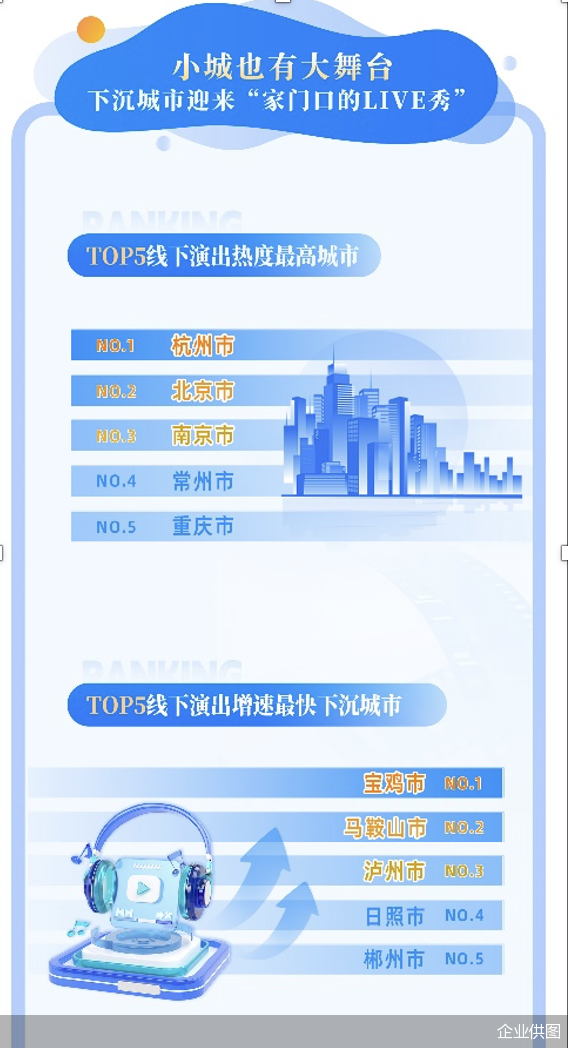
Core Insights - The report indicates a significant shift in the entertainment consumption landscape during the National Day holiday, with offline performances becoming increasingly "localized" and "niche" [1] - There is a notable increase in the number of performances in lower-tier cities, with a total performance count growth of 34.1% [1] - Online viewing time has also surged, particularly for animation content, which saw a 76% increase [1] Offline Performance Trends - The total number of domestic performance projects exceeded 3,100, with nearly 15,000 performances, marking a year-on-year increase of approximately 4.4% [7] - The total audience reached 1.94 million, reflecting a year-on-year growth of 39.5% [7] - The fastest-growing categories in audience attendance were sports events, music festivals, and concerts, with year-on-year increases of 264%, 66.6%, and 39.7% respectively [7] Niche Performance Growth - The report highlights a growing preference among younger audiences for niche performances, with theater and stand-up comedy ticket sales increasing by 16.8% year-on-year, and Livehouse ticket sales rising by over 16% [7] - The report emphasizes the trend of performance activities significantly increasing in third-tier and below cities, with total box office revenue rising by 86.6% year-on-year [7] Key Cities for Offline Performances - The top five cities with the highest offline performance popularity include Beijing, Shanghai, Changzhou, Chongqing, and others [3] - The fastest-growing cities for offline performances in lower-tier markets include Baoji, Daoshan, and Rizhao [5]
山东城市观察|青岛市南:点亮城市新“夜”态
Xin Lang Cai Jing· 2025-07-04 11:15
Core Insights - The article emphasizes the importance of "night economy" as a reflection of modern consumer demands for emotional value and spiritual needs, particularly in Shandong Province and Qingdao [1][10] - Qingdao's night economy is positioned as a key driver for building an international consumption center, with a focus on cultural depth and diverse experiences [1][18] Group 1: Night Economy Development - The "night economy" in Qingdao is being actively promoted through initiatives like the "Shandong Consumption Boost Year," aiming to enhance consumer engagement and economic growth [1][10] - The vibrant atmosphere of Zhongshan Road serves as a central hub for night activities, attracting both locals and tourists with its unique cultural offerings and culinary delights [1][2] Group 2: Target Demographics and Experiences - The Taixingli area has transformed into a trendy "tipsy street," catering to younger consumers seeking relaxation and social experiences through craft beer and coffee [2][3] - Events like the "Decompression Old Goods Market" attract creative vendors and young crowds, highlighting the demand for stress relief and community engagement [3] Group 3: Immersive Experiences and Attractions - The night experiences in Qingdao have evolved into immersive and scene-based activities, with attractions like the "Night Tour of Fushan Bay" offering luxurious yacht experiences [4][9] - The integration of high-end commercial spaces, such as Hisense Plaza, enhances the night economy by providing a platform for art exhibitions and upscale dining [7][8] Group 4: Cultural Integration and Community Engagement - Cultural events, such as the "Light Up Qingdao" series, enhance the night economy by creating unique public cultural memories and boosting local pride [13][14] - The "Ghost Market" initiative in Taixingli combines local culture with modern trends, appealing to younger generations and fostering a vibrant night scene [17] Group 5: Economic Impact - Nighttime consumption now accounts for over 65% of total sales in key commercial areas of Shinan District, establishing it as a significant economic driver [10] - The diverse offerings in the night economy cater to various consumer segments, reflecting a shift towards more refined and specialized nighttime activities [10][18]