
MI455X

Search documents
英伟达Q4财报核心看点:2027营收、75%毛利率保卫战及中国市场展望
傅里叶的猫· 2026-02-23 15:21
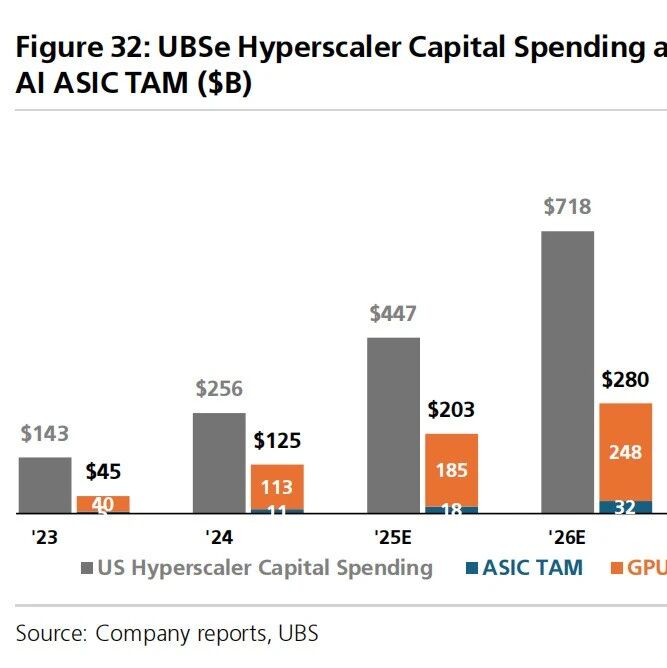
Core Viewpoint - The article emphasizes the importance of Nvidia's upcoming Q4 earnings report, which is expected to provide insights into the company's future performance and revenue guidance, particularly for 2027 [2][3][4]. Group 1: Q4 Earnings Expectations - Both Goldman Sachs and UBS maintain a bullish outlook on Nvidia, predicting that Q4 revenue will exceed market expectations, with Goldman forecasting an additional $2 billion in revenue and UBS estimating revenue of approximately $67.5 billion, exceeding the company's guidance by about $2.5 billion [3]. - The market is more focused on Nvidia's management outlook for future revenue rather than just the Q4 results, as the growth expectations for 2026 have already been largely priced in [4]. Group 2: Supply Chain and Production Capacity - Goldman Sachs anticipates multiple catalysts for Nvidia in the first half of 2026, while UBS has raised its expectations for TSMC's CoWoS advanced packaging capacity, predicting an increase from 110,000 to 120,000 units by the end of 2026 [5]. - UBS forecasts Nvidia's GPU production to reach 6.9 million units in 2025 and 9.5 million units in 2026, up from previous estimates of 5.7 million and 9.3 million units, indicating additional inventory for Nvidia in 2026 [5]. Group 3: Competitive Landscape - The competitive landscape remains a focal point, particularly with the impact of cloud vendors developing their own ASIC chips. Goldman Sachs expects increased competition from Google's TPU v7 and AMD's MI455X, while UBS remains optimistic about Nvidia's ability to maintain its 75% gross margin guidance [6]. - Nvidia is likely to emphasize the competitive advantages of its CUDA ecosystem and will focus on recent collaborations, such as with Groq, and their implications for inference costs [6]. Group 4: Demand Trends from Non-Cloud Customers - There is growing confidence in demand from non-traditional customers like OpenAI and Anthropic, with OpenAI expected to accelerate computing power deployment through partnerships with Nvidia, Broadcom, and AMD by the second half of 2026 [10]. - Anthropic has recently raised its revenue expectations for 2026 by 20%, and various national AI projects are progressing well, indicating a robust overall AI ecosystem [10]. Group 5: Uncertainty in the Chinese Market - Both Goldman Sachs and UBS acknowledge the uncertainty surrounding Nvidia's contributions from the Chinese market. Despite reports of Nvidia's H200 chip approval, more details are needed regarding potential revenue contributions from China by 2027 [11]. - UBS suggests that as China accelerates the adoption of domestic GPUs, the market recovery prospects remain uncertain, estimating that the Chinese market could bring Nvidia several billion dollars in additional revenue, although it is unlikely that Nvidia will include this market in its earnings guidance [11].


AMD-受益于数据中心的积极趋势,本季度表现强劲,但短期运营杠杆有限
2026-02-05 02:22
Summary of Advanced Micro Devices Inc. (AMD) Conference Call Company Overview - **Company**: Advanced Micro Devices Inc. (AMD) - **Industry**: Semiconductors, specifically focusing on Datacenter, Gaming, and Embedded segments Key Financial Highlights - **Revenue**: AMD reported revenue of **$10.3 billion**, exceeding Goldman Sachs (GS) estimate of **$9.6 billion** and the Street estimate of **$9.7 billion** [2] - **Gross Margin**: Reported gross margin (excluding $430 million of previously reserved inventory) was **55.1%**, slightly above GS at **54.8%** and the Street at **54.5%** [2] - **Operating Margin**: Excluding the benefit, operating margin was approximately **26%**, above GS at **25.2%** and the Street at **25.5%** [2] - **Non-GAAP Operating EPS**: Reported at **$1.53**, significantly higher than GS at **$1.30** and the Street at **$1.34** [2] - **Datacenter Revenue**: Reached **$5.38 billion**, well above GS at **$4.79 billion** and the Street at **$4.98 billion** [2] - **Gaming Revenue**: Reported at **$843 million**, above GS at **$822 million** but below the Street at **$883 million** [2] - **Embedded Revenue**: Came in at **$950 million**, in line with GS at **$951 million** and the Street at **$958 million** [2] Strategic Insights - **Datacenter Trends**: AMD is experiencing strong traction in its CPU and GPU solutions related to AI deployments, with expectations of "tens of billions" in Datacenter GPU revenue by **2027** [4] - **Server CPU Growth**: The server CPU business reached a record in the quarter, with expectations for continued growth in **2026** [5] - **Operating Expenses (OpEx)**: AMD is increasing OpEx significantly to support higher levels of AI systems and software investment, with guidance for **1Q** at **$3.05 billion**, above both GS and Street estimates [5] - **Future Guidance**: AMD expects **1Q26** revenue to be around **$10.1 billion**, with Datacenter revenue anticipated to increase quarter-over-quarter [11] Market Position and Risks - **Customer Concentration**: There is a concern regarding high customer concentration in AMD's GPU Datacenter business, which may limit near-term operating leverage [1] - **Investment Stance**: The current rating on AMD is **Neutral**, with a 12-month target price of **$210**, based on a **30x P/E multiple** applied to a normalized EPS estimate of **$7.00** [7] - **Upside Risks**: Include increased traction for AMD GPUs and better-than-expected share trends for x86 architecture in servers [7] - **Downside Risks**: Include lower-than-expected traction for AMD GPUs and server CPUs [7] Financial Projections - **Earnings Estimates**: EPS estimates for **CY2026-28** have been reduced by an average of **4%** due to higher revenue and OpEx [6] - **Revenue Growth**: AMD anticipates **over 60% YoY growth** in Datacenter revenue by **CY26** [4] Conclusion - AMD is positioned well in the Datacenter segment with strong revenue growth and AI-related opportunities, but faces challenges with high operating expenses and customer concentration risks. The stock is currently rated Neutral with a cautious outlook on near-term operating leverage.

AMD(AMD.US)Q4财报亮眼难掩AI不确定性 华尔街质疑增长可持续性
智通财经网· 2026-02-04 15:47
Core Viewpoint - AMD's fourth-quarter performance and guidance were better than expected, but uncertainties remain, leading to a significant drop in stock price [1][2] Group 1: Financial Performance - AMD reported approximately $400 million in unexpected MI308 revenue from the Chinese market in Q4, which supported its performance [1] - The company expects only about $100 million in MI308 revenue from China in Q1, causing confusion in the market [1] - Despite a strong overall outlook, AMD's performance did not fully reflect expectations for higher sales and optimized product structure, contributing to stock sell-off [1] Group 2: Analyst Opinions - Wedbush Securities analyst Matt Bryson maintains an "outperform" rating with a target price of $290, citing the need for better performance metrics [1] - Morgan Stanley analyst Joseph Moore expressed surprise at the stock's decline post-earnings, noting that the performance numbers were solid and new product signals were positive [2] - Morgan Stanley's Moore also highlighted that AMD achieved double-digit growth in server business during a typically weak Q1, indicating strong demand [3] Group 3: Market Dynamics - AMD's CEO and CFO explained that the $400 million revenue from China was due to a license approved by the Trump administration, with orders formed in early 2025 [2] - The company is cautious about predicting additional revenue from China due to rapidly changing policy environments [2] - AMD's management emphasized that the development of MI455/Helios products is progressing smoothly, with ongoing customer testing [4]
AMD:初步点评-数据中心趋势向好,季度业绩与指引强劲
2026-02-04 02:32
Summary of Advanced Micro Devices Inc. (AMD) Conference Call Company Overview - **Company**: Advanced Micro Devices Inc. (AMD) - **Industry**: Semiconductors Key Financial Results - **Revenue**: AMD reported revenue of **$10.3 billion**, exceeding Goldman Sachs (GS) estimate of **$9.6 billion** and the Street estimate of **$9.7 billion** [2] - **Gross Margin**: Reported gross margin (excluding $430 million of previously reserved inventory) was **55.1%**, slightly above GS at **54.8%** and the Street at **54.5%** [2] - **Operating Margin**: Excluding the benefit, operating margin was approximately **26%**, above GS at **25.2%** and the Street at **25.5%** [2] - **Non-GAAP Operating EPS**: Reported at **$1.53**, significantly higher than GS at **$1.30** and the Street at **$1.34** [2] - **Datacenter Revenue**: Reached **$5.4 billion**, well above GS at **$4.79 billion** and the Street at **$4.98 billion** [2] - **Gaming Revenue**: Reported at **$843 million**, above GS at **$822 million** but below the Street at **$883 million** [2] - **Embedded Revenue**: Came in at **$950 million**, in line with GS at **$951 million** and the Street at **$958 million** [2] Guidance and Future Outlook - **1Q Guidance**: AMD guided 1Q revenue to **$9.80 billion** at the midpoint, above GS at **$9.23 billion** and the Street at **$9.40 billion** [3] - **Gross Margin Guidance**: Non-GAAP gross margin is guided to **55%**, slightly above GS at **54.5%** and the Street at **54.8%** [3] - **Key Focus Areas for Investors**: - 2H Datacenter GPU ramp and timing of MI455X launch - Contribution from OpenAI in 2H26/2027 - Recovery pace in traditional business amid component cost inflation - Gross margin dynamics [1] Market Position and Trends - **Datacenter Revenue**: The better-than-expected performance in Datacenter revenue indicates a robust AI spending environment, positively impacting AI-exposed companies like Nvidia and Broadcom [4] - **Investor Sentiment**: Investors are constructively positioned due to optimism around market strength and share gains in server CPUs, alongside ongoing strength in AI infrastructure [1] Price Target and Risks - **Price Target**: The 12-month target price is set at **$210**, based on a **30X P/E multiple** applied to a normalized EPS estimate of **$7.00** [5] - **Upside Risks**: - Increased traction for AMD GPUs - Better-than-expected share trends for x86 architecture in servers - Stronger operating expense leverage [5] - **Downside Risks**: - Lower-than-expected traction for AMD GPUs - Lower-than-expected traction in Server CPUs [5] Additional Insights - **Quarterly Performance**: Year-over-year revenue growth was **34.1%**, with a quarter-over-quarter increase of **11.1%** [8] - **Market Capitalization**: AMD's market cap is approximately **$404.1 billion** [9] - **Future Revenue Projections**: Forecasted revenue for the next few years shows significant growth, with estimates reaching **$66.2 billion** by 2027 [9] This summary encapsulates the key points from the AMD conference call, highlighting financial performance, guidance, market trends, and potential risks and opportunities for investors.
成本暴降70%!谷歌TPU强势追赶,性价比已追平英伟达
Hua Er Jie Jian Wen· 2026-01-21 04:55
Core Insights - The focus in the AI chip market is shifting from performance to cost efficiency, as commercial pressures mount and the cost of inference becomes a critical factor in determining competitive advantage [1][2][3] Group 1: Shift in Evaluation Criteria - The evaluation criteria for AI chips are transitioning from "who computes faster" to "who computes cheaper and more sustainably" as inference becomes a significant source of long-term cash flow [2][3] - High costs associated with inference are becoming more pronounced as deployment and commercialization of large models progress, leading to a reevaluation of chip performance metrics [3] Group 2: TPU's Cost Reduction - Google/Broadcom's TPU has significantly reduced its inference cost, with the transition from TPU v6 to TPU v7 resulting in a 70% decrease in unit token inference cost, making it competitive with NVIDIA's GB200 NVL72 [1][4] - The cost reduction in TPU v7 is attributed to system-level optimizations rather than a single technological breakthrough, indicating that future cost reductions will depend on advancements in adjacent technologies [4] Group 3: Competitive Landscape - Despite TPU's advancements, NVIDIA maintains a time-to-market advantage with ongoing product iterations, which are crucial for customer retention [5][6] - The investment outlook remains positive for both NVIDIA and Broadcom, with Broadcom's earnings forecast for FY2026 raised to $10.87 per share, reflecting its strong position in AI networking and custom computing [7] Group 4: Industry Dynamics - The report suggests a clearer division of labor within the industry, where GPUs continue to dominate training and general computing markets, while custom ASICs penetrate predictable inference workloads [7][8] - The significant drop in TPU costs serves as a critical stress test for the viability of AI business models, highlighting the importance of economic considerations in the ongoing GPU vs. ASIC competition [8]
AMD:2026年人工智能驱动带来巨大增长潜力
美股研究社· 2026-01-12 13:52
Core Insights - AMD has significantly improved its competitive position in the AI accelerator market, becoming a strong competitor to NVIDIA with a rich product pipeline and upcoming releases [1][2] - The company's data center business is experiencing remarkable growth, with record revenues and profits, particularly driven by the success of the MI300X accelerator [4][7] - AMD's upcoming MI400 series, set to launch in 2026, is expected to further enhance its market position and profitability [1][4][10] Group 1: Competitive Landscape - AMD's product line is expanding, with the MI400 series designed for large-scale AI training and inference, positioning it to compete directly with NVIDIA's offerings [1][6] - The AI chip market is projected to grow significantly, with IDC forecasting a 42% compound annual growth rate (CAGR) until 2029, benefiting companies like AMD [6][10] - AMD's focus on inference-optimized AI chips aligns with the increasing demand for accelerated computing, particularly in hyperscale data centers [6][10] Group 2: Financial Performance - AMD's data center business reported a record net revenue of $4.3 billion in Q3 2025, a 34% quarter-over-quarter increase, with operating profit soaring to $1.1 billion, a 793% year-over-year growth [4][7] - The company is expected to report operating profits between $6.5 billion and $7.5 billion for the full year of 2026, reflecting strong growth potential [7][10] - AMD's forward price-to-earnings (P/E) ratio is currently at 34.1, indicating a market premium compared to NVIDIA's 24.8, driven by expectations surrounding the MI400 chip [9][10] Group 3: Market Outlook - Analysts are optimistic about AMD's growth trajectory, particularly with the anticipated launch of the MI400 chip, which could significantly boost the company's performance [14][15] - Despite AMD's slower growth rate compared to NVIDIA, the market is beginning to recognize AMD as a key player in the GPU/accelerator market's next growth phase [15]

四大芯片巨头,正面激战CES
2 1 Shi Ji Jing Ji Bao Dao· 2026-01-07 13:22
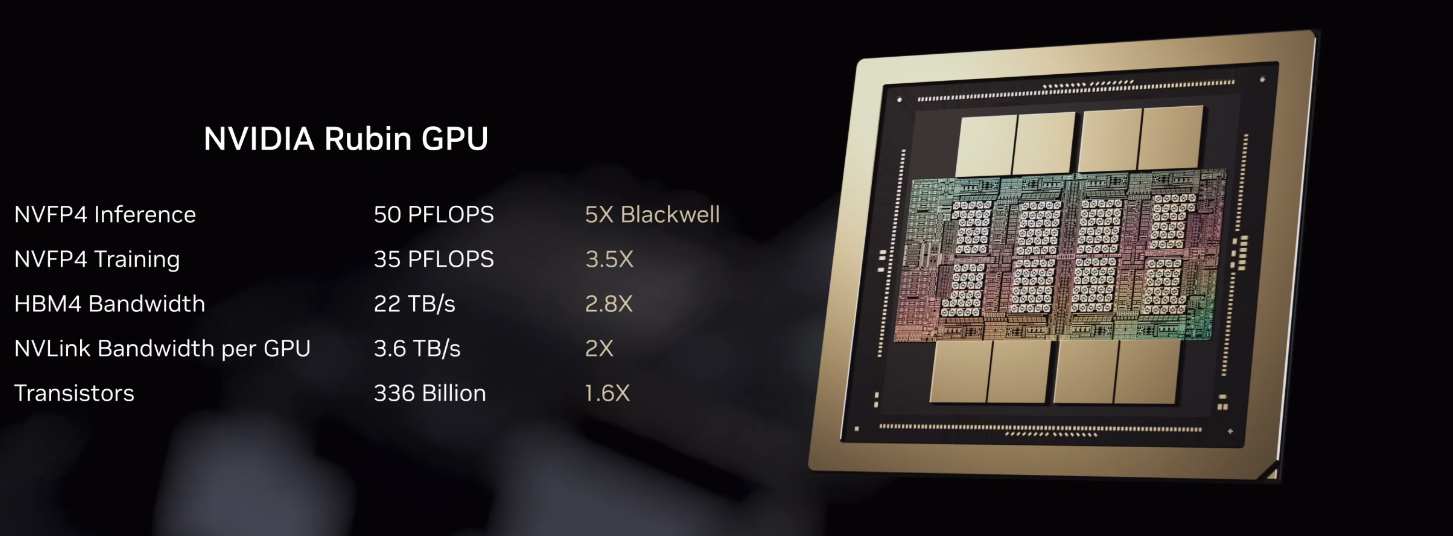
Group 1: Industry Overview - The CES 2026 showcased over 4,000 companies, focusing on AI and its integration into various products, including PCs, home appliances, and foundational chips [1] - The combined market capitalization of the four major semiconductor companies—NVIDIA, AMD, Qualcomm, and Intel—reaches nearly $5.3 trillion, indicating significant investor interest in AI technologies [1] - Concerns about the over-exuberance of the AI market persist, with 2026 expected to be a year for evaluating genuine value creation rather than mere speculation [1] Group 2: NVIDIA Developments - NVIDIA unexpectedly launched its next-generation AI chip platform "Rubin," which significantly enhances training and inference performance by 3.5 times and 5 times, respectively, compared to its predecessor [2] - The company reported over $500 billion in orders for its Blackwell and Rubin architectures for 2025-2026, reflecting strong demand for computing power in data centers [2] - NVIDIA introduced the open-source autonomous driving model "Alpamayo," which features 10 billion parameters and aims to streamline the processing from sensor input to driving commands [3] Group 3: AMD Initiatives - AMD adopted an aggressive "stacking" strategy, showcasing the Helios AI rack, which integrates 72 MI455X accelerator chips and 31TB of HBM4 memory, claiming it to be the best AI rack globally [5][6] - The new generation of chips is expected to deliver up to a 10-fold performance improvement under various workloads, aided by a hybrid 2nm and 3nm manufacturing process [6] - AMD signed a significant infrastructure procurement agreement with OpenAI, valued at 6 gigawatts, marking a substantial entry into the core supply chain of leading AI model developers [6] Group 4: Qualcomm and Intel Strategies - Qualcomm is diversifying its strategy to reduce reliance on the smartphone market, launching the Snapdragon X2 Plus chip aimed at the mid-range laptop market, with a focus on energy efficiency and 5G connectivity [8] - Intel introduced the "Panther Lake" third-generation Core Ultra processor, its first chip manufactured using the 18A process, which is crucial for regaining manufacturing leadership [9] - The third-generation Core Ultra processors are set to be released in the second quarter of 2026, targeting industrial, medical, and smart city applications [10]


OpenAI、李飞飞同台,Lisa Su:AMD AI 芯片走到关键一步
3 6 Ke· 2026-01-07 00:42
Core Insights - AMD's CEO Lisa Su emphasized that AI is the most significant technology of the past 50 years and presented a comprehensive industrial-grade platform rather than just chips [1][2] - The introduction of Helios, a rack-level platform designed for the Yotta-level AI era, signifies a shift in the industry towards integrated solutions for AI deployment [7][19] Group 1: AI Demand and Infrastructure - The global AI computing demand is projected to exceed 100 Zettaflops by 2025, with a bold prediction of a 100-fold increase in computing power over the next five years, reaching 10 Yottaflops [4][5] - AI applications are expected to explode, requiring robust infrastructure to support complex tasks such as video generation and multi-modal intelligence [6][21] - AMD's Helios architecture aims to provide a scalable, long-term online AI infrastructure rather than relying on individual powerful chips [7][18] Group 2: Helios Architecture - Helios is designed as a production-ready AI factory, integrating multiple components such as MI455X GPUs, Venice CPUs, and Pensando network chips into a cohesive system [11][12] - The architecture is modular and adheres to the Open Compute Project (OCP) standards, allowing for easy upgrades and replacements [13][14] - Helios features full liquid cooling and high bandwidth capabilities, with each rack supporting 31TB of memory and 2.9 Exaflops of computing power [15][17] Group 3: Industry Adoption and Use Cases - Leading AI companies like OpenAI and Luma are already deploying their core operations on AMD platforms, showcasing the practical applications of Helios [19][22] - The shift in AI deployment from cloud-based to local solutions is highlighted by AMD's Ryzen AI Max and Halo, which enable local execution of large models [36][37] - The healthcare sector is rapidly adopting AI, with companies like Absci and Illumina utilizing AMD technology for drug design and cancer screening [38][39] Group 4: Future Directions - AMD is positioning itself as the foundational infrastructure for AI, moving beyond chip sales to provide comprehensive solutions that support AI's integration into everyday life [44][45] - The focus is on creating a system that can support millions of intelligent agents simultaneously, emphasizing the need for cost-effective and stable solutions [45]
从英伟达Rubin引领“AI工厂时代”到AMD MI500“千倍路线图”:“AI牛市叙事”继续主导股票市场
智通财经网· 2026-01-06 08:33
Core Insights - AMD announced a new enterprise-level AI GPU platform, MI455X, shortly after NVIDIA's CEO unveiled the Vera Rubin AI GPU infrastructure at CES, indicating intensified competition in the AI data center market [1][6] - Both companies emphasized the ongoing exponential growth in AI computing demand, with AMD projecting a significant increase in active AI users from 1 million to 1 billion since the rise of ChatGPT, and potentially reaching 5 billion by 2030 [5][6] Group 1: NVIDIA's Vera Rubin Platform - NVIDIA's Vera Rubin platform has entered full production, featuring six core chips that significantly enhance AI inference performance by 5 times and training performance by 3.5 times compared to the previous Blackwell architecture [3][5] - The platform reduces the cost of AI inference token generation to just 1/10 of the previous architecture, making it commercially viable for Agentic AI applications [5][6] - NVIDIA's CEO highlighted the transition to a "rack-scale AI factory era," emphasizing system collaboration and cost-effectiveness [3][7] Group 2: AMD's Competitive Position - AMD's MI455X GPU is designed for large-scale data centers, boasting a performance increase of 10 times over its predecessor, MI355X, and is part of a broader strategy to capture a significant share of the AI computing market [1][6] - The company aims to achieve a "double-digit" market share in the data center AI chip market, with projected annual revenue reaching $100 billion within five years [19] - AMD's stock has surged over 80% since 2025, driven by major partnerships and contracts, including a significant deal with OpenAI [10][12] Group 3: Market Dynamics and Future Outlook - Analysts predict that the AI infrastructure investment cycle is still in its early to mid-stages, with a potential market size of $3 to $4 trillion by 2030 [21][22] - The competition between NVIDIA and AMD is expected to shape the future of AI computing, with both companies focusing on enhancing their product offerings to meet the growing demand [8][19] - The AI chip market is anticipated to remain a key driver of stock market performance, with significant growth expected in semiconductor sales and related technologies [20][22]
对标英伟达:AMD推出MI440X,抢攻企业级AI数据中心市场
Hua Er Jie Jian Wen· 2026-01-06 06:54
Core Insights - AMD is launching the MI440X chip aimed at enterprise data centers to challenge NVIDIA's dominance in the AI hardware market and solidify its position as a key competitor [1][3] - The MI440X is designed for smaller enterprise data centers, allowing clients to deploy local hardware and maintain data privacy, catering to businesses that do not fully rely on large cloud services [2] - AMD's CEO, Lisa Su, emphasized the unprecedented speed of AI innovation and the ongoing demand for computing power, indicating that the company's efforts in this area are just beginning [1][3] Product Development - The MI440X chip is part of AMD's strategy to penetrate the enterprise market, providing new options for companies with high data privacy requirements [2] - The MI455X chip and the Helios system, based on the MI455X and new Venice processors, are set to launch later this year, targeting the most demanding computing needs [2] Market Positioning - AMD is viewed as the closest competitor to NVIDIA in the AI chip sector, with investors eager to see AMD capture a larger share of NVIDIA's multi-billion dollar orders [3] - Lisa Su echoed sentiments from other tech executives, stating that the AI wave will continue due to its benefits and the immense demand for computing power [3] Future Outlook - OpenAI co-founder Greg Brockman supported the partnership with AMD, discussing future system deployment plans and the link between economic growth and AI resource availability [3] - AMD previewed the MI500 series processors, expected to launch in 2027, promising a performance leap of 1000 times compared to the MI300 series introduced in 2023, showcasing AMD's commitment to long-term innovation [3]