
NorFlash

Search documents
半导体全链涨价催生业绩回暖,非存储芯片板块有望迎价值重估
Di Yi Cai Jing· 2026-02-03 12:49
Core Viewpoint - The current semiconductor cycle is experiencing a price surge that is expanding from memory chips to non-memory sectors such as power chips and analog chips, driven by the explosive demand for AI computing power [1][2]. Group 1: Price Surge Dynamics - The price increase in memory chips is leading to a chain reaction across the semiconductor industry, affecting various segments including LED drivers, analog chips, power devices, and MCUs [2][4]. - Multiple A-share semiconductor companies have issued price increase notices, indicating a widespread trend of price hikes across the industry [1][2]. - The price adjustments range significantly, with some companies like Zhongwei Semiconductor increasing prices by 15% to 50% for certain products, while others have reported increases as high as 80% [3][4]. Group 2: Causes of Price Increases - The primary reasons for the price surge include a significant rise in costs across the entire supply chain, driven by increasing prices of raw materials and higher manufacturing costs due to price hikes from wafer foundries and packaging/testing services [4]. - The allocation of upstream capacity is increasingly focused on higher-margin products like memory chips, leading to a squeeze on traditional products such as analog chips and power semiconductors [4]. Group 3: Market Impact and Performance Outlook - The price surge is expected to lead to a recovery in performance for non-memory chip companies, with several firms already forecasting significant profit increases for 2025 [5][6]. - For instance, Silan Microelectronics anticipates a net profit increase of 50% to 80% for 2025, while Zhongwei Semiconductor expects a revenue growth of 23.07% and a net profit increase of 107.55% [6][7]. - Analysts suggest that the return of pricing power due to supply-demand dynamics will benefit companies with strong market positions and pricing capabilities, particularly in segments tied to AI and new energy [6][7].


华强北不知何为“AI泡沫”
经济观察报· 2026-01-30 14:33
Core Viewpoint - The article highlights a significant surge in the prices of server components, particularly storage chips and graphics cards, driven by supply constraints and increased demand from AI infrastructure investments. This price volatility is causing challenges for both buyers and sellers in the market [2][3][20]. Price Trends - A single server equipped with eight NVIDIA RTX 5090 graphics cards has seen its price rise from 300,000 yuan to 400,000 yuan within a month, indicating a 33.3% increase [2]. - The price of DDR4 64G server memory has doubled from approximately 1,500 yuan to 3,100 yuan in two months, reflecting a 106.7% increase [4]. - High-frequency DDR5 memory prices have surged to over 13,000 yuan for second-hand parts, with new products priced above 25,000 yuan (approximately 18,000 yuan) [6]. Market Behavior - Sellers are hesitant to stock inventory due to unpredictable price fluctuations, leading to a shift from traditional order placements to same-day pricing validity [3][4]. - Payment terms have become stricter, with sellers requiring a 50% deposit upon order and full payment before shipment [4]. Supply Chain Dynamics - Major semiconductor companies are issuing price increase notices, with adjustments ranging from 15% to 80% due to rising costs and supply chain pressures [10][11]. - The demand for AI-related chips is causing a supply crunch, with manufacturers like TSMC and Samsung reporting record profits and high demand for high-value products [17][18]. Impact on End Products - The rising costs of memory and storage are expected to increase the prices of consumer electronics, with estimates suggesting a potential 10% to 20% increase in product prices [13]. - The notebook computer market is projected to face significant challenges, with expected shipment declines of 9.4% in 2026 due to rising component costs [21]. Industry Outlook - The current chip price surge is anticipated to persist throughout 2023, with supply chain constraints and high demand from AI investments driving ongoing price increases [14][20].




华强北不知何为“AI泡沫”
Jing Ji Guan Cha Wang· 2026-01-30 14:06
Core Viewpoint - The prices of server-related hardware, particularly storage chips and graphics cards, have surged dramatically due to supply constraints and increased demand driven by investments in AI infrastructure. This has led to significant price volatility in the market, affecting both buyers and sellers [2][3][5][12]. Price Trends - A server equipped with eight NVIDIA RTX 5090 graphics cards has seen its price rise from 300,000 yuan to 400,000 yuan within a month, indicating a 33.3% increase [2]. - The price of DDR4 64G server memory has doubled from approximately 1,500 yuan to 3,100 yuan in two months [3]. - High-frequency DDR5 memory prices have exceeded 13,000 yuan for second-hand parts, while new products are priced above 25,000 yuan (approximately 18,000 yuan) [6]. Market Behavior - Sellers are hesitant to stock inventory due to unpredictable price fluctuations, leading to a shift from traditional order placements to same-day pricing [3][4]. - Buyers are resorting to alternative strategies, such as purchasing second-hand laptops to extract valuable memory components, reflecting the high value of memory compared to other parts [4]. Supply Chain Dynamics - Major semiconductor companies are issuing price hikes for various products, with increases ranging from 15% to 80% due to rising costs and supply chain pressures [12][13]. - The demand for AI-related chips is causing a structural imbalance in supply, with companies like TSMC and SK Hynix reporting record revenues while others, like Intel, struggle with production issues [18][21][22]. Future Outlook - The ongoing price increases are expected to persist throughout 2026, with significant impacts on consumer electronics, including potential reductions in laptop shipments by 9.4% [22][23]. - The rising costs of storage and memory components may force manufacturers to either increase product prices by 10% to 20% or downgrade specifications to maintain cost balance [16].
半导体行业提价趋势愈发清晰,存储链业绩亮眼引爆行业热度,科创芯片ETF南方(588890)一键布局芯片行业景气度高增机遇
Xin Lang Cai Jing· 2026-01-28 03:55
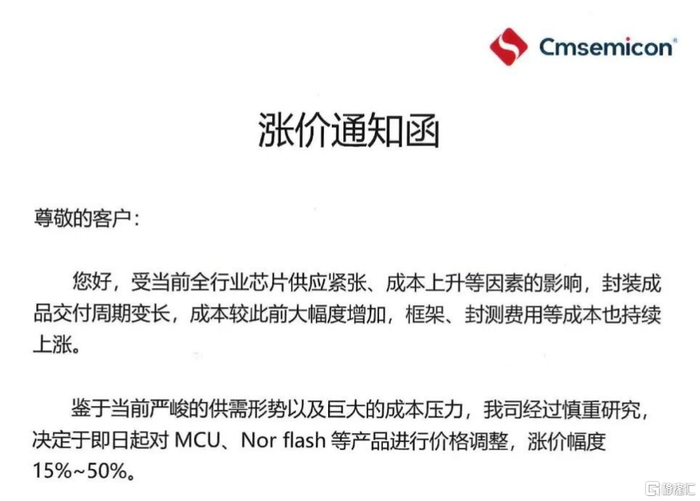
Core Viewpoint - The semiconductor industry in China is experiencing a clear trend of price increases, driven by tight supply and rising costs, with major companies like Zhongwei Semiconductor and Guokewai announcing significant price hikes for their products [1][2]. Group 1: Price Increases - Zhongwei Semiconductor announced price increases for its core products, including MCU and NorFlash, with adjustments ranging from 15% to 50% due to supply constraints and rising costs [1]. - Guokewai has issued a price increase notice for its KGD series products, with price hikes of 40% for 512Mb, 60% for 1Gb, and 80% for 2Gb specifications, indicating a significant upward trend in pricing [2]. Group 2: Industry Performance - The semiconductor industry index rose by 18.91% from January 1 to January 23, 2026, outperforming the CSI 300 index, driven by improved expectations for the industry [2]. - The storage chip sector is entering a high prosperity cycle, with strong performance driven by the explosive growth of AI and computing power industries, leading to improved revenue and profit for related companies [2]. Group 3: ETF and Index Information - The Southern Science and Technology Chip ETF (588890) closely tracks the Shanghai Stock Exchange Science and Technology Innovation Board Chip Index, which includes companies involved in semiconductor materials, equipment, design, manufacturing, and testing [3]. - The top ten weighted stocks in the index include major players such as SMIC, Haiguang Information, and Cambrian, reflecting the overall performance of representative semiconductor companies listed on the Science and Technology Innovation Board [3].
芯片“急涨”警报!两大芯片厂商双双调价
Ge Long Hui A P P· 2026-01-28 01:24
Core Viewpoint - The semiconductor industry is experiencing a significant price increase driven by strong AI demand, with price hikes of 50%-80% reported for various products, indicating a systemic upward cycle in the industry [1][5][8]. Group 1: Price Increases - Zhongwei Semiconductor announced price adjustments for MCU and NorFlash products, with increases ranging from 15% to 50% due to supply tightness and rising costs [3]. - Guokewi has raised prices for KGD products by 40% to 80%, with further adjustments expected in the second quarter based on cost changes [5]. - Samsung Electronics has increased NAND flash prices by over 100% and DRAM prices by nearly 70%, with expectations of continued price hikes into the second quarter [6]. Group 2: Market Trends - The semiconductor industry is entering a "super bull market," with forecasts indicating a significant supply-demand gap for traditional storage chips, leading to a new super cycle expected between Q2 2025 and Q2 2026 [8]. - Counterpoint Research has noted that the storage market is currently in a "super bull market" phase, surpassing historical highs from 2018, with projected price increases of 40%-50% in late 2025 and early 2026 [8]. - ClearBridge Investments highlighted that AI-driven demand for storage chips is significantly underestimated, suggesting a mid-term economic cycle rather than a short-term supply correction [8]. Group 3: Company Performance - ShenGong Co. expects a net profit of 90 million to 110 million yuan for 2025, representing a year-on-year increase of 118.71%-167.31%, driven by AI demand and increased operational rates in high-end logic and storage chip manufacturing [9]. - Zhongwei Semiconductor anticipates a net profit of approximately 284 million yuan for 2025, reflecting a year-on-year growth of about 107.55% [9]. - Domestic A-share companies are projected to see significant profit growth in 2025 due to the AI wave, with increased demand for key materials and components in the storage sector [9].
SMIC(00981) - 2025 Q3 - Earnings Call Transcript
2025-11-14 01:32
Financial Data and Key Metrics Changes - Revenue for Q3 2025 was $2,382 million, representing a sequential increase of 7.8% [4][11] - Gross margin improved to 22%, up 1.6 percentage points sequentially [4][15] - Profit from operations was $351 million, with EBITDA at $1,430 million and an EBITDA margin of 60% [4] - Profit attributable to the company was $192 million [4] - Total assets at the end of Q3 were $49.4 billion, with total cash on hand at $11.4 billion and total liabilities at $16.4 billion [6] - Debt-to-equity ratio was 34.8%, and net debt-to-equity ratio was 0.4% [6] - Net cash generated from operating activities was $941 million, while net cash used in investing activities was $2.062 billion [7] Business Line Data and Key Metrics Changes - Wafer revenue from 12-inch and 8-inch wafers accounted for 77% and 23% respectively, with stable proportions [11] - The utilization rate was 95.8%, and wafer shipments increased by 4.6% sequentially to 2,499,000 standard logic 8-inch equivalent wafers [11] - Blended wafer price increased by 3.8% sequentially due to a favorable product mix [11] Market Data and Key Metrics Changes - Revenue by region showed China accounting for 86%, the Americas 11%, and New Asia 3% [13] - Revenue from the China region increased by 11% sequentially, driven by demand pull-in and domestic market expansion [13] Company Strategy and Development Direction - The company is focusing on strengthening its product platforms, with advancements in specialty technologies and 28-nanometer ULP logic processes [18][19] - The company is seizing growth opportunities in the automotive chip market by launching multiple specialty processes [19] - The overall production lines are still in short supply, indicating a robust demand for the company's products [20] Management's Comments on Operating Environment and Future Outlook - The fourth quarter is expected to follow a traditional seasonal pattern, with revenue guidance flat to up 2% sequentially and gross margin expected between 18% to 20% [8][17] - Full-year revenue is anticipated to exceed $9 billion, marking a new milestone [17] - The company is collaborating with customers to ensure sustainable orders amid the ongoing reshuffling in the domestic industrial chain [20] Other Important Information - For the first three quarters of 2025, revenue reached $6.838 billion, up 17.4% year-over-year, with a gross margin of 21.6% [16] Q&A Session Summary Question: Inquiry about the impact of the super cycle on the company - Management discussed the potential effects of the super cycle on the company's operations and market positioning [24] Question: Questions regarding MCU and other product lines - Management provided insights into the performance and future expectations for MCU and other integrated circuits [26] Question: Inquiry about the company's growth in AI and other sectors - Management addressed the growth in AI and other major application fields, noting moderate growth or stability [20]

SMIC(00981) - 2025 Q3 - Earnings Call Transcript
2025-11-14 01:30
Financial Data and Key Metrics Changes - Revenue for Q3 2025 was $2,382 million, representing a sequential increase of 7.8% [4][11] - Gross margin improved to 22%, up 1.6 percentage points sequentially [4][15] - Profit from operations was $351 million, with EBITDA at $1,430 million and an EBITDA margin of 60% [4] - Profit attributable to the company was $192 million [4] - Total assets reached $49.4 billion, with total cash on hand at $11.4 billion and total liabilities at $16.4 billion [5] - The debt-to-equity ratio was 34.8%, and the net debt-to-equity ratio was 0.4% [5] - Net cash generated from operating activities was $941 million, while net cash used in investing activities was $2.062 billion [6] Business Line Data and Key Metrics Changes - Wafer revenue from 12-inch and 8-inch wafers accounted for 77% and 23% respectively, with stable proportions [11] - The utilization rate was 95.8%, and wafer shipments increased by 4.6% sequentially to 2,499,000 standard logic 8-inch equivalent wafers [11] - Blended wafer price increased by 3.8% sequentially due to a favorable product mix [11] Market Data and Key Metrics Changes - Revenue by region: China accounted for 86%, America 11%, and New Asia 3% [12] - Revenue from the China region increased by 11% sequentially, driven by demand pull-in and domestic market expansion [12] Company Strategy and Development Direction - The company is focusing on strengthening its product platforms, with advancements in specialty technologies and a variety of applications [18] - The company is actively collaborating with customers to ensure shipments and meet demand amid industry reshuffling [19][20] - The fourth quarter is expected to follow a traditional seasonal pattern, with revenue guidance flat to up 2% sequentially [8][17] Management's Comments on Operating Environment and Future Outlook - Management noted that the overall production lines are still in short supply, indicating strong demand [20] - The company anticipates a successful completion of 2025, with full-year revenue expected to exceed $9 billion [17][21] Other Important Information - For the first three quarters of 2025, revenue reached $6.838 billion, up 17.4% year-over-year [16] - The gross margin for the first three quarters was 21.6%, up 5.3 percentage points compared to the same period last year [16] Q&A Session Summary Question: Inquiry about the super cycle and 2026 outlook - Management discussed the potential for a super cycle in 2026 and the company's readiness to meet demand [23][24] Question: Questions regarding MCU and product lines - Management provided insights on MCU production and the company's focus on various product lines, including NOR Flash and NAND Flash [25][26] Question: Further inquiries on specific technologies and market trends - Management addressed questions related to specific technologies such as CMOS Image Sensors and market trends in automotive and consumer electronics [27][28]
国金证券:给予兆易创新买入评级
Zheng Quan Zhi Xing· 2025-04-27 06:15
Core Viewpoint - The report highlights that despite being a traditionally slow season, the first quarter of 2025 for Zhaoyi Innovation (兆易创新) showed significant growth in both revenue and profit, driven by strong downstream demand and government stimulus measures [1][2][3]. Financial Performance - In 2024, Zhaoyi Innovation achieved a revenue of 7.356 billion yuan, representing a year-on-year increase of 27.69%, and a net profit of 1.103 billion yuan, up 584.21% [2]. - For Q1 2025, the company reported a revenue of 1.909 billion yuan, a 17.32% increase year-on-year, with a net profit of 235 million yuan, reflecting a 14.57% growth [2]. Operational Analysis - The growth in Q1 2025 is attributed to several factors: 1) Government subsidies stimulating consumer electronics demand and other national measures boosting consumption [3]. 2) The AI sector driving upgrades in edge storage capacity, benefiting from increased demand for storage in computing and networking markets [3]. Future Growth Drivers - The report identifies "domestic substitution + edge AI" as the main growth drivers for the company: 1) Niche storage and MCU accelerating domestic substitution due to supply chain concerns from US-China tariffs, with Zhaoyi Innovation having a technological edge in areas like NorFlash and MCU [4]. 2) AI driving upgrades in edge storage, with expectations for a significant market expansion in AI applications such as AI headphones, smartphones, and smart homes, where the company has a comprehensive product line [4]. Profit Forecast and Valuation - The company is projected to achieve net profits of 1.6 billion yuan, 2.1 billion yuan, and 2.64 billion yuan for 2025, 2026, and 2027 respectively, with year-on-year growth rates of 45.1%, 31.2%, and 25.8% [5]. - Corresponding price-to-earnings ratios are expected to be 47, 36, and 28 times for the same years [5].


